ICT is facilitating the process of socio-economic development in Nigeria. It has offered new ways of exchanging information, and transacting businesses, efficiently and cheaply. It has also changed the dynamic natures of financial, entertainment and communication industries and provided better means of using the human and institutional capabilities of the nation in both the public and private sectors. Nigerians have seen a total redesign of many industrial sectors, from banking to insurance, as technology reduces the friction in business processes. Technology improves efficiency, delivering better experience for customers.
Increasingly, ICT is rapidly moving Nigeria towards knowledge-based economic structures and information societies, comprising networks of individuals, firms and states that are linked electronically and in interdependent global relationships. This linkage has enabled new classes of companies to emerge, not just in Nigeria, but globally.
We have gotten used to phrases like “Network Effects” and “Portal Effects” as typically used when digital ecosystems and platforms like Facebook, Twitter and LinkedIn become more efficient, not just for the features, but for the very fact they have most people using them.
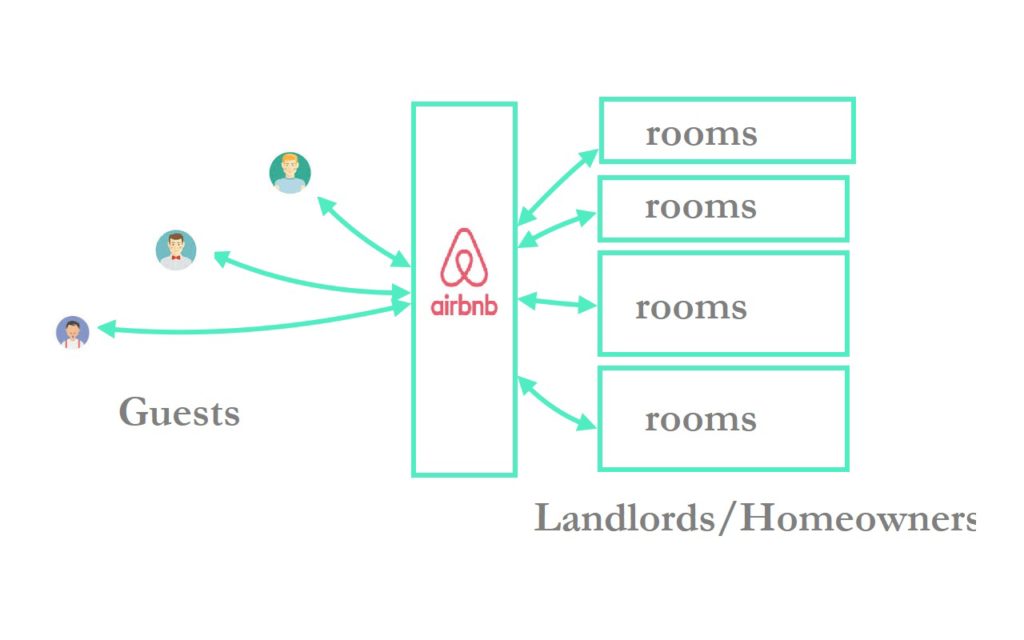
Uber has pioneered aggregation of transportation, at scale. Airbnb has also done the same in the hospitality sector. (Aggregation is a construct where an app or web app brings suppliers into an ecosystem for users/customers to find and patronize them. Uber aggregates taxi services for travelers or just for a city trip. Airbnb aggregates spare rooms for those that need rooms when they are out of town. The companies earn income through commissions.) Aggregation has made it possible that we can have a “home” outside home, for those that desperately want to save when they travel. Technology has made this aggregation possible, at cost model, that the startups that pioneered them have become empires; Uber is worth excess of $50 billion.
Airbnb is an online marketplace and hospitality service, enabling people to lease or rent short-term lodging including vacation rentals, apartment rentals, homestays, hostel beds, or hotel rooms.
Uber has found success, but Airbnb struggles, in Nigeria. We know of Uber and use the service. Airbnb is largely off the radar. Few writes about it. There are pockets of listing across major cities, but Airbnb has no meaningful presence in Nigeria. Airbnb has been operational in Nigeria since 2014 even though we may not know the office address, if it exists.
In South Africa, which I visited recently, the level of Airbnb penetration was noticeable. Even in poor neighborhoods like Langa, near Cape Town, you can see many Airbnb listing. People have turned their homes into Airbnb homes. In Nigeria, we are yet to experience that.
Not Really Airbnb Problem
The root of this issue is Nigeria, and it is a big problem that is evident to most entrepreneurs, depending on the business sector. Because of the low level of trust, especially in digital business, Nigerians like “cash and carry” transactions, where that cash now includes digital payments.In essence, we want to spend money on something and get the gratification immediately. Or better, we want to inspect before we pay.
The commodification of trust which has made Airbnb a multi-billion dollar firm does not work in Nigeria. When you do not have that trust, nothing can work. It is also a problem that technology, by itself, cannot just fix. It is at the root of Nigerian challenges online and that affects many companies including Konga, Jumia and other e-commerce companies. That has reduced the available pool of quality customers – people that make good income but are fearful of spending online in Nigeria. They have minimal trusts on websites and our payment infrastructures.
I have experienced this as an entrepreneur. Few years ago, we launched StartCrunch, a crowdfunding website, to help Nigerian entrepreneurs and makers crowdfund support for their ideas. Within days we had many people listing. However, that venture failed because they could not attract backers. Most were not sure the makers would deliver the perks, as promised. Without backers, we could not make money. We closed the business.
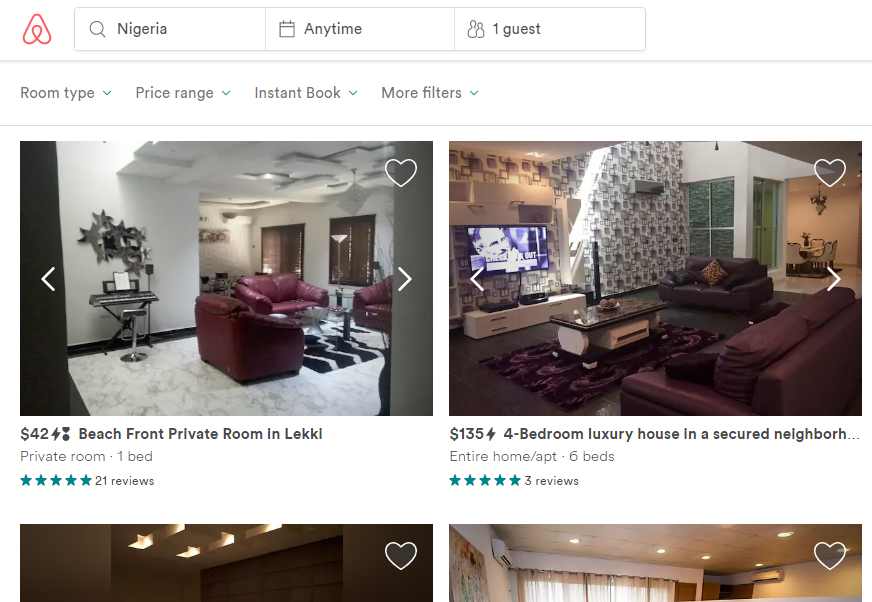
Airbnb listing in Lagos
Fixing This Is Beyond Technology
The history of the lack of trust in Nigerian Internet can be linked to the boom in the “corruption sector” in Nigeria, which was aggressively invented by the military. As Internet penetrated in our society, the corruption went digital. The emergence of the Yahoo Boys should not be seen as an Internet phenomenon, rather an extension of a physical moral collapse. As military men ripped off the commonwealth, excluding many ordinary citizens, Internet provided a window for some of the excluded in a country with minimal opportunities, to try acts they had mastered in the meatspace (the physical world). Most of those men were later branded as Yahoo Boys. They poisoned digital Nigeria. The implication is that the Internet in Nigeria became corrosive to the extent that some courts and banks, at a time, did not accept emails or documents from the web (that has since changed).
Changing this unfortunate path of Nigeria will not happen overnight. It will require orientation on civility and decency, which will take time to evolve. That is when we can see companies like Airbnb that require a higher level of trust to flourish, not just for the Americans but also for their Nigerian equivalents.
Three Key Problems for Airbnb in Nigeria
The heart of Airbnb problems in Nigeria can be summarized thus:
- Difficulty of getting people to use their debit and credit cards to reserve “home” online. Even when people like to try, most will be afraid to put their cards online, for access to someone’s home (which is not a hotel). This sentiment may not be for college students, but for most, it is an issue. That said, Wakanow, Hotel.ng, etc have shown that customers do spend to get hotel rooms. Sure, Airbnb homes are different.
- Trusting that people will see the rooms as advertised when they visit the “homes”. The perception of cheating makes few believe what they see online. The house looks good, but you are not sure. This is a huge challenge.
- Overcome the security challenges since Nigerian Police is largely not on top of its game to prosecute crime, if it happens. What happens if someone is harmed, the guest or the renter? Airbnb is risky; doing that in Nigeria, as a guest, could be seen as madness. This is the biggest reason why Airbnb struggles. unfortunately, the firm cannot do much here. A LinkedIn user after this piece ran summarized thus “I read your piece and loved it! I just need to include a 4th problem for Airbnb: The Security of the homeowner. Some people will habour the fear of being raided by the so called guest who has come to sleep in their home whether immediately or after his/her stay. Trust is the highest denomination in Digital Currency!“
Rounding Up
Nigeria is largely pre-monetisation era of Internet, at scale. Sure we have Konga, Hotel.ng, Jumia and iROKO, but the fact remains that it will take another 5-7 years to see dramatic evolution of spending on Internet. That has to happen before transactions which do not deliver value on the spot can be done by many people. Uber has to risk because you pay the driver when you get to destination. But when it comes to knocking on a door of a stranger, to sleep there, it is a tough one. The commodification of trust is an industry challenge which everyone has a duty to make sure it is institutionalized. That virtuoso moment in Digital Nigeria will not happen without it.