DD
MM
YYYY

PAGES

DD
MM
YYYY

spot_img

PAGES

Home Blog Page 7443

Senate President Saraki’s Bulletproof Range Rover Documents Seized By Nigerian Customs

0

This is why you cannot believe anything a Nigerian politician tells you – most of the guys are really not working for the country.

It has emerged that the ongoing scrutiny of the Nigerian Customs Service leadership by the Senate stemmed from the seizure of the Senate President, Bukola Saraki’s bulletproof Range Rover Sports Utility Vehicle (SUV).

According to Sahara Reporters, Customs officers in Lagos had on January 11, 2017, intercepted and impounded the SUV, which they claimed belongs to Saraki, over unpaid customs duty.

The Vehicle, with chassis number “SALGV3TF3EA190243, is said to be valued for N298 million, which means that customs duty of N74 million should have been paid on it.

It was reported that upon interception, the driver of the SUV confirmed Saraki owns it.

Here are the documents which we have aggregated in pdf.


The most innovative global agtech startups that must excite farmers

0

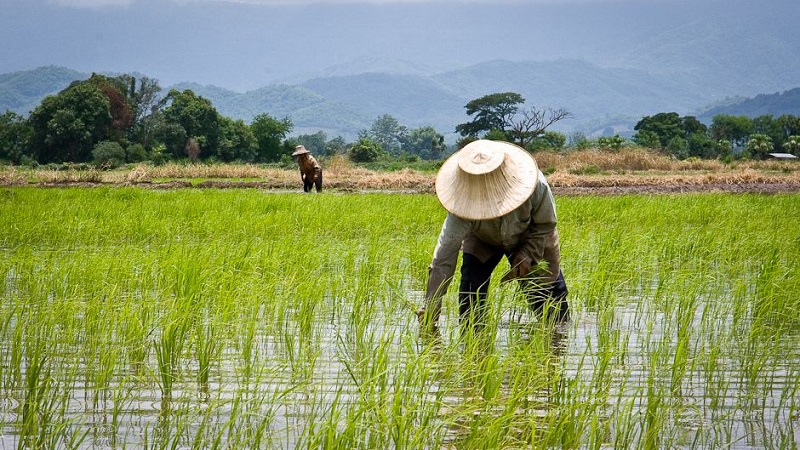
Agricultural tech, or agtech for short, has gradually become a fascinating  hot trend across the globe. It is the engine which is transforming farming. With readily available computational systems made possibly by embedded systems and cheap processing systems which can be rented in the cloud, agtech is blossoming. The era of smart farming is one driven by agtech  which is still a growing industry.

The following agtech companies are the most innovative right now in the word.

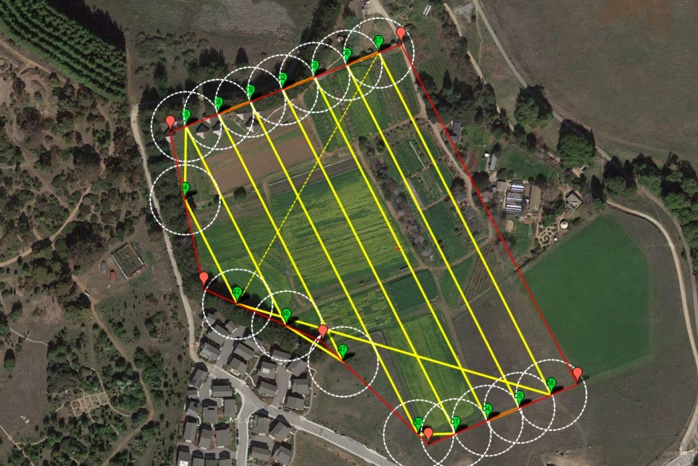
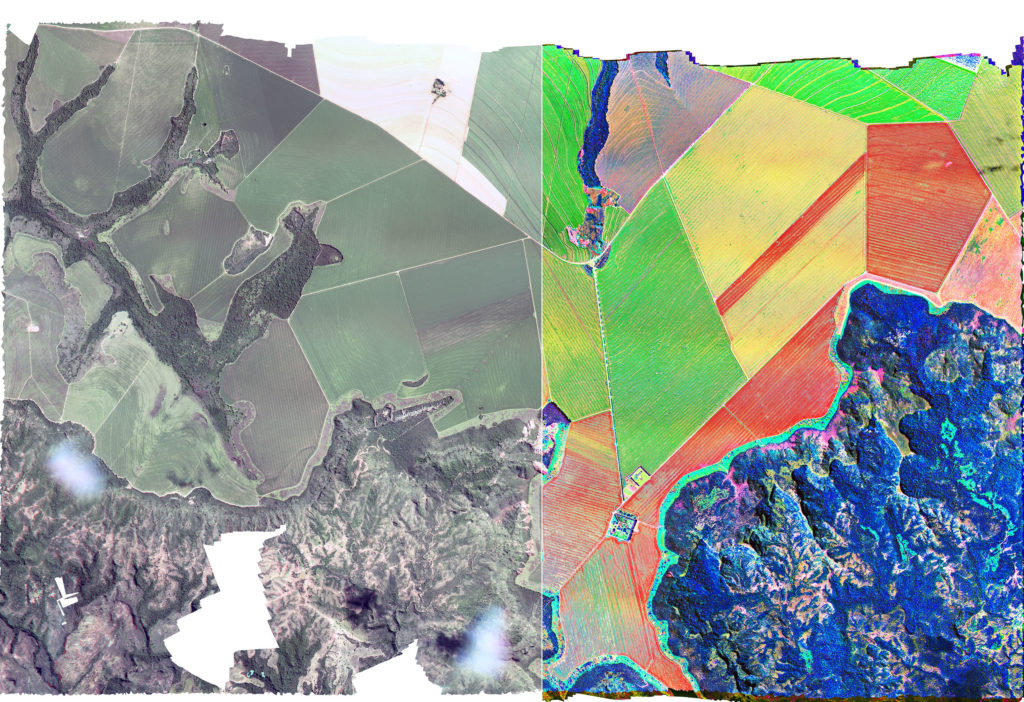
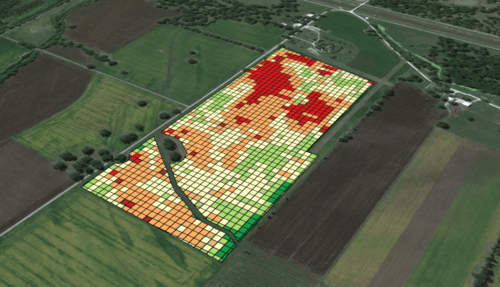
Resson is an aerial image analytics company that uses computer vision and machine learning techniques to detect and classify in-season biotic and abiotic stressors such as plant disease, insect damage or water shortage. The Resson Agricultural Management & Analytics System (RAMAS) takes in imagery from multiple platforms, including ground-based cameras and UAVs, to perform these analyses, moving beyond NDVI. It detects and localizes anomalies allowing growers to follow individual plant growth and make in-season course corrections.

Zenvus is an intelligent solution for farms that uses proprietary electronics sensors to collect soil data like moisture, nutrients, pH etc and send them to a cloud server via GSM, satellite or Wifi. Algorithms in the server analyze the data and advice farmers on farming. As the crops grow, the system deploys special cameras to build vegetative health for drought stress, pest and diseases. The data generated is aggregated, annonymized and subscribed for agro-lending, agro-insurance, commodity trading to banks, insurers and investors.

PrecisionHawk recently partnered with A&L Canada, the agronomy lab, to integrate A&L’s ground sampling data with PrecisionHawk’s drone imagery. PrecisionHawk is an information delivery company that combines unmanned aerial systems, remote sensing technologies and advanced data analytics to improve business operations and day-to-day decision making. PrecisionHawk brings value to an emerging market by offering an end-to-end solution for aerial data gathering, processing and analysis to provide actionable information across a wide range of data-intensive civilian industries.

Mavrx, which first based its insights on aerial imagery from planes, recently added a drone scout feature to its app to create specific drone flight maps for farmers to assess potential problems areas identified with its ultra high-resolution imagery from planes. The idea is to help farmers locate fields where yield is at risk efficiently to eliminate the burden of drone-based image processing. Mavrx is on a mission to collect and organize the earth’s physical data. Their job is to connect the world of agriculture with the world of big data—driving improvements in crop productivity and land management.

IntelinAir is also using machine learning to analyze aerial imagery as a service, although it acquires this imagery through third parties. IntelinAir, Inc., is an aerial imagery analytics company focused on agriculture that delivers actionable intelligence to help farmers make data-driven decisions to improve operational efficiency, yields, and ultimately their profitability. IntelinAir combines the power of aerial imagery analytics through traditional computer vision and modern deep learning methodologies, agronomic science and user-friendly interface (mobile) technologies to deliver near real-time decision support to farmers. The company’s flagship solution AG-MRI™ is a field health monitoring and early-warning system that enables farmers to manage their operations proactively and with confidence. The company, founded in 2015, has dual headquarters in San Jose, Calif., and Champaign, Ill.

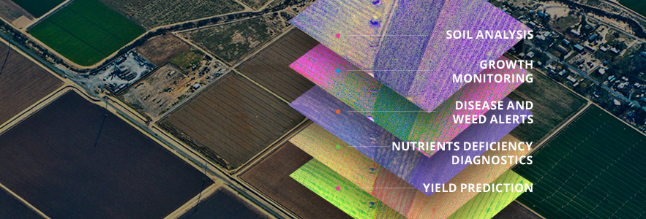
Hummingbird is a drone-enabled data and imagery analytics company leveraging machine learning and crop science. The UK-based startup offers 10 flights per growing season to detect weeds and disease at key times during the growing season to help farmers decide what and how much input to apply. It promises a 24-hour turnaround after each flight. It also offers yield prediction. Hummingbird is drone-agnostic, but mostly uses senseFly and Parrot drones and sensors. The startup layers satellite imagery and soil maps over the drone imagery as well as combine harvester reading for yield maps.

SlantRange is a drone sensor manufacturer and imagery analytics provider using computer vision. It recently announced a new multispectral sensor called the 3p. One of the main benefits of the 3p is its on-board image processing and in-field analytics capabilities, which can give farmers instant insights in the field, without the need for cellular connectivity and cloud connection.

Agribotix, which was founded in Colorado in 2013 as one of agriculture’s first drone startups, produces NDVI maps for its clients including Jamie Dumalski, a Canadian farm operator who manages 35k acres of peas, lentils, canola, wheat, barley, and soy for a farmland investment group in Saskatchewan. Agribotix is a drone-enabled software company that provides advanced imaging and analysis for precision agriculture. It offers Agribotix Hornet Drone, a rugged low-cost drone airframe purpose-built for operational use on the farm; and Agribotix Infrared and Thermal Sensors, which are thermal cameras that collect images over fields of interest. It also offers Agribotix Image Processing Services, a software solution that delivers easily viewable georeferenced aerial images.

CropX is an ag-analytics company that has developed the world’s most advanced adaptive irrigation service, which automatically optimizes irrigation, thereby delivering dramatic crop yield increase and water and energy cost savings to farms.

Gamaya, is a drone sensor and analytics platform. It differentiates itself by manufacturing hyperspectral sensors; the majority of drone imagery companies use multispectral images. The novel design can show over 40 bands of light instead of just the four — red, green, blue, infrared — provided by multispectral cameras. By capturing over 40 bands of light instead of just four, hyperspectral can detect specific physiological traits within the plant, argues the startup. The sensor is Gamaya’s enabling technology, however, and it says its main intellectual property is in its analysis of this hyperspectral imagery using artificial intelligence to produce information about the plant’s physiology. 

Sentera – Sentera’s forward-thinking team of engineers have seamlessly blended elegant design concepts with deep customer understanding to produce advanced, lightweight and customizable drone, sensor, interpretive software and data management solutions. Sentera brings meaning and organization to data and images.

DroneDeploy – DroneDeploy is a provider of cloud-control software solutions for drones which include automated flight safety checks, workflows, and real-time mapping and data processing. The company has partnered with leading drone manufacturers like DJI to provide its software to end users in a variety of industries, including agriculture, real estate, mining, construction and many other commercial and consumer arenas. DroneDeploy is compatible with any drone.

Nigerians banks gave big loans to Etisalat, yet local startups cannot get funding supports

0

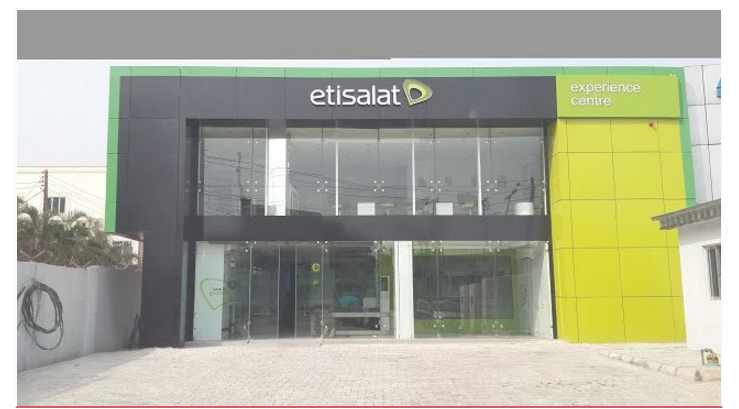
The story of how Etisalat Nigeria is owing nearly every major bank in Nigeria is a very unfortunate one. This is a country where banks prefer to finance trade over long-term investments. And when they want to invest in technology, they prefer a “well-funded” empire in Etisalat.

Can any Nigerian company receive that type of support? Not possible. The reality is that Etisalat Nigeria may not worth much when compared to the loans it has received and the parent company can just forget its Nigerian subsidiary. In other words, do not expect anyone to pump money into Nigeria to help pay the banks.

The Loan Crises

Despite last week’s intervention by the Nigerian Communications Commission (NCC) and the Central Bank of Nigeria (CBN), banks in the country have opposed a proposal by Etisalat Nigeria to convert part of a $1.2 billion loan from dollars to naira and want the Abu Dhabi telecoms group, Etisalat and its other shareholders to recapitalise it instead.

A banker conversant with the negotiations told Reuters that the seven-year syndicated loan, on which Etisalat Nigeria missed a payment, has a dollar portion of $235 million, which the telecoms operator wants to convert to naira to overcome hard currency shortages on Nigeria’s interbank market.

The UAE’s Etisalat own 45 per cent of Etisalat Nigeria, while Abu Dhabi’s Mubadala owns 40 per cent of the company, which was due to meet its lenders on Thursday for debt talks mediated by the central bank and the telecoms regulator.

However, the 13 banks that syndicated the loan for Etisalat postponed Thursday’s meeting to address the $1.2 billion the telecoms company owes the banks.

The Nigerian problem

Nigeria has been running short of dollars as a result of lower global prices for oil, its major export. Its economy entered a recession last year for the first time in 25 years.

Most of the 13 lenders involved in the Etisalat Nigeria loan had raised dollars abroad to participate, meaning that further naira weakness would see them receive fewer dollars.
The naira has lost half of its value since the loan, which matures in 2020, was made. Interest is due monthly and the next principal payment is due in May, the source said.

Etisalat, which generates 3.7 per cent of its revenues from the Nigerian business, has questioned the rationale of investing more in it and may sell its stake, sources say.

Etisalat had written down the value of Etisalat Nigeria last year to $50 million due to naira weakness, Moody’s said in a note, adding that the default at the affiliate company did not affect the parent’s credit profile.
Meanwhile, Fidelity Bank Plc’s investor relations team on Thursday revealed that its exposure to Etisalat Nigeria was about N17.5 billion ($56 million).

Rounding Up

Etisalat owes GTBank N42 billion and Access Bank N40 billion, while its exposure to other banks was yet to be disclosed.

Etisalat Nigeria has over 20 million subscribers, according to Nigeria’s telecom regulator, making it the country’s number four mobile operator with a 14 per cent market share.

South Africa’s MTN has 47 per cent, Globacom 20 per cent and Airtel – a subsidiary of India’s Bharti Airtel – 19 per cent.

When you write about Nigerian economy, you have this feeling that Nigerians do not like themselves. If things are right, Etisalat should not be in the forefront of this type of support. But the banks are always smarter – they had banked that Etisalat parent company will bail them out, if things go really bad.

But the game has changed because the parent company has no interest in a recession-ridden country called Nigeria. The question now is who will bail the banks by buying Etisalat Nigeria?

Sectors and Top Destinations of Fortune 500 Investments in Africa [with Infographics]

0

The Middle East Africa (MEA) region has become increasingly important for the majority of global Fortune 500 countries, according to a new report released by Infomineo, a global business research company specialising in Africa and the Middle East.

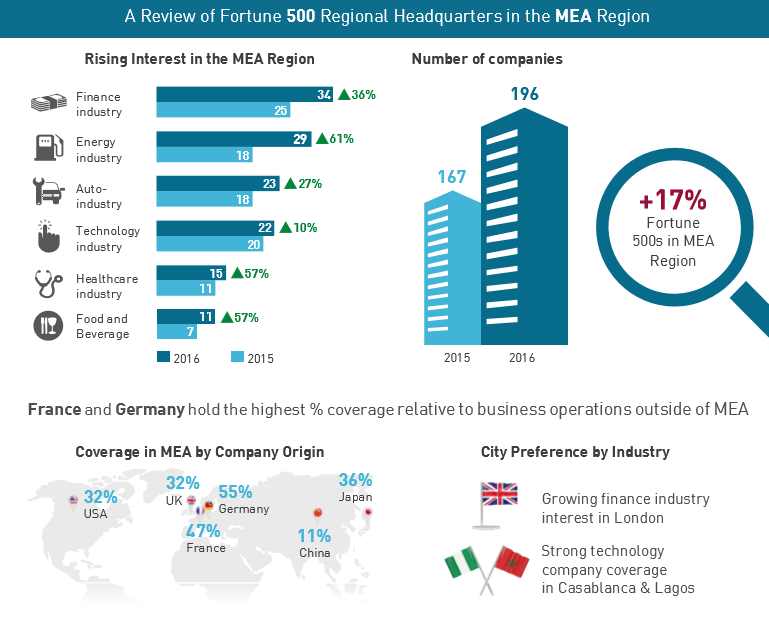
The report focuses on multinationals looking at entering, or already present, in the Middle East and Africa region. Overall, there was a 17% increase in the number of companies in MEA in 2016 compared to 2015, with Johannesburg being the leading destination for Africa.

Location Choice

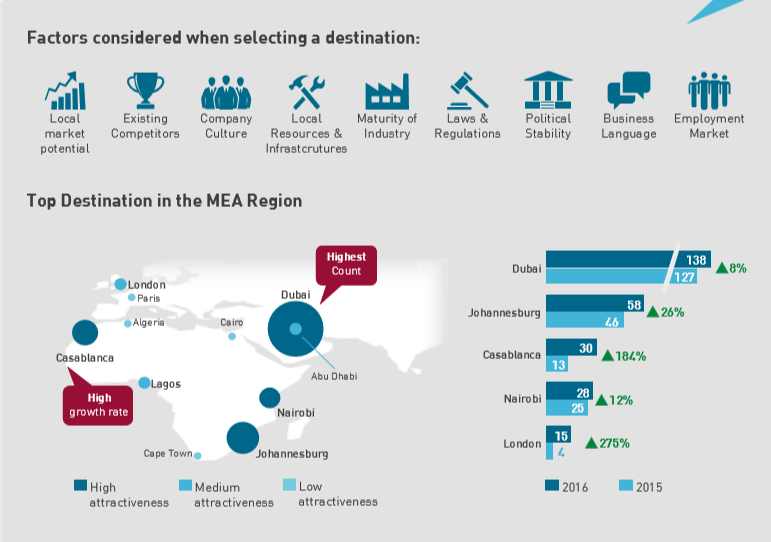
In 2016, 196 Fortune 500 companies had established a dedicated regional headquarters in the MEA region. In the Middle-East, Dubai is the most popular choice with 138 companies establishing a dedicated entity in the city.

There has also been a marked uptick in companies deciding to cover MEA from outside of the region – 38 companies up from 22 have established a regional headquarters in areas such as London, Brussels and Paris.

The leading destinations on the Fortune 500 list include Dubai, Johannesburg, Casablanca, Nairobi, Lagos, and Cairo. Egypt remains behind the leaders due to political instability, however, it has seen a 250% increase in Fortune 500 investment since 2015. Germany and France are leading in terms of coverage rate while China has the lowest presence in the region.

Industry Type

Industry type plays a pivotal role in the selection of city and country. Financial services are more likely to base MEA coverage from London, while technology companies are more inclined towards Casablanca or Lagos. The latter city is also the premier location for organisations looking to manage their operations across Western Africa with 12 Fortune 500 companies already established in the region.

Automotive and Healthcare tend to have a presence in both Africa and the Middle East, while Technology is more inclined to having a presence from the outside.

Nairobi, in Kenya, is the leading destination for the FMCG companies and tends to be the top choice for organisations looking to service Eastern Africa. Dubai and Johannesburg are the most popular hubs overall, but both Casablanca and Nairobi are rapidly gaining traction and international awareness. Casablanca has the highest growth rate overall, while Dubai has the highest count. The same can be said for London, which has tripled its number of regional HQs in the region, acting as an MEA hub. Given the geographical proximity and the talent pool present in the city, it could be that London is playing the role of a first step into the MEA region, especially for Japanese and North American companies.

Other Factors

There are numerous factors which impact on the organisation’s selection of a specific city. These include the local market potential, maturity of the industry, existing competitors, political stability and the quality of the employment market, among others. Determining the attractiveness of a location along these clear lines assures the Fortune 500 companies of a stable and profitable investment and significantly mitigates risk. The most attractive cities are Dubai, Johannesburg, Casablanca and Nairobi, and at the lower end of the spectrum, Cairo, Paris, Algiers and Cape Town.

What’s Next for Global AgTech

0

Twenty-sixteen was a year of contrasts for the agriculture technology startup market and paves the way for the sector’s next generation of technologies in 2017.

Last month, we published the 2016 AgTech Investing Report, detailing $3.23 billion in investment across 580 deals. That’s a 30% decline in funding dollars from 2015’s record-breaking $4.6 billion, but a 10% climb in deal activity year-over-year.

The decline follows the wider global venture capital markets, where funding fell 10%, and even more if you discount some extreme outliers, such as the late stage financings of Uber ($5.6 billion), Didi Chuxing ($7.3 billion), and Ant Financial ($4.5 billion).

But the growth in the number of agtech deals, driven by a 77% increase in seed stage investment, bucks the global trend where deal activity fell 24% and early stage activity saw the greatest proportionate decline.

The growth in seed stage activity can be attributed in part to the increasing number of early stage resources available to agtech entrepreneurs. From accelerators to incubators to venture development organizations, at least 33 organizations globally cropped up in 2016 to support entrepreneurs looking to disrupt the food and agriculture industry.

While this support of early stage agtech businesses is encouraging, it also opens up a question about how this second wave of agtech innovation will find investment backing at the later stages, particularly in light of the 43% decline in Series A funding to agtech startups in 2016.

How the Industry Supports Agtech

By our count, there are 14 active, agtech-focused venture capital funds today with $850 million under management, and eight more currently raising funding. Even in such a small group, they are spread across the US, Canada, France, Holland, Israel, India and China. There are also a growing number of corporate venture funds in the food and agriculture industry, dedicated to supporting new innovation.

Syngenta was the first to launch a corporate venturing arm back in 2006, and Monsanto joined in 2011 with Monsanto Growth Ventures (MGV). MGV and Syngenta Ventures are by far the most active, but their peers BASF, DuPont, and Bayer have started agtech investing initiatives too. There are some also newer initiatives from smaller agribusinesses such as The Andersons, which launched Maumee Ventures in 2015, and ag retail firm Wilbur-Ellis which launched Cavallo Ventures in 2016. More recently there’s been more corporate venture activity among the food companies, and in 2016 Kellogg’s, Campbell’s Soup, Tyson Foods, and Danone announced new investment initiatives with eighteen94 Capital, Acre Venture Partners, Tyson New Ventures, and Danone Manifesto Ventures respectively. We expect more to come in 2017 including a fund from Archer Daniels Midland.

While participation from the agtech VCs remained relatively constant in 2016, and we saw growth in the corporate venture space, these investors still provide a very small portion of the sector’s overall investment needs. This means the industry needs to rely on general tech investors to fill the gaps in funding, and they played a key role in getting the first generation of agtech startups off the ground.

The First Wave of VC-backed Agtech Startups

The five most active investors in 2014 were Khosla, Cultivian, Y Combinator, Andreessen Horowitz, and KPCB. They invested mostly in precision ag and sensing, alternative proteins, and food e-commerce. That year, Conservis, Granular, aWhere, Semios all raised Series A deals, while FarmLink, AirWare, FarmLogs, and Farmers Edge raised Series B. Beyond Meat, Hampton Creek, and Impossible Foods raised Series B, C and A rounds respectively. Instacart raised a whopping $220 million Series C from three of the above VCs, and Blue Apron raised a $50 million Series C. There were also some noteworthy deals in the indoor agriculture, waste technology, and biotech sectors, but mostly from lesser known tech VCs.

Investment activity from some of these mainstream investors declined in 2016; Khosla made just three compared to 9 in 2014, for example. The pullback from these funds doesn’t mean agtech is out of favor with them, but reflects the fact that fund priorities ebb and flow along with innovation and industry development.

The industry is sorely lacking in exits, therefore exit data to provide VC funds with performance metrics for agtech and encourage further investment in the sector. There is also the possibility that some technologies will take longer than expected to gain the traction tech investors expect, which could create a lull in investor activity as they wait to see results. If lacking traction results in a down round, that could wipe out many early investors from the space altogether.

Cause for Optimism

We are optimistic that the second wave of agtech will bring more general tech investors into the fray on the back of a faster growth trajectory. Our conversations with some of the top VCs in Silicon Valley indicate that they’re eager for these new opportunities and many with a strong thesis recognize the cyclicality.

Many of the first wave of agtech startups had to build a full-stack solution just to deliver an MVP (minimum viable product) to their customers: hardware, operating systems, software applications, and communication systems. This second wave will build on an existing foundation and ecosystem, however. We expect that these startups will have more rapid growth and experience quicker adoption by farmers and customers because they can focus on building products that deliver value to their end customer rather than enabling technologies. One example is in the drone technology space, which now has an ecosystem of specialized companies innovating around the basic technology. First there were drones manufacturers like DJI, which manufactured UAV hardware technology and placed a generic camera on it to collect data. Next came DroneDeploy, an operating system designed to help drone pilots operate and offer some basic analytics of the imagery. Today we have Gamaya, which has built a hyperspectral camera to attach to drones for increased resolution, and IntelinAir, which is using machine learning to analyze third party drone imagery through an application. Expect to see similar ecosystems building around other agtech subsectors, and crossover technologies coming to the sector from other industries too.

Growing Awareness

There’s a growing awareness among consumers, investors, industry, and entrepreneurs, that the entire food chain needs to be overhauled. It’s not just meeting the food requirements of a growing global population that’s concerning investors and entrepreneurs; the food chain is largely inefficient and opaque, beset by safety issues and lacking in traceability; consumer eating trends and regulations are rapidly changing with indications that much of the existing food industry can’t keep up; agriculture’s environmental footprint is unsustainable and increasingly unpopular; and rising labor costs are cutting into razor thin margins.

Agribusinesses understand that they need to pay more attention to innovation and indicated in a survey we conducted with Boston Consulting Group that they would invest more resources on new technologies to revolutionize their industry. It’s likely many of them are currently preoccupied with the ongoing mega-mergers of Bayer and Monsanto, Chem China and Syngenta, and Dow and DuPont. But they also need guidance; the majority of those surveyed indicated uncertainty in how to approach investing in innovation.

We can also expect corporates from other industries to start participating in agtech. In December, precision ag startup Farmers Edge raised funding from Fairfax Media, the investment company of billionaire Prem Watsa, due to potential synergies with its insurance business, and recently South African media company Naspers invested in FarmLogs.

New venture investors are also yielding from all corners of the globe. US startups accounted for 48% in 2016, down from 58% in 2015, and 90% in 2014, as we saw Chinese investors make some large bets in the sector, and activity in other Western markets like Canada and the UK grew. There are growing ecosystems of agtech startups across our network in New Zealand, Australia, Latin America, Singapore, and Europe, all with accelerators, conferences, and startup competitions cropping up to support them.

Technological developments will also drive investment. 2016 saw particular growth in funding for agriculture biotechnology startups with post-GMO technologies exploiting the microbiome and gene-editing. Food waste reutilization also drove ag biotech investment. Novel Farming Systems that are producing insects, microbes, and indoor crops, gathered pace with the promise of providing sustainable food, ingredients, and animal feed alternatives.

And the data support our optimism. While funding dollars declined in 2016, the number of investors remained steady with 670 participating compared to 672 in 2015 when funding reached $4.6 billion.

There will be challenges, and the agribusinesses need to step up to those challenges; start acquiring more companies and making more venture investments. But, with an industry that represents 10% of global GDP and accounts for only 3% of venture investment, there can only be one long-term direction for investment in agtech startups.

(For more insights on agtech funding in 2016, you can download the full report here.)

by Louisa Burwood-Taylor – Head of Media & Research AgFunder – dedicated to funding the next food & agriculture revolution.