DD
MM
YYYY

PAGES

DD
MM
YYYY

spot_img

PAGES

Home Blog Page 7449

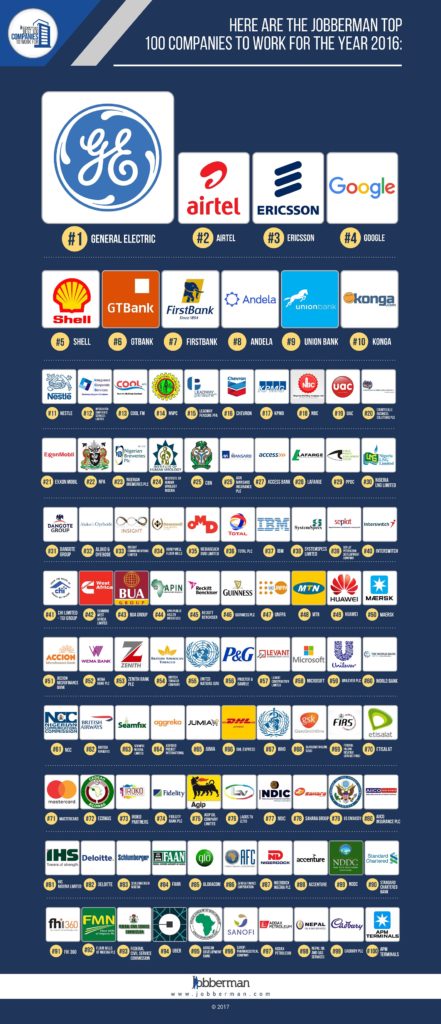
Jobberman publishes Top 100 Companies to Work for the Year 2016 in Nigeria

0

The 3rd Annual Jobberman Best 100 Companies To Work For focused on identifying, recognising and celebrating top employers in Nigeria, as rated by employees and professionals. The ranking also provides insight to job seekers on companies they should have their eyes on, for employment and career growth, as well as providing opportunities for business prospecting.

GE is the best company to work for in Nigeria followed b Airtel, Ericsson and Google, according to Jobberman.

  1. General Electric
  2. Airtel
  3. Ericsson
  4. Google
  5. Shell
  6. Guaranty Trust bank
  7. First Bank
  8. Andela
  9. Union Bank of Nigeria
  10. Konga
  11. Nestle Nigeria PLC
  12. Integrated Corporate Services Limited (ICSL)
  13. Cool FM Lagos
  14. Nigerian National Petroleum Corporation (NNPC)
  15. Leadway Pensure PFA Limited
  16. Chevron
  17. KPMG
  18. Nigerian Bottling company Limited
  19. UAC PLC
  20. Courteville Business Solutions PLC
  21. Exxon Mobil PLC
  22. Nigerian Port Authority (NPA)
  23. Nigerian Breweries PLC
  24. Institute of Human Virology Nigeria
  25. Central Bank of Nigeria
  26. AXA  Mansard Insurance PLC
  27. Access Bank PLC
  28. Lafarge Cement WAPCO PLC
  29. Public and Private Development Centre Limited (PPDC)
  30. Nigeria LNG Limited
  31. Dangote Group
  32. Aluko & Oyebode
  33. Insight Communications Limited
  34. Honeywell Flour Mills PLC
  35. MediaReach OMD Limited
  36. Total PLC
  37. IBM
  38. SystemSpecs Limited
  39. Seplat Petroleum Development Company PLC
  40. Interswitch
  41. CHI Limited – TGI Group
  42. Cummins West Africa Limited
  43. BUA Group
  44. APIN Public Health Initiatives
  45. Reckitt Benckiser
  46. Guinness PLC
  47. UNFPA
  48. MTN
  49. Huawei
  50. Maersk
  51. Accion Microfinance Bank
  52. Wema Bank PLC
  53. Zenith Bank PLC
  54. British Tobacco Company
  55. United Nations (UN)
  56. Procter & Gamble
  57. Levant Construction Limited
  58. Microsoft
  59. Unilever PLC
  60. World Bank
  61. Nigerian Communications Commission (NCC)
  62. British Airways
  63. Seamfix Nigeria Limited
  64. Aggreko Project International
  65. Jumia
  66. DHL Express
  67. World Health Organisation (WHO)
  68. GlaxoSmithKline (GSK)
  69. Federal Inland Revenue Service (FIRS)
  70. Etisalat
  71. Mastercard
  72. ECOWAS
  73. iROKO Partners
  74. Fidelity bank PLC
  75. Agip Oil Company Limited
  76. Lagos TV (LTV)
  77. Nigerian Deposit Insurance Corporation (NDIC)
  78. Sahara Group
  79. US Embassy
  80. AIICO Insurance PLC
  81. IHS Nigeria Limited
  82. Deloitte
  83. Schlumberger Nigeria
  84. Federal Airports Authority of Nigeria (FAAN)
  85. Globacom
  86. Africa Finance Corporation
  87. Nigerdock Nigeria PLC
  88. Accenture
  89. Niger Delta Development Commission (NDDC)
  90. Standard Chartered Bank
  91. FHI 360
  92. Flour Mills of Nigeria PLC
  93. Federal Civil Service Commission
  94. Uber
  95. African Development Bank
  96. Sanofi Pharmaceutical company
  97. Addax Petroleum
  98. Nepal Oil and Gas Services Ltd
  99. Cadbury PLC
  100. APM Terminals

Liberated Africa: Pathways to Self-Transformational Development by Prof Ehiedu Iweriebor

0

In the period since independence in the 1950s, Africa has undergone profound social, cultural, economic and political changes. Some inherited and historically rootless colonialist political and social systems have collapsed, been transcended and reconstituted. Different political systems – single party rule, personal rule and military governments have come and gone. New post-independence political and social systems; economic institutions, professional associations and labour unions, various types – traditional and new and varied cultural expressions have all emerged. Creative efforts to foster effective nation-building, develop a sense of belonging and manage diversity productively have also been made. New political systems, different forms of electoral democracy and democratic government;  political parties and groups, varied social and intelligentsia organizations, confident youth groups, civil society organizations are also emerging. Disruptive and traumatic political and social crises have occurred. These include civil wars, secessionist wars, famines, elite generated manipulative ethnicity and deadly intergroup conflicts, and recently home grown and imported religious terrorism and their destructive wars, spectacular damaging actions, the creation of refugees and internally displaced peoples and the generation of general feelings of insecurity.

Social development institutions like health and educational facilities that barely existed under colonialism have been built. For example, vast numbers of schools at all levels including universities and other tertiary institutions – conventional and specialized have been established and dot various parts of Africa. They have produced millions of educated Africans as never existed before in African history. New physical infrastructures: roads, railways, water ways and airports have been built. This is a rough profile of profound changes in Africa since the 1950s.

However, given Africa’s size and vast unmet human, social and economic needs there is no question that substantial as what has been built is, the extant physical and social infrastructures are not adequate or abundant enough.

At the same time, it is quite clear that the physical and social landscapes of Africa today are vastly different from what they were 60 years ago such that it is unlikely that people from those times will recognize Africa of today.

Yet it is also true that there are some aspects of African realities that have not changed substantively or for the better during this period because Africa did not regain, recover or assert its ownership and use of its autonomous self-direction capacities in some spheres over the past six decades. These are primarily in the areas of economic sovereignty, development capacitation, self-actuated development and ideological self-direction. This failure is manifested in such conditions as persistent underdevelopment, the pre-eminence of primary commodities production and export in its economic interactions with the world, import dependency, development incapacitation and poverty generation. It is also manifested in Africa’s ideological subordination to external diktat through the acceptance and implementation of the economic management dogmas and prescriptions of the multilateral imperialist agencies – the World Bank, IMF and similar bilateral external agencies. These prescribed non-development dogmas include: privatization, deregulation and African states self-withdrawal from promoting socio-economic development and the simultaneous promotion of the ascendancy of  “MARKET FORCES, FOREIGN INVESTORS, FOREIGN DIRECT INVESTMENTS and FOREIGN TECHNOLOGY TRANSFER ” as the primary and indispensable engines of African economic growth.

The forceful application of these disempowering dogmas through the active complicity of psychologically programmed and ideologically defeated African leaders and elite over the past three decades has yielded or in fact consolidated Africa in its status as under- developed, under-equipped and incapable of development self-propulsion. With African economies arrested in primary commodity export and the mass importation of manufactured goods they are mired in the same exocentric rut and this inevitably results in the export of jobs and import of poverty, therefore recurrent poverty-generation.

This condition and its persistence over this period suggest that IT CANNOT BE RESOLVED WITHIN ITSELF. It has to be transcended by African strategies of psycho-cultural recovery and development capacitation. Psycho-cultural recovery will entail the self-conscious efforts of liberated Africans to peel off the layers of self-deceit, self-delusion, psycho-ideological incapacitation, diminution of African self-worth, self-marginalization of African agency in African development. It would also require the expurgation from African leaderships and elite of their worshipful dependence on outsiders and preference for all things foreign including pre-fabricated solutions that have been introduced into Africa as dogmas of disempowerment and mechanisms of control from the slave trade era to the present. In its various incarnations, African disempowerment was partially procured through various  seemingly neutral but ultimately destructive external ideological constructs such as “Christianization”, “Islamization”; European “Civilization” during the colonial era; “Modernization” in the neo-colonial period after independence and its latest expression, as multilateral imperialist “globalism” and dictatorial globalization that ideologically and politically dictates a single, global capitalist and liberal democratic system as the only “approved” economic, political and social and order for all times. This would be composite world of the rich and powerful, and the weak and powerless with Africa at the top.

But all these disempowering political, social, cultural and economic constructs and systems of domination were politically and self-consciously created by organized and mission-driven national and racial elites pursuing the objectives of group ascendancy and global domination. They are not divine constructs imposed on the world. In the same way, liberated Africans can self-consciously choose and work to exit from this state of UNFREEDOM AND INDIGNITY by dismantling and reconstituting the extant world order (as Asians have done) and chose to create and enter the realms of FREEDOM AND SELF-DIRECTION through development capacitation, psychological liberation, cultural recuperation, mental freedom and self-actuated development so as to emerge as powerful participants in the world system as actors not subjects. This is the liberatory imperative.

In order for Africa to assume responsibility for its own transformation and elevation, and be able to undertake self-reliant development and create secure domestic prosperity, it has to create its own specific ideology and strategy of self-development. To do this there are a number of irreducible components that have to be designed and put in place. These are: the recovery and application of African agency in African development, the creation of the liberated African state, establishment of an African development capacitation system, the creation and dissemination of the Affirmative Africa Narrative and African comprehensive military empowerment.

The Centrality of African Agency in African Development
The first requirement of this liberated development strategy and process is the emplacement of African Agency at the centre of African thought and action as the primary psycho-cultural foundation, ideological premise and endogenous propellant for Africa’s self-actuated development. In this context African Agency is the endogenously created psycho-cultural software embedded in societies with which African societies train, organize, motivate, self-activate and direct themselves to accomplish desirable ends individually and collectively. It is the absolute psycho-cultural grounding and ideological ownership of the African project devoid of compromises to any external imperatives. African Agency is grounded on the supremacy of African endocentric thought and motive-forces as the propellants of development as a self-directed imperative.

Without contemporary Africans’ psychological internalization of this understanding and ownership of their development vision and their assumption of complete responsibility for self-actuated development, African societies will remain dependent, underdeveloped and insecure. Therefore the new liberated Africa vision must recognize the absolute necessity of the restoration of African Agency to primacy for any successful African actuated process of transformation. This new perspective is critically important because it has to be realized that one of the major challenges and primary impediment to Africa’s development since independence in the 1960s has been the absence of African Agency in African development as the directive force. This was due to the concerted and largely successful efforts of external multilateral imperialist forces (posing as omniscient advisers) working with psycho-ideologically unprepared and even naive African collaborator-leaders to promote exocentric authority and the corresponding marginalization, diminution and de-activation of African Agency in African development. Consequently, without the unquestioned ascendancy, centrality and directive role of African Agency, African development understood as Africans’ self-equipment for total liberation and radical transformation can never occur.

The Liberated African State
Second, is the imperative of the creation of a new Liberated African State through the rigorous ideological cleansing, psychological re-empowerment and administrative reconstruction of the contemporary politically compromised and disabled neo-colonial African states that are more representative of external forces than national interests.

The decolonization of the colonial African state and the evolution and emergence of the liberated state after independence was disrupted in the 1980s when most African states were captured and disabled by the cancerous ideologies, dogmas and prescriptions of the multilateral imperialist agencies – the World Bank and the IMF and their bilateral supporters in the context of the economic crises of the late 1970s and early 1980s. Embodied in various formulations and policy diktats such as the Structural Adjustment Programme (SAP), and its unvarying conditionalities: currency devaluation, subsidy removal, trade liberalization and others like deregulation, privatization, poverty reduction; these prescriptions have transformed African states into disabled, compromised, neo-colonial political-administrative contraptions that are responsible to neo-imperialist multilateral institutions and not to Africans. They therefore cannot serve Africa’s interests

This is why it is imperative to create the new Liberated African state. It will be a strong and interventionist developmental state. Its raison d’ etre would be the representation and promotion of national interests. This Liberated African state will be grounded on the affirmation and militant expression of its untrammeled sovereignty; and the absolute non-compromise of national interests to any external agencies, formulations, dogmas and imperatives. It would self-consciously assume and assert uncontested ideological ascendancy. In fact the new liberated state will represent the completion of the decolonization of the African states and the emergence of truly endogenous states. It is only such Liberated African developmental states that can lead to the realization of the African citizens’ expectations for defence and protection, advanced development, material prosperity and freedom from want and colonialist philanthropy, psychological security and empowerment, dignity and equity with all other groups in the world.

The African Development Capacitation System
The third critical requirement is the development and placement of an African Development Capacitation System as the primary motive-force for Africa’s social and economic transformation and creation of advanced societies. This is proposed against the background of the complete failure of the extant neo-colonial economic system inherited and maintained from colonialism. In over five decades of its use and application as the dominant economic management system and growth strategy it has yielded and maintained Africa in a state of development incapacitation, primary commodity exportation, secondary goods importation, dependency, poverty generation, incapacity for self-propulsion, and subjection to the diktat and control of multilateral imperialist agencies – the World Bank and IMF. It is quite clear that the extant exocentric economic system with its development motive forces externally situated is organically defective, un-reformable and inherently incapable of propelling Africa to the highest levels of development.

Therefore in order for Africa to develop and achieve the highest levels of human development it has to own the instruments and systems of self-actuated development. This perspective is partly based on this author’s succinct definition of Development – as a society’s self-equipment with the resources and capacities for its self-reproduction. Consequently, the African Development Capacitation system is the creation and existence within all African societies of the endogenous capacities to conceive, design, construct, manage and operate projects in ALL sectors of the economy. These include the technological, scientific, managerial and operational capabilities for all facets of modern industrial and agricultural production and development self-propulsion.

Practically, the components of the development capacitation system include the domestic possession and ownership of the following capacities: Project Conception and Design capabilities; Technological Production Capacity or Capital Goods Industries comprising : Engineering Industries for the manufacture of all types and levels of machine tools, industrial machinery and equipment, transport equipment, electrical and power equipment;  electronic and professional tools and equipment. Intermediate Goods Industries (Metals, Heavy Chemicals, Petrochemicals, Paper, Rubber etc); Civil Engineering Construction Capabilities for large, medium and small scale projects; and Project management and operation and supervision Capabilities.

This endogenous development capacitation system is found in all successful  global examples of societal self-development as the prime movers of any society’s self-actuated transformation from conditions of UN-FREEDOM: material underdevelopment, mass poverty, indignity and colonialist philanthropy to new empowered conditions of FREEDOM: expressed as self-created material abundance and prosperity, psycho-cultural confidence and dignified existence. This is practically expressed in mass industrialization, modernized mass agricultural production, mass mineral exploitation and beneficiation primarily for domestic use; mass employment, mass prosperity generation; cultural elevation, self-actuation, self-agency, human dignity and societal power. This is in effect the enthronement of the strategy and process of endocentricity and its ineluctable creation and production of a state of development.

The Affirmative Africa Narrative
The fourth basic requirement is the creation and permanent dissemination of a self-elevating paradigm or narrative to be known as the Affirmative Africa Narrative. Currently there is no global African created narrative that conceives, presents, projects and widely propagates a truthful, complex and elevating narrative of Africa and Africans. In its absence there exists a universal externally fabricated, pervasive and routinely propagated perverse perspective on Africa that I describe as the Pathological Africa Narrative. This narrative which evolved from the era of the European slave trade; was expansively propagated and consolidated during colonialism and has been fine-tuned and expanded since independence to the present to include other foreign propagators like Asians and even Africans. It presents an image and impression; perception and narrative of Africa as a world of deficits, lack, deprivation, absence, danger, disease, inaction, native incapacity, immobility and a basket charity case that is rescueable only by the self-assigned salvationary efforts of Western multilateral imperialist agencies – World Bank and IMF – their dogmas, experts and prescriptions. This Pathological Africa Narrative is not only inaccurate but it is also dangerous and damaging as it represents the software of African self-denigration, servility, surrender and incapacitation.

In order to pursue the vision of liberated Africa it is imperative to create and propagate the Affirmative Africa Narrative. This would be a robust and unapologetic statement of African accomplishments in all areas of human endeavor since independence despite all internal and external obstacles. It would provide the psychological props and grounding among Africans for their self-representation. The Affirmative Africa Narrative is intended to confront, combat, degrade, pulverize, defeat, eliminate and replace the Pathological Africa Narrative that currently pervades external and internal descriptions and representations of Africa and Africans. In its place, the Affirmative Africa Narrative should become the primary perceptual representation and imagistic projection of an energetic and boundless; resurgent and self-directed Africa.

Consequently, for Africans committed to racial upliftment and continental advancement and empowerment embodied in the new liberated Africa vision, the requisite framework of self-representation, self-projection and self-activation is the Affirmative Africa Narrative. This is thus a necessary and indispensable accompaniment and organic adjunct to the determined pursuit of the liberated African vision and mission.

The Imperative of African Military Empowerment
A fifth requirement of the liberated Africa vision is the imperative of Africa’s military empowerment through deliberate provisions for continent-wide development of military capabilities. In order to meet the defence needs of a self-conscious people and continent determined to assume responsibility for its own self-advancement,  self-protection, self-projection and emergence as a powerful and dynamic participant in global affairs, two range of actions are minimally imperative.

First is the establishment and development of military industries throughout Africa to ensure that virtually all military equipment from the most basic to the most advanced are manufactured (not assembled) in Africa. This is will free Africa from its current pathetic situation of dependency for military wares from the countries which participated in the past in Africa’s conquest and colonization as well as from new armament producers and traders. To be militarily none self-equipped and self-reliant is to reside in a state of UNFREEDOM.

The second aspect of African military empowerment is the revival, re-steaming and realization of the long-standing grand visions from the 1960s for continental defence institutions and systems. The founding nationalist and pan Africanist leaders of the 1960s and 1970s, had canvassed and proposed the development a comprehensive continental military defence system. This is was to be known as the African Military High Command. These pioneer leaders envisaged it as a powerful continental defence force for self-protection, internal security issues, intra-continental intervention, conflict resolution, contributions to continental and global peace keeping and management as needed and as a force of self-projection that announces Africa’s global presence. It would also be responsible for the security of African geo-political and oceanic spaces against foreign powers desirous of containing, controlling and constraining Africa by the establishment of their military cordon around the continent.

The over-all rationale for the prescription of Africa’s military empowerment is due to the historical purblindness and psychological incapacitation of African leaderships and dominant elite since independence.  In the light of the rapid conquest, colonization and exploitation of African communities after the Berlin Conference between the 1880s-1900s, self-conscious Africans should never have the luxury of forgetting that Africa was conquered primarily because of Western military superiority in arms and armaments. Thus it would seem minimally patriotic, psychologically imperative, behaviourially logical and eminently sensible that such a people and continent should give premium attention to the establishment of a powerful military capacity for defence and offense as indicated by its historical experiences and new status as sovereign states.

Therefore a fulsome strategy for African military self-equipment and a powerful and expansive African Military High Command should be developed and incorporated as part of the liberated development strategy to equip Africa to defend, protect and project itself and to play a dynamic role in global affairs.

Conclusion
The various elements outlined above constitute a new strategy and process of endocentric development or African Liberated Development and their application would produce Liberated Africa. This Africa would be truly self-made: developmentally transformed, ideologically self-directed, politically stable, technologically advanced, industrially developed, socially prosperous, culturally renascent, psychologically assertive, militarily powerful, a globally ascendant continent with self-restored human dignity, an Africa of which all Africans will be duly proud.

Ehiedu Iweriebor, Ph.d (Columbia) is a Professor and former Chair of the Department of Africana and Puerto Rican/Latino Studies, Hunter College, City University of New York, USA.

What is IoT Digital Forensics?

0

Digital forensics, also known as digital forensic science, is a branch of forensic science encompassing the recovery and investigation of material found in digital devices, often in relation to computer crime.

It involves investigation of electronic devices to find data that can be used to solve a digital crime. With the proliferation of Internet of Things (IoT), a new field in digital forensics has emerged. It is called IoT Forensics.

IoT forensics is a branch of digital forensics which deals with IoT related crimes and includes investigation of the connected devices, the sensors as well as the cloud of data.

The Internet of things (IoT) is the inter-networking of physical devices, vehicles (also referred to as “connected devices” and “smart devices”), buildings, and other items—embedded with electronics, software, sensors, actuators, and network connectivity that enable these objects to collect and exchange data.

Here you are looking at your cameras, home thermostats, Alexa voices, wearable etc for signatures which can be used to solve crimes. The fact is that the ubiquitous nature of these devices present crime investigators with things they need to solve crime. It is already happening in America as reported recently where law enforcement went for these IoT systems to help investigate crime.

Inside, detectives discovered a bevy of “smart home” devices, including a Nest thermostat, a Honeywell alarm system, a wireless weather monitoring system and an Amazon Echo. Police seized the Echo and served a warrant to Amazon, noting in the affidavit there was “reason to believe that Amazon.com is in possession of records related to a homicide investigation being conducted by the Bentonville Police Department.”

Globally, there is a huge demand for ToT Digital Forensics Investigators. There is also a huge gap between demand and skilled resources available. This is an emerging field as it goes beyond just electronics to understanding AI, cloud computing and more.

Use of IoT Forensics in Crime Investigation

IoT results in interconnection of devices leading to these becoming smart. In case a crime occurs, say from a corporate set-up/organisation, investigators can easily mine data from all connected devices. This is becoming critical as data from our home sensors can be used to prosecute us, depending on the legal jurisdictions and privacy laws in that area.

Computer documents, emails, text and instant messages, transactions, images and Internet histories are examples of information that can be gathered from electronic devices and used very effectively as evidence. For example, mobile devices use online-based based backup systems, also known as the “cloud”, that provide forensic investigators with access to text messages and pictures taken from a particular phone. These systems keep an average of 1,000–1,500 or more of the last text messages sent to and received from that phone

Data, thus mined, can then be studied and analysed for user patterns and behaviour. Even minute aspects such as the data & time, location and even the IP address of an IoT connected device can be traced. This is at the device level itself, the data on cloud can also then be mined to validate data at the device level, and therefore a match can be obtained.

This will change crime and transform the world of criminal investigations. People through IoT will simply provide all the data prosecutors need to nail them in courts.

Crime Prevention with IoT

With smart sensors and IoT components, we can have a system that can respond quickly to any incident. These sensors can also immediately alert the concerned law authorities without the aid of a human to do so. In fact, this has been a trend from a long time in the western economies. This means that IoT can also do a good of good even as we surrender our privacy to it.

These tools will help identify and predict where security vulnerabilities can occur and help fix them. By picking data across different platforms including social media and news website, the tools will provide law enforcement the tools they need to efficiently and effectively deliver their services.

IoT will drive Predictive Policing where the Police may be steps ahead of bag people.

Predictive policing tries to harness the power of information, geospatial technologies and evidence-based intervention models to reduce crime and improve public safety. This two-pronged approach — applying advanced analytics to various data sets, in conjunction with intervention models — can move law enforcement from reacting to crimes into the realm of predicting what and where something is likely to happen and deploying resources accordingly.

Rounding Up

The future will be driven by data. And data will be very critical and fundamental in commerce and industry. Everything we will do will be driven by data. IoT will be the engine that will drive this collection of data. Digital forensics must evolve as IoT emerges with new promises. For the users, they have to understand that there is no promise of privacy because as more things move into platforms, law enforcement can have any data they want about you at any time.

How Palantir-built ICM, useful for mass deportations in U.S., can be used to fight Boko Haram in Nigeria

0
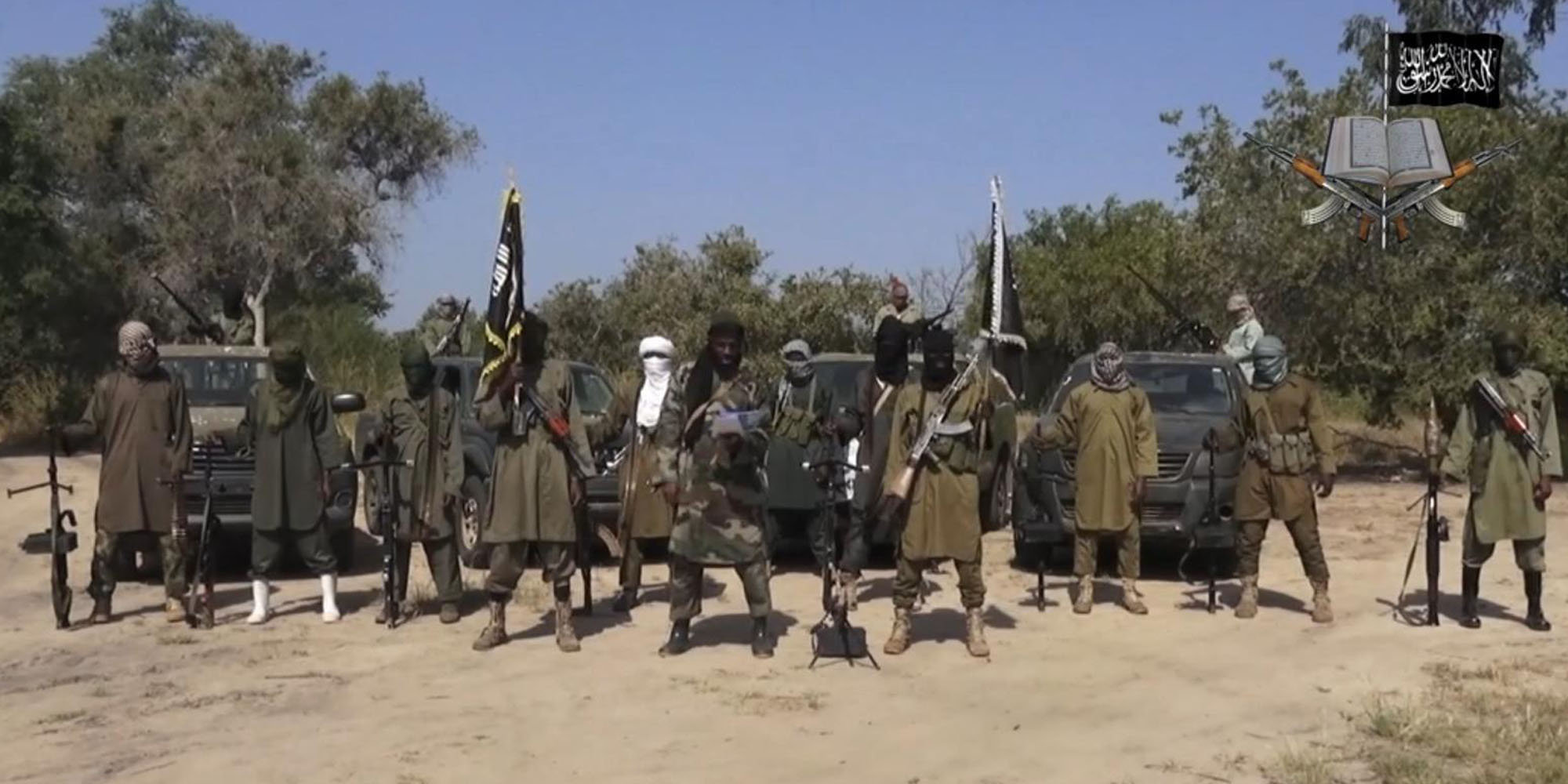
FILE - In his file image taken from video released late Friday evening, Oct. 31, 2014, by Boko Haram, Abubakar Shekau, centre, the leader of Nigeria's Islamic extremist group. Boko Haram fighters have shot or burned to death about 90 civilians and wounded 500 in ongoing fighting in a Cameroonian border town near Nigeria, officials in Cameroon said Thursday, Feb. 5, 2015. (AP Photo/Boko Haram,File)

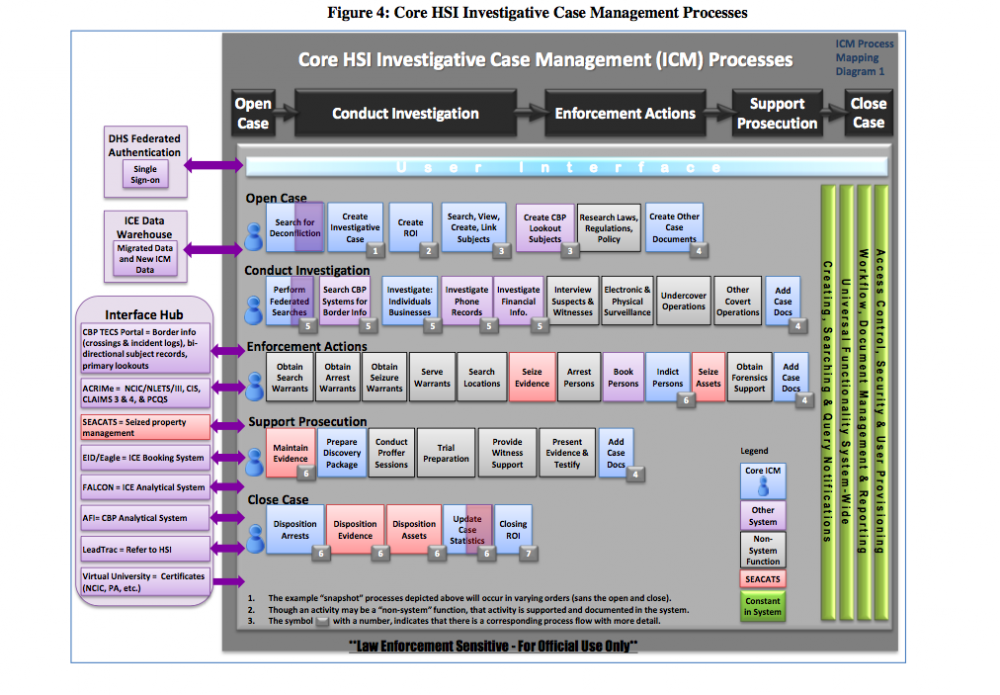
A new report from The Intercept details the new intelligence system called Investigative Case Management (ICM), built by Palantir, that is going live this fall and could assist Donald Trump’s efforts to deport millions of immigrants.  The system, developed through a $41m contract awarded in 2014, is designed to help ICE (Immigrations and Customs Enforcement) agents identify illegal immigrants by collating data from a half-dozen law enforcement databases.

By cross-referencing data from the FBI, ATF, DEA, and other entities, ICM can build a profile including a person’s job, background, schooling, relationships, address, criminal record, and other data. This can be used to drive mass deportations of illegal immigrants in U.S. President Trump has promised to do just that and one of the founders of Palantir, Peter Thiel, is a pal.

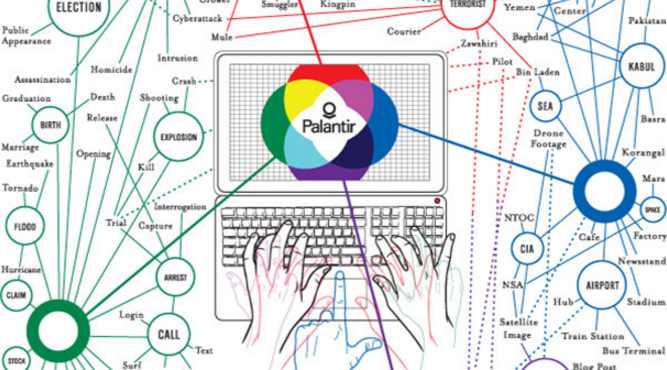
Palantir tech mesh

Why Nigeria needs better Intelligence

Nigeria is making progress on fighting Boko Haram. But it cannot afford to be like U.S. that won the war on Iraq but lost the battles with Iraqi people, making it possible for ISIS and other terror groups to blossom. Sustained intelligence is very critical:

Intelligence gathering refers to the process of collecting information relating to a particular organization or phenomenon based on a variety of information available within and outside the organization. Through intelligence gathering, a person may be able to forecast the future behavior or conduct of the organization in question as well as recommend alternative courses of actions in tackling future challenges. Governments and related security agencies such as armies or militaries and law enforcement agencies like the police usually use intelligence gathering to conduct researches on terrorist groups. Intelligence gathering entails collecting, reviewing and analyzing past and present information available about a particular organization or situation. Various techniques such as networking and mapping, imagery, observations and electronic communication can be used during intelligence gathering.

In relation to the Boko Haram group in Nigeria, the intelligence community may use intelligence gathering to collect information relating to the organizational structure, funding, operations and network or linkages of the group.

Nigeria Needs ICM Type of Solution

Palantir is a data-analytics company that does work for agencies like the NSA and the FBI. Nigeria needs an equivalent which can help the Police, SSS and other law enforcement agencies to be more effective in information gathering, analysis and application.

This solution must be innately Nigerian and cannot be an imported ICM (from Palantir) or any other foreign company. The Nigerian system will have an Analytical Framework for Intelligence engine, with capability to pull data from a host of national, state, and local law-enforcement databases to create profiles of individuals, including personal details, travel histories, and even social relationships. This can be modeled to detect patterns of behavior and stop the bad guys before they cause problems.

The National Assembly may need a new law to support building this solution in the country, if the existing law does not cover its creation.

ICE Interface

Who Can Build?

There are many startups in Nigeria that can help government build this solution. Government could use this as a vehicle to deepen the relationship between local companies and the state. A system that is organic and evolving can only be created by Nigerian companies.

The technology must be built with analytic heuristic capability to make sense of different data sets in varying formats. It needs three nexus – Fusion, Discovery and Knowledge Engine:

  • FUSION: Collates your data and transform into human understandable form
  • DISCOVERY: Searches your data to unlock patterns
  • KNOWLEDGE ENGINE: Provides insights from data

One company, Milonics Analytics, has components to make this work. There are other companies within CC Hub nexus that can step forward.

The fight against Boko Haram and terrorists can only be won with solid and refined intelligence. Nigeria needs that apparatus.

Rounding Up

Mr President is winning the physical fight against Boko Haram. The Administration needs to win the data fight. Building an ICM clone for Nigeria will be very critical in making sure the nation has the intelligence to have sustained success over terror today and in the future.

Nigerians comment on Prof CC Soludo’s “The Hard Facts To Rescue The Nigerian Economy” speech

0

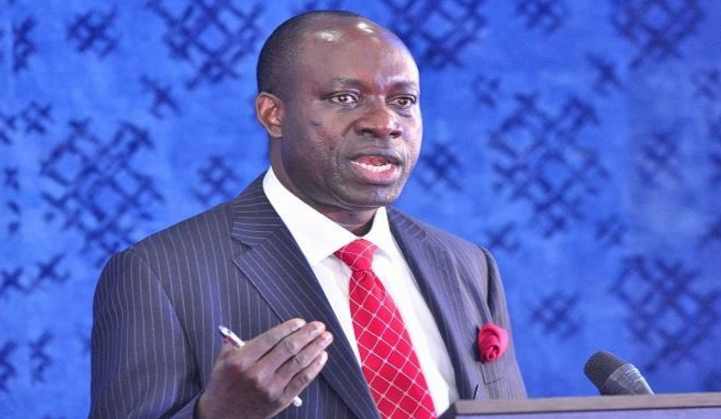
Whenever Prof CC Soludo, the former Central Bank of Nigeria governor, speaks, everyone listens. He is an eminent economist and one of the finest economic thinkers of his generation. Recently, in a program organized by the Vanguard, he brought that analytical vigor he has been known for years. Read his talk here.

Now the conversation is ON across the social media, on what he said, and meant for the recession-plagued nation – our Nigeria.

The Comments by Nigerians

We aggregate comments from Sahara Reports (here and here), Vanguard and other platforms.

  • Prof Soludo was not vocal during Jonathan Goodluck administration. Most accused him as being part of the “intellectual economy” with so many analyses and modeling but no action. Most Nigerians noted that Prof Soludo was part of the system in the past and barely built anything sustainable

This so-called “economic summit” was a sham. If you set up a Summitt and your keynote speaker is one of the perpetrators of the economic mess we find ourselves today, then the whole exercise is a fraud. Soludo should’ve been put on trial. Where did all the money go? What did you do to stop the greatest heist of a country’s wealth in human history? But, of course, Vanguard being a favorite mouthpiece for the Biafraudsters of the world, skews the reporting to fit their intentions. This was not an economic summit; it was a fraud.


The annoying thing about these so called economist and experts is that they had opportunities to move Nigeria forward but never did. They all looted and move down on leaving the economy and Nigeria worst than they met it.

  • He is speaking to power and many have branded him a Biafran.. “Any body that ever speak the truth to Buhari and his bankrupt clueless government is branded a biafran”. Yet, he has many supporters who appreciated his intellectual brilliance.

Soludo’s reasoning is higly realisitc. Arguabley most Nigerian professionals are simply a bunch of theorists. This one problem facing Nigeria. But Soludo is among the few who are very practical, able to translate theory into practice. At least many agree that when it was Soludo’s turn to serve, people saw the impact he made. No be small impact; real impact.


Soludo helped bring the economy down? Seriously? By his astute management of global economic headwinds that brought countries like USA, Uk and most of Europe to their knees between 2006 and 2008, Soludo cannot be faulted by an informed person, Nigeria was able to withstand the tsunami that pillaged most economies that period. This is notwithstanding the poor fiscal regime that prevailed that time. That we saw some measure of stability was down to his masterful application of monetary policy which is the turf of CBN. Introducing prejudice in discussing technical matters helps nobody.

  • The independence of CBN from the Presidency is a weak link and continues to affect the performance of any CBN governor in Nigeria. That will help explain the inaction and action of many governors of the bank.

The CBN was not independent of the FG for 90% of the time that Soludo was CBN governor. Soludo was heavily marked by OBJ who essentially directed and micro managed his workers. The year that the CBN under Soludo was given independence (during Yar Adua’s time) we know full well how the entire banking system nearly collapsed.

  • Nigerians want results and not analysis as many cannot understand all the analyses when nothing is working from one leader to another.

Mr Soludo, we have heard all the economic theories, Okonjo spent years saying similar craps but we are not in the lecture theatre, please suggest some practical solutions. You were the Governor of Central Bank, what did you actually do, Nigeria was not any good then

  • These past leaders have supporters and some Nigerians tend to appreciate,

Okonjo midwifed our economy into the largest in africa, GDP was growing at a rate of 3-5% year on year, FDI was increasing , Dollar was stable, and inflation was kept at a single digit.
Enter APC and clueless GMB, inflation is now 19%(its actually higher if you do the maths, it should be closer to about 50%), GDP is contracting year on year, Dollar exchnage rate has hit the roof, there are now at least 5 rates for FX in the country.

Its obvious APC and GMB have no idea of economics, but will continue to blame GEJ for the next 50 years if allowed.

Contrary to public opinion, Foreign reserves when GEJ left was higher than $25Billion, and considering that Ameachi took GEh and team to court to deplete both the foreign reserves and the ECA, that is to be expected. Especially taking into account that just before the 2015 elections, dollar was released to Fuel importers to clear a backlog of FX needed to import fuel into the country(i am sure you remember the fuel shortage then).

The problem is GMB has no economic idea, no economic policy, how will you explain a budget(2 years now infact) , where 100% of the capital expenditure was funded by loans? A budget 3 times higher than that when crude oil was at a high of $80-120, how will you explain a budget where GMB allocated 10 times what GEJ allocated to himself as feeding allowance?
Does that not reek to you of economic saboteuring?

Its not even like the budget increased to fund some heavy infratsuructure needs, we will have understood if that was the case.
But the budget increased bcos they need to fund and pay back their paymaster.
And so we r still left in a situation where our president after budgeting an hefty amount for aso rock clinic and shouting “Buy nigeria” is jetting out for any small illness.

Counter Proposal as Comments

One commenter proposed a new economic model with clear fiscal steps:

I just read this article and a number of things jumped out at me. 1. It concentrated on the state of the economy left by the PDP. It criticized the implementation of the TSA and macro economic monetary policy of the CBN (all points made by me over the years) and identified the worsening indices of the economic performance under the APC government. It also identified gaps in the recently released economic blue print of government. What it is lacking is any positive counter suggestions for the future that would aid economic regeneration. In a nutshell, it is a lot of hot air about failures of the past with no suggestion as to wise future actions.

My two cents for the government are as follows:

Fiscal steps:

1. Dispose of FG assets that require management of state run companies. It should only keep investments in those ventures that yield to it passive income without the burden of management (eg NLNG). This should reduce the govt wage bill and increase its net positive income.

2. It should change the constitution that allows states to exploit mineral resources within their states and keep 50% of the income derived therefrom. This will increase the income levels of all states and the income accruing to the FG. All states will be richer (some states will however be significantly richer than others). The Nigerian state will however by significantly richer. The solid minerals ministry cannot exploit, optimally, the resources found in 744 LGA. It lacks the manpower, resources, funding or staff to do that. The individual states will be able to do this much more efficiently.

3. The FG should significantly reduce the costs of government and if that means consolidating certain overlapping parastatals then so be it. Should there be an ICPC and EFCC?

4. Tax policies should be considered that gives tax advantages to business start-ups. That means reducing tax rates to banks, commercial landlords, etc that cater to small and start up businesses. Also give tax holidays to start – businesses in their first 5 years of operation.

5. Universities should be compelled to have courses that identify productive gaps in the Nigerian business market and train undergraduates on the benefits of self -employment.

6. Laws that make it difficult or expensive to start a new business should be looked at, addressed and repealed.

Monetary policy

1. Remove currency controls

2. Allow a managed floating rate of the Naira. Where the CBN has the resources to intervene then it should purchase Naira and sell dollars.

3. It should reduce interest rates and CRR rates. At the moment, the CBN should focus on growth and then address inflation by systematically reducing money supply in the economy as growth increases.

4. Encourage commercial banks to redirect lending to the small business sector and to the solid minerals industry sector.


Rounding Up

Nigeria needs DO-Tanks and not THINK-Tanks. We have so many analyses with no action. Soludo has served his country and he has rights to his comments. We do hope that those holding the different government positions are listening. It is not all that he says that must be taken into considerations. They have to balance his insights and do what is best for Nigeria today.

Our problem is that we do not have many great business leaders. Imagine if we can make 20 each of Dangotes, Elumelus, and Ovias within a decade. That is the economic thesis anyone will believe because that is practice in action.