DD
MM
YYYY

PAGES

DD
MM
YYYY

spot_img

PAGES

Home Blog Page 7461

Success in every modern business means playing at a global level

0

In my quest to understand more about life and growth cycles of business, I have been told more than once that every business operates either on a local, national or global level and that every entrepreneur has to decide very early in business which level he can comfortably operate on.

I was made to believe that business often start as small or medium enterprises and then grow into being large local or multinational companies. Armed with this knowledge, i found that i naturally began to categorize businesses into these three tiers with absolute size as my only criteria.

Global operations were the exclusive preserve of multinational companies while small businesses were left to offer the same services on a local and smaller scale.

While this theory sounds logical and possibly realistic, the operations of small and mono-national businesses in China and India over the past few years have changed the landscape of business as we know it in Sub-Saharan Africa (SSA).

How else would you explain the fact that the capacity to manufacture ‘cheap’ Marquee tents in China or India totally annihilated the highly lucrative canopy business in Nigeria?. This means that the activities of small businesses in China or India can provide growth opportunities or wipe out an equally small business in any country in Sub-Saharan Africa.

So much for local, national or global business, every business is playing on a global level!

Advancement in technology and the ever increasing availability of information has made it easier to carry out cross-border business relationships over the past few years.

In fact, many businesses thrive on trans-continental exchange of products, ideas and technical expertise. globalization has literally transformed the landscape of business all over the world.

Globalization goes far beyond a Harvey Nichols outlet in the middle of a city-centre in Dubai or the ease with which you can receive technical help on a malfunctioning product manufactured in Indonesia.

It means that access to the capacity and savings of advanced countries has improved drastically and for someone like me who lives in a country with an import dependent, consumer economy, the opportunities are boundless.

As a strategist, i know very well that the difference between people who harness exceptional business opportunities is often the availability of information and the ability to take advantage of opportunities within and far away from their operating environment.

Every business is playing on a global level! so my advice to entrepreneurs is simple; travel extensively. Do not restrict your travel to popular vacation spots. Be determined to see the world and discover new business opportunities everywhere you go or else, Ignorance will sooner or later see you out of business entirely. It is not a tenable excuse for failure.

Uncharted territories are reserved for the bold. Do not be afraid to test your findings and apply them into your business operations and environment.

The fear of failure is often worse than failure itself. Besides, failure is just a negative result. It does not define you as an entrepreneur.

by Oneal Lajuwomi.

Oneal is the MD/CEO & Founder at Wavelength Integrated Power Services
Epileptic Electricity Supply – Energy Insecurity in Nigeria, a Time Bomb Waiting to Explode!

0

The International Energy Agency (IEA) defines energy security as “the uninterrupted availability of energy sources at an affordable price. Energy security has many aspects: long-term energy security mainly deals with timely investments to supply energy in line with economic developments and environmental needs. On the other hand, short-term energy security focuses on the ability of the energy system to react promptly to sudden changes in the supply-demand balance.” Source www.iea.org

The future of Nigeria is bright, indeed I really think it is but alas, the bright future is seemingly becoming elusive.

Nigeria is blessed with abundant natural resources, arable land and a teeming young population. The Nigerian economy is mono-cultural, the economy has lived off and depended on oil and gas for survival since time immemorial. This has proved unsustainable with the falling crude oil price and decrease in demand for fossil fuel around the world.

Nigeria has been caught in her own web of uncertainty due to various policy somersaults over time and kleptomaniac leaders holding sway in Government.

The larger part of Nigeria’s revenue of about 80% is derived from oil and gas, 90% of oil and gas makes up the country’s exports while 90% of the country’s foreign exchange earnings is also from oil and gas.

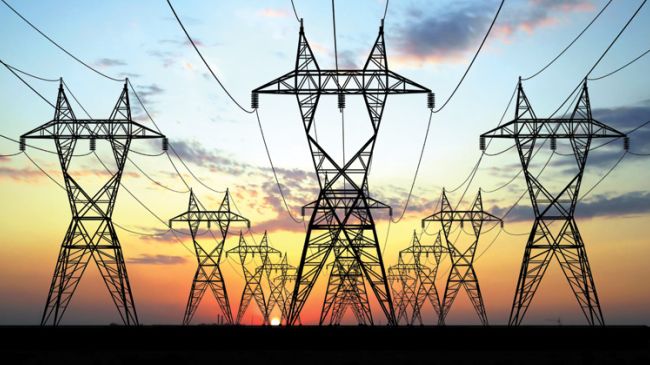
Electricity in Nigeria is heavily dependent on oil and gas, 64% of the country’s power generation is derived from gas-power plants – A TIME BOMB WAITING TO EXPLODE.

Energy security – availability plays a major role in growing and sustaining world economies, most leading economies are constantly improving on more reliable sources of energy particularly for electricity.

Nigeria is endowed with an annual average daily sunshine of 6.25 hours ranging between 3.5 hours at the coastal region and 9.0 hours in the northern region. Nigeria receives about 5.08 x 10¹² kWh of energy per day from the sun and if solar energy appliances with just 5% efficiency are used to cover only 1% of the country’s surface area, then 2.54 x 10 6 MWh of electrical energy can be obtained from solar energy and this amount of electrical energy is equivalent to 4.66 million barrels of oil per day. There is a greater accessibility and availability of solar energy for Nigeria to develop her solar energy technology.

Nigeria also has enormous hydro-electricity potentials with seven river basins in the country, namely Sokoto, River Niger, Hadejia-Jama’re, Chad, Upper Benue, Lower Benue and Cross River with small scale hydropower potentials estimated to be about 734.2 MW.

Power Holding Company of Nigeria (PHCN) estimated that Nigeria’s hydro potential currently stands at 12,220 MW.

The future of Nigeria can indeed be bright if the abundant available renewable energy resources is harnessed. Nigeria has the potential to make available abundant electricity to her populace and also export electricity to neighboring countries.

According to the World Bank census bureau (2013), Nigeria has a population of 173.6 million. It is no news that epileptic electricity supply has bedeviled Nigeria for years with the highest peak electricity supply of 5,074 MW recorded in February, 2016. it’s a drop in the ocean compared to South Africa which produces about 40,000 MW electricity for a population of 52.98 million.

It is not rocket science that attaining energy security lies in the ability to diversify the sources of electricity. Nigeria has only two sources of electricity generation namely gas-power and hydro.

According to the new aggregated power poll result released by NOIP polls in January 2017, the report shows a downward trend of electricity supply with the lowest supply of 27% public grid electricity in December 2016 recorded.

With the drop in water level of hydropower dams (Kainji, Shiroro and Jebba) in the dry season and the incessant unrest of the Niger delta where bombings of oil and gas installations appears to be a recurrent threat to gas – power plants, the energy insecurity in Nigeria is so glaring and a TIME BOMB WAITING TO EXPLODE – and if does, the country may someday be subjected to total collapse of public grid availability.

To detonate the TIME BOMB WAITING TO EXPLODE, Nigeria needs to seriously start to formulate and put into immediate practice diversified sources and supply of electricity for the nations survival.

Solar in the north, small hydro in the north, south, east and west, clean coal in the east and so forth. With effective energy policies enacted by the government, investments will be attracted for the development of various energy mix which will in-turn secure energy security for the nation.

by Oneal Lajuwomi.

Oneal is the MD/CEO & Founder at Wavelength Integrated Power Services

Looking for a Job, Try This Nice One Immediately

0

We are looking for paid professionals across African cities  in our team. This is to assist the enrollment of learners in our online cybersecurity business, First Atlantic Cybersecurity Institute (Facyber).

About the Job
First Atlantic Cybersecurity Institute (Facyber) is a cybersecurity training, consulting and research company specializing in all areas of cybersecurity including Cybersecurity Policy, Management, Technology, Intelligence and Digital Forensics.  The clientele base covers universities, polytechnics, colleges of education, governments, government labs and agencies, businesses, civil organizations, and individuals. Specifically, the online courses are designed for the needs of learners of any discipline or field (CS, Engineering, Law, Policy, Business, etc) with the components covering policy, management, and technology. Please see complete Facyber curricula here.

The programs are structured thus:

  • Certificate Program (Online 12 weeks)
  • Diploma Program (Online 12 weeks)
  • Nanodegree Program (Live 1 week)

The purpose of a paid professional is to promote Facyber training programs in the respective cities. The incumbent will coordinate the enrollment of learners in his/her city and beyond. When necessary, the incumbent will help coordinate cybersecurity and digital forensics seminars/workshops in the city.

Qualifications include:
•         No sales experience needed
•         Tech-savvy with strong presence in social media
•         Relationship development skills a must. You must be self-driven . We want people with good networks in  their cities.

Qualified applicants are encouraged to send an intent email (add a short CV please) to info@facyber.com.

Please spread the word.

Complete Winners in African Startup of the Year Event in Morocco by Bonjour Idee

0

Bonjour Idée, the collaborative magazine of start-ups and the OCP Group held the first African edition of the African start-up contest of the year “Startup of the year / Africa 2017”  on Jan 26, 2017. On the multitude of start-ups that have applied for this award, the jury has decided to take over ThinVoid from Uganda.

The task was not easy for the jury of the first edition of the “Startup of the year / Africa 2017” which had chosen a start-up on the multitude of registered applications. But ThinVoid (Uganda), co-founded by Joseph Kaizzi, attracted the attention of the majority of the jury members who awarded it the start-up prize of the year.

ThinVoid provides a service that promotes the financial inclusion of unbanked professionals in the transportation and agriculture sectors. An innovative solution in a country where the rate of banking is still low and where the products offered by the traditional financial systems are unsustainable for the poorest populations.

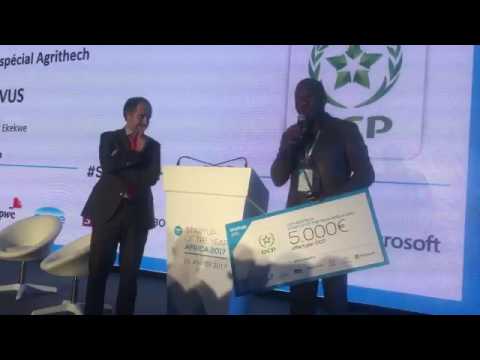
At the same time, the Agritech OCP Special Prize was won by the start-up Zenvus. The Nigerian startup was founded by Dr. Ndubuisi Ekekwe and presented as an intelligent solution for farms that uses electronic sensors to collect soil data on moisture, nutrients and temperature. This helps to tell farmers on what, when and how to farm.

The winner of the jury prize was awarded to the Guinean start-up, Fapel Guinee. A company specializing in the manufacture and marketing of reciprocating, domestic and irrigation reciprocating pumps.

There is no lack of ideas on a developing continent

Thus, African youth continues to prove themselves. Solutions are proposed to solve the problems facing the people of the continent.

Thus, this edition has seen the Audience Prize awarded to Mahazava (Madagascar). Founded by Christian Randriam, Mahazava is a start-up that finances, distributes and ensures the follow-up of solar kits in Madagascar.

The start-up Trustin Africa (France), founded by Thibaud Leclerc and Etienne Morne whose objective is to accompany companies on the African continent or in the pursuit of their establishment, mainly in West and Central Africa, connecting them with the young local talents, won the Special price destination Africa SNCF.

Similarly, EthicPhone, founded by Mouhamed Diakité and proposing a solution that makes it possible to call, to transfer money to Africa, to make purchases from a mobile phone and to invest in African SMEs, won the African Diaspora Special Prize from Microsoft.

Notes On Strategy; What Can We Learn From Religious Leaders About Building Early-Stage Startup Culture?

0

Alternative Working Title: Notes On Strategy; Engineering Your Early Stage Startup’s Culture For Longevity

The topic of culture has been in the news quite a bit since the New York Times published an investigative piece describing what it is like to work for Amazon. While culture is something I think about all the time, that article got me thinking about religion and culture . . . and how that relates to the early stage startups in which we invest.

In this post I plan to:

  1. Examine what we mean when we say “culture” and tie that to the work that startup founding teams do during business model search and discovery.
  2. Examine the structural characteristics of religious communities; How do they maintain a sense of purpose, direction, and elicit devotion and commitment from members of the community?
  3. Provide some pointers about how first-time startup founders might get things off on the right footing as far as culture is concerned by making certain deliberate choices early in the lifecycle of their startup.

I am thinking specifically of startups raising their first institutional round from seed stage venture capitalists, or perhaps a Series A round of financing. These teams are usually small, often fewer than 10 people.

To get things started; What is Culture?

Culture is the learned and shared behavior of a community of people which distinguishes that community from other communities.1

Some of the things that distinguish a culture:2

  1. It embodies a way of life, an approach to thinking, feeling, and believing about the world.
  2. It endows the members of the cultural community with a social legacy from prior members of the same community.
  3. It provides a framework that enables members of the community to think abstractly about how they should behave;
    1. It provides lessons about how members of the community should react towards recurring problems by pooling the collective wisdom of past and present members of the community.
    2. It provides a guide for community members when they need to interact with the external environment.
  4. It is the process by which the history of the community is created and brought into permanent existence.

In this analysis I am most interested in religion as a cultural system.

According to Clifford Geertz religion is:3

  1. A system of symbols which acts to
  2. Establish powerful, pervasive, and long-lasting moods and motivations in people by
  3. Formulating conceptions of a general order of existence and
  4. Clothing these moods and motivations with such an aura of factuality that
  5. The moods and motivations seem uniquely realistic.

It is not difficult to see that a religion is in fact a specific type of culture and further, that every cultures is a kind of religion. In the rest of this post I will use the term “religion” and “culture” interchangeably. I also assume that a symbol may be tangible or intangible.

The structural characteristics of a religion are:4

  1. A religion inhabits a unique world: Religions create, structure and propose a universe that is unique to adherents of that religion such that members of the community can explain, make sense of, and differentiate what is within their world from what is outside their world. This helps establish lines of commonality as well as lines of difference, and helps confront change and challenges.
  2. A religion is grounded on certain myths: Every religion possesses sacred myths that tell a story about something that happened during the genesis of the religion and that continues to have great influence on contemporary realities experienced by adherents of the religion. Myths:
    1. Help devotees of a religion make sense of the past, the present, and the future.
    2. Are a powerful means of engendering a certain mood and attitude within the devotees of a religion.
    3. Focus our attention on that which is sacred and important within a religion.
  3. A religion possesses rituals: Rituals help to focus the devotees of a religion on specific concepts or ideas at a specific point in time, also rituals enable the adherents of a religion to express their beliefs about the world in the form of a tangible display that appeals to the senses through action.
  4. A religion possesses gods: In the context of religious worlds, gods represent instances of language and behavior that is held up by the religious community as exemplary, worthy of emulation, and possessing interpretive power in terms of how that community understands the world.
  5. A religion possesses systems of purity: These systems of purity help to differentiate what is acceptable from what is unacceptable, right behavior from wrong behavior. This is a system that enables members of the community deal with negativity within the community.

What role do symbols play within a culture?

  1. Anat Rafaeli and Monica Worline: Symbols in Organizational Culture – A symbol is a visible and physical manifestation of an organization. It is an indication of organizational life that derives its meaning from the social and cultural conventions and interactions among the people who belong to the cultural organization. Symbols can be experienced through the senses. Symbols play the following functions:
    1. They reflect organizational culture: Symbols communicate information about what we think we know about an organization. They act as a bridge between our emotional and cognitive responses towards an organization.
    2. They trigger internalized values and norms: Symbols serve as a cue to trigger certain expected, desired, and acceptable behaviors once a person enters the physical environment of an organization or whenever the person is acting explicitly as a representative of the organization to the outside world.
    3. They frame conversations about experience: Symbols act as a frame of reference for guiding the communication that takes place between members of the same organization, or between members of a specific organization with people who do not belong to that organization.
    4. They integrate organizational systems of meaning: Symbols integrate the culture, norms and values, and shared experiences of members of an organization into a coherent whole within which members of the organization experience the world.
  2. Sherry Ortner: On Key Symbols – A key symbol is an element of a culture that is crucial and distinctly unique to the organization of that culture. They perform the function of carrying and conveying cultural meaning to people within the culture as well as to people outside the cultural community. Key symbols might be identified when:
    1. Members of the cultural group discuss the symbol’s cultural significance,
    2. Members of the cultural group are positively or negatively aroused by the symbol, and none are indifferent towards it,
    3. The symbol appears in many different settings and contexts,
    4. There is much elaboration around the symbol, and
    5. The group imposes numerous restrictions around the symbol. For example, misuse of the symbol can incur severe sanctions.

There are two distinct categories of key symbols. Summarizing symbols express meaning in an emotionally powerful way that is of uniform significance for all members of a given culture. They are generally accorded sacred status. Elaborating symbols make it possible for members of the religion or community to communicate ideas and feelings with one another, and to translate such feelings and ideas into tangible action. Elaborating symbols are generally analytic in nature and rarely attain sacred status.

What does this mean in the context of building an early-stage startup?

  1. Communicate a clear world view internally and externally. One question I ask myself when I meet with a founder is this; Why is this specific person uniquely suited to solve this problem in this market and why do I believe this team will succeed in its effort to accomplish this incredibly difficult task?
  2. Preserve and embellish important stories, particularly those that reflect qualities and themes that the founder wants to become aspects of the startup’s long-term culture and identity. I listen for founders who express enthusiasm for the work that the other people on the team are doing. Team cohesiveness matters.
  3. Create and maintain rituals:  For example, does every team member understand what would get existing customers/users to become more engaged with the product, and reduce churn? Does every team member know what needs to happen for the startup to increase its growth enough to get to the next funding milestone? Does the founder have a firm grasp on the startups key performance indicators? Has the team chosen the right indicators to focus on at this stage?
  4. Focus on finding product/market fit: A startup that fails to find product/market fit is doomed. Are the founders experimenting enough to find an ideal early market for the product, or are they stuck in a cycle of dogma regarding an initial point of market entry? What indications are there to help me ascertain the quality of their decision-making processes?
  5. Create systems of accountability: At the very early stage of a startup’s life the individuals on the team have an enormous impact on the organizational culture that eventually evolves. What steps are the founders taking to ensure that the early team has the right mix of people?
  6. Create a sales and marketing plan: What steps is the startup taking to create strong bonds with its earliest customers/users? Is anything being done to create a brand? Are the choices that have been made so far cost-effective and appropriate for the startup’s stage of maturity and its funding status?

Closing Thoughts The job of an early-stage technology startup founder is basically akin to that of a religious evangelist. The founder must recruit believers. Early team members join the cause because they believe in the founder and in the vision that the founder wishes to bring into reality. Early customers become believers because they have a problem they believe the startup’s envisioned product can solve. Early investors join the cause because they believe in the founder and believe that the startup can create the future reality that it describes during investment pitches. Basically, at the outset . . . Building a startup is exactly the same as creating a new religion.


  1. J. Useem and R. Useem. (1963). Human Organizations, 22(3). Page 169. See: The Center for Advanced Research on Language Acquisition (CARLA) “What is Culture?” http://www.carla.umn.edu/culture/definitions.html. Accessed Aug 29, 2015. ?
  2. Adapted from: Richard-Hooker.com; Clifford Geertz, Emphasizing Interpretation ?
  3. Clifford Geertz, Religion As A Cultural System. In: The Interpretation of Cultures: Selected Essays. Pp. 87 – 125. Fontana Press, 1993. ?
  4. William E. Paden, Religious Worlds: The Comparative Study of Religion. 2nd edition. Pp. 51 – 161. Beacon Press, 1994. ?