DD
MM
YYYY

PAGES

DD
MM
YYYY

spot_img

PAGES

Home Blog Page 7469

Industry Study: Nanotechnology

0
SUNY College of Nanoscale Science and Engineering's Michael Liehr, left, and IBM's Bala Haranand look at wafer comprised of 7nm chips on Thursday, July 2, 2015, in a NFX clean room Albany. Several 7nm chips at SUNY Poly CNSE on Thursday in Albany. (Darryl Bautista/Feature Photo Service for IBM)

Note 1: This is an update of an article that I wrote on a whim in December 2006, while I was on a break from business school at NYU Stern. It was published without update at Tekedia in July, 2011. The announcement by IBM about its new 7nm chip prompted me to dig it up from my archives and update it to reflect more recent developments.

Note 2: KEC Ventures does not specifically invest in nanotech startups, although in the past we have examined startups developing quantum crystals and other nanomaterials.

Introduction

I became exposed to nanotechnology during my days as an undergraduate student at Connecticut College, in New London, Connecticut. I pursued a double major in Physics and Mathematics, and had the good fortune of working as a research laboratory assistant in the Tunable Semiconductor Diode-Laser Spectroscopy lab, which was run by Professor Arlan W. Mantz, Oakes Ames Professor of Physics, and erstwhile chair of the Physics Department. My involvement with the lab spanned three years, and that experience played a critical role in my education.1

What Is It?

The term nanotechnology refers to a group of scientific processes that enable products to be manufactured by the manipulation of matter at the molecular level – at the nanoscale. One nanometer represents a length of 10-9 meters – one billionth of a meter.2 Nanotechnology enables the manipulation of matter at or below dimensions of 100 nanometers. Nanotechnology draws from a multitude of scientific disciplines – physics, chemistry, materials science, computer science, biology, electrical engineering, environmental science, radiology and other areas of applied science and technology.

There are two major approaches to manufacturing at the nanoscale;

  • In the “bottom-up” approach, nanoscale materials and devices assemble themselves from molecular components through molecular recognition – small devices are assembled from small components.
  • In the “top-down” approach materials and devices are developed without the manipulation of individual molecules – small devices are assembled from larger components.

Where is Activity Concentrated?

Research into nanotechnology and its applications is growing rapidly around the world, and many emerging market economies are sparing no effort in developing their own research capacity in nanotechnology.

  • Naturally, the U.S., Japan, Western Europe, Australia and Canada hold an advantage, in the short term.
  • China and India have made significant progress in establishing a foundation on which to build further capability in nanotechnology – A 2004 listing puts them among the top 10 nations worldwide for peer-reviewed articles in nanotechnology.3
  • South Africa, Chile, Mexico, Argentina, The Philippines, Thailand, Taiwan, The Czech Republic, Costa Rica, Romania, Russia and Saudi Arabia have each committed relatively significant resources to developing self-sufficient local nanotechnology industries.

Why Should Investors Care?

Fundamentally, investors should pay attention to nanotechnology because of its high potential to spawn numerous “disruptive technologies.” Nanoscale materials and devices promise to be;

  • Cheaper to produce,
  • Higher performing,
  • Longer lasting, and
  • More convenient to use in a broad array of applications.

This means that processes that fail to provide results comparable to those available through nanotechnology will become obsolete rather quickly, once an alternative nanoscale process has been perfected. In addition, companies that fail to embrace and apply nanotechnology could face rapid decline if their competitors adopt the technology successfully.

The United States Government has maintained its commitment to fostering U.S. leadership and dominance in the emerging fields of nanoscale science. In its 2006 budget, the National Nanotechnology Initiative, a multi-agency U.S. Government program, requested $1.05 Billion for nanotechnology R&D across the Federal Government.4 That amount reflects an increase from the $464 Million spent on nanotechnology by the Federal Government in 2001.

Applications of Nanotechnology

Nanotechnology’s promise to revolutionize the world we live in spans almost every aspect of human endeavor. Today, nanotechnology is applied in as many as 800 commercial products.5

  • IBM’s new chip “could result in the ability to place more than 20 billion tiny switches – transistors – on the fingernail-sized chips that power everything from smartphones to spacecraft. To achieve the higher performance, lower power and scaling benefits promised by 7nm technology, researchers had to bypass conventional semiconductor manufacturing approaches. Among the novel processes and techniques pioneered by the IBM Research alliance were a number of industry-first innovations, most notably Silicon Germanium (SiGe) channel transistors and Extreme Ultraviolet (EUV) lithography integration at multiple levels.”6
  • Carbon nanotubes and other nanomaterial additives can be used to fabricate stronger, lighter materials for use in automobile bodies, helmets, sports equipment and other products in which stiffness and durability are important features.
  • Researchers at Stanford University have killed cancer cells using heated nanotubes, while EndoBionics, a US firm, developed the MicroSyringe for injecting drugs into the heart. MagForce Technologies, a Berlin based company developed iron-oxide particles that it coats with a compound that is a nutrient for tumor cells. Once the tumor cells ingest these particles, an external magnetic field causes the iron-oxide particles to vibrate rapidly. The vibrations kill the tumor cells, which the body then eliminates naturally. Other applications in medicine and biotechnology exist.
  • Cosmetics companies are actively engaged in the exploration of nanotechnology as a source of enhanced products. For example, to produce cosmetics that can be absorbed more easily through human skin and that exhibit longer lasting properties.
  • Thebreakthrough by IBM will only acceleratethe development ofnanoscale technologies for computing platforms. According to the National Nanotechnology Initiative:”Nanotechnology is already in use in many computing, communications, and other electronics applications toprovide faster, smaller, and more portable systems that can manage and store larger and larger amounts of information. These continuously evolving applications include:
    • Nanoscale transistors that are faster, more powerful, and increasingly energy-efficient; soon your computer’s entire memory may be stored on a single tiny chip.
    • Magnetic random access memory (MRAM) enabled by nanometer?scale magnetic tunnel junctions that can quickly and effectively save even encrypted data during a system shutdown or crash, enable resume?play features, and gather vehicle accident data.
    • Displays for many new TVs, laptop computers, cell phones, digital cameras, and other devices incorporate nanostructured polymer films known as organic light-emitting diodes, or OLEDs. OLED screens offer brighter images in a flat format, as well as wider viewing angles, lighter weight, better picture density, lower power consumption, and longer lifetimes.
    • Other computing and electronic products include Flash memory chips for iPod nanos; ultraresponsive hearing aids; antimicrobial/antibacterial coatings on mouse/keyboard/cell phone casings; conductive inks for printed electronics for RFID/smart cards/smart packaging; more life-like video games; and flexible displays for e-book readers.”
  • Nanotechnology is applied in the garment industry to produce stain resistant fabrics, for example.
  • Nanotechnology companies in the developing world are pursuing solutions to problems peculiar to the developing world – for example, an Indian company is working on a prototype kit for diagnosing tuberculosis. There is great potential for the application of nanotechnology to agriculture.

A more complete listing of the benefits and applications of nanotechnology is available here: US National Nanotechnology Initiative

Threats

In spite of its promise, nanotechnology faces threats that could investors ought to be aware of. Among these;

  • It is not yet clear how nanotechnology will affect the health of workers in industries in which it is applied. For example, how should we assess exposure to nanomaterials? How should we measure the toxicity of nanomaterials?
  • Public agencies and private organizations do not have a clear sense of how further progress in nanotechnology will affect the environment, or of the public safety issues that will accompany an expanded use of nanotechnology in industrial, medical and consumer applications. For example, what factors should risk-focused research be based on, and how should we go about creating prediction models to gauge the potential impact of nanomaterials?
  • The complexity of the science that is integral to nanotechnology makes it a very difficult area to regulate. It is likely that firms involved in the pursuit of nanoscale applications in medicine and pharmaceutics will face long delays in obtaining regulatory approval for the wide scale use of their products.
  • The complexity of nanotech-related patents could lead to delays in obtaining intellectual property protection for nanotech-enabled products.
  • It is not yet clear how society can protect itself from the abuse of nanotechnology. The public sector needs to collaborate with the private sector in developing protective mechanisms to guard against “accidents and abuses” of the capabilities of nanoscale processes and materials.

A Note To Would-Be Investors

The average investor must remain keenly aware that firms involved in nanotechnology will have to assign significant resources to research and development. There is no reliable means of predicting the ultimate outcome of such activities, and the probability that any firm can maintain an enduring edge over its competitors is small. Investors should expect the mantle of leadership in innovation to change with a relatively high frequency. As such, pure-play nanotechnology firms will need to pay critical attention to means of sustaining market dominance that go beyond core competence in the science of nanotechnology.

Lux Research estimates that revenues from products using nanotechnology will increase from $13 Billion in 2004 to $2.6 Trillion in 2014. The 2014 estimate represents approximately 15% of global manufacturing output.7

In 2005, Lux Research and PowerShares Capital Management launched a nanotech ETF – The PowerShares Lux Nanotech Portfolio (PXN). In addition, Lux Research measures the performance of publicly traded companies in the area of nanotechnology through the Lux Nanotech IndexTM, a modified equal dollar weighted index of 26 companies. The companies in this index earn profits by utilizing nanotechnology at various stages of a nanotechnology value chain;8

  • Nanotools – Hardware and Software used to manipulate matter at the nanoscale.
  • Nanomaterials – Nanoscale structures in an unprocessed state.
  • Nanointermediates – Intermediate products that exhibit the features of matter at the nanoscale.
  • Nano-enabled Products – Finished goods that incorporate nanotechnology.

Companies in the index are further classified as

  • Nanotech Specialists, or
  • End-Use Incumbents.

Investors must note that the investment characteristics of Nanotech Specialists are likely to differ markedly from those of End-Use Incumbents. The end-use incumbents that are part of this index include 3M, GE, Toyota, IBM, Intel Hewlett-Packard, BASF, Du Pont, and Air Products & Chemicals. Because these companies have large, well-established and significant operations in arenas that do not rely heavily on nanotechnology, investors can expect them to achieve financial results that are only moderately volatile. In contrast the financial performance of nanotech specialists will exhibit highly volatile swings, because;

  • With the exception of companies in the “picks and shovels” segment of nanotechnology, much of the work that many nanotech specialists engage in is still in the “trial and error” phase, and
  • There is no reliable means of predicting the results that heavy investment in R&D will yield.

Finally, it is likely that financial valuations of nanotech firms will fail to capture the true value of the intangible assets that provide the bedrock of each company’s ability to sustain innovation, create economic value, and protect its competitive advantage. If nanotechnology is truly the way of the future, then investors must embrace that future with enthusiasm that is layered with caution by;

  • Performing an extra amount of due diligence before committing significant funds to investments in individual nanotechnology companies,
  • Limiting such investments to companies in the U.S., Japan, Canada, Western Europe, and Australia, in the near term, and
  • Following developments in the nanotechnology initiatives of the BRIC block of emerging market economies without committing any funds until a clear assessment of the future prospects of individual investment opportunities becomes possible.

Individual investors must exercise an extra amount of caution in pursuing nanotech investments, and should not commit more than they can afford to lose. Most individual investors with a desire to invest in nanotechnology should do so through PXN and similar instruments. Institutional investors must bring all their resources to bear in assessing the viability of a nanotech investment strategy prior to committing funds to this nascent area. For added security, individual investors that seek to invest in publicly traded nanotech companies should seek firms with the following characteristics;

  • No debt, and positive cash flows, and evidence of an ability to sustain profits.
  • Companies that supply corporate customers must not be too reliant on one customer.

Founders and insiders should have a significant and increasing portion of their net worth at stake in the company, and a track record in multi-disciplinary research.

In a Feb 2014 State of The Market Report update, Lux Research says “Our expanded forecast for nano-enabled products reveals the global value of nano-enabled products, nano-intermediates, and nanomaterials reaching $4.4 trillion by 2018.”

Closing Thoughts

Many risks accompany investments in nanotechnology. However, if nanotech is to be believed, it may yield significant long-term returns to those investors that learn to harness its power while keeping the following caveats in mind;

  • Many nanotech companies face an up-hill task in converting promising research into products that can sustain a steady revenue stream.
  • A considerable number of nanotech companies may be surrounded by “more hype than substance”.
  • There is no guarantee that the price investors pay for an investment in nanotech will be adequate, once all associated risks are taken into account.


  1. Let me know if you feel I have failed to attribute something appropriately. Tell me how to fix the error, and I will do so. I regret any mistakes in quoting from my sources. ?
  2. For perspective, 100nm represents about 1000-1 of the width of a human hair. ?
  3. Hassan, Mohamed H. A., Small Things and Big Changes in The Developing World. Science,Vol. 309 no. 5751, Jul 1 2005, accessed on Dec 19, 2006 at http://www.sciencemag.org/cgi/content/full/309/5731/65 ?
  4. The National Nanotechnology Initiative, Research and Development Leading To A Revolution in Technology and Industry, Supplement to The Presidents FY 2006 Budget ?
  5. National Nanotechnology Initiative, accessed online on Jul 12, 2015. ?
  6. See the announcement from IBM. Accessed online on Jul 12, 2015. ?
  7. Gosh, Palash R, How To Invest In Nanotech, www.businessweek.com, Apr 17, 2006. Accessed on Dec 22, 2006. ?
  8. Adapted from www.luxresearchinc.com ?

A Story About Startup Cofounder Teamwork: Climbing To The Summit of Denali

0
OLYMPUS DIGITAL CAMERA

Denali  Image Credit: NPS Photo/Tim Rains

Denali
Image Credit: NPS Photo/Tim Rains

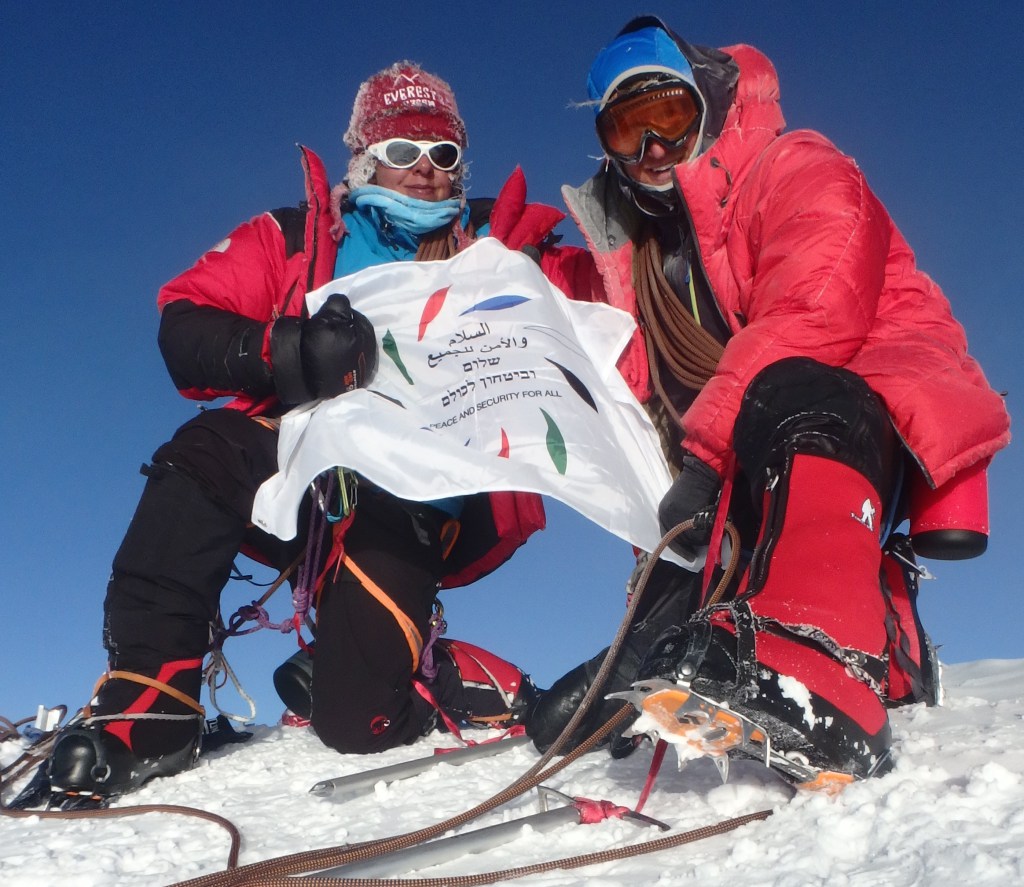
On June 30th, 2015, Naira Musallam and her climbing partner, Tim Lawton successfully summited Denali (Mount McKinley). They made history as The First Arab-American Team to ever do so. Naira also became the first Arab woman to stand on the summit of Denali.

Standing at 20,320 feet, Denali is one of the “Seven Summits” because it is the highest point on the continent of North America. From that point Naira and Tim raised a flag with the message “Peace and Security for All” written in Arabic, Hebrew, and English.

I checked my email around 8:00 AM EST in NYC after arriving at work on Tuesday, July 7th 2015, and found a note from Naira telling me the good news. She had sent it at 6:51 AM. I wrote back to congratulate her, and asked if I could write about their story. She and Tim graciously said yes.

This is their story. It highlights everything I discussed in Innovation Footprints: 6 Things I Have Learned About Building High-Performing Teams.

Naira Musallam and Tim Lawton at the summit of Denali on June 30th, 2015. (Image Credit: Naira and Tim)

I met Naira on Thursday, October 9th 2014 when I was at NYU’s Leslie eLab to lead a lunch and learn. I had arrived early, to give myself some time to work through my nerves – I get super nervous about speaking in front of groups of people.

Naira was the first person to arrive. She came, said hello, and introduced herself. I introduced myself, and asked if she was an undergraduate student, what year she was in, what major she was studying . . . She smiled at me and explained she’s a professor at NYU, and she teaches statistics. Oh, lest I forget. She also mentioned that she “climbs mountains as a hobby” and “runs long distance, as a hobby.”

I thought to myself; “Great! It really would have been helpful if someone had warned me that I’d have professors in the audience! Never mind mathematicians who climb mountains and run long distance races . . . as a hobby.”

So much for calming my nerves. It seemed to me that her arrival was timed to optimize the intimidation factor. Any way, the talk went well – or, so she says. To my great “horror” there are excerpts on video which you can check out here, here, here and here. After the event, I chatted briefly with Naira again and we agreed to meet for coffee. She wanted to pick my brains about something she was working on. Since I have never met a mathematician or physicist I do not like, I said yes. What could be better than chatting with a mathematician?

We met again on November 26th, 2014 at Cafe Reggio near NYU. After spending some time getting to know one another from a biographical standpoint, we spent most of the time discussing many of the types of questions I have come to expect from the first-time founders I meet; What does a VC want to see in order to decide to make an investment? How does the decision-making process typically work? How about fund-raising, how does that work, in general? How does one get a meeting with a VC to whom one does not have a direct or indirect connection? Does sending a cold-email work? And many more.

During subsequent meetings over coffee, and sometimes lunch . . . I learned about a startup she and Tim have been building, Frontier7 is an online data analytics platform. I also learned a lot about Tim, whom I had not yet met.

Eventually, I met Tim . . . I pointed out to Tim that Naira intimidated me when I first met her, and now she’d brought him along to escalate that intimidation factor even more. I remember we were all laughing so hard, the other folks in the bar must have thought we’d been drinking too much.

Naira Musallam and Tim Lawton: Starting The Climb on Denali (Image Credit: Naira and Tim)

Naira Musallam and Tim Lawton: Starting The Climb on Denali (Image Credit: Naira and Tim)

About Naira Musallam

Naira is currently a full-time professor at New York University, where she teaches Applied Statistics, Analytical Skills, and National Security and Middle East Affairs at the Center for Global Affairs. She also serves as an Adjunct Professor at Columbia University and in its collaborative program at the United States Military Academy at West Point where she teaches graduate level research courses. Naira received her doctorate from Columbia University.

She has over thirteen years of applied research experience consulting with multiple industries in the private sector, ranging from financial services, to pharmaceuticals, retail, oil and gas, and the fashion industry, helping them solve business problems through data driven processes. She used applied statistics to develop insights on business issues such as M&A deals, C-Suite executive assessments, employee retention, and sales strategies. She also consulted to governmental agencies and non-profit organizations on projects related to project assessment, and monitoring and evaluation. Naira is the recipient of multiple research awards from the Earth Institute, Columbia University, and the U.S. Department of State.

Naira grew up in a small Palestinian town in Galilee, and has been climbing for the last seven years. When not working in New York City on statistical issues, she enjoys high altitude mountain climbing, scuba diving, and cultural exploration and adventures around the world.

About Tim Lawton

Tim is a graduate of the United States Military Academy at West Point and served 5 1/2 years as an officer in various infantry and special operations units. During his time in the Army he was deployed to both Iraq and Afghanistan for a total of four combat tours. After leaving the military he attended MIT Sloan School of Management where he received an MBA with a concentration in corporate finance. He spent the next 5 years in investment banking with experience in debt restructuring, equity financing, and mergers & acquisitions in one role and helped to lead a sales effort in another.

As an active member of the veteran community in NYC, Tim is involved with various veteran non-profit organizations and is working to further veteran’s business initiatives in the city. He is originally from the Boston area. His hobbies include mountain climbing, travel, sky diving, scuba diving, and working out.

How They Met

“We first met at a 5k road race that was to support a veteran’s organization that we were both connected to. We had struck up a conversation because we were both wearing the same brand of sunglasses, which are unique mainly to mountain climbers. From then on we continued our friendship and over time began to discuss not only future mountain climbing endeavors, but also a potential business idea that leveraged both of our experiences from the corporate world.”

Naira Musallam and Tim Lawton: Camp on Denali (Image Credit: Naira and Tim)

Naira Musallam and Tim Lawton: Camp on Denali (Image Credit: Naira and Tim)

Why They Thought They’d Make A Good Team


We both suck at different things.


“In all seriousness, since we initially began our friendship due to mountain climbing and had subsequently climbed together in Ecuador before starting in business together we both had to learn how to trust each other on a different level than is typically required in business and cursory friendships. On that trip we realized that we could trust and rely on each other when things don’t go smoothly.

In one particular recent event while we were climbing together in Alaska, Tim was leading up a steep slope when the ice gave out and he began to tumble down the mountain. As they were connected via a climbing rope, Naira quickly reacted and began to self-arrest. By the time Tim had also recovered enough to self-arrest and stop his fall they had both fallen about 100 feet and 80 feet respectively.  It is this type of event that engrains a level of trust in another’s competence that can be carried over to any other type of situation.

On the actual business front, we both realized that we possessed very different, yet complementary skill sets. Once we began to develop the business plan and put together a strategy, coupled with the trust we had gained with each other from the mountains, we knew we could both move ahead with different responsibilities, yet towards achieving the very same goal.”

Three Things That Have Been Important To Their Success as a Team

  1. Trust,
  2. Complementary skill sets, and
  3. Sharing and believing in the same vision

What successfully Summiting Denali Means for Each One of Them

Tim: “For me it was the culmination of an idea and vision that began years before. In the mountains, it should be about the journey, but getting to the summit is always a sweet addition. This particular mountain and successful summit was by far the most complex and difficult in all aspects as it required more planning and preparation than other mountains I had climbed. Plus, we had spent so long this year attempting to get there. It took two trips, two cross-continental round trip flights, sleeping in airports, hotels, and tents, but we did it. We spent 35 days on the mountain during those two trips. So to have been denied the summit once before, but continuing to try and having the mindset of not quitting until we succeed, and then to succeed, is a great feeling. To have achieved that with Naira, with a mindset that we also share in business makes it satisfying as we look to apply the same tenacity to our new business venture.”

Naira: “While being able to say that I became the First Arab woman to climb Denali has its significance in the mountaineering world, the climbing of Denali with Tim took much deeper meaning for several reasons: Tim and I were the first American- Arab team to step on the highest point in North America. The ability to share a message of hope from there together, especially in today’s turbulent world was extremely unique. In addition, it was elating to reach the top with Tim because we have failed in the past to reach the top. Success becomes way more enjoyable when you achieve it with the same person you failed with before. Finally, reaching the top and being able to make history would absolutely not have been possible without Tim’s partnership and competence on the mountain. In that regards, I feel truly blessed to have Tim as partner.”

Naira Musallam and Tim Lawton: View From The Top of Denali (Image Credit: Naira and Tim)

Naira Musallam and Tim Lawton: View From The Top of Denali (Image Credit: Naira and Tim)

Their Shared-Vision for Frontier7, The Significance of The Name

“The name Frontier7, which certainly didn’t come to us quickly, has a number of meanings for us. First of all, we are both in love with the outdoors and adventure, so ‘frontier’ in the sense of the furthest known boundary, the last frontier, the beginning of the unexplored, etc. appealed to us. In business we wanted to create an analytics platform that helped push our clients to the frontier of their industries. The “7” has many meanings that we both value: in most cultures 7 is a lucky number, 7 wonders of the world, 7 summits, 7 colors in the rainbow, in Eastern thought the 7th Chakra is the center for trust, devotion, inspiration, happiness, and positivity. (There are also 7 dwarfs in Snow White and who doesn’t love Snow White?)”


Our vision for Frontier7 is to be the go-to online platform for seamless analytics. We want to enable companies to be able to unlock all of the value of the data they gather in order to maximize their own business performance.


The Announcement They Sent To Their Friends, and Other Associates

On June 30th, 2015, Naira Musallam and Tim Lawton made history together on the highest point of North America, Denali (also known as Mount McKinley) by summiting as the First Arab-American Team to ever do so, and with Naira becoming the first Arab woman to ever stand on the summit. Denali is one of the “Seven Summits” or highest point on the continent of North America, standing at 20,320 feet. From the highest point in North America they raised a flag with the message “Peace and Security for All” written in Arabic, Hebrew, and English.

Their goal to summit Denali began on May 4th, 2015 when they attempted to climb the mountain with a guided group but were unable to due to severe weather conditions, spending a total of 18 days on the mountain. While it would be normal for them to come back another season to attempt the mountain again, they decided to return only a few weeks later in June. The second and successful attempt was a self-guided climb with just the team of the two of them. They raised their flag on the summit after 13 days and took a full 17 days on the mountain. The two months, two cross-continental round trips, red eye flights, sleeping in airports, tents, and hotels, and 35 total days on the mountain was well worth the effort on the evening of June 30th, 2015.

What makes their story even more unique is that they come from significantly different backgrounds. Naira grew up as a Palestinian in Israel where she spent a significant amount of time working in the conflict field, while Tim grew up in Massachusetts, served in the United States Army and served numerous combat tours overseas. They connected because of their love for mountaineering, and drive to send a message about hope, interdependence, and common human values.

Furthermore, today they are also co-founders of a data analytics company, Frontier7 (www.frontier7.com), and are also in the process of starting a non-profit in the form of a social platform that engineers chance for people by connecting those from varied backgrounds and shared passions (like themselves) and aligning people, ideas, and resources for them to address social issues that they care about. They believe that in today’s reality, this message becomes more important than ever.

My Closing  Thoughts

We’ve had numerous discussions about Frontier7, but I have not yet seen a demo. They assure me that day is coming soon. Either way, I am eager to watch their journey, as co-founders and as people who have a vision that they wish to turn into a reality. They each embody the intangible characteristics I look for in founders; courage, grit, vision, determination, resilience, creativity, resourcefulness, conflict management and resolution, discipline, a willingness to assume responsibility, and the ability to learn from others. I could not feel more proud of their accomplishment.

Naira Musallam and Tim Lawton: At The Top of Denali (Image Credit: Naira and Tim)

Naira Musallam and Tim Lawton: At The Top of Denali (Image Credit: Naira and Tim)

Bastian Gotter departs from iROKO Partners (press release)

0

Bastian Gotter is leaving iROKO Partners. He has served as COO/CFO and will be replaced by Lauren Miller.  The full press release:


Monday 30 January 2017. Lagos, Nigeria. The board and executive team of iROKO, today announces that Bastian Gotter, the company’s co-founder and original seed investor, is moving on from his role as COO/CFO, after four successful years at the company. The changes will take effect as of January 2017, with Gotter’s replacement, Lauren Miller, taking up the role of CFO from the company’s London office.

During his tenure at the African entertainment and tech company with his co-founder, Jason Njoku, Gotter has been pivotal in the company’s meteoric growth, having raised an additional $33Mn from new and existing investors, and has also overseen key organisational infrastructure and built out a number of the company’s tech functions. In conjunction with his work at iROKO, Gotter and his business partner, Njoku, have seed invested in Lagos-based tech start-ups through Spark, their $2.5M investment platform. Together, they have invested in and worked with some of Nigeria’s hottest technology companies, including Hotels.ng and ToLet.com.ng, both of whom have gone on to raise additional investment rounds.

Following his passion for investing in and building companies in Africa, Gotter will now apply his considerable expertise in the sector to working with start-ups across  Africa. Gotter says, “I leave iROKO in the knowledge that the company has a strong vision and a solid management team to execute it. iROKO’s relentless focus on riding the macro trends of high-quality local content and mobile in Africa will drive it to become a massive consumer success and I’m proud to have been there from the start.”

“My departure is bittersweet; naturally, I’m sad to leave the company that has been central to my life for so long, but I couldn’t be more excited to embark on a new journey, searching for and building up the next wave of truly exciting African tech companies.”

Jason Njoku,  CEO and co-founder adds, “iROKO would not be the company it is today, without Bastian’s seed investment and faith in me to ‘figure out Nollywood’. In 2010, Bastian put his money where my mouth was, and together we embarked on the huge adventure of building an African entertainment brand that has changed the face of media consumption on the continent forever. This is no small feat.

“Everyone at iROKO, the board, and our investors, thank him for his unswerving commitment to helping build iROKO, and we wish him all the very best on his new journey. The companies he goes on to work with and invest in will find an experienced, dedicated and shrewd partner”.

In 2010, Gotter invested $150,000 for a 50% stake in iROKO, and later, when the company closed on Series A investment from Tiger Global in early 2012, left his role as a London-based Oil trader at BP to relocate to Lagos and take up the reins as iROKO’s COO and CFO. Replacing Gotter will be Lauren Miller, a corporate finance heavyweight who brings with many years of experience in top roles at Millicom, Paramount, Vodacom, JP Morgan & Chase and Warner Brothers.

Gotter concludes,“From my very first cash transfer for Jason to jump on a plane to Lagos to figure out the Nollywood distribution model, to the company we’ve built together today, it’s been an almost indescribable journey. I’d like to thank Jason, and the entire iROKO family, for all that iROKO has given me”.


6 Things I Have Learned About Building High-Performing Teams

1
Chelsea won this in the past

Chelsea FC – Celebrating victory in the 2012 UEFA Champions League. Image Credit: Chelsea FC

I spend a lot of time thinking about teamwork; how teams function, how they operate, how they fail or succeed, and how the most successful teams make their success repeatable in the face of changing conditions. This post is my attempt to synthesize what I have learned so far.1

What is a team? For the purpose of this blog post I will define a team as: A group of people with complementary skills who choose to work collaboratively together towards accomplishing a shared vision and a common objective, within an environment of mutual support in which each team member is empowered to independently set goals, solve problems and make decisions with support from other members of the team, based on an agreed-upon framework, under severe resource constraints.

A team will perform better than an individual in situations where the task at hand can only be completed through:

  1. the creation of new knowledge, or
  2. a novel and unique application of existing knowledge, or
  3. the meshing of different disciplines and subject matter areas, and
  4. there isn’t a single person who possesses all the knowledge and skills that would be required to accomplish the task within a period of time acceptable to the parties involved.

The presence of the following phenomena help us identify a team2

  1. Interdependence and Social interaction: Team members depend one one another in order to meet the teams goals and objectives, their interdependence results in social interaction through communication with one another.
  2. Perception of a group and Commonality of Purpose: Team members agree they are part of the team, and they buy into the team’s purpose, its goals, and its objectives.
  3. Favoritism: Members of the group demonstrate positive prejudice towards one another, and discriminate in favor of other members of the team.

In research using Letters-to-Numbers Problems, a task-grouping that combines elements of hypothesis testing, mathematical and logical reasoning, cryptographic reasoning, and collective induction: Groups of size three, four, and five performed better than the best of an equivalent number of individuals, but groups of size two performed at the level of the best of two individuals. Groups of size three, four, and five performed better than groups of size two but did not differ from each other. These results suggest that groups of size three are necessary and sufficient to perform better than the best of an equivalent number of individuals on intellective problems.3

Other research found that: “Groups are better than individuals in making difficult decisions, but the opposite effect is found when decisions are easy. The model suggests that the reason lies in the different assessment mechanisms operating at the level of individuals and colonies. For a difficult choice, solitary ants have a relatively high probability of accepting the worse nest, because they rely on quality dependent acceptance probabilities that differ little for similar nests. Successive comparisons cause these probabilities to diverge, but the ant is likely to make her decision before this slow process has had much effect. Whole colonies, on the other hand, do much better at difficult choices, because they use social information to accentuate the quality difference between sites. Rather than rely on individual comparisons, the colony’s choice emerges from a competition between recruitment efforts. Recruitment generates positive feedback on the number of ants at each site, with the better site slightly favored by its higher acceptance rate. The quorum rule amplifies this difference, allowing the colony to settle on the better site more frequently.”4


The importance of the team that is working to build a startup cannot be overstated. The team is the most important aspect of a startup during the earliest stages of its existence, while it is searching for a repeatable, scalable, and profitable business model. Once that business model has been found, the startup has a better chance of surviving team instability. Before that, team instability can be fatal. Also, the traits of the people in that early team determine the culture of the company that might evolve out of that startup.


Lesson # 1 – Every team goes through Development Stages: Bruce W. Tuckman’s model of how groups form is the foundational work on which our understanding of how teams develop and function is built. His paper ‘Developmental sequence in small groups’ was first published in 1965.5

  1. Forming: “Groups initially concern themselves with orientation accomplished primarily through testing. Such testing serves to identify the boundaries of both interpersonal and task behaviors. Coincident with testing in the interpersonal realm is the establishment of dependency relationships with leaders, other group members, or pre-existing standards. It may be said that orientation, testing and dependence constitute the group process of forming.”
  2. Storming: “The second point in the sequence is characterized by conflict and polarization around interpersonal issues, with concomitant emotional responding in the task sphere. These behaviors serve as resistance to group influence and task requirements and may be labeled as storming.”
  3. Norming: “Resistance is overcome in the third stage in which in-group feeling and cohesiveness develop, new standards evolve, and new roles are adopted. In the task realm, intimate, personal opinions are expressed. Thus, we have the stage of norming.”
  4. Performing: “the group attains the fourth and final stage in which interpersonal structure becomes the tool of task activities. Roles become flexible and functional, and group energy is channeled into the task. Structural issues have been resolved, and structure can now become supportive of task performance. This stage can be labeled as performing.”
  5. Adjourning or Mourning: This stage is experienced by teams that go through the process of dissolution; planned or unplanned, voluntary or involuntary. It was added to the preceding four stages in 1977.

Lesson #2 – To sustain success, leadership matters: Anita Elberse conducted research on Manchester United Football Club’s legendary leader, Sir Alex Ferguson. About Sir Alex Ferguson, she writes “Some call him the greatest coach in history. Before retiring in May 2013, Sir Alex Ferguson spent 26 seasons as the manager of Manchester United, the English football (soccer) club that ranks among the most successful and valuable franchises in sports. During that time the club won 13 English league titles along with 25 other domestic and international trophies—giving him an overall haul nearly double that of the next-most-successful English club manager.” Following are some observations based on her research.6

  1. Sir Alex Ferguson on building an organization that will last, starting with the foundation: “From the moment I got to Manchester United, I thought of only one thing: building a football club. I wanted to build right from the bottom. That was in order to create fluency and a continuity of supply to the first team. With this approach, the players all grow up together, producing a bond that, in turn, creates a spirit.”
  2. Successful teams are led by people who set high standards, and hold everyone accountable to meeting and even exceeding those standards: “He recruited what he calls “bad losers” and demanded that they work extremely hard. Over the years this attitude became contagious—players didn’t accept teammates’ not giving it their all. The biggest stars were no exception.”
  3. Team leaders, and other team members, should encourage one another as often as possible, especially when a team member’s effort has matched or exceeded the group’s expectations. Sir Alex Ferguson: “Few people get better with criticism; most respond to encouragement instead. So I tried to give encouragement when I could. For a player—for any human being—there is nothing better than hearing “Well done.” Those are the two best words ever invented. You don’t need to use superlatives.”
  4. The most successful teams prepare to win. Under Sir Alex Ferguson, Manchester United was always prepared to adapt its tactical play in order to increase its chances of winning the game; how to play if a goal was needed in the late stages of a match, training to force a favorable outcome when the going got tough. They used training sessions as opportunities to learn and improve. Sir Alex Ferguson: “Winning is in my nature. I’ve set my standards over such a long period of time that there is no other option for me—I have to win. I expected to win every time we went out there. Even if five of the most important players were injured, I expected to win. Other teams get into a huddle before the start of a match, but I did not do that with my team. Once we stepped onto the pitch before a game, I was confident that the players were prepared and ready to play, because everything had been done before they walked out onto the pitch.”

Denali Image Credit: NPS Photo/Tim Rains

Denali
Image Credit: NPS Photo/Tim Rains

Lesson #3 – Great teams learn how to adapt their leadership structure to match the intensity and difficulty of the task at hand: In a study of 5,104 mountain-climbing expeditions that took place between 1905 and 2012 on more than 100 mountains around the world, researchers found that: “In sum, hierarchical cultural values predicted summiting and fatality rates only for group expeditions. Hierarchy did not predict summiting or fatality rates in solo expeditions, providing evidence that group processes are a critical driver of the observed effects.”7 In other words, groups characterized by a higher degree of “command-and-control” style leadership – and a lower degree of egalitarian leadership, were more likely to summit but also faced more deaths than groups with a higher degree of egalitarian leadership – and a lower degree of command-and-control style leadership. Commenting on the study, Cecilia Ridgeway, a professor at Stanford University observed that:

  1. The crucial factor in a team’s success or failure under conditions such as those the researchers examined is the leader’s competence. Perhaps that competence is compromised in certain situations due to ingrained social structures, norms and behavioral patterns.
  2. Egalitarian teams are better positioned to survive in the face of potentially dooming conditions which would overwhelm the single decision maker in a non-egalitarian team. “The reason for that is when they hit these complex situations, under best circumstances they share their information, the ideas bounce off, and they come up with things that none of them would have thought of alone about how to survive.”

Related questions raised by this study:

  1. How can a team find an optimal balance between egalitarianism and non-egalitarianism, and
  2. How can the team learn to identify the situations in which it should adopt one leadership approach over the other?

Cecilia Ridgeway offers this advice: “The team would have to know itself well and all the members would really have to trust one another and be willing to go with their boss but also pull back from that in a kind of kaleidoscopic way. It’s not impossible but it wouldn’t be easy to do. It would depend a lot on the interpersonal skills, not just the climbing skills, of everybody involved.”

The best teams shift fluidly from one organizational form to another, depending on the circumstance, and depending on the nature of the task at hand. This is a function of the effectiveness of the team’s leadership, and reflects the complex nature of the environment in which startups and other businesses operate today.

  1. Teams can be organized such that interaction between each member and the team leader is the key characteristic of how the team gets its work done. The degree of collaboration between team members is low. The effectiveness of a team organized in this way is largely dependent on the effectiveness of the team leader.
  2. They may be organized such that responsibilities are shared to a large extent, with each team member exerting significant authority and decision-making responsibility for some aspect of the team’s work. Team leadership is not a shared responsibility. The degree of collaboration is high.
  3. A team can also be self-directed, with no official leader. However, such a team will often have one person responsible for coordinating the activities of team members.

Lesson #4 – Great teams are made up of people who each strive for true mastery in their area of specialization. The greatest soccer teams usually have players who each would be selected amongst the very best players in the world for the position that they fill on the team.9 To become the best each member of the team must hold a worldview that is keeping with what the Japanese describe as Shokunin kishitsu (????) – translated roughly as the “craftsman spirit” and commit to the following five principles:

  1. They must be committed to the art, and committed to always functioning in their role on the team at the highest possible level. Commitment to hard work, and dedication to consistently executing at a high level is what sets great teams apart from their peers.
  2. They must aspire to improve themselves and their work, individually and collectively.
  3. They must pay attention to the cleanliness and freshness of their work environment. “Work environment” applies to the physical space in which the team gets its work done, but it also applies to the intangible work environment; Do team members feel free to express opinions that might be unpopular without fear of the consequences? Does every member of the team feel a sense of belonging and inclusiveness? Have cliques formed within the team, how does this affect the team’s overall effectiveness?
  4. The team’s leader is stubborn and obstinate in the pursuit of excellence. This does not mean that the leader has to be a jerk towards other members of the team, but it implies that the team’s standards for excellence, its vision, its mission . . . those are not sacrificed for the sake of consensus building.
  5. They each must be passionate and enthusiastic about mastering their skill, and in doing so they each cause their team to improve and become every day. They must be passionate about their individual and collective pursuit of perfection.

Lesson #5 – A team should strive to become collectively more intelligent than any single member of that team could be acting alone. 

  1. Gender diversity helps, or find team members with high social sensitivity. Researchers assigned subjects randomly into teams after each individual had been administered a standard intelligence test, and then the researchers asked the teams to solve several tasks which included brianstorming, decision making, and visual puzzles, as well as one complex problem. The team’s collective intelligence was scored on the basis of their performance on the tasks. Teams with members with higher IQs did not perform much better than the other teams. However, teams that had more women did. The researchers suggest that the higher social sensitivity of women relative to men, explains the higher scores attained by teams with more women. Teams that include people who have high social sensitivity will perform teams that do not.
  2. In the face of complex problems, teams that solve the problem together will improve their chances of success over teams that rely on a star individual performer. “Swarm intelligence, which brings to mind the image of a hive of bees working together, requires people to gather information independently, process and combine it in social interactions, and use it to solve cognitive problems, according to behavioral biologist Jens Krause.  It has an advantage over other systems in that individuals get the opportunity to lead the swarm and affect what it does.  Moreover, because people act collectively, they can consider more factors, come up with more solutions, and make better decisions.” There are 4 things teams can do to accomplish this:
    1. Create a common vision,
    2. Leaders should be teachers, not bosses,
    3. Set collective objectives, and
    4. Leaders must be full-time leaders.
  3. Create, maintain, and nurture the team’s identity. Together with culture, identity can provide a powerful means of driving performance. Identity is different from culture. Identity tells a team “who we are.” Culture tells the team “what we do” or “how we behave.”13

A good team has learned how to make one plus one equal two. A great team has learned how to make one plus one equal three.1


Lesson # 6 – In order to sustain performance teams should be aware of the problems related to intra-group collaboration and intra-group creativity. 

  1. The process of collaboration can lead teams to perform worse than an individual. Julia A. Minson and Jennifer S. Mueller found that teamwork can exacerbate overconfidence, and lead team members to reject outside information.14
    1. The study examined the assumption that collaboration leads to superior decisions than decisions made by an individual.
    2. The study found that teams of two people were more reluctant to change their judgements when presented with new information than an individual working alone. As a result the teams made poorer decisions than they would have if they had more willingly incorporated outside information in their decision making.
    3. The researchers found that teams’ tended to be more confident in the inherent ability of the team to reach a decision without outside input, this led them to be less willing to accept outside information. They suggest that the process of collaboration itself, not the quality of collaboration, makes team members over-confident in their collective expertise and leads to the higher degree of rejection of outside input.
    4. This is especially detrimental when the team is confronting a novel problem or task, but fails to explore alternatives that might lead to an improved decision.
  2. The best teams are those in which each member of the team shares the same team mental model, and the team mental model is correct. Beng-Chong Lim and Katherine J. Klein found that team performance is enhanced when team members share the same mental model.
    1. A mental model is “a ‘mechanism whereby humans generate descriptions of system purpose and form, explanations of system functioning and observed system states, and predictions of future system states.’ Mental models are organized knowledge frameworks that allow individuals to describe, explain, and predict behavior. Mental models specify relevant knowledge content as well as the relationships between knowledge components. An individual’s mental model (of, for example, a car, a disease, or a process such as child development) reflects the individual’s perception of reality.”
    2. They found “a direct relationship between team mental model similarity and team performance. This may reflect the context in which the teams that we studied are trained to operate. They are expected to perform under high stress and intense time pressure. Under such circumstances, there is very little time for explicit coordination and communication. To succeed in their tasks (e.g., reacting to an enemy’s ambush), team members must have a shared understanding of the emerging situation and the collective action required. It is precisely in this type of context that shared mental models have been hypothesized to be most predictive of team performance.” Mental model similarity is a measure of the degree to which each team member’s perception of reality differs from the perception of other individuals on the team.
    3. They also found “that team mental model accuracy is also instrumental for team performance. Teams whose average mental models were most similar to experts’ mental models performed better than did teams whose average mental models were less similar to experts’ mental models. We speculate that teams whose mental models were most accurate pursued more effective task performance strategies than did teams whose mental models were less accurate.” In other words, the more correct a team’s mental model, the better the team performed.
  3. The team might fail to benefit from the knowledge of its most knowledgeable member because of pressure to conform with the majority position.  In 1956 Solomon E Asch found that even when one member of a team is more knowledgeable than the rest of the team about a specific task, that individual might choose to agree with the team even if the team is wrong, and that individual would have disagreed with the team’s decision under different circumstances. This happens because that individual feels pressure to conform with the team’s position. This is especially the case if that individual’s self-perception of the power-dynamic on the team places that individual in a position of weakness which makes it advantageous for that individual to protect the social relationships that exist between that individual and the other members of the team.
  4. The behavioral biases present in individual team members can be amplified within a group setting, particularly, the biases of dominant group members can become amplified by the group. Behavioral psychology is the study of observable and quantifiable aspects of human behavior. Behavioral biases refer to the tendency that people have to behave in certain ways under certain conditions. Behavioral biasescan be divided into two groups; Cognitive biases and Emotional biases. Anindividual’s behavioral biases can interfere with that person’sdecision making, and cause theindividual to makesuboptimal choices. The impact behavioral biases have on the quality ofdecision makingcan be worse in the context of a group asindividual team members might have a multiplying effect on oneanothers’ biases instead of reducing bias within the group. For example, two over-confident people might form a team that exhibits a higher degree of overconfidence than either individual acting alone.
    1. Groupthink occurs when teams make consistently suboptimal decisions because members of the team have a strong desire to maintain harmony within the group. Groupthink can lead the team to consistently reject creative ideas.
    2. Groupshift occurs when the group adopts a position that is more extreme than the position that any of the individual members of the team would have taken. It is the example I described above of a team of individually overconfident people forming a team that is even more extreme in its overconfidence than any single individual member of the team would be if acting alone, under any circumstance.
    3. Deindividuation occurs as the group gradually becomes self-unaware as individual members of the group engage in less self-evaluation and self-critiquing, subsuming their self-awareness in the face of the behavior of the group. This phenomenon is exemplified in the real world through phenomena like lynch mobs, peaceful demonstrations that turn violent for no identifiable or obvious reason, or groups that form spontaneously and cause destruction, say while celebrating a sport’s teams victory in some sports tournament like the FIFA World Cup.
  5. As a team grows individuals in the team can perform worse than they would have if they were acting alone. Jennifer S. Mueller found that as teams grow larger the performance of individuals on the team can suffer because the social bonds between members of the team grow weaker. In her study relational loss outweighed extrinsic motivational loss and perceived coordination loss in explaining the tendency for individuals on large teams to perform worse. Relational loss is a measure of the likelihood of one team member to obtain task-related help from another team member when it is needed. Extrinsic motivation is the tendency of team members to perform actions because of the likelihood of recognition from  other members of the team. Coordination loss is the tendency for team members to become less capable of taking synchronistic action towards completing a task as the team grows. She states: “This study identifies that, in modern contexts, coordination losses and motivation losses provide an incomplete story in explaining why individuals in larger teams perform worse. Instead, the current study shows that relational losses play an important role in explaining why individuals experience performance losses in larger teams. Better understanding of process in larger teams moves the field past an obsession with finding the ‘‘optimal team size,’’ a line of questioning which has yielded little understanding about performance in larger groups. Indeed, the optimal team size may be completely dependent upon the exact nature of the group task which may have as many variations as there are teams. Focusing on process also moves the field past blanket recommendations to simply keep group sizes small. The reality is that managers tend to bias their team size towards overstaffing, and theory would suggest that larger teams have more potential productivity that can lead organizations to increased competitive advantage if managed correctly.
  6. Individual team members, and thus teams in general can have an implicit bias against creative ideas. The best teams are those that recognize this and introduce mechanisms to guard against discarding creative ideas that later go on to become the basis for phenomenally successful products and businesses. A study by Jennifer S. Mueller, Shimul Mewani and Jack A. Goncalo suggests that this might happen because people and teams try to reduce uncertainty, and creative ideas are those that confront us with extreme uncertainty.

Concluding Thoughts


If you want to go fast go alone. If you want to go far go together.


The Big 5 of Team Work and The Coordinating Mechanisms of Teamwork: In Is There a “Big Five” in Teamwork? Eduardo Salas, Dana E. Sims and C. Shawn Burke provide a helpful summary of The Big Five and the Coordinating Mechanisms of Team Work. I am reproducing part of that summary below.20

The Big Five of Teamwork

  1. Team Leadership
    1. Definition: Ability to direct and coordinate the activities of other team members, assess team performance, assign tasks, develop team knowledge, skills, and abilities, motivate team members, plan and organize, and establish a positive atmosphere.
    2. Behavioral Markers: Facilitate team problem solving. Provide performance expectations and acceptable interaction patterns. Synchronize and combine individual team member contributions. Seek and evaluate information that affects team functioning. Clarify team member roles. Engage in preparatory meetings and feedback sessions with the team.
  2. Team Orientation
    1. Definition: Propensity to take other’s behavior into account during group interaction and the belief in the importance of team goal’s over individual members’ goals.
    2. Behavioral Markers: Taking into account alternative solutions provided by teammates and appraising that input to determine what is most correct. Increased task involvement, information sharing, strategizing, and participatory goal setting
  3. Shared Mental Models
    1. Definition: An organizing knowledge structure of the relationships among the task the team is engaged in and how the team members will interact.
    2. Behavioral Markers: Anticipating and predicting each other’s needs. Identify changes in the team, task, or teammates and implicitly adjusting strategies as needed.
  4. Mutual Trust
    1. Definition: The shared belief that team members will perform their roles and protect the interests of their teammates.
    2. Behavioral Markers: Information sharing. Willingness to admit mistakes and accept feedback.
  5. Closed-loop Communication
    1. Definition: The exchange of information between a sender and a receiver irrespective of the medium.
    2. Behavioral Markers: Following up with team members to ensure message was received. Acknowledging that a message was received. Clarifying with the sender of the message that the message received is the same as the intended message.

The Coordinating Mechanisms of Teamwork

  1. Mutual Performance Monitoring
    1. Definition: The ability to develop common understandings of the team environment and apply appropriate task strategies to accurately monitor teammate performance.
    2. Behavioral Markers:Identifying mistakes and lapses in other team members’ actions. Providing feedback regarding team member actions to facilitate self-correction.
  2. Backup Behavior
    1. Definition: Ability to anticipate other team members’ needs through accurate knowledge about their responsibilities. This includes the ability to shift workload among members to achieve balance during high periods of workload or pressure.
    2. Behavioral Markers: Recognition by potential backup providers that there is a workload distribution problem in their team. Shifting of work responsibilities to underutilized team members. Completion of the whole task or parts of tasks by other team member.
  3. Adaptability
    1. Definition: Ability to adjust strategies based on information gathered from the environment through the use of backup behavior and reallocation of intrateam resources. Altering a course of action or team repertoire in response to changing conditions (internal or external).
    2. Behavioral Markers: Identify cues that a change has occurred, assign meaning to that change, and develop a new plan to deal with the changes. Identify opportunities for improvement and innovation for habitual or routine practices. Remain vigilant to changes in the internal and external environment of the team.


  1. Let me know if you feel I have failed to attribute something appropriately. Tell me how to fix the error, and I will do so. I regret any mistakes in quoting from my sources.
  2. Adapted from Group Behavior, accessed on Jun 29, 2015 at https://www.boundless.com/psychology/textbooks/boundless-psychology-textbook/social-psychology-20/social-influence-104/group-behavior-393-12928/
  3. “Groups Perform Better Than the Best Individuals on Letters-to-Numbers Problems: Effects of Group Size”, Patrick Laughlin, Erin Hatch, Jonathan Silver, and Lee Boh, University of Illinois at Urbana Champaign; Journal of Personality and Social Psychology, Vol. 90, No. 4. Accessed online on Jun 27, 2015.
  4. Takao Sasaki et al, Ant Colonies Outperform Individuals When A Sensory Discrimination Task is Difficult But Not When it is Easy.Proceedings of the National Science Academy of Sciences of the United States 2013 110(34). Accessed on Jun 27, 2015 at http://www.pnas.org/content/110/34/13769.full.pdf+html
  5. Tuckman, Bruce W. (1965) ‘Developmental sequence in small groups’, Psychological Bulletin, 63, 384-399.
  6. Anita Elberse, Ferguson’s Formula. HBR October 2013 Issue accessed on Jun 27 at https://hbr.org/2013/10/fergusons-formula. Also, Anita Elberse and Thomas Dye, Sir Alex Ferguson: Managing Manchester United. Harvard Business School Case N9-513-051, Sep 2012.
  7. Eric M. Anicich et al, Hierarchical Cultural Values Predict Success and Mortality in High-Stakes Teams. Proceedings of the National Science Academy of Sciences of the United States 2015 112(5). Accessed on Jun 27, 2015 at http://media.outsideonline.com/documents/himalaya-expedition-study.pdf.
  8. Devon O’Neil, Summit or Death! Accessed on Jun 27 at http://www.outsideonline.com/1928751/summit-or-death
  9. On such teams young players must commit to trying to become one of the best, and the example must be set by the more experienced members of the team.
  10. Adapted from Garr Reynold’s Shokunin Kishitsu & The Five Elements of True Mastery. Accessed on Jun 27, 2015 at http://www.presentationzen.com/presentationzen/2015/05/the-five-secrets-to-mastery.html
  11. Anita Wooley and Thomas W. Malone, What Makes a Team Smarter? More Women. Harvard Business Review, Jun 2011. Accessed on Jun 27, 2015 at https://hbr.org/2011/06/defend-your-research-what-makes-a-team-smarter-more-women/ar/1
  12. Wolfgang Jenewein et al, Learning Collaboration from Tiki-Taka Soccer. Harvard Business Review, Jul 2014. Accessed on Jun 27, 2015 at https://hbr.org/2014/07/learning-collaboration-from-tika-taka-soccer/
  13. Andres Hatum and Luciana Silvestri, What Makes FC Barcelona Such a Successful Business? Harvard Business Review, Jun 16 2015. Accessed on Jun 27, 2015 at https://hbr.org/2015/06/what-makes-fc-barcelona-such-a-successful-business ?
  14. Julia A. Minson and Jennifer S. Mueller, The Cost of Collaboration: Why Joint Decision Making Exacerbates Rejection of Outside Information. Psychological Science, Mar 16, 2012. Accessed on Jun 29, 2015 at http://opim.wharton.upenn.edu/DPlab/papers/publishedPapers/Minson_2011_The%20cost%20of%20collaboration.pdf ?
  15. Beng-Chong Lim and Katherine J. Klein, Team mental Models and Team Performance: A Field Study of The Effects of Team Mental Model Similarity and Accuracy.J. Organiz. Behav. 27, 403–418 (2006) Published online in Wiley InterScience (www.interscience.wiley.com). DOI: 10.1002/job.387. Accessed on Jun 29, 2015 at http://www-management.wharton.upenn.edu/klein/documents/Lim_Klein_Team_mental_models_2006.pdf ?
  16. Coincidentally, this is an area of investigation I often pursue when I study early stage startups – does the startup team’s mental model match the mental model that customers have of the startup? What are the implications if it does not? ?
  17. Solomon E. Asch, Studies of Independence and Conformity: 1. A Minority of One Against A Unanimous Majority. Psychological Monographs: General and Applied, Vol. 70, No. 9, Whole No. 416, 1956. Accessed online on Jun 28, 2015. I have saved a copy here Minority v. Majority – asch1956. A more accessible discussion of Samuel Asch’s research on Decision Making and Social Conformity can be found here
  18. Adapted from Group Behavior, accessed on Jun 29, 2015 at https://www.boundless.com/psychology/textbooks/boundless-psychology-textbook/social-psychology-20/social-influence-104/group-behavior-393-12928/
  19. Mueller, J. S. Why individuals in larger teams perform worse. Organizational Behavior and Human Decision Processes (2011), doi:10.1016/j.obhdp.2011.08.004. Accessed on Jun 29, 2015 at https://1318d3f964915c298476-71207924aec76187d46cf4d3ee8ac05a.ssl.cf2.rackcdn.com/or-mueller_2012_obhdp_why-indivdiuals-in-larger-teams-perform-worse.pdf
  20. Eduardo Salas, Dana E. Sims and C. Shawn Burke, Is There a “Big Five” in Teamwork?SMALL GROUP RESEARCH, Vol. 36 No. 5, October 2005 555-599 DOI: 10.1177/1046496405277134. Accessed on June 29, 2015 at http://www.uio.no/studier/emner/matnat/ifi/INF5181/h14/artikler-teamarbeid/salas_etal_2005_is_there_a_big_five_in_teamwork—copy.pdf. I have saved the relevant pages Salas et al – Big 5 in Team Work.