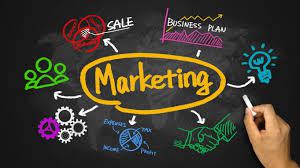
For any sales-driven business, it isn’t the size of your data that matters, it’s what you do with it. No longer a discretionary luxury, predictive analytics are now the name of the game for marketers determined to utilize customer metrics in a meaningful way to establish a tremendous competitive advantage, gain notable market share and significantly boost bottom lines.
Just what exactly is predictive analysis? Simply put, it’s the ability to more precisely predict a customer’s future spending based on their past behaviors. Of course, there’s no way to actually predict the future but predictive analysis can give companies invaluable insight that can make or break a CRM system. If you’re not using predictive analytics, your current CRM system is likely falling short in several areas. Here’s why:
1. Forecasting Likely Customer Behaviors
There’s an old saying in sales: “buyers are liars.” Unfortunately, salespeople are forced to enter notes based on what the customer tells them. Besides these basic notes that are often unreliable, it’s almost impossible for a CRM system to determine a consumer’s actual behavior. However, predictive analytics software comes with a certain level of assumptions. In this case, the assumption is the future will continue to be like the past. Often, however, behaviors change. That’s why it’s critical to have a system that can not only change with your customers but also learn and adapt to their new actions to make predictive calculations based on the past, present and future behaviors.
2. Enhancing Customer Relationships
It’s very difficult to build a true customer relationship if you have no way of accessing and analyzing their prior behavior with your company. Unfortunately, a CRM system cannot automatically track customer actions. It relies heavily on manual human interaction and cultivation relying heavily on the accuracy of a salesperson’s notes, which are often less than desirable. The most common use of predictive analytics is, in fact, to increase and improve customer relationships. The better you know your customer, the more sales you can ultimately make. Using sophisticated algorithms to reveal how your customer behaves allows you to also better communicate with your customer. For instance, isn’t it nice to hear your name when you walk in to your local coffee shop? Isn’t it nice that they already know what you’re drinking without you saying anything? On a larger scale, this is how predictive analytics enhance a company’s sales efforts. Many direct marketers have it figured it out, sending you offers in the mail that you are likely to actually want as opposed to the ones you consider junk. This is all done with predictive analytics. And, another great thing about predictive analytics data is that it doesn’t have to be “big” at all. In fact, sometimes the data can be just a small concentrated section of just a few hundred actions.
3. Maximizing Marketing Budget ROI
If you’re like most companies and have an actual marketing budget, however big or small, it’s best to first make sure the audience you’re targeting actually wants what you’re selling. On its best day, a CRM system can only give you an educated guess. If you want to maximize your marketing dollars, solely using a CRM platform to determine the best suited marketing audience is not the best direction. But, with predictive analytics, you can maximize your return on investment no matter the budget. For example, if you seek to spend $10,000 on a campaign for delivery to 10,000 customers or prospects, predictive analytics will curate that audience to deliver your message to 10,000 consumers that specifically want what you’re offering at the time. Conversely, CRM solutions alone have very limited filters that prevent a business owner from drill-down targeting the correct audience and, as a result, are undermining their ROI with opportunity loss.
4. Allowing Data-Driven Decisions
The core success benchmark of any company is its numbers. A CRM system cannot show you exact sales numbers broken down by each individual customer over time with any ease. A significant amount of training is usually involved in trying to properly access and formulate these tasks. This often requires a lot of time, which means less time spent making actual sales. Fortunately, good predictive analytics software will allow you to specifically identify where all your money is being made and where the areas of your business are lacking. It should also be able to provide you with a specific customer spending list based on what you’re asking for. Adept systems can actually categorize all your customer spending and break it down for you in an easy to read format that allows you to properly make future predictions.
5. Formulating Offer Intelligence
Unlike a predictive analytics platform, CRM systems cannot recommend specific offers that are unique to customer spending habits. This is a huge downside in my opinion. It is very difficult to maintain and engage repeat customers without knowing what they want. CRM solutions are mainly a lead management system but, let’s be honest, who wants leads when you can have buyers? Predictive analytics not only analyze customer actions and habits but also “learns” as it goes. For instance, when an online offer is sent out to customers, or even different offers sent to varying customer segments, a predictive analytics platform can tell you who opened a particular offer, who clicked through on that offer, who redeemed that offer and, when they did, how much that customer spent—including any upsells. The data can also be finely filtered down further to key metrics like which date and day of the week a customer redeemed a particular offer. With the rich data predictive analytics provides, customers can be sent highly meaningful offers tailored specifically to their needs and, as a result, companies can more readily build stronger customer relationships that bolster the bottom line.
Lack of quality data is usually the greatest barrier a sales-driven organization can face when deciding to implement predictive analytics. Getting the most out of a predictive analytics platform requires there is actually available data on customer spending habits, the attributes of the products or services they’re buying (other than the “people who buy this also but this” type of model), date ranges of their spending, and how much they spend on an average. Some demographic information wouldn’t hurt, either. If it’s really good, the predictive analytics platform will automatically track all your customer actions from start to finish. And, although it can be very difficult to find in current predictive analytics software, a really good system will also automatically capture this data for you to automatically create unique profiles of your individual customers. With this weapon in your proverbial sales arsenal, prepare to grow your sales revenue and overall company profitability in kind.
Lang Smith is the founder of Cloud Signalytics—a first-of-its-kind predictive intelligence software platform helping major franchise auto dealerships create highly precise, individualized customer profiles to maximize sales.