DD
MM
YYYY

PAGES

DD
MM
YYYY

spot_img

PAGES

Home Blog Page 7529

How Zenvus Can Help Nigerian Telcos (MTN, Airtel, Glo & Etisalat) Improve Revenue

1
Zenvus precision sensors in farms

Everyone understands the challenges in the telecom sector in Nigeria. There is the problem of extra tax burdens on one side and the erosion of revenue, accelerated by OTT services like Whatsapp which consume infrastructure capacities without the telecom companies earning decent revenue therein, on the other side.

Yet, these companies have opportunities to unlock more value if they can partner with Zenvus to help them deepen the use of telecom infrastructure in Nigerian agriculture. Zenvus is an intelligent solution for farms that uses proprietary electronics sensors to collect soil data like moisture, nutrients, pH etc. It then sends the collected data to a cloud server via GSM, satellite or Wifi. Algorithms in the server analyze the data and advice farmers on the best farming techniques. As the crops grow, the system deploys special cameras to build vegetative health to help detection of drought stress, pests and diseases. Zenvus provides clear visibility for precision agriculture by looking at data in the soil and the crop vegetation.

The data generated is aggregated, anonymized and made available via subscription for agro-lending, agro-insurance, commodity  trading to banks, insurers and investors.

The Animation of Zenvus

With this AgTech IoT (Internet of Things) innovation, companies like MTN, Airtel, Etisalat and Glo can pipe a lot of agriculture data to farmers, banks, insurers and others across the food chain. The telecoms will aim to improve the connectivity of sensors and other data-capturing devices on the farm to help farmers turn this data into actionable insights through Zenvus software platform. The opportunity is huge as this is an untapped market and these companies can even come together to seed the connectivity part of the business. We mean these companies can come together under an initiative to connect Nigerian farms. It would be a necessary investment for them to expand beyond where they are today.

Consider MTN AgTech (or Glo AgTech) which will run through Zenvus platform with tools to help local developers and others build for, and use, IoT in the agriculture space. Zenvus has an API that will support such an initiative. People are talking of smartcity in Nigeria. We think that is largely elitist because we have more urgent things to deal with before whether the city is smart. The real deal right now is agriculture and the demand projection is huge because farming productivity is very poor and any improvement in yield will improve the living conditions of more than 60% of the Nigerian citizens. (It is estimated that more 60% of Nigerians work in the agriculture sector across the different layers of the value chains.) Did we note that the telcos will make more money in the process. As Nigerians do well, the bulk being farmers, telcos will have better Christmas parties!

The telecom companies will help Zenvus handle connectivity issues with a national standard, if necessary, set in the nation for the agriculture space. This is good business; NCC, the regulator should not be anywhere close. We just suggest the telcos work together and build a new business segment. Bringing a network and a platform together will quickly help drive this innovation process.

In addition to providing farmers with the ability to track everything that’s happening in their fields such as a water pipe leak, irrigation, efficient fertilizer application,  the telecom firms working with Zenvus will aim to provide farmers with prescriptive recommendations based on the combination of historical, geospatial and on-farm data via Zenvus dashboard. This is not just for farmers, even local gardeners will be on board and the telcos will  benefit.

The telcos in this partnership will focus on their strengths in wireless connectivity and tackle some of the technical challenges of connecting devices and getting data out of the field and into the cloud. We envisage that they could decide to build a completely open IoT platform that an existing and future ecosystem of companies could build farmer-focused solutions on which could tether those customers in their networks because their farm data are already resident with these telcos. Zenvus believes that participation and interests from the telcos will help accelerate innovation in this area. We do hope the telcos will not suddenly try to focus on selling their own software products to farmers. If they choose that path, they will likely fail because working with farmers is not an expertise the telcos have in their DNAs. They just need to provide the networks so that AgTech entrepreneurs will do the rest. The cost model will not work in their favors because the farming entities in Nigeria are very fragmented and what we have seen on the fields, you need to operate with new cost models to succeed.

The biggest opportunity for telcos will be Zenvus Fusion where Zenvus is planning to document the soil fertility data of any farmland in Nigeria by taking 1000 samples per ward in each of the local government areas in Nigeria. Our technology makes that possible but the data requirement is relatively unprecedented and enormous. These soil data will be used to support building best growth Zenvus model for 5 crops for each local government area in Nigeria. This means we want farmers to focus on crops where they will earn more over just following cultural traditions handed by ancestors. To make the call, we need data.

That process has started with Zenvus Boundary which helps a farmer map the boundaries of his/her farm by himself/herself and just like that print the boundary from our portal. You walk around your farm when you have Zenvus on boundary scan mode and you have a document which can be ratified by government to serve as a bank collateral. That documents is your farmland title. This will formalize informal assets and help rural farmers have records of asset ownership. Our engine allows farmers to put their National Identify Number and other pertinent data. The data also have a plain view survey which does not have the Google Map superimposed. The essence of showing part  of the map with Google Map is to give relational associations with that farm in ways that rural farmers can relate: you know that farm is near that iroko tree and close to the lake. You see all via Google.

The future opportunities in telecoms will come when telcos begin to move into legacy sectors like health, agriculture and begin to connect them. They have to do this connection with a business model that makes sense. Zenvus offers many elements because Zenvus has suite or services running on the IoT meaning that telcos are sure of more data usage by farmers.

The key Zenvus services (all under Zenvus Financials) are:

  • zManager – zManager is an electronic farm diary that helps Zenvus farmers record all phases of farming from planting through harvest to sales. It keeps all records – financial, staff, tools, etc in one secured place
  •  zPrices  – zPrices empowers rural Zenvus farmers with real-time produce prices across major cities. It provides farmers with data to effectively negotiate prices with merchants who normally pay them little.
  •  zCapital – zCapital helps Zenvus farmers raise capital (loan or equity) by providing independent farm data from our sensors to help banks and investors evaluate overall profitability of farms.
  •  zCrowdfund – zCrowdfund helps Zenvus farmers crowdfund capital from local donors who they can deliver produce after harvest. Our sensors validate these farms providing partners with confidence.
  •  zInsure – zInsure helps Zenvus farmers insure their farms by providing independent farm data from our sensors to insurers. This helps them evaluate the risks based on actual farm data.
  •  zMarkets – zMarket provides a platform for Zenvus farmers to sell their produce. It is an avenue to expand their markets by removing geographic limitations. Farmers list their harvest days and buyers connect.

These services will be activated once Zenvus builds a fairly critical mass in its ecosystem. It will bring banks, farmers and other stakeholders together thereby driving data consumption. For example, a bank that is funding 100 farmers can ask MTN to connect all the farms to its Zenvus account so that it can track what is happening in them as needed. The telcos need to have a revenue stream from the agriculture space. Zenvus has many services like Zenvus Insights, Zenvus Insights Pro, Zenvus Boundary, Zenvus Financials and Zenvus Fusion.

Our firm through our Founder has been working with farmers. He just pitched some groups in Zambia. The roadmap is that Zenvus ecosystem will have at least one million farmers by December 2017.

The Promise of Zenvus is to radically transform the agriculture sector in Africa. We have taken that message to governments and the results have been positive. As we continue to work with partners, we think the telcos must adopt a strategy to focus and build the agriculture sector connectivity business.
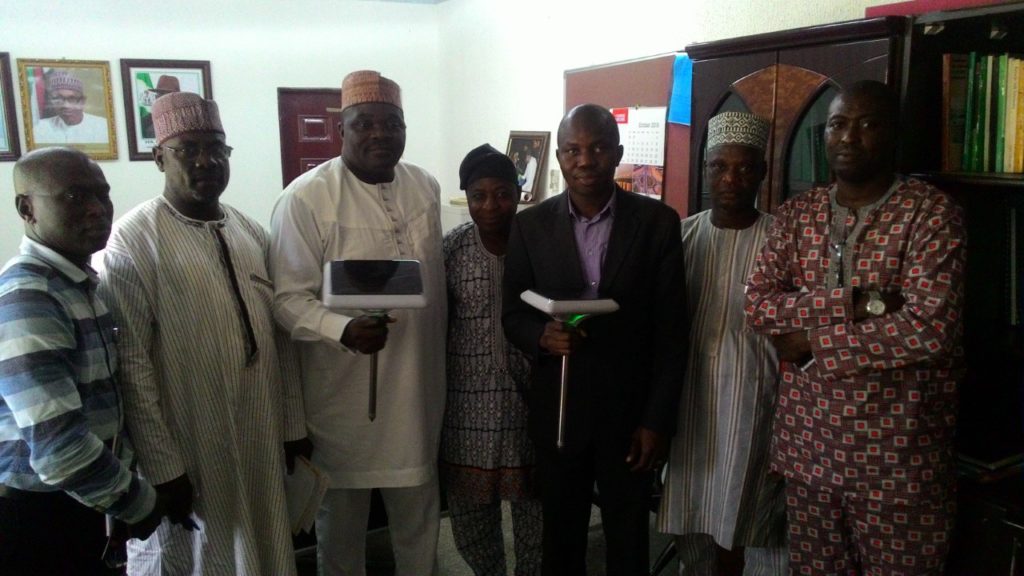
  

Zenvus presenting the technology to Nigerian Government

We are local and international. We want to do business. Email us at zenvus@fasmicro.com and let us begin the conservation.

Source: Zenvus Media
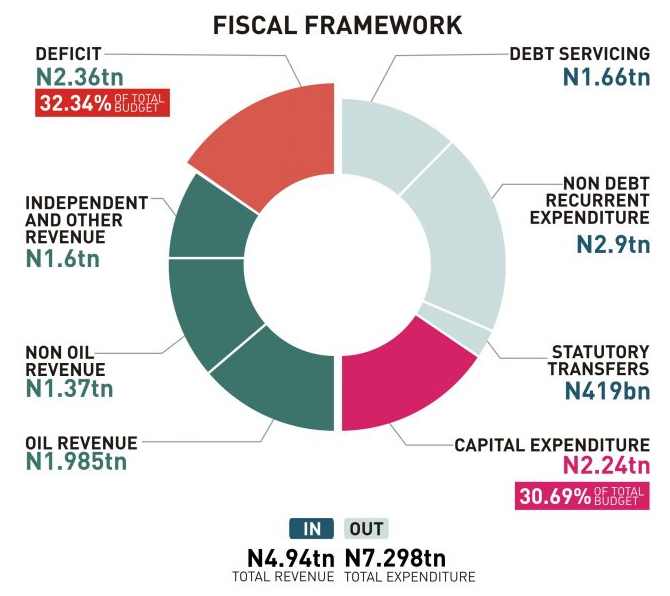
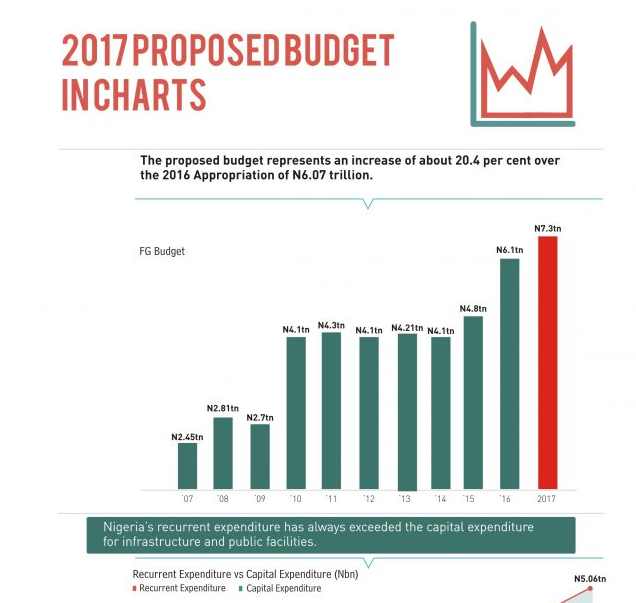
2017 Nigeria Proposed National Budget [Plots]

0

This is the Nigerian budget, courtesy of Budgit. In the ministerial grouping the largest recurrent allocations went to the Interior Ministry with N482.37 billion; Ministry of Education with N398.01 billion; Ministry of Defence with N325.87 billion; and Ministry of Health, N252.86 billion. Analysing the expenditure components, aggregate recurrent spending accounts for 35.3 per cent of aggregate expenditure, which went up 8.7 per cent from N2.3 trillion in 2016, while capital expenditure is budgeted to rise by 41.1 per cent to N2.2 trillion representing 31 per cent of the total expenditure. Debt service is projected to be the third largest component of total expenditure, proposed to grow 8.7 per cent year-on-year to N1.7 trillion as a consequence of increasing debt obligations while taking up 23 per cent and 33.6 per cent of gross expenditure and revenue respectively.


Nigerian Interswitch is Facing Existential Threat from Other Fintechs and Banks

0

Interswitch is a pioneering fintech in sub-Saharan Africa. It  is an Africa-focused integrated digital payments and commerce company that facilitates the electronic circulation of money as well as the exchange of value between individuals and organisations on a timely and consistent basis.

At its peak, it was valued close to $1 billion few years after Helios invested for majority share. Helios had paid $92 million for a 52 percent stake in Interswitch in 2010, according to its website.

But things have gone really south for the fintech company and if care is not taken Interswitch may fail. The challenges are numerous. There are attacks from global fintech companies like Paypal and Stripe which have provided other ways for Nigerians and Nigerian companies to do ecommerce online. Interswitch used to be the only company to take companies online to collect payments (remember the unfortunate N100,000 merchant activation fee); not anymore. As these companies strengthen their positions in Africa, Interswitch will lose its dominant capabilities.

Apart from its core infrastructure, the company does not come out as being innovative. Its products are largely ordinary.

And besides the foreign fintechs, startups like Flutterwave and Paystack are emerging and they have real Africa-wide visions. The latter just raised $1.3 million today.  It took Interswitch ages to expand outside Nigeria despite having, at a time, all the opportunities to dominate sub-Saharan Africa digital payments.

In the past, merchant integration with GTBank used to offer the options of GTPay and Interswitch, now it is only GTPay as GTBank had removed Interswitch. Other banks are increasingly pushing their brands over Interswitch.

Sure the company understands these challenges and have made some acquisitions. It bought VANSA for $50 million in cash in October 2015. That was after it bought Paynet for an undisclosed amount few months earlier. It has sought diversification by investing in SlimTrader and Africa Courier Express. But generally, these are all hail marys because the company is not locking any barrier of entry into its core business. The growth drivers are in continental Africa and Interswitch, unlike in the past, does not seem to be the potent competitor that can win the race right now.

It needs to invest in innovation and stays a step ahead of its peers to ensure its business remains viable within the next five years. The old rumored IPO in London had died down because global players could not really see what they will be buying into. They had expected $1 billion. But if you look critically, Interswitch may not be worth that much since its main competitor, eTransact, is worth about N5.25 billion.

One Reason Uber will Dominate Ride-Hailing in Africa

0
File illustration picture showing the logo of car-sharing service app Uber on a smartphone next to the picture of an official German taxi sign in Frankfurt, September 15, 2014. A Frankfurt court earlier this month instituted a temporary injunction against Uber from offering car-sharing services across Germany. San Francisco-based Uber, which allows users to summon taxi-like services on their smartphones, offers two main services, Uber, its classic low-cost, limousine pick-up service, and Uberpop, a newer ride-sharing service, which connects private drivers to passengers - an established practice in Germany that nonetheless operates in a legal grey area of rules governing commercial transportation. REUTERS/Kai Pfaffenbach/Files (GERMANY - Tags: BUSINESS EMPLOYMENT CRIME LAW TRANSPORT)

If you think you can compete with Uber, think again. The company has notched yet another quarter of staggering losses.

That’s according to a new story from The Information’s Amir Efrati, who reports that the ride-hailing company lost more than $800 million in the third quarter of this year. Those losses, which follow a reported $1.27 billion in the first half of the year, put Uber on track to lose $2.8 billion in 2016, according to The Information’s calculation.

While the millions in losses look bad on the surface for Uber — which was most recently valued at $68 billion — those losses are growing more slowly than they used to.

These losses and the ability to do them without worries explain why it will be hard for anyone to challenge Uber as it works to dominate African ride-hailing. Simply, Uber can decide to drop $50 million and waste it in Africa just to own the market share. It has shown that it does not care and anyone that wants to challenge it must first go and raise millions of dollars and be ready for battle.

Take note – there is no market share available for ride-hailing in Africa unless you have $100 million in the bank!

List of Virtual Cybersecurity Equipment and Tools for Learners at Facyber

0

First Atlantic Cybersecurity Institute (Facyber), the cybersecurity and digital forensics firm, has published some of the virtual tools which are available for learners in its portal. Each participant will need Internet access for the programs. Our firm will provide all the virtual tools and staff facilitators required for the training in our platform where they are required for Diploma and Nanodegree programs which require practical components. Some of the virtual tools are:

  • Virtual Lab Environment: A virtual lab environment employs the concept of virtualization and allows one to use a single physical computer for hosting multiple virtual systems, each running a potentially different operating system
  • Computer Forensics Tools: Computer forensic tools are used for digital image acquisition, analysis, reporting, recovery and investigation of material found in digital devices
  • Malware Analysis Tools: Malware analysis tools are used to disassemble, debug and analyze compiled malicious executables. This is a key tool in reverse engineering and facilitates malware analysis. While analysis relies primarily on the expertise of skilled and trained personnel, these tools enable the process to be accomplished much easier.
  • Live Memory Forensics Tools: Memory forensics tools are used to acquire and/or analyze a computer’s volatile memory (RAM)
  • Network Forensics Tools: Network forensic tools provide real-time network forensics and automated threat analysis solutions
  • Expert Witness Testimony: To provide expert witness testimony, one must be able to provide a visual presentation of associations and linkages that may exist for any person, location or thing under investigation
  • Up-to-Date Threat intelligence: Serve as the operational focal point for up-to-date threat information sharing through a Virtual Collaborative Information Sharing Environment for eligible subscribers.
  • eBooks and electronic publications on cybersecurity: We have access to ebooks and materials our learners need to continue advancements in the cybersecurity education.