DD
MM
YYYY

PAGES

DD
MM
YYYY

spot_img

PAGES

Home Blog Page 7535

The Predictable Crises of Growing Startups

0

Each of the three crises occurs at a different phase in a company’s life.

The first crisis, overload, refers to the internal dysfunction and loss of external momentum that management teams of young, fast-growing companies experience as they try to rapidly scale their businesses.

The second crisis, stall-out, refers to the sudden slowdown that many successful companies suffer as their rapid growth gives rise to layers of organizational complexity and dilutes the clear mission that once gave the company its focus and energy. Stall-out is a disorienting time for a company: the accelerator pedal of growth no longer responds as it used to, and faster, younger competitors are starting to gain ground. Most companies that stall out never fully recover.

The third crisis, free fall, is the most existentially threatening. A company in free fall has completely stopped growing in its core market, and its business model, until recently the reason for its success, suddenly no longer seems viable. Time feels scarce for a company in free fall. The management team often feels it has lost control. It can’t identify the root causes of the crisis, and it doesn’t know what levers to pull to escape it.

These three crises represent the riskiest and most stressful periods for businesses that have made it successfully through their start-up and early-growth phases. The good news is these crises are predictable and often avoidable. The killers of growth that these crises contain can be anticipated and even turned into a constructive reason for change.

Helium is the new African gold and Tanzania matters

0

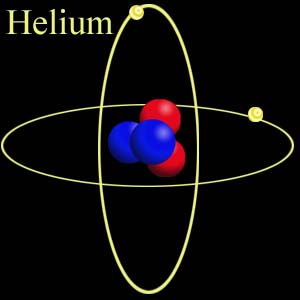
The recent discovery of a large new helium deposit in Tanzania merely delays by a few years the day when world supplies will run out. Mun Keat Looi explains why helium is so vital, how it got so badly mispriced that we used it to fill party balloons, and what we can do to husband it.

At current rates of consumption, the world’s current known reserves will run out sometime between 2030 and 2040. This is why the Tanzania discovery is such a big deal. At an estimated 54 billion cubic feet, it is bigger than the NHR was at its peak.

The real breakthrough is in the way it was discovered. Nobody has ever found helium by looking for it deliberately, but only as a side-product of natural-gas exploration. The Tanzanian site, however, was found through modern prospecting. The theory is that rocks in which helium has formed (by radioactive decay) are slowly heated by the Earth’s core, letting the gas leak out, and it then gets caught in underground caves. The prospectors used their knowledge of the Rift Valley’s geology to find potential helium mines.
Tanzania will increasingly grow in importance as helium becomes scarce over the next few decades. It will assume more impacts and positions in Africa..

The limits of technology to truth

0

It is five minutes walk from the corner of Lamar and Main streets in Dallas, where a sniper killed five police officers this week, to Dealey Plaza, where another sniper killed president John F. Kennedy in 1963. What connects these events, other than guns and geography, is the raw, grainy footage that captured each.

If the silent, 27-second film of the Kennedy assassination made by Abraham Zapruder, inadvertent witness to history, became a symbol of America in the 1960s, it was also the precursor of what has sadly become a symbol of America in the 2010s: the ever-more-frequent cellphone videos showing shocking violence toward innocent men. This week, graphic footage of the deaths of Alton Sterling and Philando Castile led to the Black Lives Matter protest at which the Dallas officers were shot. At least one of the officers’ deaths was also captured on video.

Since Zapruder, technology has granted us vast increases in both the quantity and quality of these acts of witnessing. What it has not granted is greater access to truth. Just like JFK’s death, the deaths of Sterling and Castile may well remain disputed—as with the death of Eric Garner, which went unpunished despite being captured on camera in plain sight. We are still learning, painfully, that while the camera never lies, it never tells the whole truth, either.

Transparency and accountability are not the same thing. We should not confuse them, just as we should not confuse truth with evidence.Technology gives us ever more of the latter, but getting to the truth requires a very different process, which is still as susceptible to power and influence as it ever was. Until we understand and learn from that distinction, the camera footage won’t stop the killing.


Nigeria needs the robot used by Dallas Police to kill suspect

0

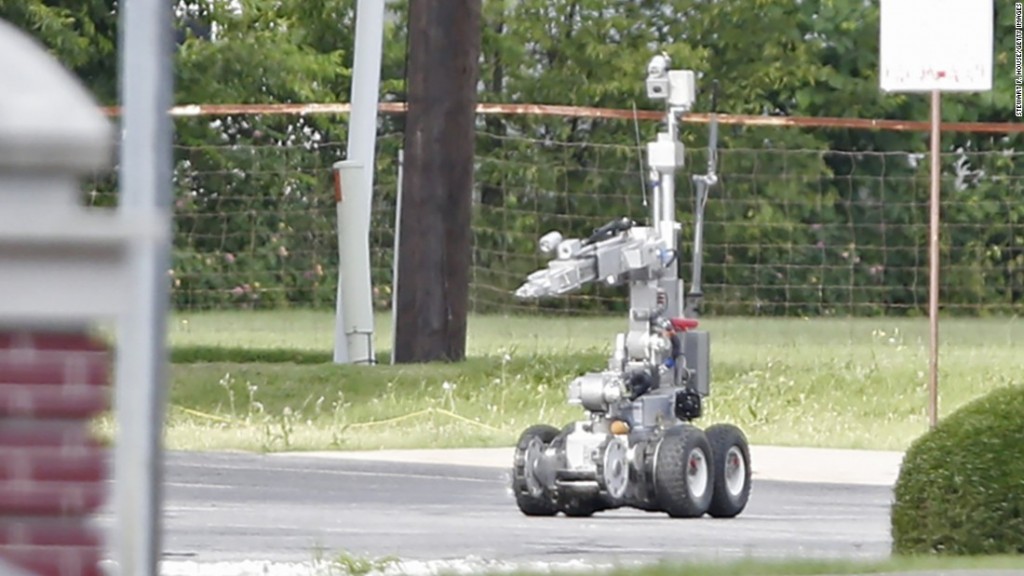
Police used an unusual weapon to kill a man suspected of murdering five officers in Dallas on Thursday: A robot.

Dallas Police Chief David Brown told reporters during a press conference that police officers cornered a suspect and attempted to negotiate with him until the talks devolved into gunfire. Because of the danger to officers, Brown said law enforcement “saw no other option” but to use a robot carrying a bomb to kill the suspect.

That is it – Nigerian government should begin to acquire these weapons or better develop its version so that it can effectively manage the complex security challenges in the country.

Israel pivots to Africa but Nigeria missing

0

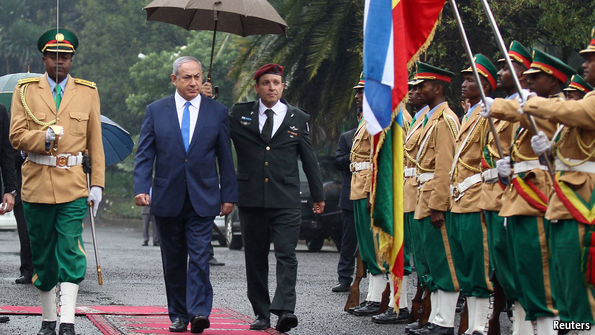
Binyamin Netanyahu has just wrapped up a four-nation visit to Africa. Its governments, facing Boko Haram, al-Shabab and other extremist groups, are eager for Israeli security assistance. The trip underlines Israel’s shifting diplomatic strategy, away from relying on its Western allies and towards a broader approach. Israel is also trying to confront Iranian attempts to gain influence in the region, reports the Economist.

His itinerary included Uganda, Kenya, Rwanda and Ethiopia and he took part in a summit with the leaders of these countries as well as South Sudan, Zambia and Tanzania. The prime minister took with him 80 businesspeople, representing 50 Israeli companies working in Africa and launching a programme for economic co-operation with sub-Saharan African countries.

We hope Nigeria makes the list next time as Nigeria needs Israel for its expertise in  agriculture  and security.