DD
MM
YYYY

PAGES

DD
MM
YYYY

spot_img

PAGES

Home Blog Page 756

Trump Set to Announce Semiconductor Tariffs, Deepening Uncertainty in U.S. Chip Industry

0

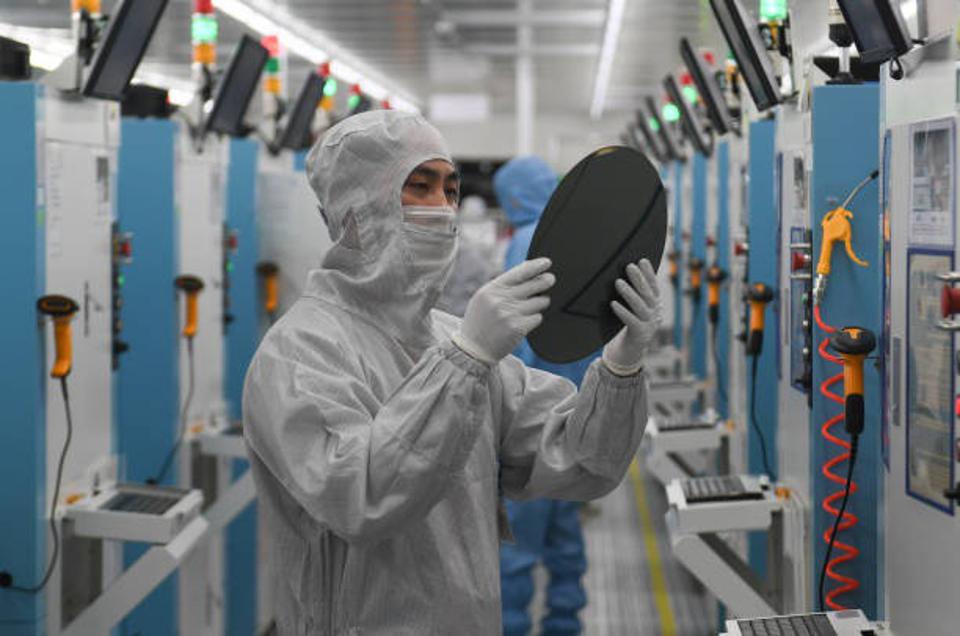
The turbulence rocking the global semiconductor market is poised to escalate further as President Donald Trump on Tuesday told CNBC’s Squawk Box that his administration plans to announce a new wave of tariffs on semiconductors and chips “within the next week,” marking a sharp turn in U.S. trade and industrial policy.

The announcement comes on the heels of an ongoing Section 232 investigation launched in April into national security risks posed by U.S. reliance on foreign-made chips — a probe that many experts had warned could set the stage for punitive tariffs.

Though Trump did not provide specific details about the tariff rates or scope, policy insiders anticipate the administration could begin with a 25% levy on imported chips, with the potential to expand the coverage and rate depending on supply chain vulnerabilities and geopolitical concerns. The Wall Street Journal reported that the tariffs could also target pharmaceutical products, but the chip measures appear to be more imminent.

The reaction was swift across financial markets. Shares of chipmakers including Nvidia, Broadcom, and other semiconductor giants tumbled on Tuesday. The Philadelphia Semiconductor Index dropped 1.1%, while the iShares Semiconductor ETF (SOXX) lost 0.7%. Investors are bracing for ripple effects across the U.S. tech sector, particularly for firms heavily reliant on imported hardware components.

The tariff plan comes even as the U.S. attempts to rebuild its semiconductor supply chain under the 2022 CHIPS and Science Act, which earmarked $52 billion in subsidies to bolster domestic chip production. At the time the law was signed, the U.S. produced only around 10% of the world’s chips, despite being home to more than half of the leading semiconductor design firms.

Major players like Intel and Taiwan Semiconductor Manufacturing Company (TSMC) have already received support under the program. TSMC has committed to investing at least $100 billion over four years to build and expand its U.S.-based manufacturing facilities. But establishing chip fabs — massive, clean-room manufacturing plants — is a long, expensive process. Intel’s repeated delays in building its flagship plant in Ohio underscore the difficulty of scaling production quickly, even with government funding.

The U.S. remains far from achieving full supply chain independence, raising concerns that new tariffs could end up hurting domestic industries more than their intended foreign targets, at least in the short term.

Reversal on AI Chip Export Rules Sows Further Confusion

Complicating the picture is the administration’s shifting stance on AI chip export controls. In May, Trump formally rescinded the Biden administration’s rules that placed tiered, country-specific restrictions on the export of advanced semiconductors used in artificial intelligence systems. The Biden-era framework had focused on national security threats, particularly around China’s access to high-performance chips from companies like Nvidia and AMD.

Trump’s administration followed the repeal with the release of a broad AI Action Plan in July, which emphasized the need for stricter export controls. But the document was vague on how such rules would be implemented. And now, according to reporting from Semafor, senior officials within the administration are internally debating whether to go through with their plan to replace the Biden rules or abandon the effort altogether. Sources close to the matter say no final decision has been made.

This policy uncertainty is unsettling to U.S. chipmakers and AI firms, many of which operate in both consumer and defense-adjacent sectors. Without a clear regulatory roadmap, companies are struggling to plan long-term strategies and are voicing growing frustration over the uncertainty.

High Stakes for the U.S. Tech Ecosystem

The combination of looming tariffs and murky export controls is setting the stage for a pivotal period in the U.S. tech industry. On one hand, the administration appears determined to reduce America’s dependence on foreign chips — particularly from Asia — and to secure domestic control over the next generation of computing infrastructure. On the other hand, the tariffs could raise costs for U.S. firms and consumers in the short term, while regulatory unpredictability may hinder innovation and investment.

Despite the billions poured into the CHIPS Act, the U.S. still lacks the capacity to meet domestic chip demand. That gap means tariffs may do more to squeeze American companies than foreign competitors, at least until domestic manufacturing catches up.

If Trump follows through with the tariff announcement as expected next week, the semiconductor sector could face a dramatic shake-up, compounding what has already been a volatile year for chips, AI hardware, and the entire tech supply chain.

Trump Slaps 50% Tariffs on India Over Russian Oil Imports, Escalating Global Energy Tensions

0

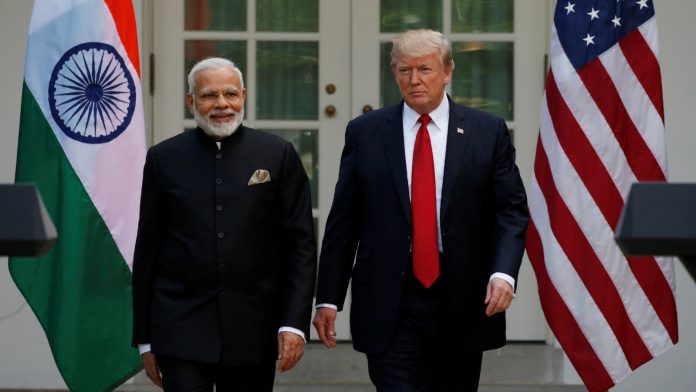
The White House on Wednesday formally imposed additional tariffs on India, escalating the Trump administration’s campaign to punish countries trading with Russia amid the war in Ukraine.

The new executive order adds a 25% tariff on Indian goods, on top of an existing 25% levy, bringing the total tariff burden to a staggering 50% — one of the highest rates imposed on any U.S. trading partner.

“I find that the Government of India is currently directly or indirectly importing Russian Federation oil,” President Donald Trump stated in the order, invoking executive powers to expand trade penalties under national security justifications. The new tariffs are set to take effect within 21 days.

While Trump has previously warned India of consequences for its continued purchase of Russian energy and military equipment, the decision marks the first time Washington has concretely penalized New Delhi over its ties to Moscow since the full-scale Ukraine invasion began.

“This is just the beginning,” Trump said on CNBC’s Squawk Box a day earlier. “They’re buying Russian oil, they’re fueling the war machine… and if they’re going to do that, then I’m not going to be happy.”

India Hits Back, Says U.S. Hypocrisy on Display

India has responded, labeling the U.S. action as “unjustified” and accusing Washington of targeting New Delhi for pursuing its national energy interests. In a statement, India’s Ministry of External Affairs said the move was “extremely unfortunate,” especially since other countries continue to buy energy from Russia without facing similar penalties.

“We reiterate that these actions are unfair, unjustified and unreasonable,” the Indian government said, adding that its oil imports from Russia are driven purely by market factors and the urgent need to ensure energy security for 1.4 billion people.

India also pointed to the hypocrisy of Western countries, noting that many of them maintain commercial relations with Russia even as they pressure others to isolate Moscow.

“It is revealing that the very nations criticizing India are themselves indulging in trade with Russia,” the statement said. “Unlike our case, such trade is not even a vital national compulsion [for them].”

Trump’s executive order goes beyond India to task administration officials with identifying other nations importing Russian oil, directly or indirectly, and to recommend punitive actions, which could include tariffs or other trade restrictions.

The move suggests that the Trump administration is preparing to turn its sanctions and tariffs toolkit into a global enforcement mechanism against Russian energy — a strategy that risks dividing allies and undermining broader trade relationships.

In the past two weeks, Trump has intensified his rhetoric, warning that any country buying from Russia will be considered “complicit” in prolonging the war in Ukraine. While European allies have largely complied with phased bans, India — which has historically charted an independent foreign policy — has ramped up its Russian crude intake since 2022, often refining it for resale in global markets.

Why the Tariff Matters — and Why It’s Dangerous

India is one of the United States’ key strategic partners in Asia, and the move to slap a 50% tariff could destabilize bilateral ties that have deepened over shared concerns about China. The U.S. and India have expanded defense cooperation, tech investments, and intelligence sharing in recent years. But the tariff marks a sharp departure from recent efforts to woo New Delhi into closer alignment with Western interests.

Analysts say the decision may play well domestically for Trump, but it risks sending the wrong message globally.

There are also concerns that the tariff could backfire economically. India is a major supplier of pharmaceuticals, textiles, and IT services to the United States. A 50% tariff could result in higher costs for American companies and consumers, while pushing India to retaliate — or worse, turn further toward Russia and China.

Global Energy Fault Lines Are Hardening

The tariff underscores the increasingly fragmented global energy order. While the U.S. has tried to rally support for isolating Russia, many countries in the Global South — including India, Brazil, and even parts of the Middle East — continue to balance their interests rather than picking sides.

New Delhi has repeatedly said it cannot be expected to cut off an affordable and stable energy source, particularly when Western nations — including some NATO members — continue buying Russian LNG, fertilizer, and commodities under various exemptions.

In short, Trump’s action reflects an escalating clash between moral posturing and economic realism, with India now caught in the crossfire of that contradiction.

Kremlin spokesperson Dmitry Peskov on Tuesday, in defense of India, dismissed Trump’s tariff threats as “attempts to force countries to stop trade relations with Russia,” declaring that “sovereign countries should have… the right to choose their own trade partners.”

Little Pepe (LILPEPE) and Dogecoin (DOGE) Price Prediction if Meme Coin Sector Hits $250 Billion Market Cap in 2025

0

The meme coin sector, now worth a hefty $72 billion, could balloon to $250 billion in 2025. Consequently, investors are have one question, what’s the best crypto to buy now?

Two names keep surfacing: Dogecoin (DOGE), the old-timer with a loyal pack, and Little Pepe (LILPEPE), a fresh-faced upstart packing serious punch.  Dogecoin has clawed past $0.22 recently, hinting at a rally. Meanwhile, Little Pepe (LILPEPE) has raised $14.6 million in its presale. Let’s unpack what’s fueling these coins and where they’re headed.

Dogecoin (DOGE) Holds Steady

Dogecoin (DOGE) has been flexing its muscles lately. Having broken the $0.22 barrier, a level it’s wrestled with since 2022, it’s signaling a potential surge. Analysts have spotted patterns echoing its 2021 peak of $0.73.

If the meme coin sector hits $250 billion in 2025, Dogecoin could ride the wave. Experts are predicting a climb to $0.50, maybe more, if its fanbase keeps growing. But it’s banking on nostalgia and hype, not new tricks. That’s where the real story shifts. Moreover, Little Pepe (LILPEPE) is stealing the spotlight with something Dogecoin lacks, innovation.

Little Pepe (LILPEPE) Redefines the Game

Little Pepe (LILPEPE) has stormed the scene with audacity. Its presale has concluded stage 8, raising $13.775 million across sold-out stages 1 through 8.

Stage 9 is now open, with tokens priced at a mere $0.0018, and stage 10 looms with a bump to $0.0019. Having amassed $14.6 million so far, stage 9 is underway, drawing feverish demand.  This isn’t just pocket change, it’s a war chest for a bold vision: a Layer 2 chain built for meme coins. Furthermore, this isn’t some flimsy promise, it’s a calculated move to dominate.

Layer 2 Powerhouse

Little Pepe (LILPEPE) isn’t resting on memes alone. It’s crafting the fastest, cheapest Layer 2 chain around, tailored for meme coins.  A meme coin launchpad is also in the works, poised to birth the next big tokens. Anonymous experts, veterans of top meme coin successes, are backing this juggernaut. Listings on two major exchanges are set for launch, with plans to hit one of the world’s biggest platforms soon after.

Price Predictions Unleashed

If the meme coin sector soars to $250 billion in 2025, what’s the payoff? Dogecoin (DOGE) has room to grow, perhaps to $0.50 or beyond, riding its legacy. But Little Pepe (LILPEPE) is where the real fireworks are brewing.  From its $0.0018 presale price, analysts are eyeing a post-launch leap to $0.75. That’s a colossal gain for early birds. Little Pepe (LILPEPE) is making a deafening case with utility Dogecoin can’t match.

Moreover, Little Pepe (LILPEPE) has dropped a bombshell to ignite its community. A $777,000 giveaway is underway. 10 winners will each snag $77,000 in tokens. Join the presale with $100 minimum and tackle a few tasks to enter. It’s a tantalizing hook, amplifying the FOMO as stage 9 ticks on. Meanwhile, trust is rock-solid here.

Audit and Credibility

Little Pepe (LILPEPE) has finalized a rigorous audit with FreshCoins.io, scoring 81.55 out of 100. LILPEPE’s a fortress of security, bolstered by zero taxes and no mint function.  Coinmarketcap has recently added it, cementing its legitimacy.

Final Thoughts: Cashing In on 2025

The meme coin sector hitting $250 billion in 2025 isn’t a pipe dream, it’s a looming reality. Dogecoin (DOGE) has its charm, but Little Pepe (LILPEPE) is rewriting the playbook. With its Layer 2 edge, presale momentum, and giveaway sizzle, it’s the best crypto to buy now. Stage 9 is your shot at $0.0018 tokens. Don’t wait for stage 10’s hike. Jump in today and ride this rocket to the moon.


For more information about Little Pepe (LILPEPE) visit the links below:

Website: https://littlepepe.com

Whitepaper: https://littlepepe.com/whitepaper.pdf

Telegram: https://t.me/littlepepetoken

 Twitter/X: https://x.com/littlepepetoken

OpenAI Unveils First Open Models Since 2019 Amid Surge in Global Competition for Open-Weight AI Dominance

0

OpenAI has released two new open-weight language models — gpt-oss-120b and gpt-oss-20b — in a strategic move to reassert its dominance in the fast-evolving world of artificial intelligence.

The announcement, made on Tuesday, marks the company’s first open-weight model release since GPT-2 in 2019 and comes amid a heated contest among global AI developers, notably Meta and China’s DeepSeek, for leadership in the open-weight and open-source model space.

Unlike open-source models that make training data and methodology public, open-weight models provide access to trained parameters (weights), allowing developers to fine-tune and deploy them without access to the original training data. OpenAI emphasized that these models are designed to run efficiently on consumer-grade devices.

The larger model, gpt-oss-120b, runs on a single GPU, while the smaller gpt-oss-20b is optimized for laptops and PCs. Both models are built to perform on par with OpenAI’s proprietary o3-mini and o4-mini reasoning models, particularly excelling in advanced reasoning, coding, competition mathematics, and health-related queries.

“One of the things that is unique about open models is that people can run them locally. People can run them behind their own firewall, on their own infrastructure,” said Greg Brockman, co-founder of OpenAI, during a press briefing.

The models were trained on a text-only dataset with a heavy focus on science, math, and programming domains critical to performance in next-gen AI tools.

Adding to the momentum, Amazon Web Services (AWS) has onboarded OpenAI’s new models onto its Bedrock generative AI marketplace. This makes them accessible to a broader developer base, marking the first time any OpenAI model has been hosted on Bedrock. Atul Deo, Director of Product at AWS Bedrock, said the partnership gives customers powerful open-weight options.

“OpenAI has been developing great models and we believe that these models are going to be great open-source options, or open-weight model options for customers,” Deo said in an interview.

The rollout also coincides with OpenAI’s ongoing $40 billion funding round led by Japan’s SoftBank Group, which could raise its valuation to an eye-popping $300 billion. The timing of the release and the scale of fundraising reflect OpenAI’s intensifying efforts to entrench its position against a growing field of global competitors.

Meta’s LLaMA (Large Language Model Meta AI) models were long seen as leaders in the open-weight space until China’s DeepSeek emerged with DeepSeek-V2 and DeepSeek-Coder, models that combined raw performance with cost efficiency. DeepSeek’s releases forced a recalibration in the market, especially as Meta’s anticipated LLaMA 4 suffered repeated delays.

Meanwhile, OpenAI’s move is also seen as a counter to the growing shift in developer preference towards models that offer greater transparency and customizability. This demand for openness has propelled DeepSeek and Mistral — a French startup — into the global spotlight. Mistral, for instance, recently secured a €600 million funding round to expand its suite of open-weight models and enterprise AI tools. Likewise, China’s Zhipu AI, supported by Alibaba and Tencent, has been pushing out its GLM family of models with a focus on multilingual capabilities and commercial deployment.

Analysts believe OpenAI’s reentry into open models is a strategic pivot that acknowledges the broader industry shift. Some note that closed models like GPT-4 are powerful but inaccessible for developers looking to embed models in private or on-prem systems. OpenAI’s new models are designed to address that gap.

However, OpenAI has not released performance benchmarks comparing its gpt-oss models with DeepSeek or Mistral’s open-weight counterparts, leaving room for speculation about whether the move is more strategic than revolutionary.

OpenAI’s re-emergence in the space may recalibrate the balance of power as the artificial intelligence industry rapidly shifts towards openness, but it faces steep competition from agile rivals in China and Europe who have already captured critical developer mindshare.

$1K Could Turn Into $37K? Here’s Why Cold Wallet Might Be the Best Crypto Buy Right Now!

0

Every once in a while, a presale appears where the numbers do all the talking. Cold Wallet’s native coin, CWT, is now priced at $0.00924, with a confirmed launch price of $0.3517. That points to a strong 3,633% potential return, and that’s before any post-launch surge.

The project stands out with a simple but game-changing idea: a wallet that rewards users instead of draining them. That concept has sparked heavy demand, 15 stages gone, and more than $5.6 million already raised. Traders are rushing in, knowing what’s at stake. The focus isn’t on whether the product will work, it already is. The real question is how much of this upside remains for anyone who waits too long.

Fixing the Wallet Problem That’s Costing Users Money

Crypto wallets have long acted like fee machines, quietly taking a cut every time users make a move. Whether it’s swapping, bridging, or withdrawing to fiat, users end up losing value. Cold Wallet changes that with a bold pitch: using a wallet should build wealth, not drain it.

This system runs on CWT, Cold Wallet’s native currency. Every action, transfers, ramps, and swaps, earns cashback, rebates, or real-time rewards. That utility is helping CWT gain traction fast.

A $270 million acquisition of Plus Wallet brought in 2 million+ users, giving Cold Wallet a head start in adoption before it even launches. With $5.6M+ already raised and 15 stages gone, CWT is now being called one of the best cryptos to buy today by traders tracking presale momentum and utility-focused growth.

Whales Race Into Cold Wallet, 15 Stages Sold Out

The buying pressure on Cold Wallet isn’t just retail-driven. Large crypto holders, whales, are entering fast, pushing token allocations to sell out ahead of schedule. Stage 15 didn’t last 24 hours.

Stage 16 is already seeing activity ramp up, and prices have now jumped over 34% since the earliest stage. Each sellout slices away at potential ROI. The launch price target of $0.3517 is fixed, but entry cost keeps rising.

As that gap closes, the size of returns shrinks. Those who join now at $0.00924 can still aim for 3,633% gains, but with each new buyer, that opportunity narrows. If this pace continues, latecomers may find themselves paying much more for significantly less return, and that’s what’s driving urgency in this presale.

Analysts Say $0.3517 Is Just the Beginning

Stage 16 already promises major gains. But some analysts are suggesting the real opportunity comes after launch. Private trading groups and research channels are talking about $5 to $10 price targets for CWT in the longer term.

At today’s entry rate of $0.00924, even a climb to $1 delivers a huge return. If CWT nears those higher projections, small early entries could turn into life-changing returns.

While these numbers are speculative, they’re being taken seriously by early buyers who see CWT’s model and traction as a rare mix. Those waiting too long may miss out, as each new stage reduces the margin for profit.

A Simple $1,000 Could Be Worth Over $37K at Launch!

Let’s break down the math. At the current price of $0.00924, a $1,000 purchase gives over 108,000 CWT. If Cold Wallet hits its expected launch value of $0.3517, that single $1K turns into more than $37,000, with zero need for price movement beyond listing. Should the coin climb to $5, that same stack would be worth over $500,000. A $10 scenario pushes that over $1 million.

While nothing is promised, traders see the structure and potential as clear-cut. Every new stage increases the price and lowers the upside, which is why more are rushing in at current levels. Miss this window, and it may not return.

The Bottom Line

At $0.00924, Cold Wallet’s presale is still offering a 3,633% potential ROI, but only for now. Stage 15 is gone, Stage 16 is getting thinner, and prices keep creeping up. As more buyers jump in, the next stage will come at a higher cost, meaning lower gains for the late crowd.

More than $5.6 million has already been collected, and momentum keeps building. CWT isn’t being hyped on blind hope, it’s backed by real mechanics, traction, and a clear use case that resonates.

Buying now could turn $1,000 into $37,000. But waiting may cost much more than just a higher price. These kinds of windows don’t stay open long, and when they close, it’s the early birds who end up winning big.

Explore Cold Wallet Now:

Presale: https://purchase.coldwallet.com/

Website: https://coldwallet.com/

X: https://x.com/coldwalletapp

Telegram: https://t.me/ColdWalletAppOfficial