DD
MM
YYYY

PAGES

DD
MM
YYYY

spot_img

PAGES

Home Blog Page 7561

The Global Rise Of Informal Economy – How MTN Is Using Hawkers And Street Vendors As Distribution Agents

0

Robert Neuwirth, author of Stealth of Nations: The Global Rise of the Informal Economy, examines how mobile operator MTN is using hawkers and street vendors as distribution agents.

Throngs of okada – unlicensed motorcycle taxis – manoeuvred in and out of the pedestrian flow. Most of the passengers were purchasers. They made their deals and hefted their goods on their shoulders or on their heads. The bikes whizzed past kids selling tiny bags of peanuts, women carrying buckets of soda bottles on their heads, kiosks selling tools, hawkers selling mobile phone recharge cards, roadside stalls offering fried Indomie (a brand of spiced instant noodles that is a common, cheap meal here).

Trucks dropped off containers straight from the port, disgorging banged-up car bodies, piles of coiled springs, used copper bushings, and mounds of dusty hubcaps. Panel trucks delivered photocopiers, computers, TVs, gaming consoles, and troves of mobile phones freezer-packed in Styrofoam cartons. The guts of global production splayed out in a series of chaotic stalls.

This is Ladipo Market in Lagos, Nigeria – part of a $10 trillion worldwide economy known as System D.

You probably have never heard of System D. Neither had I until I started visiting street markets and unlicensed bazaars around the globe.

System D is a slang phrase pirated from French-speaking Africa and the Caribbean. The French have a word that they often use to describe particularly effective and motivated people. They call themdébrouillards. To say a man (or woman) is a débrouillard(e) is to tell people how resourceful and ingenious he or she is. The former French colonies have sculpted this word to their own social and economic reality.

They say that inventive, self- starting, entrepreneurial merchants who are doing business on their own, without registering or being regulated by the bureaucracy and, for the most part, without paying taxes, are part of “l’economie de la débrouillardise”. Or, sweetened for street use, “Systeme D”. This essentially translates as the ingenuity economy, the economy of improvisation and self-reliance, the do-it-yourself, or DIY, economy. A number of well-known chefs have also appropriated the term to describe the skill and sheer joy necessary to improvise a gourmet meal using only the mismatched ingredients that happen to be at hand in a kitchen.

There is another economy out there. Its edges are diffuse and it disappears the moment you try to catch it. It stands beyond the law, yet is deeply entwined with the legally recognised business world. It is based on small sales and tiny increments of profit, yet it produces, cumulatively, a huge amount of wealth. It is massive yet disparaged, open yet feared, microscopic yet global. It is how much of the world survives, and how many people thrive, yet it is ignored and sometimes disparaged by most economists, business leaders, and politicians. At the same time, many major corporations make their money through System D.

***

Perhaps the most strikingly visible way in which formal businesses make use of System D is in the mobile phone industry. Along every road in many African and Asian countries – on median strips, on the side streets and main drags, in the middle of highways, at almost every intersection – you can find small plastic tables with umbrellas overhead.

They’re called umbrella stands and they are the phone booths of the developing world. In the sparse shade offered by those umbrellas, the formal economy meets System D in an extremely direct way.

Nigeria provides a perfect case study. It’s the largest country in Africa, with a mobile phone market that seems to have nothing but upside, and a variety of telecom firms are battling for market share.

MTN, a massive multinational based in South Africa and active in twenty one countries through Africa and the Middle East, had spent years looking for a way to gain a share of the Nigerian market. With a population of close to a hundred and sixty million, Nigeria is Africa’s most populous country, and one in six Africans is a Nigerian.

The Nigerian market was worth a lot of money. MTN made its first move on Nigeria in 2001. “We tried to replicate the car and phone market of the United Kingdom,” Akinwale Goodluck, the general manager of regulatory issues for the company’s Nigerian operations, told me.

“We wanted all dealers to be registered. They had to get a licence from the Nigeria Corporate Affairs Commission. They had to have a business name, to be a registered company.” MTN determined that it would sell airtime in three denominations: fifteen hundred naira, three thousand naira, and six thousand naira – $10, $20, and $40 – which would be sold only through stores that had the MTN brand.

The result: the plan crashed and burned. Goodluck put it in gentler terms: “It became very glaring that such a ‘Rolls-Royce’ type of distribution network would not be feasible.”

So MTN wrote off the loss and rethought its approach. It concluded that in Nigeria, where even scavengers at the garbage dump have mobile phones, the bulk of its income – perhaps as much as 90 per cent – would come from selling pay-as-you-go airtime rather than selling costly monthly plans. And that meant that service had to be cheap and readily available.

So MTN came back with a new plan based on umbrella stands. Almost all of its products would be sold by hawkers and street vendors. The cheapest airtime would be offered at a bargain basement price – a hundred naira, or less than $1 – and it would be available all over town. The company dropped its vision of selling phones with the MTN label. It dropped the price of SIM cards to less than $3. And it has ridden this low-priced model to a better than 40 per cent share of the Nigerian mobile phone market.

In 2007, MTN had revenues of 73.1 billion rand (approximately $8.78 billion) and earnings of 31.8 billion rand ($3.8 billion), and Nigeria was a big part of that, responsible for one-quarter of MTN’s one hundred million customers and 28 per cent of the company’s cash – or about $2.4 billion per year. And how does MTN earn that $2.4 billion? Almost all of it comes from System D.

Despite their importance to the bottom line, MTN keeps these System D vendors at arm’s length. “We don’t have a direct relationship with the gentleman or lady on the street,” Goodluck said. “We provide merchandise and support through the dealers.” What he means is that MTN sells its recharge cards to distributors, who in turn sell to subdealers, who sell to sub-subdealers, who sell to the folks on the street, who retail the cards to the people who use them.

Most umbrella stand operators also purchase heavily discounted contracts from MTN and other service providers.

If you want to call anywhere in Nigeria on the MTN network or any other network, for that matter – you can go to your local umbrella stand and make your call for twenty naira (thirteen cents) a minute. Most umbrella stand operators have several phones with SIM cards from different mobile services, so you can save money by making your call on the network the person you are calling uses. Many people who have their own mobiles nonetheless use the umbrella stands to make calls – because the cost per minute is cheaper.

“The umbrella market is a very, very important market now,” Goodluck told me. “No serious operator can afford to ignore the umbrella people.”

***

Margaret Akiyoyamen is one such umbrella person. She ran a stand in Lagos for several years and started in the business with just five thousand naira, or about $34, of recharge cards. She knew her customers didn’t have lots of cash, so she sold denominations of between only one hundred and three hundred naira. She set up her umbrella, table, and chairs (the setup cost her two thousand naira – or about $13) on the median strip of the street where she lived, Fifth Avenue in Festac Town (in another fixed cost, she gave the local government thirteen hundred naira, or around $10, for a ticket entitling her to do business on that spot).

In total, her initial working capital was just eighty-three hundred naira, or a little more than $50. It was a volume business. She got slight discounts on the cards for buying them in bulk from a large distributor, and she used a cheap handset to offer calls for twenty naira a minute.

In the first month, she reported, she recouped her initial investment. After that, Margaret pushed her business forward over the next five months. Six months in, she was buying more than three hundred thousand naira worth of cards every month – sixty times her initial load – and making a profit of forty thousand naira, or about $270 – five times the government’s minimum wage. Her story shows how much growth there is in the mobile phone industry, how profitable selling airtime can be for sidewalk vendors; we can only imagine how profitable it is for the mobile phone firms themselves.

“It provides a fair amount of gainful sustenance,” Goodluck allowed. Indeed, he suggested, the steady profits that street hawkers make from the airtime biz have encouraged people to shift from criminality to card selling, including a number of people who had been dealing drugs. “Even beggars are selling recharge cards,” he said. MTN says it is putting together a database of the sellers and their locations. But there is one thing MTN does not contemplate doing. The company refuses to invest in these merchants who are retailing its recharge cards. “It works nicely as it is,” said Goodluck, who has since been named MTN’s corporate services executive. “It would not be advisable for us to go out on the street and offer them loans and credit. It’s a very informal business. It would not be a safe investment.”

It may well be true that hawkers and roadside salespeople are not always the most reliable investments. Some have other jobs (Margaret, for instance, had a day job at an insurance company); others may be lousy at record keeping or suffer through periods of slow sales. A few are undoubtedly fly-by-night operators. This would, indeed, make it tough to invest.

But it does seem as if the company could design a programme to work with the sales force that is responsible for the bulk of its income – perhaps a college scholarship programme, or a training institute designed to augment the skills of the best roadside distributors. MTN’s involvement doesn’t have to be limited to investing in the distribution operation. Goodluck smiled uncomfortably at the notion and repeated his mantra:  “The system works well as it is.”

This article is an edited extract from Robert Neuwirth’s book Stealth of Nations: The Global Rise of the Informal Economy (Pantheon, October 2011). Buy on Amazon.
Africa’s Agricultural Potential – What’s The Cost To Unlock It?

0

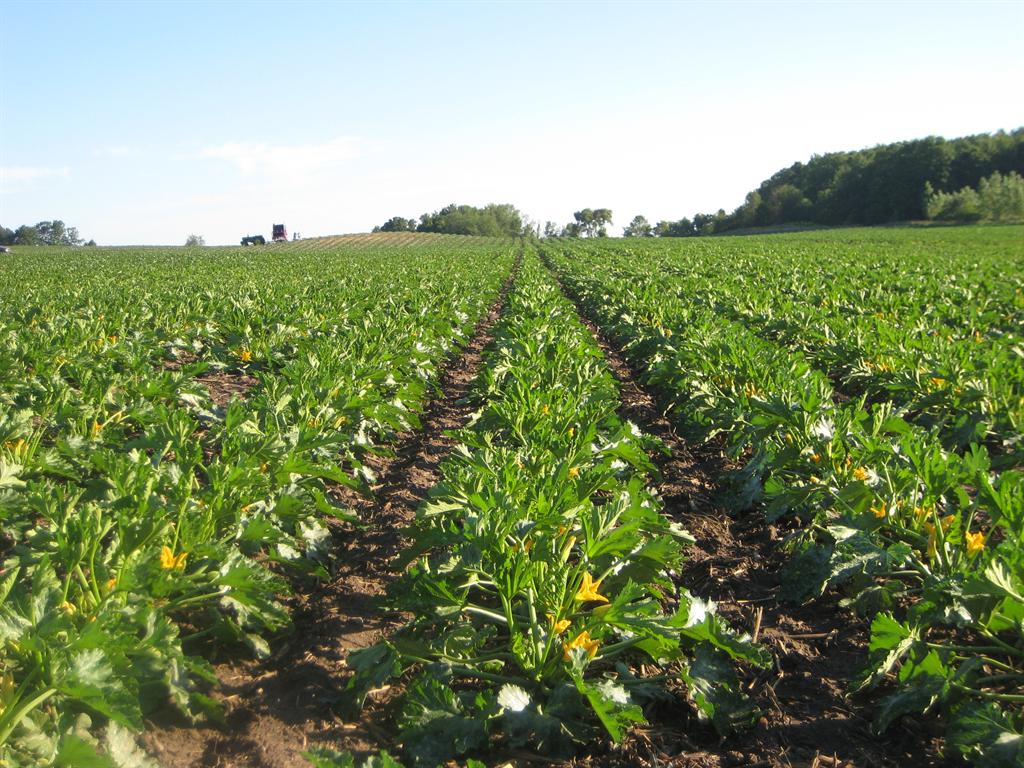
At what cost will Africa realize the economic potential of its agricultural industry? According to McKinsey & Company, about 60 percent of the world’s uncultivated arable land is on the African continent. A few months ago, NPR did a piece on how Brazil has leveraged science to establish the country as a breadbasket. While listening to the piece, I thought about the model Brazil presents for African countries. Initially excited, I then thought about the potential costs of producing genetically manufactured (GM) foods.

Embrapa, Brazil’s government-run agricultural research institute, has done significant research to find ways for various types of crops to grow in the country since the 1970s. This research has led to enormous economic output. According to the Economist, Brazil drove the value of its crops from $23 billion in 1996 to $108 billion in 2006.

Furthermore, the country is only using 12.5 percent of its 400 million hectares of uncultivated arable land. The Economist article qualifies these figures with the caution that Brazil drove agricultural growth systematically, and that growth on the African continent will not come quickly. Brazil spent years improving its soil, in concert with seed development. These developments led to new farming techniques that have enabled farmers to significantly increase their yields.

One can imagine the implications of Brazil’s agricultural growth for the African continent. McKinsey and Company projects that by 2040, African countries can increase the collective value of their agricultural output from $280 billion to $880 billion. To do this, countries will have to bring more land into cultivation, increase crop yields, and replace low-value crops with high-value crops like fruits and vegetables. Furthermore, if African countries are not able to implement these key drivers faster than Brazil has, 2040 will not be the year that the continent realizes $880 billion in agricultural output. The celerity with which African countries have driven the boom of the mobile phone industry makes me hopeful that it will be able to implement agricultural growth at a faster pace.

My tension lies in Brazil being second only to the United States in utilization of GM crops. Proponents of GM foods point to the necessity of these crops in establishing food security and production levels for generations to come. Critics argue against GM crops due to their potential danger to humans, and the threat they pose to other plants. A number of African countries are already producing GM crops, and scientists in Brazil continue to develop new plant technologies and farming techniques. Scientists, farmers, and policy makers are going to have to commit to thoroughly vetting the costs and benefits of employing GM crops in pursuit of a robust agricultural industry on the African continent.

The economic potential of agriculture on the continent is quite impressive and will be an obstacle to objective cost-benefit analysis of policy options. Decision makers must champion thorough research and holistic conversations in shaping the premise on which countries drive agricultural development efforts. Without this hard analysis, the realization of Africa’s agricultural potential could come at a significant cost to the continent’s one-billion people

by  Kwame Som-Pimpong

Kwame is an Atlanta based V.C. expert. He discovers startups for early investments.

Ovim Lite Android Tablet Available At Fasmicro Offices For N30,000

0

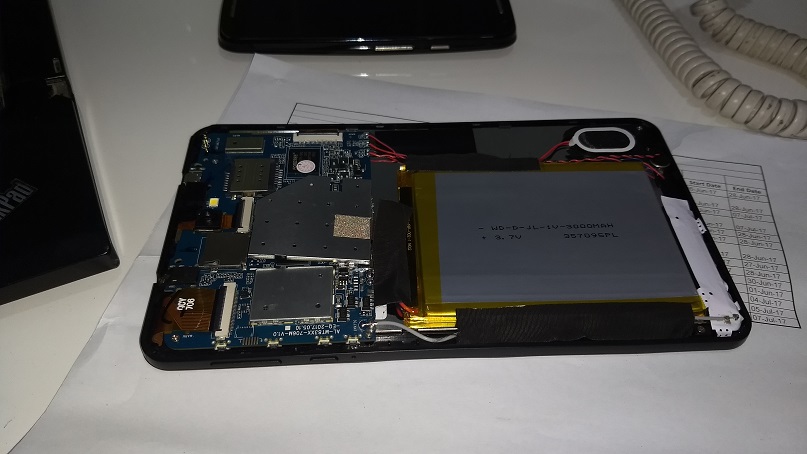
You can now buy Ovim Lite at Fasmicro Owerri office.

Of course you can also buy the 10.1”  Ovim Plus which retails for N59,900 in Owerri or Lagos.


Ovim Lite price: N36,900 (N100 discount for this month)


Ovim Lite Specification
CPU Marvell 166 800MHz ( from US based Marvell Semiconductor)

O/S Google Android 2.2

Top Bonus: Ovim can make/receive phone calls and SMS. It is the only Tablet in Nigeria with Phone feature as a bonus.

Memory 256MB DDR2 RAM

Storage Device 2GB NAND Flash (can be up to 16G)

Screen 7 inch TFT LCD with resistive touch screen, 800*480 Pixels

G-SENSOR MMA7660 accelerometer (inbuilt)

Navigation GPS/compass (optional)

Camera 0.3 MP (inbuilt)

Battery 5000mAH (up to 8 hours after full charge)

Adapter Input voltage: AC 100-240V, output DC9V, 1.6A , Frequency 50-60Hz

USB high speed USB OTG 2.0 AND usb HOST 1.1/ full screen handwriting

Connectivity Wi-Fi 802.11a/b/g. 3G Module (in-built – no driver worries). With in-built 3G, we save you ~N10,000 of external MODEM. And no worries with 3rd party drivers.

I/O ports Mini USB2.0, T-flash–1G to 32G microSD card, build-in microphone, etc

Multimedia video MPEG1, MPEG2, WMV9, MPEG4 SP, ASF, DIVX, H.263, H.264, RMVB, MOV,MKV,TS,FLV, etc

Music MP3/WMA/APE/FLAC/AAC/AC3/WAV/OOG/AAC/EAAC, etc

Online Chat MSN/ SKYPE/GTALK/Yahoo/ICQ, etc

E-book PDF/TXT/CHM/DOC/EXCEL, etc

PIC JPEG/BMP/GIF/PNG/TIFF, etc

Product size 20.1 × 12.5× 1.65 cm

Colors: black, white, pink. Silver

Others standard accessories


Email: info@fasmicro.com

Why Northern Ghana Is Underdeveloped

0

Northern Ghana administratively comprises the three regions of Ghana which lie in the Savanna belt of West Africa and include; Upper West, Upper East and Northern Regions. Geographically, it is boarded to the north by Burkina Faso, to the South by Brong – Ahafo and Northern Volta, to the East is Togo and to the West is Ivory Coast.

Northern Ghana’s fair share of natural resources include shea nut trees, “dawadawa”, Iron ore, salt, abundant land among others. It is blessed with honest, intelligent, hardworking and determined people who however have limited opportunities as compared to their counterparts in the South. Northern Ghana is poor by every indicator of human development when compared with Southern Ghana. The problems confronting the people of the north are multi-faceted as elucidated below.

First and foremost is the conflict situation in the North. Numerous chieftaincy and land disputes some of which have historical antecedents hamper development in the area. More often than not the youth are used to perpetuate violence in areas such as Bawku, Gushiegu, Yendi and others which often lead to destruction of lives and property running into several billions of cedis. We cannot sit in the cities and allow our future leaders in the north to engage in unproductive ventures which make them wallow in poverty and live in despair.

What affect the people of the north affect the people of the south as well. For this reason, we should all be part of “the solution and not the problem”. In the words of Martin Luther King Jnr. in his “Letter from Birmingham Jail”, injustice anywhere is a threat to justice everywhere. People of the north should not sit in Accra and Kumasi and allow their fellow brothers and sisters to die like fowls not through no fault of theirs but the greediness of some unscrupulous people including some politicians.

Colonialism is partly responsible for the underdevelopment of the north. The colonial masters (British) deliberately denied the people of the north access to formal education. They instead saw the north to be a reservoir for labour supply to the cocoa farms and mines in the south. Education got to the north hundred years after it had gotten to our brothers and sisters in the south. Education therefore came as a “beacon of hope” to the people. Thanks to the missionaries especially the Catholic Church which opened up the place and built many quality schools including St. Francis Xavier Minor Seminary, Wa, Notre Dame Seminary, Navrongo, St. Charles Seminary, Tamale, St. Francis Girls in Jirapa, Nandom Secondary School, Lassia Tuolu Secondary among other good schools which have produced great sons and daughters for Ghana in particular and the World at large. Nevertheless, much still need to be done to improve upon the level of education in the area since it is only education that can help bridge the north-South dichotomy.

Furthermore, the media do not help in the projection of the north for its development. It is not uncommon to hear in the news how some journalists misrepresent the north. It saddens my heart when I hear in the news that, “Bolgatanga in the Upper West Region” or “Wa in the Upper East Region”. Also the media tend to hype the negative aspects of the north and the least provocation over there is often liken to Gulf War 1 or the War in Iraq. This is no exaggeration of the fact. It is important that as Ghanaians we know the regions of our country as well learn the culture of others. This will help all of us appreciate the diversity in culture in the various regions of the country.

There is huge potential in the north when harnessed will create employment opportunities for the people which will lead to the development of the area. Tourists sites of high interest abound in the area include, Mole game reserve, Larabanga Mosque, the mystery stone all in the Northern Region. The Paga crocodile Pond, the slave camp in Nania, the Tongu hills and shrine in the Upper East Region. The rock pedestals/Mushroom rocks in Wuling near Jirapa, the hippo. sanctuary on the Black Volta near Wichau, the Nandom Catholic church (Minor Basilica) which is the largest stone church building in Africa all in the Upper West Region are just a few of the many tourist sites in the North when well developed and managed will bring development to the people as well as revenue to the government.

In addition, lack of motivation, encouragement often compel most of the youth to migrate to the South especially Accra and Kumasi to look for jobs which are non-existent. They end up as potters (Kayayei) which expose them to rape and the vagaries of the weather since most, if not all, do not have descent accommodation. Well-to-do people from the north who work in the south and the diaspora do not want to go back home for fear of being ‘killed’ by witches. This has led to retardation of development in the area for several decades.

To add insult to injury, the politicians from this part of the country have not help matters. They promise the people heaven on earth that when given the mandate, they will help secure jobs for the youth and create for them opportunities only for them to win power and turn their back on the very people who voted for them. They return only after the next elections with the same promises. This is the time to rise up and speak with one voice against any politician who comes to deceive our people for we have no time to waste.

Agricultural development should be pursued vigorously in the North. Northern Ghana has vast stretch of land and I propose that irrigation dams be constructed to encourage dry season farming. Poultry farming is another venture that should be encouraged and supported. Farmers should be given credit facilities, farm implements. Through this, employment opportunities will be created to solve the many problems confronting the people of the North.

Conclusion could be drawn by stating that sons and daughters from the North should know that the development of the north is in their own hands. No one government can solve all the problems of the north. The problems of the north can be solved by northerners themselves through commitment, dedication, hard work and peaceful co-existence. Poverty is a human problem and not a natural disaster. Since it is a human problem, it can be solved by human beings. The time has come for all of us to stop the blame game theory as I call it and marshal our strength with zeal and enthusiasm in unity and progress to help develop the north. Let us live in peace and harmony as one people with a common destiny.

by Francis Xavier Tuokuu

Francis is a graduate of the University of Ghana where he graduated with a Bachelor of Arts Degree in Geography and Resource Development with a minor in Philosophy. He began his career in journalism in October 2010 as a Senior Reporter/Acting Editor and was the West African Correspondent writer of “The Development Analyst Magazine”. Email: fxtuokuu@yahoo.com

The Global Economic Downturns and Remittances

0

The global economic downturns also referred to as global credit crunch or crisis is affecting people everywhere in the World either directly or indirectly. Some people argue that it is not a global issue but a Western and European problem. Some economic analysts have likened the crisis to the Great Depression of 1930s. Whatever the case may be Ghana, and for that matter Africa, will be affected adversely.


Clearly, what began as a financial crisis in East Asia in July, 1997 has now developed into a full-blown global economic crisis. Recent developments in Japan and Russia helped to extend the crisis. It was the recent overlapping effects of the Japanese and Russian crises that have been a major cause of the recent worsening in the global economic situation. The intensification of the crisis has dramatically exposed the vulnerability of the International financial system to short-term capital flows and policies of financial deregulation and financial liberalization being pushed by the West through the IMF, World Bank and the WTO (Third World Network).


In Ghana, Dr. Paa Kwesi Ndoum said a stimulus package is needed to boost the economy which the Finance Minister and others disagreed completely. However, one area which contributes a lot to the economy of Ghana but which will reduce drastically is remittance flow from abroad.


Remittances are defined broadly as the monetary transfers that a migrant sends to his/her country of origin or, in other words, financial flows associated with migration. Most remittances are personal cash transfers from a migrant worker or immigrant to a relative in the country of origin. It can be funds invested, deposited, or donated by the migrant to the country of origin. Some scholars go further to include transfers of skills and technology, as well as “social remittances” (Baruah, 2006 in OSCE, IOM, ILO, 2007).


International remittances received by developing countries in 2005 were estimated at around US$167 billion and have doubled in the last five years (World Bank, 2006). Migrant remittances cannot be underestimated as it contributes to foreign exchange, which go a long way to help countries acquire vital imports or pay off external debts. Remittances also play an important role in reducing poverty (World Bank, 2006 in OSCE, IOM, ILO, 2007). Remittances amount to approximately 8% of Ghana’s GDP (estimated at US$ 6,160 million in 2002) (Takyiwaa, 2005, page139).


The global economic downturns will affect remittances because those who contribute to remittances will be laid off their jobs. So many Ghanaians over the past decades migrated abroad especially to Europe and America in search of greener pastures. Some went there legally and others illegally. They do all kinds of work from sweeping of streets to lecturing in the Universities. Some students in our Ghanaian Universities who travel abroad during holidays to do “International any work” are referred to as “burgers”.


They enjoy ‘better lives’ on campus because of the few dollars and pounds they bring home. All these migrants whether temporary or permanent are the very people who contribute the remittances to our economy. The services of all these people however will be cut down because organizations and institutions in which they work will find it difficult to pay them. Some will be retained but their salaries cut down. Australia is to cut its intake of migrant workers for the first time in a decade amid concern that the skilled foreigners could stoke local resentment at a time of rising unemployment. The revised intake will see the quota of skilled migrant workers for next year slashed by about 14% from 133,500 previously to 115,000.


Foreign bricklayers, plumbers, carpenters and electricians are expected to be affected by the new policy (Daily Graphic, 17th March, 2007, page 2). From this, it is obvious that remittances abroad will be reduced because workers will receive less pay which will be insufficient for them to remit back home.


Also, Poverty is likely to increase because a cut down in remittances means some people will go hungry. This is so because some people in Ghana depend solely on their relatives abroad. Their utility bills ranging from water to electricity bills including rent are catered for by their relatives abroad. The volume of remittances from Ghanaians abroad has dropped by some 16% in line with general expectations of a possible dip. Latest figures sighted by Joy Business Report show that monies sent from Ghanaians abroad to relations home, between January and February, 2009 stands at $250 million, a drop from the $300 million registered for the same period last year (The Ghanaian Times, 14th April, 2009, page 27).


Nevertheless, Ghana also stands to benefit if the so many skilled people who traveled abroad in the 70?s and 80?s decide to come home with their knowledge and expertise. Some will come as entrepreneurs to set up businesses and create employment for the many unemployed graduates who are roaming on the streets of Accra and other cities with their certificates in search of non-existing jobs. Others will take up appointments to lecture in our universities, polytechnics and training colleges whereas the nurses and doctors who probably will also return will help bring good health care delivery to the people.


Conclusion could be drawn by saying that whether a stimulus package or not, the global economic crisis will affect all of us in Ghana directly or indirectly. What is important is that, we should be well prepared for it by creating a conducive atmosphere needed for businesses to thrive well. It is gratifying to hear that the government is set to make the agricultural sector more productive and the engine of growth of the economy.


Apart from the many employment opportunities it will create, it will also help in food sustainability and increase foreign exchange flows. My plea is that, it should be supported by a political will and we the people should learn to tolerate one another whether one belongs to party A or party B and stop over politicizing issues. This will go a long way to help us in this period of global crisis. When the right measures are put in place, there will be no going back and we will move forward in unity and progress.