DD
MM
YYYY

PAGES

DD
MM
YYYY

spot_img

PAGES

Home Blog Page 757

Trump’s AI Push Gains Steam as US Adds OpenAI, Google, Anthropic to Federal Vendor List

0

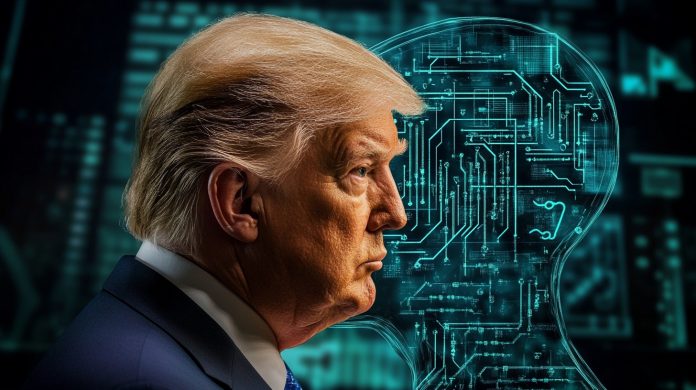
The US government has taken a significant step toward mainstreaming artificial intelligence in federal operations by adding OpenAI, Google, and Anthropic to its approved list of AI vendors.

The move, announced by the General Services Administration (GSA), opens the gates for widespread adoption of advanced AI technologies like ChatGPT, Gemini, and Claude across civilian agencies, marking a major shift in Washington’s approach to automation and digital governance.

By onboarding the three companies into its Multiple Award Schedule — a procurement platform that offers pre-negotiated contracts — the GSA is fast-tracking federal access to commercial AI tools. The agency said the models were vetted for both performance and security, though contract terms remain undisclosed. In similar past deals, the GSA has secured deep discounts from software giants like Adobe, Salesforce, and Google.

GSA Deputy Administrator Stephen Ehikian emphasized the agency’s broader objective: equipping all federal employees with powerful digital tools.

“We’re not in the position of picking winners or losers here,” he said. “There’s going to be different tools for different use cases.”

Still, OpenAI, Google, and Anthropic’s early inclusion highlights how far they’ve advanced in regulatory compliance compared to other firms still navigating federal procurement hurdles. GSA officials confirmed other AI vendors would be considered in due course.

A Presidential Mandate: No “Woke AI”

The rollout comes just days after President Donald Trump signed three executive orders reshaping the government’s relationship with AI. Central to the directives is a mandate that all federal agencies procure language models “free from ideological bias,” an apparent rebuke of what Trump has repeatedly dubbed “woke AI.”

Implementation of this ideological filter will vary agency by agency, GSA officials noted, but the policy is already inflecting federal discourse around algorithmic fairness and model transparency.

“This is a race, right?” said Josh Gruenbaum, commissioner of the GSA’s Federal Acquisition Service. “And as the president said, we’re going to win this race.”

The urgency reflects growing geopolitical stakes in AI supremacy. The administration hopes to reduce the gap between federal capabilities and the private sector, or even rival nations like China, by accelerating adoption across civilian government.

Beyond Defense: Civilian Agencies Now in Focus

While national security agencies such as the Pentagon have already awarded AI contracts to OpenAI and Elon Musk’s xAI, Tuesday’s announcement significantly broadens AI’s civilian footprint. Agencies such as the Treasury Department and Office of Personnel Management (OPM) have expressed interest in deploying these tools for practical, high-volume tasks.

Potential use cases include fraud detection at the IRS, automation of patent review at the US Patent and Trademark Office, grant application screening at the Department of Education, and even editing press releases.

Scott Kupor, Director of the OPM, said he envisions AI being used to build customer service bots and to digest thousands of public comments on federal rulemaking — a task that has long slowed regulatory processes. But he also acknowledged a talent gap inside government.

“We’re probably missing people who are super conversant with very modern, AI-related stuff,” Kupor admitted. “Clearly, we can’t just throw things against the wall and see what sticks.”

A Broader Commercial Shift

This federal embrace comes at a pivotal moment for AI vendors. Many of these companies — including OpenAI and Anthropic — are navigating fierce competition not only for enterprise clients but also for top engineering talent. As revealed in recent interviews, OpenAI has even become protective of its most prized debuggers, concealing their identities out of concern over poaching, particularly by Meta and other Silicon Valley rivals.

In that sense, GSA’s announcement is more than just a bureaucratic update. It signals Washington’s deeper engagement in the AI arms race — one where the players are not just governments but tech titans with global reach and ideological agendas. And with Trump’s executive orders now setting the tone, the federal marketplace for AI isn’t just growing — it’s being reshaped.
Adam Weitsman’s Acquisition of 5000 Otherdeeds Spark Debates About Central Control

0

Billionaire Adam Weitsman acquired over 5,000 Otherside NFTs, including Otherdeeds, Mega Kodas, and Weapon Kodas, directly from Yuga Labs in an over-the-counter (OTC) deal.

This purchase, representing nearly half of Yuga Labs’ 10,400 Otherside NFT holdings, is a show of long-term support for the Otherside metaverse, a gamified virtual world blending MMORPG and Web3 elements. Weitsman also plans to acquire more NFTs on the open market, signaling confidence in the project’s future despite a 95% decline in the NFT market’s trading volume.

Following the announcement, the Otherside collection’s floor price rose to a one-month high of 0.19 ETH. Yuga Labs, known for Bored Ape Yacht Club, has been focusing on Otherside after divesting assets like CryptoPunks and Moonbirds.

Co-founder Greg Solano praised Weitsman’s commitment, noting his role as a key partner in the project’s next phase. Adam Weitsman’s acquisition of over 5,000 Otherside NFTs from Yuga Labs raises several implications and concerns regarding central control in the context of NFTs and the broader Web3 ecosystem.

Weitsman’s purchase of nearly half of Yuga Labs’ Otherside NFT holdings concentrates significant ownership in the hands of a single individual. This could give him outsized influence over the Otherside metaverse’s economy, governance, or future development, especially if voting rights or utility are tied to these assets.

Weitsman’s move, coupled with his intent to buy more NFTs on the open market, signals strong belief in the Otherside metaverse’s long-term potential. This could attract other investors or developers, potentially boosting the ecosystem’s growth, but it also ties the project’s perceived success to a single player’s actions.

While Web3 and NFTs are often marketed as decentralized, such a large acquisition by one entity highlights how wealth concentration can undermine this ethos. Weitsman’s control over a significant portion of Otherside assets could mirror traditional power structures, where a few wealthy players dominate.

If Otherside’s metaverse incorporates decentralized governance (e.g., through DAOs or token-based voting), Weitsman’s large holdings could grant him disproportionate influence over decisions, potentially sidelining smaller holders and centralizing control.

With such a substantial stake, Weitsman could intentionally or unintentionally manipulate the market by selling or holding assets strategically, affecting liquidity and pricing. This could harm retail investors or create distrust in the project’s fairness.

The promise of Web3 is community-driven ecosystems, but concentrated ownership by a billionaire could shift Otherside toward a more centralized model, where one entity’s decisions heavily impact the project’s direction, contradicting the decentralized ethos.

The project’s success may become overly reliant on Weitsman’s continued support or financial involvement. If he were to exit or reduce his stake, it could destabilize the ecosystem, especially given the NFT market’s current 95% decline in trading volume.

Concentrated ownership may discourage new participants, as retail investors might feel priced out or unable to compete with “whales” like Weitsman. This could limit the diversity of the Otherside community, which is critical for a vibrant metaverse. This acquisition reflects a broader trend in the NFT space, where wealthy individuals or entities often accumulate significant portions of collections.

While Yuga Labs frames Weitsman’s involvement as a positive partnership, the concentration of assets in one person’s hands could spark debates about whether Web3 projects truly align with their decentralized ideals or simply replicate existing power imbalances in a new form.

Ventuals’ Pre-IPO Initiative on Hyperliquid Could Redefine How Private Company Shares Are Valued and Traded

0

Ventuals, a platform incubated by Paradigm, has announced its initiative to enable pre-IPO trading of private company shares on Hyperliquid, a high-performance Layer 1 blockchain designed for decentralized finance (DeFi).

This move aims to democratize access to a multi-trillion-dollar asset class traditionally reserved for institutional investors and venture capitalists, allowing retail investors to trade perpetual futures (perps) on private companies like OpenAI, SpaceX, and Stripe before their initial public offerings (IPOs).

Ventuals leverages Hyperliquid’s HIP-3 standard (Builder Deployed Perpetuals) to create custom perpetual contract markets, utilizing a proprietary pricing mechanism called an “optimistic oracle.” This system allows anyone to submit a valuation and stake collateral, with disputes resolved through a challenge-and-vote process, transforming off-chain consensus into on-chain pricing.

The platform addresses the challenge of pricing private equities, which lack public market data, by blending off-chain data feeds with an exponential moving average (EMA) of the perp’s mark price, ensuring price discovery while tethering valuations to real secondary market transactions.

This initiative aligns with Hyperliquid’s broader mission to break the information asymmetry and price suppression often seen in traditional IPOs, where investment banks underprice shares to benefit institutional clients. By enabling pre-IPO trading, Ventuals and Hyperliquid aim to create transparent, open markets that reduce arbitrage opportunities for insiders and allow retail investors to participate in the growth of high-potential startups.

For example, trading on Ventuals reportedly allowed investors to go long on Circle at a $7 billion valuation before its IPO, yielding up to 240% returns compared to 55% at the IPO’s $15.5 billion opening valuation. However, pre-IPO trading carries significant risks, including information asymmetry, company failure, and regulatory hurdles like SEC restrictions and lock-up periods.

Ventuals’ approach, built on Hyperliquid’s infrastructure with sub-second latency and capacity for 100,000 orders per second, aims to mitigate some of these risks through transparency and high-frequency trading capabilities. The platform’s founders, Alvin and Emily Hsia, previously built Shadow, a project focused on efficient on-chain data extraction.

This development could redefine private market access, potentially positioning Ventuals as a transformative force in DeFi and capital markets, though its success will depend on navigating regulatory complexities and maintaining robust pricing mechanisms.

By allowing retail investors to trade perpetual futures on private companies like OpenAI or SpaceX, Ventuals breaks down barriers to an asset class historically reserved for venture capitalists and institutional investors. This could expand wealth-building opportunities for a broader audience.

Traditional IPOs often favor insiders who benefit from underpriced shares. Transparent pricing on Hyperliquid’s blockchain, driven by Ventuals’ optimistic oracle, could level the playing field, giving retail investors access to valuations closer to fair market value.

Private company shares are typically illiquid, with long lock-up periods. Ventuals’ perpetual futures markets create synthetic liquidity, allowing investors to trade exposure to these assets without owning the underlying shares, potentially attracting more capital to private markets.

The optimistic oracle and Hyperliquid’s infrastructure provide a novel mechanism for pricing illiquid private equities. By combining off-chain data and on-chain mark prices, Ventuals could set a precedent for valuing private assets in a transparent, decentralized manner.

If pre-IPO trading gains traction, investment banks may face pressure to reform IPO pricing practices, as retail investors could bypass underpriced offerings and capture value earlier, reducing arbitrage opportunities for institutional players.

Advancement of DeFi and Blockchain Technology

Hyperliquid’s high-performance blockchain, with sub-second latency and 100,000 orders per second, demonstrates its ability to handle complex financial instruments like pre-IPO perps. This could drive adoption of Hyperliquid as a go-to platform for DeFi innovation.

Ventuals’ application of perpetual futures to private equities expands the scope of DeFi, showing that blockchain-based derivatives can represent real-world assets beyond cryptocurrencies or commodities. The optimistic oracle model, with its stake-and-challenge mechanism, could inspire similar pricing systems for other illiquid or hard-to-value assets.

By enabling broader access to high-growth private companies, Ventuals could contribute to reducing wealth inequality, though this depends on retail investors’ ability to manage risks and access the platform. Normalizing pre-IPO trading could shift how society views startup investing, encouraging earlier retail participation in innovation-driven companies but also potentially fueling speculative bubbles.

Increased liquidity and visibility through pre-IPO trading could make private companies more attractive to investors, potentially lowering their cost of capital and accelerating growth, though it may also pressure founders to prioritize short-term valuations over long-term strategy.

However, its success hinges on overcoming regulatory hurdles, ensuring robust pricing mechanisms, and managing the inherent risks of private market investments. If executed well, this could catalyze a broader shift toward decentralized, transparent capital markets, with ripple effects across startups, investors, and financial institutions.

Binance Launches “ALL” Composite Index Perpetual Contract (ALLUSDT) With Up to 75x Leverage

0

Binance launched its “ALL” Composite Index perpetual contract (ALLUSDT) and trading to start on August 6, 2025, at 9 a.m. UTC, offering up to 75x leverage. This USD-margined contract tracks all USDT-quoted USD-M perpetual futures on Binance, excluding ETHBTC, USDC-quoted contracts, delivery products, pre-market pairs, and other composite indexes.

It settles in USDT, supports Multi-Assets Mode margining, and rebalances daily at 08:00 UTC, with new listings added and delistings removed in the nearest cycle. The launch follows a seven-month high in futures volume in July 2025. Parameters may adjust based on market conditions.

The ALLUSDT contract tracks a broad basket of USDT-quoted perpetual futures (excluding specific pairs like ETHBTC and USDC-quoted contracts). This provides traders with diversified exposure to the crypto market, potentially reducing the risk of single-asset volatility while still capturing overall market trends.

With 75x leverage, traders can amplify their positions significantly, enabling higher potential returns with less capital. The Multi-Assets Mode margining allows users to collateralize positions with various assets, enhancing capital efficiency.

As a composite index, ALLUSDT reflects the performance of a wide range of crypto futures, serving as a proxy for overall market sentiment. This could attract institutional and retail traders looking to speculate on or hedge against broader market movements.

The contract’s inclusion of multiple assets and daily rebalancing at 08:00 UTC may enhance liquidity but could also introduce volatility during rebalancing periods, especially if significant market moves coincide with new listings or delistings.

Effects on Risk and Leverage

The 75x leverage magnifies both potential profits and losses. A small adverse price movement (e.g., 1.33% against the position) could lead to liquidation, increasing risk for inexperienced traders or those with insufficient risk management.

The use of USDT settlement and Multi-Assets Mode means traders must monitor margin requirements closely, as price swings in collateral assets could trigger margin calls or liquidations, especially during volatile market conditions.

Daily rebalancing introduces the risk of price slippage or unexpected changes in the index’s composition, particularly when assets are added or removed. This could affect leveraged positions if the index’s value shifts significantly during rebalancing.

Since the index covers a broad range of futures, it may expose traders to systemic risks in the crypto market, such as widespread sell-offs or regulatory events impacting multiple assets simultaneously.

For sophisticated traders, the contract offers a tool to hedge broader crypto portfolio exposure. However, the high leverage requires precise risk management to avoid overexposure. Traders should limit position sizes to manage the high leverage’s impact, ensuring they can withstand adverse price movements.

Using stop-losses can help mitigate losses from sudden market drops, particularly given the contract’s broad market exposure. Traders need to stay aware of rebalancing schedules and potential index composition changes to anticipate volatility. Leveraging Multi-Assets Mode requires careful selection of collateral to avoid correlated risks between the index and margin assets.

The ALLUSDT perpetual contract offers opportunities for high returns and diversified exposure but comes with heightened risks due to its 75x leverage and broad market linkage. Traders must employ robust risk management to navigate the amplified volatility and systemic risks inherent in such a product.

Coinbase Plans to Raise $2B Amid Base Blockchain Halting Block Production for 19 Minutes

0

Coinbase, a leading U.S. cryptocurrency exchange, announced plans to raise $2 billion through a private offering of convertible senior notes, split evenly between 2029 and 2032 maturities, with an option for an additional $300 million.

The notes, offered to qualified institutional buyers, aim to fund general corporate purposes, including working capital, acquisitions, and capped call transactions to reduce potential dilution. This move follows a Q2 revenue decline and a 15% drop in COIN shares, though some analysts see it as a buying opportunity.

Separately, Coinbase’s Ethereum Layer-2 network, Base, experienced its first major outage since 2023, halting block production for 19 minutes on August 5, 2025, due to a sequencer failure. The issue, reported at 06:15 UTC, was resolved by 06:44 UTC, with no loss of funds. The outage highlights centralization risks in Layer-2 designs, prompting calls for more robust, decentralized solutions.

The outage, even though short, temporarily disrupted deposits, withdrawals, and decentralized application (dApp) functionality, potentially shaking user confidence. Social media platforms like Reddit, X, and Telegram saw heightened activity with user concerns, memes, and speculation, indicating a hit to perceived reliability.

With over $4.2 billion in total value locked (TVL) on Base, including $1.5 billion tied to protocols like Morpho, the halt paused DeFi operations, causing transaction congestion and delays. This could deter users and developers relying on Base for time-sensitive financial activities.

Base’s rapid growth, including surpassing Solana in daily token launches (54,000 on July 27), positions it as a key player in Ethereum’s scaling ecosystem. Outages undermine its reputation as a scalable, reliable solution, which is critical for mainstream adoption.

The outage, caused by an “unsafe head delay” linked to Base’s centralized sequencer, highlights a critical flaw in its architecture. Unlike Ethereum’s mainnet, which is secured by thousands of validators, Base’s reliance on a single Coinbase-operated sequencer means a single point of failure can halt the entire network.

Critics and decentralization advocates are pushing for Base to adopt backup sequencers or a decentralized rollup architecture to mitigate such risks. This incident amplifies long-standing concerns about centralization in Layer-2 designs, which could limit trust from developers and institutions.

The outage coincided with a surge in network activity, driven by features like Basenames and integrations with platforms like Zora and Farcaster. This suggests that rapid scaling may have outpaced infrastructure readiness, exposing technical limitations.

Coinbase has not yet released a detailed post-mortem, leaving questions about whether recent upgrades, like Flashblocks, contributed to the issue. This lack of clarity could fuel skepticism about Base’s operational maturity.

The outage is not isolated, as other blockchains like Sui, TON, Avalanche, and Solana have faced similar disruptions in 2024. However, Base’s role as a Coinbase-backed, high-profile Layer-2 makes its failures more scrutinized, given its 110 million-user ecosystem and partnerships with major brands.

Why Base’s Reliability Is Critical at This Stage

Base leverages Coinbase’s 110 million verified users, making it a gateway for mainstream Web3 adoption. Downtime risks alienating this large audience, particularly retail users and developers building dApps for social media, gaming, and DeFi.

As the second-largest Ethereum Layer-2 by TVL ($13 billion) and a leader in transaction volume, Base competes with Arbitrum, Optimism, and other scaling solutions. Reliability is a key differentiator, as users and developers prioritize networks with consistent uptime for financial and operational stability.

Base is integral to Ethereum’s scaling strategy, handling high transaction volumes at lower costs while maintaining Ethereum’s security. Disruptions undermine its role as a scalable complement to Ethereum’s mainnet, especially as Layer-2s become mission-critical for Ethereum’s ecosystem.

Base hosts a vibrant ecosystem of dApps, including Blackbird, CyberConnect, and Echelon Prime, which rely on its performance for gaming, social media, and DeFi applications. Downtime disrupts developer operations and could deter new projects from building on Base, slowing ecosystem growth.

Coinbase’s $2 billion convertible notes offering signals aggressive expansion plans, likely tied to enhancing Base and other services. Outages could undermine investor confidence in Coinbase’s ability to execute, especially amid a Q2 revenue decline and a 15% drop in COIN shares.

The Base outage, while resolved quickly, underscores the fragility of centralized Layer-2 designs and the high stakes for reliability at this stage of its growth. As a cornerstone of Ethereum’s scaling ecosystem and Coinbase’s Web3 strategy, Base’s uptime is critical to maintaining user trust, developer confidence, and market leadership.