

DD
MM
YYYY

PAGES

DD
MM
YYYY

spot_img

PAGES

Home Blog Page 7724

Adoption of This Technology will Make Nigeria Leapfrog South Africa in GDP

5

Outlook on Nigeria:  For Nigeria to realize the Vision 2020 and become the 20th largest economy, it must grow at least 9.5% annually within the next eleven years, 2010 included. It is currently ranked 44th ($174b (nominal), 2009) and chasing Belgium which is 20th ($471b, 2009), according to IMF.  Making that jump will require a compounded interest of 298% by 2020 which will translate to 171% percentage growth in the GDP. This analysis assumes that the GDP of the 20th economy will remain constant in 2020. For a nation that has averaged about 5.5% in growth, in the last seven years, it does mean that it needs a new growth engine.

Yet, while one can dismiss the bold vision of Nigeria’s government, it is important to note that in 1999, the GDP was $34.8b. A combination of policies and massive ICT investment, the nation moved from 105th position in global GDP ranking to 44th today. Though the ICT market is still one of the fastest growing ones in the world, the FDI has slowed down.


Now, Nigeria needs another engine to drive growth. Our analysis shows that a 50%* penetration rate of creative semiconductors and microelectronics will produce a compounded interest of 300% in the next ten years and make Vision 2020 a reality. This will create excess of one million direct and indirect jobs. The study shows that microelectronics will accelerate Nigeria’s overall growth since most ICT products will then be made in Nigeria, if MNCs build plants, over mere distribution and sale of their electronics and ICT products. When we benchmarked with Asia, we noticed that Nigeria has advantages in currency, wage, regulations, and other factors for oursourcing. The clustering effect and ability to develop technology districts, anywhere without regards to any raw material but knowledge, show that microelectronics will position Nigeria for greatness.


To make this possible, Fasmicro has a clear roadmap to help the Nigerian government (federal, state, or local) develop the industry through targeted policies and stimulations. We are proud of our four years of experience in a United States National Science Foundation committee, which has helped us master the act of crafting and implementing successful roadmaps.


*Our diffusion model is not the traditional home penetration model, rather one that focuses on SMEs. If there are hundred technical companies and fifty use microelectronics/semiconductor products creatively, we will assume a 50% penetration rate. If none uses creatively, all does sale and distribution, we assume 0% diffusion. We are looking for value creation either by using already created microelectronics related products or by actually developing new ones. That makes us assign a high value to a (potential) Lagos maker of Video Games and nothing to a firm that distributes video games.


We focus on value because a company that takes silica (sand), the starting material of semiconductors, and produces a microchip may be transforming a N100 worth of sand to a value of N100,000 while the one that sells that end product makes only marginal gains (few hundreds of Naira). That high value creation is our focus in this diffusion model and not the use of the products by end consumers. Practically, Zinox Computers (Lagos) gets a high score from us because they create value while most computer distribution firms in Ikeja Computer Village get zero in our model.
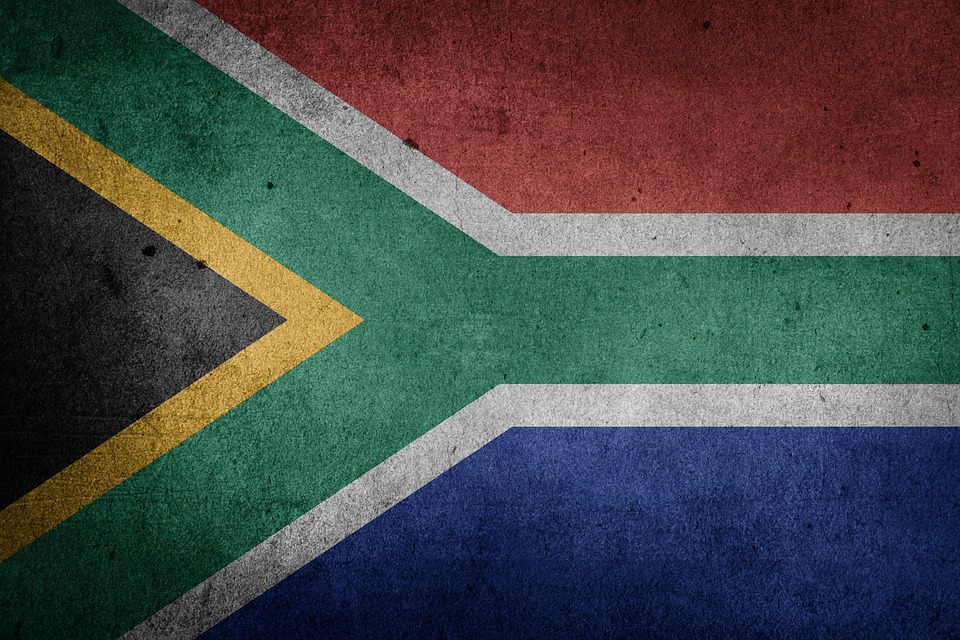
Research Policies That Can Destroy South Africa

0
South African flag

When we blogged on the greatest legislation, we shared some insights on the impacts of Bayh-Dole:

“In 1980, a United States legislation dealing with intellectual property emanating from federal government-funded research was implemented. The legislature called Bayh-Dole Act (after two Senators Birch Bayh of Indiana and Bob Dole of Kansas that sponsored it) or University and Small Business Patent Procedures Act gave US universities, small businesses and non-profits intellectual property rights and control of their inventions, even though they were funded by government.

Through this Act, universities, small businesses or non-profit organizations could pursue ownership of inventions in preference to the government.”

In South Africa, they are planning the opposite, in a typical African way. They hoped by making ideas funded by government to remain in shelves instead of moving to market, they will force private companies to put resources in research. It is sheer ignorance to think that companies that license patents and commercialize them from projects funded by governments are not helping the economy. If South Africa follows this path, it could be a turning point in their technology roadmaps.

Meanwhile, according to a UNCTAD report, the increasing role of large developing countries in global trade, finance, investment and governance, coupled with their rapid economic growth, has stimulated debate on the implications for Africa’s development. The report examines recent trends in the economic relationships of Africa with other developing countries and the new forms of partnership that are animating those relationships.

Samsung Becomes Microsoft’s Latest Android IP Infringement Target

0

Over the last few weeks, Microsoft had gunned down a number of Android smartphone and tablet manufacturers and reached a licensing agreement with those companies as Microsoft claims that by making and selling products utilizing the Android operating system, these companies are misappropriating patent technologies that Microsoft owns.


Microsoft has gone as far as going after some of its long-time and key partners in the mobile space, and it is believed that Windows Phone and Windows Mobile manufacturer HTC had agreed to a $5 per handset licensing fee per Android smartphone that it sells. Now, Microsoft may be going after Samsung, which makes Windows Phone, Android, and Bada OS devices, with a licensing fee as high as $15. The licensing fee that is speculated to be requested by Microsoft from Samsung is on the high side, and at $15 per Android phone, that fee would be the equivalent of a license of Windows Phone.


Neither Samsung nor Microsoft are commenting on the issue, though it is believed that Samsung may ask that the licensing fee be dropped down to around $10. Other companies being targeted by Microsoft in the past include Winstron, Velocity Micro, and Itronix, for example.


While it is interesting that Microsoft’s patent licensing business could rival and top its Windows Phone licensing as Android’s popularity continues to grow, it does present new market opportunities for Microsoft as well. In the future, rather than ask for royalty payments, Microsoft could work out agreements with manufacturers where it could undercut Google in key areas where the search giant is utilizing Android to monetize its core business. Rather than asking for money from Android licensees who infringe on Microsoft’s mobile patents, Microsoft could ask manufacturers, for example, to make Bing search and Bing Maps the default search and mapping tools on Android smartphones.


This would be a clever strategy as it would help Microsoft grow its mobile search shares and build out its Bing franchise without having to rely on Windows Phone. Android smartphone makers have been also targeted by Apple as well, with Apple having filed lawsuits against Motorola and HTC in the past.


Although the Android operating system is given free to manufacturer to use from Google, Microsoft’s latest claims and Apple’s claims in the past shows that Android is in fact not free to use in the marketplace. With manufacturers having to pay Google’s rivals in the mobile space for technologies that are present in Android that the OS infringes upon, the cost of these royalty payments are either absorbed by manufacturers like HTC or are passed down to consumers through higher phone prices.


Microsoft’s move comes as Samsung is dedicating more of its resources to Android. The Korean phone-maker has gained the position of the leading Android smartphone maker and is expected to de-thrown Nokia for the position of top smartphone maker.


Recently Microsoft publicly asserted for the first time that Google’s Android operating system infringes on its intellectual property.  Microsoft has taken the position, according to those close to the company, that Android infringes on the company’s patented technology and that the infringement applies broadly in areas ranging from the user interface to the underlying operating system.


In a statement, Microsoft deputy general counsel Horacio Gutierrez said that, although Microsoft prefers to resolve intellectual property licensing issues without resorting to lawsuits, it has a responsibility to make sure that “competitors do not free ride on our innovations.”

Nigeria Alternative Energy Expo Postponed To October 17-19, 2011, Yardua Conference Centre, Abuja

7

About the Event

The Nigeria Alternative Energy Expo 2011 is Nigeria’s premier alternative energy event. NAEE 2011 takes place at the Yaradua Convention Centre, Abuja Nigeria from July 6- 8 2011 (Oct 17-19, 2011). The event organizers promises and impressive line-up of local and international speakers, delegates and exhibitors, who will gather to debate a new energy future for Africa’s biggest nation.


Mathesis Consulting has announced today that, Nigeria Alternative Energy Expo has changed the date of the 2011 Expo, to be held at the Yardua Conference Centre, Wuse, Abuja, Nigeria. The expo will now be held on October 17 – 19, 2011.


This year’s conference will focus on the theme reforming the Nigerian Power sector with Alternative Solutions. NAEE 2011 takes place in partnership with Nigerian’s Department of Energy, Presidential Action committee on Power (PACP), as well as numerous other local and multinational organisations, from both the public and private sectors, whose core competency is in developing solutions to Africa’s energy requirements. This year event will attract more than 4,000 renewable energy power professionals and over 200 exhibiting companies from all over the World.


This year’s workshop highlights critical industry issues to the forefront. Featuring prominent industry speakers and representatives, the programme is designed to enable delegates stay abreast of industry developments, obtain technical knowledge and understand the issues affecting today’s global energy industry in the Nigerian context. Nigeria Alternative Energy Expo will Feature insightful discussions and presentations related to technology, strategies and policies covering the wind, solar, biomass, hydro, geothermal, ocean/tidal/wave, bio-power, bio-fuels and hydrogen energy sectors.


There has never been a better time to be a part of this exciting moment that the Nigerian government as pledged to deliver uninterrupted power through alternative energy. Don’t miss this opportunity to network with thousands of experts’ and stake holders in the Nigerian Market.


The Workshop

This session will highlighting the progress so far, challenges and options for generation, transmission, distribution and management of the Nigeria’s Energy sector. Government officials, Company executives, captains of industries and parastatals, amongst others will present papers.


The Exposê

This session will be held concurrently with the expo, the Expose will focus on presentations by leading experts on sustainable energy solutions for today and the future of Nigeria. The exhibitor will present their latest technologies and innovations that are already on display to the audience. There will be special Event Day/s and product launch during the Expo please contact Organizers if you are interested.


Attend NAEEE 2011 and benefit:
• Networking amongst more than 200 senior level energy sector experts and decision-makers planning and reforming the Nigeria energy sector.
• Hearing from expert speakers presenting the latest and best industry practice.
• Visiting over 100 leading energy suppliers showcasing the latest technologies, equipment and services.
• Reviewing policy and regulation, industry progress, and changing market trends.
• Establishing a remarkable presence in the Nigerian market
• Sourcing and commissioning of local agents for your products


Attend NAEEE 2011 and meet:
• Government & Municipality Representatives
• African Utilities & African Ministers of Energy
• Project Developers/Consultants / Analysts
• Environmental Engineering
• Equipment & Technology Solutions
• Banks/Investors/Insurance
• Energy representatives from the continent
• Automotive & Transport
• Green energy experts
• Commodity Traders / agents &

DATE & VENUE
October 17-19, 2011

Time: 9am – 5pm Venue: Yardau Centre, Wuse, Abuja, Nigeria.

The exhibition ground is over 1000 sqm. It is a five-star, Conference Centre in Abuja CBD and is about 25 minutes driving from the NnamdiAzikiwe International Airport.


Admission
Admission to the Exhibition is free.


Registration
All visitors must register on arrival at the Venue. Registration cards must be obtained and completed before one can gain entry into the venue. Invitation cards may be obtained from the Organizers office at the Exhibition arena. Admission badges will be issued and must be worn at all time in the venue for security reasons. Subsequent entries can be made without further registration provided that the assigned badges are won.


Country Information
Nigeria is the most populous black nation in the world and is among the ten largest oil producing Countries in the world, with a population of more than 130 million.
Land mass: 923,768 sq.km
Population: 140,003,542
Government: Three-tier-a Federal Government, 36 States Governments, 774, Local Government Administrations.
Official Language: English
Main indigenous Languages: Hausa, Igbo, Yoruba
Main Commercial/Industrial Cities: Lagos, Onitsha, Aba, Kano, Kaduna, Enugu, Port Harcourt, Warri
Main Ports: Lagos Apapa, tin-can Island], Warri, Port Harcourt, Calabar
Main Airports: Lagos, Kano, Port Harcourt, Kaduna, Enugu, Calabar, Owerri, Maiduguri
Currency: Naira and Kobo N1.00=100k [one naira= hundred kobo / 1 USD = 150 NGN ]
Climate: Temperatures across Nigeria are relatively high with a very narrow variation in seasonal and diurnal ranges [22-36t]. There are two basic seasons; wet and dry. Wet Season lasts from April to October; while Dry Season, is from November to March.

Yardua Conference Centre, Wuse, Abuja

Twitter Valued at $7 Billion In a New Financing Round

0

Twitter, the Microblogging  site, is in talks for extra hundreds of millions of dollars in financing. This round is expected to value the company at close to $7 billion dollars. In Dec 2010, it got $200m and was valued at about half of this value.


Does it mean that Twitter has appreciated in value within about six months? We do not think so. It is largely the model now where the succeeding tech companies are getting more money with the thinking that if anything goes wrong, they will be  the ones that will survive. Watch out for the season of bubble, but only the strong will succeed.


Similarly, we are seeing a lot of tech partnerships as companies create synergies to better position them for competitions. IBM and Cable Wireless Worldwide announced plans to develop a smart energy cloud in Britain. In the same light, Tesco and J Sainsbury have rolled out energy saving services.