

DD
MM
YYYY

PAGES

DD
MM
YYYY

spot_img

PAGES

Home Blog Page 7735

Microchip Announces 60 MIPS 16-bit dsPIC Digital Signal Controllers (DSCs) and PIC24 Microcontrollers (MCUs)

0

Microchip has announced 60 MIPS 16-bitdsPIC® Digital Signal Controllers (DSCs) and PIC24 microcontrollers (MCUs).   Based upon the next-generation dsPIC DSC/PIC24 MCU core, the 60 MIPS dsPIC33 and PIC24 “E”devices offer larger (536 KB) Flash memory, more RAM (52 KB), greater I/O capability with 144-pin packages, a USB 2.0 OTG interface, and expanded motor-control, graphics, audio, and real-time embedded-control capabilities over the previous-generation dsPIC DSC/PIC24 MCU core.  In support of the first nine dsPIC33 and PIC24 “E” devices released today, Microchip launched two USB starter kits and five Plug-In Modules (PIMs) that can be used with its Multimedia Expansion Board, motor-control development kits, and Explorer 16development platforms.  Also available are 30 software libraries and application notes on topics such as speech and audio, encryption/decryption, communications, and motor control.  The new devices and comprehensive support package help designers create high-performance designs in less time.


Microchip’s dsPIC33E DSCs and PIC24E MCUs are fully compatible with the existing broad portfolio of dsPIC33F DSCs and PIC24H/PIC24F MCUs, software libraries and tools, providing a solid growth path for current customers.  The new USB 2.0 On-The-Go (OTG) peripheral enables a connection to a PC, Flash drive and other USB-enabled devices, and 60 MIPS performance means the new devices support high-end industrial and commercial applications, such as Servo motor control, solar inverters, and running dual 3-phase motors in parallel.  Additionally, a new, independent Pulse Width Modulation (PWM) mode supports multiple stepper motors and dead-time compensation, which reduces software overhead.  Three on-chip analog comparators further reduce system cost and the number of external components required.


“Microchip continues to invest in its 16-bit product lines,” said Sumit Mitra, vice president of Microchip’s High-Performance Microcontroller Division.  “Building upon the success of previous-generation dsPIC DSCs and PIC24 MCUs, the new ‘E’ core devices, and their extensive support resources, provide the increased performance, integration, and whole-product solution that customers need for their increasingly complex designs.”


The first dsPIC33 and PIC24 “E” devices include four each of the SPI and UART interfaces, as well as two I2C™ interfaces.  A new auxiliary Flash module enables designers to program or erase Flash data without slowing normal CPU operation, which is critical for motor-control, power-conversion and many other applications that require on-the-fly programming.  Improved Direct Memory Access (DMA) functionality automatically starts linked DMA operations, and the improved debugger capability enables complex breakpoints for faster debugging.  Additionally, with enhanced timer capabilities, the dsPIC33 and PIC24 “E” devices’ Input-Capture and Output-Compare modules are more flexible and powerful.


Microchip also announced the dsPIC33E USB Starter Kit (part # DM330012, $65) and PIC24E USB Starter Kit (part # DM240012, $65), today. These starter kits can be used for stand-alone development and also work with Microchip development platforms such as its Multimedia Expansion Board (part # DM320005) to enable the development of high-impact user interfaces.


Additionally, several Plug-In Modules (PIMs) were introduced for Microchip’s Explorer 16 Development Board and motor-control development kits, including the dsPICDEM™ MCHV (part # DM330023), dsPICDEM MCLV (part # DM330021) and dsPICDEM MCSM (part # DM330022) kits. New PIMs include the dsPIC33E 100-pin PIM for Motor-Control, General-Purpose and Graphics applications (part # MA330025-1, $25); PIC24E 100-pin PIM for General-Purpose and Graphics Applications (part # MA240025-1, $25); dsPIC33E 144-pin PIM for General-Purpose and Graphics Applications (part # MA330025-2, $30); dsPIC33E 144-pin PIM for Motor-Control Applications (part # MA330025-3, $40); and PIC24E 144-pin PIM for General-Purpose and Graphics Applications (part # MA240025-2, $30). The dsPIC33E Dual Motor Control PIM (part # MA330027, $175) enables designers to control two motors using one dsPIC33E DSC and is expected to be available this July 2011.


The dsPIC33E and PIC24E devices are also supported by Microchip’s standard development tools, including the MPLAB® IDE, MPLAB ICD 3 In-Circuit Debugger and REAL ICE™ In-Circuit Emulator, as well as the MPLAB C Compiler for PIC24 MCUs and dsPIC DSCs (also known as the MPLAB C30 C Compiler).


The dsPIC33E DSCs and PIC24E MCUs are available in 64-pin QFN and TQFP packages, 100- and 144-pin TQFP, 121-pin BGA, and 144-pin LQFP packages. Pricing starts at $4.98 each, in 10,000-unit quantities.


For more information, visit www.microchip.com
 

Technical Proposals on Microelectronics and Mobile Apps Dev- Some Samples and Expert Publications

0

We are experts in developing technical proposals and grants. Here is an example for your review. Let us help you customize that proposal and build a solid international network inside it. Besides,  our clients have access to the following publications. We also write white papers in the domain we operate.


Technical analyses and papers


  • Outlook 1: How to Establish and Manage a Semiconductor & Microelectronics Institute- with special focus for an African based operation Read more.
  • Outlook 2: Nigerian Semiconductor and Microelectronics Industry-summary of the industry as at August 2010. Read more.
  • Outlook 3: South African Semiconductor and Microelectronics Industry-summary of the industry as at August 2010. Read more.
  • Outlook 4: Clustering and Competitiveness Report of Lagos computer industry. Read more.
  • Outlook 5: Clustering and Competitiveness Report of Aba shoe industry. Read more.
  • Outlook 6: Lessons from Nigerian Mechanic villages- Clustering, Synergy, Innovation and Competitiveness. Read more.


For more: http://fasmicro.com/Products.aspx


Proposals are here:


Churches’ Connect – The Cheapest Way for Churches to Get Online in Nigeria. Highly Affordable


Web Services & eBusiness

  • Web design and hosting
  • Networked Digital Libraries for schools, firms, and governments


We now offer to our Premium web design customers FREE Two weeks ad placement in Tekedia.

This is one way we are adding value in our services

Microelectronics Training and Development Centre

  • Microelectronics Training and Research Institute (MTRI) (a Centre of Excellence)
  • Microelectronics Training & Development Centre (MTDC)
  • Mobility Computing & Android App Dev Center
  • Mobile Computing and Microelectronics Curricula Development

Networked Knowledge Engine

  • Farm Monitoring via mobile devices 
  • CO2 Emission Capture and monitoring
  • mobile Electronic Medical Records (mEMR)
  • mobile Integrated Management System (mIMS)

 
Fasmicro Partnership Scheme (pdf) (word)


Cypress Semiconductor Introduces the New West Bridge Benicia Controller, the Industry’s First USB 3.0 Solution

0

Cypress Semiconductor has introduced the industry’s first USB 3.0 (SuperSpeed USB) solution specifically built to improve the performance of mobile handhelds. The new West Bridge® Benicia™ (CYWB0263) peripheral controller is a highly optimized Data transfer Offload Engine (DtOE) that enables mobile devices to double the IOPS (Input/output Operations Per Second) throughput, stream high-definition video, “sideload” multimedia content at up to 200 MB per second, and reduce battery charging time by 50 percent with increased charging currents up to 900mA. The additional performance afforded by Benicia results in a state-of-the-art user experience.


The technology significantly improves the performance of a device during boot, page loading, switching between apps and other tasks that require frequent memory access.  It employs the second generation of Cypress’s Simultaneous Link to Independent Multimedia™ (SLIM™ II) architecture, which manages multiple, non-blocking paths between peripherals, memory and the processor to allow maximum data throughput.


This new generation West Bridge controller supports the latest mass storage standards such as SD 3.0 (SDXC with UHS-I) and e-MMC4.4x, enabling faster data access and greater storage capacity. It also provides Cypress’s new EZ-Dtect™ feature, which provides charger and accessory detection without the need for any external power management device.


Cypress also introduced a new USB OTG and USB 2.0 solution for mobile devices – the West Bridge Bay™ controller. West Bridge Bay offers the same benefits as Benicia — SD 3.0 and e-MMC4.4x support, EZ-Dtect functionality, and the SLIM™ II architecture — for devices without USB 3.0 capability.


The new West Bridge peripheral controllers act as data transfer co-processors to an embedded application processor in a handheld, freeing the processor from data-intensive operations. They employ a configurable ARM9™ processor core that enables the devices to act as low power audio co-processors.


Cypress is the market leader in USB controllers, having shipped over 1 billion devices since 1996. Cypress USB products, including the new EZ-USB® FX3 USB 3.0 controllers, deliver design flexibility, USB compliance and whole product support that includes software tools, development kits and reference designs.


USB is the most successful peripheral connectivity standard with an installed base of billions of devices and has been heavily adopted in consumer electronics, PC peripherals and portable devices.  USB 3.0 is the next step in the wired USB market, offering the same ease of use and flexibility that users expect, but at the much higher data rate of 5 Gbps. USB 3.0 also offers better power management (20 percent of USB 2.0) and faster battery charging (charge in half the time) compared to USB 2.0.


These devices are expected to reach full production by September of 2011.  More information is available at www.cypress.com


The Fall of An Empire – Blackberry

5

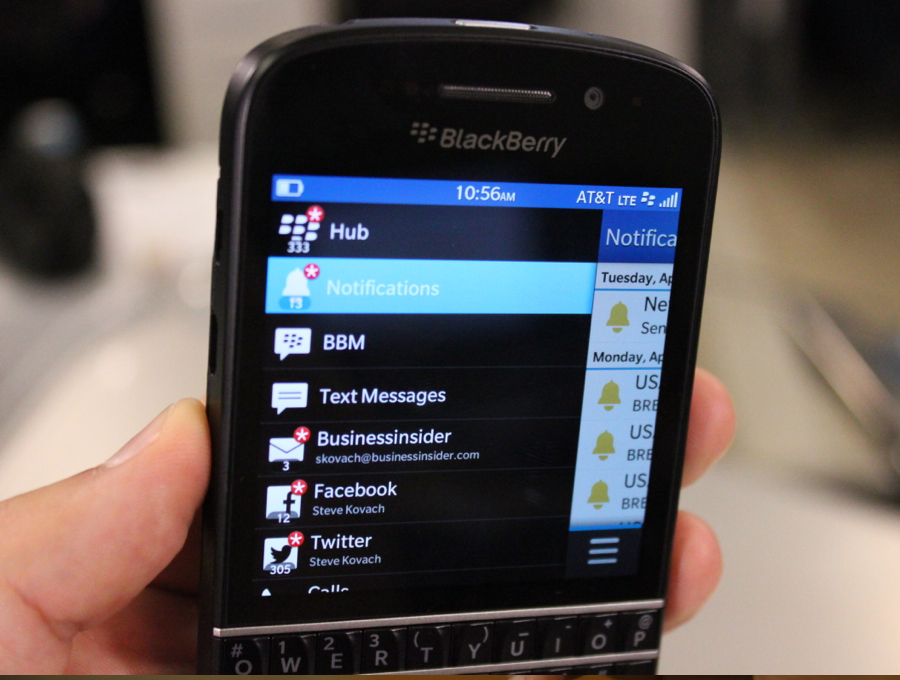
It no longer news that Research In Motion (RIM) the corporation behind BlackBerry is in trouble, but the one unanswered question is how they got themselves in this mess, absolutely astounding that a company with a market share of $83 billion just three years ago, is now worth $14 billion.

The decline of the Blackberry started two years ago after the release of the Blackberry Storm which is supposed to be Blackberry multimedia phone. Just two years ago, Blackberry and iPhone were the players seen to be fighting for number one, not android and iPhone. In late 2008, RIM released the Blackberry Storm (without wifi). It was this device that was supposed to be the iPhone killer. An Engadget review of the Storm notes that Verizon, Storm’s partner, was Apple’s first choice for the then soon-to-launch iPhone, “Verizon refused and Apple took its multi-billion dollar ball to AT&T. But software glitches and lackluster reviews like that from Engadget killed the Storm, people simple didn’t like the product, and a high return rate likely worried Verizon.

Doubts about the competitiveness of a single product may have sealed Blackberry’s fate, the launch of the Storm was the beginning of the end for Blackberry, and emboldened the carrier (Verizon) to shift its efforts to android, which managed to sell well as an alternative to AT&T exclusive iPhone.

Perhaps there was nothing that Blackberry could have done about the decline, After all, the Storm was badly received, not only because of the software glitches, but also because it simply did not hold up well when compared to the two other smartphone platforms from iPhone and Android. Wall Street Journal also believes that weak leadership played a role in the decline in RIM’s fortunes, as well as missing a fundamental shift away from smartphones targeting the corporate (and law firm) IT departments, they failed to have a backup plan for the future as they were very comfortable at the top.

In March 2011, Android led all Smartphone in market share, toppling the Blackberry for the first time. “no one really expected enterprise customers to start switching over, en masse, to the new consumer platforms of android and iOS, but that is exactly what is happening, the Samsung galaxy S II has sold above 3 million tablets in less than 2months of release, review says it’s the best Smartphone ever conceived by man, it is not to be compared with iPhone 5 but rather with the next iPhone. The future is looking so android for mobile.

Good news for Blackberry users, it is rumored that Microsoft is taking so much interest in RIM and we know how Microsoft can smell blood in the water and swoop like the shark we have come to know them for. I still love my Blackberry phone, don’t care if its RIM or Microsoft I will like to see the Blackberry rise again like a phoenix but time is really running out on the Blackberry, with developers shunning the platform for the Android and iOS the future looks so bleak for Blackberry except something is done really quick.

This should serve as a warning to iPhone and Google, one bad product can bring down an empire especially in this techie world where Smartphone users are unforgiving and not loyal to any Smartphone.

Obami Gives Schools, Teachers, Students and Parents Exclusive Social Networking Site

0

Obami is a social networking platform for schools, teachers, students and parents. It is only accessible for pre-registered schools in South Africa. So it is a closed platform only open to pre-registered schools and their members. It is affiliated with the Independent Schools Association of Southern Africa (ISASA) and takes seriously the safety and security of its members.


How does it work?
Teachers, students and parents can interact and build communities on the platform to:

  • Distribute school newsletters and notices, and enable your school community to provide valuable feedback
  • Upload study notes, class handouts and helpful information
  • Assign, submit and mark homework, tests and projects
  • Share school events, term dates, exam timetables and sports fixtures
  • Upload photos and videos from the school play, the science experiment, or the swimming gala
  • Support correspondence and collaboration between, and amongst, classmates, teachers, and parents


It recently won a global award.


The Obami Team started off the year with a bang when it was announced that Obami had been awarded a spot as one of the world’s Top 10 most innovative companies across the globe at the prestigious Netexplorateur Forum!

This award recognises businesses that exhibit a high level of innovation, along with the ability to make a significant social impact. Obami beat thousands or so other businesses from around the world to land its spot as one of the Top 10 winners in 2011.