DD
MM
YYYY

PAGES

DD
MM
YYYY

spot_img

PAGES

Home Blog Page 7740

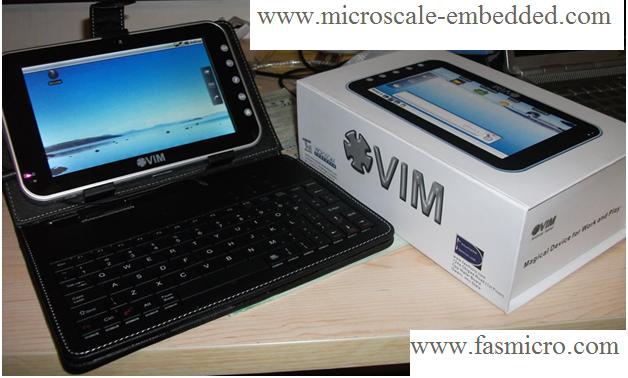
Ovim Plus Photos – You Will Like This Tablet

5

Please shop at Fasmicro. For better photos, click here.

Welcome People, this is the tablet you have been waiting for. Ovim Plus is here. Like its predecessor, it is engineered with you in mind. Ovim Plus is elegant, sleek and simple. We call it the Nigeria’s tablet because there is nothing to benchmark it when you loop the affordable cost, features and the brand. It comes with 10.1 inch display and opens the door to Freedom. Oh yes Good People, Ovim Plus is ready for Android Market so you can download all those apps. Besides, if you need the local ones, you can download from our apps store. Get Ovim Plus today!


Microelectronics Development in Developing Nations using Internet Virtual Classrooms and Labs

0

Advances in information and communication technologies (ICT) are  becoming central to the social and economic developments of nations. ICT  has offered means to transact businesses and transformed nations and  organizations into knowledge based economic structures and data  societies with electronically linked interdependent relationships.


Education in the 21st century is best positioned to utilize  these evolving opportunities to lift a higher percentage of the global  population out of illiteracy and poverty. Through Internet, the  international boundaries have shrunk and the movement and transfer of  ideas across nations by industries, academia and individuals sky-rocked.  For UNESCO and other organizations focused on facilitating global  literacy especially in the developing nations, Internet Virtual  Classrooms and Labs (IVC) would be pivotal to realizing their objectives  faster and with lesser resources.

 
Specifically, semiconductor technology has remained pervasive in shaping all aspects of modern commerce and industry. Being pivotal to  many emerging industries in the 21st century, it occupies a  central position in the global economy. Because Internet, medicine,  entertainment and many other industries cannot  substantially advance  without this technology, it occupies a vantage position in engineering  education in many developed nations. These nations invest heavily in  microelectronics education as in the United States where the MOSIS  program enables students to fabricate and test their integrated circuits  to enable full cycle design experience.


On the other hand, developing  nations increasingly lag behind in developing and diffusing this  technology in their economies owing to many factors which include human  capital, infrastructure, among others. Notwithstanding, the Internet  offers opportunities to bridge this widening gap by using IVC to harness  the skills of experts in the developed nations and virtually export  them to the developing ones. This article describes the IVC challenges  and opportunities in the developing nations.
What is IVC? This is a ‘classroom’ on the Internet where instructors  and students interact via computers. Besides lecture notes, VOIP (Voice  over Internet Protocol) phone, live-chats and online-conferencing are
vital components of this classroom resources. The motivation is to  create a virtual traditional classroom on the web and educate students  separated by physical distance from the instructors. Many US and  European universities use IVC to coordinate their satellite campuses and  distance education programs.
A. The merits/drawbacks of IVC

  • IVC is not      limited by distance, allowing lectures to be delivered across national and      continental boundaries.
  • IVC offers      the platforms to harness the brightest minds to teach a larger spectrum of      students globally.
  • At the      long-run, the benefits of IVC supersede the cost of implementation.
  • The main      drawback of IVC, though video conferencing iseliminating it, is the      impersonal delivery method which could be

    challenging to some students.

  • The      courseware and labware could be reused over time towardssaving cost in      the long-term. IVC offers a good archival capability

    to store and      disseminate materials developed by leading experts.

  • Another is      the investment required from poor nations to fund high speed communication      systems needed for IVC.
  • To the      developing nations, it provides a framework throughwhich they can tap the      pool of their experts in Diaspora which

    increasingly prefer to live in the      developed nations.


There are many challenges to the deployment of IVC in the developing nations. Some are:

  • Electricity
  • Telephone      facilities
  • Broadband telecommunications
  • Computer systems
  • IVC      Accessories
  • Lack of      adequate manpower


Though these problems are widespread in the developing nations, some  of the schools, especially the private ones which are better managed  have good facilities. Consequently, they are well positioned to benefit  through IVC the expertise and skills of experts across the globe. This  opportunity is strategic considering the lack of enthusiasm from top  global scholars in traveling to these regions owing to their high crime  rates, transportation safety problems and incessant political  instabilities. Besides, The One Laptop Per Child Initiative which is  poised to make laptops available to students will certainly help to  improve some of these conditions over time.


The Internet offers the core platform in designing the IVC. IVC is a network of Internet-connected computers which have been tailored for  learning. These computers are equipped with audio, video, test-messaging
capabilities with huge storage systems. In designing this system, quality is important to facilitate efficient transfer of ideas between  the parties.


In conclusion, as information and communication technology continues  to shape all aspects of human endeavors, its application in education in  the developing nations would be vital. These regions lack the human and  institutional capabilities to deliver some of the emerging concepts to  their teeming student populations. IVC if properly implemented will  offer a highly needed solution to access the global pool of top scholars  for these nations. Though complex, appropriate IVC deployment would  facilitate semiconductor technology acquisition and diffusion into these  economies via sound microelectronics education.

Web 2.0 – The Convergence And Evolving Disruption

0

Internet has since become an instrument of disruption of many established and traditional institutions. We have seen our print media affected. Daily, more industries are being transformed. The mail man is in trouble because emails reduce the number of mails he has to carry every day. Even the travel industry is affected because people can do video conferencing over the web. So, new things are happening and the web is an anchor to most of them.


Insight corporation has an interesting analysis on the evolution of this redesign – how internet is changing the telecommunication sector. They look at the future and are making some bold predictions on where the web 2.0 is taking us. One key fact is that we are just starting. As 4G telecom penetrates across the world, more things could be done in the mobile space and that will mean more disruptions of more traditional industries.


The ubiquity of Internet access has created a new set of technologies and business models known as “Web 2.0”—and it has already made significant changes to fixed line and wireless application development and deployment. We believe the application of Web 2.0 to telecommunications will be the most significant change to the industry since the introduction of the public Internet, significantly accelerating adoption of new applications. Pure IP-based services like Magic Jack and Skype challenge the traditional market for “fixed” communication services by delivering equivalent service without a traditional fixed line. The arrival of 3G & 4G combined with intelligent mobile devices will present challenges and opportunities. The ability to truly separate the applications from the network afforded by broadband IP networking will produce a surge in innovation.


What is Web 2.0?

The term Web 2.0 is associated with web applications that facilitate participatory information sharing, interoperability, user-centered design, and collaboration on the World Wide Web. A Web 2.0 site allows users to interact and collaborate with each other in a social media dialogue as creators (prosumers) of user-generated content in a virtual community, in contrast to websites where users (consumers) are limited to the passive viewing of content that was created for them. Examples of Web 2.0 include social networking sites, blogs, wikis, video sharing sites, hosted services, web applications, mashups and folksonomies. (wikipedia)

Tele-10 Continues To Lead Ugandan TV Market

0

Tele–10 was incorporated. incorporated in 1993 in Burundi, TELE-10 started as a pay-tv company, transmitting international TV programming in a UHF analog system, through main Burundi city.


Installed in Rwanda in 1995, after the Tutsi genocide


In 2009 : Kenya and Uganda


TELE-10 Group of companies is principally a pay-tv operator and an ISP company that aims to provide high-level expertise in TV and ISP industries using diversified implementation strategies.

The Company facilitate the acquisition of both hardware and software, value addition, consultancy services

Virtual City is a Kenyan Innovator – Positioning a Nation for Post Mineral Era

0

There is nothing to write in essence about this excellent innovator in Kenya – the winner of Nokia’s $1m challenge. Virtual City is a good story of how knowledge companies can redesign nations. They have a simple mission:  To Be The Preferred Mobility Solution Provider In Africa.


And they seem to be doing that just fine.


With over 10 years experience Virtual City has been able to carve a position for itself as the market leader in the development, customization and implementation of innovative mobility solutions. We have done this by being able to constantly recognize and adapt to the changing needs and growing demands of our clients by continuously developing and introducing new technological innovations into the market.


Tekedia likes one of their products – Electr.


Electr is a solution used to Automate Vote Tallying and electioneering processes so as to normalize the election process by doing away with the negative influence of delays, and subsequent upheavals and destabilization of delayed announcements of results thus consequently increasing vote reporting.


The Electr System for elections is geared towards addressing the highlighted issues and bringing accountability to the electioneering process and increase voting reporting efficiencies. The use of the system will also usher election entities and participants into complying with acceptable international standards expected of electioneering processes, especially with the magnitude of the repercussions of the botched elections.