

DD
MM
YYYY

PAGES

DD
MM
YYYY

spot_img

PAGES

Home Blog Page 7742

[Rejoinder] Global Products, Package Local Designs (part 1)

1

Hello readers, I have written many articles over the years and gotten many personal emails on my posts. But this one is simply different. I asked the person that sent it for the right to share with you. The author, C. Idahosa, is very experienced. I thank him for the insights. Nothing serious – it is more of space in HBR. I wrote in details on this in my doctoral dissertation in finance while in the banking industry in Nigeria and conducted research on this as an EMBA student in UNICAL. Of course, I have to cut some details for a piece in HBR. Specifically, I presented my work in June of 2001 in a workshop in Airport Hotel, Ikeja.


Hi Mr. Ndubuisi Ekekwe,


Within the last week or so, I read came across your interesting narrative on Global Products, Package Local Designs published in BusinessDay on Monday, May 23, 2011 as part of the Harvard Business Review series. In the absence of a direct mailing address, I gambled on reaching you via the website of African Institution of Technology just to make a few observations, particularly on the entry of Procter & Gamble into the local space for detergent powders, and the meat processor that ran into a storm up north


With all due respect, while your account is correct in context, it is sort of off track in some aspects. To the extent that the intention is to instruct on serious strategic marketing, I reasoned it might help to take a closer look at some of the issues.


To begin with, you are right on the money about some retailers decanting detergent powders into nylon materials   – a phenomenon that has deepened over time and somewhat disruptive in the supply chain of some products. In the days of “essenco” (essential commodities), people were wont to buy and share large quantities of foodstuff and other household consumables. Also true and still in common practice is people banding together to buy live cows and share the slaughtered meat. However, what I cannot recall is when it was an established trend for economically pressured families to club together, buying and splitting detergent powders so as to get round the issue of large expensive carton packs the producers were shifting. If that ever occurred, it must have been as isolated and insignificant as two buddies occasionally sharing a bottle of lager beer. I do not think such a practice would be settled enough to warrant the interest of the makers of booze.


Further still, I do hope someone has not gone around suggesting (be it in some marketing literature or company records) that P&G (Ariel) was first to market or brought a new game to town with flexo-packaging in the relevant market space. It has to be said though that their marketing initiatives indeed caused some lethargic competitors in different product categories, including Cadbury’s Tom Tom, to sit up and be more driven. Nonetheless, it was in female sanitary pad/towel and baby diapers that they dramatically changed the ground norms. P&G’s Always sanitary pad practically walked past the major brands, Simple, Tampax and LadySept, to grab market leadership. I know so because yours truly saw successive Indian managers of Pharco Products Ltd, makers of Simple, dismiss suggestions for audacious marketing support when theirs was #1 in the market. Their argument was that sanitary towel is not a product type that lends itself to robust TV presence, billboard display and street-level consumer bugging.   .


Truth be told, it could be argued that as far as flex packaging goes, Ariel’s market entry was auspicious in timing because it keyed into a market situation that was fast taking shape. So, what happened? To address the query, a little bit of history might help.


Through the late 1970s and early 80s, Unilever/Lever Brothers Nigeria (Omo and Surf), PZ (Elephant), and Nasco Marketing (Brytex), three majors who competed across the broad spectrum of consumer products and every so often behaved like a cartel were already offering their powders in different carton-pack SKUs, ranging across (I think) 100grams 175/200grams and way up to 1 or 1.5kilograms. Not all the companies offered the different sizes. Other marketing nuances included Unilever having a male model on the pack sold in the northern markets to reflect the preponderance of male shopping in that region. Sunlight and Premier soaps were beginning to be proposed as multi-purpose washing soaps. While further down the scale the likes of Key and Canoe laundry bars. With such varied offerings and price points, marketers went a long way to meet the needs of different income levels. However, by the mid-1980s, consumer resistance, as a measure of the straitened times, was becoming obvious. The IMF-inspired Structural Adjustment Programme was biting.


About that time LBN was mulling the retrenchment of (white-coloured) Surf detergent powder from ythe local scene and word was coming in from Indian’s Hindustan-Lever – acting in some sense as Unilever’s laboratory and lead market for developing economies – that fresh thinking was required in soaps and detergents to rein in spiraling cost and hold on to large segments of consumers. They were looking to flex package as the way forward.


Procuring that class of packaging material was a distant cry from the off-the-cuff offering it was to become a few years later. Bodpak division of UAC of Nigeria, which met much of the carton packaging, label and photogravure printing needs of all Unilever-related companies – UACN/A.J. Seward, Lever Brothers, Nigerian Breweries and Guinness – was not geared to do that kind of stuff. There was only one proper flex packaging company (Indian-owned InterPlas Nigeria Limited) with operations largely hinged on wrappers for candies and other confectionery products. Another in the printing/packaging sector was Colodense, with focus more on flow-wrapping, a format  that was yet to become popular for packing low-end personal and laundry wash bars/tablets. Poly Products Ltd was majorly a maker of plastic containers, nylon bread wrappers and shopping bags. The current leader in that packaging space, Messrs Vee Pee/Arvee Industries, through its sister company, Gee Pee Ltd, was in the main a producer of water storage tanks bearing the name, Gee Pee tanks. That was what the packaging business looked like.    .


To make progress, recourse was made to Indian suppliers to enable Blue Omo to be test-marketed in flex packaging. Shelf off take was sluggish, to say the least. Consumer engagements results shared with advertising agencies as standard practice in Unilever’s playbook, had mainstream Omo users saying, inter alia, (1) they couldn’t fathom their “premium” Blue Omo in a cheap polythene bag, and (2) if it is Omo, which had become the default name for powdered detergent, it had to blue coloured. By and large, it did not count for much that affluent consumers had accepted mostly white-coloured imports. In the main, consumer resistance was the major reason Omo did not go full blast into flexo-packaging when first introduced in Nigeria. On the sideline, not a few brand people wondered whether there was indeed a convergence of understanding between the Omo’s pitch as premium offering in its class and the consumer’s appreciation of that.
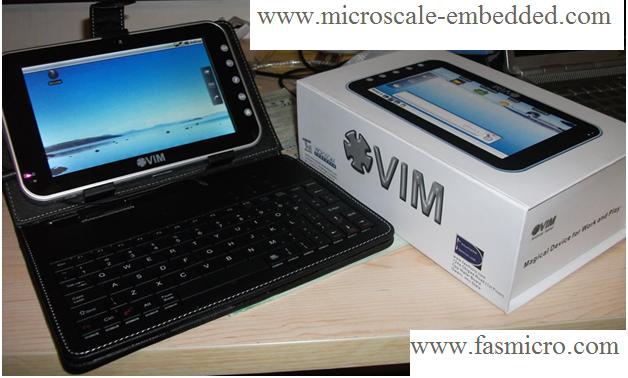
 

Ovim Plus Photos – You Will Like This Tablet

5

Please shop at Fasmicro. For better photos, click here.

Welcome People, this is the tablet you have been waiting for. Ovim Plus is here. Like its predecessor, it is engineered with you in mind. Ovim Plus is elegant, sleek and simple. We call it the Nigeria’s tablet because there is nothing to benchmark it when you loop the affordable cost, features and the brand. It comes with 10.1 inch display and opens the door to Freedom. Oh yes Good People, Ovim Plus is ready for Android Market so you can download all those apps. Besides, if you need the local ones, you can download from our apps store. Get Ovim Plus today!


Microelectronics Development in Developing Nations using Internet Virtual Classrooms and Labs

0

Advances in information and communication technologies (ICT) are  becoming central to the social and economic developments of nations. ICT  has offered means to transact businesses and transformed nations and  organizations into knowledge based economic structures and data  societies with electronically linked interdependent relationships.


Education in the 21st century is best positioned to utilize  these evolving opportunities to lift a higher percentage of the global  population out of illiteracy and poverty. Through Internet, the  international boundaries have shrunk and the movement and transfer of  ideas across nations by industries, academia and individuals sky-rocked.  For UNESCO and other organizations focused on facilitating global  literacy especially in the developing nations, Internet Virtual  Classrooms and Labs (IVC) would be pivotal to realizing their objectives  faster and with lesser resources.

 
Specifically, semiconductor technology has remained pervasive in shaping all aspects of modern commerce and industry. Being pivotal to  many emerging industries in the 21st century, it occupies a  central position in the global economy. Because Internet, medicine,  entertainment and many other industries cannot  substantially advance  without this technology, it occupies a vantage position in engineering  education in many developed nations. These nations invest heavily in  microelectronics education as in the United States where the MOSIS  program enables students to fabricate and test their integrated circuits  to enable full cycle design experience.


On the other hand, developing  nations increasingly lag behind in developing and diffusing this  technology in their economies owing to many factors which include human  capital, infrastructure, among others. Notwithstanding, the Internet  offers opportunities to bridge this widening gap by using IVC to harness  the skills of experts in the developed nations and virtually export  them to the developing ones. This article describes the IVC challenges  and opportunities in the developing nations.
What is IVC? This is a ‘classroom’ on the Internet where instructors  and students interact via computers. Besides lecture notes, VOIP (Voice  over Internet Protocol) phone, live-chats and online-conferencing are
vital components of this classroom resources. The motivation is to  create a virtual traditional classroom on the web and educate students  separated by physical distance from the instructors. Many US and  European universities use IVC to coordinate their satellite campuses and  distance education programs.
A. The merits/drawbacks of IVC

  • IVC is not      limited by distance, allowing lectures to be delivered across national and      continental boundaries.
  • IVC offers      the platforms to harness the brightest minds to teach a larger spectrum of      students globally.
  • At the      long-run, the benefits of IVC supersede the cost of implementation.
  • The main      drawback of IVC, though video conferencing iseliminating it, is the      impersonal delivery method which could be

    challenging to some students.

  • The      courseware and labware could be reused over time towardssaving cost in      the long-term. IVC offers a good archival capability

    to store and      disseminate materials developed by leading experts.

  • Another is      the investment required from poor nations to fund high speed communication      systems needed for IVC.
  • To the      developing nations, it provides a framework throughwhich they can tap the      pool of their experts in Diaspora which

    increasingly prefer to live in the      developed nations.


There are many challenges to the deployment of IVC in the developing nations. Some are:

  • Electricity
  • Telephone      facilities
  • Broadband telecommunications
  • Computer systems
  • IVC      Accessories
  • Lack of      adequate manpower


Though these problems are widespread in the developing nations, some  of the schools, especially the private ones which are better managed  have good facilities. Consequently, they are well positioned to benefit  through IVC the expertise and skills of experts across the globe. This  opportunity is strategic considering the lack of enthusiasm from top  global scholars in traveling to these regions owing to their high crime  rates, transportation safety problems and incessant political  instabilities. Besides, The One Laptop Per Child Initiative which is  poised to make laptops available to students will certainly help to  improve some of these conditions over time.


The Internet offers the core platform in designing the IVC. IVC is a network of Internet-connected computers which have been tailored for  learning. These computers are equipped with audio, video, test-messaging
capabilities with huge storage systems. In designing this system, quality is important to facilitate efficient transfer of ideas between  the parties.


In conclusion, as information and communication technology continues  to shape all aspects of human endeavors, its application in education in  the developing nations would be vital. These regions lack the human and  institutional capabilities to deliver some of the emerging concepts to  their teeming student populations. IVC if properly implemented will  offer a highly needed solution to access the global pool of top scholars  for these nations. Though complex, appropriate IVC deployment would  facilitate semiconductor technology acquisition and diffusion into these  economies via sound microelectronics education.

Web 2.0 – The Convergence And Evolving Disruption

0

Internet has since become an instrument of disruption of many established and traditional institutions. We have seen our print media affected. Daily, more industries are being transformed. The mail man is in trouble because emails reduce the number of mails he has to carry every day. Even the travel industry is affected because people can do video conferencing over the web. So, new things are happening and the web is an anchor to most of them.


Insight corporation has an interesting analysis on the evolution of this redesign – how internet is changing the telecommunication sector. They look at the future and are making some bold predictions on where the web 2.0 is taking us. One key fact is that we are just starting. As 4G telecom penetrates across the world, more things could be done in the mobile space and that will mean more disruptions of more traditional industries.


The ubiquity of Internet access has created a new set of technologies and business models known as “Web 2.0”—and it has already made significant changes to fixed line and wireless application development and deployment. We believe the application of Web 2.0 to telecommunications will be the most significant change to the industry since the introduction of the public Internet, significantly accelerating adoption of new applications. Pure IP-based services like Magic Jack and Skype challenge the traditional market for “fixed” communication services by delivering equivalent service without a traditional fixed line. The arrival of 3G & 4G combined with intelligent mobile devices will present challenges and opportunities. The ability to truly separate the applications from the network afforded by broadband IP networking will produce a surge in innovation.


What is Web 2.0?

The term Web 2.0 is associated with web applications that facilitate participatory information sharing, interoperability, user-centered design, and collaboration on the World Wide Web. A Web 2.0 site allows users to interact and collaborate with each other in a social media dialogue as creators (prosumers) of user-generated content in a virtual community, in contrast to websites where users (consumers) are limited to the passive viewing of content that was created for them. Examples of Web 2.0 include social networking sites, blogs, wikis, video sharing sites, hosted services, web applications, mashups and folksonomies. (wikipedia)

Tele-10 Continues To Lead Ugandan TV Market

0

Tele–10 was incorporated. incorporated in 1993 in Burundi, TELE-10 started as a pay-tv company, transmitting international TV programming in a UHF analog system, through main Burundi city.


Installed in Rwanda in 1995, after the Tutsi genocide


In 2009 : Kenya and Uganda


TELE-10 Group of companies is principally a pay-tv operator and an ISP company that aims to provide high-level expertise in TV and ISP industries using diversified implementation strategies.

The Company facilitate the acquisition of both hardware and software, value addition, consultancy services