

DD
MM
YYYY

PAGES

DD
MM
YYYY

spot_img

PAGES

Home Blog Page 7753

Database Types and Some Applications

0


Previously, I presented some types of databases:


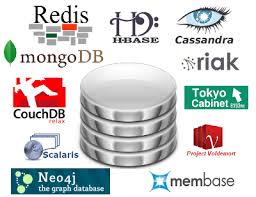
Key-value stores: data is stored as key-value pairs such that values are indexed for retrieval by keys. These systems can hold structured and unstructured data. An example is Amazon’s SimpleDB.


Column-oriented Databases: contain one extendable column of closely related data rather than sets of information in a strictly structured table of columns and rows as is found in relational databases. The ColumnFamily databases stem from Google’s internally-used BigTable. Some other examples are Cassandra, HBase, and Hypertable.


Document-based Stores: data is stored and organized as a collection of documents. Users are allowed to add any number of fields of any length to a document. They tend to store JSON-based documents in their databases. Examples of document databases include MongoDB, Riak, Apache CouchDB, and SimpleDB.


Find below some applications and uses


Apparently, document databases are often best when dealing with collections of similar entities.


ColumnFamily (column-oriented) databases seem to be best when scalability (particularly write scalability) is the main issue. The tradeoff is that developers must write more complicated code in order to do certain things explicitly. Graph databases (another type of NoSQL database), are often best in cases where the manner in which entities are related is very important.


In an SQL database, adjustments involving updates to schema and already stored data often cause problems whenever unanticipated changes need to be made to initial database designs. I have always wondered how upgrades to applications that are already in use can be made, especially when they involve making changes to database tables that already contain data. NoSQL databases seem to be the answer to this dilemma.


It is quite obvious that RDBMS is better at some things, particularly reporting. There are already a large number of reporting tools built around RDBMS. It is important that we use the right tool for each job. It is only by doing this, that we can produce software that works best in the situations in which they are intended to be used.


NoSQL databases, when used appropriately, can offer real benefits. However, caution should be exercised when adopting new technology. Everyone generally needs to be aware of the limitations and issues that are associated with these databases. This is especially important for enterprises.


Apparently, the best days of relational databases are now far behind, but these systems are not likely to die anytime soon. In fact, NoSQL databases are not likely to replace relational databases, but instead would find their own niche in certain types of projects. As Dave Kellogg has rightly stated, some of the NoSQL hype is actually an over-reaction to the current situation where a small number of RDBMS vendors control the vast majority of the database market. Nevertheless, some of the NoSQL hype is also a reaction to the technological inadequacies of relational databases as well as the conceptual and technical difficulties in programming on them.


I intend to employ heavy use of a NoSQL database (probably MongoDB) in a new project of mine. I believe it just might solve some of my worries, even though I know it would create some new ones as well.

IBM’s 100 Years Longevity – What Next?

0

We received this in an email from an Indian publication house. We like the idea and making it public to our readers for anyone that wants to contribute. Send your comments, answers, interviews to tekedia@fasmicro.com and we will send to the team in India.


The ANALYST is a flagship publication of the Icfai University Press. It brings to life the insights and best practices of corporate world in the area of finance. Every month The Analyst delivers in-depth analysis and thought-provoking ideas. It is a unique menu of interesting cover stories, debates, case studies, interviews with corporate elites across the globe.


In the forthcoming issue of the ANALYST, we intend to publish an article on IBM’s 100 Years Longevity – What Next? In this context, we invite you to share your perceptions on the subject. (Questionnaire enclosed)


It would be of great convenience to us, if you send your response by July 6, 2011. You may respond the same in the form of interview and questionnaire is being sent herewith for the purpose. (If you are interested to contribute by invitation article on the subject, we are most welcome (around 2000 Words.)


Looking forward to a positive reply from your end


Questionnaire – IBM’s 100 Years Longevity – What Next?

1. How do you view the saga of big blue’s 100 years longevity and what is the biggest bet it has made in its long journey?

2. In an industry which is characterized innovation and change than any other industry perhaps, why is IBM still alive and thriving after so long period?

3. There is a notion that big companies mostly try to defend their existing domains rather than explore and conquer new ones. How different is IBM on this front?

4.   The big blue’s ability to constantly reinvent itself and enjoy prolonged success is something its peers envy. How it has been able to do differently to stay on top of changes and opportunities?

5.   How does IBM encourage employees to think big and to ensure the balance between short-term and long-term financial goals?

6.   What lessons IBM@100 can offers other teach majors like Apple, H-P and Microsoft?

7.   Any other issues would you like to comment upon the topic?

NoSQL database – Advantages and Disadvantages

1

Simply, what are the advantages and disadvantages of NoSQL database? Let me begin with the advantages. Outlined below are some of the more obvious advantages:

  • For years, in order to improve performance on database servers, database administrators have had to buy bigger servers as the database load increases (scaling up) instead of distributing the database across multiple “hosts” as the load increases (scaling out). RDBMS do not typically scale out easily, but the newer NoSQL databases are actually designed to expand easily to take advantage of new nodes and are usually designed with low-cost commodity hardware in mind. Therefore, NoSQL databases function superbly in a distributed setting. This means that users could scale a single database by running it across additional inexpensive machines rather than running it on a single more powerful and costly machine. Furthermore, NoSQL databases enable better performance, especially for write-intensive applications. This has been attested to by Opeyemi Obembe in a recent blog article. This performance increase can be attributed to their simpler data models, amongst other things.
  • High-end RDBMS systems can typically be maintained only with the assistance of highly trained Database Administrators (DBAs). NoSQL databases are generally designed from the ground up to require less management using such desirable features as automatic repair, data distribution, and simpler data models leading to lower administration and tuning requirements, or at least that is the expectation. It is a known fact that someone would always have to be accountable for the performance and availability of any mission-critical data store. However, the human resource requirements for managing a NoSQL database are typically less.
  • It is usually not easy to make big changes to the data model of an RDBMS. Changes have to be carefully managed and may even necessitate downtime or reduced service levels. NoSQL databases have less rigid or even nonexistent data model restrictions. Many NoSQL databases typically allow new columns to be created without too much ado.

Despite the fact that NoSQL databases have a number of significant advantages, they also have a number of setbacks. These challenges may not be as important to developers as they are to enterprises. But either way, they are definitely worth noting.

  • Most NoSQL systems are in pre-production versions with many key features yet to be implemented. Therefore, caution should be exercised when deciding whether or not to use NoSQL databases. This is especially important for enterprises as they have a lot more to lose than the more adventurous developers.
  • Enterprises tend to rely a lot on the assurance that if a key system fails, they will be able to get timely and competent support. RDBMS vendors go to great lengths to provide a high level of enterprise support. Most NoSQL systems are open source projects. The companies that created these systems are often small start-ups without global reach, extensive support resources or the kind of the credibility that large RDBMS vendors like Oracle have.
  • NoSQL databases offer few facilities for queries and analysis since they do not work with SQL. Things that would otherwise require simple queries in RDBMS require significant programming expertise when using NoSQL databases. Furthermore, commonly used Business Intelligence (BI) tools do not provide connectivity to NoSQL. However, some work is being done to provide query capabilities to a variety of NoSQL databases.
  • Although, the design goals for NoSQL may be to provide a solution that requires little or no administration, NoSQL databases currently have not achieved that. These databases today, still require a significant level of skill and effort to install and maintain.
  • Most developers at the moment are currently only familiar with RDBMS concepts and programming. This means that almost every NoSQL developer is in learning mode. This might change over time, but at the moment, it is easier to find experienced RDBMS programmers or administrators than it is to find a NoSQL expert. However, NoSQL databases may be easier to work with for developers who are not familiar with the Structured Query Language (SQL).

Apparently, document databases are often best when dealing with collections of similar entities. ColumnFamily (column-oriented) databases seem to be best when scalability (particularly write scalability) is the main issue. The tradeoff is that developers must write more complicated code in order to do certain things explicitly. Graph databases (another type of NoSQL database), are often best in cases where the manner in which entities are related is very important. In an SQL database, adjustments involving updates to schema and already stored data often cause problems whenever unanticipated changes need to be made to initial database designs. I have always wondered how upgrades to applications that are already in use can be made, especially when they involve making changes to database tables that already contain data. NoSQL databases seem to be the answer to this dilemma.

It is quite obvious that RDBMS is better at some things, particularly reporting. There are already a large number of reporting tools built around RDBMS. It is important that we use the right tool for each job. It is only by doing this, that we can produce software that works best in the situations in which they are intended to be used.

NoSQL databases, when used appropriately, can offer real benefits. However, caution should be exercised when adopting new technology. Everyone generally needs to be aware of the limitations and issues that are associated with these databases. This is especially important for enterprises.

Apparently, the best days of relational databases are now far behind, but these systems are not likely to die anytime soon. In fact, NoSQL databases are not likely to replace relational databases, but instead would find their own niche in certain types of projects. As Dave Kellogg has rightly stated, some of the NoSQL hype is actually an over-reaction to the current situation where a small number of RDBMS vendors control the vast majority of the database market. Nevertheless, some of the NoSQL hype is also a reaction to the technological inadequacies of relational databases as well as the conceptual and technical difficulties in programming on them.

I intend to employ heavy use of a NoSQL database (probably MongoDB) in a new project of mine. I believe it just might solve some of my worries, even though I know it would create some new ones as well.

Tekedia Predicts That Windows Mobile Will Disrupt The Market WIth Office 365

3

With the launch of Office 365 planned, Tekedia thinks that Microsoft Windows Mobile will play a major role in the tablet warfare.


Microsoft is set to place one of its biggest bets yet on cloud computing with the launch of Office 365, an online version of its most widely used business software.

The software company’s belated push online with one of its core businesses comes more than four years after Google came up with its own service, but has still left it in a strong position to dominate the market for online applications used by white-collar workers, according to analysts.


Tekedia has noted that if Microsoft moves Office to the cloud, it can be a game changer in the industry. Now, they have done it, you will see how platform will become a huge cost issue and not just a matter of convenience.  The next move from Microsoft will be to use Office365 to sell their tablets. CIOs will go for Microsoft tabs  because staff can access Office at lower rates. Soon, consumers will follow as more works move to the cloud, PC going, and yes, Office  363 will be there.


Watch out, in coming months, all users of Windows Mobile tablets will get Offoce365 free or highly discounted.  That is the most important strategy for Microsoft to get into this game. We think it makes sense to use Office to try. The business is so far ahead of them than nothing else has a chance. We think Microsoft has a plan.


We estimate that Microsoft has a chance of doubling its market share in the tablet OS market. They will eat into Blackberry which continues to bleed and Apple iOS. Android from Google will remain safe because of its open source model.

Nigerian Stock Exchange Plans To Install Nasdaq OMX platform

0
NASDAQ

Nigeria Stock Exchange plans to install Nasdaq OMX Platform according to the Financial Times.

Nigeria’s stock exchange, which was rocked by allegations of financial mismanagement last year, is to install a trading platform from Nasdaq OMX and launch equity options as it prepares for demutualisation and a possible listing, the country’s securities watchdog said.

Arunma Oteh, director-general of Nigeria’s Securities & Exchange Commission, said she was “delighted” with the work of an interim administrator, which has run the bourse since the ouster last year of former chief executive Ndi Okereke-Onyiuke.

This  comes after Tekedia plans to launch its Tekedia Broad  Industrial Average (TBIA) that will track the biggest stocks in the Nigerian Stock exchange. This average mirrors the Dow Jones Industrial Average of the United States.