DD
MM
YYYY

PAGES

DD
MM
YYYY

spot_img

PAGES

Home Blog Page 7763

As Publishers, You Must Develop A Combo Content Delivery Strategy On Print and Digital

0

We all know that the Internet has changed many things about us. It has redesigned all aspects of our lives.  The impact of high-speed Internet connectivity and mobile phone technologies on print is immense. In this age when we want things immediately, the print is making way for a new kind of content delivery – digital. Yet, print i s still very important.


For publishing entrepreneurs, here are the two things to consider as you you move into deciding a strategy.


Digital delivery of content is now the primary method for some key reasons:

  • Quick access to content
  • Ease of searching
  • Inclusion of live hyperlinks and multimedia (i.e., sound/video)
  • Portability
  • Tight control of content (of particular appeal to publishers)
  • The ability to update as needed

Print as a content delivery method and has advantages of its own:

  • Permanence
  • No electronic device required to read it (and no concerns for electricity or battery life)
  • Easy ability to archive
  • Physical annotation
  • Paper is easy to recycle
  • Print does not require high-tech devices or monthly service plans

Overall, publishers and other content providers have seen how important electronic delivery is to their future. Publishers see how digital print and electronic delivery can be used in combination to create a “data warehouse” of documents that, for example, allows books to be delivered as orders are received.


Getting payment for content, however, presents its own challenges. The models for delivering and paying for content in the digital age are evolving and had a significant impact on the publishing market.


Africa is getting into the mix with m-payment and that will simplify the payment of contents. With cellphone based payment, a lot of things will be made easier. It has to be and that means even the digital could be profitable as the old media.

Nordic And Apple Join Bluetooth SIG As It Pushes Into TV and Medicals

0

Apple and Nordic Semiconductor have joined the board of directors of the Bluetooth Special Interest Group (SIG).  This is coming even as Bluetooth goes beyond consumer products to TV and medical devices. For example, in the ECG data acquisition, some use Bluetooth to connect the sensors with the displays. With Apple and Nordic and foray into TV and medical, this standard can ship up to 15 million devices in five years from the present 5 million.


“Bluetooth technology has been the main R&D focus at Nordic for the last six years and we are now in a position to enable new and exciting products for consumers,” said Svenn-Tore Larsen, CEO Nordic in the press statement.


The Bluetooth group described a shift ahead as mobile devices—including cars–serve as hub devices that capture data from small sensors monitoring everything from footsteps, heart rate activity, blood pressure and sugar levels to house temperature and energy use. Insights from Apple on platform development and Nordic for sensor silicon demands will help the group navigate that shift.


Apple and Nordic’s two-year appointments were agreed upon by unanimous vote of the current board of directors and will officially begin on July 1, 2011. They join existing board members from Intel, Motorola, Lenovo, Nokia, Microsoft, Ericsson AB and Toshiba.


Apple is a known global leader in consumer gadgets while Nordic offers a variety of short range wireless chips from 433 MHz to 2.4 GHz, including ones using the ANT+ standard and Bluetooth Low Energy.


Ingredients And Contents Will Be Key to Apple Tablet Competitors

0

The tablet market has been a one-horse race to date, with Apple so far in front of competitors it is difficult to imagine a truly competitive market, especially in the developed world.   Lacking in essential applications and features, what has been delivered to the marketplace thus far hasn’t really been viewed as a serious alternative to the Apple iPad.


From Galaxy Tab to Xoom, none of the alternatives have made much a progress in stopping the momentum of Apple in the market.   Much of the early stumbles have been linked to the immaturity of the respective operating systems though and the hardware elements have hinted at the exciting future for this rapidly growing market, says iSuppli in a new report.


While Android 3.0, the first tablet specific Android OS addressed many of these issues, vendors and developers believe that before the OS can be a serious contender to Apple, further improvements are needed. Similar improvements will be required for QNX if it is to move beyond its core potential market of Blackberry smartphone users.


The U.S. market is where much of the tablet activity is currently concentrated, with a rapidly expanding mix of offerings across multiple operating systems, sizes, and brands. In the race to build share vendors are experimenting with features, channel strategy, and pricing, striving to find the right mix for success.


Apple will be expected to ride the premium side of the tablet market especially in the US and Western Europe. But that will change as time goes on. However, because of the disparity of the contents and ingredients in the OS ecosystem, when the competitors get the hardware right, they have to get the apps right. Apple has built the best Apps war chest that challenging them there could be difficult.


Yet, you never say Never, but anyone that will do this has to step us the game. Ingredients and contents will be the key to taking that top spot from Apple. Anything less will not work. You need to design good hardware and then get the industry to built solid contents within it.

A Price-Based Model of Expanding Business in Africa

0

Many western companies design their business models based on high profit margins. It pays very well to be differentiated and pursue vertical markets. Horizontal markets are commoditized and a strategy to dominate within it is not always seen as a smart move by analysts. Increasingly firms try to innovate and differentiate in order to carve a niche where they can make hefty margins.


That is very good if your business is domiciled in the saturated Western Europe and U.S markets. There is growth inertia in these two markets with their ultra-competitions and intense regulations. Especially in the Pharmaceutical industry, there seems to be no way to expect growth in these matured economies.


So what do you do? You have to expand out of Europe and U.S to Africa, Latin America and Asia. They are the future. They have the population with enormous growth potentials. Despite the downturn in the global economy, they remain promising, especially Asia and Latin America (in this case, Brazil).


Having worked in Lagos (Nigeria) as a banker and traveled to many Africa nations, the high margin structure will not always work in Africa, especially in pharmaceutical industry. Many are still very poor; yet, they have the same needs as those in the developed world. From entertainment to drugs, they want to enjoy the western products. They want the new cars for their bad roads; they want the best drugs to manage diabetes; the new video games to relax; and so on. Any sense of high cost, people will abandon the product. It is very common to see people die slowly because they cannot afford drugs for treatable diseases.


Arguably, these drugs and cars are available in many parts of Africa. But the problem is that only few can afford them. With no insurance scheme to finance healthcare delivery, patients must pay themselves. What worked in Boston will not work in Botswana because the patient in Boston is being helped by the insurance firm while the one in southern Africa must pay cash. That is the major difference in marketing drugs between U.S and Africa.


Another example is in the telecommunication industry. Cellular handsets are very expensive in Africa when compared to the U.S. Understandably, a simple reason is lack of competition since not many firms have gotten into the markets. Another is the obvious fact that none of those gadgets are made in Africa. So, there are associated transportation and handling costs in selling them in Africa.


Nonetheless, the truth is that by not using price based model, many MNCs are undermining their potentials in developing, emerging or transitional economies like Africa and Asia. You have to offer what the customers can afford and do away with the cost based strategy. In the U.S, you can ask for any price; in Africa, you need sales volume and lower price makes it happen.


For Pharma industry, they have to rethink their strategies. It is time they cut down the prices of their drugs. Drug prices are patient problems, unlike in U.S where it is the insurance firms’ (for those that have, anyway). Many more people can give you sales volume and you will make more profits than sticking to your present pricing model and serving only less than 5% of the African market.


If you focus on pushing volume at good prices, more customers will come in. That alone will help you stay profitable. And they will be better off themselves by using your great products. Drugs, video games, etc must not be overly expensive in Asia and Africa compared to U.S and Western Europe.


Change your model and you will be happier doing business in Africa. Cut the prices and use sales volume to help people and improve your bottom line. It could be that simple

Remember Ovim Plus Takes You Perfectly To Google Android Market. Vote Freedom, Buy Ovim+, Now On Sale

0

You can read this on the official website site:

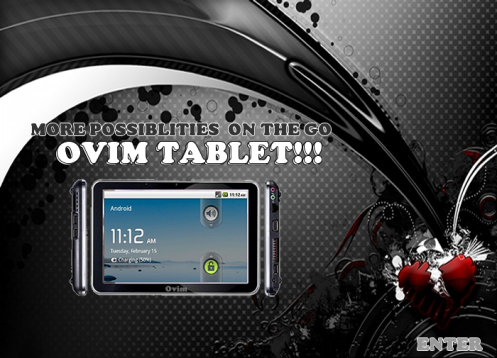
Welcome People, this is the tablet you have been waiting for. Ovim Plus is here. Like its predecessor, it is engineered with you in mind. Ovim Plus is elegant, sleek and simple. We call it the Nigeria’s tablet because there is nothing to benchmark it when you loop the affordable cost, features and the brand. It comes with 10.1 inch display and opens the door to Freedom. Oh yes Good People, Ovim Plus is ready for Android Market so you can download all those apps. Besides, if you need the local ones, you can download from our apps store. Get Ovim Plus today!


Ovim Plus – The Engine of Work and Play

Available for sale in Owerri and Lagos offices of Fasmicro.


Cost: N59,900


Order at the Sales Network or come to office


Our Bank and Payment details are here


Specs

Processor: Freescale iMX515 800MHz ARM Cortex A8

CPU: Dual core 800MHZ

O/S:Android 2.2 Support Flash10.1

Memory/Hard disk:512M/4GB

Display:10.1 TFT resistive touch screen,1024*600

Camera:Support TF card.Battery:3800mAh

support word,Excel,Power point and email function

Audio/Video:Support web video,music,chat,picture

Other function:Support HDMI WIFI , built-in 3G

Box/Kg:30.5*21.5*8.5mm/0.9KG


Ovim Plus will help you load the locally inspired Nigerian apps from the Apps Store.


For the first version of Ovim, please visit this page


Ovim is a product of Fasmicro and Microscale