DD
MM
YYYY

PAGES

DD
MM
YYYY

spot_img

PAGES

Home Blog Page 779

OpenAI’s Education VP Says Every Graduate Needs to Know How to Use AI

0

In a message that underscores the growing divide between those embracing artificial intelligence and those resisting it, OpenAI’s Vice President of Education, Leah Belsky, has said workers who fail to learn how to use AI will soon find themselves obsolete.

“Luddites have no place in an AI-powered world,” she said during an episode of OpenAI’s official podcast on Friday.

Belsky, who joined OpenAI in 2024 to lead its education strategy, made the case for early and structured exposure to AI in schools, warning that failure to do so could leave an entire generation unprepared for the future of work.

“Any graduate who leaves institution today needs to know how to use AI in their daily life,” she said. “And that will come in both where they’re applying for jobs as well as when they start their new job.”

Her comments follow widespread debates within academia, where the use of AI tools like ChatGPT has often been labelled as cheating. But Belsky said such framing misses the point. Rather than banning AI, she argued, educational institutions should teach students how to use it responsibly — not as an “answer machine,” but as a catalyst for deeper learning.

“AI is ultimately a tool,” Belsky said, likening it to calculators once feared by math teachers. “What matters most in an education space is how that tool is used. If students use AI as an answer machine, they are not going to learn. And so part of our journey here is to help students and educators use AI in ways that will expand critical thinking and expand creativity.”

To encourage that kind of learning, OpenAI recently introduced a new feature called Study Mode in ChatGPT. The feature provides students with “guiding questions that calibrate responses to their objective and skill level,” aiming to help them build deeper understanding, rather than regurgitate AI-generated answers. It’s part of the company’s broader push to incorporate structured learning support directly into AI interfaces.

A central skill Belsky believes every student must acquire is coding, even if only at a basic level. She emphasized “vibe coding,” a popular method where people use natural language to prompt AI into writing code. While useful, it’s not foolproof; since AI-generated code can be riddled with errors, users still need some technical knowledge or access to someone who can verify its correctness. Nevertheless, Belsky said such tools will eventually make it easier for every student to not just use AI, but to build with it.

“Now, with vibe coding and now that there are all sorts of tools that make coding easier,” she said, “I think we’re going to get to a place where every student should not only learn how to use AI generally, but they should learn to use AI to create images, to create applications, to write code.”

But some educators remain wary — not of cheating, but of what they call the erosion of “productive struggle.” This idea refers to the challenge learners face in trying to understand new material, an experience many consider crucial to developing real competence. The concern is that AI, by offering instant answers, might rob students of the hard but rewarding process of learning through effort.

OpenAI and others are responding to that criticism. Study Mode and other emerging tools aim to reintroduce intellectual “friction” at strategic points during a student’s interaction with AI. Belsky said this approach could preserve the cognitive work essential to long-term learning.

Tech firms beyond OpenAI are also trying to rethink how students engage with AI. Kira Learning — a startup chaired by Google Brain founder Andrew Ng — has been developing AI tools for the classroom since 2021. This year, it launched a range of agents to help non-expert teachers bring computer science into their lessons. Kira’s CEO, Andre Pasinetti, told Business Insider that the goal is to design AI systems that prompt students to reflect, iterate, and learn from mistakes, rather than merely copy answers.

Meanwhile, Tyler Cowen, a professor of economics at George Mason University, said universities need to reevaluate their entire approach to teaching.

“There’s a lot of hand-wringing about ‘How do we stop people from cheating’ and not looking at ‘What should we be teaching and testing?’” he said in a recent podcast interview with Azeem Azhar. “The whole system is set up to incentivize getting good grades. And that’s exactly the skill that will be obsolete.”

The consensus among technology leaders, as the use of AI grows in classrooms and boardrooms, appears to be that the divide is no longer between users and non-users, but between those who use AI well and those who don’t.
Dangote Refinery Names David Bird, Former Shell Executive, as CEO

0

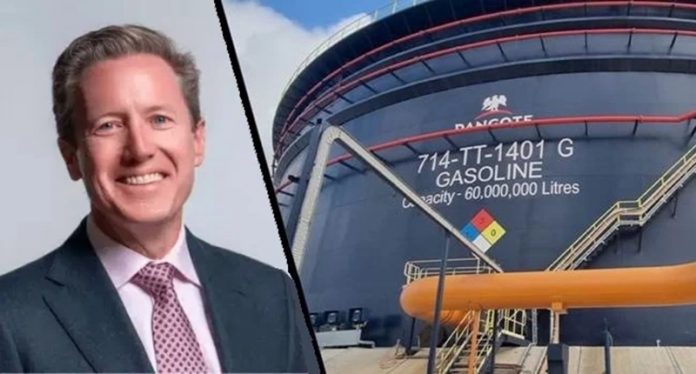
The Dangote Petroleum Refinery and Petrochemicals has appointed David Bird as Chief Executive Officer of its petroleum and petrochemicals division, a move that not only marks a critical leadership shift for Africa’s largest privately-owned refinery but has also stirred conversation over the capacity of Nigerians for the top leadership roles.

Bird, a seasoned British oil executive, assumed the role in July 2025, bringing decades of high-level global industry experience. He spent nearly 20 years with Shell, overseeing some of its most complex operations, including the landmark Prelude Floating LNG facility in Australia — the first of its kind in the world. He later took on senior positions at Oman’s Duqm Refinery and Australian energy giant Santos Ltd, where he led production operations and supply chain efforts.

With degrees from Imperial College London and Stanford University, Bird has now been tasked with steering the Dangote Refinery through its critical growth phase — a time when Nigeria is banking on the refinery to finally ease its chronic fuel import dependence, stabilize local supply, and position itself as a fuel-exporting nation.

In a LinkedIn post cited by S&P Global, Bird pledged to focus on “maximizing operational output and commercial competitiveness,” while also eyeing expansion into other African markets.

But Bird’s appointment has also reopened an uncomfortable conversation about why, after over 60 years of being Africa’s top oil producer, Nigeria appears unable to produce leadership for its most strategic downstream project. There appears to be deep-rooted concerns over the dominance of foreign professionals in Nigeria’s most ambitious industrial venture and the broader implications for indigenous capacity in the oil and gas sector.

Industry chatter quickly turned to questions of competence — or the lack—with critics saying that the refinery’s leadership structure, now firmly in the hands of expatriates, signals a damning indictment of Nigeria’s oil industry training, management, and oversight capabilities. Many pointed to the decades-long failure of state-owned refineries — in Warri, Port Harcourt, and Kaduna — as proof that the country lacks the expertise to run a complex facility of Dangote’s scale.

These state-run facilities have swallowed billions of dollars in failed turnaround maintenance projects since the 1990s, with little to no output to show. None has produced refined fuel at scale in more than two decades.

Against this backdrop, Bird’s appointment is based on operational credibility and the competence required to run a $19 billion project.

Foreigners have been at the helm of Dangote’s oil ambitions from the outset. Edwin Devakumar, an Indian national, has served as Vice President of Oil and Gas at Dangote Group since March 1, 2024, overseeing strategic direction and the buildout of refining operations. Devakumar, who has worked with the group for over two decades, is one of Aliko Dangote’s most trusted lieutenants and played a central role in the engineering, design, and planning of the refinery.

The refinery itself — located in the Lekki Free Trade Zone, Lagos — is the largest single-train refinery in the world, with a processing capacity of 650,000 barrels per day. Its complex houses 435 MW of power generation capacity, a fertilizer plant, petrochemical units, and an integrated export terminal. It began producing diesel and aviation fuel in 2024, with petrol production commencing in September of the same year.

With its aim to dominate the Nigerian oil market and significantly curtail petrol imports, the Dangote Group announced that it will deploy 4,000 compressed natural gas (CNG)-powered trucks to move fuel across Nigeria starting August 15.

Meanwhile, Aliko Dangote continues to pursue international deals, including a partnership with U.S.-based Premier Product Marketing LLC to export petrochemicals and a joint venture with Emirati firm G42 to construct a major data center in Abu Dhabi, further highlighting the group’s increasing global footprint and internationalization strategy.

While the optics of having a non-Nigerian leadership team steering the country’s flagship refinery project have not sat well with many, the bigger question is whether Nigeria is ready for the recalibration that will produce competent indigenous hands in its oil sector.

“Apple Must Do This:” Tim Cook Rallies Apple Staff Around AI Ambitions

0

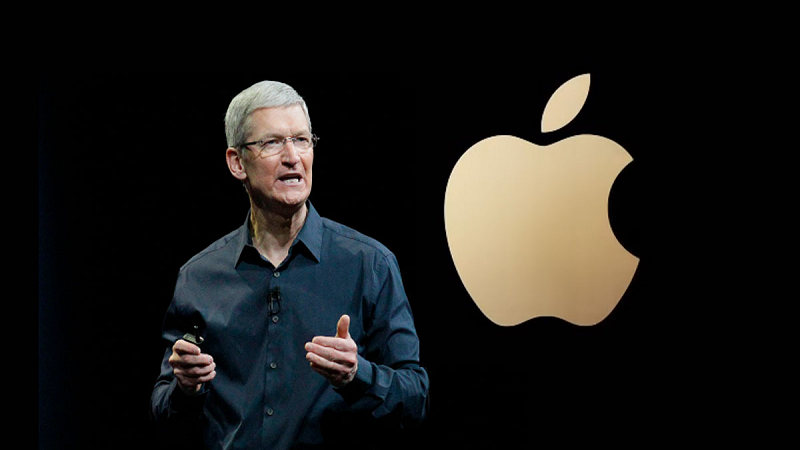
Apple CEO Tim Cook has delivered a rare all-hands address, rallying employees behind the company’s artificial intelligence ambitions and assuring them that Apple is well-positioned to lead the next big technological leap.

Speaking at the Steve Jobs Theater in Cupertino after a strong quarterly earnings report, Cook described the ongoing AI revolution as “ours to grab,” emphasizing the urgency of seizing the moment.

“This is as big or bigger than the internet, smartphones, cloud computing and apps,” Cook said, making clear that AI isn’t just a passing trend but a fundamental shift in how technology works—and how Apple must operate. “Apple must do this. Apple will do this.”

“We will make the investment to do it.”

Wall Street’s Mounting Pressure

The meeting came as Wall Street intensifies its calls for Apple to show a clear AI roadmap. Investors have grown increasingly vocal about Apple’s slow response to the AI wave, especially as competitors like Microsoft, Google, Amazon, and OpenAI move swiftly to integrate large language models and generative AI into consumer and enterprise platforms. Apple, known for its cautious and polished approach to new technologies, has so far taken a quieter route—an approach that many analysts say is no longer enough.

For much of the past year, investors have watched rivals’ AI announcements drive massive gains in stock value. Microsoft’s investment in OpenAI has reshaped its product ecosystem and pushed its valuation higher, while Nvidia’s dominance in AI chips has turned it into a trillion-dollar firm. Meanwhile, Apple’s stock has been volatile, with analysts questioning whether the company has a credible AI strategy.

The pressure grew particularly intense earlier this year after Apple skipped flashy AI launches while its peers rolled out new tools and integrations seemingly every quarter. Some investors began openly questioning whether the company, long viewed as a hardware-first business, was at risk of missing the AI revolution entirely.

Cook’s internal remarks appear designed to silence those concerns, not just within Apple’s walls but on Wall Street.

“We’ve rarely been first,” he said, referencing how Apple redefined existing product categories like smartphones and tablets without being first to market.

“There was a PC before the Mac; there was a smartphone before the iPhone; there were many tablets before the iPad; there was an MP3 player before iPod.”

But Apple invented the “modern” versions of those product categories, he said. “This is how I feel about AI.”

The statement implies that Apple may be late to show its hand, but that doesn’t mean it won’t dominate the space.

Siri’s Overhaul and Internal Restructuring

A key part of Apple’s AI revamp is a major overhaul of Siri, the company’s long-criticized voice assistant. Craig Federighi, Apple’s senior vice president of software engineering, told staff that Apple had initially planned to update Siri using a hybrid approach that combined legacy command features with modern AI tools. But the results weren’t good enough.

“We didn’t meet the quality bar,” Federighi admitted, noting that the company shifted course earlier this year, handing Siri’s redevelopment to a new team under Vision Pro chief Mike Rockwell. The team is now building a completely new foundation for Siri, with the goal of launching it sometime in 2025.

“There is no project people are taking more seriously,” Federighi added.

The revamp also includes investments in core infrastructure. Cook highlighted Apple’s internally developed chip for cloud AI computing—code-named Baltra—as well as a new AI server production hub in Houston. These moves suggest Apple is preparing to handle more processing in the cloud, similar to how OpenAI’s ChatGPT and Google’s Gemini work, rather than relying solely on on-device models.

Workforce and Product Pipeline Expanding

In the last year, Apple has hired around 12,000 people, with nearly half of those joining research and development—a sign of the company’s renewed technical focus. Apple’s chip division, led by Johny Srouji, has been particularly active in developing silicon tailored for AI workloads, both in its consumer devices and its backend systems.

Cook also reaffirmed Apple’s commitment to international expansion. He noted that a “disproportionate” share of the company’s growth would come from emerging markets. New stores are opening in India, China, and the UAE this year, with Saudi Arabia set to get its first Apple Store next year.

“We’re planting flags where we see long-term demand,” Cook said.

He also hinted at growth in other areas like Apple TV+, wearables, and health features in AirPods Pro, including hearing aid-like functionality, which could open up new use cases and markets. Meanwhile, the company remains committed to achieving carbon neutrality by 2030, despite regulatory hurdles.

Regulatory and Trade Headwinds

Even as it charges into new frontiers, Apple faces external challenges. Cook acknowledged that trade tensions are not letting up. Tariffs introduced under President Donald Trump’s administration are expected to cost the company $1.1 billion in the current quarter alone. Apple had already spent $800 million in the previous quarter dealing with these duties, primarily tied to the International Emergency Economic Powers Act (IEEPA) tariffs related to China.

Trump’s tariffs have touched nearly every Apple product, most of which are manufactured in China, Vietnam, or India. Although Apple has diversified its supply chain—with most iPhones sold in the US now coming from India and many Macs and iPads from Vietnam—it still faces threats of further tariff hikes if it doesn’t shift more production to the United States.

Riding a Wave of Momentum—But With Caution

Apple’s rally comes on the heels of a stronger-than-expected earnings report. Revenue rose 10% to $94 billion between April and June, buoyed by solid iPhone and Mac sales and a double-digit jump in App Store revenue. While that momentum has helped stabilize investor confidence, Apple’s AI narrative remains a key driver of its future valuation.

In his speech, Cook also pushed employees to move more quickly to weave AI into their work and future products.

“All of us are using AI in a significant way already, and we must use it as a company as well,” Cook said. “To not do so would be to be left behind, and we can’t do that.”

The all-hands meeting was as much about aligning internal teams as it was about reassuring the market. As Cook wrapped up the hourlong session, he struck an optimistic tone.

“I have never felt so much excitement and so much energy before as right now,” he said, without disclosing any product specifics.

However, some have summed up his message to mean that Apple is late to AI, but not out of the race.

Microsoft’s AI Bet Delivers Financial Windfall—But at a Human Cost

0

Microsoft’s latest earnings report shows the company is enjoying massive financial gains from its aggressive push into artificial intelligence and cloud computing.

But the figures also illuminate a broader and more unsettling trend in the tech industry: an accelerating shift to automation, often at the expense of human workers.

The company posted a net income of $27.2 billion for the latest quarter, up 24 percent from the previous year. Much of this surge was powered by its cloud division, Azure, which now generates over $75 billion annually—a 34 percent year-on-year growth driven by what Microsoft calls “expansion across all workloads.”

“Cloud and AI is the driving force of business transformation across every industry and sector,” CEO Satya Nadella said in the earnings statement. “We’re innovating across the tech stack to help customers adapt and grow in this new era.”

That era, it seems, is increasingly defined by artificial intelligence—not just as a service to clients, but as a fundamental restructuring tool for internal operations. Microsoft, like many tech giants, is using AI to streamline processes and reduce reliance on human labor, a strategy that has contributed to recent mass layoffs. Earlier this year, the company cut around 9,000 jobs. Reports that followed revealed executives had weighed cutting AI investments versus eliminating positions. The decision was clear: automation would stay, people would go.

This pivot cuts across the tech sector, where companies are pouring billions into AI with the promise of reducing long-term operational costs. By automating customer service, coding, data analysis, marketing, and even HR functions, firms hope to achieve greater efficiency, faster product cycles, and leaner payrolls. AI-driven tools like GitHub Copilot, chatbots, and internal large language models are now replacing tasks that once required teams of workers.

This shift is already reshaping the corporate landscape. What was once a steady march toward digitization has become a scramble to embed AI at every level of business. From Amazon’s AI-powered logistics to Meta’s algorithmic content moderation, tech companies are betting that fewer humans and more algorithms will yield higher margins.

For investors, the payoff is evident. Microsoft’s gaming division, for instance, reported a 10 percent increase in revenue, buoyed by first-party content and Xbox Game Pass subscriptions. Other services like Windows, LinkedIn, and Microsoft 365 also posted gains. But the cloud and AI segment remains the company’s most explosive growth engine, drawing the bulk of strategic focus and resources.

Yet for workers, the AI boom has taken on a more ominous tone. Many now fear displacement as companies chase automation to please shareholders. Satya Nadella once described the paradox of rising profits amid job losses as “the enigma of success.” But for laid-off employees, it’s a stark reminder of how quickly Silicon Valley can pivot from opportunity to obsolescence.

While AI may be driving productivity and profits, it is also ushering in a wave of structural unemployment, especially in roles deemed “automatable.” And with AI systems improving rapidly, even white-collar jobs once considered safe are being reevaluated through the lens of cost-cutting and efficiency.

In the amoral ecosystem of publicly traded companies, the calculation is that if AI can do it cheaper, faster, and without demanding benefits or time off, it wins. Microsoft’s latest earnings only confirm that, for now, this approach is delivering exactly what Wall Street wants. Whether it will deliver a sustainable future for workers remains a far more uncertain question.

Silicon Valley’s $250 Million AI Offer Signals a New Era of Pay in the Tech Industry

0

The artificial intelligence boom is reshaping the boundaries of compensation, ambition, and scientific prestige. Meta’s recent offer of a $250 million package to AI researcher Matt Deitke—reportedly with $100 million in the first year alone—marks a turning point in Silicon Valley’s escalating talent war, surpassing not only the pay of today’s tech professionals and athletes, but even the rewards once granted for humanity’s greatest scientific achievements.

Deitke, a 24-year-old AI researcher who previously led the multimodal system Molmo at the Allen Institute for AI and co-founded the startup Vercept, specializes in systems that process images, sound, and text together—exactly the kind of next-generation AI Meta is racing to develop. His expertise made him a prime target. And he’s not alone. Meta CEO Mark Zuckerberg reportedly offered another top engineer a staggering $1 billion to lure them into the company’s AGI efforts.

Behind these astronomical figures is a race for artificial general intelligence—AGI—or what some in Silicon Valley call superintelligence: machines capable of performing intellectual tasks at or beyond the level of humans. Tech giants like Meta, OpenAI, Google DeepMind, and Anthropic believe that the company that gets there first will hold the keys to the future, unlocking not only dominance in AI but the ability to reinvent products, create entire industries, and automate vast swaths of the global knowledge economy.

Zuckerberg recently told investors that Meta would continue pouring resources into AI research “because we have conviction that superintelligence is going to improve every aspect of what we do.” In an open letter, he called it “an exciting new era of individual empowerment,” though he stopped short of defining exactly what superintelligence means.

But the size of Meta’s investment makes its priorities clear. The company plans to spend over $80 billion on capital expenditures this year, mostly aimed at AI. One senior executive told The New York Times, “If I’m Zuck…is it worth kicking in another $5 billion or more to acquire a truly world-class team to bring the company to the next level? The answer is obviously yes.”

A New Standard of Scientific Compensation

According to Ars Technica, the numbers leave even history’s most iconic scientists in the dust. J. Robert Oppenheimer, who led the Manhattan Project that developed the atomic bomb, made about $10,000 a year in 1943—about $191,000 today. Deitke’s offer is over 300 times that. Even Thomas Watson Sr., IBM’s CEO in 1941 and one of the wealthiest executives of the time, received what would be $11.8 million in today’s money, less than a quarter of Deitke’s annualized package.

During the Apollo program, Neil Armstrong earned the equivalent of about $245,000 for his historic 1969 moon landing. Today, a top AI researcher at Meta makes that amount in three days.

Historically, even revolutionary scientists like Claude Shannon—the father of information theory—worked on modest salaries at Bell Labs during its golden era. In that era, the pay difference between the director and the lowest-paid technician was about 12 to 1. In today’s AI world, that ratio would be laughable.

Why AI Talent Is So Expensive

Several forces are driving this runaway market. Unlike government-backed mega-projects like Apollo or the Manhattan Project, the AI race is driven by competing trillion-dollar corporations. And the talent pool is tiny. Only a few dozen individuals in the world have deep experience developing frontier multimodal AI systems. Companies are bidding aggressively, sometimes offering tens of thousands of GPUs—specialized hardware required to train massive models—on top of money and equity.

Deitke’s peers, many of whom are still in their 20s, now share offer letters in private Discord and Slack groups and sometimes hire informal agents to negotiate deals. One top researcher was told by recruiters they’d be given access to 30,000 GPUs—a resource that would have taken a national lab to muster just a few years ago.

The belief among executives is that AGI will not just be a better product. It could invent other products, write software, discover scientific breakthroughs, and fundamentally transform entire economies. The stakes are so high that spending hundreds of millions on individual researchers is seen as a justifiable bet. In this context, Deitke’s $250 million offer—or even a rumored $1 billion—may seem extreme, but not irrational.

A Modern Gilded Age

These developments also mark a return to levels of industrial wealth concentration last seen in the Gilded Age. But unlike the steel barons or railroad tycoons of that era, today’s AI firms are valued in the trillions and operate at a scale that affects the entire globe. And while AI promises productivity and transformation, the economic upside is not being evenly distributed.

Meta, for example, has laid off thousands of workers even as it aggressively invests in AI. It’s a pattern seen across the tech industry: aggressive hiring for a tiny cadre of AI researchers and engineers, and widespread job cuts elsewhere. The economic model seems clear—automate what can be automated, reduce costs, and double down on scalable intellectual capital.

More Than Just Money

For some, these record-setting offers raise ethical questions about the priorities of today’s tech industry. Is the AI boom really about human empowerment, as Zuckerberg suggests, or about cornering the next trillion-dollar platform and the power that comes with it?

Whether AGI ever truly materializes remains an open question. But the belief that it might is already reshaping compensation, research priorities, and the nature of scientific work itself. For now, researchers like Matt Deitke represent the sharpest edge of that shift, where science, capital, and ambition collide.

And if he chooses to cash in and walk away in a few years, as some of his peers may, few would blame him. As one of his Vercept co-founders joked after the Meta deal became public, “We look forward to joining Matt on his private island next year.”