DD
MM
YYYY

PAGES

DD
MM
YYYY

spot_img

PAGES

Home Blog Page 7808

[News Flash] Indigo Trust Awards £10,008.96 Grant To Activ Spaces Cameroon

0


Activ Spaces announces that Indigo Trust has awarded them a grant of £10,008.96 to continue their efforts in facilitating technology penetration in Cameroon. This Trust has also made other awards in Africa.


Based on the proposal sent to Indigo, we’re pleased to announce that ActivSpaces has received a one-time grant award of £10,008.96. How will these funds be used? Our self-financed, entrepreneurial model is part of our DNA, so we’ll continue to run our operations this way. The majority of these funds will go to hire a full-time Community Manager. This role has been filled by the part-time contributions of our co-founders from the start, with varying degrees of success. Having a dedicated resource to push our vision forward will be an incredible boost for us.


So what is Indigo Trust?


The Indigo Trust is a grant making foundation that funds technology-driven projects to bring about social change, largely in African countries.  The Trust focuses mainly on innovation, transparency and citizen empowerment.  The Indigo Trust makes grants to African projects or programmes, or to organisations who operate at least partly in African countries. We believe that access to information for all empowers people to change their own lives and communities.

Based on the proposal sent to Indigo, we’re pleased to announce that ActivSpaces has received a one-time grant award of £10,008.96. How will these funds be used? Our self-financed, entrepreneurial model is part of our DNA, so we’ll continue to run our operations this way. The majority of these funds will go to hire a full-time Community Manager. This role has been filled by the part-time contributions of our co-founders from the start, with varying degrees of success. Having a dedicated resource to push our vision forward will be an incredible boost for us.Based on the proposal sent to Indigo, we’re pleased to announce that ActivSpaces has received a one-time grant award of £10,008.96. How will these funds be used? Our self-financed, entrepreneurial model is part of our DNA, so we’ll continue to run our operations this way. The majority of these funds will go to hire a full-time Community Manager. This role has been filled by the part-time contributions of our co-founders from the start, with varying degrees of success. Having a dedicated resource to push our vision forward will be an incredible boost for us.

Microcontroller – A blend of Software and Hardware (part 2)

0

Why do we have many different Microcontrollers?

Like there are so many different car manufacturers, Toyota, Honda, Mercedes and so on, so also are many manufacturers of microcontrollers. After the idea of having a programmable device, many electronics manufacturers took the idea to develop their own chip. The internal architecture therefore differs among the manufacturers in a little ways. So learning one microcontroller facilitates learning the other. Moreover the same company manufactures many different microcontrollers, which are all almost compatible. In electronics, the requirements of projects vary; for example to make a security device, you need little memory, whereas to make a data logger you need lots of memory.


A remote control will not need to display data on LCD, so needs lesser number of I/O lines, whereas an industrial control unit will need to display its data, and therefore needs more I/O lines. A calculator needs only digital input, whereas a temperature controller needs to acquire analog data. These differences in requirements, makes the manufacturers produce different microcontrollers with different memory size, number of I/O lines and number of integrated peripheral devices. Otherwise they are all similar to use. Again, if you have mastered one microcontroller, it’s easy to migrate to another. So the type of microcontroller to be used in a given project will be determined by the exact requirements.


Microprocessor vs. Microcontroller

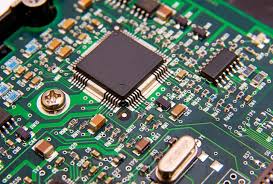
Essentially these two devices are similar, but with a little bit of difference. The microcontroller contains the same main elements as any computer system:

• Central processing unit (CPU)

• Memory

• Input/Output


In a PC, these are provided as separate chips, linked together via bus connections on board, but under the control of the microprocessor (CPU). A bus is a set of lines which carry data in parallel form which are shared by the peripheral devices. The PC can be modified to suit a particular application, by changing the type of CPU, size of memory and selection of input/output (I/O) devices tailored to the system requirements. A microcontroller on the other hand will contain, the CPU, RAM, ROM, Timers, I/O etc. all packed within one integrated circuit. This facilitates the development process, as well as reduces the requirements of external components. In microcontroller, you cannot change the number and type of integrated devices. This means that the MCU for a particular application must be chosen to suit the application at the design level from the available range of microcontrollers. In any given circuit, the microcontroller has a single dedicated function in contrast to the PC that is multifunctional. Single task application in which microcontrollers are deployed is a type of system referred to as embedded system because they are often embedded in many devices.


Central processing unit (CPU)

In a microcontroller system, a CPU block is in charge of all input, output, calculations and control. This cannot operate without a program, which is a list of instructions that is held in memory. The program consists of a sequence of binary codes that are fetched from memory by the CPU in sequence, and executed. The instructions are stored in numbered memory locations, and copied to an instruction register in the CPU via the data bus. Decoding the instruction is a hardware process, using a block of logic gates to set up the control lines of the processor unit, and fetching the instructions.


Memory

There are two types of memory: volatile and non-volatile. Volatile memory loses its data when switched off, but can be written by the CPU to store current data; this is RAM (Random Access Memory). ROM (Read Only Memory) is non-volatile, and retains its data when switched off. In a microcontroller, we have Electrically Erasable Programmable Read Only Memory (EEPROM) which is used in storing data during power down; for example, a security code or combination for an electronic lock. The ideal memory is non-volatile, read and write, fast, large and cheap. Unfortunately, it does not exist! The main trade-off is cost, size and speed of access. Flash ROM, as used in memory sticks and MP3 players, is closest to the ideal, having the advantages of being non-volatile and rewritable. This is why it is used as program memory in microcontrollers which need to be reprogrammed.


Input and Output

In microcontrollers, ports (input and output) are based on a data register, and set of control registers, which pass the data in and out in a controlled manner, often according to a standard protocol (method of communication). There are two main types of port: parallel and serial. In a parallel port, the data is usually transferred in and out 8 bits at a time, while in the serial port it is transmitted 1 bit at a time on a single line.


Existing microcontrollers in the world market today? Next series (Part 3)


Nigeria “Freedom of Information Act” – Available For Download

3

The Freedom of Information Act (FOI) is ready. The National Assembly completed the job with the President few days ago. Now, you can ask for more information about how things work in the government with a legal backing. The goal? More transparency in the nation.


On May 28, 2011, Nigeria’s president Goodluck Jonathan signed into law a Freedom of Information (FOI) Act, heralding the conclusion of arguably the most exciting legislative odyssey in postcolonial Nigeria.


The bill is available here (in pdf).

Google Wallet – Creativing New Opportunities For Citi, NXP, Sprint, Mastercard and First Data

0


Google launched its ‘Google Wallet’ that will become the future payment engine. This will surely make Android phones more popular in the near future. Immediately, NXP came out and told the world that it is its chip and technology that are powering this hot mobile payment idea. In the U.S., Google and the hosts of First Data, Mastercard, Citi and  Sprint plan to get this Wallet into the market before the end of summer. This product will offer newer options with Citi getting a good one through its PayPass  Citi Mastercard brand. It will also work for the Google prepaid card.


The telecommunication company, Sprint, gets into the loop simply because the Nexus S 4G will run on Sprint Network and the first release of the Wallet will be on Sprint.


Have you counted how one product is creating opportunities for a bank, ICT firm, card company, telecommunication company? And yes, the chip supplier. There are many other companies that are behind this vision through supply chain, distribution, marketing and so on. That is what technology does – it could change an economy.


The Wallet will be powered by of one the hottest technologies right now. The Near Field Communication (NFC). That means all you need is to tap your phone on the PayPass terminal and that is all for making a payment. By tapping the phone on the approved and enabled terminal, you have paid and checkout is completed for your transaction in a supermarket, mall, etc. The days of credit card swipe for payment could  be coming close to becoming  history.


We are fascinated that NXP could produce this technology. In a company statement after the launch, they stated thus:


With NXP’s secure contactless NFC solution, consumers can simply wave their phones over intelligent surfaces to pay for goods, apply a discount coupon, or receive loyalty points


NXP has been moving fast into this domain. Recently, it has started developing varieties of Android based devices with medical applications. If this turns out to be true since Google did not confirm, it simply means that NXP NFC business unit could be really hot in coming quarters. Google Wallet is expected to bulldoze itself into the top of the market. One hopes that Square will not put itself for sale immediately.


Nigeria can see what technology does. It creates great opportunities. We think now is the time to create that environment to enable tech companies to succeed. They can help expand our GDP and diversify our economy away from minerals and hydrocarbon.


The Web Redesign: Evolution of Platform-Based Advertising

0

Innovation is taking place in the internet, daily. Disruptions are happening and a new order is being formed. Industrial age companies continue to adapt, even as new firms redesign the structure of commerce and industry.


Anywhere you look, from Facebook recent changes on email messaging to Twitter introduction of more feedbacks, the web is alive and healthy. But it is changing and becoming more fragmented. Interoperability exists only at the point of connections and networking, after that, everyone takes a different path. Today, the big web entities are creating their own structures.


Google’s Chrome is unique and very different from Microsoft’s Internet Explorer. The same applies to Opera, Mozilla’ Firefox and Apple’s Safari. It is amazing how building proprietary web platforms around products have become a competitive strategy. While Facebook lives on the web, most of its contents reside within its boundaries. Search engines are not happy about that.


That old cohesive internet platform has given way to fragmentation with more proprietary ‘gateways’. We have seen new mobile devices that are connecting us to the web.  The transformation is so much that reliable assessment of internet hits could be challenging. It is common to see statistics that are off by millions from different companies for one site, within the same timeframe. Indeed, no one can blame them because they can measure based on their understanding of the gateways.


So, can a marketing director decide to buy ads which can be delivered to those that use iPhone to access the web? The ad will be web-based but can only be shown to users who access the web via iPhone. Going to that platform-based advertising will open opportunities to target customers not just by location, but by the device they use to access the web. What if I want Facebook to show my ads only to those that are visiting the site via Windows operating system? My product runs only on Windows and there is no reason to waste ad buys on Linux, Mac and Unix users.


We are already witnessing some of these innovations, albeit at infancy stage. It could result to higher efficiency in ad delivery, though cost of ads will increase. Previously, an ad buy in Google could serve most of the web. Today, you need to have different versions for Facebook, Twitter, and then Google. Of course, there are other channels. Twitter cannot be used in Facebook because the latter has built its own platform. Google is being cut-off by some other big players.  Proprietary platforms make it difficult for Google to have that speed to push ad since they must first receive ‘permissions’ from owners of the platforms before their ads are hosted. And most are not open to that. So, everyone has to develop and nurture its platform, driving more innovations. The whole constructs of network effects where the more the users, the better the value of the web solutions is a reflection of the advertising model.


In conclusion, as the web fragments on the platform bases, the ways businesses reach consumers must get creative. The proliferation and uniqueness of platforms provide an opportunity to target the right customer even at a very good budget. Instead of throwing ads into the deep ocean of the web, platforms can help deliver them, efficiently. After all, it does not make much sense to show Mac downloads ads to someone surfing the web with Windows.


Originally published at IGI Global