DD
MM
YYYY

PAGES

DD
MM
YYYY

spot_img

PAGES

Home Blog Page 794

Crypto Bettors Choose Spartans for 300% Bonus and Instant Payouts! Here’s Why Betway is Falling Behind

0

In 2025, flashy branding isn’t enough for online betting platforms; users want genuine perks, fast processes, and instant winnings. Two sites often debated are Betway, a legacy operator with international reach, and Spartans, a crypto-focused platform offering major rewards and quick payouts.

Betway brings broad sports coverage and a long-standing reputation, yet comes with notable setbacks. Crypto users face transaction restrictions, and bonus conditions are often vague. Spartans targets today’s gaming crowd with clear bonus rules, lightning-fast cashouts, and an esports setup tailored for crypto.

This breakdown shows where each platform stands and why more users are switching from traditional betting names like Betway to Spartans for speed, ease, and bigger benefits.

Bonus Clarity: What You See Is What You Get

Betway tends to roll out attractive promos around big sporting events, but users frequently run into region-locked terms, hidden clauses, or sudden changes. These fine-print pitfalls can make once-appealing deals unusable.

Spartans removes the guesswork. Its 300% casino bonus that spells out every rule upfront, 35x wagering, 7-day use window, and withdrawal limits are all stated before activation. No digging through FAQs or support chats.

With fixed conditions from the start, Spartans delivers reliability. Whether it’s Valorant bets or new crash games, rules don’t shift mid-way. This no-nonsense setup earns trust, offering fairness that players remember.

Esports Odds, Game Variety, and Transparent Fairness

Betway has carved out respect in traditional sports like football and cricket and recently expanded into esports, supporting teams like FURIA and Ninjas in Pyjamas. Still, the system sticks to fiat rails, with limited flexibility and no true crypto support.

Spartans fills that need with high-RTP casino titles and broad esports coverage, CS2, LoL, Valorant, Overwatch, NBA2K, and more, all in one place. Every title runs on provably fair systems, with RTP stats available, and odds often competing with or better than top fiat-based operators.

For those wanting a smooth esports experience that feels modern, Spartans matches top platforms like GG.Bet or Sportsbet.io without the drawbacks of old-school payment methods.

Reliable Crypto Withdrawals Every Time

Betway’s payout process can be inconsistent. Depending on where you live or which payment method you use, cashouts might take time. Account verifications and the absence of crypto options slow things further, frustrating users expecting quick transfers.

Spartans run on a crypto-native setup. Withdrawals in BTC, ETH, and USDT are processed instantly, with no delay based on account type or region. Once verified, your withdrawal speed remains unchanged.

Whether you’re cashing out a small win or a large jackpot, Spartans ensures seamless access. There’s no chasing paperwork, just smooth, immediate transactions that let players stay focused on the game.

Final Verdict

Betway’s structure still shows its age. Withdrawals can lag, promotions may change without notice, and the lack of crypto support puts it behind. For mobile-first or crypto-oriented users, it feels less aligned with current demands.

Spartans flips that script. A 300% bonus with set conditions (35x playthrough, 7-day validity, transparent limits), over 5,900 game titles, and a robust esports sportsbook backed by provably fair providers make it a clear standout.

Add fast crypto withdrawals and an interface optimized for speed and clarity, and it becomes obvious why Spartans is rising fast. When fairness, simplicity, and speed are key, Spartans leads with confidence.


Find Out More About Spartans:

Website: https://spartans.com/

Instagram: https://www.instagram.com/spartans/

Twitter/X: https://x.com/SpartansBet

YouTube: https://www.youtube.com/@SpartansBet
See How BlockDAG’s Demo Exchange Is Preparing Users for Trading Before the GLOBAL LAUNCH Release

0

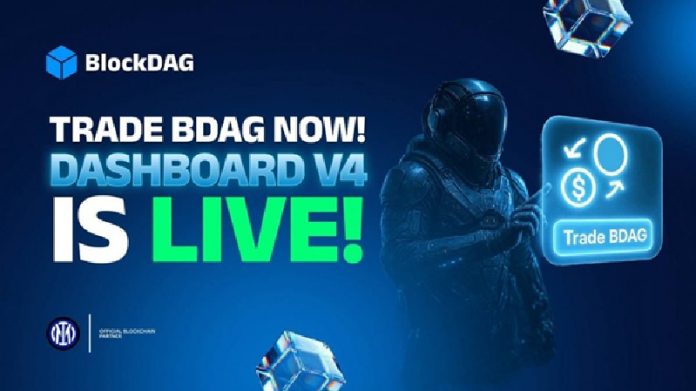
In crypto, how users interact with a platform can be just as important as the tech behind it. While many projects go live with barely any on-chain activity, BlockDAG is doing things differently. Its Demo Trading Platform is already up and running, giving users the chance to buy BDAG coins in real time and simulate selling, all before any exchange listing.

This isn’t just a training tool. It’s part of a larger plan to help users get familiar with the platform, reduce potential hiccups during the launch, and highlight the network’s technical readiness. With $360 million raised, more than 2.5 million users on its mobile mining app, and listings lined up on over 20 exchanges, BlockDAG is shaping up to be a major Layer 1 launch in 2025.

Real-Time Buys, Simulated Sells: Here’s How the Platform Works

BlockDAG’s Demo Exchange looks and feels like a full trading terminal. The Buy button is live, so users can purchase BDAG instantly, with balances updating at the current presale price of $0.0016. The Sell function, however, is currently in demo mode, giving users a risk-free way to test their strategies ahead of the official trading debut.

From live price charts to a professional-grade order book, everything mirrors what traders will see once BDAG is live. It’s meant to help new users get comfortable and let current BDAG holders get ready for potential price movements, especially with the launch price aiming for $0.05.

BlockDAG is also using this setup to put its backend through real-time stress testing, something most projects skip before listing.

Putting the Focus on User Preparation

Launching a trading demo while still in the presale stage isn’t common. Most projects concentrate purely on raising funds, often saving user tools for later. BlockDAG is going the other way, rolling out features like the Demo Trading Platform, the X1 mobile miner, and soon, Cold Wallet integration, giving users full control over their BDAG holdings.

This approach leans into transparency and preparation. Instead of surprising users with post-launch features, BlockDAG is making sure they can explore early. That’s good news for the community, it helps reduce price swings on launch day and builds trust with both casual buyers and those more actively involved.

It’s also a sign that BlockDAG has confidence in its tech stack, especially its hybrid DAG and Proof-of-Work model, which aims to deliver both speed and security.

Timing It Right With the 10 BTC Auction & Final Presale Stage

This demo launch isn’t happening in isolation. It ties directly into BlockDAG’s final presale phase and the rollout of the 10 BTC Auction Pool. Any BDAG purchase made through the platform now earns a spot in the auction, with larger buys increasing the share of the 10 BTC reward.

That extra incentive is bringing more users into the platform and encouraging them to try out the Buy function. It’s a clever way to build momentum, new users are learning how to use the exchange while also entering a high-stakes competition.

Right now, BDAG sits at $0.0016 with over 24.6 billion coins already sold. The presale will close with the GLOBAL LAUNCH release on August 11, followed by listings on more than 20 exchanges.

Helping Traders Prepare for What Comes Next

Listing events often create unpredictable price swings. By offering a place to practice trading and explore how the system works, BlockDAG is aiming to make that transition smoother. Traders who understand the interface and price action are more likely to stick around, trade smartly, and add to the project’s long-term liquidity.

This platform also gives the team a chance to monitor what users are doing, adjust the interface if needed, and prepare for the real traffic that will come with exchange listings.

In some ways, it’s similar to how stock markets offer paper trading to help new participants build skills. In crypto, where complexity can turn people away, tools like this could reshape how projects prepare users for launch.

Setting the Stage for Confident Participation

BlockDAG’s Demo Trading Platform is more than just a test run. It’s a forward-thinking move that blends live BDAG purchases, demo sell tools, and a major presale incentive in the form of the 10 BTC Auction.

It shows that the team is serious about preparing users, demonstrating tech readiness, and making the upcoming launch smoother for everyone involved. With the final stage of the presale underway and listings around the corner, this focus on usability could give BlockDAG an edge once trading begins.

For anyone holding or thinking about buying, the message is clear, BlockDAG isn’t just helping you buy low, it’s helping you get ready to win.

Presale: https://purchase.blockdag.network

Website: https://blockdag.network

Telegram: https://t.me/blockDAGnetworkOfficial

Discord: https://discord.gg/Q7BxghMVyu


Little Pepe (LILPEPE) Named Top Cheap Crypto for 2025 as Ethereum (ETH) Sets Sights on $5,000 After Mid-July Surge

0

The crypto market has regained its bullish momentum following Trump’s positive stance on the Fed rate cut. Ethereum (ETH) is again leading the charge, with a mid-July breakout, as investors eye the $5,000 milestone.

However, while ETH is reclaiming its dominance among large-cap cryptocurrencies, savvy investors are turning toward lesser-known but high-upside plays, such as Little Pepe (LILPEPE), a sub-$0.002 meme coin that’s defying the odds with real utility, breakout potential, and a growing community. With over $13.2 million raised in its presale and more than 9.3 billion tokens sold, Little Pepe is no longer a hidden gem; it’s a rising star. As Ethereum gears up for its next leg higher, LILPEPE is positioned as the next best low-cost mover, with 1000x upside potential.

Presale Momentum and Growing Ecosystem Back LILPEPE’s Rise

The presale success of Little Pepe isn’t luck. It results from precise execution, viral community traction, and a vision that resonates across meme coin enthusiasts and serious crypto investors. Now in Stage 8, with 91% of the tokens sold and the current price up 70% from Stage 1, the LILPEPE presale has outpaced many of its peers in both capital raised and speed of sale. Early buyers are already sitting on notable gains, and with the token set to list at $0.003, even late presale participants have a clear upside.

Backing this momentum is more than hype. The project has launched a $777,000 giveaway, offering 10 lucky winners $77,000 each in tokens. It has also completed a smart contract audit, been listed on CoinMarketCap, and is preparing for CEX listings post-presale, with clear credibility indicators and a well-executed roadmap.

Ethereum Eyes $5,000 as Institutional Floodgates Open

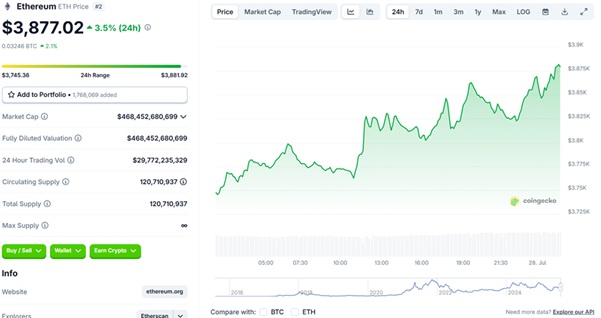
Ethereum’s price action in July has been explosive. After breaking out of a 3.7-year descending trendline and forming a bullish wedge, ETH surged from $2,090 to over $3,700, stabilizing above $3,870.

Ethereum Price Chart | Source: CoinGecko

Analysts noted that a weekly close above $4,000 opens the gates to $4,800 and even $5,000, driven by technical patterns and on-chain strength. What’s pushing this rally? Institutional demand.

Ethereum ETFs have logged a record-breaking 17-day inflow streak, with over $2.4 billion in inflows last week alone, surpassing the inflows of Bitcoin ETFs. BlackRock’s ETHA ETF pulled in $440 million in a single day.

Even Ethereum’s Layer-2 networks are booming. Arbitrum, Optimism, and zkSync drive transaction volume and scale the Ethereum network, which now handles over $10 billion in weekly on-chain activity. If the momentum continues into August, historically ETH’s strongest month, we could see Ethereum reach its $5,000 target sooner than most expect.

How Little Pepe Is Rewriting the Meme Playbook

While Ethereum leads on the institutional front, Little Pepe is rewriting how meme coins operate, starting with utility first. At the core of the LILPEPE ecosystem is its Layer 2 EVM-compatible blockchain, designed to provide meme coins and micro-cap tokens with a scalable and low-cost infrastructure. This is a first in the meme space, where most tokens lack a technical foundation.

Built on this Layer 2 is the Pepe Launchpad, a no-code token launch platform that allows anyone to create and deploy their meme tokens safely and quickly. With sniper bot resistance, 0% buy/sell tax, and a clear roadmap, Little Pepe appears as a meme-powered launch engine for the next wave of community tokens.

This makes it even more attractive because all these utilities are centered around the $LILPEPE token, an ERC-20 coin, ensuring continuous demand for use cases as the platform grows. The project also leverages meme virality, boasting a strong social presence and consistent traction across platforms like X (formerly Twitter), Telegram, and TikTok.

Best Breakout Candidate Below $0.002? Here’s Why It’s LILPEPE

With its current price below $0.002, Little Pepe offers one of the lowest barriers to entry in the entire meme coin sector and one of the highest upside potentials.

Why?

  • Planned Tier-1 CEX Listings will expose LILPEPE to global retail demand.
  • Sustainable long-term utility project, unlike pump-and-dump meme coins.
  • Its Layer 2 blockchain and Launchpad create real infrastructure for developers and meme coin fans.
  • The current presale price ($0.0017) is expected to double on listing, and that’s just the beginning.

As Ethereum races to $5,000, attention will inevitably shift to lower-cap projects with viral energy and genuine fundamentals. LILPEPE sits at the intersection of both. With a strong roadmap, presale traction, and technical features rarely seen in meme projects, it’s primed to be the best low-cost mover of 2025.

Conclusion

Ethereum’s march toward $5,000 is strengthening with every ETF inflow, whale buy, and technical confirmation. But Little Pepe stands out as the top cheap crypto to watch in 2025 for those seeking bigger percentage returns. Its under-$0.002 price point, Layer-2 tech stack, and meme-market appeal give it breakout potential unmatched by most altcoins. Join the Little Pepe Presale now, before the price climbs again!


For more information about Little Pepe (LILPEPE) visit the links below:

Website: https://littlepepe.com

Whitepaper: https://littlepepe.com/whitepaper.pdf

Telegram: https://t.me/littlepepetoken

Twitter/X: https://x.com/littlepepetoken

X Slams UK’s Online Safety Law, Says It Threatens Free Speech

0

Elon Musk’s X has openly condemned Britain’s new Online Safety Act, warning that its sweeping enforcement threatens free speech and risks fostering an online environment of excessive censorship.

The platform’s criticism adds to growing public and political backlash against the law, which was introduced to curb harmful online content and protect minors.

The Online Safety Act, enacted last year and gradually being rolled out in 2025, compels social media giants like Facebook, TikTok, YouTube, and X to crack down on illegal content and implement stricter protections for children online. Sites hosting pornography are also required to verify user age, a move that has stirred significant privacy concerns.

In a statement on Friday, X said the law’s “laudable intentions were at risk of being overshadowed by the breadth of its regulatory reach.” The company, which has already implemented age verification measures in line with the law, warned that the act’s vague boundaries and tight deadlines were encouraging platforms to over-police content for fear of regulatory penalties.

“When lawmakers approved these measures, they made a conscientious decision to increase censorship in the name of ‘online safety’. It is fair to ask if UK citizens were equally aware of the trade-off being made,” the company said.

A key element of the law’s implementation involves oversight by media regulator Ofcom, which has already launched formal investigations into four unnamed companies operating 34 pornography websites to assess compliance. These probes come as users voice mounting frustration over intrusive age verification processes that require personal data uploads—measures seen by many as a disproportionate infringement on digital rights.

That sentiment is spreading fast. Over 468,000 people have signed a petition calling for the repeal of the law. Critics, including content creators and free speech groups, argue the law has already gone too far, resulting in the removal of legal content in efforts to avoid potential violations. They contend the law’s structure places disproportionate power in the hands of regulators and platforms, effectively chilling lawful expression online.

Despite the uproar, the UK government has stood its ground. Technology Secretary Peter Kyle defended the law earlier this week, saying those seeking to overturn it were “on the side of predators.” His comments were widely criticized as inflammatory and dismissive of legitimate concerns about civil liberties and overreach.

Ofcom, for its part, has vowed to enforce the law “proportionately,” but its investigations into pornography sites—alongside the possibility of steep fines for violators—signal an aggressive posture that platforms like X say risks harming the very liberties the UK purports to uphold. X stressed the need for a “balanced approach” that simultaneously safeguards children, encourages innovation, and protects individual freedom.

“Significant changes must take place to achieve these objectives in the UK,” the company said.

The UK joins a growing list of countries attempting to regulate online spaces more tightly, citing child safety and national security. But as tech companies like X push back, the debate is increasingly framed as a battle over who decides what speech is permissible—and whether security should come at the cost of free expression in the digital age.

Anthropic Reportedly Revokes OpenAI’s Access to Claude Ahead of GPT5 Launch

0

Anthropic has formally cut off OpenAI’s access to its Claude family of models, citing breaches of its terms of service tied to internal benchmarking activity, per Wired.

The move comes at a pivotal moment, just as OpenAI prepares to unveil its highly anticipated GPT5 model.

Why Access Was Cut Off

According to WIRED, OpenAI engineers used Claude Code, Anthropic’s AI-powered coding assistant, to evaluate Claude’s performance against OpenAI’s own engines across tasks like coding, creative writing, and safety-related scenarios (e.g., self-harm and defamation prompts). Anthropic maintains that this violated its commercial terms, which explicitly forbid customers from using the API to build competing services or improve their own models.

Anthropic spokesperson Christopher Nulty said: “Claude Code has become the go to choice for coders everywhere… OpenAI’s own technical staff were also using our coding tools ahead of the launch of GPT5… this is a direct violation of our terms.”

OpenAI responded by calling the benchmarking activity “industry-standard,” arguing that evaluating rival models is a normal part of development and safety testing. The company expressed disappointment but noted that Anthropic’s API remains available to it for benchmarking and safety evaluations, though details remain murky.

A Pattern of Access Control

This action follows a pattern. In recent weeks, Anthropic had already revoked API access to Windsurf, a startup rumored to be linked with OpenAI. Chief Science Officer Jared Kaplan remarked at the time: “I think it would be odd for us to be selling Claude to OpenAI.”

Analysts see parallels to precedents in Big Tech: Facebook cutting off Vine API access and Salesforce restricting Slack’s openness. As AI evolves, control over competitor access appears central to company defense strategies.

Instead of standard user interactions, OpenAI reportedly integrated Claude into its proprietary developer tools via custom API endpoints. This allowed bulk benchmarking—testing Claude’s functions in categories such as code generation, writing, and safety responses. These evaluations played a role in refining GPT5, expected to include new reasoning and coding capabilities.

On the Eve of GPT5

The cut occurred on August 1, 2025, just days before GPT5’s slated launch. Many interpret the timing as strategic; perhaps Anthropic aimed to blunt any competitive leak or advantage OpenAI might gain.

The decision signals a profound shift in AI industry dynamics: from cooperative benchmarking to protective exclusivity, as labs rush to preserve their competitive edge.

Implications for OpenAI, Anthropic & Beyond

OpenAI now loses direct insight into Claude’s performance under realistic developer conditions—a limiting blow if it can’t independently replicate those capabilities.

Anthropic reinforces its safety- and integrity-first posture, emphasizing control over how Claude is used and preventing rivals from reverse engineering its capabilities.

Developers and startups may become more vulnerable. Access to major AI models is increasingly contingent on loyalty—or at least compliance—with restrictive terms.

The AI policy landscape now faces a critical question: Are these models proprietary platforms, or should fair benchmarking access be considered industry-standard infrastructure?

Broader Industry Trends

Benchmarking in AI is becoming more complex and costly. As models excel on traditional tests like MMLU or Hellaswag, companies are building private evaluation systems for reasoning and planning. This shift raises concerns about comparability and trust in model performance claims.

However, Anthropic’s Claude models continue to gain traction and market share. Recent figures show the company now holds 32% of enterprise LLM usage, surpassing OpenAI in adoption, particularly in coding tasks, recording a 42% share compared to OpenAI’s 21%.