DD
MM
YYYY

PAGES

DD
MM
YYYY

spot_img

PAGES

Home Blog Page 797

Trump’s August Tariffs Set to Hit U.S. Consumers Hard, Experts Warn

0

The ripple effects of President Donald Trump’s sweeping tariff strategy are beginning to show, with new data and expert analyses suggesting that U.S. consumers could soon face significantly higher prices for everyday food products — and worse still, the most severe economic consequences may still lie ahead.

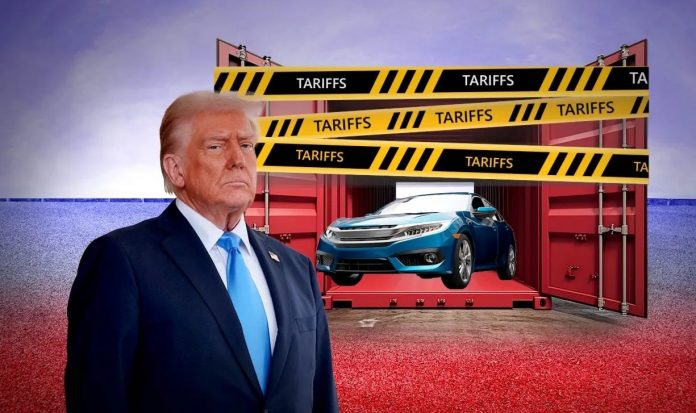
Trump’s latest wave of tariffs, scheduled to take full effect on August 1, aims to force a reorientation toward American-made goods. But economists warn that this strategy is creating distortions in supply chains, especially for food items the U.S. cannot produce at scale, such as Brazilian coffee or bananas.

According to a new analysis from the Tax Foundation, the U.S. imported $221 billion worth of food products in 2024, many of which already face tariffs ranging from 10% to 30%. The August levies, if implemented fully, could push rates beyond 30% for some imports.

The top five imported food categories by volume—liqueurs and spirits, baked goods, coffee, fish, and beer—make up about 21% of total U.S. food imports. Consumers are already seeing a shift: grocery prices are up 2.4% from a year ago, but economists say the worst is yet to come. A report from The Budget Lab at Yale forecasts that the new tariffs will push food prices 3.4% higher in the short term, with a sustained 2.9% increase in the long run. Fresh produce could initially spike by nearly 7%, before leveling off at a 3.6% increase.

Alex Durante, senior economist at the Tax Foundation, explained that some items have no real domestic alternatives, forcing Americans to pay higher prices or go without.

“In some cases, U.S. consumers may decide to pay more for these imported food products rather than choosing a substitute,” he said.

The White House insists that the pain is being felt primarily by foreign exporters. “The Administration has consistently maintained that the cost of tariffs will be borne by foreign exporters who rely on access to the American economy, the world’s biggest and best consumer market,” said spokesperson Kush Desai.

He pointed to a recent White House Council of Economic Advisers report showing that the price of imported goods, measured via the personal consumption expenditure index, actually declined between December and May.

But market analysts and independent economists see a more troubling picture forming—one that suggests U.S. households will carry a greater share of the burden, and that this policy path may be steering the country into a stagflation scenario.

Torsten Sløk, chief economist at Apollo Global Management, warned earlier this month that the most damaging effects of Trump’s tariffs are not immediate, but lagging.

“They need to wait to see the peak,” Sløk said, referring to the Federal Reserve’s cautious stance on interest rate adjustments. “We have really only had the take-off stage,” he added, cautioning that inflationary pressures are still working their way through the system.

Sløk projects that toward the end of the year, the full brunt of the tariffs could manifest in a dangerous economic blend of high inflation and sluggish growth—conditions ripe for stagflation, which the U.S. hasn’t faced on this scale since the 1970s. The concern is that as prices rise, consumer spending could slow, especially among lower- and middle-income households, creating a drag on economic momentum that may extend well into 2025.

What makes this situation particularly volatile is the timing. The Federal Reserve has been holding off on rate cuts, banking on the idea that inflation is cooling. But as tariff-driven price increases begin to surface in essential goods like food, the Fed may find itself stuck between the need to tame inflation and the risk of stifling growth.

“We could see some large movements in prices over the next few months if the administration holds firm to that Aug. 1 deadline,” Durante told CNBC.

If the analysis holds true, American households will not only feel the squeeze at grocery stores but may also see broader price increases across other sectors, including consumer goods and transportation. The outlook paints a precarious economic trajectory in which political strategy and economic stability are now on a collision course, with ordinary Americans caught in the crossfire.


Collect Africa Announces Plans to Shutdown as Founders Pivot to Stablecoin Platform Autosend

0

Collect Africa, a Nigerian payment platform that allows African SMEs to receive payments across all sales channels, manage and monitor their businesses, has announced plans to shut down.

The company noted that by August 31, 2025, it will cease operations as the team will now focus entirely on a new stablecoin-based platform called Autospend.

In an email to users as seen by Condia, the company wrote,

After much consideration, we have made the difficult decision to wind down the business”. It further informed customers to withdraw all remaining funds from their accounts ahead of the closure.

According to Collect Africa co-founder Abraham Ojes, he noted that the shutdown marks a strategic shift rather than an end. “After four years of building Collect and helping hundreds of merchants manage payments, we saw firsthand how big the need is for global, instant, and affordable money movement,” he said.

This realization led to Autospend, a new startup launched earlier in 2025, which enables businesses and individuals to move money using stablecoins for payments, savings, and expense management. Ojes describes it as “the next chapter of what we’ve been building all along.”

Collect Africa was founded in 2021 by Abraham Ojes and Wale Martins with a simple mission to help businesses collect payments seamlessly from their customers all over Africa.

The company launched with the belief that customers should be given the freedom to pay with whatever methods they are used to. Collect goal was to connect businesses to local payment methods and improve acceptance rates.

The startup built tools that enabled SMEs to accept payments via bank transfers, POS terminals, QR codes, payment links, and direct debits all from a single dashboard. Also, it sought to offer a better alternative to Nigeria’s fragmented payment systems for small businesses.

The platform positioned itself as the best way for businesses to accept recurring payments, offering a superior payment experience through ready-made payment pages or customizable checkout options that integrated easily with existing online services.

Collect Africa focused on minimizing failed transactions by ensuring most payments were successful on the first attempt, while its smart systems automatically retried failed payments. By leveraging its technology, the company claimed to reduce the total cost of collecting, managing, and reconciling recurring payments by up to 40%.

Built on open banking infrastructure, Collect Africa connected to every bank in Nigeria through reliable service providers, with plans to expand its services to Kenya and South Africa. The platform offered various features tailored to business needs. Its invoicing solution allowed customers to securely set up their payment details once, enabling businesses to collect both one-off and recurring payments as they became due.

Subscription payments gave merchants the flexibility to create custom billing schedules, accessible via secure payment links or directly from the Collect dashboard. To enhance cashflow management, Collect Africa also provided businesses with dedicated accounts, enabling faster collections, instant settlements, and better access to business insights. Through the dashboard, businesses could create an unlimited number of dedicated accounts for different units without the need for any paperwork.

Over its years of operation, Collect Africa became a trusted payment solution for businesses of various sizes, streamlining payment processes and improving overall efficiency in financial management. Since launch, the startup has processed over $4 million in payments, registered 5,000 businesses, and facilitated more than 50,000 transactions.

It maintained monthly revenues of about $5,000 and recorded an average annual growth rate of 25%, according to early-stage investor Ajim Capital. The company also attracted backing from prominent investors.

Collect Africa’s closure reflects a broader trend among African fintechs, moving away from local payment tools toward infrastructure that supports cross-border financial access. The company’s pivot reflects the belief that stablecoin will become the future of money movement in Africa.

With Autospend, the founders are betting that stablecoins will play a key role in the future of global money movement on the continent.

The 90-Day U.S-Chinese Tariff Pause Stabilizes Tech and Crypto Markets By Reducing Immediate Cost Pressures

0

The United States and China have extended their tariff truce for an additional 90 days, effective from August 12, 2025, as trade negotiations continue in Stockholm. Both nations have committed to not imposing new tariffs or escalating the trade war during this period. The talks, led by U.S. Treasury Secretary Scott Bessent and Chinese Vice Premier He Lifeng, follow earlier discussions in Geneva and London focused on de-escalation.

While no major breakthroughs are expected, the Chinese delegation may raise concerns about U.S. fentanyl-related tariffs, and the U.S. is likely to address China’s industrial overcapacity and technology restrictions. This extension aims to maintain stability in trade relations, with speculation of a potential Trump-Xi summit at APEC in October.

The tariff pause, reducing US tariffs on Chinese goods from 145% to 30% and Chinese tariffs on US goods from 125% to 10%, provides temporary relief for tech companies reliant on Chinese manufacturing and supply chains. Major firms like Apple, which produces 90% of its iPhones in China, benefit from reduced cost pressures, as earlier high tariffs threatened price increases (e.g., a potential $350 hike for high-end iPhones).

Chipmakers like Nvidia, AMD, Broadcom, and Qualcomm, previously impacted by trade restrictions, saw stock gains of 5-8% following the May 2025 tariff reduction announcement, reflecting market optimism. This trend is likely to continue with the extension, stabilizing supply chains for semiconductors and electronics. US-listed Chinese tech firms like Alibaba, JD.com, and Baidu also benefit, as lower tariffs ease export costs and improve market sentiment, potentially boosting their stock valuations.

Despite the pause, a 30% US tariff on Chinese goods remains high (compared to 3% when Trump took office), and the baseline 10% universal tariff on all US imports persists. This ongoing cost burden could still pressure tech firms to raise prices or absorb losses, particularly for consumer electronics like smartphones and PCs. The pause is temporary, and negotiations must yield progress by November 2025 to avoid tariff reinstatement.

China’s $138 billion Innovation Fund, focusing on AI, quantum computing, and 6G, signals a long-term strategy to reduce reliance on US technology. This could challenge US tech dominance, as Chinese firms like Huawei advance in domestic chip production and AI development. The tariff pause may allow China to stabilize its economy while accelerating these investments, potentially widening the technological divide by fostering a parallel ecosystem less dependent on Western supply chains.

High tariffs have already prompted companies like Apple to diversify manufacturing to India, Vietnam, and Thailand, though these countries also face US tariffs. The pause gives firms breathing room to plan further diversification, but the complexity and cost of relocating high-tech manufacturing remain significant barriers. China’s stimulus policies and subsidies for 5G adoption, smart devices, and rural e-commerce aim to bolster domestic demand, potentially offsetting tariff impacts but reinforcing a decoupled tech market.

The tariff pause has spurred optimism in crypto markets, as reduced trade tensions lower macroeconomic uncertainty. Bitcoin surged past $118,571 and Ethereum saw gains following the July 2025 announcement, reflecting their status as risk-on assets during periods of economic stability. The extension is likely to sustain this momentum, encouraging capital inflows into cryptocurrencies as investors perceive lower recession risks. Historically, crypto markets rally when trade hostilities ease, as seen in the 1.25% Bitcoin price increase after the May 2025 tariff cut.

Crypto markets remain sensitive to macroeconomic events. Earlier in 2025, Trump’s tariff hikes caused a sharp crypto market drop, with Bitcoin falling to $74,500 and Ethereum losing over 20%. If negotiations falter by November 2025, renewed tariffs could trigger similar volatility. Tariffs on tech imports, such as GPUs used in Bitcoin mining, increase costs for miners. While the pause mitigates this, persistent high tariffs on Chinese mining equipment (e.g., Bitmain products) could still pressure profitability, particularly for US-based miners.

Bitcoin’s role as a hedge against economic instability may strengthen if tariffs resume and fuel inflation or slow growth. A stronger US dollar, often a byproduct of tariffs, historically exerts downward pressure on Bitcoin prices, but prolonged economic uncertainty could drive institutional adoption of crypto as a safe-haven asset. The tariff war may accelerate Bitcoin’s decoupling from traditional financial markets, as suggested by experts like Robby Greenfield, who see trade volatility pushing crypto toward greater independence.

The tariff pause highlights the need for robust compliance frameworks in crypto, as geopolitical shifts could lead to tighter regulations. Emerging Web3 partnerships (e.g., Sequence and FortePay) underscore the importance of regulatory clarity to sustain growth amid trade uncertainties. The tariff pause is a tactical de-escalation, not a resolution. The US’s 20% fentanyl tariff and restrictions on Chinese tech exports (e.g., rare earths, critical for chip production) signal ongoing strategic competition.

China’s retaliation, including rare earth export curbs, underscores its leverage in critical materials. China’s focus on tech self-reliance and domestic innovation (e.g., AI, 6G) aims to reduce dependence on US technology, potentially creating a bifurcated global tech ecosystem. This divide could lead to incompatible standards, reduced interoperability, and higher costs for global tech firms. The Stockholm talks, involving broader issues like China’s oil purchases from Russia and Iran, indicate that trade is intertwined with geopolitical strategies.

Failure to address these could reignite trade hostilities, deepening the divide. China’s state media portrays the tariff reduction as a negotiating victory, bolstering its domestic narrative of resilience. This could embolden Beijing to maintain a hardline stance in future talks, complicating long-term agreements. The pause has stabilized markets, with the S&P 500 and Nasdaq rallying post-May 2025 announcement. However, the persistent 10% universal tariff and 30% China tariff keep trade costs elevated, potentially reducing global GDP by 0.7-1% if tensions persist.

Other nations, like the EU and ASEAN, are diversifying trade away from the US and China, further fragmenting global markets. This could exacerbate the divide, as countries align with one economic bloc over the other. While the tariff pause offers short-term relief, it does not address underlying structural issues, such as the US’s $1.2 trillion trade deficit or China’s industrial overcapacity. The narrative of a “thawing” trade war may be overstated, as both sides use the pause to reposition strategically.

The US aims to rally allies against China, while Beijing leverages its economic vulnerabilities (e.g., deflation, weak credit demand) to push for concessions. For tech, the pause delays but does not eliminate the risk of supply chain disruptions, and China’s innovation push could challenge US dominance long-term. For crypto, the pause supports short-term gains but leaves markets vulnerable to policy shifts. The divide between the US and China is likely to deepen unless permanent trade agreements emerge, with profound implications for global technology and financial systems.

The 90-day tariff pause stabilizes tech and crypto markets by reducing immediate cost pressures and boosting investor confidence. However, persistent tariffs, unresolved geopolitical tensions, and China’s self-reliance strategy maintain uncertainty. Tech firms face ongoing supply chain challenges, while crypto markets could see both short-term rallies and long-term hedging opportunities. The US-China divide continues to shape a fragmented global economy, with technology and cryptocurrencies at the forefront of this economic and strategic rivalry.

FIRS Unveils Real-Time VAT Tracking Portal, Mandates Integration for Banks, Fintechs, etc in Nigeria

0

Nigeria’s Federal Inland Revenue Service (FIRS) has unveiled a real-time Transaction Monitoring System to track all VAT-eligible electronic transactions, mandating integration from banks, card schemes, fintechs, and payment service providers.

According to a report by Tech Cabal, the move is part of an aggressive push to plug tax leakages in Nigeria’s rapidly expanding digital economy.

Speaking on this, FIRS Executive Chairman Zacch Adedeji said,

This system represents a transformative leap in transaction visibility. By monitoring VAT-eligible activities in real time, we are fostering a fair and transparent digital marketplace for all stakeholders”.

The portal requires financial institutions to route transactions through the system, granting FIRS instant visibility into VAT-eligible payments and potential deductions. While FIRS will not directly collect taxes through the portal, it will use the data to automatically reconcile invoices and assess taxpayer thresholds via a centralised dashboard.

The agency stated that Nigeria’s fast-growing digital economy has outpaced traditional tax monitoring methods, resulting in significant gaps in compliance and transaction visibility. To address this, the new platform leverages real-time data collection, encryption, and AI-driven validation to ensure transaction integrity.

This directive comes after Nigeria’s President Bola Tinubu, on June 26, 2025, granted assent to the following four landmark tax reform bills: Nigeria Tax Bill, Nigeria Tax Administration Bill, Nigeria Revenue Service (Establishment) Bill, and Joint Revenue Board (Establishment) Bill (now “Acts”).

The assent by the President is a culmination of efforts by the Presidential Fiscal Policy and Tax Reforms Committee to reshape the landscape of Fiscal/Economic governance and tax administration in Nigeria, with a view to supporting the economic policy of the Administration.

It is expected that the Acts will provide better oversight on government revenues, and streamline tax administration in Nigeria to bring it closer to best practices globally and improve efficiencies in tax administration in Nigeria.  

Notably, after a conference held by the FIRS on July 22 and 23 2025, in a statement quoted by the FIRS CEO, he noted that the event was held to spotlight the agency’s “intensified efforts in tackling IFFs, including strengthening compliance mechanisms, enhancing beneficial ownership transparency, and leveraging technology to detect and deter tax evasion, trade mispricing, and other illicit outflows.”

Currently, financial institutions in Nigeria are being asked to integrate with the portal as they handle millions of micro-transactions daily. Banks only report transactions above N5 million ($3,200), leaving smaller taxable transactions largely undocumented. By integrating these institutions, FIRS aims to capture a major leakage point in consumption tax collection and standardise data on taxable transactions.

Although the new tax laws take effect in January 2026, FIRS is exercising its existing powers under Section 25(4) of the FIRS Act, which allows it to issue a 30-day notice to taxpayers to integrate with the system.

FIRS clarified that transaction data alone is not a definitive indicator of tax liability. Before using financial data for assessments, it will be cross-checked against taxpayers’ self-assessments, where individuals and businesses can claim eligible deductions to reduce taxable income.

Overall, while the directive strengthens Nigeria’s tax system and promotes transparency, it places significant compliance demands on financial institutions, which could reshape operational and cost structures in the fintech and banking sector.

Microsoft Introduces Copilot Mode in Edge as AI Browsers Enter Next Phase

0

Microsoft has rolled out a new feature in its Edge browser dubbed Copilot Mode, a move that pushes the company further into the growing competition around AI-powered web browsing tools.

Unveiled on Monday, the feature turns Edge into an intelligent assistant capable of not just answering questions but actively helping users research, compare, and take action online, from booking appointments to navigating multiple tabs of information.

The launch comes amid a surge in demand for more intuitive and productive browsing experiences powered by artificial intelligence. Microsoft is positioning Copilot Mode as a key leap forward, integrating AI into the browser environment in a way that removes friction and anticipates users’ needs.

Copilot Mode, still in experimental rollout, is opt-in and currently free for all Edge users on Mac or PC who already have access to Copilot. Once enabled, users are greeted with a revamped new tab experience where they can search, chat, and navigate the internet with the AI’s assistance. On any web page, the AI can help contextualize what users are reading or offer actions based on their browsing intent.

One demonstration showed how Copilot could help convert a standard recipe into a vegan version, suggesting plant-based substitutions without the user needing to rephrase or copy content into a separate chatbot. In another example, the AI companion can simply extract and present the essential parts of a webpage — such as the core ingredients of a recipe — skipping over the typical long preambles that often bog down web content.

More than just a chatbot, Copilot is designed to act like a research assistant or task manager. It can draft content, generate shopping lists, and even assist in booking hotels or flights — a function that blends search with intelligent filtering. While this kind of “agentic” behavior signals a big step in browser evolution, Microsoft acknowledges that the experience may not yet be faster or more intuitive than manual navigation, especially for seasoned web users.

Notably, Copilot allows for voice input, opening up accessibility for users who are less comfortable with digital navigation or who may have physical limitations. The feature is expected to evolve to handle more complex tasks as users permit access to browsing history, credentials, and additional context, but for now, much of the action is still manual.

Where Copilot may shine most is in research-heavy sessions. With the user’s permission, the AI can access all open browser tabs to understand the context and patterns in browsing activity. For instance, if someone is comparing flight prices across different websites, Copilot can synthesize the options and present a summary or suggest next steps. Eventually, the tool will be able to recommend where users left off on a project or nudge them forward with suggestions based on their activity.

Microsoft emphasizes that privacy controls are central to Copilot Mode. The AI can only access browsing data when explicitly authorized by the user, and this access will be visibly flagged with clear indicators in the interface. Still, the notion of an AI assistant that can “see and hear” what users are doing online — even if permission-based — raises concerns around digital surveillance, especially at a time when tech giants are under scrutiny for how they manage data.

The Race Toward AI-First Browsing

Microsoft’s move comes amid a broader race to redefine how people interact with the internet using AI. Browsers are rapidly evolving from passive information portals into active, conversational tools that aim to reduce cognitive load and take action on behalf of users. With companies like Google also integrating AI into Chrome and startups pushing AI-native browsers from the ground up, Microsoft is banking on Copilot Mode to keep Edge relevant and competitive.

The browser, once a passive gateway to the web, is now becoming a full-fledged digital assistant. However, some analysts note that the success of Copilot Mode will ultimately depend on whether users find it truly helpful or more of a gimmick than a necessity.