DD
MM
YYYY

PAGES

DD
MM
YYYY

spot_img

PAGES

Home Blog Page 8

Spacecraft Developer Quantum Space To Go Public In $1.2bn SPAC Deal As Investor Appetite For Orbit Economy Grows

0

Space infrastructure company Quantum Space is set to join public markets through a merger with special purpose acquisition company (SPAC) Inflection Point Acquisition Corp., in a transaction that values the combined entity at approximately $1.2 billion.

The deal comes off renewed investor enthusiasm for the space industry as capital pours into companies positioned to benefit from the next phase of the commercial space economy. Investor attention has increasingly shifted toward space-related companies ahead of the highly anticipated public debut of SpaceX, which is expected to command a valuation of around $1.75 trillion.

The prospect of SpaceX entering public markets has reignited interest across the broader space ecosystem, benefiting companies involved in launch services, satellite communications, space infrastructure, and national security applications.

Quantum Space’s transaction includes a substantial $300 million private investment in public equity (PIPE), led by Inflection Point Asset Management. The capital injection is expected to fund the development of the company’s flagship Ranger spacecraft platform while supporting the expansion of its manufacturing capabilities.

While the first generation of commercial space companies focused primarily on launch vehicles and satellite deployment, a growing number of firms are targeting the infrastructure needed to support sustained activity in Earth orbit and beyond.

Quantum Space, led by former NASA Administrator Jim Bridenstine, is positioning Ranger as a multi-purpose spacecraft platform capable of serving government, defense, and commercial customers. Such platforms are increasingly viewed as critical components of future space operations, enabling missions ranging from satellite servicing and orbital logistics to national security applications.

The company’s emphasis on national security missions is particularly significant. Governments around the world, especially the United States, are dramatically increasing investments in space-based capabilities as orbital assets become central to military communications, intelligence gathering, navigation, and missile-warning systems. This trend has created a rapidly expanding market for companies capable of providing resilient and flexible space infrastructure.

The transaction also highlights the continued relevance of SPAC mergers as a route to public markets for capital-intensive aerospace ventures. Although the SPAC market cooled significantly after the speculative boom of 2020 and 2021, space companies remain among the sectors where investors have shown a willingness to support long-term growth stories that require substantial upfront investment before generating meaningful revenue.

Access to public capital could prove crucial for Quantum Space. Building spacecraft platforms, expanding production facilities, and competing for government contracts require significant financial resources. The additional funding is expected to accelerate the deployment of Ranger while helping the company scale manufacturing to meet anticipated demand.

The deal also underpins a broader investment thesis that the space economy is entering a new growth phase. Falling launch costs, advances in satellite technology, increasing defense spending, and the emergence of commercial lunar and deep-space initiatives are creating opportunities for companies supplying the infrastructure layer of the industry.

Analysts see space infrastructure as one of the most attractive segments of the sector. Much as railroads, ports, and telecommunications networks became foundational assets during previous industrial revolutions, orbital infrastructure may become an essential component of future economic activity beyond Earth.

The timing of Quantum Space’s market debut is unlikely to be coincidental. Investor enthusiasm for aerospace and defense-related technologies has strengthened considerably, fueled by geopolitical tensions, rising government spending, and optimism surrounding the commercial potential of space.

If completed as expected in the fourth quarter of 2026, the merger will see the combined company operate under the Quantum Space name and trade on the Nasdaq under the ticker symbol “QSPC.”

However, the transaction offers another indication that capital markets are once again warming to ambitious space ventures. While risks remain substantial in a sector known for long development cycles and technological complexity, the growing flow of funding suggests that many investors believe the next major frontier of economic growth may extend well beyond Earth’s atmosphere.

Understanding the BTC to XMR exchange rate, and how to get a fair one

0

If you are checking the BTC to XMR exchange rate, you are probably trying to answer one of two questions: how much Monero will my Bitcoin get me right now, and am I being offered a fair deal. Both are reasonable, and both are easy to get wrong if you only glance at a single number on a price ticker. This article breaks down what actually drives the rate, why the quote on a swap service differs from a mid-market figure, and how to make sure the rate you act on is an honest one, without giving up your privacy in the process.

I am not going to print a live rate here, because it would be wrong within seconds. Crypto prices move constantly. What stays useful is understanding how the number is built.

What the BTC to XMR exchange rate actually is

At its simplest, the rate is how many XMR one BTC will buy at a given moment. But “the rate” is not a single fixed value. A few different numbers float around and they do not mean the same thing.

The mid-market rate is the midpoint between what buyers and sellers are quoting across exchanges. It is the cleanest reference number, the one you see on price-tracking sites, but you almost never trade at exactly that price.

The quoted swap rate is what an actual service offers you for a real conversion. It already includes the service’s margin, so it sits a little below the mid-market figure. This is the number that matters when you commit.

The two are not in conflict. The mid-market rate is for orientation; the quoted rate is what you will actually receive. Treat a price ticker as a sanity check, not as the deal.

What moves the rate

Several things push the BTC to XMR rate around, and knowing them helps you read a quote.

Market price of each coin. BTC and XMR each have their own price in dollars, and the ratio between them is what the rate expresses. When either moves, the rate moves.

Volatility and timing. Both coins can swing quickly. The rate you see when you open a converter and the rate at the moment a swap settles can differ slightly, especially if Bitcoin confirmation is slow that day.

Liquidity for the pair. XMR is delisted from many large platforms, so there are fewer venues quoting it than for mainstream pairs. Thinner liquidity can mean a slightly wider spread.

The service’s margin. Instant swap services bake their fee into the quote rather than charging a separate line item. A reasonable spread is normal; an unusually bad rate is how some services hide their real cost.

Why privacy belongs in a conversation about rate

This is the part people skip when they are only chasing the best number. Many places that would quote you a BTC to XMR rate also demand an ID upload and a selfie before you trade. The moment you verify your identity to acquire a privacy coin, you have created a permanent record linking your name to the purchase, which undoes the on-chain privacy that was the whole reason to buy XMR.

So the rate is not the only axis. A marginally better quote behind a KYC wall is often a worse deal once you count what you gave up. The services worth comparing for this pair are the ones that quote a fair rate and do not make you register.

How to get the rate and convert in one step

A non-custodial swap service shows you the rate you will actually receive and performs the conversion without an account:

  1. You enter the amount of BTC you want to convert and paste your Monero receiving address.
  2. The service shows you how much XMR you will get at the current quoted rate and generates a one-time Bitcoin deposit address.
  3. You send your BTC to that address from your own wallet.
  4. Once the network confirms it, the service sends XMR straight to the address you gave.

No registration, no KYC review, no funds parked for days. The quote you see at step two is the real rate for your conversion, not a separate ticker.

Checking the rate on Xgram

To see the BTC to XMR rate you would actually receive and convert at it, BTC to XMR exchange shows the live quote for the amount you enter, and the swap runs start to finish without an account. You type how much BTC you are sending, drop in your XMR address, and it shows the Monero you will receive along with a one-time deposit address. Send your Bitcoin, wait for confirmation, and the XMR arrives at your wallet.

If you want to compare rates across other pairs or coins, the main Xgram site lists what else is available.

A few things worth doing whenever you act on a rate:

  • Compare the quote against a mid-market price ticker as a sanity check. A small spread is normal; a large one is a red flag.
  • Double-check your Monero address before sending. Crypto transactions do not reverse.
  • Use a wallet you control on both ends rather than another custodial account.
  • Bookmark the real URL so you are not relying on search results that scammers sometimes hijack.

Is acting on a rate like this legal and safe

Yes, converting one cryptocurrency into another is legal in most places, and wanting privacy is not suspicious on its own. You are still responsible for the rules where you live, including any tax reporting on crypto disposals, which are calculated from the rate at the time of the trade. Keep a note of the rate you converted at if your jurisdiction requires it.

On safety, the main risks are the ones you control: sending to the wrong address, falling for a phishing site, or using a wallet whose keys you do not hold. Verify the address field every single time.

A few honest caveats

The rate is a moving target, not a fixed price, and the quote on any instant service already includes a margin, so you will receive slightly less XMR than a raw mid-market figure suggests. For most people the convenience and the no-account aspect are worth that small premium. If you are converting a very large amount, where even a small spread adds up, it is worth comparing a couple of quotes before committing.

And a good rate means little if you sacrifice privacy to get it. A marginally better number behind an ID check is usually the worse deal for a privacy coin.

Bottom line

The BTC to XMR exchange rate is best understood as two numbers: a mid-market reference for orientation, and the quoted swap rate you will actually receive. Compare them, watch for an unreasonable spread, and do not let a slightly better quote talk you into a KYC wall that defeats the purpose of buying Monero. Xgram shows the rate you will receive and skips the account requirement, so checking the rate and converting at it stays a five-minute, no-signup job. Check your address, mind the rate, and you are done.

Note: Under Xgram’s terms of use, the service is not provided to users from the United States. US residents are not eligible to use the exchange.

Saylor’s Strategy Continues Relentless Bitcoin Buying Spree, Adds 1,550 BTC to Its Stack

0

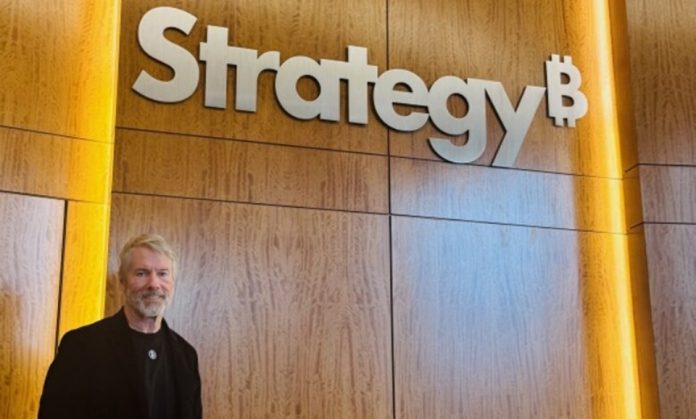
Michael Saylor’s Strategy has once again doubled down on its Bitcoin conviction, adding another 1,550 BTC to its growing treasury despite ongoing market volatility.

The acquisition, valued at roughly $101 million with an average price of about $65,332 per coin, continues the company’s aggressive Bitcoin accumulation strategy.

This BTC purchase, reinforces the company’s aggressive accumulation strategy and further cements its position as the world’s largest corporate holder of Bitcoin.

As institutional interest in digital assets continues to evolve, Strategy remains steadfast in its belief that Bitcoin is the ultimate long-term store of value.

This latest buy comes just days after Strategy sold 32 Bitcoin for around $2.5 million in late May, its first notable sale in years.

That small divestment, representing a tiny fraction of its holdings, coincided with a sharp market reaction that pushed Bitcoin prices lower, creating what many observers saw as an attractive entry point for further accumulation.

The new purchase increases Strategy’s total Bitcoin reserves to 845,256 BTC, acquired at an overall average cost basis near $75,000–$76,000 per coin.

The company funded the transaction primarily through proceeds from share sales and continues to maintain a substantial cash reserve, recently boosted to around $1 billion.

Shares of Strategy, the world’s largest corporate holder of Bitcoin jumped 5.1% on Monday. Also Bitcoin prices rose above the $63k price level, after dipping below $60,000 last week. Alt-coins Ethereum and Solana recorded significant gains.

Thomas Perfumo, Chief economist at crypto platform Kraken, has described Strategy as the single most influential entity in the market.

Market Reaction and Sentiment

The timing of Strategy’s purchase of Bitcoin, triggered lively discussion across the crypto community. Many praised Saylor’s unwavering conviction, viewing the move as classic “buy the dip” behavior executed at corporate scale.

Others joked about strategic timing, suggesting the earlier sale engineered a better entry price. Recall that earlier this month, Strategy broke its more than three-year streak of never selling its cryptocurrency.

The company reportedly sold 32 BTC worth $2.5 million between May 26 and May 31, 2026. This move marked a notable shift for the company, which has become synonymous with aggressive Bitcoin buying under the leadership of Executive Chairman Michael Saylor.

However, the recent purchase of Bitcoin, underscores Strategy’s long-term commitment to Bitcoin as its primary treasury asset.

This latest addition reinforces the company’s position as the largest corporate Bitcoin holder by a significant margin. Saylor has consistently championed Bitcoin as superior digital property and a hedge against currency debasement, turning the company’s balance sheet into a prominent vehicle for this philosophy.

As Bitcoin markets remain volatile amid macroeconomic pressures, Strategy’s steady buying highlights a contrasting approach of disciplined, high-conviction accumulation regardless of short-term price swings. The company shows no signs of slowing its Bitcoin strategy in the foreseeable future.

Outlook

Looking ahead, Strategy’s continued accumulation of Bitcoin is likely to remain a key factor influencing market sentiment, particularly among institutional investors seeking exposure to the digital asset.

For Bitcoin itself, the outlook remains closely tied to broader macroeconomic developments, including interest rate expectations, inflation trends, regulatory clarity, and the pace of institutional adoption.

While short-term volatility is expected to persist, many market participants believe growing demand from corporations, exchange-traded funds (ETFs), and sovereign entities could provide long-term support for prices.

OpenAI Confidentially Files for IPO, Adding to Historic AI Listings

0

OpenAI has confidentially filed for an initial public offering, marking a major milestone for the company behind ChatGPT and setting the stage for what could become one of the largest technology listings in history.

The move comes just days after rival AI developer Anthropic filed confidentially for its own IPO and as SpaceX prepares for a blockbuster public debut that is expected to test investor appetite for trillion-dollar AI-related companies.

OpenAI, valued at approximately $852 billion following its March fundraising round, said it had submitted a confidential S-1 filing with the U.S. Securities and Exchange Commission. The company stressed that it has not yet determined when it will go public.

“We recently submitted a confidential S-1. We expect it to leak so we’re just announcing it,” OpenAI said in a statement. “We have not decided on timing yet; it may be a while because there are things we want to do that are likely easier as a private company. But it’s a complicated set of tradeoffs and this gives us the option to go public sooner if that ends up being best.”

The confidential filing allows OpenAI to begin discussions with regulators and refine its financial disclosures before publicly releasing detailed financial information.

The move places OpenAI squarely in an increasingly crowded race among AI leaders seeking access to vast pools of investor capital. Last week, Anthropic revealed it had filed confidentially for an IPO shortly after completing a financing round that valued the company at $965 billion, making it one of the most valuable startups in the world.

The near-simultaneous filings highlight the enormous financial demands facing frontier AI developers. While revenue growth across the sector has been explosive, the costs associated with securing advanced chips, building data centers, and running increasingly sophisticated models continue to rise at an extraordinary pace.

OpenAI Chief Financial Officer Sarah Friar signaled earlier this year that the company was preparing itself for life as a public company, telling CNBC that it is “good hygiene” for a business of OpenAI’s scale to “look and feel and act” like a public company.

Industry analysts view the filing as less about immediate fundraising and more about strategic flexibility. By confidentially entering the IPO process now, OpenAI gains the option to move quickly should market conditions remain favorable.

The company is also planning a tender offer that would allow employees to sell shares at the latest valuation. Such transactions have become important for highly valued private technology firms whose employees have accumulated substantial paper wealth but limited liquidity.

The AI Capital Race

OpenAI’s IPO preparations come amid what is rapidly becoming one of the largest capital-raising cycles in technology history. The AI industry is no longer competing primarily on algorithms. Increasingly, competition revolves around access to computing infrastructure.

Companies are spending billions on advanced chips, power generation, data centers, and cloud infrastructure. Investors have begun comparing the current AI buildout to previous eras of railroad construction, telecommunications expansion, and internet infrastructure deployment.

OpenAI has raised more than $180 billion in funding to date. Yet the company continues to consume significant amounts of capital as it trains increasingly advanced models and expands global computing capacity.

Anthropic faces similar pressures. The company recently disclosed annualized revenue of approximately $47 billion in May, up sharply from around $9 billion at the end of 2025, but executives have acknowledged that the cost of building and serving frontier AI models remains enormous.

The backdrop is helping fuel what bankers expect to be an exceptionally active IPO market. SpaceX, which has positioned itself as both a space and AI infrastructure company, is expected to launch one of the largest public offerings ever. The success or failure of that deal could influence how investors evaluate subsequent offerings from OpenAI and Anthropic.

Several Wall Street firms have argued that the market currently possesses sufficient liquidity to absorb these massive offerings. Goldman Sachs CEO David Solomon recently said investors appear to be operating in an environment where “there’s more greed than there is fear,” suggesting capital remains readily available for large AI-related transactions.

Growing Competition

OpenAI’s filing also arrives as competition in artificial intelligence intensifies. The company that ignited the generative AI boom with ChatGPT now faces challenges from Anthropic’s Claude models, Google’s Gemini platform, Meta’s expanding AI efforts, China’s DeepSeek, and Elon Musk’s growing AI ambitions through xAI and SpaceX.

According to SpaceX’s recent IPO filing, OpenAI, Anthropic, and Google are all viewed as key competitors in the race to build advanced AI systems and infrastructure.

OpenAI has responded by concentrating resources on products with the strongest commercial potential. The company has focused on enterprise services and software development tools such as Codex, which competes directly with Anthropic’s Claude Code.

Chief Executive Officer Sam Altman recently described the company’s evolution as entering a “third phase.” According to Altman, OpenAI’s first phase focused on research aimed at artificial general intelligence. The second phase centered on becoming a product company and understanding how users interact with AI tools.

“Now we are entering the third phase,” Altman wrote. “The economy is beginning to reshape around AI. The central question now is how to make advanced AI abundant, affordable, safe, useful, and easy enough for every person and organization to benefit from it.”

That statement offers perhaps the clearest indication yet of how OpenAI intends to position itself ahead of a public listing. Rather than presenting itself solely as an AI research laboratory, the company wants investors to view it as a foundational technology platform capable of reshaping entire industries.

A Defining Test for the AI Boom

OpenAI’s confidential filing represents more than a corporate milestone. It is shaping up to be one of the clearest tests yet of whether public investors are willing to support the immense spending required to build the next generation of AI systems.

For years, private investors have financed the industry’s expansion. Public markets may soon be asked to take over that role. Questions are beginning to emerge about whether corporate spending on AI can continue growing at its current pace. Some large enterprise customers have reported strong productivity gains, while others are still evaluating whether massive AI investments are generating sufficient returns.

Investors will ultimately have to decide whether companies such as OpenAI and Anthropic deserve valuations approaching or exceeding $1 trillion, especially as they continue to burn cash in pursuit of scale.

Launching a Turnkey Online Casino: From Strategy to Profitable Operation

0

Most entrepreneurs entering the online casino space face the same fundamental choice: operate under someone else’s license with limited control, or build a proper business with the infrastructure to scale. The turnkey model is the industry-standard answer to that question – and understanding what it actually means is the starting point for making the right decision.

What Turnkey Actually Means

In the iGaming industry, a turnkey online casino refers to a specific business model: the operator holds their own gaming license and their own corporate structure, rents a platform from a provider, pays a GGR fee and a minimum monthly fee, and conducts their own negotiations with payment providers, game aggregators, and other partners. The critical distinction is control – the operator controls the financial flow, the product, and the business relationships.

This is fundamentally different from the white label model, where the operator works under the platform’s license, has no control over payment flows, cannot independently negotiate with partners, and pays a significantly higher GGR percentage. In a white label arrangement, the platform provides everything and the operator’s role is essentially to drive traffic. That limitation has a direct cost: white label revenue share can reach 15% of GGR, rolling reserves lock up capital, and the operator has no ownership stake in the underlying business assets.

The math is concrete. A good turnkey online casino platform costs around €30,000 setup with a revenue share of 5% or less. A white label runs €10,000 setup but up to 15% revenue share. The break-even point where turnkey becomes cheaper is approximately €200,000 in GGR – after which every euro earned stays in the operator’s hands rather than being absorbed by the platform.

Phase 1: Strategic Planning and Financial Modeling

The most expensive mistake in iGaming is entering the wrong market with the wrong model and discovering it too late. Planning from day one prevents wasting tens of thousands of dollars on ineffective business models. The planning phase produces an up-to-date financial model for the target market: projected Gross Gaming Revenue over 12 and 24 months, the required investment to enter the market, and the break-even point. Without this, operators are guessing at whether the business will support itself.

Phase 2: Licensing and Corporate Structuring

The license and corporate structure are what make the turnkey model work. Without them, the operator has no independent relationship with payment providers, no control over cash flow, and no asset to build or sell. Through direct relationships with key regulators, licensing can be secured in under four weeks across jurisdictions including Anjouan, Kahnawake, Tobique, Curacao, Malta MGA, and Isle of Man.

Choosing the right jurisdiction determines tax burden, payment provider access, and operational costs. Proper structuring can save hundreds of thousands of dollars over the life of the business – and ensures the operator can connect to payment providers and open bank accounts without delays.

Phase 3: Platform and Partner Negotiations

With the license and structure in place, the operator rents a platform and negotiates directly with software providers, game aggregators, and payment partners. This is where the turnkey model delivers its core advantage over white label: the operator conducts their own negotiations, secures their own rates, and builds direct relationships with partners rather than accepting whatever the platform decides to offer.

Payment infrastructure is particularly critical. The best-converting payment methods for Europe, Brazil, India, and Turkey require pre-existing provider relationships. Top-tier payment partners – similar to those used by major operators like Stake.com – deliver high transaction success rates and competitive fees that translate directly into Reg2Dep conversion and player retention.

Phase 4: Building the Operational Team

A live casino requires people running it. The operator builds and hires a full operational team to support the business 24/7 – customer support, fraud and risk management, KYC, VIP management. Guidance from practitioners who actively run successful casinos, rather than theorists, makes the difference between a team that handles operational complexity and one that creates it.

Phase 5: Post-Launch Growth and Optimization

Post-launch focus goes to the top of the funnel: stabilizing and optimizing Click-to-Registration (Click2Reg) and Registration-to-Deposit (Reg2Dep) metrics to ensure every marketing dollar delivers a real return. On the retention side, bonus systems and loyalty programs turn casual players into VIPs, reduce churn, and extend player lifetime value – building the stable revenue base that makes the business sustainable long-term.

Why Turnkey Is the Only Serious Option for Operators Building to Last

Almost every operator who starts on white label eventually transitions to turnkey once they understand what they’re leaving on the table. The transition takes months and isn’t cheap. Starting turnkey eliminates that cost entirely – and from day one, the operator owns the license, controls the financial flow, and builds a business with real equity rather than a revenue share arrangement that can be terminated with a single platform decision.