DD
MM
YYYY

PAGES

DD
MM
YYYY

spot_img

PAGES

Home Blog Page 8

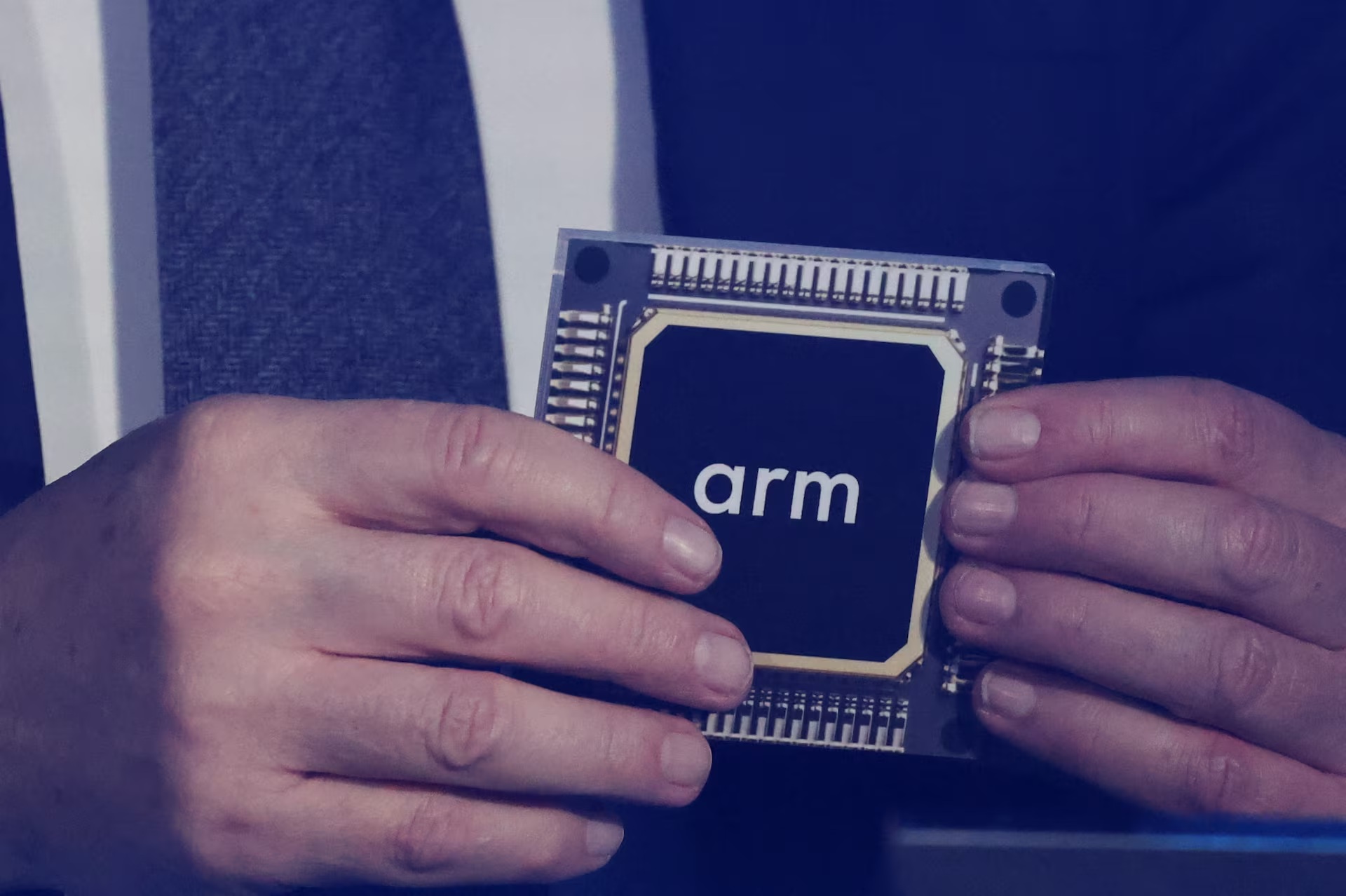
Arm Holdings Shares Plunge 7.5% After Licensing Revenue Miss, Signaling Persistent Smartphone Weakness Amid AI Transition

0

Arm Holdings plc (ARM) shares dropped 7.48% in after-hours trading on Wednesday, following a fiscal third-quarter earnings report that missed Wall Street expectations on licensing revenue despite record overall sales driven by AI-related demand.

The decline reflects renewed investor concerns over Arm’s heavy reliance on the smartphone market, still roughly half of its revenue, at a time when memory shortages and weakening consumer demand are pressuring key customers. For the three months ended December 31, 2025, Arm reported total revenue of $1.242 billion, a record quarterly figure that beat LSEG SmartEstimates (which prioritize consistently accurate analysts) and represented strong year-over-year growth.

However, licensing revenue—the higher-margin segment tied to upfront design fees and royalties—increased 25% to $505 million but fell 2.9% short of the $519.9 million FactSet consensus. Royalty revenue, which reflects chip shipments using Arm’s architecture, was not separately broken out but is known to be closely linked to smartphone production volumes. Andrew Jackson, equity analyst at Ortus Advisors, highlighted the licensing miss and guidance as primary drivers of the selloff.

“Investors were also reacting to Arm’s guidance only slightly beating estimates, as well as a poor outlook delivered by its chip design customer Qualcomm,” he said.

Qualcomm, a major Arm licensee, reported fiscal first-quarter results that beat expectations but issued disappointing guidance due to a global memory shortage constraining smartphone production. Qualcomm shares fell 9.68% in after-hours trading on the same day, underscoring the interconnected pressures. Both companies signaled that handset makers may scale back production volumes as supply constraints persist, particularly for DRAM and NAND flash memory.

Rolf Bulk, an analyst at Futurum Group, told CNBC that such a scenario would also pressure Arm customers like Apple and Samsung, which together account for a significant portion of Arm’s royalty stream. Smartphones remain ARM’s largest end market, contributing roughly half of its revenues, even as exposure to data centers and edge computing devices grows rapidly.

Jackson cautioned: “ARM is trying to diversify into AI chips used for DC/servers, but the success of this remains uncertain, and its business model is still heavily reliant on royalties from chips used in consumer products such as handsets.”

He added that a potential decline in Chinese smartphone production—exacerbated by memory shortages—could further weaken Arm’s near-term outlook before any AI-driven recovery materializes. The memory shortage, driven by production prioritization toward high-margin HBM for AI data centers, has led to sharp price increases and constrained supply for consumer electronics. This dynamic has prompted warnings from memory leaders Samsung and SK Hynix that smartphone and PC makers will bear the brunt of the tightness.

Arm’s royalty model, which earns a percentage of each chip shipped using its architecture, is particularly vulnerable to production slowdowns in the handset segment. Despite the licensing shortfall, Arm’s overall performance underscored continued strength in AI-related areas. The company’s chip designs power most of the world’s smartphones and are increasingly deployed in AI data centers and edge devices, benefiting from the ongoing AI infrastructure buildout.

Executives reiterated confidence in long-term diversification, though near-term headwinds from consumer electronics remain a drag. Arm’s shares have faced broader tech market pressures in the lead-up to earnings and are down 4% year-to-date in 2026, even after significant gains since its 2023 IPO. The post-earnings reaction reflects investor caution about the pace of Arm’s transition from smartphone dominance to AI and data center growth.

As memory constraints persist and smartphone demand softens, the selloff in Arm and Qualcomm shares highlights the interconnected risks facing the semiconductor supply chain. With memory shortages constraining production and AI demand diverting capacity, companies reliant on consumer end-markets face near-term pressure—even as long-term AI tailwinds remain intact.


Joe Tsai on Alibaba’s Innovation Lessons: Why Big Companies Stall, and How Ownership and Speed Can Restart Growth

0

For a company that helped define China’s internet economy, Alibaba’s struggle to sustain innovation is a story its own leadership does not shy away from.

Joe Tsai, the group’s cofounder and chairman, says the tech giant has already paid the price for losing its innovative edge — and the experience has reshaped how he thinks about building for the future inside a large organization.

Speaking in an interview at Stanford University released on Wednesday, Tsai offered a rare, reflective look at how scale, structure, and success can quietly work against creativity. His message was blunt: innovation does not disappear because people stop being talented, but because organizations stop giving those people the room — and the responsibility — to think ahead.

“We’ve gone through periods where we stopped innovating, and we suffer from it as a large company,” Tsai said. “Everybody has their role. It’s very difficult to get people to think about new things about the future, innovate.”

Alibaba’s experience mirrors a broader pattern across global technology firms that have matured from scrappy startups into sprawling institutions. As companies grow, processes multiply, risk tolerance narrows, and employees often become more focused on internal expectations than external change. Tsai argued that many companies respond to this problem in the wrong way — by creating isolated “innovation labs” or special divisions meant to think differently from the rest of the business.

That approach, he said, misses the point.

Creating a separate innovation unit can actually reinforce the idea that creativity is someone else’s job. Tsai believes innovation only becomes durable when it is embedded across the organization, not parked at the edges.

Instead, he identified two values that he sees as essential if large companies want to keep reinventing themselves: ownership and agility.

Ownership, in Tsai’s view, goes beyond stock options or job titles. It is about who employees believe they ultimately answer to. He returned to a principle long championed by Alibaba founder Jack Ma — that workers should think of themselves as serving customers, not pleasing their managers.

“They’re not just working for their boss. Everybody should work for their customers,” Tsai said.

That distinction matters because it changes how people define success. When employees optimize for internal approval, they tend to protect existing processes and products. When they optimize for customers, they are forced to confront shifting needs, emerging behaviors, and future demand — even when those insights challenge the status quo.

Tsai said that mindset naturally pushes people to ask harder questions: what customers will want next, how their expectations are changing, and which assumptions no longer hold. In his telling, innovation is less about sudden breakthroughs and more about constantly adjusting to those signals.

The second value Tsai highlighted — agility — speaks to how decisions are made under uncertainty. In fast-moving technology markets, he said, waiting for perfect information is often the biggest risk of all.

“There is always a deficiency of information,” Tsai said. “You’d have to be able to tolerate not having full information and then just making a decision and committing to it.”

Crucially, he paired decisiveness with humility. Acting quickly only works, Tsai argued, if leaders and teams are equally willing to admit mistakes and pivot when reality proves them wrong. That ability to change direction without paralysis or blame is, in his view, one of the hardest traits for large organizations to maintain.

Tsai’s comments come at a moment when Alibaba is trying to prove that it can still move with speed after years of turbulence. The company has spent the past two years restructuring its business, breaking itself into semi-independent units in an effort to restore accountability and sharpen execution. At the same time, it has placed artificial intelligence at the center of its growth strategy, betting that AI can reinvigorate everything from e-commerce and logistics to cloud computing.

That push has already begun to reshape Alibaba’s public narrative. After a period marked by regulatory pressure and slowing growth, the company has staged a rebound driven in large part by AI-related investment and product development. Management has been explicit that this is not a tentative experiment.

In an earnings call late last year, CEO Eddie Wu dismissed concerns about an AI bubble and said Alibaba was accelerating, not moderating, its spending on the technology.

“We’re not even able to keep pace with the growth in customer demand,” Wu said, adding that AI resources are likely to remain in short supply for years to come.

Wu framed the surge in demand as practical rather than speculative, pointing to real-world adoption of AI across industries. Alibaba’s Qwen family of AI models, which compete with global peers on benchmark tests, has become a cornerstone of that strategy, underpinning services across the group’s platforms.

Seen in that context, Tsai’s reflections read less like abstract management theory and more like a post-mortem on Alibaba’s own missteps — and a blueprint for avoiding them again. His emphasis on ownership aligns with the company’s effort to push decision-making closer to individual business units. His focus on agility mirrors Alibaba’s willingness to commit heavily to AI even as the broader debate about its long-term impact remains unsettled.

Bitcoin Declines Below $64,000 Amid Bearish Concerns – Is The Market Headed For A Reset?

0

Bitcoin has slipped below the $64,000 mark, reigniting bearish sentiment across the crypto market and raising fresh questions about the sustainability of the recent rally.

BTC has printed massive bearish candles for the third consecutive day, dragging the price down by more than 10% this week.

The crypto asset plunged as low as $66,695 today, sparking sentiments that bears are in control. BTC is currently trading at $67,642 at the time of this report.

As selling pressure intensifies and investor confidence wavers, market watchers are increasingly debating whether this downturn signals a temporary pullback or the early stages of a broader market reset.

Reports reveal that BTC has erased all gains since its $69,000 all-time high set in late 2021, as the break below $70,000 comes as market structure has deteriorated sharply, with onchain indicators pointing to forced selling, thin spot demand, and fading institutional support.

Analysts at Glassnode noted that the market has entered a decisively defensive phase, with realized losses accelerating as holders exit positions at a loss.

“Spot BTC volumes remain structurally weak, reflecting a demand vacuum where sell-side pressure isn’t being met by sustained absorption,” Glassnode analysts Chris Beamish and Antoine Colpaert wrote in a note.

Veteran trader Peter Brandt recently warned that Bitcoin could slide toward the $58,000 to $62,000 range. According to onchain analyst GugaOnChain, Bitcoin risks a deeper drop toward $54,600 amid continued institutional selling.

Notably, amid the massive decline, market analysts say the current phase is being driven less by narrative shifts and more by balance-sheet mechanics. Kyle Rodda, senior financial market analyst said bitcoin’s downward price rally, reflects broader deleveraging across risk assets as volatility ripples through equities, commodities, and crypto simultaneously.

Others see the move as part of a longer reset rather than a short-lived correction. Nic Puckrin, co-founder of Coin Bureau, said the market is transitioning “from distribution to reset,” warning that such phases historically take months rather than weeks to resolve.

As institutional netflows slip below neutral, Bitcoin price action weakens alongside it, suggesting that recent declines are being reinforced by capital outflows from major entities, not just retail selling. Until netflows stabilize or turn positive, upside momentum remains limited.

Based on the historical view, Bitcoin’s price could hit a low as early as May 14, well ahead of the July estimate suggested by longer-term trend models. Even though the timelines differ, both point toward the same price area, making $60,000 an important level to watch. 

The economic conditions and unexpected events could still affect the outcome, but the repeating patterns seen across multiple Bitcoin cycles offer useful context for those watching Bitcoin’s long-term price direction.

Outlook

From a historical perspective, cycle-based models suggest Bitcoin could reach a local low as early as mid-May, ahead of later estimates that point to July.

A sustained recovery is likely to depend on stabilization in institutional flows and a revival in spot market demand. Until then, Bitcoin may remain vulnerable to further downside, with volatility expected to stay elevated as the market works through what increasingly appears to be a broader reset phase

MegaETH Is Launching with an Ready Ecosystem of Autonomous Participants 

0

The OpenClaw skillset or suite of skills for MegaETH has been released ahead of the project’s mainnet launch on February 9, 2026.

MegaETH, an Ethereum Layer-2 network promising real-time performance targeting up to 100,000 TPS with sub-millisecond latency and ~10ms block times, publicly confirmed its mainnet go-live date as February 9 following a major stress test that hit 35,000 TPS and processed billions of transactions.

In preparation, developer-focused OpenClaw skills for MegaETH integration appeared a few days earlier around early February 2026. OpenClaw (the open-source AI agent framework, formerly Clawdbot/Moltbot) allows extensible “skills” — modular tools/plugins — that let AI agents perform actions like deploying smart contracts, swapping tokens, or interacting with chains.

A prominent suite comes from @bread_ (GTM at MegaETH), who shared a “MegaETH Developer Skills Suite” on GitHub and ClawHub. It’s built from best practices, low-latency patterns, and official MegaETH docs; still in unit testing with calls for contributions before an official repo.

Installable via ClawHub: Enables OpenClaw agents to directly interact with MegaETH (e.g., deploy contracts, swaps) on mainnet day one. Community posts highlight this as a sign of crypto’s evolution — from whitepapers in 2021 to ready-to-install AI agent skills in 2026.

Other niche skills for NFTs on MegaETH have also surfaced, but the main developer-focused set aligns with the pre-launch timing.This positions OpenClaw agents to operate natively on MegaETH from launch, potentially accelerating on-chain activity in a high-speed environment.

Note that OpenClaw’s skill ecosystem has faced security scrutiny (malicious skills reported in ClawHub), so vet sources carefully before installing.

The release of the OpenClaw skillset (including the prominent MegaETH Developer Skills Suite) just days before MegaETH’s confirmed mainnet launch on February 9, 2026, carries significant implications for the crypto ecosystem, AI agents, Ethereum scaling, and on-chain activity.

Day-One Readiness for AI Agents on a High-Performance Chain

MegaETH positions itself as a “real-time” Ethereum L2 with targets of up to 100,000 TPS, sub-millisecond latency, and ~10ms block times—far beyond current L2s or even Solana in sustained performance.

Having OpenClaw skills ready like contract deployment, token swaps, low-latency interactions means autonomous AI agents can immediately operate natively on mainnet without waiting for post-launch tooling.

This enables instant on-chain automation at launch: Agents could deploy dApps, execute high-frequency trades, stress-test protocols, mint NFTs, or manage liquidity in real time. It accelerates agent-driven activity — potentially flooding the network with transactions from launch day, helping validate MegaETH’s throughput claims in live conditions.

Community sentiment highlights this shift: “Crypto 2021: Here’s our whitepaper. Crypto 2026: Here’s our agent skills.” It underscores how projects now prioritize executable AI integrations over documentation alone. Pre-built OpenClaw skills lower barriers for developers and users to build/interact with MegaETH: Developer acceleration — Skills draw from official docs and best practices, allowing quick prototyping of high-speed apps (e.g., real-time DeFi, gaming, or on-chain hosting).

Niche extensions already exist, like NFT deployment with permanent on-chain storage via SSTORE2, no IPFS/servers or specialized tools for stress testing. This could attract AI/crypto crossover projects, positioning MegaETH as the go-to chain for autonomous agents needing ultra-low latency.

With backers like Vitalik Buterin and Dragonfly, and a successful 2025 token sale, early agent activity could drive TVL, user growth, and visibility. This exemplifies the evolving paradigm:AI agents via frameworks like OpenClaw/Clawdbot move from chat-based tools to on-chain executors with modular, installable capabilities.

It highlights efficiency gains: Agents share specialized “harnesses,” memory, and toolchains, enabling collective improvement without redundant self-optimization. Potential for emergent behaviors — agents collaborating, managing assets, or even issuing tokens autonomously as seen in related experiments like Moltbook.

This bridges crypto’s programmability with AI’s execution layer, creating more “agent-native” chains. OpenClaw’s open ecosystem (ClawHub) has seen malicious skills targeting crypto users (e.g., 14 reported last month). Installing unvetted MegaETH skills risks wallet drains or exploits — always audit sources, use session keys/spend caps, and verify contributors.

Massive agent-driven traffic from day one could cause congestion, failed txs, or expose bottlenecks despite stress tests (35K+ TPS, billions processed). While promising, real-world performance under agent load remains unproven; early chaos could temper enthusiasm if not managed.

This pre-launch skill release signals crypto’s maturation into an AI-agent era: MegaETH isn’t just launching a chain — it’s launching with an ready ecosystem of autonomous participants. If successful, it could catalyze a wave of high-speed, agent-powered applications, but vigilance around security and realistic expectations will be key in the first weeks post-February 9.

MetaMask Partner with Ondo Finance to Integrate Tokenized U.S. Equities 

0

MetaMask has partnered with Ondo Finance to integrate tokenized U.S. equities (stocks), ETFs, and commodities directly into the wallet. This integration was announced and launched on February 3, 2026, during the Ondo Global Summit in New York.

Eligible users can now buy, hold, and trade over 200 tokenized U.S. securities via Ondo Global Markets (Ondo Finance’s platform for tokenized real-world assets, or RWAs). Examples of assets: Major stocks like Apple (AAPL), Amazon (AMZN), Microsoft (MSFT), Nvidia (NVDA), Tesla (TSLA), and others.

ETFs such as QQQ (Nasdaq-100 tracking), IAU (gold), SLV (silver), and more. Commodities exposure including gold, silver, platinum, and others. How it works: Powered by MetaMask Swaps on the Ethereum mainnet.

Users swap USDC or other supported assets for Ondo’s tokenized versions structured as 1:1 tracking derivatives or on-chain products issued by Ondo Global Markets, a BVI entity. Trading follows U.S. market hours roughly 24/5, but tokens can be transferred or used in DeFi 24/7. Users maintain full control without needing a traditional brokerage account.

Currently live on the MetaMask mobile app (desktop support expected soon, potentially by late February 2026). Restricted to eligible users in supported non-U.S. jurisdictions due to regulatory considerations; U.S. users are excluded at launch.

This marks one of the first times major tokenized U.S. equities and ETFs are natively accessible in a leading self-custodial crypto wallet. It bridges crypto and traditional finance (TradFi), allowing users to manage crypto, stablecoins, and tokenized stocks/ETFs in one place.

Part of the booming RWA sector (tokenized real-world assets), which has surpassed $22–24 billion in total value. Ondo Finance positions this as expanding access to “Wall Street onchain,” with additional announcements at the summit including Ondo Perps (equity perpetual futures), Ondo Global Listing (tokenizing IPOs day-one), SEC registration filings, and more.

Tokenized assets on Solana refer primarily to Real World Assets (RWAs) — traditional financial instruments or physical assets represented as digital tokens on the Solana blockchain.

Solana’s high throughput, low fees, fast settlement (sub-second finality), and features like Token Extensions make it ideal for RWAs, enabling 24/7 trading, fractional ownership, composability in DeFi, and institutional-grade applications.

As of early February 2026, Solana has emerged as a major hub for tokenized RWAs, with rapid growth driven by integrations from traditional finance players. Total Value in Tokenized RWAs on Solana excluding stablecoins: Surpassed $1 billion recently, with tokenized equities alone hitting a new all-time high of $230 million.

Broader RWA sector including stablecoins like USDC/PYUSD: Much larger, but non-stablecoin RWAs (funds, equities, treasuries, etc.) show explosive growth. Solana’s RWA ecosystem reached highs like $873 million in January 2026 and continues upward momentum into February.

This positions Solana as a top chain for RWAs, competing with Ethereum while offering superior speed and cost for retail and high-frequency use cases. Representations of U.S. stocks/ETFs (e.g., AAPL, NVDA, TSLA, SPY, QQQ). Ondo Global Markets (from Ondo Finance): Launched over 200 tokenized U.S. stocks and ETFs on Solana in January 2026, becoming the largest and most liquid catalog of on-chain equities on the network. Accessible via DEXs like Raydium or Jupiter, and wallets like Phantom.

xStocks from Backed Finance: Over 60 tokenized U.S. equities live since mid-2025, fully collateralized and tradable 24/7 in DeFi. Other examples: Tokenized shares of companies like Galaxy Digital (GLXY) via Superstate.

Money market funds, fixed income, alternatives. WisdomTree: Expanded its full suite of regulated tokenized funds (money market, equities, fixed income, asset allocation) to Solana in early 2026. Accessible via WisdomTree Connect (institutional) and WisdomTree Prime (retail), with USDC/PYUSD conversions.

BlackRock, Apollo, VanEck, and others have tokenized funds or assets on Solana. Other RWAs — Commodities (gold, etc.), private credit, reinsurance funds, real estate fractions, and more.Platforms like Credix (tokenized credit in emerging markets), OnRe (tokenized reinsurance), and others.

Prediction markets via DFlow integrating Kalshi. Sub-second settlements and fees often under $0.01 enable efficient trading of volatile or high-volume assets. Tokenized assets integrate seamlessly with lending (e.g., Kamino), DEXs (Jupiter, Raydium), perpetuals, and yield strategies.

Tools like Solana Permissioned Environments support compliance, while multi-chain issuers (Ondo, WisdomTree) choose Solana for retail reach (3.2M+ daily active users). 24/7 access, self-custody, no intermediaries, and global availability with jurisdictional restrictions.

Phantom, Solflare, or Backpack — many have built-in swap or RWA sections. Jupiter, Raydium for trading tokenized stocks/ETFs. Ondo Finance app, WisdomTree Prime/Connect. The RWA sector on Solana is booming in 2026, with tokenized equities and funds leading the charge toward “Wall Street on-chain.”

This convergence could drive massive adoption, especially as more TradFi players expand here. This move highlights the growing convergence of DeFi and traditional markets, potentially accelerating mainstream adoption of tokenized assets.