
DD
MM
YYYY

PAGES

DD
MM
YYYY

spot_img

PAGES

Home Blog Page 8

World Liberty Financial Receives Conditional OCC Approval for National Trust Bank

0

World Liberty Financial has received conditional approval from the U.S. Office of the Comptroller of the Currency (OCC) for a national trust bank, marking another significant development in the growing intersection between digital assets and the traditional financial system.

The approval represents an important step for the company as it seeks to establish a regulated banking structure capable of operating within the broader U.S. financial framework.

The OCC is responsible for supervising and regulating national banks and federal savings associations in the United States.

A conditional approval therefore carries considerable significance, particularly for a company associated with the rapidly expanding digital-asset industry. However, conditional approval is not the same as a final authorization to begin full banking operations.

World Liberty Financial would still need to satisfy outstanding regulatory requirements before receiving final approval and commencing the activities permitted under its charter. The development reflects a broader shift in the relationship between cryptocurrency businesses and U.S. regulators.

For years, many digital-asset companies operated primarily through partnerships with conventional banks because obtaining direct access to regulated banking infrastructure was difficult.

The emergence of companies seeking their own banking charters suggests that the industry is increasingly attempting to integrate financial technology, blockchain infrastructure and traditional banking under regulated entities.

A national trust bank could potentially provide World Liberty Financial with a more direct framework for offering custody, fiduciary and other permitted financial services. The precise scope of activities will depend on the conditions attached to the OCC approval and subsequent regulatory decisions.

This distinction is particularly important because a trust bank does not automatically function like a conventional commercial bank. The announcement also arrives as U.S. policymakers continue debating how digital assets should fit into the country’s financial architecture.

Regulators and lawmakers have increasingly focused on stablecoins, tokenized assets, digital-asset custody and the role of regulated institutions in blockchain-based markets. As these sectors expand, regulatory clarity has become an increasingly important competitive factor.

For World Liberty Financial, obtaining conditional approval could strengthen its position in this evolving environment. A regulated banking structure could potentially improve institutional credibility and create new opportunities to connect blockchain-based products with established financial markets.

At the same time, the approval places the company under heightened regulatory expectations. Compliance, governance, risk management and consumer protection will become central considerations as it progresses toward final authorization.

The development could also have implications beyond World Liberty Financial. If more digital-asset companies successfully obtain national trust charters, the boundary separating traditional finance from blockchain-based financial services could become increasingly difficult to define.

Established financial institutions may face greater competition from technology-driven firms, while crypto companies could gain access to more regulated infrastructure.

The conditional nature of the approval means investors and market participants should avoid treating it as the completion of the process.

Regulatory conditions can require substantial work before an institution becomes fully operational. The next stage will therefore be closely watched for evidence that World Liberty Financial can satisfy the OCC’s requirements and translate the preliminary approval into a functioning regulated institution.

The OCC decision highlights how rapidly the financial landscape is changing. Digital-asset firms are no longer seeking only market adoption; they are increasingly pursuing formal integration with the institutions that underpin the global financial system.

World Liberty Financial’s conditional approval could become an important example of that transition, provided the company successfully completes the remaining regulatory steps.
Bitcoin Records Largest Weekly Gain Since March 2023, Surging Over 23%

0

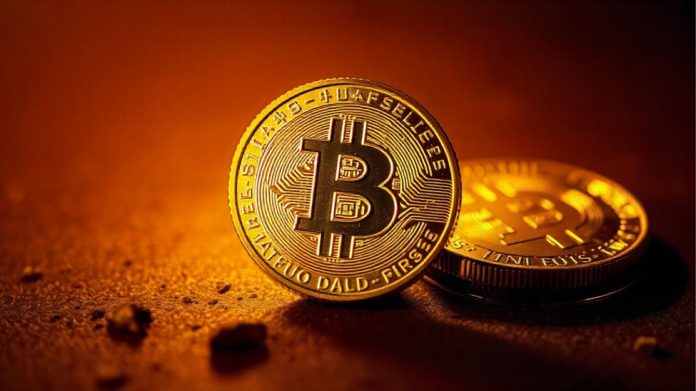
Bitcoin has reportedly delivered its strongest weekly performance in more than three years, climbing more than 23% as the cryptocurrency broke out of a prolonged summer range.

The asset moved from levels near $62,000–$63,000 at the start of the week to a peak around $79,500 before settling in the high $77,000s to low $79,000s by Monday.

The advance marks the largest percentage gain for seven days since March 2023, when Bitcoin rose sharply amid the regional banking crisis. In dollar terms, the weekly increase of roughly $14,000 to $15,000 ranks among the largest on record.

Also. Trading volumes expanded significantly as the price cleared successive resistance levels, including moves past $70,000 and $75,000.

Institutional demand played a central role. U.S. spot Bitcoin exchange-traded funds recorded approximately $1.92 billion in net inflows over the week, the strongest total since October 2025.

BlackRock’s iShares Bitcoin Trust (IBIT) accounted for the majority of the capital, with one single day alone bringing in more than $600 million. The influx reversed prior weeks of weaker or negative flows and coincided with a sharp rise in ETF trading activity.

Macro factors also supported the move. Announcements related to expanded U.S. Treasury buybacks helped ease yields and improved liquidity conditions for risk assets. Derivatives markets amplified the rally through large short liquidations, with billions of dollars in positions closed as prices accelerated higher.

The combination of fresh institutional buying and forced covering created a powerful upward feedback loop.

The broader cryptocurrency market participated in the rebound. Ethereum and several major altcoins posted double-digit gains over the same period, lifting overall market capitalization. Ethereum’s price broke above $2,500 U.S. in early trading on Aug. 24, having gained 34% over the last seven days. In contrast, Bitcoin’s price has increased 24% over the same time period.

Bitcoin’s dominance remained elevated, reflecting its leadership in the move. Despite the strong week, Bitcoin remains well below its October 2025 all-time high near $126,000, leaving substantial ground still to recover on a longer-term basis.

This rally changes the unpleasant picture of the first two quarters of 2026, restoring optimism to the market after months of intense pressure on the price.

The first half of the year proved extremely difficult for investors, as the declines in January and February were followed by a 20.5% plunge in June, which brought bearish sentiment back to the market.

Zaye Capital market analyst Naeem Aslam says Bitcoin is increasingly trading as both a risk-sensitive asset and a hedge against fiscal and monetary policy uncertainty.

Market participants are now watching whether the renewed ETF demand and improved sentiment can sustain further gains or whether the rapid advance invites consolidation.

Outlook

The near-term outlook for Bitcoin remains constructive, although the pace of the latest advance raises the likelihood of increased volatility and a period of consolidation.

Sustained ETF inflows could provide a strong foundation for further upside, particularly if institutional demand remains elevated and macroeconomic conditions continue to support liquidity-sensitive assets.

While the sharp weekly rally has significantly improved sentiment, Bitcoin’s ability to maintain momentum after such a large move will be critical in determining whether the latest surge develops into a broader recovery toward its previous all-time high.

Fasset Raises $68 Million at $1 Billion Valuation as Stablecoin Banking Enters a New Phase

0

Fasset, a stablecoin-powered neobanking platform, has reached unicorn status after raising $68 million in a Series C funding round led by Japan’s SBI Group.

The financing values the company at $1 billion and highlights the growing investor appetite for financial platforms using stablecoins to modernize payments, banking and cross-border settlement.

The latest investment comes only three months after Fasset secured $51 million in Series B funding in May.

With the new capital included, the company has raised $119 million during 2026, demonstrating the speed at which its business has expanded. Fasset said the fresh funding will be directed toward strengthening its financial infrastructure, particularly Own Network.

While increasing investment in artificial intelligence systems designed for stablecoin settlement, corridor banking and tokenized assets. The fundraising is significant because it reflects a broader shift in how stablecoins are being positioned within financial markets.

Rather than being used solely as crypto trading instruments, stablecoins are increasingly being developed as settlement infrastructure for payments, remittances and international commerce. Fasset is attempting to build a banking model around that infrastructure, connecting traditional financial institutions with blockchain-based settlement rails.

According to Fasset, its Own Network connects banks, telecommunications companies, payment providers, liquidity providers and other financial infrastructure across more than 100 banking corridors.

The company says it now processes more than $40 billion in annualized transaction volume, serves more than three million wallets and supports more than 1,000 enterprises across 125 countries.

Artificial intelligence is another major component of Fasset’s expansion strategy. The company plans to deploy agentic AI systems to improve transaction routing across payment rails, currencies, liquidity providers and settlement methods.

Such technology could become increasingly important as financial networks become more fragmented, particularly in emerging markets where consumers and businesses may rely on several different payment systems.

The involvement of SBI Group also gives the fundraising broader strategic significance. Japan’s financial conglomerate is already active across banking, securities, asset management and digital assets.

Its investment in Fasset indicates that established financial institutions are increasingly viewing stablecoin infrastructure as a potential component of the next generation of international payments.

SBI has also partnered with Fasset through SBI Remit, creating opportunities to connect Fasset’s infrastructure with a wider remittance network. For Fasset, the $1 billion valuation represents more than a fundraising milestone.

It places the company among fintech unicorns while strengthening its ability to compete in a rapidly developing digital-finance market. The company is pursuing a model in which users can receive, hold, transfer, spend and invest across currencies and asset classes through a unified financial platform.

However, the road ahead will not be without challenges. Stablecoin businesses continue to operate within evolving regulatory frameworks, while competition is increasing among fintech companies, crypto firms, payment networks and traditional banks.

Fasset will therefore need to demonstrate that its infrastructure can scale securely while maintaining regulatory compliance across numerous jurisdictions. Fasset’s latest funding round reflects a larger transformation underway in global finance.

Investors are no longer viewing stablecoins simply as digital representations of fiat currencies. Increasingly, they are being treated as programmable settlement rails capable of connecting fragmented financial systems.

With $68 million in fresh capital and a $1 billion valuation, Fasset is betting that this infrastructure can become the foundation of a more interconnected global banking system.

Gold Hits $4,700 for the First Time in Three Months

0

Gold has returned to the spotlight after climbing to $4,700 an ounce for the first time in three months, underscoring renewed demand for the precious metal as investors reassess inflation, monetary policy, geopolitical risks and the broader outlook for global markets.

The latest advance reinforces gold’s position as one of the market’s most closely watched defensive assets at a time when uncertainty continues to shape investment decisions.

The move above $4,700 represents a significant recovery for gold and highlights the strength of buying interest across the precious-metals market. Gold has increasingly benefited from investors seeking protection against economic and financial instability.

Its appeal tends to increase when confidence in traditional assets weakens or when expectations surrounding interest rates and inflation become less certain. One of the most important forces behind the latest rally is the changing perception of monetary policy.

Interest rates have a major influence on gold because the metal does not generate interest or dividends. When investors expect tighter monetary conditions, higher yields can make bonds and cash relatively more attractive.

Conversely, expectations of lower rates can reduce the opportunity cost of holding gold and encourage capital to move into the precious metal. Inflation is another important factor. Even when headline inflation appears manageable.

Persistent concerns about purchasing power can strengthen demand for assets traditionally viewed as stores of value. Gold’s limited supply and long history as a monetary hedge make it particularly attractive when investors worry that currencies could lose value over time.

Central-bank demand has also become an important structural component of the gold market. Central banks have increased their focus on diversifying reserves, with gold offering an asset that is not directly tied to the creditworthiness of another government.

Continued official-sector purchases can provide an underlying source of demand and help support prices during periods of market volatility. Geopolitical uncertainty adds another layer to the rally.

Conflicts, trade tensions, political instability and concerns about the global economy can encourage investors to reduce exposure to riskier assets. Gold often benefits from these episodes because it can serve as a portfolio hedge when confidence deteriorates.

The $4,700 milestone therefore carries significance beyond the headline price. It signals that investors remain willing to pay a substantial premium for protection and diversification.

At the same time, such a rapid rise can increase the possibility of short-term profit-taking and volatility, particularly if economic data or central-bank communication changes expectations about interest rates.

For investors, the latest gold rally highlights the continuing importance of diversification. Equities, bonds, currencies, cryptocurrencies and commodities can respond very differently to changes in inflation, liquidity and geopolitical risk.

Gold’s resurgence demonstrates why the precious metal continues to occupy a strategic position in global portfolios. Gold reaching $4,700 is both a market milestone and a reflection of broader investor psychology.

The rally suggests that demand for defensive assets remains powerful, while expectations surrounding monetary policy and economic stability continue to evolve. If uncertainty persists, gold could remain firmly in focus as investors search for stability in an increasingly complex global financial environment.

Why Community Commentary Remains Important in LGBTQ Media

0

Community commentary gives LGBTQ readers space to interpret events through lived experience, local knowledge, and cultural memory. News reports establish what happened, while columns, essays, reviews, and reader responses examine why an issue matters to people whose perspectives receive limited attention elsewhere.

Commentary Has a Distinct Role

LGBTQ publications have long combined reporting with first-person analysis, public debate, arts coverage, and practical information. A local newspaper might report a city council vote, then publish a column explaining how the decision affects youth programs, nightlife, health services, or transgender residents in that area.

Digital formats have expanded community discussion beyond print through newsletters, podcasts, reader forums, and video-based conversations. Alongside formats such as livestreams and panel discussions, live girl video calls provide another option for real-time communication and audience engagement across online media spaces.

Local Voices and Cultural Context

Strong commentary begins with knowledge of place, history, and social conditions. Writers who understand local institutions, community language, and regional tensions provide context that remains absent from generalized national narratives.

Local Reporting Needs Local Interpretation

City and regional publications document events that larger outlets rarely cover in depth. Pride planning meetings, library disputes, venue closures, school board debates, and changes at community organizations all shape everyday life.

A columnist familiar with the area connects those developments with earlier decisions and established relationships. That continuity helps readers distinguish a temporary controversy from a longer pattern.

Three types of local knowledge strengthen an opinion piece:

  • Familiarity with neighborhood organizations reveals who is already doing the work.
  • Awareness of past disputes prevents old arguments from appearing newly discovered.
  • Direct contact with residents introduces concerns that official statements leave out.

Lived Experience Adds Necessary Detail

First-person writing gives readers access to the practical effects of public policy, media representation, workplace culture, health communication, and family expectations. Personal experience does not replace verified reporting, but it identifies questions that detached coverage overlooks.

Editors still need clear standards. A writer’s perspective requires accurate dates, fair descriptions, disclosed conflicts, and careful separation between observed facts and personal interpretation.

Cultural Criticism Builds a Record

Reviews of books, films, theater, music, nightlife, and visual art document how LGBTQ culture develops. A thoughtful critic examines artistic choices, historical references, representation, and audience response rather than reducing every review to approval or rejection.

The table shows how several commentary formats contribute different forms of cultural knowledge:

Format Main focus Community value
Arts review Creative work and performance Records local cultural production
Personal essay Individual experience Adds detail to broader social issues
Event column Community gathering Documents participation and change
Reader letter Public response Preserves disagreement and feedback

Digital publishing gives smaller outlets room for photo essays, recorded panels, audio interviews, and extended reviews. These formats also help preserve work created outside major cultural centers.

Marginalized Voices Need Editorial Space

LGBTQ communities contain differences in race, disability, class, age, faith, immigration status, geography, and gender identity. Commentary loses value when the same limited group speaks for everyone.

Editors strengthen coverage by commissioning contributors with direct knowledge of underreported experiences. Payment, accessible submission processes, respectful editing, and transparent corrections make that participation more sustainable.

Accountability, Visibility, and Memory

Commentary serves a public function when it examines institutions, challenges weak narratives, and preserves experiences that disappear from official records. Its strongest form combines a clear viewpoint with evidence, editorial review, and accountability to readers.

Commentary Supports Accountability

Opinion writing gives journalists and community members room to question decisions made by elected officials, nonprofit leaders, venue owners, health providers, media companies, and event organizers. Responsible commentary avoids personal attacks and unsupported allegations. It addresses actions, language, priorities, and outcomes while allowing room for correction or response.

Visibility Requires More Than Mention

Representation is not measured by the presence of one LGBTQ character, quotation, or photograph. Commentary examines who receives complexity, who remains absent, and whose experience is treated as representative.

Five editorial questions help writers evaluate visibility with greater precision:

  • Who receives authority to explain the issue?
  • Which identities appear only during conflict or crisis?
  • Are rural, disabled, older, and working-class voices present?
  • Does the article explain relevant historical or political context?
  • Are quoted community members portrayed as full participants rather than symbols?

Reader letters and moderated responses extend this process. They reveal disagreement, identify omissions, and give editors evidence about how coverage was received.

Archives Preserve Community Memory

Local publications create records that historians, students, families, and organizers later use. Event notices, obituaries, advice columns, photographs, reviews, and editorials preserve details that public agencies never collect.

Digital work requires deliberate preservation. Websites close, links break, and social posts disappear. Downloadable editions, library partnerships, searchable archives, and consistent metadata protect commentary from becoming temporary material.

Keeping Community Commentary Strong

Community media grows stronger when local knowledge, lived experience, cultural criticism, and archival care work together. Commentary then becomes a record of how LGBTQ people understood their own communities, challenged institutions, celebrated creative work, and spoke to one another across different generations.