
DD
MM
YYYY

PAGES

DD
MM
YYYY

spot_img

PAGES

Home Blog Page 8

Implications of Space Launching the First 10x Leveraged Prediction Market on Solana

0

Space, a new decentralized prediction market protocol on Solana, has indeed raised $3 million in funding to develop what it positions as the first 10x leveraged prediction market on the network.

Space allows users to trade YES/NO outcomes on real-world events (crypto prices, politics, sports, tech, culture, etc.) using up to 10x leverage, a central limit order book (CLOB), zero maker fees, and instant cash-outs. It includes gamified elements like ranks, leaderboards, referrals, and seasonal airdrops to boost engagement.

Built by the creators of UFO Gaming, a former top-100 project that reached a $1.5B+ market cap. The $3M came from seed and strategic rounds led by Morningstar Ventures and Arctic Digital, plus a highly oversubscribed (1,360%) community round on Echo.xyz and participation via Impossible Finance’s Curated platform.

Reports mention support from entities like Kalshi, a major traditional prediction market player expanding to Solana and the Solana Foundation. Native token $SPACE is launching via public sale with mechanics including revenue share for buyback-and-burn to create deflationary pressure.

This positions Space as a hybrid of Polymarket’s event trading and Hyperliquid’s leveraged perps, optimized for Solana’s speed and low costs. Prediction markets have seen massive growth on Solana recently outpacing even memecoin volumes in some metrics, making leveraged versions a hotly anticipated addition.

While competitors like Drift’s BET or PolyPerps offer some prediction/perp features, Space emphasizes being the first fully integrated leveraged prediction market with these specific tools. Prediction markets have exploded in 2025, with total sector volume reaching $44 billion, Polymarket ~$21.5B, Kalshi ~$17.1B, others contributing the rest.

On Solana specifically, volumes have already surpassed memecoins by 1.8x in recent metrics, driven by low fees, high speed, and integrations like Polymarket/Kalshi tokenization. Space adds 10x leverage, a feature absent in most competitors (e.g., standard Polymarket or Hedgehog Markets).

This hybrid of prediction outcomes + perps-style leverage inspired by Hyperliquid could attract high-risk traders, potentially multiplying volumes further. Solana solidifies as the “home” for on-chain prediction markets, pulling liquidity from Ethereum/Polygon-based platforms like Polymarket’s core.

More TVL and activity could indirectly support $SOL price stability/growth amid 2025’s broader ecosystem expansions. Traditional prediction markets suffer from liquidity fragmentation and low returns on low-probability events. Space tackles this with: Central Limit Order Book (CLOB) for deeper liquidity.

Zero maker fees + instant cash-outs.
Gamification (ranks, leaderboards, referrals, seasonal airdrops). Leverage amplifies upside: A correct bet on a $0.35 YES share could yield massive returns with 10x exposure. Expect higher retention and speculative volume, similar to how leverage transformed perps on Hyperliquid/Drift.

Analysts compare Space to “Hyperliquid for predictions,” potentially capturing share from non-leveraged platforms. Sector-wide, this could push 2026 volumes beyond 2025’s $44B if evergreen markets— crypto prices, sports, culture dominate post-election hype.

50% of platform revenue allocated to buyback-and-burn, creating deflationary pressure.
No staking required for usage; rewards from trading/LP/activity + airdrops. Strong alignment for holders—real yield from fees could make $SPACE a revenue-sharing play. Success depends on volume capture; high adoption = sustained burns and price appreciation.

However, post-IDO dumps are common in Solana launches. Could fragment liquidity short-term but consolidate high-leverage traders on Space long-term. Winners: Degens seeking amplified PnL; losers: Slower, non-leveraged platforms.

Prediction markets proved real-world utility in 2024-2025 elections/economics, outperforming polls. Leveraged versions amplify gambling-like elements, potentially drawing regulatory scrutiny. Onboards more retail via gamification; bridges TradFi with DeFi. High leverage = higher liquidations/volatility; potential for manipulation in illiquid markets.

Crypto winters or regulatory clamps could hit hard. Space arrives at a peak moment for the sector—post-2025 hype sustaining via sports/crypto events. If it delivers deep liquidity and retains users, it could become a top Solana app, driving ecosystem growth. But execution risks remain high in crypto; leverage cuts both ways.
Airtel Africa Partners with SpaceX to Bring Starlink Satellite-to-Mobile Service Across 14 Markets

0

Airtel Africa on Tuesday announced a sweeping partnership with SpaceX to deploy Starlink’s direct-to-cell satellite technology across all 14 countries where the telecoms group operates, a move that could significantly reshape mobile connectivity in some of Africa’s hardest-to-reach regions.

The partnership is also seen as a strategic play that could reshape competition across Africa’s telecom sector, particularly in Nigeria, the continent’s largest and most lucrative mobile market, where network coverage has long been a decisive battleground.

The service is expected to begin in 2026, initially supporting text messaging and limited data services for selected applications. Over time, Airtel says the offering will expand as satellite capabilities improve and more smartphones become compatible with direct-to-cell connectivity.

Under the partnership, Airtel Africa subscribers will be able to connect directly to Starlink satellites in areas where terrestrial mobile networks are unavailable. This effectively removes the need for traditional cell towers in some remote and sparsely populated regions, allowing Airtel to extend coverage into locations that have historically been difficult or uneconomical to serve.

The agreement also covers Starlink’s first broadband direct-to-cell system, which will rely on next-generation satellites designed to deliver significantly higher data speeds directly to smartphones. Airtel Africa says these systems could offer data speeds up to 20 times faster than earlier satellite-to-mobile technologies, narrowing the gap between satellite connectivity and conventional mobile broadband.

For Airtel Africa, which serves tens of millions of customers across markets such as Nigeria, Kenya, Uganda, Tanzania, Ghana, and Zambia, the partnership offers a way to scale coverage without the heavy capital expenditure required to build towers, lay fiber, or secure power infrastructure in remote areas. It also strengthens the company’s pitch to governments and regulators focused on closing digital divides and expanding rural connectivity.

Nowhere is the competitive implication clearer than in Nigeria. The country is Africa’s largest telecom market by subscribers, and MTN has historically led on network coverage, particularly in rural and semi-urban areas. That coverage advantage has been a key reason MTN has maintained its dominant market position despite intense price competition.

Through the SpaceX partnership, Airtel is now expected to gain a potential edge in regions where MTN’s terrestrial network still struggles or where further expansion would be costly. The ability to offer coverage in deep rural communities, border regions, and hard-to-reach terrain could allow Airtel to narrow, or in some cases leapfrog, MTN’s long-standing coverage lead. In a market where network availability often matters as much as pricing, that shift could influence subscriber growth, churn rates, and enterprise contracts.

The deal also comes at a time when Nigerian telecom operators are under pressure from rising operating costs, foreign exchange constraints, and energy challenges. Satellite connectivity offers an alternative path to expansion that reduces reliance on diesel-powered base stations and extensive physical infrastructure, both of which have become increasingly expensive.

For SpaceX, the partnership deepens Starlink’s push into Africa by embedding its technology within established mobile networks rather than relying solely on direct-to-consumer satellite broadband. Starlink has been expanding rapidly across the continent and recently launched services in São Tomé and Príncipe, bringing the number of African countries with Starlink access to 26.

That expansion has not been smooth in every market. In South Africa, Starlink is still not fully operational due to regulatory hurdles, particularly Black Economic Empowerment rules that require 30% local ownership. Those requirements clash with SpaceX’s corporate structure. While the government issued a directive aimed at allowing satellite providers to operate without ceding ownership, a parliamentary committee overseeing the telecoms sector has since recommended that the directive be revoked, creating renewed uncertainty.

Even with those challenges, the Airtel Africa partnership underscores the growing role of satellite-to-mobile technology as a competitive weapon in Africa’s telecom industry. Rather than replacing traditional networks, the technology is increasingly being positioned as a complement.

Volkswagen Begins Testing of its Gen.Urban Autonomous Research Vehicle

0

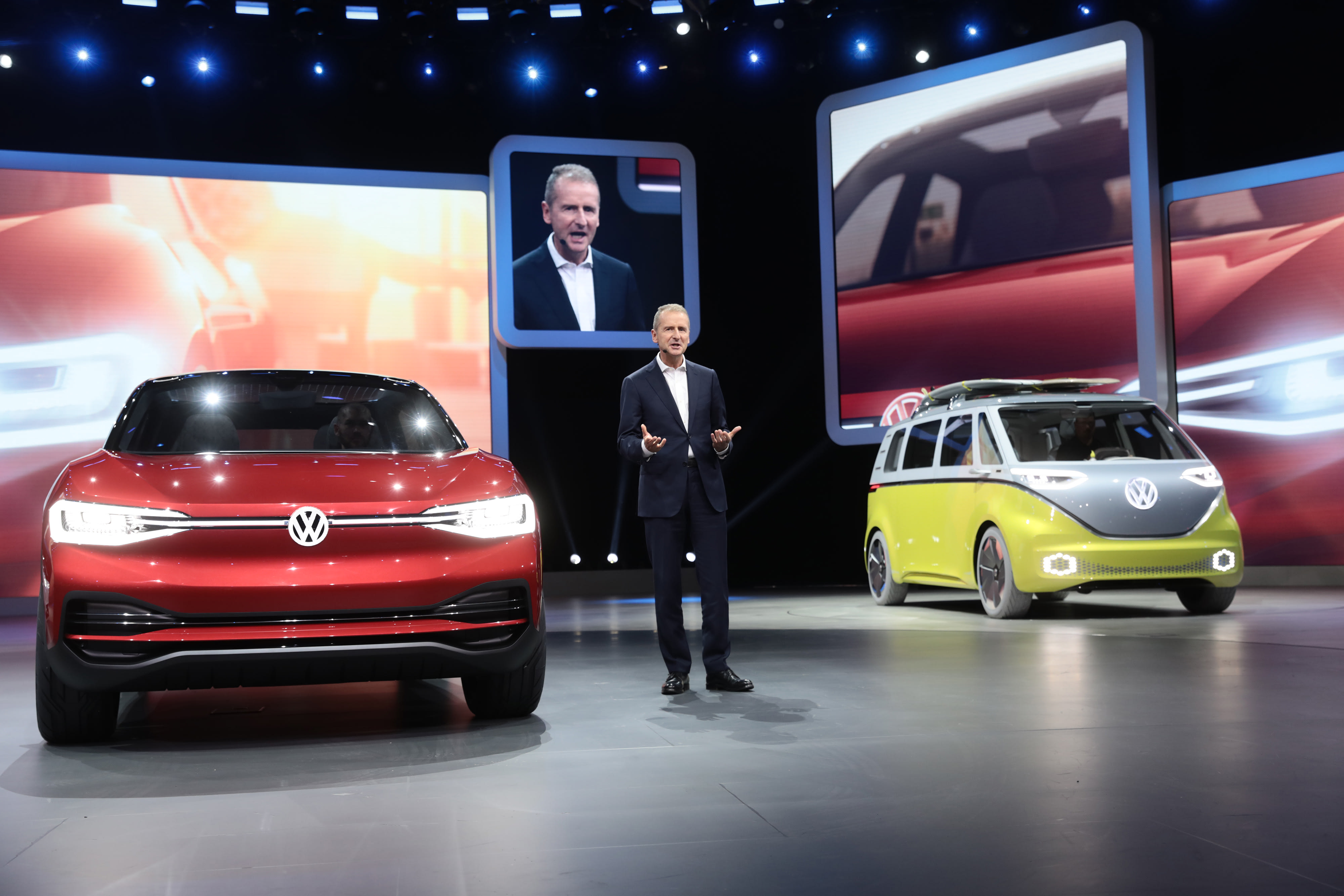
Volkswagen has begun real-world testing of its Gen.Urban autonomous research vehicle on the streets of Wolfsburg, Germany, as announced in mid-December 2025.

This marks a new phase where the vehicle drives autonomously in urban traffic after prior closed-course trials. The Gen.Urban is a purpose-built prototype without a traditional steering wheel or pedals, designed to study passenger experiences in fully self-driving cars—focusing on trust, interaction, comfort, and user behavior rather than just technical performance.

Tests occur on a fixed ~10 km about 6-mile route through Wolfsburg’s city center, including intersections, roundabouts, residential areas, and construction zones. Rides last around 20 minutes. An interdisciplinary team (designers, human factors experts, engineers) collects data on how people including employees initially behave and feel.

Questions include time spent during rides, interaction needs especially for children or elderly, and building trust via AI-assisted features. Passengers customize settings (temperature, lighting, seating) via app or onboard. The vehicle greets users, auto-adjusts seats, and uses AI for personalized displays with visuals, light, and sound.

A trained safety driver monitors from the passenger seat and can intervene via a joystick panel. Current phase with VW Group employees lasts several weeks; it’s a research project, not a production vehicle. This complements VW’s autonomous efforts, like the upcoming ID.Buzz AD robotaxi planned for commercial use in 2026+, but Gen.Urban emphasizes human-centered design for future interiors across VW brands.

Dr. Nikolai Ardey, Head of Volkswagen Group Innovation, stated: “The technology for autonomous driving is making rapid progress. With our Gen.Urban research vehicle, we want to understand exactly how passengers experience autonomous driving… The key to a positive customer experience is to build trust.”

This development highlights VW’s push toward user-centric autonomous mobility, positioning it in the growing robotaxi and self-driving space.Images of the Gen.Urban prototype show its sleek, sensor-equipped design tailored for urban autonomy.

Volkswagen’s mid-December 2025 launch of real-world testing for the Gen.Urban research vehicle in Wolfsburg marks a significant step in human-centered autonomous vehicle development. While not a production model, this prototype—designed without a steering wheel or pedals—focuses on passenger experience, trust-building, and interaction in fully self-driving urban environments.

Advancement in User-Centric Autonomous Design

The Gen.Urban shifts emphasis from pure technical autonomy to how passengers feel and behave in driverless vehicles. Building trust through AI-personalized interiors. Understanding needs across demographics.
Time usage during rides (work, relaxation, entertainment).

Insights from this testing will directly influence future interior and UX concepts across Volkswagen Group brands (VW, Audi, Porsche, etc.). This addresses a critical barrier to AV adoption: public anxiety over relinquishing control.

The project complements VW’s broader strategy: ID.Buzz AD planned for commercial ride-hailing via MOIA and partnerships like Uber, starting testing in late 2025 and passenger services in 2026 initially US, then Europe. Gen.Urban’s findings on passenger comfort will inform these production vehicles, accelerating VW’s goal of scalable Mobility-as-a-Service (MaaS).

This positions VW in the competitive robotaxi race against Tesla (Cybercab), Waymo, and Cruise, emphasizing volume manufacturing and urban practicality. Testing occurs under Germany’s progressive framework updated 2021–2022, allowing Level 4 autonomy in defined areas with a technical supervisor here, a safety driver with joystick.

Real urban trials including intersections, construction validate systems in complex environments, paving the way for driverless operations. Germany’s leadership in EU AV regulations gives VW a home advantage for data collection and iteration.

Redefining Vehicle Interiors — Without controls, cabins become lounges, enabling new layouts for productivity or relaxation.
Helps VW catch up in software-defined vehicles amid challenges in China and EV transitions.

Empirical data on trust could influence global standards and accelerate adoption, potentially reducing accidents— human error causes ~90% currently and enabling inclusive mobility Still research-focused; full commercialization depends on scaling trust, regulatory expansions, and integration with fleets like Uber.

The Gen.Urban testing underscores VW’s commitment to trust-first autonomy, potentially shaping the future of urban mobility beyond technology alone.

Paystack Restores Zap Access, Integrates Peer-to-Peer App into Checkout After Regulatory Setback

0

Paystack, the Nigerian financial technology company providing online and offline payment solutions across Africa, has restored access to its peer-to-peer payment app, Zap, following a regulatory setback.

The Central Bank of Nigeria (CBN) had fined Paystack N250 million over Zap’s initial operations, alleging that the app functioned as a deposit-taking wallet beyond the scope of Paystack’s regulatory licence.

According to the CBN, Zap, which launched in March 2025, operated in a manner reserved for institutions holding microfinance or full banking licences.

Following regulatory adjustments, Zap has now returned in a more defined role and is available as a payment option on Paystack Checkout. This integration allows millions of customers shopping on Paystack-powered websites and apps to pay using Zap as a fast, simple, and secure option.

For Paystack merchants, Zap appears automatically on checkout pages once “Pay with Bank Transfer” is enabled, with no additional setup required. This gives customers another familiar and reliable way to complete payments using a transfer flow they already trust for daily transactions.

Zap users can now pay for goods and services online including food, transportation, fashion, and professional services directly from the app. Payments can be completed using a Zap balance or Apple Pay, with instant confirmation reflected on the merchant’s checkout once approval is granted in the app.

Zap was originally introduced in March 2025, as a mobile app designed for instant and secure bank transfers, built on the same infrastructure that powers Paystack’s large-scale transaction processing. The product was created to remove friction from money movement, enabling users to complete transfers quickly without delays or pending states.

Paystack’s CEO and co-founder, Sola Akinkade, explained that Zap was developed to address the frustration many Nigerians face with slow bank transfers. According to him, the goal was to ensure users can start and complete transfers in under 30 seconds, which is why the app is focused exclusively on bank transfers.

Following its recent rollout on Paystack checkout relaunch, Zap has been updated with several new features aimed at improving speed, reliability, and user experience. Users can now repeat previous transfers with a single tap, making it easier to send money without saving beneficiaries.

The app also introduces automatic bank suggestions, instantly identifying the correct bank once an account number is entered, reducing errors and time spent searching through bank lists.

Additional updates include a balance visibility toggle for enhanced privacy, real-time service alerts that notify users of bank network downtimes before initiating transfers, and Tier 3 account upgrades. With Tier 3, users can access higher limits of up to ?5 million in daily transfers and maintain balances of up to ?100 million.

According to Paystack, these improvements are part of ongoing efforts to make Zap more stable, predictable, and useful for everyday payments.

The rollout of Zap on Paystack Checkout places the company in more direct competition with established consumer fintech players in Nigeria, including PalmPay, Kuda, OPay, and Moniepoint. However, Akinkade maintains that Zap’s focus is not on competing head-to-head with other fintechs but on delivering a superior transfer experience.

He noted that Zap is designed for people who send money frequently and are constantly on the move, such as Nigerians travelling across Africa, adding that the product is built for users who value speed, reliability, and seamless experiences.

Notably, Zap operates on the same secure infrastructure that powers Paystack Checkout, Terminal, and Transfers systems already trusted by thousands of large businesses across Africa. While Zap is relatively new to consumers, Paystack says it is built on technology that has already been tested at scale.

Looking ahead, Paystack envisions a future where payments across Africa are truly frictionless, supported by infrastructure designed for ambitious individuals and businesses. With Zap, the fintech company says it is building a modern bank transfer experience tailored for everyday spending and cross-border mobility.

The “Everything Exchange”: Coinbase’s Making Massive Pivot Into Mainstream Global Finance

0

Coinbase is executing its most ambitious strategic pivot to date, moving far beyond its origins as a digital asset exchange to become a comprehensive “Everything App” for global finance.

In a major “System Update” announced on December 17, 2025, the company unveiled a robust slate of products designed to challenge traditional brokerages like Robinhood and Charles Schwab. CEO Brian Armstrong’s vision is to replace the fragmented legacy financial system with a unified, always-on platform where stocks, ETFs, prediction markets, and crypto coexist on a single on-chain rail.

The cornerstone of this expansion is the immediate rollout of commission-free stock and ETF trading for U.S. users. In a significant departure from the constraints of traditional finance, Coinbase is enabling 24/5 trading, allowing investors to react instantly to overnight earnings or global macro events.

Users can fund these trades using either traditional USD or the USDC stablecoin, effectively bridging the gap between the speed of crypto and the stability of equities. This integration simplifies portfolio management by housing diverse asset classes under one account, with plans to add thousands of additional stocks in the coming months.

Early next year, Coinbase intends to further blur these lines by introducing stock perpetuals, allowing international traders to bet on equity price movements with up to 50x leverage. This move signals Coinbase’s intent to capture the sophisticated derivatives market that has historically been the domain of major investment banks and offshore crypto platforms.

A pivotal element of the new ecosystem is the launch of Prediction Markets, integrated directly into the Coinbase app through a strategic partnership with Kalshi. As the only CFTC-regulated event contract exchange in the U.S., Kalshi provides the necessary legal rails for Coinbase users to trade on the outcomes of everything from Federal Reserve interest rate decisions to the Oscars and major sporting events.

Brian Armstrong argues that the value of these markets extends beyond mere speculation; they serve as a high-fidelity sentiment gauge. While a small fraction of users trade these as an asset class, Armstrong posits that the vast majority use them as a “truth engine” to understand collective expectations on global events—positioning prediction markets as a direct competitor to traditional news media.

“If you look at things like economic indicators … or elections, people are using prediction markets to try to figure out what is going to happen next month,” Armstrong told CNBC. “Maybe1% of people use it as an asset class to trade, and 99% of people are using it as a way to figure out what’s going to happen — almost like a competitor to traditional media or maybe even entertainment.”

By incorporating these into the “Everything Exchange,” Coinbase is betting that “always-on engagement” will keep users within the app even when crypto markets are stagnant.

Tokenization and the ‘Agentic’ Economy

Coinbase is not just expanding its retail offerings; it is fundamentally rebuilding the underlying infrastructure for institutional finance through Coinbase Tokenize. This institutional-grade stack is designed to bring Real-World Assets (RWAs), such as private credit, treasuries, and eventually real estate, onto the Base blockchain. The long-term goal is to transition the current T+2 settlement system (where it takes two days for a stock trade to clear) to a T+0, near-instant settlement model that operates 24/7 globally.

Simultaneously, the company is laying the groundwork for the future of automated commerce with the x402 protocol. This new open internet standard allows for stablecoin payments to be attached directly to HTTP web requests.

This is a critical development for the burgeoning AI agent economy, enabling autonomous software programs to pay for API access, content, or services without human intervention. In its first 30 days of testing, the protocol has already processed an annualized volume of $200 million, indicating significant early adoption by developers.

Global Business Expansion and the Singapore Launch

To support this broader ecosystem, Coinbase Business has officially made its international debut in Singapore, in collaboration with Standard Chartered. This platform serves as a “crypto operating account” for startups and small businesses, offering instant USDC settlements, global payroll in stablecoins, and automated accounting integrations with platforms like QuickBooks and Xero. By choosing Singapore—a global hub for digital innovation—as its first international business market, Coinbase is positioning itself as the primary liquidity provider for the next generation of digitally native companies.

The throughline of all these initiatives is retention and diversification. By becoming a one-stop shop for all financial needs—from an AI-powered robo-advisor to institutional tokenization tools—Coinbase aims to decouple its revenue from the volatile “feast-or-famine” cycles of crypto trading.