
DD
MM
YYYY

PAGES

DD
MM
YYYY

spot_img

PAGES

Home Blog Page 8

Germany Introduces AI to Streamline Immigration Services and Public Administration

0

Germany is taking significant step toward modernizing its immigration system by embracing artificial intelligence to streamline the processing of asylum, visa, and residence permit applications.

Chancellor Friedrich Merz’s Cabinet approved legislation that would permit immigration authorities to use AI as a supporting tool in handling applications, with the goal of reducing processing times, improving efficiency, and easing the growing workload faced by public agencies.

The proposal reflects a broader trend across Europe, where governments are increasingly turning to advanced technologies to modernize public administration. Germany has long struggled with lengthy immigration procedures, particularly following years of increased migration and rising demand for work visas, student permits, and humanitarian protection.

These delays have placed significant pressure on immigration offices, creating backlogs that affect both applicants and government agencies. By integrating AI into administrative workflows, the government hopes to accelerate routine tasks while allowing human officials to focus on more complex decisions.

Under the proposed legislation, AI will assist officials rather than replace them. The technology is expected to handle repetitive administrative functions such as organizing documents, identifying missing information, categorizing applications, and supporting preliminary reviews.

Human caseworkers will continue to make the final decisions on asylum claims, visa approvals, and residence permits, ensuring that legal standards and individual circumstances remain central to every case.

Government officials argue that AI can significantly improve efficiency by reducing manual workloads and minimizing human error in document processing.

Faster application reviews would benefit asylum seekers awaiting protection decisions, skilled workers seeking employment opportunities, international students, and businesses that rely on foreign talent. Germany, like many developed economies, faces labor shortages across several industries, making quicker visa processing an important economic priority.

The initiative also reflects Germany’s commitment to digital transformation within the public sector. Over the past decade, critics have frequently described Germany’s government bureaucracy as outdated, heavily paper-based, and slow to adopt modern digital infrastructure.

Introducing AI into immigration services represents part of a wider effort to digitize government operations, improve public service delivery, and reduce administrative costs without compromising legal oversight.

The proposal has sparked debate among legal experts, civil rights organizations, and privacy advocates. Immigration decisions often involve highly sensitive personal information and can have life-changing consequences.

Critics warn that AI systems must operate with complete transparency and should not introduce algorithmic bias that could unfairly disadvantage certain groups of applicants. They emphasize that automated systems should remain explainable, regularly audited, and subject to strict human supervision.

Another concern involves data protection. Germany maintains some of the world’s strongest privacy standards, and any AI system used by government agencies must comply with both national laws and the European Union’s data protection regulations. Authorities will likely need to implement robust cybersecurity measures, establish clear accountability frameworks, and ensure that applicants retain the right to challenge decisions made with AI assistance.

Supporters believe that these safeguards can coexist with technological innovation. Rather than replacing experienced immigration officers, AI could function as an intelligent administrative assistant capable of handling large volumes of paperwork quickly and consistently. This hybrid approach may enable authorities to improve service quality while maintaining fairness and legal accountability.

If implemented successfully, Germany’s AI-assisted immigration system could become a model for other European countries seeking to modernize public administration. As governments worldwide explore the responsible use of artificial intelligence.

Germany’s approach will serve as an important test of whether advanced technology can improve efficiency while preserving transparency, human oversight, and the fundamental rights of applicants navigating complex immigration procedures.
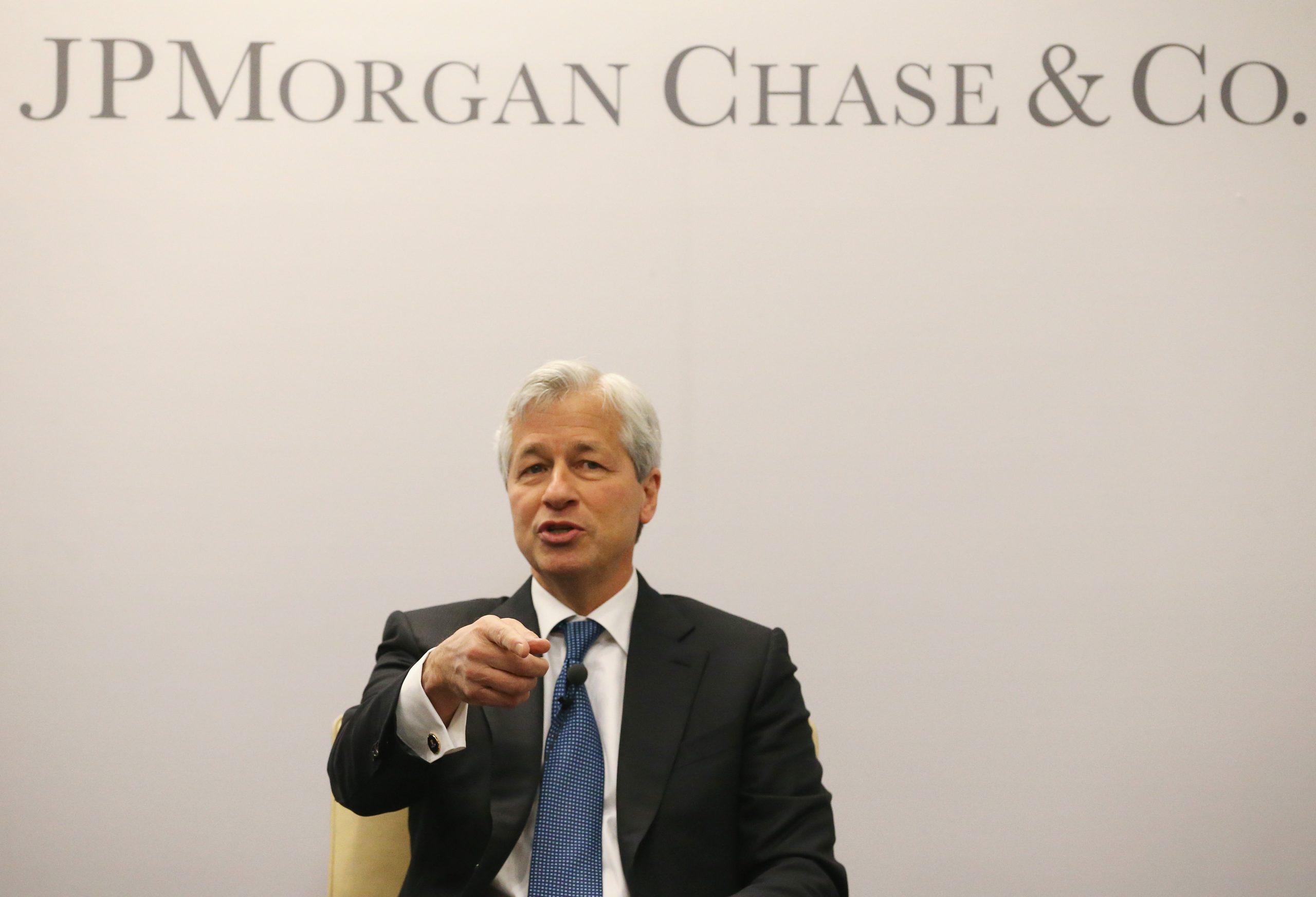

JPMorgan Warns That Failure to Pass The Clarity Act Will Hurt Crypto Markets

0
JP Morgan Chase puts contents through its CEO account, it goes viral. But the same content via JPMC account, no one cares (WSJ)

American multinational banking institution JPMorgan, has issued a stark warning to US lawmakers, stating that continued delays in passing the Digital Asset Market Clarity Act, commonly known as the Clarity Act, pose an increasing threat to the country’s crypto industry and broader financial innovation.

In a recent statement highlighted across financial and crypto circles, the banking giant emphasized that the longer approval of the legislation is postponed, the greater the potential damage to crypto markets.

JP Morgan wrote,

“The longer the approval of the Clarity Act is postponed, the greater the threat to crypto markets from the growth of tokenization and blockchain-based applications eventually being absorbed by incumbent market infrastructure rather than accruing to public crypto networks.”

The message arrives as the bill faces legislative hurdles in Congress, with a narrowing window for passage amid upcoming midterm elections and ongoing debates over key provisions.

The Clarity Act represents a significant effort to establish the first comprehensive federal framework for digital assets in the United States.

It seeks to clarify regulatory jurisdiction by drawing a clear line between assets treated as securities under the Securities and Exchange Commission (SEC) and those classified as commodities under the Commodity Futures Trading Commission (CFTC).

The bill also addresses rules for intermediaries, decentralized projects, stablecoins, and market infrastructure, aiming to replace the current enforcement-by-litigation approach with predictable guidelines that protect investors while fostering innovation.

Industry advocates have long argued that regulatory uncertainty has driven talent, capital, and projects overseas. With roughly 90% of spot crypto trading already occurring outside the US, supporters view the Clarity Act as essential for keeping America competitive in blockchain and tokenization technologies.

Proponents believe the legislation could unlock greater institutional adoption by providing the legal certainty that banks, asset managers, and traditional finance players have demanded.

JPMorgan’s position is particularly notable given the bank’s influential role in traditional finance and its own ongoing blockchain initiatives. While CEO Jamie Dimon has historically expressed skepticism toward certain aspects of crypto, including past criticisms of Bitcoin, the institution has increasingly recognized the need for clear rules.

Analysts at the bank have pointed out that unresolved issues, such as stablecoin yield and capital requirements, remain sticking points but should not derail the broader push for market structure reform.

Without the Clarity Act, experts warn that tokenization growth could primarily benefit Wall Street incumbents rather than open public networks. Delays risk further fragmenting the market and allowing other jurisdictions, such as those in Europe and Asia, to advance their own frameworks, and pull ahead.

The bill has garnered bipartisan interest and support from major players including Coinbase, BlackRock, Fidelity, and Goldman Sachs. As the Senate considers next steps ahead of the August recess period, pressure is mounting from both the crypto industry and traditional finance institutions for swift action.

JPMorgan’s latest comments underscore a growing consensus that regulatory clarity is no longer optional but necessary for the sustainable development of digital assets in the United States.

Outlook

The coming weeks are expected to be pivotal for the future of the Clarity Act. If lawmakers can advance the legislation before Congress enters its August recess, the bill would move a step closer to providing the regulatory certainty long sought by both the crypto industry and traditional financial institutions.

A successful passage could accelerate institutional participation in digital assets, encourage greater investment in tokenization and blockchain infrastructure, and strengthen the United States’ position against competing jurisdictions.

Luno Lays Off 20% of Global Workforce as Crypto Exchange Shifts to Institutional Clients

0

Luno’s decision to cut roughly 20% of its global workforce marks another significant moment in the ongoing restructuring of the cryptocurrency industry.

CEO James Lanigan confirmed that the Digital Currency Group-owned exchange is reducing its headcount as it shifts its strategic focus away from retail trading and toward institutional clients and business-to-business services.

While layoffs have become a recurring feature of the crypto sector over the past few years, Luno’s latest move highlights a broader transformation in how exchanges are positioning themselves for long-term sustainability in a rapidly evolving market.

This is not the first time Luno has taken drastic measures to reduce costs. In January 2023, the company eliminated approximately 35% of its workforce amid a prolonged crypto market downturn that followed the collapse of several major industry players.

Management cited deteriorating market conditions and declining trading activity as key reasons for the restructuring. More than three years later, the exchange finds itself making another round of cuts, but the rationale has evolved beyond market volatility.

Lanigan has pointed to greater automation and a deliberate shift toward institutional business as the primary drivers of the latest restructuring. The move reflects a wider industry trend. Retail cryptocurrency trading, once the dominant growth engine for exchanges during the 2020–2021 bull market, has become increasingly competitive and less profitable.

Lower trading volumes, tighter regulations, and the rising cost of customer acquisition have pressured exchanges to diversify their revenue streams.

Institutional clients, including asset managers, financial institutions, and corporate investors, generally generate larger transaction volumes, demand sophisticated trading infrastructure, and offer more predictable long-term business opportunities.

As a result, many exchanges are redirecting resources toward enterprise-grade products, custody services, and liquidity solutions instead of relying heavily on individual retail traders. Automation is reshaping the crypto industry.

Advances in artificial intelligence, machine learning, and cloud-based operational systems have enabled exchanges to automate compliance, customer support, fraud detection, and transaction monitoring.

While these technologies improve efficiency and reduce operating costs, they also lessen the need for large operational teams. Luno’s restructuring illustrates how technological progress is changing workforce requirements across financial technology companies, where software increasingly replaces manual processes.

The layoffs come during a difficult period for employment across the broader crypto ecosystem. Only weeks before Luno’s announcement, exchanges including AscendEX, BitMEX, and BitMart either reduced operations or shut down entirely, reflecting continued pressure on smaller and mid-sized platforms.

Largely, instead of prioritizing rapid expansion fueled by speculative retail trading, many companies are emphasizing profitability, operational efficiency, and sustainable business models.

Investors are increasingly rewarding firms that demonstrate disciplined cost management and diversified revenue sources rather than aggressive hiring during market booms. For employees, however, the transition remains painful.

Thousands of professionals across engineering, marketing, compliance, and customer support continue to face uncertainty as companies streamline operations. New opportunities are emerging in specialized areas such as institutional infrastructure, blockchain security, tokenization, digital asset custody, and artificial intelligence-driven financial services.

While overall employment growth has slowed, demand for highly skilled professionals remains resilient. Luno’s latest workforce reduction therefore represents more than another round of layoffs.

As automation accelerates and competition intensifies, crypto companies are likely to continue reshaping their organizations to align with a future defined by efficiency, enterprise services, and long-term resilience.

Tech Stocks Under Pressure as SanDisk Erases $220 Billion in Value

0

SanDisk has suffered one of the most dramatic market reversals of the year, with its shares plunging nearly 58% from their June peak and wiping out an estimated $220 billion in market value.

The steep decline has sent shockwaves through technology and financial markets, raising fresh questions about the sustainability of AI-driven rallies, investor leverage, and the risks of concentrated bets in high-growth sectors.

Only weeks ago, SanDisk was among the strongest performers in the semiconductor and storage technology space.

Investors had poured into the stock, encouraged by expectations that demand for high-performance memory solutions would continue to surge as artificial intelligence infrastructure expanded globally.

The company’s exposure to enterprise storage, cloud computing, and AI-related workloads made it a favorite among institutional investors looking to capitalize on the next wave of digital transformation.

Momentum shifted rapidly as concerns over valuations, slowing capital expenditure, and broader market weakness triggered a wave of selling. Once profit-taking began, the decline accelerated, with leveraged investors facing mounting losses.

The result was a sharp collapse that erased months of gains in just a matter of weeks, illustrating how quickly sentiment can change in today’s highly interconnected financial markets.

Adding to the uncertainty are market rumors surrounding investor and fund manager Leopold Aschenbrenner. According to speculation circulating across trading desks and social media, Aschenbrenner may have experienced forced liquidations on leveraged positions tied to the technology sector.

Reports suggest he is seeking additional funding to stabilize his investment activities, although no official confirmation has been provided. The rumors have captured significant attention because Aschenbrenner has become closely associated with bullish views on artificial intelligence and advanced technology investments.

If a high-profile investor with concentrated exposure were indeed forced to unwind positions, the resulting selling pressure could amplify declines across related assets. Without verified evidence, these reports remain speculative and should be treated cautiously until confirmed by reliable sources.

The episode highlights the dangers of leverage during periods of heightened volatility. Borrowed capital can significantly amplify returns when markets rise, but it also magnifies losses when prices fall.

Once collateral values decline below required thresholds, lenders often force the liquidation of positions, creating additional downward pressure on already falling assets. These cascading liquidations can turn what begins as a routine market correction into a much larger selloff.

Beyond SanDisk itself, the decline reflects broader concerns surrounding technology valuations. Many AI-related companies experienced extraordinary gains over the past year as investors priced in years of future growth. While long-term demand for AI infrastructure remains strong, expectations may have moved ahead of underlying fundamentals.

Investors are increasingly scrutinizing whether corporate earnings can justify premium valuations in an environment of elevated interest rates and tighter financial conditions.

The market’s reaction also serves as a reminder that strong narratives alone cannot sustain stock prices indefinitely.

Companies benefiting from transformative technologies must continue delivering revenue growth, expanding margins, and meeting investor expectations. Any signs of slowing demand or weaker profitability can quickly reverse market enthusiasm.

SanDisk’s sharp decline underscores the importance of diversification, disciplined risk management, and careful evaluation of leverage. While innovation continues to create compelling long-term opportunities, recent events demonstrate that even market leaders are vulnerable to rapid corrections.

Whether SanDisk stabilizes or faces further pressure will depend not only on its business fundamentals but also on broader market confidence, capital flows, and the resolution of speculation surrounding major investors.

India’s Gold Smuggling Rebounds After Import Duty Hike, WGC Warns Grey Market Is Hurting Formal Trade

0

India is witnessing a sharp resurgence in gold smuggling after the government raised import duties earlier this year, creating lucrative opportunities for illegal traders while weighing on the country’s formal bullion market, according to the World Gold Council (WGC).

The warning exposes the unintended consequences of New Delhi’s decision to increase import tariffs in an effort to curb gold demand, narrow the country’s trade deficit and reduce pressure on the rupee. While the higher duties have dampened official imports, they have also widened the price gap between legally imported and smuggled gold, making illicit trade increasingly profitable.

India, the world’s second-largest gold consumer after China, more than doubled the import duty on gold to 15% on May 13, lifting the total tax burden to around 18% after including the 3% Goods and Services Tax (GST).

“The arbitrage is so huge. I mean, with the 15% duty and 3% GST, there’s an 18% difference, and that almost spurs an entire industry,” said Sachin Jain, chief executive of the WGC’s Indian operations.

According to Jain, the expanding grey market is eroding the competitiveness of organized jewelers, bullion dealers and authorized importers that comply with tax regulations.

“Grey market inflows and the disruption they cause are hurting organized players,” he said.

Official data suggest smuggling activity has accelerated since the tariff increase. According to figures presented to Parliament earlier this month, Indian enforcement agencies seized 160.91 kilograms of smuggled gold between May 13 and June 30, nearly double the 86.16 kilograms confiscated between April 1 and May 12.

Although seizures represent only a fraction of total illicit inflows, the sharp increase indicates authorities are intercepting more illegal shipments as smuggling networks respond to the higher tax regime.

The reversal marks a significant shift from the past two years.

The WGC estimates that gold smuggling fell to 69.2 metric tons in 2024 from 156.1 metric tons in 2023 and declined further to 20.4 metric tons in 2025 after India reduced import duties, narrowing the incentive to evade taxes. However, following this year’s tariff increase, industry officials told Reuters last month that illegal imports could exceed 100 metric tons in 2026, potentially reversing much of the progress made in reducing smuggling.

The resurgence brings to the fore a longstanding challenge for policymakers.

India is one of the world’s largest gold importers, and because the country produces very little domestically, it relies heavily on overseas supplies to meet consumer demand. Gold imports have a significant impact on India’s trade balance and foreign exchange reserves, prompting successive governments to use import duties as a tool to moderate demand during periods of external pressure.

However, economists and industry participants have long argued that excessively high tariffs often prove counterproductive by encouraging smuggling rather than reducing overall consumption.

The WGC’s latest quarterly report suggests higher duties are already reshaping the market. India’s net gold imports fell 23% year on year to 98.1 metric tons during the June quarter, the lowest quarterly level since September 2020, when nationwide COVID-19 lockdowns severely disrupted consumer demand and supply chains.

Domestic gold consumption also weakened.

Total demand declined 6% from a year earlier to 131.4 metric tons, as elevated prices and higher import costs reduced jewelry purchases. The weakness in jewelry demand was partially offset by robust investment buying, with investors continuing to accumulate gold as a hedge against inflation, geopolitical uncertainty and financial market volatility.

The contrast between jewelry and investment demand indicates that while consumers have become more price-sensitive amid record-high bullion prices, investors have continued to increase allocations to gold, viewing the precious metal as a safe-haven asset during periods of economic uncertainty, elevated government debt, geopolitical tensions and expectations of lower real interest rates.

Jain expects market conditions to improve during the second half of the year if gold prices stabilize. He said many consumers postponed jewelry purchases during this year’s rally and could return to the market as prices become less volatile, particularly ahead of India’s festival and wedding season, which typically generates the strongest annual demand for gold.

For policymakers, however, the renewed rise in smuggling presents a difficult trade-off. While higher import duties can temporarily reduce official imports and help contain the current account deficit, they also increase incentives for illegal trade, reduce tax revenues and place compliant businesses at a competitive disadvantage.

The latest WGC findings suggest that unless the gap between domestic and international gold prices narrows, the informal market could continue expanding, complicating India’s efforts to balance fiscal objectives, external stability and the health of its formal bullion industry.