

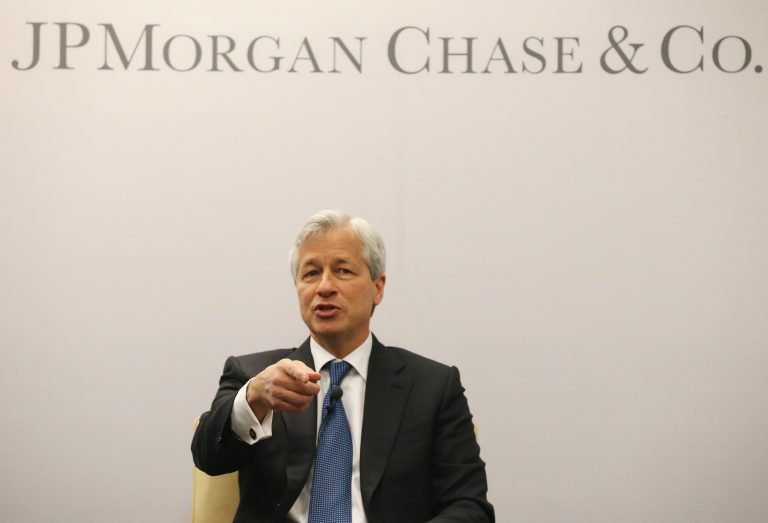
American multinational banking institution JPMorgan, has issued a stark warning to US lawmakers, stating that continued delays in passing the Digital Asset Market Clarity Act, commonly known as the Clarity Act, pose an increasing threat to the country’s crypto industry and broader financial innovation.
In a recent statement highlighted across financial and crypto circles, the banking giant emphasized that the longer approval of the legislation is postponed, the greater the potential damage to crypto markets.
JP Morgan wrote,
Register for the next Tekedia Mini-MBA.
Register for Tekedia AI in Business Masterclass.
Join Tekedia Capital Syndicate and co-invest in great global startups.
“The longer the approval of the Clarity Act is postponed, the greater the threat to crypto markets from the growth of tokenization and blockchain-based applications eventually being absorbed by incumbent market infrastructure rather than accruing to public crypto networks.”
The message arrives as the bill faces legislative hurdles in Congress, with a narrowing window for passage amid upcoming midterm elections and ongoing debates over key provisions.
The Clarity Act represents a significant effort to establish the first comprehensive federal framework for digital assets in the United States.

It seeks to clarify regulatory jurisdiction by drawing a clear line between assets treated as securities under the Securities and Exchange Commission (SEC) and those classified as commodities under the Commodity Futures Trading Commission (CFTC).
The bill also addresses rules for intermediaries, decentralized projects, stablecoins, and market infrastructure, aiming to replace the current enforcement-by-litigation approach with predictable guidelines that protect investors while fostering innovation.
Industry advocates have long argued that regulatory uncertainty has driven talent, capital, and projects overseas. With roughly 90% of spot crypto trading already occurring outside the US, supporters view the Clarity Act as essential for keeping America competitive in blockchain and tokenization technologies.

Proponents believe the legislation could unlock greater institutional adoption by providing the legal certainty that banks, asset managers, and traditional finance players have demanded.
JPMorgan’s position is particularly notable given the bank’s influential role in traditional finance and its own ongoing blockchain initiatives. While CEO Jamie Dimon has historically expressed skepticism toward certain aspects of crypto, including past criticisms of Bitcoin, the institution has increasingly recognized the need for clear rules.
Analysts at the bank have pointed out that unresolved issues, such as stablecoin yield and capital requirements, remain sticking points but should not derail the broader push for market structure reform.
Without the Clarity Act, experts warn that tokenization growth could primarily benefit Wall Street incumbents rather than open public networks. Delays risk further fragmenting the market and allowing other jurisdictions, such as those in Europe and Asia, to advance their own frameworks, and pull ahead.
The bill has garnered bipartisan interest and support from major players including Coinbase, BlackRock, Fidelity, and Goldman Sachs. As the Senate considers next steps ahead of the August recess period, pressure is mounting from both the crypto industry and traditional finance institutions for swift action.
JPMorgan’s latest comments underscore a growing consensus that regulatory clarity is no longer optional but necessary for the sustainable development of digital assets in the United States.
Outlook
The coming weeks are expected to be pivotal for the future of the Clarity Act. If lawmakers can advance the legislation before Congress enters its August recess, the bill would move a step closer to providing the regulatory certainty long sought by both the crypto industry and traditional financial institutions.
A successful passage could accelerate institutional participation in digital assets, encourage greater investment in tokenization and blockchain infrastructure, and strengthen the United States’ position against competing jurisdictions.