
DD
MM
YYYY

PAGES

DD
MM
YYYY

spot_img

PAGES

Home Blog Page 8

Apple And Google Seek Crypto Talent Amid Growing Interest in Stablecoins and Tokenization

0

Apple and Google are recruiting senior professionals with expertise in stablecoins, tokenized deposits, and blockchain technology, according to recent job listings that have drawn attention across the crypto and finance sectors.

The openings signal that two of the world’s largest technology companies are building internal knowledge around digital-asset infrastructure, even as neither has announced plans to launch its own stablecoin or new blockchain-based products.

Apple posted a role for an Apple Pay Financial Product Strategy Lead, based in Cupertino, California, or New York. The position sits within the teams responsible for Apple Card, Apple Cash, peer-to-peer payments, and related consumer financial products.

Core duties include developing long-term strategy, evaluating new growth opportunities, assessing product structures and commercial models, and driving business planning.

Preferred qualifications include an understanding of stablecoins, tokenized deposits, and blockchain technology, along with experience in peer-to-peer payments or credit cards and familiarity with major payment systems outside the United States.

Meanwhile, Google Cloud is hiring an Industry Principal Architect for Web3 based in Hong Kong. The role focuses on supporting institutional clients across the Asia-Pacific region, including blockchain foundations, exchanges, digital-asset custodians, financial institutions engaged in real-world asset tokenization, and decentralized application developers.

Candidates are expected to have substantial experience architecting and operating production-grade Web3 systems, along with knowledge of stablecoin payment rails, tokenized deposits, custody architectures, blockchain validators, smart contracts, and related infrastructure.

The position involves advising senior executives, designing scalable architectures that connect decentralized protocols with cloud services, and helping shape Google Cloud’s Web3 product roadmap. Compliance considerations specific to Hong Kong regulators also feature in the requirements.

These openings reflect broader industry momentum. Interest in stablecoins and tokenization has accelerated as financial institutions, technology companies and investors increasingly explore blockchain technology beyond speculative cryptocurrency trading.

The two trends are closely connected: stablecoins provide a digital form of money for moving value on-chain, while tokenization brings traditional assets such as government bonds, equities, commodities and funds onto blockchain networks.

Stablecoins have expanded rapidly in recent years. By mid-2026, the market capitalization of U.S.-dollar stablecoins had reached approximately $308 billion, representing a 30% increase, or $71 billion, from April 2025, according to the Federal Reserve Bank of New York.

The market remains concentrated, with Tether’s USDT and Circle’s USDC accounting for more than 80% of stablecoin assets. The expansion reflects growing interest in stablecoins as a potential payment and settlement infrastructure.

Unlike volatile cryptocurrencies such as Bitcoin, stablecoins are designed to maintain a relatively stable value, usually by maintaining a peg to a fiat currency such as the U.S. dollar. Their blockchain-based structure allows them to operate continuously and potentially reduce the friction associated with cross-border transfers and settlement.

However, transaction figures require some qualification. McKinsey estimates that stablecoins generated as much as $35 trillion in annual on-chain transaction volume, but much of that activity consists of cryptocurrency trading, internal transfers, and automated transactions rather than actual payments.

Its analysis estimates that genuine stablecoin payment activity was approximately $390 billion in 2025, more than twice the level recorded in 2024.

Notably, tokenization of real-world assets and the expansion of regulated stablecoin frameworks particularly in markets such as Hong Kong are prompting traditional technology and payments companies to deepen their capabilities.

Google has previously explored related infrastructure, including partnerships involving asset tokenization and its Universal Ledger initiative. Apple’s interest appears more closely tied to potential future enhancements in consumer payments and financial products.

Samsung has also publicly discussed adding stablecoin features to its wallet, underscoring a wider shift among major device and platform providers.

Neither company has confirmed product launches or timelines tied to these hires. The postings function primarily as signals that expertise in digital assets is becoming relevant to core strategy and infrastructure roles at scale.

As regulatory clarity improves and institutional adoption of tokenized assets continues, such talent acquisition is likely to remain a key indicator of how Big Tech intends to participate in the evolving digital payments landscape.

Germany’s Auto Workers Protest as Volkswagen and Mercedes Face Job Security Crisis

0

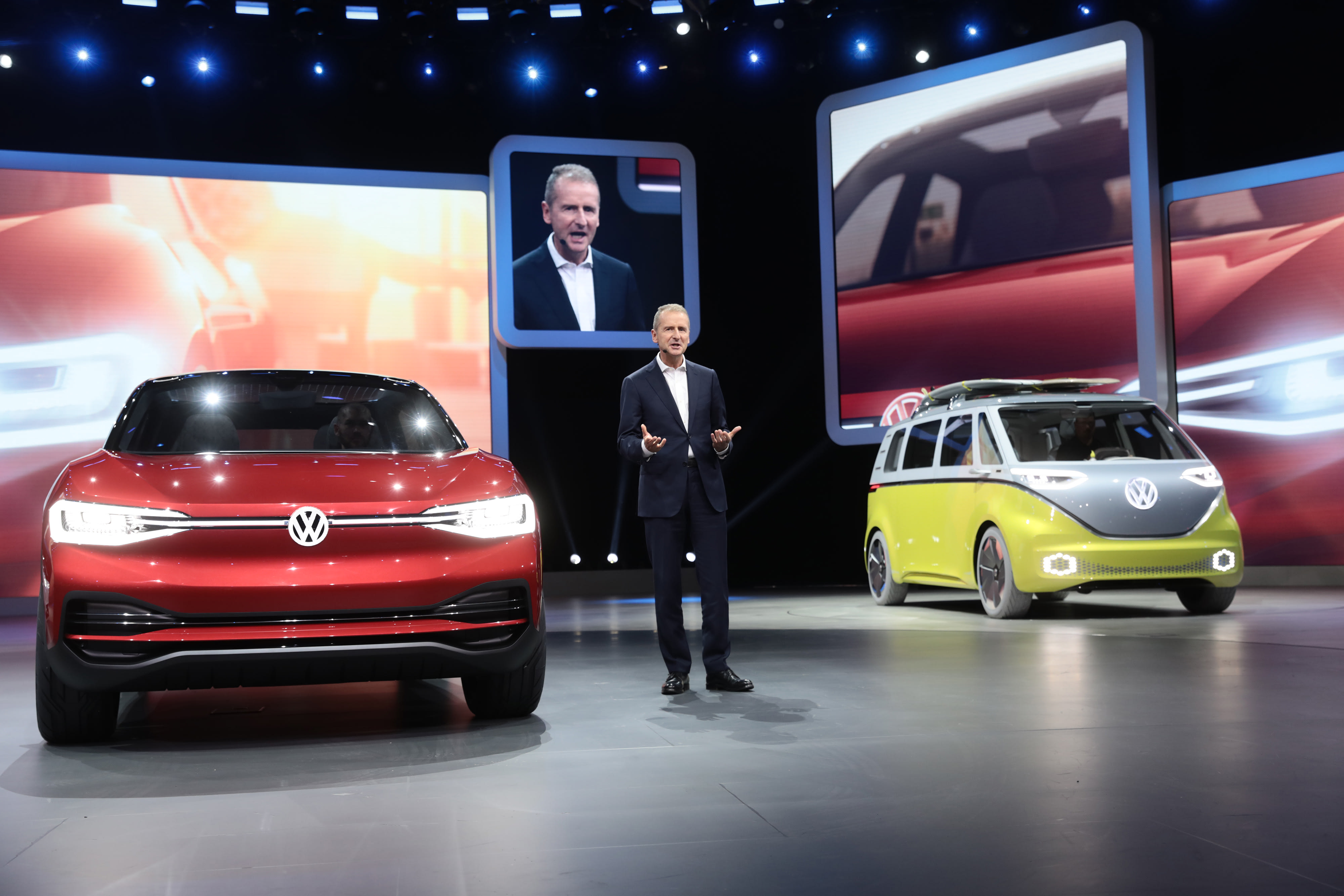
Germany’s automotive industry is confronting a defining moment as workers across the country take to the streets to demand greater job security and a clearer future from the companies that have long formed the backbone of the German economy.

Employees at major manufacturers, including Volkswagen and Mercedes-Benz, protested on Monday, putting pressure on management to address growing concerns over restructuring, competitiveness and employment.

The protests reflect a broader anxiety spreading through Germany’s industrial workforce. For generations, automotive manufacturing has represented more than an important source of employment.

It has been closely associated with Germany’s export strength, engineering reputation and regional economic stability. But the industry is now undergoing a structural transformation that is challenging the traditional business model.

The shift toward electric vehicles is at the centre of the disruption. Electric cars require different components, production processes and supply chains than vehicles powered by internal-combustion engines.

While the transition creates opportunities in batteries, software, charging infrastructure and digital services, it also threatens jobs linked to conventional engines, transmissions and other mechanical systems.

For workers, the question is therefore not simply whether Germany can produce electric vehicles. It is whether the transition can happen without leaving large sections of the existing workforce behind.

Volkswagen has become one of the clearest examples of the pressure facing Germany’s car industry.

The company has been pursuing cost reductions and restructuring as it responds to weaker demand in some markets, intense competition from Chinese manufacturers and the substantial investment required for electrification and software.

Mercedes-Benz faces similar pressures, as European manufacturers attempt to protect margins while investing in new technologies and adapting to changing consumer demand.

The protests also expose a difficult tension between corporate competitiveness and social expectations. Automakers must control costs if they are to compete globally, but aggressive cost-cutting can create uncertainty for workers and communities dependent on automotive factories.

Factory closures, reduced shifts or job cuts can have consequences far beyond individual employees, affecting suppliers, local businesses and municipal economies.

Germany’s challenge is intensified by the rise of Chinese electric-vehicle manufacturers. Companies from China have expanded their technological capabilities and increasingly compete in international markets on price, battery technology and production efficiency.

European manufacturers consequently face pressure to accelerate innovation while maintaining the higher labour and regulatory costs associated with production in Germany.

Workers are demanding that management provide more than short-term restructuring plans.

They want a credible industrial strategy that explains what production will remain in Germany, which new technologies will be developed domestically and how employees can participate in the transformation.

That demand places responsibility not only on company executives but also on policymakers. Germany’s industrial transition requires investment in infrastructure, research, vocational training and energy security.

High energy costs have already become a concern for energy-intensive industries, while uncertainty over regulations and market conditions can make long-term investment decisions more difficult.

The protests therefore represent something larger than a dispute over individual employment contracts. They are a visible expression of uncertainty about Germany’s industrial future. The automotive sector is attempting to move from a century-old manufacturing model toward an economy increasingly shaped by electrification, software and automation.

For workers, the transition needs to produce a future rather than simply eliminate the past. For manufacturers, remaining competitive will require substantial technological and financial discipline. And for Germany, the challenge is to reconcile both objectives without weakening one of its most important industrial pillars.

The demonstrations show that the transformation of Germany’s car industry is no longer an abstract corporate strategy. It has become a question of livelihoods, communities and the country’s economic identity.

Google Launches $899 Premium Android Laptops as It Takes Aim at Apple’s MacBook Market

0

Alphabet’s Google is taking its Android ecosystem deeper into the laptop market, opening pre-orders Monday for Googlebook, a new premium laptop category built around the company’s Gemini artificial intelligence tools.

Starting at $899, the first Googlebook models will be produced by Acer, Asus, Dell, HP and Lenovo. The laptops will use Intel or Qualcomm processors and offer up to 14 hours of battery life, Google said.

The launch marks a shift for Google’s laptop strategy. Chromebooks have traditionally competed by offering relatively inexpensive computers focused on simplicity, education, and basic productivity. Googlebook moves that proposition further upmarket, pairing more capable hardware with Gemini-powered features and closer integration with Android phones.

The move also puts Google into more direct competition with Apple as the iPhone maker expands its laptop lineup at the lower end of the market with its $699 MacBook Neo.

Google is positioning Googlebook less as another Chromebook and more as a showcase for how its AI and Android ecosystems can work together across devices. The laptops include Gemini tools that can help users draft and organize text, answer questions about material displayed on their screens, and resume tasks that began on an Android phone.

That integration is central to Google’s attempt to differentiate its laptops. Rather than competing solely on processor performance, battery life, or price, the company is using access to its software and AI services as part of the product proposition.

Googlebook combines the Android technology stack with desktop foundations from ChromeOS, creating a platform designed to make movement between Android smartphones and computers more seamless.

The approach comes at a time when AI is becoming an increasingly important feature in personal computers. Microsoft and its hardware partners have pushed AI-enabled Windows PCs, while Apple has integrated its own AI capabilities across its device ecosystem. Google’s response is to make Gemini a more visible part of the computing experience and use Android’s enormous installed base as a potential advantage.

The $899 starting price places Googlebook well above the traditional Chromebook market, but below many premium laptops. That leaves Google attempting to establish a new segment between inexpensive ChromeOS machines and higher-priced flagship computers.

The timing also gives Google an opportunity to test whether consumers will pay more for a laptop when AI functionality and smartphone integration are central to the product.

Google has tried to establish premium hardware categories before. The Googlebook launch follows the company’s Pixelbook in 2017 and Pixelbook Go in 2019, but this time the company has a more developed AI ecosystem to incorporate into the computing experience.

The broader laptop market is becoming more competitive as manufacturers look for new reasons for consumers to upgrade. Hardware improvements alone can be difficult to turn into compelling reasons to replace a functioning computer, while AI features offer manufacturers and software companies another way to differentiate newer devices.

For Google, the challenge will be converting Gemini’s popularity and Android’s reach into demand for higher-priced laptops. The company is relying on multiple hardware partners rather than building the category around a single Google-branded device, potentially allowing Googlebook to reach consumers through a wider range of designs and configurations.

The strategy also gives Acer, Asus, Dell, HP and Lenovo a way to offer Android-linked AI features while retaining their role as hardware manufacturers.

Apple’s $699 MacBook Neo adds another layer of competition. A lower-priced MacBook gives Apple an entry point for consumers who may previously have considered Chromebooks, while Google’s new premium tier moves in the opposite direction by asking Chromebook users to pay more for additional capabilities.

The result is a laptop market where the boundaries between traditional budget computers, premium notebooks and AI-focused devices are becoming less distinct.

Googlebook’s success will ultimately depend on whether its Gemini features and Android integration provide enough practical value to justify the premium over conventional Chromebooks. The launch gives Google a new vehicle for extending Gemini beyond smartphones and web applications, while giving its hardware partners another way to participate in the emerging AI PC market.

The larger opportunity for Google is not simply selling more laptops; it is using the computer as another access point for Gemini and strengthening the connection between Android phones, AI services, and personal computing.

Bitcoin’s 50-Week Reclaim Puts the June Bottom Under the Microscope

0

Bitcoin has crossed a technical threshold that could reshape how traders interpret the cryptocurrency’s long and volatile 2026 drawdown.

The weekly close above its 50-week moving average marks the first successful reclaim of the indicator in 45 weeks, reviving the argument that June’s $58,525 low may have represented the cycle’s floor.

The importance of the move lies less in Bitcoin’s price on any single day than in what the 50-week moving average has historically represented.

During major Bitcoin bear markets, the indicator has frequently acted as a ceiling. Rallies could approach it, but sustained weekly closes above it were comparatively rare until the market had moved beyond the worst phase of the downturn.

Galaxy’s Alex Thorn has studied that pattern across Bitcoin’s completed bear markets. His research found that in four of five major downturns that lost the 50-week moving average, the first weekly reclaim ultimately held as a signal that the bear-market low had already been established.

That gives the latest move historical significance, although it does not turn a technical pattern into a guarantee. The June low provides an important part of the argument. Bitcoin fell to $58,525 on June 30 after declining roughly 53% from its October 2025 record of $124,824.

The subsequent recovery has taken BTC back above both the 200-week and 50-week moving averages, strengthening the case that the market has transitioned from capital preservation toward recovery.

Yet Bitcoin’s history also contains a warning against treating moving averages as infallible. The 2021–2022 downturn produced the notable exception in Thorn’s research.

Bitcoin reclaimed the 50-week average twice before ultimately falling to a substantially lower low. Those failed signals demonstrate why the latest breakout needs confirmation from subsequent weekly closes and price structure rather than being interpreted in isolation.

That makes the weeks ahead particularly important. A technical breakout becomes more meaningful if Bitcoin can remain above the reclaimed average during periods of volatility. Conversely, a rapid loss of the level would raise questions about whether the September move was simply another bear-market rally.

The debate also reflects a broader disagreement about Bitcoin’s cycle. Some analysts continue to anticipate another bottoming phase in October, meaning the June low remains provisional rather than universally accepted as the final floor.

The market therefore faces two competing narratives: a historical technical signal suggesting the worst may have passed, and a cycle-based argument that Bitcoin could still revisit lower levels.

For traders, the distinction matters. A move above the 50-week average changes the market’s technical structure, but it does not eliminate downside risk.

The critical question is no longer simply whether Bitcoin can reclaim the level; it is whether buyers can defend it. Bitcoin has spent 45 weeks beneath this important trend indicator. Breaking above it is therefore a meaningful change in market behavior.

But the June low becomes credible as the cycle floor only if the market continues to build higher lows and maintain the reclaimed territory. The signal has shifted the conversation from where might Bitcoin bottom? to can June’s bottom hold? The answer will be written not by one weekly candle, but by what Bitcoin does next.

German Economy Faces Dual Pressure From Weak Car Sales and Rising Fuel Costs

0

Germany’s economic debate is increasingly being shaped by two pressures that appear separate but are becoming difficult to disentangle: the declining competitiveness of its automobile industry and the political pressure created by expensive fuel.

The latest analysis from EY shows how severe the first problem has become. Volkswagen, Mercedes-Benz and BMW generated combined revenue of about €284 billion in the first half of 2026, down 2.9% from a year earlier.

Across the 19 major international manufacturers examined by EY, revenue instead increased 3.6% to roughly €1.048 trillion. It was the third consecutive first-half revenue decline for the German manufacturers.

The deterioration is not limited to sales. Operating profit at the three German groups fell 19% to €13 billion, while their combined operating margin declined to 4.6%. Meanwhile, the broader group of manufacturers recorded an 11.4% increase in operating profit.

EY’s figures therefore point toward a problem deeper than a temporary slowdown in car demand: German manufacturers are finding it harder to convert their global scale into competitive profitability. China is particularly important.

Sales by the German manufacturers there fell 25% during the first half, reducing China’s share of their global vehicle sales from 28.9% to 23.5%. Chinese consumers have increasingly favored domestic brands, particularly in electric vehicles, while Chinese manufacturers are simultaneously expanding into Europe.

EY recorded a 44% increase in Chinese manufacturers’ sales in Europe during the period, with BYD’s European sales rising 168%. That creates a difficult strategic equation for Germany. Its manufacturers are being squeezed simultaneously by changing consumer preferences.

Chinese competition, high domestic energy costs, labor costs and regulatory expenses. The traditional advantage associated with producing premium vehicles in Germany is therefore being challenged by an industry increasingly organized around software, batteries, lower-cost production and rapidly changing electric-vehicle technology.

The government’s response to another economic pressure — soaring fuel prices — has produced a related argument about Germany’s economic direction.

Berlin has announced a temporary reduction in fuel taxation worth about €0.17 per litre from October 1 through the end of 2026, alongside plans to explore a longer-term fuel-price cap.

Reuters reported that the package represents roughly €2.5 billion in tax relief.  Economist Veronika Grimm, a member of Germany’s Council of Economic Experts, criticized the measure as “cynical,” arguing that subsidizing combustion-engine driving places costs on younger generations while postponing structural reforms.

She also warned that short-term political responses could ultimately frustrate voters if deeper economic problems remain unresolved. The disagreement illustrates Germany’s broader dilemma. Consumers and businesses facing exceptionally high fuel prices need immediate relief.

But subsidies can also weaken incentives to address the underlying causes of high energy costs and dependence on fossil fuels. For Germany’s industrial economy, the challenge is therefore larger than the price at the pump or the performance of three famous carmakers.

The country is confronting a transition in which energy, transportation, manufacturing and technology are becoming one interconnected competitiveness problem. Temporary relief may soften the pressure.

But the automobile figures suggest that international competitors are continuing to move while Germany debates how much of its existing economic model it can afford to preserve.

Germany’s Recovery Hits a Temporary Wall as Rhine Levels and Energy Costs Bite

Germany’s economic recovery is entering another difficult stretch, but the latest warning from the Deutsche Bundesbank is less about a new recession than a temporary interruption to an emerging recovery.

In its September monthly report, the central bank said the economy is likely to lose momentum in the third quarter of 2026, with real GDP expected to expand only slightly after stronger growth in the previous two quarters.

Two forces are particularly important: unusually low water levels on the Rhine and renewed energy-price pressure. The Rhine is not simply a geographical feature for Germany; it is a crucial commercial artery connecting industrial regions with suppliers, customers and international markets.

When water levels fall, vessels cannot carry normal loads, forcing companies to adjust logistics, pay higher transportation costs and, in some cases, confront delays in receiving critical inputs.

The impact was already visible in July. German industrial production and sales declined noticeably, while industries exposed to supply bottlenecks were particularly affected.

Energy-intensive sectors such as chemicals, metals, coke and petroleum processing were hit by both transportation difficulties and expensive fossil fuels. The energy problem adds another layer. Germany’s industrial model remains unusually sensitive to energy costs because manufacturing occupies such an important position in the economy.

The Bundesbank reported that European energy commodity prices rose sharply again in August and September, with natural gas, electricity, diesel, gasoline and crude oil all experiencing substantial increases. Germany’s harmonised inflation rate reached 2.9% in August, while energy inflation accelerated to 9.4%.

For households, expensive energy can reduce disposable income and weaken consumption. For companies, it can squeeze margins and make investment decisions more difficult. That creates a complicated recovery: Germany can receive support from stronger exports and government spending while consumers and energy-intensive manufacturers remain under pressure.

Yet the Bundesbank’s assessment contains an important counterpoint. The central bank does not regard the third-quarter slowdown as evidence that Germany has abandoned its recovery trajectory. Instead, it expects activity to strengthen again in the fourth quarter as temporary constraints fade.

The normalization of water levels on major waterways will be particularly important, while industrial orders and government spending could provide additional support.

Germany also entered the second half of 2026 with some underlying momentum. Second-quarter GDP was revised upward to 0.3%, and Bundesbank President Joachim Nagel previously highlighted exports and expansionary fiscal policy as important sources of support.

Defence spending and infrastructure investment are expected to provide further economic stimulus. The broader question, therefore, is whether temporary disruptions remain temporary. If Rhine water levels normalize and energy markets stabilize, postponed industrial activity could return, creating the catch-up effects anticipated by the Bundesbank.

But persistent energy costs, weaker consumer demand and geopolitical uncertainty could make the recovery more uneven. Germany’s third-quarter slowdown consequently illustrates the fragile nature of its 2026 rebound.

The economy is not simply confronting weak demand; it is navigating the intersection of climate-related logistics disruption, energy-market volatility, industrial competitiveness and geopolitical risk.

The fourth quarter will show whether these pressures were merely a pause—or the beginning of another more persistent challenge for Europe’s largest economy.