
DD
MM
YYYY

PAGES

DD
MM
YYYY

spot_img

PAGES

Home Blog Page 803

U.S. SEC Announces ‘Project Crypto’ To Move US Capital Markets On-chain

0

SEC Chair Paul Atkins announced “Project Crypto,” a bold initiative to modernize U.S. securities regulations and integrate blockchain technology into capital markets. The initiative aims to position the U.S. as the global leader in blockchain finance by enabling on-chain trading, custody, and fundraising while aligning with President Trump’s vision to make America the “crypto capital of the world.”

Replace outdated, analog-era rules with clear, blockchain-native policies. This involves drafting new securities rules for tokenized assets like stocks and bonds, and providing exemptions and safe harbors for crypto fundraising methods such as ICOs and airdrops.

Move away from the vague Howey Test to establish “bright-line rules” distinguishing digital collectibles (NFTs), stablecoins, and investment contracts, with most crypto assets not classified as securities. Update regulations to support self-custody wallets and institutional providers, facilitating blockchain-based settlement and smart contract use.

Introduce “innovation exemptions” to allow startups to launch products with principles-based compliance, reducing legal uncertainty and encouraging crypto firms to operate in the U.S. rather than offshore. Authorize platforms combining securities and non-securities trading, staking, and lending under a single regulatory framework, fostering competition and growth in the digital asset ecosystem.

The initiative builds on the GENIUS Act for stablecoin oversight and recommendations from the President’s Working Group on Digital Asset Markets. Led by Commissioner Hester Peirce’s Crypto Task Force, Project Crypto aims to shift the SEC from regulation-by-enforcement to a clear, supportive framework, addressing past criticisms of stifling innovation.

Atkins emphasized that the SEC will not let U.S. markets stagnate while global innovation advances, with plans to modernize rules like Reg NMS and support tokenized securities to keep pace with global trends. This move has sparked interest from firms like BlackRock, Coinbase, and JPMorgan, who are already exploring tokenized assets and on-chain infrastructure.

Tokenizing securities (stocks, bonds, etc.) on blockchain could streamline trading, settlement, and custody, reducing costs and delays. Blockchain’s near-instant settlement (T+0) could replace the current T+2 system, boosting liquidity and reducing counterparty risk. Clear rules for tokenized assets and DeFi platforms could democratize access to investments, enabling retail investors to participate in markets previously dominated by institutions.

By legitimizing on-chain trading and fundraising (ICOs, airdrops), Project Crypto could attract billions in capital to U.S.-based crypto markets, reversing the trend of firms moving offshore to jurisdictions like Singapore or Dubai. Authorizing “super apps” that combine trading, staking, and lending could foster new financial products, spurring competition among platforms like Coinbase, Kraken, and traditional firms like JPMorgan entering the tokenized asset space.

Replacing the Howey Test with clear token classification rules (e.g., distinguishing NFTs, stablecoins, and securities) reduces legal ambiguity, potentially lowering compliance costs and litigation risks for crypto firms. Moving away from regulation-by-enforcement to principles-based compliance via “innovation exemptions” could encourage startups to operate in the U.S., fostering a more predictable regulatory environment.

Modernized custody rules for self-custody wallets and institutional providers could set a global standard, balancing decentralization with investor protection, but may face scrutiny over security and fraud risks. As the U.S. aims to be the “crypto capital,” Project Crypto could shape international standards, pressuring jurisdictions like the EU or Asia to align with U.S. blockchain regulations or risk losing market share.

While the initiative promises to foster innovation, the ambitious scope raises questions about implementation timelines, potential regulatory gaps, and whether the SEC can balance investor protection with decentralization. The success of Project Crypto will depend on the clarity and practicality of the new rules, as well as cooperation with industry stakeholders.
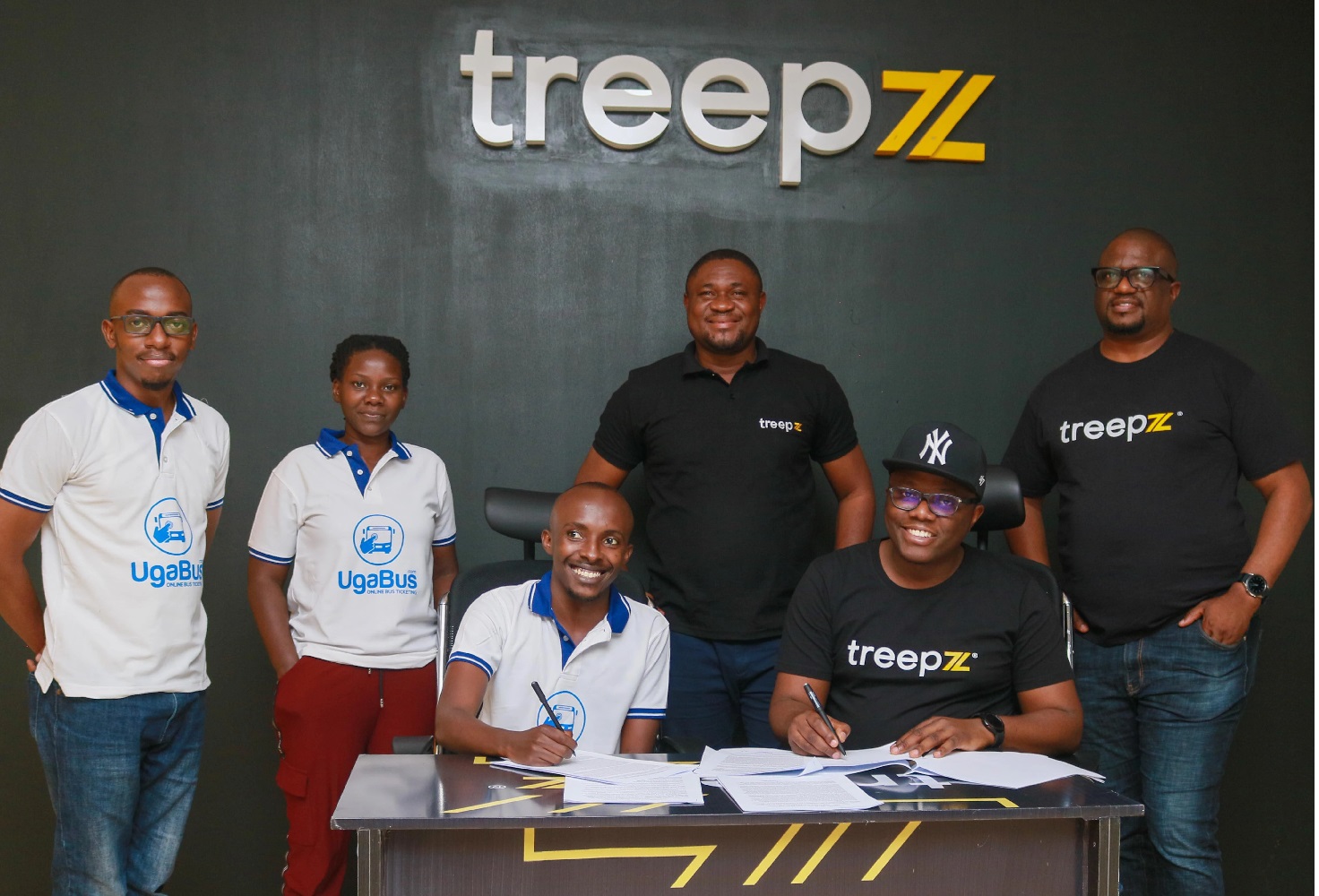
Treepz Expands to North America, Launches Operations in Canada

0

Africa’s leading corporate travel startup Treepz has officially expanded into North America, starting with operations in Canada.

What began as a bold vision to transform mobility across Africa has now crossed continents as Treepz brings its mission of safe, reliable, and convenient transportation to even more people. This milestone is more than just geographical growth; it’s a testament to the team’s resilience, innovation, and hard work, as well as the trust of its partners and community.

With its Canadian launch, the company is opening up new opportunities to connect people, empower drivers, and offer seamless mobility experiences in Canada, just as we’ve done across Nigeria, Ghana, Kenya, and Uganda. Onyeka Akumah, Founder and CEO of Treepz, also shared his excitement at the launch of Treepz in Canada.

In his words,

“The launch of Treepz Canada is a strong positive statement of intent for not just our company but how we represent all African startups. We can truly build globally acceptable and reputable brands right from the streets of Lagos, and Treepz is just one more startup that proves this. We are proud Nigerians who have worked tirelessly to make this happen. So today, I celebrate my co-founders, Johnny and Atums. I celebrate my board of directors, I celebrate my stakeholders and investors, and most importantly, I celebrate my team that supports us. We are now a global brand directly serving customers on 2 continents, including Africa and North America”.

Treepz’s entry into the Canadian market is the result of long-term planning and meaningful relationships built over time. The startup participated in the Techstars Toronto accelerator in 2021, during which CEO Onyeka Akumah first engaged with Mayor Patrick Brown to explore potential expansion opportunities. With Canada’s substantial commuter population and travel volume over 16.5 million daily commuters and 38.7 million international travelers in 2024—Treepz identified a clear opportunity to apply its innovative mobility model in North America.

Treepz’s milestone is a testament to the bold leadership of its founders Onyeka Akumah Enagwolor Johnny John Shaibu and the incredible efforts of our team, partners, and community who continue to drive this vision forward. To commence operations, Treepz announced a 2-year

partnership with the African Impact Initiative, supported by the University of Toronto at its launch of Treepz Canada.

This partnership will see Treepz provide corporate travel solutions to this group, who will be traveling to 4 African countries every year from more than countries globally, including Canada. Treepz will provide all flights, accommodation, experience, and its trademark ground transportation service across South Africa, Kenya, Ghana, and Rwanda.

Treepz was founded in 2019 by four entrepreneurs who were tired of the broken transport system in Africa and wanted to make a change. Starting with a successful car rental app, the founders saw an even greater potential for impact in corporate mobility. This vision led to the creation of Treepz.

Since then, the company has served over 4 million customers, saved 900,000 kg of CO2 emissions, and signed up 688 vehicles. Treepz is backed by prominent investors which include Google, Techstars, ODBA, SOSV, amongst others, and is on a mission to empower 1 million daily commuters with the options to move better in Africa.

TikTok Pro Debuts in Europe as a New App for Charity-Driven Engagement

0
The brand is growing

TikTok has launched a new app, TikTok Pro, in Germany, Spain, and Portugal, unveiling a streamlined version of its main platform that offers a fresh model for digital engagement—this time with a philanthropic twist.

Announced on July 30, 2025, TikTok Pro strips away advertising, e-commerce, and creator monetization while maintaining the familiar short-form video experience that made the original app a global powerhouse. In place of commercial incentives, the app introduces a feature called Sunshine, a reward system that lets users convert their in-app activity into donations made by TikTok to real-world charities.

This marks a notable shift as the company faces increasing pressure from European regulators. With scrutiny intensifying under the Digital Services Act, which imposes strict rules on content moderation, data handling, and algorithmic transparency, TikTok is responding with a socially responsible alternative aimed at rebuilding trust. TikTok Pro, the company says, is designed to “inspire and reward good.”

At the heart of TikTok Pro is the Sunshine Programme, a pilot initiative that transforms ordinary app engagement into meaningful support for nonprofit work. Users generate sunshine points by liking or sharing videos from verified charities, following nonprofit accounts, inviting friends to download the app, or engaging with educational and awareness content. These digital interactions are tallied and redeemed for real donations, all funded directly by TikTok. The program is age-restricted, with only users aged 18 and above permitted to activate sunshine rewards, and daily caps are in place to prevent gaming of the system.

So far, TikTok has partnered with several humanitarian and environmental organizations, including Médecins Sans Frontières, WaterAid, NABU (Germany’s nature conservation group), and Aktion Deutschland Hilft. The company plans to add more charity partners in the coming weeks as it expands the program.

Unlike the flagship app, TikTok Pro does not allow creators to earn income through livestream gifting, branded content, or in-app purchases. There are no shoppable videos or targeted ads. The absence of commercial incentives and revenue-driven features is meant to reset the app’s focus, steering attention away from monetized virality and toward civic engagement, social awareness, and goodwill.

This move appears to be part of a broader strategic pivot for TikTok. By voluntarily launching a non-commercial version of the platform, the company is positioning itself ahead of further regulatory clampdowns in the European Union. Since regulators began investigating TikTok for its influence on youth, the spread of harmful trends like #SkinnyTok, and its in-app shopping expansion, the company has come under repeated fire. TikTok Pro, in this context, functions both as a realignment of priorities and a preemptive response to calls for platform reform.

Despite being a separate app, TikTok Pro retains many of the familiar visual elements of the original. There is a personalized For You feed, a Discover section for trending and educational content, and a familiar scroll-and-watch interface. However, content is curated with a slightly different emphasis, promoting charity, sustainability, wellness, and humanitarian causes over entertainment or trend-based content.

The launch comes at a time when rival social media platforms are also experimenting with alternate content models. Industry watchers have speculated that TikTok Pro could eventually be adapted to serve older users, educators, or civic organizations seeking safer and purpose-driven online spaces. According to analysts, the app could function as a reputational cushion, allowing TikTok to test content formats that emphasize positivity while sidestepping accusations of promoting addictive behavior, commerce-first design, or controversial content.

However, TikTok Pro has its unique challenges. By removing creator monetization, it risks losing the participation of high-quality content makers who drive most engagement on the main app. The separation between TikTok and TikTok Pro may also confuse some users, particularly younger audiences unsure of the difference between the two platforms. And while the Sunshine Programme is well-intentioned, it places a financial burden squarely on TikTok itself, meaning the more the program becomes popular, the more the company will have to pay in donations.

Ultimately, TikTok Pro represents more than a test app—it reflects a new direction in how platforms might align user engagement with public service. In a digital landscape driven by metrics and monetization, the idea of turning scrolls into donations could reframe what social media can be.

However, some analysts say whether TikTok Pro remains a regional experiment or becomes a global initiative will depend on how well users embrace it and how regulators respond.

Ethereum’s 10-Year Plan Dubbed ‘Lean Ethereum’ Positions It As A Leader In Scalability, Security, and Resilience

0

Ethereum’s 10-year plan, dubbed “Lean Ethereum,” was unveiled by researcher Justin Drake, aiming to maintain the network’s 100% uptime while scaling performance and implementing quantum-resistant defenses.

The plan targets 10,000 transactions per second (TPS) on Layer 1 and 1 million TPS on Layer 2, leveraging hash-based cryptography, real-time zero-knowledge virtual machines (zkVMs), and data availability sampling. It includes upgrades across three Layer 1 sublayers:

Beacon Chain 2.0 for rapid finality and security, Blobs 2.0 for post-quantum data efficiency, and EVM 2.0 for optimized execution, possibly using RISC-V. These changes aim to protect Ethereum from quantum computing threats and ensure resilience against nation-state interference, while preserving decentralization and achieving full chain verification across devices.

The vision emphasizes minimalism, modularity, and long-term security to sustain Ethereum’s role as a global value transfer network. Ensuring uninterrupted service strengthens Ethereum’s appeal for decentralized finance (DeFi), enterprise applications, and global payments, potentially attracting more institutional and retail users.

Achieving 10,000 TPS on Layer 1 and 1 million TPS on Layer 2 could rival centralized payment systems like Visa, enabling Ethereum to handle global transaction volumes. This could drive mass adoption for dApps, NFTs, and tokenized assets. Implementing hash-based cryptography and other post-quantum measures future-proofs Ethereum against quantum computing threats, ensuring the security of funds and smart contracts.

Early adoption of quantum resistance could set a standard for other blockchains, pressuring competitors to follow suit or risk obsolescence. Features like full chain verification on consumer devices (e.g., laptops, phones) and data availability sampling enhance decentralization, allowing more users to run nodes and participate in the network. This could counter centralization risks from staking pools or large validators.

The minimalist and modular approach (e.g., Beacon Chain 2.0, Blobs 2.0, EVM 2.0) simplifies development and maintenance, potentially lowering barriers for developers and node operators. Ethereum’s plan could widen its moat against rivals like Solana, Cardano, and Polkadot, which also aim for high TPS and scalability. By combining quantum defense, uptime guarantees, and Layer 2 scaling, Ethereum may solidify its dominance in smart contract platforms.

The focus on real-time zkVMs and RISC-V could attract developers from other ecosystems, fostering innovation in dApps and Layer 2 solutions. Higher throughput and efficiency could reduce transaction fees on Layer 2, making Ethereum more cost-effective for users. However, Layer 1 fees may remain high due to its focus on security and data availability.

Continued emphasis on energy-efficient proof-of-stake (post-Merge) aligns with environmental concerns, appealing to ESG-focused investors and users. Defending against nation-state interference (e.g., via quantum attacks or censorship) ensures Ethereum remains a neutral, global platform. This could make it a preferred infrastructure for cross-border finance and decentralized governance.

The plan prioritizes Layer 2 for ultra-high TPS (1 million), while Layer 1 focuses on security and modest scaling (10,000 TPS). This may frustrate users and developers who prefer low-cost, high-speed transactions directly on Layer 1, as Layer 2 solutions like rollups often involve trade-offs. Layer 2 ecosystems (e.g., Arbitrum, Optimism) may dominate user activity, potentially creating a two-tiered Ethereum.

While the plan emphasizes decentralization (e.g., lightweight verification), scaling to 1 million TPS via Layer 2 and relying on advanced tech like zkVMs could concentrate development and infrastructure in the hands of well-funded teams or entities. Large staking providers or rollup operators might gain outsized influence.

Community debates over governance and control may intensify, with fears that Ethereum could drift toward oligarchy despite its decentralized ethos. Smaller validators or node operators may struggle to keep up with technical demands. The shift to EVM 2.0, possibly using RISC-V, and the integration of real-time zkVMs require developers to adapt to new tools and paradigms. This could create a skills gap, favoring those with resources to retrain while sidelining smaller or less-funded developers.

Ethereum could attract capital and talent from less-prepared competitors, but it may also face pressure to assist smaller chains in transitioning, potentially straining its resources or focus. High Layer 1 fees and the cost of interacting with advanced Layer 2 solutions (e.g., rollup gas fees) could exclude less-wealthy users, particularly in developing regions. Meanwhile, institutional players with deep pockets may dominate high-value use cases.

However, it risks deepening divides between Layer 1 and Layer 2 users, centralized and decentralized stakeholders, advanced and legacy developers, and Ethereum versus its competitors. Bridging these divides will require careful governance, inclusive design, and community engagement to ensure Ethereum remains a unified, accessible platform while achieving its ambitious goals.

Ether Machine’s Ascent As A Major ETH Holder Signals Ethereum’s Growing Mainstream Appeal

0

The Ether Machine has indeed surpassed the Ethereum Foundation to become the third-largest institutional holder of Ethereum (ETH). It recently acquired 15,000 ETH for $56.9 million, bringing its total holdings to 334,757 ETH, valued at approximately $1.28 billion. This move has positioned it ahead of the Ethereum Foundation, which holds around 234,000 ETH.

The purchase, timed with Ethereum’s 10th anniversary, reflects The Ether Machine’s long-term strategy to build a robust institutional-grade ETH treasury, with plans for further acquisitions using its remaining $407 million reserve. The firm, formed through a merger between The Ether Reserve, LLC and Dynamix Corporation, aims to list on NASDAQ under the ticker “ETHM” in Q4 2025.

This shift highlights growing institutional confidence in Ethereum’s role in digital finance, driven by its staking and DeFi capabilities. The Ether Machine’s aggressive accumulation of 334,757 ETH ($1.28 billion) signals strong institutional belief in Ethereum’s long-term value, particularly its role in decentralized finance (DeFi), staking, and smart contract infrastructure. This could attract more institutional players, boosting Ethereum’s legitimacy and market stability.

The planned NASDAQ listing under “ETHM” in Q4 2025 could further bridge traditional finance and crypto, potentially drawing in retail and institutional investors seeking exposure to ETH without direct custody. Large-scale ETH acquisitions, like the 15,000 ETH purchase for $56.9 million, reduce circulating supply, which could exert upward pressure on ETH prices, especially if demand grows. This aligns with Ethereum’s deflationary mechanisms post-EIP-1559, where ETH is burned with network activity.

However, concentrated holdings by institutions like The Ether Machine could increase market volatility if they liquidate positions, especially in a bearish market. The Ethereum Foundation, historically a steward of Ethereum’s development, now holds less ETH (~234,000) than The Ether Machine. This shift suggests a potential rebalancing of influence, where profit-driven institutions may prioritize financial strategies over the Foundation’s focus on protocol development and decentralization.

The Ether Machine’s $407 million reserve for further ETH purchases could amplify its influence, potentially shaping market sentiment and Ethereum’s adoption trajectory. With significant ETH holdings, The Ether Machine could become a major player in Ethereum’s proof-of-stake (PoS) network, where staked ETH secures the blockchain. Large-scale staking by institutions could enhance network security but also centralize validator power, raising concerns about governance concentration.

Entities like The Ether Machine focus on building treasuries, maximizing returns, and integrating with traditional finance (e.g., NASDAQ listing). Their strategies often prioritize profit and market influence, which may not always align with Ethereum’s open-source, decentralized vision. The Ethereum Foundation and grassroots developers emphasize protocol upgrades (e.g., sharding, rollups), accessibility, and decentralization. Their focus is on long-term scalability and inclusivity, often funded by ETH grants rather than profit motives.

Institutional involvement may legitimize Ethereum for traditional investors but risks alienating retail users who value crypto’s anti-establishment roots. Large ETH accumulations could drive prices higher, making it harder for smaller investors to participate. The Ethereum Foundation’s reduced holdings (relative to institutions) may limit its ability to fund development, potentially slowing progress on upgrades like Ethereum 2.0 scaling solutions, which the community sees as critical for accessibility.

The crypto community often views institutions with skepticism, fearing they dilute the ethos of decentralization. The Ether Machine’s corporate merger (The Ether Reserve, LLC and Dynamix Corporation) and NASDAQ ambitions amplify this tension, as they represent a corporate encroachment into a historically libertarian space.

While institutional investment could drive price appreciation and network security, it risks centralizing influence and diverging from Ethereum’s original vision. The Ethereum Foundation’s role as a counterbalance will be crucial to maintain equilibrium, but its reduced holdings may limit its clout. The ecosystem’s future hinges on whether these forces can coexist without compromising Ethereum’s core principles of decentralization and innovation.