DD
MM
YYYY

PAGES

DD
MM
YYYY

spot_img

PAGES

Home Blog Page 808

4 Best Long-Term Cryptos to Buy Now: BlockDAG, AAVE, Pi Network & Chainlink!

0

The crypto space is shifting focus. People are no longer chasing hype; they’re looking for coins that solve real problems, have usable apps, and keep users engaged. While plenty of tokens make promises, only a few deliver results. That’s why practical use, active engagement, and reliable technology matter more than ever.

When it comes to picking the best long-term cryptos, it’s no longer just about price surges. It’s about understanding who’s actually delivering something people use. BlockDAG, AAVE, Pi Network, and Chainlink are leading the way. These names are gaining attention for offering something substantial and are already making progress. Here’s a closer look at why they’ve made the list.

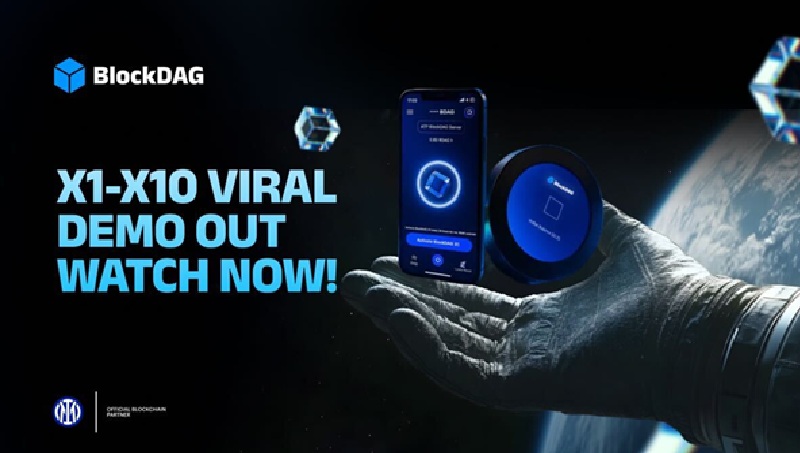
1. BlockDAG: Demo Event Proved X1 App and X10 Miner in Real Action

No theories, BlockDAG (BDAG) showed real mining in action. The live demonstration featuring the X1 mobile app synced with the X10 hardware miner highlighted a functioning setup that was simple and efficient. Without any flashy effects, viewers saw BDAG rewards land in the app live, offering a straightforward look at how the system runs.

Connecting through Bluetooth, the X1 app syncs with the X10 miner to push reward output up to 10 times more than the app alone. Compact, practical, and without messy installations, this setup removes the common hurdles seen in crypto mining. Instead of hinting at what’s coming, BlockDAG showcased exactly what works, and it’s already here.

That kind of hands-on proof sparked a surge in demand for the devices, and the BDAG presale reflects that momentum. BlockDAG has now raised $357 million and sold 24.5 billion coins across 29 batches. Batch 29 is currently priced at $0.0016 and will be available until August 11. With a launch goal of $0.05, early users have already seen a 2,660% growth in their funds since batch 1.

Real earnings, working tech, and solid adoption give BlockDAG a place among the best long-term cryptos. This isn’t about hype, it’s about showing results. With tools already in use and strong presale support, BlockDAG keeps gaining ground.

2. Aave (AAVE): Redefining Lending Through Code-Based Systems

Aave has reshaped lending by removing the need for banks. Running on Ethereum, Aave lets users lend and borrow crypto assets directly through smart contracts. It supports 17 different coins and offers unique tools like flash loans, which need to be paid back in the same transaction without collateral.

The AAVE token powers the system, allowing users to access fee discounts, governance roles, and rewards through staking. Its limited supply and deflation-focused design make it appealing for long-term holders. With DeFi steadily expanding, Aave remains one of the best long-term cryptos, giving users access to income tools and decentralised finance services.

3. Pi Network (PI): Low-Effort Crypto Mining via Mobile

Pi Network brings crypto mining to your smartphone. Built by Stanford alumni, it lets users mine Pi coins through a simple tap on their mobile app. Unlike Bitcoin, there’s no expensive hardware or energy waste involved. The project uses the Stellar Consensus Protocol and trust groups to stay secure.

Users who check in regularly and refer others increase their mining rate. As the app nears full launch and begins removing usage restrictions, Pi’s user base keeps growing. With its simple approach and people-focused model, Pi Network keeps appearing on best long-term crypto lists for offering easy access and a broad reach.

4. Chainlink (LINK): Trusted Data for Smart Contract Use

Chainlink plays a key role in linking smart contracts to off-chain info like stock rates, weather data, and more. It does this using oracles, tools that collect, verify, and deliver external data to blockchain-based apps. To keep data reliable, Chainlink checks multiple sources and uses a trust system.
The LINK token is at the heart of this ecosystem. It pays data providers and supports staking. Since more developers are creating apps that need verified off-chain data, Chainlink is growing in demand. With practical use already in motion, Chainlink keeps its spot among the best long-term cryptos.

Final Say!

Crypto is maturing, and the best long-term cryptos aren’t just about promises anymore. Chainlink shows how real-time data powers smart contracts. Pi Network offers easy mining for everyone. Aave continues to shift financial control from institutions to users through smart contracts.

Then there’s BlockDAG, which takes it further by already running its tools. The demo showed the system in full gear, mining coins live and sending them to user wallets. With $357 million raised and 24.5 billion coins sold, BlockDAG stands out among the best long-term cryptos by proving that working products speak louder than future talk. This kind of delivery is what makes people pay attention and act.


Early Bonk (BONK) and Pepe Coin (PEPE) Buyers Made Millions, This Meme Coin Below $0.002 Could Be the Next Millionaire-Maker

0

Investors often turn to the crypto market to flip a little initial investment into wealth. In 2023, a few lucky (and brave) wallets scooped up Bonk (BONK) and Pepe (PEPE) while they were still market jokes. Those “jokes” became multi-million dollar punchlines, minting overnight millionaires and breaking crypto Twitter.

Now, in 2025, that cycle is stirring again. However, the next millionaire-maker isn’t coming from the usual suspects. It’s emerging from the deep, meme-soaked corners of the blockchain. One name stands out: Little Pepe (LILPEPE). This low-priced, high-upside token trading under $0.002 has more traction and tech than any meme coin before it. Let’s unpack what’s different this time, and why early BONK and PEPE buyers may soon have company.

The Blueprint of a Meme Coin Millionaire

What made BONK and PEPE explode? It wasn’t utilities. It wasn’t big-name backing. It was perfect timing, early entry, viral community buzz, and a narrative people could meme into reality.

BONK rode the Solana revival and became a proxy bet on the chain. PEPE emerged out of nowhere and built a cult faster than gas fees could catch up. The results?

  • BONK returned up to 300,000% to some holders.

  • PEPE delivered over 9,000% gains in mere weeks.

But the key wasn’t just the project; it was the entry point. Early buyers didn’t wait for listings or news. They entered before the storm, when others were distracted. Right now, that same energy is swirling around Little Pepe. But this time, the meme comes with real infrastructure.

Little Pepe Isn’t Just a Meme. It’s a Movement With Muscle

Unlike many meme tokens that hope to “go viral,” Little Pepe has designed virality into its architecture. The project is launching its own EVM-compatible Layer-2 chain, optimized for meme coins. This makes it more of a home for other coins than just a token. At the heart of its vision is the Pepe Launchpad, a meme-centric incubator allowing holders to stake, launch, and promote new meme tokens, all while integrating directly into Little Pepe’s Layer-2, EVM-compatible ecosystem.

Even more compelling?

  • Sniper-bot resistant code to keep presale dumps out

  • 0% buy/sell tax for frictionless trading

  • Micro-cap advantage, which means it takes less liquidity to moon

  • Smart contract audit already completed for investor trust

The presale momentum highlights its strength. With over $11.3 million raised in its ongoing presale, LILPEPE has already outperformed most post-launch tokens and hasn’t even been listed. More than 8.3 billion tokens sold, with a price rise from $0.001 to $0.0017, showing constant demand.  With a growing community and a detailed roadmap that includes top CEX listings, Little Pepe is a potential millionaire-making opportunity this cycle. 

Why This Sub-$0.002 Entry Is a Rare Window to Millions

Timing matters. By the time PEPE hit exchanges, the 1,000x opportunity was already gone for most. Same for BONK. Little Pepe is still in presale, available at $0.0017, a price rising with each stage. Already up 70% from its Stage 1 price, the token has amassed 8.3 billion in sales and is generating serious buzz as the top meme presale of 2025.

What’s critical here is the vesting schedule. LILPEPE has a zero-token unlock at launch, a 3-month cliff, and 5% vesting every 30 days, meaning there’s no massive dump risk on day one. That alone sets it apart from many quick-pump meme launches that crash under their weight. The upside? Early buyers can ride momentum without worrying about instant dilution. And if it follows even a fraction of BONK or PEPE’s trajectory, a small bag could become a generational wealth-making portfolio.

If You Missed PEPE and BONK, You’re Right on Time for LILPEPE

Regret is one of the most expensive things in crypto. But here’s the truth: it’s never too late if you catch the next one. BONK and PEPE taught the space that meme coins could outpace fundamentals and turn low-cap projects into portfolio legends. But they also lacked something Little Pepe now delivers: tech, structure, and pre-launch clarity.

Getting involved in Little Pepe’s presale is fast, secure, and wallet-friendly.

Here’s How to Buy:

  1. Visit https://littlepepe.com

  2. Connect your crypto wallet (MetaMask or Trust Wallet)

  3. Swap using ETH, BNB, or USDT

  4. Sit tight. Your tokens will be claimable once the presale ends.

Don’t wait. The price rises with each new stage, and new buyers flood in every hour.


For more information about Little Pepe (LILPEPE) visit the links below:

Website: https://littlepepe.com

Whitepaper: https://littlepepe.com/whitepaper.pdf

Telegram: https://t.me/littlepepetoken

Twitter/X: https://x.com/littlepepetoken

Presco Delivers A Pretax Profit Of N53.2bn In Q2 2025, 156% Growth From Q2 2024

0

Presco Plc has posted a remarkable financial performance for the quarter ended June 30, 2025, signaling what analysts now describe as a golden era for Nigeria’s palm oil sector.

The company reported a pretax profit of N53.2 billion in Q2 2025, marking a 156% increase from N20.7 billion recorded in the same period last year.

The result lifted Presco’s half-year pretax earnings to N111.8 billion, up 121.76% from H1 2024, driven primarily by a massive jump in revenue. In Q2 alone, the company’s revenue soared by 130.79% to N104.9 billion, pushing H1 revenue to N198.7 billion—more than double the N88 billion it recorded in the corresponding period last year.

Notably, 100% of Presco’s revenue came from the sale of crude and refined palm oil products. Domestic sales accounted for the majority at N146.4 billion, while Ghana contributed N52.2 billion. This surge reinforces palm oil’s growing status as a high-yield export commodity amid Nigeria’s drive to diversify its economy away from crude oil.

The company’s gross profit more than doubled to N87.1 billion in Q2, up from N31.7 billion in the same quarter last year, despite a 30.36% increase in cost of sales. However, administrative expenses spiked significantly—up 207.17% year-on-year to N23.2 billion—reflecting rising overheads amid expanding operations. Still, the topline strength outpaced expenses, as operating profit climbed to N60.7 billion, from N22.7 billion in Q2 2024.

Finance costs also rose sharply, largely due to interest on borrowings, which jumped 319.27% to N8.9 billion. But these higher costs had little impact on overall profitability, as net income surged 177.59% year-on-year to N41.1 billion.

Presco’s balance sheet showed significant expansion, with total assets growing by 29% to N612.9 billion. Retained earnings rose to N220.6 billion, up from N126.7 billion in December 2024, signaling strong reinvestment potential.

Presco’s Managing Director, Reji George, expressed optimism over the company’s growth trajectory, stating: “Looking ahead, we are well-positioned to sustain this momentum, with our robust operational capacity and strategic initiatives expected to drive continued growth and value creation for our stakeholders.”

Presco’s stellar performance comes amid similar success from Okomu Oil Palm Plc, Nigeria’s other major palm oil producer. Both companies have delivered consecutive double- and triple-digit growth figures in recent quarters, causing market watchers to dub palm oil “Nigeria’s new gold.” The surge in profitability for these firms is being viewed as a validation of palm oil’s rising value, not only as a domestic commodity but also as a vital export.

The rally in palm oil prices globally, along with government opposition to the importation of edible oils and increased demand for locally refined products, has created a favorable market environment for both Presco and Okomu. Together, they are fast becoming bellwethers of a resurging agro-industrial sector that was once Nigeria’s economic backbone before the oil boom of the 1970s.

As of the close of trading on July 29, 2025, Presco’s stock was priced at N1,550, delivering a staggering 226.32% year-to-date return—another reflection of investor confidence in the sector’s future.

Key Highlights (Q2 2025 vs Q2 2024)

  • Revenue: N104.9 billion (+130.79% YoY)
  • Cost of Sales: N17.8 billion (+30.36% YoY)
  • Gross Profit: N87.1 billion (+174.02% YoY)
  • Administrative Expenses: N23.2 billion (+207.17% YoY)
  • Operating Profit: N60.7 billion (+167.22% YoY)
  • Finance Cost: N8.9 billion (+319.27% YoY)
  • Pre-tax Profit: N53.2 billion (+156.27% YoY)
  • Total Assets: N612.9 billion (+29.02% YoY)

With both Presco and Okomu raking in billions, industry watchers believe palm oil could become a long-term replacement for oil revenues if supported with the right policies and incentives. The current boom also underscores the untapped potential of Nigeria’s agricultural sector, which continues to prove its resilience and profitability in the face of economic headwinds.

Chipper Cash Partners With Western Union And Zoona to Launch International Money Transfers in Zambia

0

Chipper Cash, a payments platform that allows users to send and receive money, has announced a partnership with Western Union and Zoona Transactions Zambia Limited to introduce international money transfer services through the Chipper Cash app in Zambia.

This service will enable Zambian customers to send and receive money globally, tailored to their convenience and needs.

Zoona, a leading Zambian fintech and payments platform acquired by Chipper Cash in 2022, joins forces with Chipper Cash to serve 5 million customers across Africa. The partnership leverages Western Union’s 175 years of global money transfer expertise and network spanning over 200 countries, combined with Chipper Cash and Zoona’s local payments knowledge and innovative mobile technology.

Chipper Cash app users in Zambia can now send funds to mobile wallets worldwide, access cash pick-up at hundreds of thousands of global locations, with bank account payouts launching soon.

Also, the service caters to Zambia’s diverse financial needs. Users can send money to support family abroad or receive funds from loved ones, regardless of banking status. This aligns with the shared mission of Western Union, Zoona, and Chipper Cash to make financial services accessible to all. In Zambia, where many lack traditional bank accounts, mobile apps like Chipper Cash bridge the gap.

Speaking on the partnership, Mohamed Touhami el Ouazzani, Western Union’s?Regional Vice President of Africa said,

Zambia’s digitally savvy population of over 20 million is driving a remarkable shift toward mobile-first financial solutions. Integrating our international money transfer services in the Chipper Cash app means customers can transfer funds across our global network – reliably and with ease. I am delighted that, together, we are expanding the possibilities for Zambians to connect, transact and thrive in the global economy.

Customers can fund Western Union transactions using their Chipper Cash wallet, which can be topped up via retailers, mobile network operators, banks, and ATMs.

Also commenting, Brett Magrath, CEO at Zoona and CPO at Chipper Cash.

At both Zoona and Chipper Cash, we’ve witnessed firsthand the incredible evolution of Zambia’s financial landscape, from the early days of cash-based transactions and agent networks to a thriving ecosystem of mobile and digital payments. This partnership marks the next chapter in that journey. With smartphone adoption on the rise, there’s an increasing appetite for digital financial services that move beyond USSD to deliver richer, app-based experiences. This partnership extends the reach of Zambia’s vibrant fintech ecosystem, connecting more users to global financial services through a seamless digital experience.

The launch of this service, comes at a crucial time for the Zambia economy. In recent times, Remittances have played a vital role in Zambia’s economy, supporting household consumption, education, healthcare, and investments. These are funds sent by Zambian migrants, primarily to family and friends, often from countries with significant Zambian diaspora populations. In 2021, remittances were estimated to contribute significantly to Zambia’s GDP, with personal remittances received accounting for a notable share of foreign exchange inflows.

This recent collaboration enhances Western Union’s physical presence in Zambia while advancing the shared mission of Western Union, Zoona, and Chipper Cash to provide accessible financial services to all Zambians, regardless of banking status.

Google Signs EU’s AI Code of Practice as Meta Backs Out, Deepening Rift Over Regulation

0
The US is after Google also

Google has confirmed it will sign the European Union’s general-purpose AI code of practice, a voluntary framework meant to help developers of powerful AI models align with the bloc’s upcoming AI Act.

The move sets Google apart from Meta, which earlier this month refused to endorse the code, calling it overreaching and harmful to Europe’s AI prospects.

The decision by Google comes just days before August 2, when new EU rules for providers of “general-purpose AI models with systemic risk” are scheduled to take effect. These rules apply to major players like Google, Meta, OpenAI, Anthropic, and others building or deploying large-scale generative models. While the AI Act gives these companies two years to fully comply, the EU code of practice acts as a transitional mechanism to encourage best practices ahead of enforcement.

In a blog post published Wednesday, Kent Walker, Google’s President of Global Affairs, acknowledged that the final version of the code was an improvement from the original draft, but said the company still holds “serious reservations.” He warned that the AI Act and its accompanying code could hinder innovation, citing concerns over deviations from EU copyright law, slowed approval timelines, and exposure of proprietary trade secrets.

“We remain concerned that the AI Act and Code risk slowing Europe’s development and deployment of AI,” Walker wrote.

Despite those reservations, Google is going forward with its commitment to sign the code, making it one of the first among the world’s top AI firms to publicly declare support for the EU framework. Signing the code binds AI developers to a list of expectations, including keeping updated documentation on their AI models, avoiding the use of pirated content in training datasets, and responding to content owners who do not wish to have their work used to train AI.

Meta’s refusal to sign has drawn a sharp line within the AI industry. The company described the code as legally questionable and accused the EU of creating obligations that go beyond the AI Act’s legal framework. Meta also criticized what it called Europe’s “wrong path on AI,” arguing that such regulations may discourage companies from building foundational AI systems in the region. This sentiment reflects broader tensions between U.S. tech giants and European regulators, especially as the EU takes the lead globally in attempting to place guardrails on AI.

The EU’s AI Act itself is a sweeping risk-based regulation. It bans certain “unacceptable risk” uses of AI, including manipulative behavioral systems and social scoring, while placing strict controls on “high-risk” applications like facial recognition, biometrics, education, and employment. Developers of such systems will be required to register their models, conduct risk assessments, and meet transparency and quality management obligations. Violators face stiff penalties, including fines of up to 7% of global turnover.

While the code of practice is not legally binding, it offers a glimpse of how the EU plans to interpret and enforce the broader rules of the AI Act. Companies that sign the code are expected to benefit from greater legal clarity and reduced regulatory friction, particularly during the transition period before the full force of the law kicks in.

Google’s decision to align with the EU—despite ongoing misgivings—signals a cautious but strategic embrace of regulatory cooperation. Meta’s defiance, on the other hand, highlights deep industry fractures over how best to balance innovation with accountability in the fast-evolving AI space.

It is not clear for now whether other U.S. firms like Microsoft, OpenAI, or Anthropic will follow Google’s lead or side with Meta. What’s clear is that the EU’s push to rein in AI through comprehensive rules is no longer theoretical. The regulatory future is arriving, and companies must now choose their path.