DD
MM
YYYY

PAGES

DD
MM
YYYY

spot_img

PAGES

Home Blog Page 812

Microsoft’s AI Chief Pushes for Copilot’s Evolution Into a Lifelong AI Companion With Emotions, Memory, Age, and a Face

0

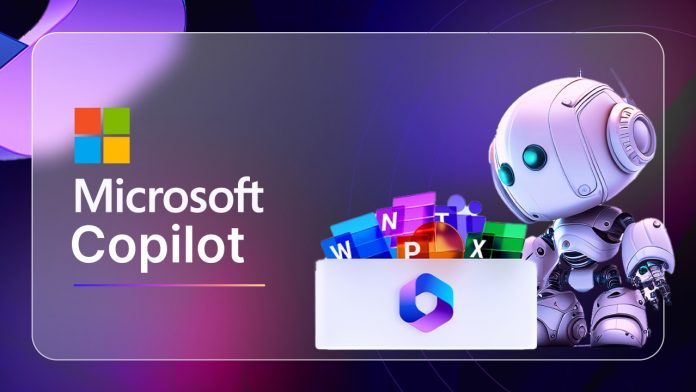
Microsoft is pushing its Copilot AI assistant beyond static prompts and voice commands into something more human-like, a persistent virtual entity that can age, adapt, and form an emotional rapport with users.

Under the leadership of Mustafa Suleyman—Microsoft’s AI CEO and co-founder of DeepMind—the company is exploring a deeply personalized future for Copilot, one where the assistant not only responds to your commands but grows alongside you.

Suleyman revealed the vision in a recent appearance on The Colin & Samir Show, where he discussed the concept of a “digital patina”—the idea that Copilot should accumulate experience, visual wear, and emotional nuance over time, just like a person or a well-used object.

“Copilot will certainly have a kind of permanent identity, a presence, and it will have a room that it lives in, and it will age,” he said, describing a future where users form a relationship with the AI not unlike the way they do with long-term friends or colleagues.

“I’m really interested in this idea of digital patina. The things I love in my world are the things that are a little bit worn or rubbed down, and have scuff marks. Unfortunately in the digital world we don’t have a sense of age.“

The bold idea is already being prototyped through a new feature called Copilot Appearance, which is now available in early access for a limited group of users in the U.S., U.K., and Canada via Microsoft’s Copilot Labs. The feature allows users to interact with a virtual character capable of real-time facial expressions—smiling, nodding, reacting with surprise—paired with voice input and conversational memory. While not yet widely available, this test marks a significant step toward Microsoft’s goal of creating a lifelike AI assistant.

This reimagining of Copilot stems from Suleyman’s previous work at Inflection AI, where he created Pi, a warm, emotionally intelligent AI chatbot. Most of Inflection AI’s team—including co-founder Karén Simonyan—joined Microsoft last year, and Copilot was soon revamped with a heavy focus on emotional intelligence, real-time voice conversation, and a more interactive interface.

The result is a rapidly evolving AI assistant that mimics human social dynamics. Unlike traditional digital assistants like Alexa or Siri, Microsoft’s new Copilot is being designed to remember previous conversations, understand your personality, and act with continuity.

But Microsoft is moving cautiously. Similar emotionally resonant AI systems have faced backlash and tragedy. In one lawsuit, AI platform Character.AI was sued after a teen reportedly died by suicide following obsessive interaction with a chatbot. Microsoft, aware of the potential dangers of parasocial AI relationships, is slowly rolling out Copilot Appearance while conducting safety reviews.

Still, the ambition remains clear. Suleyman said the next evolution might be transforming the Windows desktop itself into a less chaotic, more AI-centered workspace.

“I hate my desktop,” he admitted. “I look at my screen and I’m like ‘s**t man I have a billboard in front of me.’ It’s just so noisy, so neon, and it’s all competing for my attention. It just looks ugly.”

He envisions a calmer, more intuitive digital environment—what he calls his “workshop”—where Copilot quietly streamlines tasks in the background, aware of context, goals, and emotional tone.

Suleyman’s personal phone interface offers a glimpse into that philosophy. He’s stripped it down into a minimal black-and-white theme, with most apps hidden or muted.

“My home screen is really just two or three primary apps,” he said, describing it as a way to reduce digital noise and reclaim focus.

While Microsoft’s main cloud, productivity, and AI competitors—Amazon and Google—continue expanding in enterprise and tools, Copilot’s next big pitch may be personal. Rather than a voice in a box, it’s becoming a voice in your life.

This is more than just a redesign. It’s Microsoft staking its claim in the future of emotional computing—one where AI remembers you, grows with you, and one day might even outlive you.

Little Pepe Could Be 2025’s Biggest Meme Coin, Outpacing Bonk (BONK) and Dogecoin (DOGE)

0

Dogecoin whales are re-entering the market. Bonk is posting record growth. Meme coin mania is heating up again as the sector hits a $72 billion cap in July 2025. But it’s not DOGE or BONK that analysts are tipping as the biggest breakout. Instead, all eyes turn to an under-$0.0018 Ethereum-based meme token called Little Pepe (LILPEPE).

With its Stage 7 presale live, LILPEPE is gaining serious momentum, already raising over $8.8 million while still priced at just $0.0016 per token. This isn’t just another Pepe spin-off; it’s a contender for 2025’s biggest meme coin surge, possibly outshining even the giants of the last cycle.

Dogecoin Is Booming, But Still a Giant That Moves Slowly

Dogecoin recently surged above $0.24 as over 1 billion DOGE were scooped up by whales within just 48 hours. According to analyst Crypto Yoddha, DOGE is maintaining its long-term rising channel with strong support and is now targeting the elusive $1 mark by the end of the current cycle.

Dogecoin Price 1-Week Chart | Source: Yodha/X

Dogecoin’s structure looks healthy: whale accumulation, bullish chart formations, and historic four-year breakout cycles align toward another bull rally. But there’s a catch: its $30 billion market cap makes it slow to move. Despite optimistic projections, DOGE’s path to 3x or 4x growth is far from explosive.

Bonk Is Hot, But It May Have Peaked Early

Solana’s Bonk has also captured attention. In July alone, BONK gained 72% and dominated meme coin trading volume with $8.25 million in 7-day launchpad revenue through its LetsBonk platform. The token now leads meme coin momentum on Solana, accounting for over 50% of the launchpad market share.

Bonk Price Chart | Source: CoinGecko

Still, despite these incredible stats, BONK is known for its deep post-rally corrections. The token is down 5% in the past day, and indicators show it might dip more in the coming days.

The explosive growth phase may have already passed for early investors. Unless another 10x utility layer is added soon, the upside will shrink compared to younger, cheaper projects like LILPEPE.

What Is Little Pepe (LILPEPE) and Why Is Everyone Buying?

Little Pepe, a new Ethereum-based meme, dominates market chatter as it progresses rapidly across the ongoing presale. It’s now in Stage 7 of its presale, with over 6.75 billion tokens sold and $8.825 million raised. The token, priced at just $0.0016, is already up 60% from its Stage 1 price of $0.001.

So, why is LILPEPE different from the sea of meme coins?

  • Sniper bot-resistant presale ensures fair access, deviating from rug pull and liquidity-draining stunts seen in recent meme launches.
  • Pepe Launchpad serves as an incubator for new meme projects. This makes the project more of a home than an ordinary token.
  • The Layer 2 of the project aims to decrease gas consumption and enhance the scalability of the ecosystem. It is set to be the cycle’s fastest, cheapest, and safest bet.

The community is growing, as investors are key to this sector-defining project. LILPEPE is already listed on CoinMarketCap even before launch, increasing global visibility. And the ongoing $777K Giveaway (10 winners get $77,000 worth of tokens each) further adds to the buzz.  Simply put, most meme coins rely on hype. Little Pepe delivers hype, a roadmap, early visibility, and innovation. This is why it’s trending on social media and being backed by experienced meme coin creators.

Why Little Pepe Could Leave BONK and DOGE Behind in 2025

Here’s the alpha: Little Pepe has the microcap advantage, where 20x, 50x, even 100x gains are made.

  • While DOGE aims to hit $1, LILPEPE only needs to hit $0.03 to deliver a 20x.
  • While BONK is maturing fast, LILPEPE is just getting started, with Tier-1 CEX listings in the works after presale ends.
  • LILPEPE’s entry price of under $0.0018 means even a $500 investment puts you in a powerful position if the token follows the same trajectory as PEPE or SHIBA.

What sets it apart even more is timing. With memecoin supercycle buzz returning, and crypto influencers shifting attention to smaller-cap, faster-moving plays, Little Pepe fits the narrative perfectly.

Final Verdict: LILPEPE Is 2025’s Meme Coin to Watch

Bonk and Dogecoin had their runs, and they may still go higher. However, LILPEPE offers the kind of early-stage upside that is no longer available in large caps.

It’s still in presale, under $0.0018, off major exchanges, but already breaking records and climbing fast.

If you’re serious about turning small capital into exponential gains this bull cycle, don’t sleep on this Ethereum meme coin.

The next presale price is $0.0017. Get in before the next surge.


For more information about Little Pepe (LILPEPE) visit the links below:

Website: https://littlepepe.com

Whitepaper: https://littlepepe.com/whitepaper.pdf

Telegram: https://t.me/littlepepetoken

Twitter/X: https://x.com/littlepepetoken

Tinubu Approves N4tn Bond to Tackle Power Sector Liquidity Crisis, Offsetting Nigeria’s Debt to GenCos

0

President Bola Tinubu has granted anticipatory approval for a N4 trillion bond programme to address Nigeria’s long-standing electricity sector liquidity crisis.

The move is aimed at rescuing power generation companies (GenCos), which have been crippled by massive debts owed by the Federal Government over the years.

This decision was confirmed by the Special Adviser to the President on Energy, Olu Verheijen, after a high-level meeting between the President and key GenCo stakeholders at the Presidential Villa in Abuja. The gathering, led by former Niger State Governor Col. Sani Bello (rtd), included representatives from the Association of Power Generation Companies and top government officials.

According to Verheijen, the bond programme follows an extensive audit of GenCo claims, which amount to N4 trillion in unpaid tariffs and market shortfalls accumulated since 2015. She explained that the Nigerian Bulk Electricity Trading Company (NBET) has so far verified N1.8 trillion of these claims, with final figures still under review and subject to downward revisions before the Debt Management Office (DMO) proceeds with issuance.

President Tinubu acknowledged that the sector’s crisis stems from a backlog of inherited liabilities from previous administrations. He pledged a transparent, fair, and deliberate approach to settling the verified debts.

“I accept the assets and liabilities of my predecessors, and there is no question about that. But that acceptance must be on credible grounds. I need to wear the audit cap of verifiability, authenticity, and the fact that this inheritance is not a mere deodorant but a support structure for critical economic and industrial promotion,” he said.

He called on the GenCos and financial institutions to exercise patience and avoid pushing for foreclosures while the verification process continues.

“We are here. So market it to your other colleagues. Give us time to do verification and validation of the numbers,” Tinubu added.

The President reaffirmed his belief in a market-driven electricity sector and cited recent government reforms, including the removal of fuel subsidies and the introduction of Compressed Natural Gas (CNG), as efforts to shift toward sustainable energy relief for Nigerians. He described electricity as one of the most transformative discoveries in human history, saying, “Access to electricity is fundamental to economic growth and human dignity.”

Minister of Power Adebayo Adelabu lauded Tinubu’s intervention, noting that his administration has taken historic steps to reform the sector. These include the signing of the Electricity Act, 2023—which decentralizes power generation and distribution—and the launch of Nigeria’s first Integrated National Electricity Policy in over two decades. He also highlighted the inflow of over $2 billion in new private investments and a 70 percent increase in the sector’s annual revenue, which grew from N1 trillion in 2023 to N1.7 trillion in 2024. That revenue surge has reportedly helped reduce government subsidy obligations by over N700 billion.

Adelabu also cited improvements in operational metrics: installed generation capacity has risen from 13,000 MW to 14,000 MW; a record daily energy delivery of 120,370 MWh was achieved on March 4, 2025; and there have been no national grid collapses in 2025, thanks to the Presidential Power Initiative. The government has also launched a N700 billion Presidential Metering Initiative and leveraged the World Bank-backed DISREP programme to deliver 300,000 out of 3.45 million procured smart meters to homes and businesses.

Despite the upbeat tone from the presidency and sector leaders, many Nigerians have expressed skepticism, describing the N4 trillion bond approval as yet another fruitless spending spree in a chronically underperforming sector.

Many point to previous multitrillion-naira interventions that failed to yield tangible improvements in electricity supply. Between 1999 and 2010, the Nigerian government reportedly spent over N4.7 trillion on the power sector. A separate N1.7 trillion was also expended between 2018 and 2020. Yet, power supply remains erratic, with frequent outages and limited access still plaguing millions across the country.

It is believed that unless systemic corruption, mismanagement, and regulatory dysfunction are addressed head-on, fresh funds—no matter how large—will only add to Nigeria’s growing debt burden without solving the sector’s fundamental problems.

The Delay In The $PUMP Airdrop Underscores A Tension Between Short-Term Market Expectations And Long-Term Goals

0

Pump.fun co-founder Alon Cohen confirmed in a July 23, 2025, interview with Michael “ThreadGuy” Jerome that the anticipated $PUMP token airdrop will not occur in the immediate future. Cohen emphasized that while an airdrop is still planned, the focus is on ensuring it is meaningful and well-executed, prioritizing ecosystem development and long-term growth over short-term hype.

This announcement led to a significant market reaction, with the $PUMP token dropping 17.7% in a day, falling below its initial coin offering price of $0.004 to around $0.00305-$0.003243, and losing over 50% of its value since its July 16 peak. Major meme coins like DOGE, PEPE, and Pump.fun-created tokens such as GOAT, Moo Deng, and Peanut the Squirrel also saw double-digit declines.

Cohen’s transparency aims to shift focus to utility and governance features, but it has triggered volatility, with investors like Machi Big Brother holding long positions despite losses, while others, including two whale wallets, dumped 1.25 billion $PUMP tokens at a $1.19 million loss. Large-scale sell-offs, such as the two whale wallets dumping 1.25 billion $PUMP tokens at a $1.19 million loss, suggest panic or strategic exits by significant holders, further fueling volatility.

Cohen’s emphasis on a “meaningful” airdrop and ecosystem development over short-term hype signals a pivot toward long-term sustainability. This could involve enhancing utility (e.g., governance features or platform integrations) rather than relying on speculative airdrop-driven price pumps. This approach may attract more serious investors but risks alienating the speculative retail base that drives much of the meme coin market’s momentum.

Pump.fun’s platform, which enables easy meme coin creation, has been a key driver of its popularity. Delaying the airdrop may slow the creation of new tokens on the platform, as speculative interest wanes, potentially reducing transaction fees and platform activity. The announcement could strain community trust, especially among users expecting quick rewards. However, Cohen’s transparency might resonate with those who value long-term vision over immediate gains.

The decline in related meme coins suggests that Pump.fun’s decisions have a systemic impact. As a platform responsible for launching numerous tokens, its strategic shifts could dampen enthusiasm for meme coins overall, especially in a market already sensitive to sentiment-driven volatility. Many retail investors and some whales were likely banking on the airdrop to boost $PUMP’s price, as airdrops often create short-term price spikes due to hype and increased liquidity.

The delay has led to sell-offs, as seen with the whale wallets dumping tokens at a loss, reflecting a focus on quick profits. Others, like Machi Big Brother, who continues to hold despite losses, appear to align with Cohen’s vision of building a sustainable ecosystem. These investors may prioritize governance features, platform growth, or future utility over immediate price gains. Whales and institutional players, while also affected (as seen with the $1.19 million loss), may have more capacity to weather volatility and align with strategic goals like ecosystem development.

The delay in the $PUMP airdrop underscores a tension between short-term market expectations and long-term strategic goals. While it has triggered volatility and exposed divisions within the community, it also offers Pump.fun an opportunity to redefine its value proposition. The project’s success will depend on balancing the needs of its speculative retail base with the vision of building a sustainable ecosystem.

Quantum Solutions To Acquire 3000 Bitcoin Over The Next 12 Months

0

Quantum Solutions Co., Ltd., a Tokyo Stock Exchange-listed AI firm, announced its plan to acquire up to 3,000 Bitcoin (BTC) over the next 12 months as part of a strategic Bitcoin treasury initiative. This move, valued at approximately $350 million at current market prices, aims to hedge against inflation, yen depreciation, and global financial uncertainties. The initiative is managed by its Hong Kong subsidiary, GPT Pals Studio Limited, with an initial $10 million investment from Integrated Asset Management (Asia) Limited, a firm known for acquiring Forbes Media in 2014.

The company views Bitcoin as a long-term reserve asset, citing its growing acceptance as “digital gold” and increasing institutional interest. The acquisition will be phased, with a focus on security, regulatory compliance, and risk management, using segregated cold and hot wallet systems. Quantum Solutions aims to become Japan’s second-largest corporate Bitcoin holder, behind Metaplanet (16,352 BTC), surpassing firms like Remixpoint (1,051 BTC). This reflects a broader trend of Japanese companies, including Kitabo and ANAP Holdings, adopting Bitcoin to diversify reserves amid rising bond yields and economic pressures.

By allocating up to $350 million to Bitcoin, Quantum Solutions aims to protect its treasury against inflation and yen depreciation, especially amid Japan’s rising bond yields and economic uncertainties. This mirrors a global trend where companies like MicroStrategy and Tesla have adopted Bitcoin as a reserve asset. As a TSE-listed AI firm, this move could enhance Quantum Solutions’ appeal to investors seeking exposure to both AI and cryptocurrency markets, potentially boosting its stock price. However, it also introduces volatility risks tied to Bitcoin’s price fluctuations.

Aiming to become Japan’s second-largest corporate Bitcoin holder behind Metaplanet, Quantum Solutions could gain a first-mover advantage among Japanese firms, signaling confidence in Bitcoin’s long-term value. Quantum Solutions joins other Japanese firms like Metaplanet, Kitabo, and ANAP Holdings in embracing Bitcoin. This could encourage more TSE-listed companies to diversify into cryptocurrencies, especially as Japan’s regulatory environment becomes more crypto-friendly.

With Japan facing a weakening yen and rising bond yields, Bitcoin adoption by corporations may signal distrust in traditional financial instruments, potentially pressuring policymakers to address currency stability. The acquisition reinforces Bitcoin’s growing legitimacy as a corporate treasury asset, potentially spurring further institutional investment globally. It aligns with trends in the U.S. and Europe, where firms are increasingly holding Bitcoin to hedge against fiat currency risks.

Purchasing 3,000 BTC could exert upward pressure on Bitcoin’s price, especially if executed in a short timeframe, given the asset’s limited supply (21 million cap). This could also inspire similar moves in Asia, amplifying demand. Bitcoin’s price volatility could impact Quantum Solutions’ financial stability, especially if market conditions sour. While Japan has a relatively progressive crypto regulatory framework, increased corporate adoption could attract stricter oversight.

Despite plans for secure storage (cold and hot wallets), the risk of cyberattacks or mismanagement remains a concern. Advocates, including Quantum Solutions, view Bitcoin as “digital gold” with strong long-term potential due to its scarcity, decentralized nature, and growing institutional acceptance. They argue it offers a hedge against fiat currency devaluation and aligns with innovative, forward-thinking corporate strategies.

Skeptics, including some institutional investors and central banks, argue Bitcoin’s volatility, lack of intrinsic value, and regulatory uncertainties make it a risky treasury asset. They favor traditional safe-havens like bonds or gold, especially in stable economies like Japan. Firms like Quantum Solutions, Metaplanet, and MicroStrategy are betting on Bitcoin’s long-term appreciation, willing to accept short-term volatility for potential gains. These companies often have high risk tolerance and align with tech-driven or innovative sectors.

While developed markets like Japan and the U.S. see growing corporate interest, emerging markets often lack the infrastructure or regulatory clarity to support similar strategies, widening the gap in global adoption. Retail and institutional investors bullish on crypto may view Quantum Solutions’ move as a positive signal, potentially driving demand for its stock and Bitcoin itself.

Quantum Solutions’ Bitcoin acquisition plan positions it as a bold player in Japan’s corporate landscape, potentially catalyzing further adoption while highlighting the risks of volatility and regulatory scrutiny. The move underscores a broader divide between those embracing Bitcoin as a transformative asset and those adhering to traditional financial strategies.