DD
MM
YYYY

PAGES

DD
MM
YYYY

spot_img

PAGES

Home Blog Page 817

Trump’s Auto Tariffs Slam Stellantis With $1.7bn Loss, Pushing Carmaker Deep Into Crisis

0

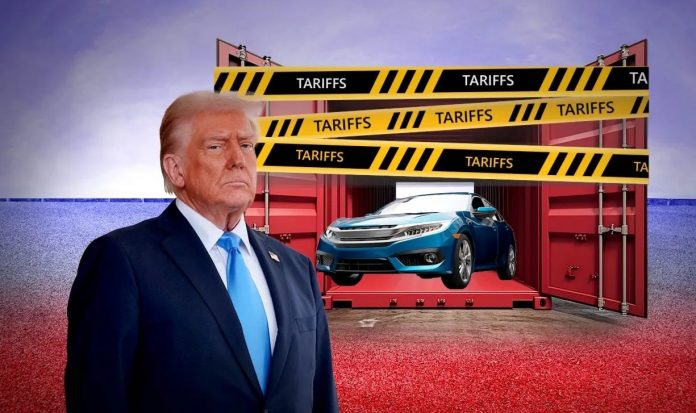
Stellantis is facing a crushing financial blow this year as U.S. import tariffs under President Donald Trump are expected to cost the automaker €1.5 billion ($1.7 billion)—five times what it lost in the first half of 2025 due to those levies.

The maker of Jeep, Chrysler, Fiat, and Peugeot said Tuesday that it suffered a net loss of €2.3 billion ($2.65 billion) in the first six months of the year, a staggering reversal from the €5.6 billion ($6.5 billion) profit recorded in the same period last year.

Revenue also dropped sharply, plunging 13% to €74.3 billion ($85.7 billion), as U.S. vehicle shipments fell by nearly a quarter. That decline followed the company’s decision to drastically reduce imports into the U.S. in a bid to shield itself from Trump’s revived 25% auto tariffs, which now target a wide array of foreign-manufactured vehicles.

The tariff-related losses alone amounted to €300 million ($346 million) in just the first six months of 2025, and Stellantis now projects the full-year damage will reach €1.5 billion. The company made clear that this level of financial exposure is unsustainable, even as it scrambles to adapt.

The blow comes as Stellantis contends with a slew of internal setbacks. It burned through €3.3 billion ($3.8 billion) in cash, driven by the abrupt cancellation of a hydrogen fuel cell project, compliance costs stemming from a revised U.S. carbon emissions penalty system, and significant write-downs on past platform investments, many of which are now being abandoned as part of the company’s restructuring.

The firm’s new CEO, Antonio Filosa, who took over in June, is leading the turnaround. In a statement on Tuesday, he acknowledged the depth of the crisis but insisted the company still has the strength and discipline to correct course.

“My first weeks as CEO have reconfirmed my strong conviction that we will fix what’s wrong with Stellantis,” Filosa said. “The new executive team will continue to make the tough decisions needed to re-establish profitable growth and significantly improve results.”

Filosa inherits a company that, even before the tariffs, was under pressure to simplify its global operations and reduce reliance on low-margin models. However, the new tariff burden—coming amid Trump’s broader protectionist push—has raised the stakes dramatically. Stellantis’s traditional strength in North America has now been severely undermined, with revenue in the region down by over 25%. For the first time in years, its European operations generated more income than its U.S. business.

Despite the turmoil, Stellantis has reissued a full-year forecast, saying it expects revenue and cash flow to improve in the second half of the year. Management is now targeting a return to positive cash generation and operating profit margins in the low single digits by year-end.

Still, the road ahead is far from smooth. Trump’s tariff escalation has forced automakers across the globe to rethink their U.S. strategies, but Stellantis appears to be among the hardest hit. Its global footprint, once an advantage, now exposes it to the highest costs in a market increasingly tilted toward domestic production.

This means 2025 is proving to be a year of reckoning—not just financially, but structurally for Stellantis. The company is being forced to dismantle parts of its long-held strategy while absorbing a multi-billion-euro blow in the process. And unless the trade environment changes, even the toughest internal decisions may not be enough to shield it from further losses.
Togo Seaports Become Top Choices for US and Russia, A Loss for Nigeria in AfCFTA Era

0

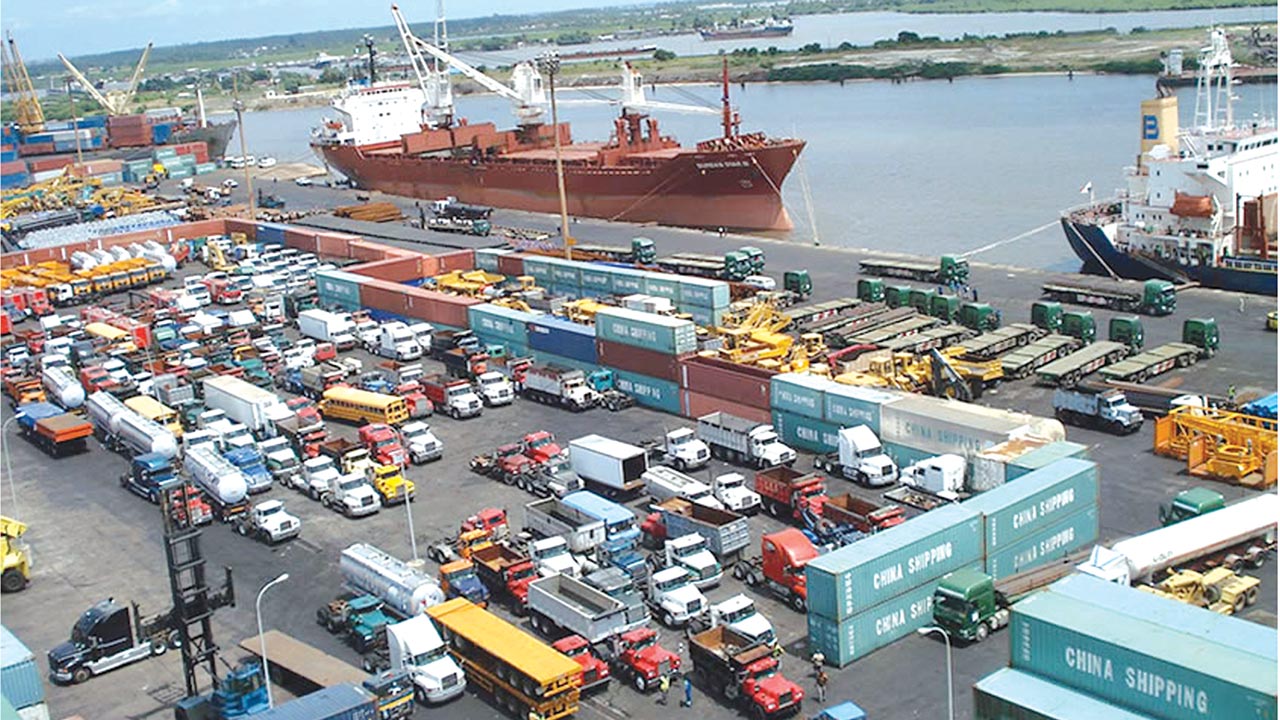
Global powers are zeroing in on Togo as their preferred maritime gateway in West Africa, with both the United States and Russia throwing weight behind the Port of Lomé.

Their growing presence signals a strategic shift away from other regional ports—most notably Nigeria’s congested Lagos ports—as Togo’s capital positions itself as the new epicenter of trade in the African Continental Free Trade Area (AfCFTA) era.

AfCFTA is a free trade agreement among 55 African Union member states, aiming to create a single continental market for goods and services. The goal is to boost intra-African trade, reduce trade barriers, and enhance Africa’s global trade position.

The U.S. is now actively pursuing trade expansion through Lomé. Just last week, a delegation led by the Chargé d’Affaires of the U.S. Embassy in Lomé, Richard C. Michaels, conducted a full tour of the port facility and held a high-level meeting with the management of Lomé Container Terminal (LCT). Discussions centered on unlocking commercial opportunities for American businesses by leveraging Togo’s advanced port infrastructure.

“With advanced deep-water capabilities, cutting-edge equipment, and an annual throughput exceeding 30 million tons, Lomé offers U.S businesses unmatched access to African markets.

‘’Ongoing infrastructure expansion, including a dry-port and industrial zone, further enhances the port’s role as a growing gateway,” commented the U.S Embassy in Togo.

This diplomatic and trade push comes just days after U.S. President Donald Trump met with five West African leaders—Gabon, Guinea-Bissau, Liberia, Mauritania, and Senegal—in Washington. While the meeting emphasized trade collaboration amid U.S. aid cuts, Togo’s absence was conspicuous in person but prominent in strategy: its port has quietly become the favored route into African markets.

Russia, on the other hand, has secured a more militarized entry. This month, Moscow ratified a defense cooperation agreement with Togo, originally signed earlier this year. The deal includes military exercises, arms support, and joint training—but notably, also grants Russian warships access to Togo’s strategic ports, including Lomé.

“Togo is considered the most organized and equipped in Tropical Africa. For example, the busiest seaport in West Africa is located on its territory,” said Vladimir Gruzdev, a member of the Russian Government Commission on Legislative Activity.

The deal also covers hydrography, navigation, and anti-piracy support, further extending Russia’s strategic reach through maritime infrastructure.

Beyond great power rivalry, Lomé’s port has been energized by the surge in Asia-West Africa trade, which has transformed the port into a central regional container hub. Major ocean carriers like MSC have started deploying ultra-large container vessels (ULCVs) directly to Lomé, bypassing traditional hubs like Lagos. Analysts say this reflects how seamlessly Togo has adapted to the demands of modern maritime logistics.

Economists now view Togo as a key AfCFTA winner, having reshaped its seaport infrastructure to support intra-African trade. Goods arriving at Lomé are easily trucked into larger markets, including Nigeria—an arrangement that exploits Nigeria’s weaknesses. The country remains bound to its outdated Lagos port system, plagued by high charges, inefficient customs processes, and chronic congestion.

Successive Nigerian governments have largely ignored calls by maritime experts to decongest Lagos and invest in underutilized Eastern ports such as Calabar, Onne, and Port Harcourt. This inaction is believed to have opened the door for smaller neighbors to capitalize.

The Shipping Association of Nigeria (SAN), which represents foreign shipping lines operating in the country, recently raised the alarm over the increasing diversion of cargo to nearby ports, particularly Lomé and Cotonou. SAN Chairperson Boma Alabi explained that most of these goods eventually make their way into Nigeria through informal means, resulting in economic losses.

The practice not only leads to cargo loss but strips Nigeria of vital revenue, job opportunities, and value chain benefits.

Alabi also criticized plans to introduce additional Free On Board (FOB) charges on cargo clearance in Nigeria, warning it would worsen port competitiveness and drive more business across the border.

With the AfCFTA now in effect, regional trade integration is accelerating—and so is the urgency for nations to align infrastructure with opportunity. Togo is believed to have moved swiftly and strategically, investing in capacity, access, and international partnerships. Nigeria, by contrast, continues to rely on a narrow maritime choke point, unfit for the scale of current or future trade.

Analysts have warned that unless Nigeria breaks away from its Lagos dependence and invests in alternate seaport corridors, it risks not just losing relevance but becoming a passive recipient of goods and value now being routed, controlled, and taxed by its smaller but more agile neighbor.

The Revenue Drop At Pump.fun Stems From A Cooling Memecoin Market and Intensified Competitions

0

Pump.fun, a Solana-based memecoin launchpad, has seen its revenue drop significantly in 2024, hitting lows not seen since September of that year. Daily revenues fell in late July and further declined to less $1M, marking a July-month low. Protocol fee revenue was reported at $791,500, a 94% drop from its peak of $15.38M on January 25, 2025.

This decline aligns with a broader cooling of memecoin frenzy, evidenced by a token graduation rate falling to 0.98% from 1.62% in January. Factors contributing to this include reduced user engagement, with only 194 tokens graduating to Raydium and 7,233 wallets creating new tokens daily, down from a peak of 292K active addresses. Controversies, such as the suspension of the platform’s livestream feature in November 2024 due to extreme content and legal pressures from class-action lawsuits alleging unregistered securities sales, have also impacted its reputation and user base.

Additionally, regulatory bans, like the UK Financial Authority’s restriction in late 2024, and competition from platforms like Four.meme on BNB Chain, have further eroded activity. Despite these challenges, Pump.fun has launched initiatives like Pump Advanced and a mobile app to revive interest, but the platform continues to face a downward trend in trading volume and user activity.

Pump.fun’s revenue peaked at $15.38M on January 25, 2025, driven by a memecoin boom on Solana. By March 2025, daily revenue plummeted to $791,500, a 94% drop, as the memecoin market cooled. The token graduation rate fell to 0.98% from 1.62%, reflecting fewer successful token launches reaching decentralized exchanges like Raydium. Reduced user engagement, with daily active addresses dropping from 292K to 7,233 wallets creating tokens, further eroded revenue.

Emerging platforms like Four.meme on BNB Chain and LetsBonk on Solana have siphoned market share. Pump.fun’s dominance in Solana’s memecoin launchpad space has weakened, with PumpSwap holding only 19.2% of Solana DEX market share compared to Raydium’s 60.7%. This fragmentation has diluted trading volume and fees.

In late 2024, the UK Financial Authority banned Pump.fun for UK users, citing regulatory concerns. A class-action lawsuit filed in the Southern District of New York alleges Pump.fun operated a $5.5B “racketeering scheme,” accusing it of deceptive practices akin to a “slot machine” where early investors dump tokens on later ones. These legal challenges, naming Solana Labs and Jito Labs as co-defendants, have damaged investor confidence and platform activity.

In November 2024, Pump.fun suspended its livestream feature due to extreme content, including dangerous stunts, which sparked community backlash and reduced user engagement. Although the feature was reintroduced with stricter moderation, the initial suspension alienated some users. The platform’s no-code model has led to nearly 12 million tokens launched since January 2024, many lacking utility, contributing to market saturation.

Pump.fun initially teased a $PUMP token airdrop in October 2024, fueling speculation of a lucrative distribution for active users. However, on July 23, 2025, Alon Cohen announced in a Twitch interview and a Threadguy podcast that no airdrop would occur “in the immediate future,” prioritizing platform sustainability over short-term hype. This reversal led to a 17-20% price drop in $PUMP, from $0.00369 to as low as $0.0028, as investors sold off tokens bought at the $0.004 ICO price. Community frustration was evident on X.

Rumors of a $1B token sale at a $4B fully diluted valuation in June 2025 sparked controversy, with critics questioning the need for additional capital given Pump.fun’s $774M in revenue. Traders and community members, including voices on Reddit, labeled the raise as opportunistic, fearing it would siphon liquidity from other Solana assets. The token’s post-ICO performance, dropping 45% from a high of $0.006878, intensified skepticism about its value proposition.

The expanded lawsuit filed on July 23, 2025, accused Pump.fun, Solana Labs, Jito Labs, and their leadership of RICO violations, alleging they designed a fee structure to extract $5.5B from users through manipulative token launches. The complaint highlighted inadequate user verification and exposure to financial crime risks, further eroding trust. This legal pressure coincided with the airdrop delay, amplifying negative market sentiment.

Alon Cohen’s cryptic X posts, including a pyramid of Pump.fun “pills” and vague comments like “Think harder,” fueled conspiracy theories and confusion about the airdrop timeline. While some traders remained optimistic, hoping for a future rebound, others felt misled by earlier promises of a lucrative airdrop, with one X user calling $PUMP’s chart “one of the worst” post-launch.

Alon Cohen has consistently emphasized long-term utility over short-term speculative gains. In his July 23, 2025, Twitch interview, he clarified that Pump.fun is prioritizing governance features and DeFi integrations within Solana’s ecosystem, aiming to build a sustainable platform rather than relying on airdrop-driven hype. This stance, while praised by some for transparency, frustrated traders expecting quick rewards, contributing to the token’s price decline. Cohen’s direct denial of an imminent airdrop was intended to curb speculation, but his ambiguous X posts earlier in July.

The $PUMP token launch and airdrop controversy have affected Solana’s market perception. SOL’s price dipped 2-3% following the token sale rumors in June 2025 and faced further pressure after the airdrop delay, trading at $156-$160 by mid-2025. Critics argue that Pump.fun’s speculative model has painted Solana as a “crypto casino,” overshadowing its DeFi and infrastructure advancements. The lawsuit targeting Solana Labs and the Solana Foundation for facilitating Pump.fun’s operations has raised concerns about regulatory scrutiny.

The allegations suggest Solana’s leadership, including Anatoly Yakovenko and Raj Gokal, knowingly supported a platform that enabled manipulative practices, potentially damaging Solana’s reputation as a hub for legitimate DeFi projects. Solana’s ecosystem faces increased competition from platforms like Raydium’s LaunchLab and Meteora, which offer alternative token launch strategies.

The revenue drop at Pump.fun stems from a cooling memecoin market, intensified competition, regulatory bans, legal challenges, and community backlash over controversial features like the livestream suspension. The $PUMP airdrop controversy, exacerbated by Alon Cohen’s delayed timeline and cryptic communication, has fueled distrust and price volatility, with the token falling below its $0.004 ICO price to as low as $0.0028.

Trump’s August Tariffs Set to Hit U.S. Consumers Hard, Experts Warn

0

The ripple effects of President Donald Trump’s sweeping tariff strategy are beginning to show, with new data and expert analyses suggesting that U.S. consumers could soon face significantly higher prices for everyday food products — and worse still, the most severe economic consequences may still lie ahead.

Trump’s latest wave of tariffs, scheduled to take full effect on August 1, aims to force a reorientation toward American-made goods. But economists warn that this strategy is creating distortions in supply chains, especially for food items the U.S. cannot produce at scale, such as Brazilian coffee or bananas.

According to a new analysis from the Tax Foundation, the U.S. imported $221 billion worth of food products in 2024, many of which already face tariffs ranging from 10% to 30%. The August levies, if implemented fully, could push rates beyond 30% for some imports.

The top five imported food categories by volume—liqueurs and spirits, baked goods, coffee, fish, and beer—make up about 21% of total U.S. food imports. Consumers are already seeing a shift: grocery prices are up 2.4% from a year ago, but economists say the worst is yet to come. A report from The Budget Lab at Yale forecasts that the new tariffs will push food prices 3.4% higher in the short term, with a sustained 2.9% increase in the long run. Fresh produce could initially spike by nearly 7%, before leveling off at a 3.6% increase.

Alex Durante, senior economist at the Tax Foundation, explained that some items have no real domestic alternatives, forcing Americans to pay higher prices or go without.

“In some cases, U.S. consumers may decide to pay more for these imported food products rather than choosing a substitute,” he said.

The White House insists that the pain is being felt primarily by foreign exporters. “The Administration has consistently maintained that the cost of tariffs will be borne by foreign exporters who rely on access to the American economy, the world’s biggest and best consumer market,” said spokesperson Kush Desai.

He pointed to a recent White House Council of Economic Advisers report showing that the price of imported goods, measured via the personal consumption expenditure index, actually declined between December and May.

But market analysts and independent economists see a more troubling picture forming—one that suggests U.S. households will carry a greater share of the burden, and that this policy path may be steering the country into a stagflation scenario.

Torsten Sløk, chief economist at Apollo Global Management, warned earlier this month that the most damaging effects of Trump’s tariffs are not immediate, but lagging.

“They need to wait to see the peak,” Sløk said, referring to the Federal Reserve’s cautious stance on interest rate adjustments. “We have really only had the take-off stage,” he added, cautioning that inflationary pressures are still working their way through the system.

Sløk projects that toward the end of the year, the full brunt of the tariffs could manifest in a dangerous economic blend of high inflation and sluggish growth—conditions ripe for stagflation, which the U.S. hasn’t faced on this scale since the 1970s. The concern is that as prices rise, consumer spending could slow, especially among lower- and middle-income households, creating a drag on economic momentum that may extend well into 2025.

What makes this situation particularly volatile is the timing. The Federal Reserve has been holding off on rate cuts, banking on the idea that inflation is cooling. But as tariff-driven price increases begin to surface in essential goods like food, the Fed may find itself stuck between the need to tame inflation and the risk of stifling growth.

“We could see some large movements in prices over the next few months if the administration holds firm to that Aug. 1 deadline,” Durante told CNBC.

If the analysis holds true, American households will not only feel the squeeze at grocery stores but may also see broader price increases across other sectors, including consumer goods and transportation. The outlook paints a precarious economic trajectory in which political strategy and economic stability are now on a collision course, with ordinary Americans caught in the crossfire.

Collect Africa Announces Plans to Shutdown as Founders Pivot to Stablecoin Platform Autosend

0

Collect Africa, a Nigerian payment platform that allows African SMEs to receive payments across all sales channels, manage and monitor their businesses, has announced plans to shut down.

The company noted that by August 31, 2025, it will cease operations as the team will now focus entirely on a new stablecoin-based platform called Autospend.

In an email to users as seen by Condia, the company wrote,

After much consideration, we have made the difficult decision to wind down the business”. It further informed customers to withdraw all remaining funds from their accounts ahead of the closure.

According to Collect Africa co-founder Abraham Ojes, he noted that the shutdown marks a strategic shift rather than an end. “After four years of building Collect and helping hundreds of merchants manage payments, we saw firsthand how big the need is for global, instant, and affordable money movement,” he said.

This realization led to Autospend, a new startup launched earlier in 2025, which enables businesses and individuals to move money using stablecoins for payments, savings, and expense management. Ojes describes it as “the next chapter of what we’ve been building all along.”

Collect Africa was founded in 2021 by Abraham Ojes and Wale Martins with a simple mission to help businesses collect payments seamlessly from their customers all over Africa.

The company launched with the belief that customers should be given the freedom to pay with whatever methods they are used to. Collect goal was to connect businesses to local payment methods and improve acceptance rates.

The startup built tools that enabled SMEs to accept payments via bank transfers, POS terminals, QR codes, payment links, and direct debits all from a single dashboard. Also, it sought to offer a better alternative to Nigeria’s fragmented payment systems for small businesses.

The platform positioned itself as the best way for businesses to accept recurring payments, offering a superior payment experience through ready-made payment pages or customizable checkout options that integrated easily with existing online services.

Collect Africa focused on minimizing failed transactions by ensuring most payments were successful on the first attempt, while its smart systems automatically retried failed payments. By leveraging its technology, the company claimed to reduce the total cost of collecting, managing, and reconciling recurring payments by up to 40%.

Built on open banking infrastructure, Collect Africa connected to every bank in Nigeria through reliable service providers, with plans to expand its services to Kenya and South Africa. The platform offered various features tailored to business needs. Its invoicing solution allowed customers to securely set up their payment details once, enabling businesses to collect both one-off and recurring payments as they became due.

Subscription payments gave merchants the flexibility to create custom billing schedules, accessible via secure payment links or directly from the Collect dashboard. To enhance cashflow management, Collect Africa also provided businesses with dedicated accounts, enabling faster collections, instant settlements, and better access to business insights. Through the dashboard, businesses could create an unlimited number of dedicated accounts for different units without the need for any paperwork.

Over its years of operation, Collect Africa became a trusted payment solution for businesses of various sizes, streamlining payment processes and improving overall efficiency in financial management. Since launch, the startup has processed over $4 million in payments, registered 5,000 businesses, and facilitated more than 50,000 transactions.

It maintained monthly revenues of about $5,000 and recorded an average annual growth rate of 25%, according to early-stage investor Ajim Capital. The company also attracted backing from prominent investors.

Collect Africa’s closure reflects a broader trend among African fintechs, moving away from local payment tools toward infrastructure that supports cross-border financial access. The company’s pivot reflects the belief that stablecoin will become the future of money movement in Africa.

With Autospend, the founders are betting that stablecoins will play a key role in the future of global money movement on the continent.