DD
MM
YYYY

PAGES

DD
MM
YYYY

spot_img

PAGES

Home Blog Page 817

The Merger Option When Funding Stalls [podcast]

0

The video lecture highlights the severe economic paralysis in Nigeria, particularly its impact on startups’ ability to secure funding. The speaker delineates two distinct periods in the Nigerian entrepreneurial ecosystem: the pre-May 2023 era, characterized by a stable Naira and significant foreign investment, and the post-May 2023 era, marked by the Naira’s floating and subsequent devaluation. This devaluation led to substantial losses for foreign investors, making them hesitant to reinvest. Consequently, Nigerian startups face a critical capital shortage, jeopardizing their growth and survival.

To combat this, the speaker strongly advocates mergers as a primary solution. Mergers allow companies to pool resources, eliminate redundancies, and improve profit margins by consolidating operations. However, a major impediment to successful mergers is the ego of founders and executives, who are often unwilling to relinquish their titles or control. The lecture stresses that overcoming these personal barriers is crucial for the collective survival of businesses.

Beyond mergers, the presentation emphasizes the importance of rigorous operational optimization. Key strategies include meticulous burn rate management to forecast capital runway, adopting asset-light business models to reduce capital intensity, and operating at the “edges” of the value chain (the “smiling curve” principle) to minimize resource requirements. Furthermore, a strong emphasis is placed on cost-cutting, maintaining lean operations, and substituting expensive foreign talent with competent local alternatives to reduce dollar-denominated expenses. The core message is that in an environment of scarce resources, companies must innovate their operational models to survive and thrive.


Podcast VideoSign-up at Blucera and check Tekedia Daily podcast category under Training module.

U.S. GENIUS Act and EU’s MiCA, Provide A Structured Framework That Enhances PayPal’s “Pay with Crypto” Feature

0

PayPal launched its “Pay with Crypto” feature enabling U.S. merchants to accept payments in over 100 cryptocurrencies, including Bitcoin, Ethereum, USDT, XRP, BNB, Solana, and USDC. This service supports major crypto wallets like Coinbase, MetaMask, Binance, OKX, Kraken, Phantom, and Exodus, with plans to expand further. It allows near-instant conversion of crypto to fiat or PayPal’s stablecoin (PYUSD), shielding merchants from volatility while offering a seamless checkout experience.

The feature reduces international transaction fees by up to 90% compared to traditional credit card processing, charging a promotional 0.99% fee until July 31, 2026, then 1.5% thereafter. This aligns with PayPal’s broader “PayPal World” initiative to integrate global digital wallets and enhance cross-border commerce, tapping into a $3+ trillion crypto market and over 650 million crypto users.

Merchants can also earn a 4% yield on PYUSD balances held in PayPal accounts. The service is set to roll out to U.S. merchants in the coming weeks, with global expansion pending regulatory approvals. Crypto payments cut international transaction fees by up to 90% compared to traditional credit card processing (typically 3-4%). PayPal charges a promotional 0.99% fee until July 31, 2026, then 1.5%, significantly cheaper than cross-border bank or card fees.

Crypto transactions settle near-instantly, unlike traditional systems that can take days for cross-border transfers, improving cash flow for merchants and buyers. By converting cryptocurrencies to fiat or PYUSD at the point of sale, the feature minimizes expensive foreign exchange fees and shields merchants from crypto volatility.

PayPal supports over 100 cryptocurrencies and major wallets (e.g., Coinbase, MetaMask), enabling seamless payments across borders without reliance on banks or SWIFT networks, which often involve intermediaries and delays. Decentralized Infrastructure leverages blockchain’s decentralized rails, bypassing traditional financial gatekeepers like banks or payment processors, which can impose restrictions or high costs in certain regions.

Financial inclusion enables unbanked or underbanked populations with crypto wallets to participate in global commerce, reducing dependence on traditional banking infrastructure. Merchants holding PYUSD balances earn a 4% yield, providing an additional financial incentive not typically offered by traditional systems. By integrating crypto rails, PayPal’s feature streamlines cross-border payments, lowers costs, and enhances efficiency, challenging the dominance of legacy financial systems while catering to a growing crypto user base of over 650 million globally.

The U.S. has enacted the Guiding and Establishing National Innovation for U.S. Stablecoins (GENIUS) Act, establishing a federal regulatory framework for stablecoins. It mandates that issuers be registered as “permitted payment stablecoin issuers” (PPSIs), which can be subsidiaries of insured depository institutions, uninsured depository institutions, or nonbank entities. Stablecoins must be backed 1:1 by liquid assets like U.S. currency, Treasury bills (?93 days maturity), or demand deposits at insured institutions. Monthly disclosures and audits by registered accounting firms are required.

Issuers must adhere to Bank Secrecy Act requirements, including anti-money laundering (AML) programs, customer identification, and sanctions compliance. Large issuers (market cap >$10 billion) face federal oversight by the Federal Reserve and OCC, while smaller issuers can opt for state regimes if “substantially similar” to federal standards. PayPal’s PYUSD stablecoin must comply with these rules, ensuring reserves are fully backed and audited. The GENIUS Act’s clarity enables PayPal to offer PYUSD for cross-border payments with reduced regulatory risk, facilitating lower-cost transactions (0.99% fee until July 2026) compared to traditional systems (3-4% credit card fees).

Critics, like Sen. Elizabeth Warren, argue the GENIUS Act lacks robust AML protections and allows non-financial entities to issue stablecoins without bank-level scrutiny, raising concerns about money laundering and consumer protection. The Act also prohibits yield-bearing stablecoins for consumers, limiting PayPal’s ability to offer interest on PYUSD directly to users, though merchants can earn 4% yield on PYUSD balances.

PYUSD’s delisting in the EU restricts its use for cross-border payments in the region, forcing PayPal to rely on compliant stablecoins or fiat conversions. However, MiCA’s interoperability focus supports PayPal’s goal of seamless cross-border transactions by aligning stablecoin standards across EU member states. Vague deadlines and ongoing rule-drafting may delay PayPal’s ability to fully integrate PYUSD for UK cross-border payments. However, the UK’s exploration of overseas stablecoins could allow PayPal to leverage compliant USD-pegged stablecoins, reducing reliance on traditional payment rails.

Stablecoin regulations in 2025, particularly the U.S. GENIUS Act and EU’s MiCA, provide a structured framework that enhances PayPal’s “Pay with Crypto” feature by ensuring reserve stability and compliance, enabling cheaper and faster cross-border payments. While reducing reliance on traditional systems, challenges like EU delistings and AML scrutiny require PayPal to adapt by using compliant stablecoins or focusing on regions with favorable regulations. This regulatory clarity strengthens PayPal’s position to challenge legacy financial systems, but global interoperability remains a hurdle due to varying standards

Coca-Cola Sells Chivita|Hollandia to UAC of Nigeria in Strategic Shift Toward Asset-Light Model

0

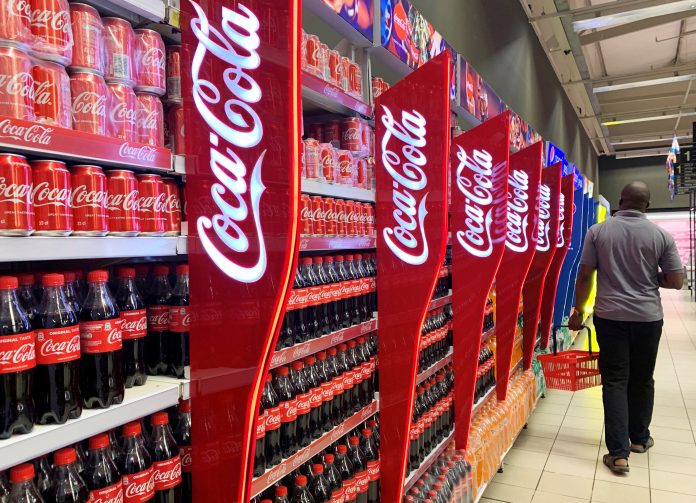
The Coca-Cola Company has announced a major divestment in Nigeria, entering into a definitive agreement to sell its wholly owned subsidiary, Chivita|Hollandia (CHI Limited), to UAC of Nigeria PLC.

The transaction marks a significant restructuring in Coca-Cola’s Africa strategy as the company intensifies its shift toward an asset-light business model while maintaining a firm presence in one of its key growth markets.

CHI Limited, the maker of Chivita and Hollandia, has established itself as a dominant force in Nigeria’s food and beverage sector. The Chivita line leads in the fruit juice segment, while Hollandia dominates the evaporated milk and drinking yoghurt market. The company also produces a range of snacks and still drinks, with a workforce of over 5,000 employees and a strong nationwide distribution network.

The sale, which is pending regulatory approval, aligns with Coca-Cola’s global strategy to focus on brands with the greatest potential to scale and to reduce ownership of capital-intensive operations. In its statement, the U.S. beverage giant reaffirmed its long-term commitment to Nigeria, referencing a planned $1 billion investment over the next five years, contingent on the existence of a stable and enabling environment.

“This transaction further supports The Coca-Cola Company’s strategy to operate a flexible and asset-light model and focus on brands that have the greatest potential to scale,” the company said.

UAC of Nigeria, a prominent holding company with interests across consumer goods, paints, logistics, and real estate, will absorb CHI Limited into its portfolio. With nine manufacturing facilities and multiple logistics hubs across Nigeria, UAC sees the acquisition as a chance to broaden its reach in the food and beverage space.

Fola Aiyesimoju, Group Managing Director of UAC, called the acquisition a strategic win, stating: “As a company with a strong presence in Africa, we are deeply committed to the continent’s growth. We are pleased to announce the acquisition of Chivita|Hollandia (CHI Limited), a leading dairy and juice business in the region. This acquisition presents significant potential to build on Chivita|Hollandia’s (CHI Limited’s) legacy of excellence and innovation.”

This acquisition presents significant potential to build on CHI Limited’s legacy of excellence and innovation.”

CHI Limited’s managing director, Eelco Weber, also expressed optimism about the deal, noting the company’s recent achievements and the strong position of its brands in the market. He praised the team of over 5,000 employees, calling the company a “Gold-rated Great Place to Work,” and added: “We see a bright future for Chivita|Hollandia (CHI Limited). With the strength of our team, coupled with the dedication of UAC, there will be exciting opportunities for further growth.”

Coca-Cola acquired full ownership of CHI Limited in 2019 after gradually increasing its stake, positioning itself to gain greater control over the value-added dairy and juice segments in Nigeria. However, with increasing cost pressures, currency volatility, and broader macroeconomic headwinds affecting multinationals operating in the region, Coca-Cola appears to be recalibrating its approach.

This move mirrors similar retrenchments by other multinational giants such as Unilever and PZ Cussons, who have either divested or reduced exposure to certain operations in Nigeria amid declining margins and operational inefficiencies.

The financial details of the CHI Limited transaction were not disclosed. However, Citi served as the exclusive financial advisor to The Coca-Cola Company, while McDermott Will & Emery acted as legal counsel. UAC was advised by Fasken Martineau LLP and Nigerian law firm Templars.

The deal adds to UAC’s growing footprint in the Nigerian consumer market, potentially positioning the company to capitalize on rising demand for branded dairy and juice products as consumer habits evolve. For Coca-Cola, it marks another step toward a leaner operating model while continuing to support its presence in Africa through strategic investments and partnerships.

Foxconn Bets Big on $1tn AI Data Center Boom With Strategic Stake in TECO

0

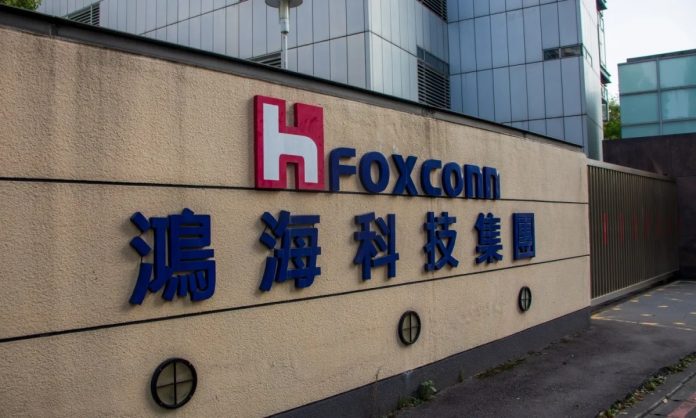
Foxconn is ramping up its push into artificial intelligence infrastructure, announcing on Wednesday that it is taking a 10% stake in TECO Electric & Machinery Co.

The move marks a strategic pivot for the Taiwanese electronics giant—formally known as Hon Hai Precision Industry—as it eyes a dominant role in the global race to build next-generation AI data centers.

The share-swap deal deepens cooperation between the two companies and comes at a moment of massive investment in data infrastructure, with analysts at Counterpoint Research estimating global spending on data centers could top $1 trillion in the coming years. Foxconn, best known for assembling Apple’s iPhones, is now attempting to leverage its manufacturing expertise into new markets, particularly AI, where it also partners with Nvidia to build servers designed for high-performance computing.

The new alliance with TECO is intended to create a “one-stop shop” for AI data centers, ranging from the design and manufacturing of server components to full-scale infrastructure deployment. TECO, which began as a motor manufacturer, now has experience in electric vehicles, energy storage systems, and large-scale industrial construction. The companies say the joint initiative will focus on Taiwan, parts of Asia, the Middle East, and the United States, where both firms already have a manufacturing footprint.

“The strategic partnership extends the two companies’ cooperation in the fields of low-carbon smart factories and energy services, toward being a one-stop solution for data centers going forward,” said TECO Chairman Morris Li in a statement.

Foxconn’s ambitions in this space are driven by the booming demand for AI processing power. The company previously forecast that its AI server revenue would double in the second quarter of 2025, driven by surging global demand for infrastructure supporting large language models and generative AI tools. Its servers are purpose-built for AI workloads, which require enormous amounts of computation and storage, far more than traditional enterprise applications.

Neil Shah, partner at Counterpoint Research, described the TECO-Foxconn alliance as a tightly integrated supply chain play.

“With the AI infrastructure boom, Hon Hai with a strategic alliance with TECO aims to extend and tightly integrate the server components and racks value chain from co-design, manufacturing to engineering and infrastructure construction services,” he said. “Hon Hai aims to become a one-stop shop for all the data center needs.”

Beyond server racks and chips, Foxconn is betting that full-stack offerings will be key to winning major contracts. That includes everything from the physical hardware to the energy-efficient cooling and power systems needed to operate hyperscale data centers. By pairing TECO’s energy and infrastructure engineering capabilities with its own electronics manufacturing capacity, Foxconn believes it can offer a vertically integrated solution that rivals global players like Siemens, ABB, and Mitsubishi Electric.

The partnership also ties into broader geopolitical shifts in supply chains. Both companies indicated their joint project will support U.S. manufacturing and help “reshape the global supply chain,” reflecting the increasing importance of localized production in sensitive technology sectors such as AI, semiconductors, and energy systems.

With tech giants like Microsoft, Amazon, and Google committing tens of billions of dollars to AI infrastructure in 2025 alone, Foxconn is aggressively positioning itself to become a crucial supplier not just of components, but of entire data center ecosystems. The tie-up with TECO underlines its intent to go beyond its legacy role in consumer devices and become a central player in the physical foundation of the AI age.

Trump Administration Confirms Approval for Limited Nvidia Chip Exports to China

0

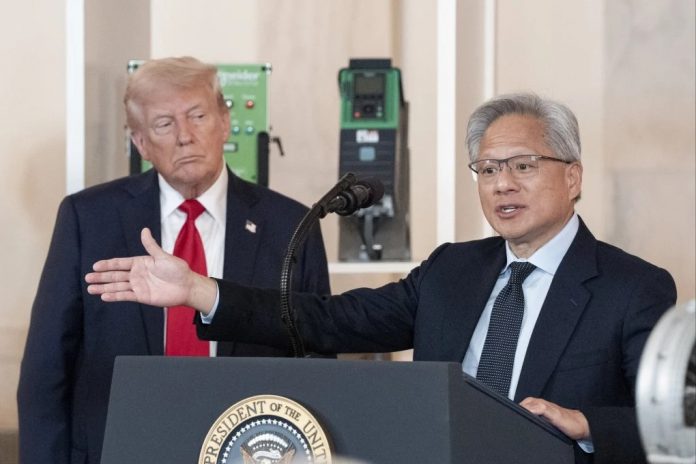
President Donald Trump’s administration has confirmed its approval for the controlled export of Nvidia’s H20 artificial intelligence chips to China, reversing months of uncertainty and raising fresh questions about how Washington intends to balance its desire for tech dominance with national security.

White House National Economic Adviser Kevin Hassett confirmed the decision in an interview with Fox News, saying the administration made a calculated call to let Nvidia resume chip shipments to prevent China from gaining a strategic foothold in the AI chip race.

“President Trump and his team decided to let the NVIDIA chips go” to maintain America’s technological edge, Hassett said. “One of the risks that you have to take seriously is that if China’s not buying chips from us, then they’re innovating, making their own chips. And the one thing we don’t want is for them to jump ahead in the race for chips.”

The chips in question are Nvidia’s H20 graphics processing units (GPUs), a version designed specifically for the Chinese market that complies with U.S. export restrictions by omitting some of the high-end capabilities found in versions sold elsewhere. The company confirmed earlier this month that it had filed applications with U.S. authorities to resume H20 shipments and has since been assured that licenses would be granted.

These chips represent the most powerful AI hardware that Nvidia can legally sell to Chinese customers under current restrictions. They were developed as a workaround after Trump’s earlier executive orders, later expanded under President Joe Biden, placed strict limits on exporting cutting-edge semiconductors and related technologies to China.

While the H20 chips are not as capable as Nvidia’s flagship AI models like the H100 or the A100—used to train large language models and power supercomputing applications—they remain among the most advanced options available to Chinese firms.

This marks a tactical shift for the Trump administration, which has steadily ratcheted up export controls to choke off Beijing’s access to high-performance computing tools. However, the latest decision reflects a growing concern within U.S. policy circles that locking China out entirely could backfire. Rather than halting its AI ambitions, China could double down on developing indigenous alternatives, potentially leading to an uncontrollable arms race in chip innovation.

Some analysts agree that it is strategically smarter to sell something slightly less advanced to China, so they stay on the U.S. playing field. It is believed that forcing China to innovate in isolation will cause the U.S. to lose the upper hand.

For Nvidia, the clearance to resume sales is a financial relief. China remains one of its biggest markets, and U.S. export controls have already affected billions in potential revenue. The company had reported a substantial drop in sales to China after restrictions intensified in late 2023, and CEO Jensen Huang had previously warned that overly aggressive bans could result in “permanent loss of opportunity” in a market too big to ignore.

Still, the decision has reignited criticism from hawks in Washington who argue that any export to China risks strengthening a geopolitical rival. Lawmakers who back stronger tech decoupling have called for tighter scrutiny of export waivers, fearing they could erode the effectiveness of America’s sanctions regime.

Despite those concerns, the Trump administration’s move underscores a broader strategic calculation—one that leans toward managed engagement rather than blanket exclusion.

Nvidia has not publicly commented on the political aspect of the clearance but said it expects to begin shipments once it receives final approval. Industry analysts predict a modest but meaningful revenue boost in the current quarter, though they caution that regulatory uncertainty remains a long-term challenge for chipmakers operating across U.S.-China lines.

The move also adds to the broader context of President Trump’s aggressive trade and technology strategy. From sweeping tariffs scheduled to begin August 1 to sweeping export bans on critical technology, Trump’s policies continue to reshape global supply chains and test the limits of globalization.