DD
MM
YYYY

PAGES

DD
MM
YYYY

spot_img

PAGES

Home Blog Page 818

BlockDAG with $351M Presale Faces Off with Cardano: Who’s Gaining Users and Real-World Traction Faster?

0

The crypto world keeps changing, and so do the projects that aim to shape what comes next. While older platforms like Cardano stick to long-term plans, newer names are starting to pull more attention. One of them is BlockDAG, which has already raised over $351 million during its presale.

As the space grows, both builders and users are looking for platforms that offer more than just ideas. Real-time use, faster tools, and easier access are becoming top priorities. In this comparison, we look at what Cardano offers, how BlockDAG (BDAG) takes a different path, and why so many developers are turning toward BDAG before it even launches its mainnet.

Cardano: Slow and Careful with a Strong Focus on Research

Cardano is well-known in the crypto space. It was started by Charles Hoskinson, who was also a co-founder of Ethereum. From day one, Cardano has taken a careful, research-driven route. Each update is reviewed by experts before being added to the system.

Its network runs on Ouroboros, a form of Proof-of-Stake. This keeps things energy-efficient and supports decentralisation, meaning no single group has full control. That setup is solid, but not always fast.

Cardano also uses tools like Plutus and Haskell for building apps. These tools are powerful but not simple to use. Developers coming from platforms like Ethereum often find them hard to learn. Because of this, the pace of new apps being launched has slowed down.

There has been steady progress. By 2023 and into 2024, Cardano stayed among the top coins by market value. A few apps like Djed and SundaeSwap are working on the network. It’s seen as secure and dependable, which is important to many. Still, user activity builds slowly. Many apps remain in testing or are not yet live. Cardano keeps improving, but its path is slower. The focus is more on being right than being first.

Why BlockDAG Is Catching Attention While Others Take It Slow

Cardano is known for its step-by-step method, but BlockDAG is heading in a faster direction and getting results quickly. It works using a system called a Directed Acyclic Graph, or DAG. This setup lets it process many transactions all at once, rather than one after another. That means BlockDAG can move faster and serve more users than some of the older networks.

Another part of BlockDAG’s appeal is that it works with Ethereum tools. Developers who already use Ethereum can build here without starting from scratch. It also offers a low-code smart contract builder. This means even people with little coding experience can build apps, which is useful for small teams or individuals who don’t write code for a living.

What stands out most is the early activity happening before the full launch. Over 4,500 builders are already working on more than 300 real projects using the testnet. These apps include things like finance tools, AI projects, payment platforms, and other useful tech. These aren’t just ideas; they’re being tested and updated right now.

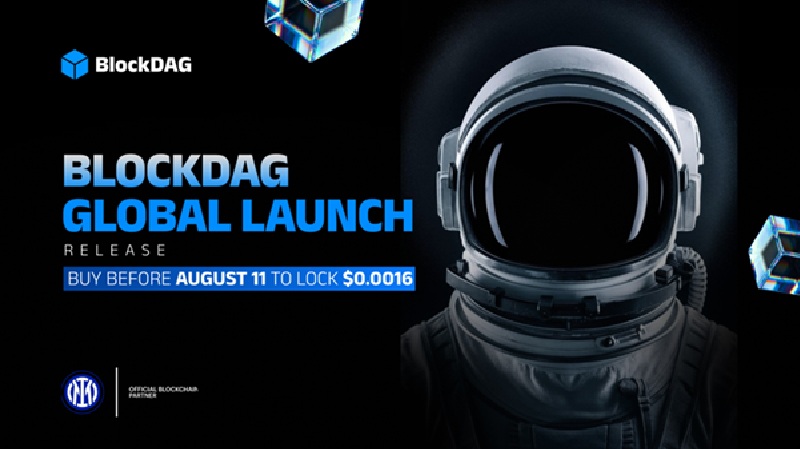
The presale has brought in a lot of support. So far, the project has raised over $351 million and sold more than 24 billion BDAG coins. The price is now $0.0016 as part of the GLOBAL LAUNCH release, which lasts until August 11. If the listing hits $0.05, that could mean a 3,025% return. Since batch 29 started at $0.0276, early buyers have already seen gains of 2,660%. Many are taking notice, and the activity around BlockDAG keeps growing every day.

Two Blockchain Projects, Two Very Different Journeys

BlockDAG and Cardano both want to improve blockchain, but they take different routes. Think of them like runners. One moves with perfect form, slow and steady. The other runs fast, learning while moving forward. That’s the difference between Cardano and BlockDAG.

Cardano is based on research and long-term goals. It is secure and uses little energy. The team tests every step carefully. This gives the project a strong base, but it also slows progress. Its coding tools are not simple to learn, which makes building apps harder. Because of this, Cardano has fewer live projects and lower network use than newer networks.

BlockDAG chooses a path that is more open and easier to use. It supports Ethereum-based tools that many developers already know. It also has a smart contract builder that needs little coding. This means more people can build apps without expert skills.

What really stands out is how much activity is already happening on BlockDAG. Over 4,500 builders are working on more than 300 real apps using the test system. The presale has brought strong attention too, raising over $351 million. That is a big deal for a project still before its launch. When compared to Cardano’s slower steps, BlockDAG looks busier and faster-moving.

Which One Connects More With Builders and Users?
Cardano is trusted for its careful planning and strong goals. It works well for those who want structure and safety. But today, people are more focused on networks that are easier to use and give real access now. This is where BlockDAG fits in. It is quick, simple to build on, and already active even before launch.

With thousands of builders already working and over $351 million raised in crypto presale, it is seeing strong early traction. For anyone who wants something that works today, not just in the future, BlockDAG brings a ready-to-use setup that’s already getting results.

Presale: https://purchase.blockdag.network

Website: https://blockdag.network

Telegram: https://t.me/blockDAGnetworkOfficial

Discord: https://discord.gg/Q7BxghMVyu

Web3 Set to Surge as 4,500 Builders Join BlockDAG, While POL Rallies & AVAX Eyes $30

0

The Polygon (POL) price surge is catching attention with a 95% rise, supported by a $2.76 billion jump in stablecoin supply, a level last reached in 2021. Meanwhile, the Avalanche (AVAX) price forecast remains strong, with AVAX gaining 18% and now aiming to push past the $30 mark.

At the same time, BlockDAG (BDAG) is becoming one of the top crypto projects to follow. More than 4,500 builders are developing over 300 active projects, boosting network activity. Its presale is also gaining traction, nearing $351 million raised. With BDAG priced at $0.0016 and the launch price confirmed at $0.05, the potential 3,250% return before its GLOBAL LAUNCH release is drawing growing interest.

Polygon (POL) Price Surge Hits 95% Following Big Stablecoin Growth

The Polygon (POL) price surge has picked up pace as its stablecoin volume reached $2.76 billion, a figure not seen since 2021. This recovery suggests stronger user confidence in the network. Since its recent upgrades, Polygon has seen steady growth in NFT activity, DeFi use, and daily transactions. The stablecoin jump supports the idea that more people are backing Polygon’s future.

POL, which is replacing MATIC, is now showing a bullish wedge on the charts. This pattern often hints at a potential price jump. If POL moves above $0.50, the current price of $0.2559 could rise to $1. The Polygon (POL) price surge may still have more room to grow.

Avalanche (AVAX) Price Forecast Looks to Break $30 Soon

The Avalanche (AVAX) price forecast is rising after AVAX climbed 18% in a week. As of Tuesday, it was trading over $25, with analysts watching closely for a break above $30. Open Interest hit $796 million, showing new capital entering the market. At the same time, Avalanche’s Total Value Locked has grown from $1.49 billion to $1.93 billion since July 1, a sign of more user activity.

The network handles 600,000 blocks each day, showing consistent usage. Technical signs are also pointing up, with key support levels holding and positive readings from indicators like RSI and MACD. The Avalanche (AVAX) price forecast now puts $30 within reach unless a dip slows it down.

4,500 Builders Join BlockDAG, Pushing Real Projects Before Mainnet

BlockDAG, a platform gaining steady traction, reached a key milestone with the launch of its public testnet. This version gave both users and developers a chance to explore, test smart contracts, and start building well ahead of the mainnet launch. That early access quickly turned into real activity.

And now, that activity is rising fast. More than 4,500 builders are working on over 300 live projects using BlockDAG. These projects include DeFi tools, AI systems, payment solutions, and real-world apps, many of which are almost ready to go live. Since the testnet mirrors the actual network, it has helped teams build quickly and with more confidence.

BlockDAG supports different kinds of creators. It is built with Ethereum’s EVM, so developers can use Solidity and existing tools without learning new systems. At the same time, a low-code builder makes it easier for people with no coding skills to build apps through drag-and-drop tools, helping small teams and solo builders take part too.

So far, BlockDAG has raised more than $351 million during its presale and sold over 24.3 billion BDAG coins. The current GLOBAL LAUNCH release price is $0.0016, which may offer a 3,250% return based on its expected listing at $0.05. With the tools running, builders active, and projects moving ahead, BlockDAG is doing something few platforms manage before launch; it’s already being used.

Final Thoughts

The Polygon (POL) price surge shows strong signs of recovery, helped by stablecoin activity and higher user trust. The Avalanche (AVAX) price forecast also points to growth, with a strong move toward the $30 level. These two are gaining interest, but when looking at what’s coming next, BlockDAG stands out.

With 4,500 builders developing over 300 working projects, the platform is already showing real-world progress before launch. Its presale is also building momentum, closing in on $351 million raised, with a price of $0.0016 offering a possible 3,250% gain. BlockDAG is shaping up to be one of those top crypto projects that might turn early interest into real success.

Presale: https://purchase.blockdag.network

Website: https://blockdag.network

Telegram: https://t.me/blockDAGnetworkOfficial

Discord: https://discord.gg/Q7BxghMVyu
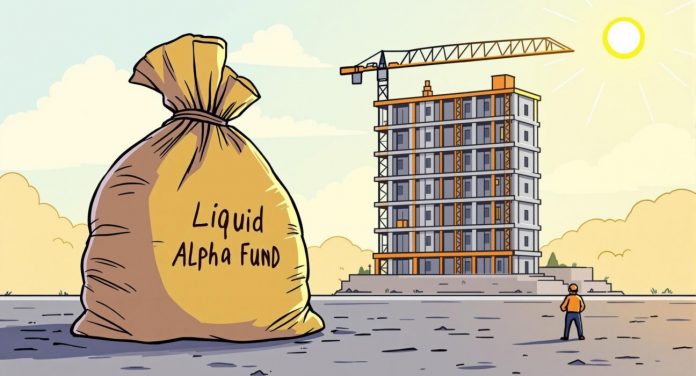
The Failure of Asymmetric’s Liquid Alpha Fund Underscores Risks of Volatility-Driven Trading In A Stabilizing Market

0

Joe McCann, founder of Asymmetric Financial, has closed the Liquid Alpha Fund after it reportedly suffered a 78% loss in 2025, amid criticism and investor frustration. The fund, designed for high-volatility crypto markets, struggled as market conditions matured and volatility dropped, with the Crypto Volatility Index (CVI) falling nearly 30% over the past year.

McCann has shifted focus from liquid trading to long-term blockchain investments, offering investors the option to exit without lock-up restrictions or roll capital into a new illiquid strategy. Asymmetric’s venture arm will continue backing early-stage blockchain projects.

Simultaneously, McCann is spearheading Accelerate, a new Solana-focused treasury company, as its CEO. Accelerate aims to raise $1.51 billion through a SPAC merger with Gores X Holding, including $800 million via PIPE, $358.8 million from the SPAC, $250 million in convertible bonds, and $103.2 million from SPAC warrants. If successful, Accelerate plans to acquire approximately 7.32 million SOL tokens, positioning it as the largest Solana treasury holder, surpassing firms like Upexi.

This move reflects growing institutional interest in Solana’s high-performance blockchain but has sparked concerns about centralization and regulatory scrutiny. The fundraising timeline targets late 2025, though details remain speculative without official confirmation. The 78% loss in 2025 highlights the challenges of managing high-volatility crypto funds in a stabilizing market. This closure signals a shift from speculative, short-term trading to longer-term blockchain investments, reflecting a broader trend among crypto funds adapting to maturing markets.

Offering investors an exit or a roll-over into an illiquid strategy mitigates immediate backlash but risks alienating those preferring liquidity. The pivot to venture-style investments in blockchain projects suggests confidence in early-stage innovation but carries higher risk and longer horizons. McCann’s decision to shut down the fund after significant losses could damage his credibility, though his transparency in offering exits may soften the blow. Success in the new venture arm will be critical to restoring investor confidence.

If Accelerate raises $1.51 billion and acquires 7.32 million SOL tokens, it could significantly influence Solana’s ecosystem. Such a large holding could stabilize SOL’s price by reducing circulating supply but risks centralization, potentially undermining Solana’s decentralized ethos. The SPAC merger and high-profile fundraising signal growing institutional interest in Solana’s scalable blockchain, potentially attracting more developers and projects.

However, it also invites regulatory scrutiny, especially given the SEC’s focus on crypto securities. Surpassing firms like Upexi as the largest Solana treasury holder positions Accelerate as a dominant player, which could drive partnerships but also spark concerns about market manipulation or governance influence within Solana’s ecosystem.

The decline in crypto market volatility (CVI down ~30%) suggests a maturing industry, pushing funds like Asymmetric toward fundamental-driven investments rather than speculative trading. Large treasury accumulations by entities like Accelerate could create tension between institutional power and the decentralized principles of blockchain, potentially alienating retail investors or developers.

Retail investors may view Accelerate’s massive SOL acquisition as centralizing control, reducing their influence in Solana’s governance or price dynamics. This could fuel distrust in institutional-driven projects. Institutional players, like those backing the $800 million PIPE, see Solana as a scalable, enterprise-ready blockchain. This divide could lead to a two-tiered ecosystem where institutional agendas dominate over retail-driven decentralization.

The failure of Asymmetric’s Liquid Alpha Fund underscores the risks of volatility-driven trading in a stabilizing market. Meanwhile, McCann’s shift to venture investments and Accelerate’s treasury strategy reflect a belief in blockchain’s long-term potential, creating a divide between traders seeking quick gains and investors betting on infrastructure. Accelerate’s potential to hold 7.32 million SOL tokens raises concerns about centralization within Solana’s ecosystem.

Critics argue this could give McCann’s firm outsized influence over network decisions, clashing with the decentralized ethos valued by many in the crypto community. The SPAC structure and large-scale fundraising invite regulatory attention, particularly from the SEC, which has intensified scrutiny of crypto assets. This creates a divide between innovators pushing for adoption and regulators enforcing compliance, potentially slowing Solana’s institutional growth.

McCann’s closure of the Liquid Alpha Fund and pursuit of a $1.51 billion Solana treasury via Accelerate reflect a strategic pivot toward long-term blockchain investment amid a maturing crypto market. While this could bolster Solana’s institutional adoption and ecosystem growth, it risks deepening divides between retail and institutional players, speculative traders and long-term investors, and centralized control versus decentralized ideals.

Intel Posts $12.86bn in Q2 Revenue, Beats Estimates in Rare Glimmer of Hope

0

Intel’s second-quarter results may have topped Wall Street’s expectations on revenue, but the once-dominant chipmaker remains far from the powerhouse it used to be. The earnings report, released Thursday, came with a sobering reminder of the company’s long road to recovery — and its ongoing financial and operational overhaul under new CEO Lip-Bu Tan.

For the quarter ended June, Intel posted $12.86 billion in revenue, ahead of analysts’ estimates of $11.92 billion, according to LSEG. The company, however, recorded a net loss of $2.9 billion, or 67 cents per share, nearly double the $1.61 billion loss from the same period a year ago. Adjusted earnings showed a 10-cent loss per share, driven by an $800 million impairment charge related to idle tools, which alone knocked about 20 cents off the bottom line.

Still, the better-than-expected revenue and improved guidance for Q3 — $13.1 billion at the midpoint versus a $12.65 billion consensus — were enough to push Intel shares higher in extended trading. And for the market, it wasn’t just a matter of numbers beating expectations; it was the first concrete sign in months that Intel’s brutal slide may be slowing.

Intel’s current position marks a stunning decline for a company that once defined the semiconductor industry. Just a decade ago, Intel was unshakable — the undisputed leader in central processing units (CPUs) and one of the most valuable tech firms in the world. But years of strategic missteps, delays in manufacturing innovation, and a failure to pivot fast enough to the AI and smartphone chip boom allowed competitors — particularly TSMC, AMD, and Nvidia — to eclipse it.

By 2024, Intel had not only lost its technological edge but had also tumbled out of the top 10 semiconductor companies globally — a humiliating milestone confirmed by its own chief.

“We are not in the top 10 semiconductor companies anymore,” Lip-Bu Tan told staff in a brutal internal assessment earlier this month.

The admission was a stark departure from the optimism that once characterized Intel’s ambitious foundry plans and efforts to recapture leadership in chip manufacturing.

The damage wasn’t just reputational. Intel’s stock plunged 60% in 2024, marking its worst performance in company history. Over-investment in chip factories that never found sufficient demand, rising competition, and lagging innovation in both PC and data center chips all contributed to the rout.

Lip-Bu Tan’s Tough Medicine

Tan, the former Cadence Design Systems chairman and a respected voice in Silicon Valley, took over from Pat Gelsinger in March with a mandate to stop the bleeding and refocus Intel’s operations. His approach has been anything but cosmetic.

In a memo to employees Thursday, Tan revealed that Intel has now “completed the majority” of planned layoffs, trimming its workforce by 15% — or around 13,000 jobs — and will close the year with approximately 75,000 employees. The move is part of a broader plan to slash operating costs by $17 billion by the end of 2025.

More drastically, Tan canceled large-scale chip fabrication (fab) projects in Germany and Poland, slowed down the $20 billion “Silicon Heartland” plant in Ohio, and consolidated testing and assembly lines in Vietnam and Malaysia. These changes hit at the heart of Intel’s once-ambitious global expansion strategy under Gelsinger, who sought to challenge TSMC as a contract chipmaker.

“Over the past several years, the company invested too much, too soon – without adequate demand,” Tan wrote in his memo. “Our factory footprint became needlessly fragmented and underutilized.”

Intel’s foundry unit — the linchpin of its outsourcing pivot — posted a $3.17 billion operating loss on $4.4 billion in revenue. Without a big external customer to anchor the business, the unit has continued to drain resources.

Tan made it clear that going forward, all investments must be backed by firm demand. “There are no more blank checks. Every investment must make economic sense,” he wrote. He also said he would personally approve all chip designs before tape-out, reflecting tighter control and a renewed focus on engineering discipline.

Turning A Corner?

While the overall business remains under pressure, the latest report does offer signs of stabilization. Sales from the Client Computing Group — which includes chips for personal computers — declined 3% to $7.9 billion, while the Data Center and AI Group grew 4% to $3.9 billion. The latter unit, though still lagging behind AMD and Nvidia, shows Intel is not entirely losing the AI race.

The financial outlook is also improving. After last year’s catastrophic drop, Intel shares are up roughly 13% year-to-date, suggesting some investor confidence in Tan’s turnaround strategy. The company’s Q3 forecast also hints at momentum — albeit fragile — heading into the second half of the year.

Intel’s second-quarter performance won’t erase years of setbacks. But it is perhaps the clearest indication yet that the company is starting to steady its footing under Lip-Bu Tan. The revenue beat and improved forecast may look modest on paper, but in the context of Intel’s recent history — and Tan’s own admission that it no longer ranks among the top 10 global chipmakers — it represents more than just a quarterly win.

Analysts believe that the recovery will depend not just on cost cuts and restructuring, but on whether Intel can once again deliver on innovation — and win back the customers it lost.

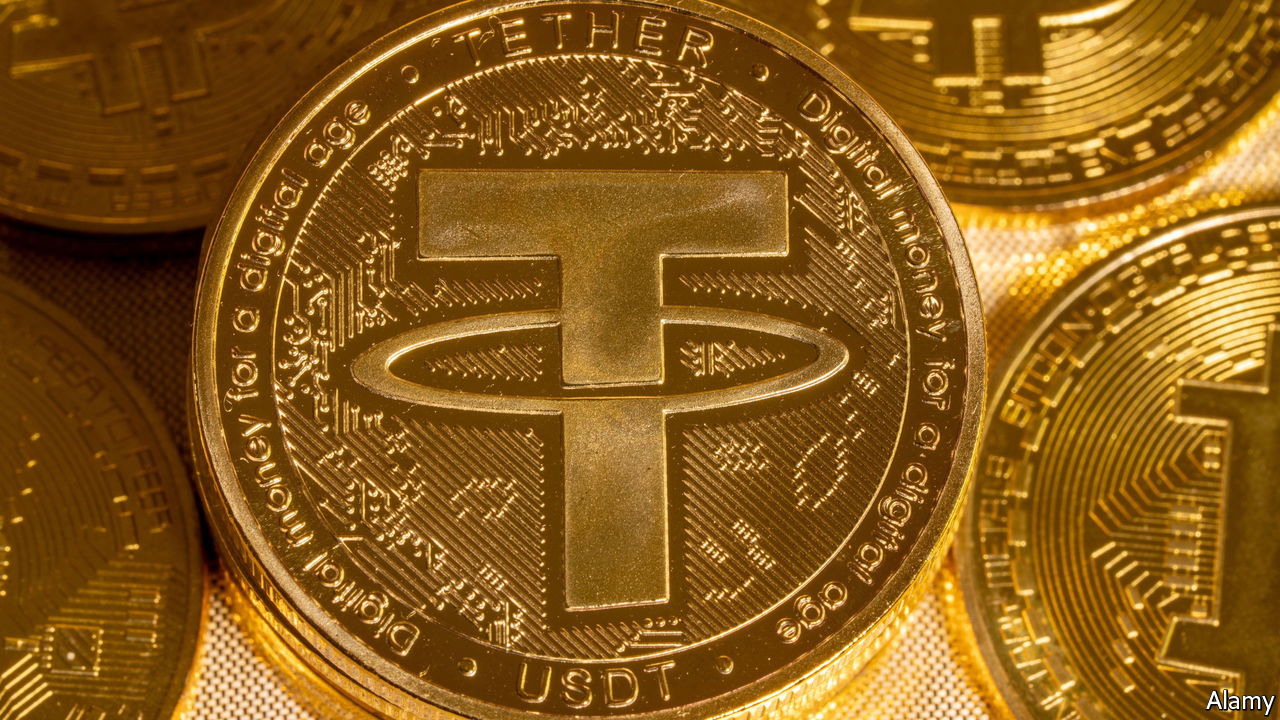
Tether’s Re-Entry Could Entrench Its Dominance, Especially If Its New Stablecoin Gains Traction Among U.S. Institutions

0

Tether, the issuer of the world’s largest stablecoin USDT, is planning to re-enter the U.S. market with a focus on institutional clients, driven by the recent passage of the GENIUS Act, signed by President Donald Trump. This legislation establishes a federal regulatory framework for stablecoins, mandating full reserve backing, anti-money laundering (AML) compliance, and regular audits, creating a conducive environment for Tether’s expansion.

CEO Paolo Ardoino has outlined a strategy targeting banks, hedge funds, and corporations for use cases like interbank settlements, corporate treasury management, and tokenized assets, emphasizing efficiency in payments and trading.

Tether is developing a new U.S.-based stablecoin distinct from USDT, designed to meet stricter compliance and transparency requirements, addressing past criticisms about reserve audits. The company aims to leverage its technological edge and market experience, despite competition from compliant rivals like Circle’s USDC. Tether’s re-entry follows a 2021 exit due to regulatory issues, including a $60 million settlement and a New York ban, and it continues to prioritize emerging markets while pursuing this U.S. strategy.

Tether’s new U.S.-compliant stablecoin, tailored for banks, hedge funds, and corporations, could accelerate institutional use of stablecoins for high-value transactions like interbank settlements, corporate treasury management, and tokenized asset trading. The GENIUS Act’s regulatory clarity (full reserve backing, AML compliance, audits) reduces legal risks, making stablecoins more attractive to risk-averse institutions.

Institutional adoption could drive significant demand for stablecoins, potentially increasing Tether’s market cap (USDT already at $120 billion as of recent data) and reinforcing its dominance. This could also spur innovation in tokenized financial products. The GENIUS Act’s framework signals U.S. acceptance of stablecoins as legitimate financial tools, potentially encouraging other jurisdictions to adopt similar regulations. Tether’s compliance with these rules could set a benchmark for the industry, pressuring non-compliant players to adapt or lose market share.

By launching a new stablecoin separate from USDT, Tether addresses past criticisms over transparency and reserves, potentially restoring trust among U.S. regulators and institutions. However, maintaining dual stablecoins (USDT globally, new stablecoin in the U.S.) may complicate operations and messaging. Tether’s re-entry intensifies competition with U.S.-based stablecoin issuers like Circle (USDC), which has already established itself as a compliant alternative. Tether’s technological edge and global dominance could challenge USDC’s market share, especially if Tether leverages its experience in high-volume transaction processing.

Smaller or less compliant stablecoin issuers may struggle to compete under the new regulatory regime, potentially leading to market consolidation around major players like Tether and Circle. Tether’s continued focus on emerging markets (e.g., Latin America, Africa) alongside its U.S. push suggests a bifurcated strategy. USDT will likely remain the go-to stablecoin in less-regulated regions, while the new stablecoin targets the U.S. institutional market. This could solidify Tether’s global dominance but risks creating operational silos.

By expanding stablecoin use in the U.S., Tether reinforces the U.S. dollar’s role in global finance, as both USDT and the new stablecoin are dollar-pegged. This could amplify dollar hegemony in crypto markets, impacting non-dollar-based stablecoins. The GENIUS Act’s strict requirements (full reserves, AML, audits) contrast with the looser regulatory environments in many emerging markets where USDT thrives. Tether’s dual stablecoin approach may create a two-tier system: a highly regulated, transparent stablecoin for the U.S. and USDT for less-regulated regions.

Smaller stablecoin issuers or decentralized projects may struggle to meet U.S. standards, creating a divide between well-funded, compliant players (Tether, Circle) and less-resourced or non-compliant ones. This could marginalize innovative but underfunded projects. Tether’s focus on institutional clients (banks, hedge funds, corporations) prioritizes high-value use cases, potentially sidelining retail users in the U.S. While USDT remains available globally, the new stablecoin’s institutional focus may limit retail access to Tether’s U.S.-compliant product, creating a perception that stablecoins are becoming tools for the financial elite.

Tether’s re-entry could entrench its dominance, especially if its new stablecoin gains traction among U.S. institutions. This risks creating a winner-takes-most dynamic, where Tether and Circle dominate, stifling competition from smaller stablecoin issuers or non-dollar-based stablecoins. Tether’s centralized model, backed by a corporate entity, contrasts with decentralized stablecoin protocols (e.g., DAI). The U.S. regulatory framework may favor centralized issuers, widening the gap between centralized and decentralized finance (DeFi) ecosystems.

Tether’s focus on the U.S. market may divert resources from its emerging market initiatives, where USDT is a critical tool for remittances and inflation hedging. This could slow innovation or support for underserved regions, deepening the economic divide between developed and developing nations. Tether’s ability to operate USDT in less-regulated markets while offering a compliant stablecoin in the U.S. could perpetuate regulatory arbitrage, raising ethical questions about exploiting regulatory gaps in poorer nations.

Tether’s U.S. re-entry is a strategic move to capitalize on regulatory clarity and institutional demand, potentially reshaping the stablecoin landscape. It could drive mainstream adoption, enhance Tether’s legitimacy, and intensify competition, but it also risks deepening divides between regulated and unregulated markets, institutional and retail users, and centralized and decentralized ecosystems.