DD
MM
YYYY

PAGES

DD
MM
YYYY

spot_img

PAGES

Home Blog Page 820

OpenAI Introduces Study Mode in ChatGPT to Enhance Active Learning

0

Artificial Intelligence company OpenAI has launched a new feature called study mode in ChatGPT, designed to transform students’ engagement with the AI tool.

Study mode is handy for homework help, test prep, and helps students learn new topics. With Study Mode, ChatGPT will ask users questions to test their understanding and, in some cases, refuse to offer direct answers unless students engage with the material.

ChatGPT has no doubt become one of the most widely used learning tools globally, assisting students with challenging homework, exam preparation, and exploring new concepts. However, its role in education has sparked an important question: how can AI ensure genuine learning rather than simply providing answers?

This has spurred the company to roll out study mode, a feature that aims to address this concern by guiding students through problems step by step, using interactive prompts and tailored support. Built with input from teachers, scientists, and pedagogy experts, the feature reflects a core set of evidence-based teaching strategies.

These strategies encourage active participation, manage cognitive load, promote self-reflection, spark curiosity, and provide actionable feedback. Essentially, study mode encourages students to engage with the material, reflect on what they’ve learned, and retain knowledge, making ChatGPT a tool for meaningful education rather than just a shortcut to answers.

Speaking on the launch, Robbie Torney, Senior Director of AI Programs at Common Sense Media said,

“Instead of doing the work for them, study mode encourages students to think critically about their learning. Features like these are a positive step toward effective AI use for learning. Even in the AI era, the best learning still happens when students are excited about and actively engaging with the lesson material.”

Starting today, the feature is available to all logged-in users across the Free, Plus, Pro, and Team plans, with ChatGPT Edu set to receive it in the coming weeks.

Key Features of Study Mode

Interactive prompts: Combines Socratic questioning, hints, and self-reflection prompts to guide understanding and promote active learning, instead of providing answers outright.

Scaffolded responses: Information is organized into easy-to-follow sections that highlight the key connections between topics, keeping information engaging with just the right amount of context and reducing overwhelm for complex topics.

Personalized support: Lessons are tailored to the right level for the user, based on questions that assess skill level and memory from previous chats.

Knowledge checks: Quizzes and open-ended questions, along with personalized feedback to track progress, support knowledge retention, and the ability to apply that knowledge in new contexts.

Flexibility: Easily toggle study mode on and off during a conversation, giving you the flexibility to adapt to your learning goals in each conversation.

Currently, study mode is powered by custom system instructions, allowing OpenAI to gather real-time student feedback and improve the experience quickly, even if it leads to occasional inconsistencies. Over time, OpenAI plans to train these behaviors directly into its main models, refining them through iteration and user insights.

The launch of this feature marks the first step in OpenAI’s broader mission to make ChatGPT a more effective educational tool, helping students not just complete tasks, but truly understand and retain what they learn.


Best Crypto to Buy Right Now: BlockDAG, SUI, XRP & PI Set the Pace for 2025

0

With crypto activity picking up again, many are exploring the best crypto to buy right now before the next price wave. Whether the focus is on scale, active communities, or broader adoption, several altcoins are beginning to stand out.

The second half of 2025 shows strong signs of growth in the altcoin space. From base-layer blockchains to financial platforms, interest is building quickly. BlockDAG (BDAG) has moved to the center of attention with a fast-selling presale and growing network. At the same time, SUI, XRP, and Pi Network are moving forward with new updates, market news, and more users joining in.

If you’re still observing the market, here are four names being closely watched as the best crypto to buy right now in 2025.

BlockDAG (BDAG) 

BlockDAG is gaining attention as one of the best cryptos to buy right now, and recent figures show why. More than $355 million has been raised in its current presale, with over 24.4 billion BDAG already sold. The price is $0.0016 now, with a confirmed listing at $0.05, showing a possible 3,025% gain before launch.

What makes it different is the usage already happening. More than 2 million people are mining BDAG each day using the X1 app. The X10 home miner, linked to the app, has sold 18,800 units and can earn up to 200 BDAG per day. This setup is running now, before the August 11 GLOBAL LAUNCH release.

Also, BlockDAG’s No Vesting Pass means all BDAG bought during this time will be fully unlocked at launch. With more than 4,500 developers already building over 300 apps, this Layer 1 chain is not waiting to grow. It’s showing progress in real time.

SUI (SUI)

SUI is gaining attention as one of the best crypto to buy right now after a sharp 15% rise that sent it above $4.23. With 62% growth over the past month, traders are now watching resistance levels between $4.35 and $4.50. Some analysts are tracking the AB=CD harmonic pattern, with projected targets ranging from $7 to $10 if the trend continues.

SUI also got a boost from a recent 21Shares ETF application that is now under SEC review. This filing points to growing interest in SUI’s setup and its position in a changing regulatory environment. RSI indicators are strong, and the $4.12 area remains a solid support zone. If the ETF advances, SUI could continue to climb.

With rising total value locked, increased stablecoin use, and steady on-chain development, SUI is earning attention as one of the best cryptos to buy right now for those looking into next-gen Layer 1s with active ecosystems.

XRP (Ripple)

Even with a recent 14% pullback, XRP is still considered one of the best cryptos to buy right now thanks to its expanding use in larger financial systems and ETF-related buzz. XRP trades near $3.18 after falling from $3.60. A $175M transfer by co-founder Chris Larsen and increased whale activity drew notice, while futures volume climbed to almost $4 billion, showing higher trader activity.

Support has returned at $2.00, and if XRP can move back to $3.60 with strong volume, it may re-enter a bullish zone. Meanwhile, talk around its potential use in future U.S. digital reserves continues to grow, building on its long-term narrative.

For those following trends in access, rules, and payment-focused networks, XRP remains in the conversation for the best crypto to buy right now. The recent drop may give short-term room for position planning.

Pi Network (PI):

Pi Network is drawing attention in 2025 with major user growth and new listings. With over 13 million users now on its mainnet and more apps joining the Pi App Studio, it’s becoming one of the most active user-built crypto platforms.

Recent listings on Gate.io, Swapfone, and OKX have improved how users can access PI. Wallet upgrades now offer direct on-ramps and a built-in “Buy” option, removing some barriers for new users. More than 10.8 million PI are about to unlock, which may briefly affect the price but also add trading volume.

While short-term moves may face some pressure, Pi’s size and steady updates make it a notable ecosystem to follow in 2025.

What’s Next: Exploring the Best Crypto to Buy Right Now

With so many projects making noise, only a few are pushing forward with real progress and active growth. BlockDAG stands out with its strong presale and live mining tools. SUI is gaining from institutional signals. XRP continues to make its case in global finance. Pi Network is growing through its large user base and platform updates.

Among them, BlockDAG is shaping its own path. The 3,025% ROI window, combined with the No Vesting Pass and active developer network, places it in a rare group. With millions mining daily and a working system already in motion, it is gaining attention ahead of the GLOBAL LAUNCH release.

For anyone exploring the best crypto to buy right now, these four projects are leading the way. As the market moves quickly, early choices could shape the rest of the year.

3 Shocking Reasons Cold Wallet Beats Dogecoin and XRP for 2025 Investments

0

Market attention often shifts toward price action, but long-term strength comes from real-world usage. XRP and Dogecoin continue to draw attention through sharp movements, online buzz, and institutional narratives. However, both lack reward mechanisms tied directly to day-to-day utility.

Yet, Cold Wallet chooses a practical route by linking its value directly to real usage through an always-active rewards system. With over $5 million raised and a current presale price of $0.00923 against an upcoming launch price of $0.3517, the structure appeals to those who prefer tangible benefits over hype cycles. Its value lies not in speculation but in how it’s used.

Cold Wallet’s Presale Is the Most Strategic Starting Point

The presale is being seen as one of the sharpest entry points for those aiming to capture early-stage benefits in what many call the most promising new crypto of the year. Now in stage 15, the presale has raised over $5 million, offering CWT at just $0.00923. With the listing set at $0.3517, early adopters are securing more than 36x in potential price upside.

This difference offers a built-in advantage to early holders, minimizing risk while increasing return potential. With each stage, token availability shrinks and pricing climbs, signaling growing confidence in the market. Those still observing are finding fewer tokens available at the same cost as momentum continues.

Rather than leaning on hype without substance, Cold Wallet’s presale is rooted in its actual product use and a unique cashback model. Every function in the wallet, from swap cashback and gas rebates to fiat ramping, is powered by the CWT token, creating a continuous value cycle for active users.

For those who care about cost-efficiency and lasting value, Cold Wallet delivers something clear: secure access before launch and benefit from a reward mechanism that begins working instantly.

XRP Price Today: Holding Steady Amid Market Noise

The XRP price today stands at approximately $3.50 as of July 25, 2025, showing strength despite broader market challenges. It has faced recent corrections from earlier highs, but underlying sentiment remains firm, supported by both macro trends and institutional signals.

Open interest has increased by around 143% year-over-year, reaching nearly $10 billion, a sign of strong speculative interest and belief in its future. Broader geopolitical developments, including the U.S.–Japan trade pacts, have also supported the use case for XRP Ledger in global transactions.

Support levels remain near $3.00, while resistance sits around $3.60. If it breaks this range, a short-term move toward $3.65 to $3.82 is possible. Anyone tracking XRP price today should watch how the token behaves around these points.

Dogecoin Price Prediction: Mixed Signals Continue

In a recent analysis from Yahoo Finance, forecasts for Dogecoin continue to be divided. Some see major gains ahead, up to 2600%, which would push its market cap to the $1 trillion mark. Such predictions rest on community excitement and online momentum.

On the other hand, more measured voices see moderate growth, depending on sentiment strength and sustained technical support. Opinions vary widely, from potential consolidation to extreme highs, with no firm consensus on its future path.

Anyone reviewing Dogecoin price prediction should consider the large uncertainty in its outlook. Price remains highly sensitive to market buzz and emotional trading, requiring a careful approach to expectations and risk.

Final Words!

While short-term gains may come from trends and emotional trading, ongoing value typically depends on practical use. XRP and Dogecoin attract attention through speculation, but neither provides consistent rewards for usage or engagement.

Cold Wallet provides a grounded alternative. It anchors the token’s worth to real activity, delivering rewards like cashback and rebates based on use.

Those wanting more than just price movement will find appeal in a model where using the product directly contributes to gains. When usage and value align, commitment becomes easier to sustain.


Explore Cold Wallet Now:

 Presale: https://purchase.coldwallet.com/

Website: https://coldwallet.com/

X: https://x.com/coldwalletapp

Telegram: https://t.me/ColdWalletAppOfficial


Meta to Allow Job Candidates to Use AI During Interviews, Unlocking A New Frontier in Tech Hiring

0

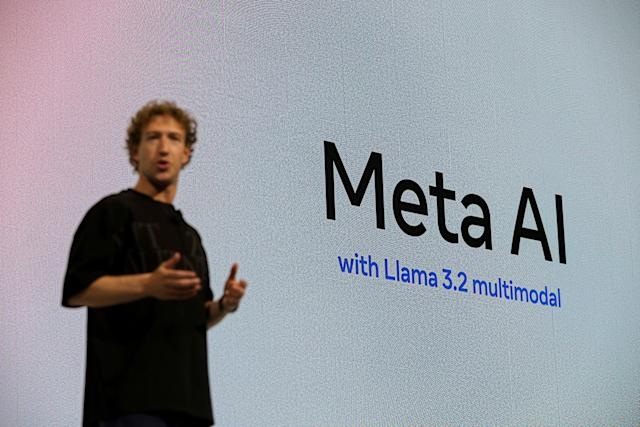
Meta has officially begun testing a radical shift in its recruitment process by allowing job applicants to use AI assistants during technical interviews — a move that breaks with Big Tech tradition and signals what may be the next frontier in AI-integrated hiring.

The pilot program, first reported by 404 Media and confirmed by Business Insider, is dubbed “AI-Enabled Interviews.” According to a recent internal post, Meta is developing a new kind of coding interview where candidates can use AI tools as they tackle real-time problems, mimicking the AI-supported environment they would work in as Meta engineers.

“This is more representative of the developer environment that our future employees will work in, and also makes LLM-based cheating less effective,” the post read.

This bold experiment marks a new high in how AI is being woven into hiring, not just behind the scenes, but right in the hands of applicants. While companies across sectors have been integrating AI to automate parts of the recruitment process — including resume screening, candidate matching, and skill assessments — allowing AI during the interview itself is a significant departure from current norms.

Meta appears to be challenging the outdated notion that external assistance during interviews constitutes cheating by letting candidates use AI in real time.  Instead, the company is recognizing AI as a legitimate tool — not unlike a calculator for a math test — that skilled workers are expected to know how to use efficiently.

“We’re obviously focused on using AI to help engineers with their day-to-day work, so it should be no surprise that we’re testing how to provide these tools to applicants during interviews,” a Meta spokesperson said.

Meta’s move comes even as other major players in tech remain cautious, or even hostile, toward AI use during job interviews. Amazon has reportedly instructed internal recruiters to disqualify any candidates caught using AI during the interview process. Anthropic, the AI safety research company behind Claude, initially imposed a similar ban on AI use by applicants, only to reverse its decision amid pushback.

So far, no other major Big Tech firm has embraced AI use during interviews the way Meta now has — and it remains unclear whether they will follow suit.

Raising the Bar for What’s Considered Cheating

Allowing candidates to access AI for interview naturally reopens the debate about what constitutes cheating in the hiring process.  Meta appears to be arguing that if engineers rely on AI tools in their daily work, then it’s only logical to evaluate them in that same context.

Instead of banning AI, the company is working to ensure its interview system tests how well candidates collaborate with AI, judging them on their judgment, input design, and decision-making rather than rote memorization or solving problems in a vacuum.

This shift fits neatly into CEO Mark Zuckerberg’s long-term vision of AI’s role in software development. During a January appearance on The Joe Rogan Experience, Zuckerberg predicted that by 2025, AI tools would be capable of functioning like midlevel engineers, able to write code and assist with complex tasks.

“Probably in 2025, we at Meta, as well as the other companies that are basically working on this, are going to have an AI that can effectively be a sort of midlevel engineer that you have at your company that can write code,” he said.

Internally, Meta has already begun deploying AI to streamline its recruitment operations. According to internal documents, the company is using AI to automate coding skill tests, generate interview prompts, and match candidates to job roles faster. But the latest move — letting AI into the candidate’s hands — marks a turning point.

Although many may see AI use in interviews as a red flag, particularly as concerns grow over fairness, ethics, and transparency in hiring, others consider the approach revolutionary.

However, Meta’s experiment may push the industry to reconsider whether resisting AI in interviews is sustainable — or even productive — in a world where coding, designing, and engineering are increasingly done in partnership with intelligent machines.

Implications of Interactive Brokers Allowing Stablecoins and Crypto for Funding Accounts

0

Interactive Brokers Group, a major discount brokerage with a market value of approximately $110 billion, is exploring the integration of stablecoins to enable instant, 24/7 funding for brokerage accounts and to support transfers of commonly traded cryptocurrencies. Founder Thomas Peterffy has confirmed that the firm is considering either issuing its own stablecoin or allowing customers to use credible third-party stablecoins, such as those issued by Paxos, with whom they already have a partnership.

No final decision has been made on the implementation, and Peterffy has expressed caution about the fundamental value of cryptocurrencies, noting their volatility and regulatory risks. This move aligns with broader industry trends, as seen with competitors like Robinhood, which recently launched the USDG stablecoin via the Global Dollar Network. The initiative reflects Interactive Brokers’ strategy to enhance client convenience and adapt to the growing adoption of blockchain-based assets, supported by recent U.S. regulatory clarity, such as the GENIUS Act signed in July 2025.

Stablecoins enable instant, round-the-clock account funding, unlike traditional banking systems with delays from ACH transfers or bank hours. This could attract active traders needing rapid liquidity. Stablecoins, being blockchain-based, facilitate cross-border transactions with lower fees and faster settlement compared to wire transfers, appealing to Interactive Brokers’ international client base.

Allowing crypto transfers could position Interactive Brokers as a bridge between traditional finance and decentralized finance (DeFi), potentially attracting younger, crypto-savvy investors. By adopting stablecoins, Interactive Brokers could stay ahead of competitors like Charles Schwab or Fidelity, which have been slower to integrate crypto. It aligns with moves by platforms like Robinhood, which launched the USDG stablecoin in 2025.

Offering crypto funding could reduce client churn to crypto-native platforms like Coinbase or Binance, which already support digital asset transactions. This move signals innovation, reinforcing Interactive Brokers’ reputation as a forward-thinking brokerage amid growing blockchain adoption.

The GENIUS Act (signed July 2025) and other U.S. regulatory advancements provide a clearer framework for stablecoin integration, reducing legal risks. However, compliance with anti-money laundering (AML) and know-your-customer (KYC) regulations will be critical. While stablecoins are less volatile, broader crypto support introduces risks tied to price fluctuations, as noted by Thomas Peterffy. Robust risk management systems will be needed.

Relying on third-party stablecoin issuers like Paxos introduces counterparty risk, requiring careful vetting and oversight. Integrating stablecoin and crypto transfers requires significant investment in blockchain technology, wallet management, and cybersecurity to prevent hacks or fraud. Clients unfamiliar with crypto may need guidance, increasing customer support demands.

Handling high transaction volumes on blockchain networks could strain systems if not properly scaled. Mainstream brokerages adopting stablecoins could normalize digital assets, driving broader market acceptance and potentially stabilizing crypto prices. Crypto-funded accounts could increase trading volume on Interactive Brokers’ platform, boosting revenue from commissions and margin interest.

Widespread crypto integration might amplify market swings if investors rapidly move funds between crypto and traditional assets. Conservative clients may view crypto integration skeptically, citing volatility, security risks, and regulatory uncertainty. They may prefer Interactive Brokers to maintain a focus on traditional assets like stocks and bonds. Interactive Brokers risks alienating one group while appealing to the other. A balanced approach (e.g., optional crypto features) could mitigate this.

Regulators and risk-averse clients may demand stringent oversight, fearing stablecoins could enable illicit activities or destabilize financial systems. Some crypto users may resist KYC/AML requirements or prefer decentralized stablecoins over centralized ones like Paxos-issued tokens, creating friction with Interactive Brokers’ compliance-driven approach.

Leadership, like Thomas Peterffy, expresses caution about crypto’s value, reflecting a divide between embracing innovation and maintaining financial stability. This could lead to a conservative rollout, focusing on stablecoins rather than volatile assets like Bitcoin. A cautious approach may slow adoption compared to crypto-native platforms, but it could protect Interactive Brokers’ reputation for reliability among traditional clients.

Interactive Brokers’ potential adoption of stablecoins and crypto could transform its platform by enhancing funding speed, global access, and market relevance, but it faces challenges in regulatory compliance, infrastructure costs, and bridging the divide between traditional and crypto-focused clients. The firm’s cautious approach, likely focusing on stablecoins like Paxos’ offerings, aims to balance innovation with stability, but it must carefully manage client expectations and operational risks to succeed in this evolving financial landscape.