DD
MM
YYYY

PAGES

DD
MM
YYYY

spot_img

PAGES

Home Blog Page 823

Nigeria’s Next Phase of Startup Opportunities [podcast]

0

In this video podcast, “The Next Phase of Startup Opportunities in Nigeria,” I provide an analysis of Nigeria’s economic evolution through technological innovation and the critical areas for future growth in the nation’s entrepreneurial ecosystem.

The lecture begins by establishing a historical context, tracing Nigeria’s journey through distinct decades of transformation. The 1990s saw the emergence of “new generation banks” like Guaranty Trust Bank and Zenith Bank. These institutions, leveraging technology, gained significant competitive advantages, unlocked substantial market value, and cultivated customer loyalty, effectively laying the groundwork for modern financial innovation in the country. This period is retrospectively termed “FinTech 1.0.”

The 2000s marked the telecommunication revolution with the advent of mobile operators such as MTN and Econet. This brought widespread voice telephony, enabling mobile communication across Nigeria and creating a new wave of market opportunities. Building on this, the 2010s witnessed the transformative power of the mobile internet. Mobile devices evolved into versatile tools, serving as virtual bank branches, stores, and more, fundamentally reshaping nearly every aspect of Nigerian life by making services and commerce widely accessible via smartphones.

Currently, Nigeria is in a fledgling age of application utility. This era is characterized by the development of “combinatorial systems” that capitalize on the mobile internet’s pervasive nature. Entrepreneurs are actively creating solutions across diverse verticals, aiming to resolve deep-seated market frictions. A significant disruptor in this landscape is Artificial Intelligence (AI), which is poised to revolutionize and transform numerous industries.

Podcaster Ndubuisi Ekekwe, issues a stark warning: over 80% of existing Software-as-a-Service (SaaS) companies, particularly in emerging nations, risk “disintermediation” (being replaced or bypassed) if they fail to integrate AI capabilities into their operations.

The core of the presentation lies in its categorization of opportunities into three “stacks”:

  1. Downstream Stack: FinTech (The “Rainmaker”): FinTech has been the primary driver of the Nigerian startup scene due to its foundational role in all business transactions – the ability to pay and get paid. It served as a crucial “catalyst,” a necessary “friction that had to be fixed,” before other sectors could truly flourish. Podcaster Ndubuisi Ekekwe asserts that this stack is now “largely fixed,” meaning the fundamental infrastructure for easy payments is in place, clearing the path for subsequent phases of development.
  2. Midstream Stack: Software Systems: This stack encompasses the myriad software solutions being developed by young entrepreneurs across various industries, including e-commerce, education, and more. While innovative, the growth and full potential of this “midstream stack” are inherently constrained by the limitations of the “upstream stack.”
  3. Upstream Stack: The Next Frontier of Value Creation: This is identified as the most critical area for future growth. The upstream stack refers to foundational, core infrastructure and systemic issues that, once addressed, will unlock immense value across the midstream stack and the broader economy. Key areas within this stack include:
    • Logistics: Crucial for e-commerce to expand beyond current geographical limitations. Without robust logistics, e-commerce businesses remain locally confined, unable to achieve true “electronic” reach.
    • Storage Facilities (Agriculture/Commodity Trading): A significant challenge, particularly highlighted by the lack of a comprehensive “warehouse receipt system” in Nigeria. Such a system would enable the efficient pricing, storage, and trading of physical commodities (like palm oil, cocoa, sorghum) without requiring physical presence, akin to global gold or crude oil markets.
    • Broadband Internet Penetration: Insufficient broadband infrastructure continues to impede the effective delivery and impact of online educational content and other internet-dependent technologies.
    • Electricity/Power: A fundamental requirement for the development of modern manufacturing and the “factories of the future.”
    • Rule of Law/Intellectual Property Protection: Essential for fostering and protecting businesses operating in “intense intellectual property” sectors.

The presentation strongly emphasizes that addressing these upstream opportunities often necessitates Public-Private Partnerships (PPPs). Individual startups typically lack the capacity and resources to tackle such large-scale infrastructural and systemic challenges alone. The speaker warns that if the upstream stack remains unaddressed, the midstream stack will stay “largely frozen,” unable to realize its full potential.

In conclusion, the lecture posits that the FinTech “deal is done” in its role as a primary enabler. The strategic focus for capturing significant value in Nigeria’s entrepreneurial capitalism must now shift squarely to solving the foundational problems within the upstream stack. This requires a collaborative approach involving governments and large multinational corporations, primarily through Public-Private Partnerships. By tackling these core infrastructural and systemic challenges, Nigeria can truly unlock unprecedented growth and opportunities across all sectors, transitioning from geographically bounded businesses to a genuinely national and electronic economy.


Podcast VideoSign-up at Blucera and check Tekedia Daily podcast category under Training module.
WLD At $1.18, RNDR Stalls But BlockDAG’s GLOBAL LAUNCH Release & 100% Coin Unlock Offer Shakes The Market

0

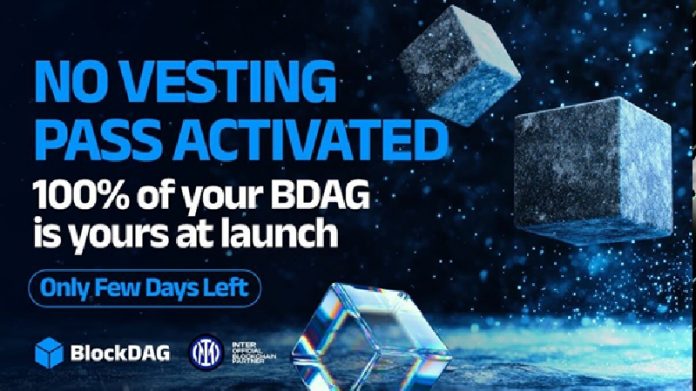
Worldcoin (WLD) is moving closer to breaking a tough resistance that has held strong since March 2024. It’s grabbing attention as it approaches this key level. In contrast, Render (RNDR) is showing less energy, staying stuck in the same range for weeks. While WLD and RNDR work through their market paths, BlockDAG (BDAG)  is making headlines for something different altogether. Due to high demand from the community, the team behind BlockDAG has extended its NO VESTING PASS.

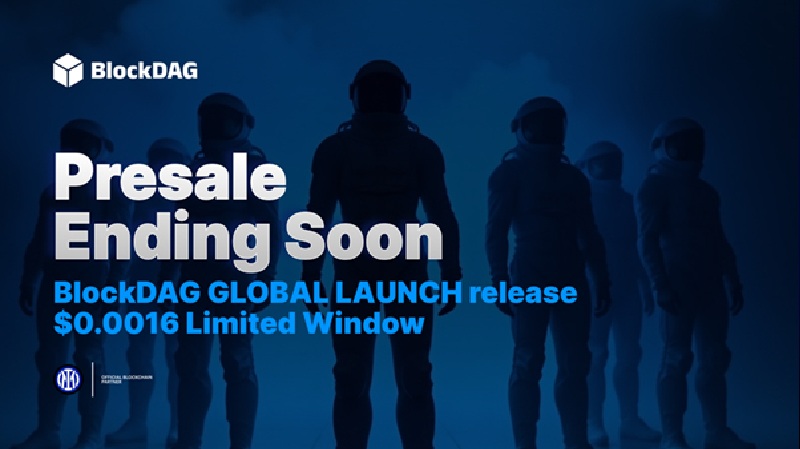
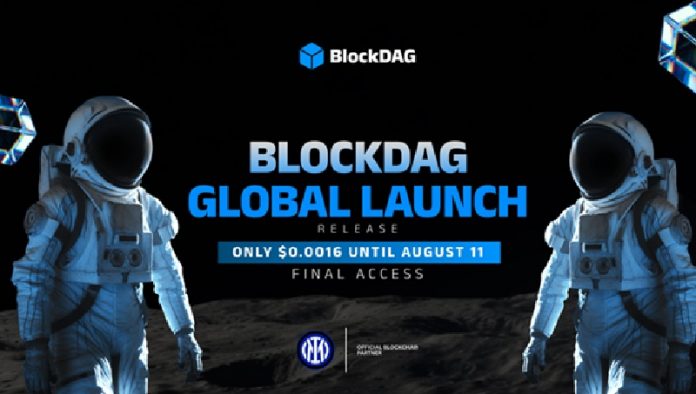
This gives users 100% access to their coins right at launch. On top of that, BlockDAG has introduced a special GLOBAL LAUNCH release price of $0.0016 until August 11. This move has pushed BlockDAG’s presale total beyond $354 million, making it one of the standout names in crypto right now.

Worldcoin Price Trend Approaches Breakout Zone

Worldcoin (WLD) is slowly gaining ground. It’s trading at about $1.18, just below a falling resistance line that’s been in place since March 2024. Over time, WLD has held key levels around $1.00 and $1.10, showing signs of building strength. Higher lows and steady volume are helping its case. The current Worldcoin (WLD) price trend also shows tight volatility and strong activity near major Fibonacci levels.

Buyers are staying active in these zones, creating the base for a potential breakout. If WLD can push above its resistance and hold that ground, the chart points toward a possible upward move. With momentum holding steady, all eyes are on whether WLD can finally break past the wall that’s been holding it back.

Render Price Movement Remains Sideways Below $5.50

The Render (RNDR) price outlook remains calm with little change in recent weeks. RNDR is stuck between $2.70 and $5.50. At the time of writing, it’s priced around $4.23. In the past 24 hours, RNDR has shown barely any shift, and the weekly trend shows a dip of about 2.77%. Trading volume is also down by nearly 33%, showing that fewer people are actively engaging with RNDR for now.

Open interest has dropped too, which means the excitement around RNDR has slowed. This puts the focus on the $4.00 support level. If RNDR can hold that, or better yet, push above its ceiling at $5.50, it could gain momentum again. Until that happens, the Render (RNDR) price outlook is in a holding pattern, with users waiting for a strong signal.

BlockDAG’s NO VESTING PASS & GLOBAL LAUNCH Offer Drive Surge In Demand

BlockDAG is making big waves. Thanks to community support, the team extended its NO VESTING PASS offer until August 4. This deal gives buyers full access to their BDAG coins the moment the platform launches, no waiting.

That’s not all. BlockDAG has also introduced a special GLOBAL LAUNCH release price of $0.0016, available until August 11. This price point is a massive chance for users looking to join early. Considering the final launch price is set at $0.05, buyers could see a 3,025% return if they grab the deal before the deadline.

So far, BlockDAG has raised over $354 million, making it one of the most successful presales in recent history. The coin has moved from $0.001 in Batch 1 to $0.0276 in Batch 29, showing a 2,660% increase. In total, over 24.4 billion BDAG coins have been sold. This growth has caught the eye of over 200,000 holders, and experts are already predicting a future price of up to $5 per coin.

With the clock ticking toward the GLOBAL LAUNCH release, this $0.0016 deal and the full unlock feature have helped place BlockDAG among the top-performing names in the market today. For anyone looking to join early, the timing couldn’t be better.

Final Thoughts

Worldcoin (WLD) is slowly building toward a breakout, and if it pushes past its resistance, it could change its trend completely. Render (RNDR), on the other hand, continues to move sideways, waiting for a sign to move. But BlockDAG is on a whole different track.

Its NO VESTING PASS and limited-time $0.0016 GLOBAL LAUNCH offer are giving the project major traction. With 200K holders and over 24.4 billion coins sold, BlockDAG is already making its mark. Right now, the combo of full coin unlock and low entry price gives it the edge as one of the top crypto coins to watch.

Presale: https://purchase.blockdag.network

Website: https://blockdag.network

Telegram: https://t.me/blockDAGnetworkOfficial

Discord: https://discord.gg/Q7BxghMVyu

Anatoly Yakovenko’s Characterization of Memecoins and NFTs As “Digital Slop” Carries Significant Implications For Solana’s Ecosystem

0

Solana co-founder Anatoly Yakovenko recently sparked controversy by labeling memecoins and NFTs as “digital slop” with no intrinsic value, comparing them to loot boxes in mobile games. This statement, made in a July 27, 2025, X post during a debate with Base creator Jesse Pollak, has drawn both criticism and support.

Yakovenko argued that their value stems solely from market-driven price discovery, not inherent worth, while Pollak countered that their content holds value, akin to art. Despite his stance, Yakovenko acknowledged memecoins’ role in Solana’s growth, noting that they accounted for 62% of the network’s decentralized app revenue in June 2025, contributing to $1.6 billion in first-half revenue, largely driven by platforms like Pump.fun and LetBonk.

Critics, including X users like “Caps” and “Karbon,” accused Yakovenko of hypocrisy for profiting from these assets while dismissing them, with some arguing that memecoins and NFTs have driven Solana’s user base and cultural relevance. Others, like OpenSea’s Adam Hollander, defended NFTs’ value in digital ownership. Despite the debate, Solana’s market activity remains robust, with no immediate impact on transaction volume.

Yakovenko’s statement risks alienating a portion of Solana’s user base, as memecoins and NFTs have been key drivers of network activity. In Q2 2025, memecoins alone generated 62% of Solana’s decentralized app revenue ($1.6 billion), largely through platforms like Pump.fun. Publicly dismissing these assets could undermine confidence among developers and users who rely on them for revenue or engagement.

Despite the critique, Yakovenko acknowledged memecoins’ role in onboarding millions to Solana. This duality highlights a tension: while memecoins fuel growth, his comments suggest a desire to pivot toward more “serious” use cases, potentially affecting Solana’s positioning as a hub for speculative assets. NFT and memecoin creators may feel devalued, potentially slowing innovation in these areas. However, Yakovenko’s focus on price discovery as a neutral mechanism could encourage developers to explore assets with stronger fundamentals.

The “digital slop” label reignites the philosophical divide in crypto about what constitutes value. Yakovenko’s view aligns with skeptics who see memecoins and NFTs as speculative bubbles, while defenders like Jesse Pollak argue they have cultural or artistic worth, akin to traditional collectibles or art. By comparing memecoins to loot boxes, Yakovenko may inadvertently invite regulatory attention, as loot boxes have faced legal challenges globally for resembling gambling. This could complicate the regulatory landscape for Solana-based projects.

The controversy hasn’t visibly impacted Solana’s transaction volume yet, but prolonged negative sentiment could dampen enthusiasm for memecoins and NFTs, potentially affecting token prices or trading activity on Solana and other blockchains. Memecoins and NFTs have shaped crypto’s cultural identity, particularly on Solana, where projects like Let Ulord and BONK thrive. Dismissing them as “slop” may alienate the communities driving this culture, potentially pushing them to rival chains like Base or Ethereum.

Memecoins and NFTs are accessible to retail users, driving adoption through low-cost, fun, or community-driven projects. They’ve been pivotal in Solana’s growth, with platforms like Pump.fun enabling easy token creation. Yakovenko’s critique aligns with a vision of blockchain as a tool for scalable, utility-driven applications. This view appeals to institutional players and developers focused on DeFi, supply chain solutions, or enterprise use cases, who may see memecoins/NFTs as distractions.

Memecoins and NFTs thrive on short-term hype and viral trends, often criticized for volatility and lack of staying power. Yet, they’ve onboarded millions, as Yakovenko admitted, creating a gateway to crypto. Yakovenko’s comments suggest a preference for sustainable, tech-driven growth, prioritizing Solana’s high-throughput capabilities for applications like DeFi or stablecoin transfers over speculative fads.

The Surge In Ethereum ETF Inflows Reflects Institutional Confidence In Ethereum’s DeFi Leadership

0

U.S. spot Ethereum ETFs recorded approximately $1.85 billion in weekly net inflows for the week ending July 27, 2025, marking one of their strongest performances and significantly outpacing Bitcoin ETFs, which saw $72 million in inflows during the same period. BlackRock’s iShares Ethereum Trust (ETHA) led with $1.29 billion, followed by Fidelity’s FETH with $382.89 million.

This surge reflects growing institutional interest in Ethereum, driven by its smart contract capabilities, regulatory clarity, and a 16-day inflow streak, with cumulative inflows reaching $9.33 billion and total assets under management at $20.66 billion. Ethereum’s price rose 54% in July, near $4,000, fueled by ETF demand and institutional accumulation.

Institutional investors are increasingly drawn to Ethereum due to its robust ecosystem and smart contract functionality, which powers decentralized finance (DeFi), non-fungible tokens (NFTs), and other blockchain applications. The approval of spot Ethereum ETFs in the U.S. has provided a regulated, accessible vehicle for institutions to gain exposure, boosting inflows. BlackRock’s iShares Ethereum Trust (ETHA) and Fidelity’s FETH, which saw $1.29 billion and $382.89 million in inflows respectively, highlight strong institutional backing.

The U.S. Securities and Exchange Commission’s (SEC) approval of spot Ethereum ETFs has alleviated concerns about regulatory uncertainty, encouraging both retail and institutional investors to allocate capital. This clarity contrasts with ongoing debates around Ethereum’s classification as a security or commodity. Ethereum’s price surged 54% in July 202025 near reaching ~$4,000, driven by ETF inflows and broader market optimism. The 16-day inflow streak and $9.33 billion in cumulative inflows reflect sustained investor enthusiasm.

Ethereum’s outperformance compared to Bitcoin ETFs ($72 million in inflows) underscores its appeal as a high-growth asset in the crypto market. Ethereum’s dominance in DeFi, hosting over 60% of the sector’s total value locked (TVL), makes it a cornerstone of decentralized applications (dApps). Its smart contract platform supports lending, borrowing, trading, and yield farming, attracting investors seeking exposure to DeFi’s growth.

Anticipation of pro-crypto policies, such as potential U.S. strategic reserve allocations for digital assets, has fueled bullish sentiment. Ethereum’s role as a foundational blockchain positions it to benefit from such developments. Ethereum remains the preeminent platform in DeFi, often described as the “sovereign” blockchain due to its foundational role and unmatched ecosystem. Its place in DeFi is defined by:

Ethereum hosts ~60% of DeFi’s TVL, with over $100 billion locked across protocols like Aave, Uniswap, and MakerDAO as of July 2025. This dominance stems from its first-mover advantage and robust developer community. Ethereum’s smart contract capabilities enable complex financial applications, from decentralized exchanges (DEXs) to yield aggregators. Its Turing-complete programming language allows developers to build versatile dApps, cementing its role as DeFi’s backbone.

Ethereum boasts the largest developer ecosystem in blockchain, with thousands of projects and a vibrant open-source community. This fosters continuous innovation, reinforcing its sovereignty. Layer-2 solutions like Arbitrum and Optimism enhance scalability, reducing transaction costs and maintaining Ethereum’s competitiveness against faster blockchains like Solana or Binance Smart Chain.

Layer-1 blockchains like Solana, Avalanche, and Cardano offer lower fees and faster transactions, capturing some DeFi market share. Solana, for instance, has grown in NFT and DeFi activity due to its high throughput. High gas fees on Ethereum’s mainnet can deter smaller retail users, though Layer-2 solutions mitigate this.

Ongoing scrutiny of DeFi protocols and potential regulations could impact Ethereum-based projects, though ETF approvals signal a positive regulatory trajectory. Ethereum’s upcoming upgrades, such as sharding and further Layer-2 integration, are expected to enhance scalability and reduce costs, solidifying its DeFi dominance. Institutional inflows via ETFs and growing adoption of Ethereum-based stablecoins (e.g., USDT, USDC) further entrench its role in DeFi’s infrastructure.

Ethereum’s sovereignty is bolstered by its cultural and technical influence, with many competing chains (e.g., Polygon, Arbitrum) operating as Ethereum-compatible or Layer-2 solutions, reinforcing its ecosystem rather than replacing it. The surge in Ethereum ETF inflows reflects institutional confidence in Ethereum’s DeFi leadership, regulatory progress, and market performance. Ethereum’s sovereignty in DeFi is rooted in its smart contract dominance, vast TVL, and developer ecosystem, though it faces competition from faster, cheaper blockchains. Continued innovation and institutional adoption are likely to sustain its central role in DeFi’s growth.

PEPE Holds for Whales, AAVE Struggles, Yet BlockDAG Roars Back With No Vesting & $354M Raised!

0

Wider market sentiment shows signs of tension. The AAVE price pattern has fallen beneath its recent support level, while the PEPE coin price trades sideways, even with notable whale activity. Current momentum across several assets has slowed, with traders unsure whether to expect a rebound or more losses. Amidst this uncertainty, some projects are managing to cut through the noise.

That’s exactly where BlockDAG (BDAG) steps in. Its presale continues gaining traction with over $354 million already raised. The BEAT VESTING PASS lets all buyers get full coin unlock at launch, and with the price fixed at $0.0016 until August 11, early participants are jumping in before the presale moves forward. While the AAVE price pattern and PEPE coin price show hesitation, BlockDAG presents a moving front.

Will AAVE Reclaim $269? Analyzing the Latest AAVE Price Pattern

Support appears to be weakening as the AAVE price pattern slips below the $269 range. Despite recently achieving a $50 billion Total Value Locked (TVL), price movement remains unconvincing. A 14% dip from the July 19 peak near $334 highlights this slump.

Indicators offer little relief. The Relative Strength Index nears oversold levels, the MACD remains bearish, and the price floats under the 7-day and 20-day moving averages. While long-term support from the 200-day SMA still holds, shorter-term signals have yet to strengthen. The critical test now lies around $269.86; a breakdown here could result in a slide toward $213 territory.

PEPE Coin Price Consolidates Despite Whale Interest

The PEPE coin price continues its sideways movement, hovering near $0.0000126 following a sharp 50% correction. Volume has dropped significantly, with a 7% decline this week and a 40% drop in overall trading activity. However, behind the scenes, whale movements between $100,000 and $1 million have risen by 32.5%, signaling stealth accumulation.

Holding steady around the $0.0000119 support line, the PEPE coin price is showing early technical hints of strength. A bullish hammer pattern and a positive Chaikin Money Flow reading at 0.08 point to accumulation in progress. While some anticipate a 20% surge to $0.000015, the coin continues to trade within a tight range, awaiting confirmation.

BlockDAG’s BEAT VESTING PASS Drives Presale Past $354M Milestone

BlockDAG’s presale is breaking all previous norms, and its BEAT VESTING PASS is leading the charge. This unique offer ensures that all BDAG coin purchases made before August 11 at the fixed price of $0.0016 will be fully unlocked at the time of launch, with no staggered releases or lock-ups.

This extension applies only to coins bought during the BEAT VESTING PASS window. Unlike phased vesting models, buyers who purchase during this period gain immediate access to their entire holdings at launch. This one-time opportunity is part of BlockDAG’s GLOBAL LAUNCH release, now in batch 29. So far, over 24.4 billion BDAG coins have been sold, with presale contributions surpassing $354 million.

With early participants already seeing 2,660% growth in their funds since batch 1, this momentum is drawing even more attention. As the price remains locked at $0.0016 until August 11, many are taking this as the final entry point before the presale advances. The confirmed exchange listing price is $0.05, and forecasts hint at $1 soon after, potentially offering a 3,025% upside from the current rate.

The BEAT VESTING PASS comes at a strategic time. With the presale nearing completion, this limited-time benefit is fueling whale interest and wide community participation. For those monitoring the top crypto for 2025, BlockDAG stands out as a project that’s actively delivering and giving users a clear advantage ahead of its launch.

Final Say!

Momentum remains shaky in the broader market. The AAVE price pattern is under pressure at the $269 support level, and the PEPE coin price hovers in a consolidation zone despite whale activity. Neither asset is making decisive moves.

By contrast, BlockDAG continues to build on its presale success, raising over $354 million and offering 100% coin unlocks through the BEAT VESTING PASS until August 11 at $0.0016. With over 24.4 billion coins sold and a projected jump to $1 post-launch, it’s becoming one of the top cryptos for 2025 worth keeping close watch on.

Presale: https://purchase.blockdag.network

Website: https://blockdag.network

Telegram: https://t.me/blockDAGnetworkOfficial

Discord: https://discord.gg/Q7BxghMVyu