DD
MM
YYYY

PAGES

DD
MM
YYYY

spot_img

PAGES

Home Blog Page 824

U.S. Commerce Secretary Says TikTok Will Go Dark If China Doesn’t Approve Deal

0
The brand is growing

TikTok is now racing against time as the U.S. government signals it will shut down the popular short-form video app unless its Chinese parent company, ByteDance, fully relinquishes control to American interests.

U.S. Commerce Secretary Howard Lutnick on Thursday confirmed that the Trump administration is standing firm on its position.

“We’ve made the decision. You can’t have Chinese control and have something on 100 million American phones,” he said.

The demand, which includes ceding control over TikTok’s core technology, data, and algorithm, comes months after President Donald Trump signed a law mandating ByteDance to divest the U.S. arm of TikTok or face a nationwide ban. Congress passed the bill in 2024 after years of mounting concern that the Chinese government could exploit the platform to collect data from American users or manipulate the information ecosystem.

Yet despite multiple public assurances from Trump that the deal would be closed “sooner than expected,” negotiations have dragged on. The President has extended the deadline three times since taking office in January. The current and possibly final deadline is September 17.

“Basically, Americans will have control. Americans will own the technology. Americans will control the algorithm. That’s something Donald Trump is willing to do,” Lutnick said on CNBC.

China Seen as the Final Obstacle

While finding the right buyer remains a major hurdle, observers say the deal’s real bottleneck is Beijing. Even if a U.S. entity is ready to acquire TikTok’s American operations, ByteDance would still need regulatory clearance from the Chinese government — a requirement that analysts believe may be difficult, if not impossible, to obtain.

Beijing previously opposed a forced divestiture when a similar situation unfolded under Trump’s first administration in 2020, calling the move “bullying” and “political oppression of Chinese companies.” The Chinese government also revised its export control rules to limit the transfer of certain technologies — including content recommendation algorithms — widely seen as a move to complicate any TikTok sale.

This makes the current standoff more than just a commercial negotiation. It’s part of a broader geopolitical conflict over data sovereignty, surveillance, and control of the next generation of global tech platforms.

Buyers Still in Flux as Time Runs Out

Earlier this month, Reuters reported that private equity giant Blackstone pulled out of a consortium that had been preparing a bid for TikTok’s U.S. assets, dealing a major blow to the prospect of a swift resolution. Though Trump recently told Fox News that he has a group of “very wealthy people” ready to buy the platform, there’s no confirmation yet of a finalized buyer or a definitive agreement.

Meanwhile, ByteDance has not made any public statement about the current state of negotiations or whether it’s seeking Chinese approval to move forward. As the deadline approaches, legal and commercial uncertainty looms over the future of one of the world’s most influential digital platforms.

If ByteDance fails to complete the divestiture in time — or if China blocks the sale — TikTok would be effectively banned from operating in the United States. That would mean the app, which has become a staple of American digital culture, particularly among Gen Z, would disappear from app stores and lose access to U.S. infrastructure, such as cloud hosting and payments systems.

Lutnick was blunt in outlining the government’s position: “If China doesn’t approve that deal, then TikTok is going to go dark.”

With the clock ticking toward September 17, all eyes are now on Beijing and the unresolved deal that could redefine not just TikTok’s future, but the contours of global tech governance.
Canal+ Seals $3bn Deal for Full Control of MultiChoice, Ending South African Ownership of DStv and GOtv

0

In a landmark deal that will reshape Africa’s broadcasting landscape, French media group Canal+ has secured final approval to acquire full ownership of MultiChoice, the South African-based pay-TV giant behind DStv and GOtv.

The $3 billion all-cash deal—which gives Canal+ the remaining 55% stake it did not already own—received conditional approval from South Africa’s Competition Tribunal on Tuesday, marking the end of MultiChoice’s three-decade run as an independent African-owned broadcaster.

Canal+ is targeting October 8, 2025, to conclude the acquisition, pending final approvals from South Africa’s broadcasting regulator, ICASA, and the Johannesburg Stock Exchange.

Canal+ Merger: Regulatory Greenlight with Strings Attached

The South African Competition Tribunal granted Canal+ conditional approval to proceed with the acquisition, but only after imposing a series of stringent public interest conditions designed to protect South Africa’s media sovereignty and economic participation:

  • Content Investment: Canal+ must inject at least R26 billion (over $1.4 billion) over the next five years into South African content production, sports rights, skills development, and technological upgrades.
  • Job Protection: MultiChoice cannot initiate retrenchments for at least three years following the deal’s conclusion.
  • Ownership Requirements: Canal+ will spin off MultiChoice South Africa’s broadcasting license into a separate entity (dubbed “LicenceCo”), which must remain majority-owned by Historically Disadvantaged Persons (HDPs). This is to comply with South Africa’s Electronic Communications Act, which caps foreign ownership of licensed broadcasters at 20%.
  • Worker Ownership: Employees of the newly carved-out LicenceCo must also own a shareholding stake, ensuring local participation in the ownership structure.
  • Support for Local Enterprises: Canal+ will expand its procurement and partnerships with South African small and micro enterprises (SMMEs), HDP-owned companies, and local suppliers across the media value chain.

MultiChoice’s Struggle to Stay Afloat in Africa

Once a dominant force across sub-Saharan Africa, MultiChoice has in recent years battled falling revenues, shrinking subscriber bases, inflationary pressures, and a deluge of competition from global streaming platforms. In Nigeria—its largest market—the company has faced a particularly bruising period.

Early this month, Multichoice was fined N766.2 million by the Nigeria Data Protection Commission (NDPC) for violating the Nigeria Data Protection Act (NDP Act) in what is now the most significant enforcement action since the law came into force in 2023.

In May 2024, MultiChoice Nigeria suffered a major blow when the Competition and Consumer Protection Tribunal in Abuja ordered it to refund Nigerian subscribers and pay a N150 million fine for increasing subscription prices in defiance of a court order. The company’s appeal failed to block enforcement, escalating its legal woes in the country.

Even more damaging has been the hemorrhaging of its Nigerian subscriber base. Between 2023 and early 2024, MultiChoice lost over 1.3 million Nigerian customers, representing nearly 43% of its total base in the country, amid rising economic hardship and pushback against frequent price hikes. In its most recent financial year, MultiChoice reported over 9 billion rand in losses (approximately $500 million), underlining mounting challenges across Africa’s top markets.

What This Means for Canal+ and African Broadcasting

For Canal+, which already operates in 25 African countries with over 8 million subscribers, the acquisition opens a direct path to MultiChoice’s 14.5 million subscribers across 50 sub-Saharan nations. The merger combines Canal+’s French-language markets with MultiChoice’s dominance in English- and Portuguese-speaking regions, establishing a continental media powerhouse capable of challenging global streamers like Netflix, Amazon Prime, and Disney+.

Canal+ CEO Maxime Saada said the deal positions the group to become “a true champion for Africa” in pay-TV and streaming. MultiChoice CEO Calvo Mawela echoed the sentiment, noting that the acquisition would ensure continued investment in local content and technological innovation.

Despite its losses, MultiChoice still boasts a vast infrastructure spanning satellite, terrestrial (GOtv), and streaming platforms (Showmax). With Canal+’s global backing, the combined company is expected to:

  • Expand local-language programming.
  • Deepen mobile streaming capabilities across Africa’s fast-growing smartphone market.
  • Retain high-demand premium sports content like the English Premier League through SuperSport.

Canal+ originally began acquiring shares in MultiChoice in 2020. By April 2024, it had built its stake to over 45% and subsequently triggered a mandatory takeover offer. After months of negotiations and regulatory scrutiny, this week’s approval finalizes a transaction that has long loomed over Africa’s media sector.

The End of an Era

Founded in 1985, MultiChoice grew into Africa’s largest satellite television company under South African ownership. Its flagship brand, DStv, dominated premium entertainment across the continent for decades. The full takeover by Canal+ marks the end of its independence—and the beginning of a new chapter driven by global capital and expanding European-African synergy in media production.

Analysts believe the Canal+–MultiChoice merger sets a precedent for the scale and structure of future media ownership on the continent, especially as Africa’s media sector becomes increasingly globalized. Time will tell whether this translates into more affordable and diverse content for consumers, or simply consolidates power among fewer, richer hands.

YouTube’s Ad Revenue Soars to $9.8bn as Viewership Shifts Toward Free Streaming, Reshaping Global and Asian Markets

0
A picture shows a You Tube logo on December 4, 2012 during LeWeb Paris 2012 in Saint-Denis near Paris. Le Web is Europe's largest tech conference, bringing together the entrepreneurs, leaders and influencers who shape the future of the internet. AFP PHOTO ERIC PIERMONT (Photo credit should read ERIC PIERMONT/AFP/Getty Images)

YouTube continues to dominate the streaming landscape, posting a 13% year-over-year increase in advertising revenue in the second quarter of 2025, reaching $9.8 billion, according to Alphabet’s earnings report released on Wednesday.

The figure exceeded analyst projections of $9.6 billion, reflecting the platform’s growing leverage in both traditional TV ad spending and digital streaming.

The growth is not occurring in isolation. Alphabet’s overall quarterly revenue hit $96.4 billion—also a 13% rise from the same period last year—bolstered by a surge across its business arms. Search accounted for $54.2 billion, up 12% year-over-year, while its Google Cloud segment grew 32% to $13.6 billion. Total ad revenue for Alphabet now stands at $71.3 billion, demonstrating a strong rebound in digital advertising.

For YouTube specifically, the gains are closely tied to a broader shift in consumer behavior. A Nielsen report showed YouTube captured 12.4% of total TV viewership time in April, marking the third straight month it led all streaming and broadcast platforms. That dominance only grew by June, with the platform hitting a record 12.8% share of TV viewing time in the U.S., outperforming Netflix, Hulu, and traditional cable networks.

This increasing share of living room screens is fueling YouTube’s appeal to advertisers. As traditional television audiences shrink and the cost of major streaming services rises, advertisers are reallocating spending toward platforms with the largest and most engaged audiences—YouTube being the primary beneficiary. According to industry analysts, the platform’s seamless integration of ad-supported content into connected TVs (CTVs) has opened a crucial revenue stream that traditional digital video never accessed at scale.

YouTube’s growth has not gone unnoticed by competitors. Netflix, which launched its ad-supported tier in late 2022, has vowed to double its advertising revenue this year. Although it has not released official ad revenue figures, Madison & Wall estimates place the figure around $3 billion, still far behind YouTube. Meanwhile, Amazon Prime Video and HBO Max have also ramped up advertising strategies in a bid to capture more budget share from brands pivoting away from traditional TV.

Implications for Asia

The developments carry significant implications for Asia’s vast and diverse streaming market. YouTube’s dominance is poised to expand even further across the continent, where mobile-first and CTV consumption habits are prevalent. Countries like India, Indonesia, Vietnam, and the Philippines already rank among YouTube’s largest global audiences, driven by a young, mobile-savvy population with a strong appetite for free content.

As inflation and economic challenges continue to strain household budgets, YouTube’s free, ad-supported model is increasingly attractive in Asian markets compared to rising subscription prices from platforms like Disney+ and Netflix. Business Insider notes that the cost of paid streaming services has soared globally, pushing more viewers toward “FAST” (Free Ad-Supported TV) platforms like YouTube.

This shift is also expected to influence advertising decisions. Marketers seeking high-volume reach in emerging markets are likely to deepen investments in YouTube’s ad inventory, especially given its powerful targeting tools and regional language content offerings.

However, this means that regional streaming giants like Tencent Video and iQIYI in China, as well as local OTT services in Southeast Asia, will need to rethink their monetization strategies. Some are expected to pivot toward hybrid or ad-based models to remain viable in a market that is quickly warming to free content.

Alphabet’s success this quarter also highlights the rising role of AI and infrastructure in sustaining growth. The company raised its capital expenditure forecast for 2025 to $85 billion—up from $67 billion—driven by expanding AI capabilities and cloud infrastructure. CEO Sundar Pichai stressed that YouTube, Search, and Cloud will all benefit from deeper AI integration, allowing advertisers to create, target, and optimize campaigns with greater precision.

In summary, YouTube’s second-quarter earnings not only underscore its growing dominance in the U.S. but also position it as the leading player in the next phase of streaming, especially in Asia, where economic pressures and mobile adoption are reshaping viewer habits. As rivals scramble to catch up, YouTube is already setting the pace for the global future of digital video.

Airtel Africa Posts Strong Q1 Results, Profit Soars 269% as Currency Pressures Ease and Tariffs Rise in Nigeria

0

Airtel Africa has posted a powerful rebound in its financial performance for the first quarter of the 2025/2026 financial year, ending June 30, 2025, recording a pre-tax profit of $273 million, marking a 269% surge from the same period last year.

The group’s profit before tax in just this quarter represents 41% of its total earnings for the full year ended March 31, 2025—an early signal that this fiscal year may outperform market expectations.

Net profit after tax came in even stronger at $156 million, a year-on-year growth of 408%, and already accounts for 48% of the group’s full-year earnings posted three months earlier. The exceptional results come amid a recovery in macroeconomic conditions across Airtel’s key African markets, especially Nigeria, where recent tariff adjustments sharply lifted revenue.

Revenue Hits $1.415 Billion as Tariff Adjustments and Digital Expansion Pay Off

Group revenue rose to $1.415 billion, showing a 24.9% growth in constant currency and 22.4% in reported currency, reflecting easing currency pressures, stronger mobile data uptake, and a customer-focused growth strategy. According to the company’s earnings report, the acceleration in revenue growth from the previous quarter was “driven by tariff adjustments in Nigeria and a strong performance in Francophone Africa.”

The Nigerian business remains a significant growth engine. Revenue in Nigeria alone rose 35.2% in constant currency, largely due to the implementation of new mobile tariffs and increased data penetration. Francophone Africa also delivered strong numbers, growing 15.7% year-on-year.

Customer Base Grows to 151.2 Million as Data Usage Surges

The company’s total customer base grew by 9%, reaching 151.2 million, driven largely by increased demand for data services. Data customers now stand at 75.6 million, up 17.4% compared to the same period in 2024. The growth comes amid the company’s continued focus on digitization and expansion of 4G and 5G networks.

CEO Sunil Taldar said the result was a reflection of “sustained demand for our services and the strength of our business model to meet these demands.” He added that Airtel Africa’s performance was driven by “relentless focus on digitization and simplifying the customer experience.”

Operating Profit Up 29%, Margins Improve Despite Spending on Expansion

Airtel’s operating profit rose by 29% to $446 million, while the EBITDA margin for mobile services improved to 46.8%, up 240 basis points. The company maintained tight control of costs even as it increased marketing spend and network investments across multiple markets.

Its capital expenditure for the quarter stood at $121 million, down 18% from the same period a year ago. However, the company said it would maintain full-year capex guidance between $725 million and $750 million, indicating continued investment in infrastructure and service delivery.

Currency Gains and Tax Credits Add to Profit Surge

Airtel Africa also recorded $42 million in tax credits following the revaluation of the naira and recognition of deferred tax assets in Nigeria. Additionally, a $22 million foreign exchange gain was booked from the appreciation of the Central African CFA franc, reversing losses suffered last year due to currency devaluation across several markets.

In recent years, currency depreciation in Nigeria, Malawi, Zambia, and Kenya has created major headwinds. But over the last three quarters, those pressures have eased considerably, helping to stabilize the company’s balance sheet and income statement.

Interest Costs and Debt Position

Finance costs rose by 8.2% year-on-year due to increased OpCo and lease-related borrowings. However, the company noted that 95% of its operational debt is now denominated in local currencies, a strategic shift aimed at minimizing exchange rate risks that had previously eroded earnings.

The group’s net debt stood at $3.3 billion, a moderate figure relative to cash flows, as Airtel continues to balance aggressive expansion with debt discipline.

With nearly half of last year’s net profit already matched in just the first quarter, analysts expect Airtel Africa to comfortably outperform its previous earnings benchmarks if current macroeconomic and operational trends continue. The company is also optimistic about growth in mobile money and data services, especially as smartphone penetration in its markets remains low, at about 46%.

Ghana Set to License Crypto Platforms by 2025 as Digital Asset Regulation Gains Momentum

0
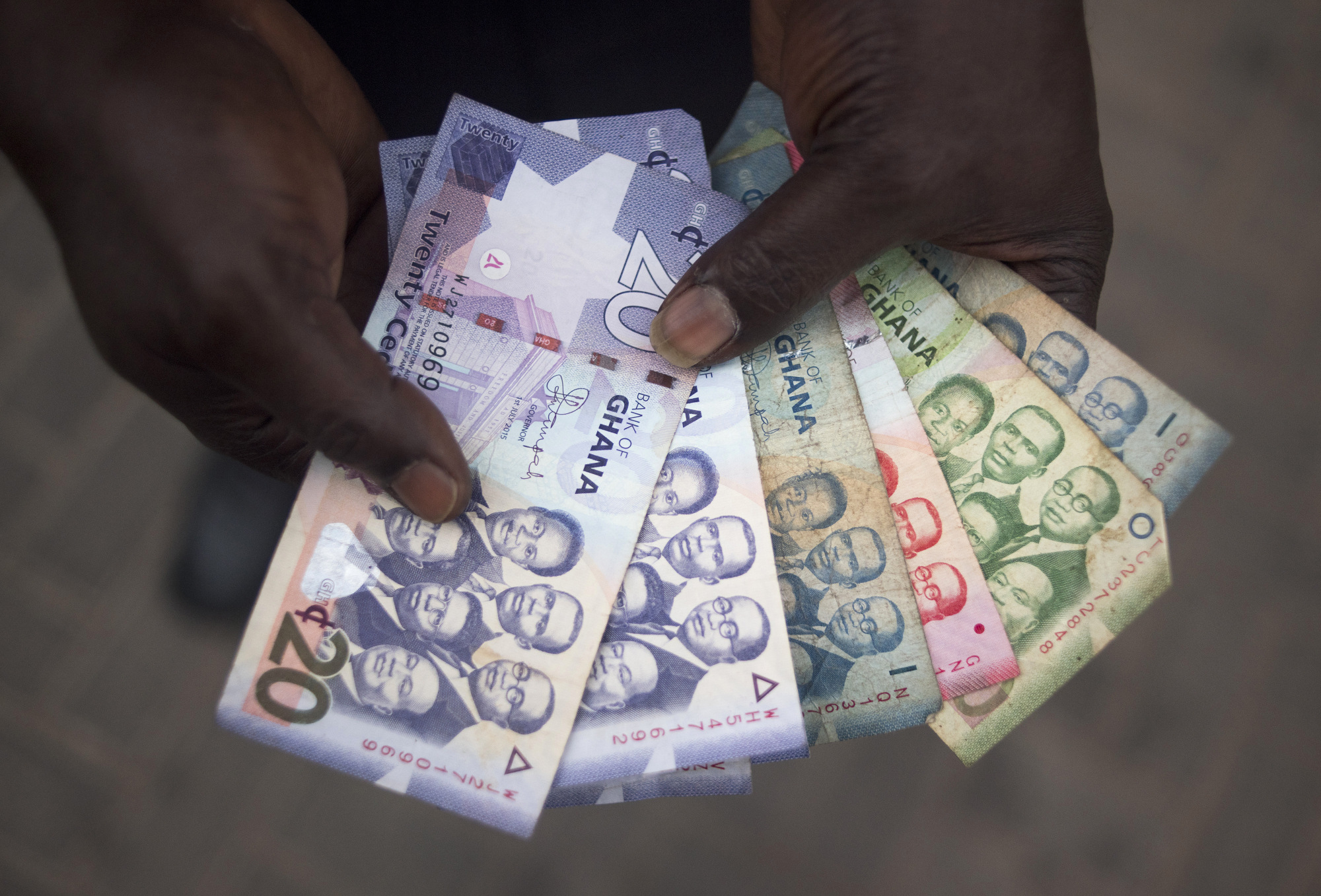
A man holds Ghanian currency in his hands on September 20, 2016 in Accra, Ghana. Ty Wright/Bloomberg News

The government of Ghana is taking decisive steps to regulate the country’s burgeoning cryptocurrency sector by introducing a licensing framework for crypto platforms.

This strategic move is aimed at addressing the growing use of digital assets both within Ghana and West Africa.

At the forefront of this development is the Bank of Ghana, which is leading efforts to implement a comprehensive regulatory framework expected to become law by September 2025.

The upcoming legislation seeks to formalize cryptocurrency operations, attract investment, boost international trade, and enable real-time financial data collection.

As part of this initiative, the Bank of Ghana plans to establish a dedicated unit to supervise the digital asset sector once the law is enacted. This regulatory structure will mark the country’s first formal system for overseeing Virtual Asset Service Providers (VASPs), laying out licensing requirements and compliance standards. Regulatory responsibilities will be shared between the Bank of Ghana and the Securities and Exchange Commission (SEC).

Speaking during a panel at the African Leaders and Partners Forum in May 2025, a Bank of Ghana representative noted that the legal foundation for oversight hinges on the passage of the Virtual Asset Providers Act. The legislation outlines key areas such as consumer protection, financial stability, cybersecurity, and the integration of digital assets into the broader financial system.

This development is coming after the Bank of Ghana has taken notice of recent developments in the use, holding, and trading of virtual or digital currencies (also known as cryptocurrencies), such as Bitcoin in Ghana. 

Crypto use has been quietly booming in Ghana over the last few years. More than 3 million adults about 17% of the adult population are now using digital currencies like Bitcoin and USDT, with estimates suggesting over 900,000 individuals (3.01% of the population) own at least one type of cryptocurrency as of 2022.

Cryptocurrency transactions surged by over 150% between 2022 and 2023, with peer-to-peer (P2P) trading volumes growing by 120% year-on-year, placing Ghana among the top 10 countries in sub-Saharan Africa for crypto adoption. On the global scale, Ghana ranked 29th globally in cryptocurrency adoption according to the Chainalysis Global Crypto Adoption Index (2023) and 4th in Africa for crypto interest, behind Nigeria, South Africa, and Morocco.

The hope is that regulating the crypto sector will help the Ghana capture revenue and better control its fiat currency. The cedi has grown over 40% against the U.S. dollar in 2025, helping it recover from a loss of nearly 20% last year. This volatility has made it difficult for the central bank to manage inflation.

In a statement made in May, the Bank of Ghana emphasized that all cryptocurrency-related businesses will be required to register and comply with Know Your Customer (KYC) and anti-money laundering protocols aligned with international standards. This includes both existing players and new entrants into the industry.

The regulatory push is also expected to drive improvements in security and transparency, fostering a more resilient and competitive crypto ecosystem in Ghana and across the West African region. For Ghanaian crypto users, the law represents a major milestone. It promises legal protection in cases of disputes or service failures, providing much-needed assurance and confidence in the digital asset space.