DD
MM
YYYY

PAGES

DD
MM
YYYY

spot_img

PAGES

Home Blog Page 828

Alibaba Unveils Quark AI Glasses in Strategic Push to Rival Meta and Expand AI Ecosystem

0

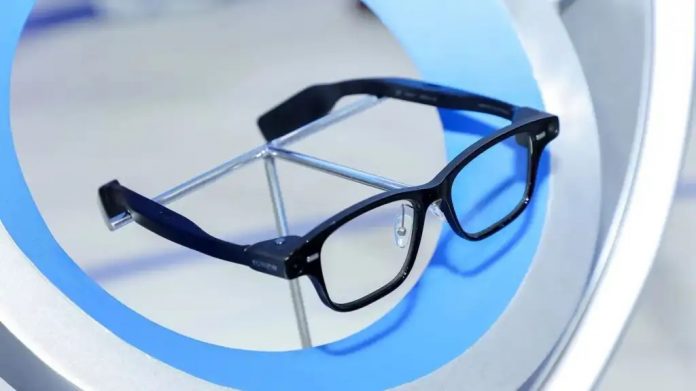
Alibaba has taken a major step into the consumer hardware market with the launch of its first AI-powered smart glasses, called Quark, at the World Artificial Intelligence Conference (WAIC) in Shanghai.

The product, powered by the company’s Quark AI assistant and its proprietary Qwen large language model, positions Alibaba as a serious challenger to Meta, Xiaomi, and other players in the emerging smart wearables market.

The announcement marks Alibaba’s most aggressive move yet to bring its generative AI capabilities directly to consumers. Beyond software dominance, the Quark AI Glasses are designed to fuse Alibaba’s core businesses—ecommerce, navigation, and digital payments—into a wearable, intelligent product that interacts with the world in real time.

What the Quark AI Glasses Offer

The glasses are tailored for both everyday and business use. Key features include:

  • Real-time translation of spoken languages
  • Instant payment via QR codes using Alipay and integration with Taobao for on-the-spot price comparisons
  • Turn-by-turn navigation through Alibaba’s Amap app
  • Hands-free calling, voice control, and music playback
  • Meeting transcription using Quark AI’s advanced speech-to-text functions

They also come with a Sony 12MP camera, with an advanced version featuring MicroLED waveguide lenses for augmented reality (AR) projections. The hardware runs on a dual-chip system—Qualcomm’s Snapdragon AR1 for performance-heavy tasks and Bestechnic’s BES2800 chip for power-efficient operation (MLQ.ai).

A Strategic Leap Beyond the Cloud

With this release, Alibaba is attempting to shift from being primarily a cloud services and ecommerce company into a fully integrated AI-powered tech ecosystem. The Quark glasses are a physical gateway into that ecosystem, designed to be always-on, voice-driven, and contextually aware, leveraging the full capabilities of Alibaba’s AI model family.

The company recently unveiled multiple upgrades to its LLM offerings, including Qwen2.5-VL, the multimodal Omni-7B, and the advanced Qwen3 series. These models offer strong reasoning capabilities and are optimized for devices like the Quark glasses. The glasses are scheduled to go on sale in China by late 2025, with no pricing or global launch information announced yet.

Part of a Broader AI Arms Race

Alibaba’s foray into smart eyewear comes as Chinese technology firms intensify their efforts to develop self-reliant AI ecosystems, especially under the pressure of U.S. export controls that have limited access to high-end semiconductors. According to Reuters, two new AI alliances were also announced during WAIC—one for chipmakers and another for model developers—to deepen integration across China’s tech stack, from chips to deployment.

Analysts say this domestic push is vital, not only to counterbalance U.S. restrictions but also to reduce reliance on foreign software and hardware. Alibaba’s vertically integrated approach—pairing AI, payments, ecommerce, navigation, and now wearables—positions it to thrive in a closed-loop ecosystem.

Challenges Ahead

Despite its strong entrance, Alibaba faces stiff competition. Meta’s Ray-Ban smart glasses continue to lead globally, and in China, companies like Xiaomi, Rokid, and Xreal have already launched their own AR wearables. Industry analysts caution that battery life, privacy, price point, and global usability could limit adoption unless Alibaba addresses these issues from the outset.

However, by leveraging its extensive ecosystem and AI expertise, Alibaba is uniquely positioned to create a differentiated offering that merges daily life, commerce, and computing.

But the Quark AI Glasses represent more than a new product. They are seen as a strategic hardware manifestation of Alibaba’s AI ambitions, aimed at transforming how people interact with the physical and digital worlds. They are also seen as part of China’s efforts to accelerate a self-sufficient AI and semiconductor ecosystem.

Huawei Dominates as Nvidia Goes Missing At China’s Largest AI Expo

0

Huawei Technologies took center stage at China’s largest artificial intelligence event of the year, the World AI Conference (WAIC) in Shanghai, underscoring its growing influence in the global chip race as Nvidia remained notably absent.

The move comes less than two weeks after Nvidia CEO Jensen Huang’s high-profile visit to Beijing, sparking renewed hopes for the U.S. chipmaker’s return to the Chinese market.

Despite those hopes, Nvidia declined to participate in this year’s AI expo and offered no public explanation, even as it continues to face tight U.S. restrictions on advanced chip exports to China. The absence was jarring — especially given Nvidia’s towering presence in global AI development — and allowed Huawei to steal the spotlight with a bold showcase of its homegrown semiconductor muscle.

At the entrance of the Shanghai Expo Center, Huawei unveiled the hardware behind its new computing powerhouse, the Atlas 900 A3 SuperPoD, linking 384 of its Ascend AI chips. The Chinese telecoms and tech conglomerate — already sanctioned and blacklisted by the U.S. — is positioning the new system as a domestic replacement for Nvidia’s cutting-edge GPUs, which have been largely barred from Chinese shores under Washington’s export controls.

Earlier in the year, analysts at SemiAnalysis suggested that although a single Ascend chip lacks the brute force of Nvidia’s Blackwell GPUs, Huawei compensates by packing significantly more chips into its servers, potentially delivering similar performance at the cost of higher power consumption.

Huang himself had acknowledged Huawei as “one of the most formidable technology companies in the world,” warning that Beijing could swiftly turn to Huawei if the U.S. keeps Nvidia on a tight leash.

China’s Growing Self-Reliance in AI Chips

Huawei was not alone. A wide array of Chinese chip developers — including Moore Threads and Yunsilicon — maintained booths at WAIC, joining tech titans like Alibaba and Tencent in showcasing AI hardware and applications ranging from translation apps and smart glasses to autonomous robots and learning aids.

At the event, education-focused NetEase’s Youdao introduced a handheld bar-shaped device that uses AI to help students prepare for university entrance exams. The device is powered by both cloud-based AI and on-device “edge AI,” highlighting how China’s chipmakers are ramping up to deliver power-efficient processors that support real-time applications.

Gao Huituan, product manager for the hardware, emphasized that many domestic chipmakers are now able to deliver “very excellent” edge processors, reducing reliance on foreign GPUs.

“Now everyone has relatively good computing power,” he said, noting a shift in the tech balance.

This expanding local capability feeds directly into Beijing’s broader goal of tech self-sufficiency. Over the weekend, Chinese Premier Li Qiang announced the launch of a global AI cooperation body with headquarters likely based in Shanghai — a strategic move aimed at asserting China’s AI standards internationally.

Nvidia’s Shrinking Chinese Footprint

Nvidia’s absence from WAIC comes despite the company’s continued attempts to navigate U.S. export restrictions. It recently received permission from Washington to resume sales of its downgraded H20 AI chips to China — chips that were specifically designed to meet U.S. export criteria while still serving Chinese demand.

While Nvidia had a booth earlier this month at a Beijing supply chain conference during Huang’s visit, it has yet to announce when H20 shipments to China will resume or how many orders it has received.

Morningstar analyst Phelix Lee noted that despite current limitations, Nvidia is still the “de facto standard” for AI data center systems globally, citing not just the H20, but flagship models like the upcoming GB300 GPU.

“The return of H20 could help Nvidia to remain as the model in (AI) GPU development in the short to medium term,” he said in a statement.

But with the WAIC snub and Huawei’s rapid momentum, the dynamics appear to be changing. Nvidia’s grip on the Chinese AI market — once seen as indispensable — is clearly under threat. The $50 billion China AI chip market, which Huang is eager to tap into, now finds itself at the center of a fast-intensifying chip war between Washington and Beijing.

Trump’s AI Action Plan

The geopolitical undercurrents deepened over the weekend with U.S. President Donald Trump announcing a national AI strategy, which includes proposals to combat what he calls “woke” bias in AI models and boost the international presence of American tech.

In response, China’s announcement of a global AI cooperation organization — potentially rivaling U.S.-led AI regulatory frameworks — shows how the race for dominance is shifting from hardware and chips to rule-setting and global governance.

With Huawei leading the charge and Nvidia’s access to the market uncertain, the world’s AI battlefield is no longer confined to lab breakthroughs — it’s increasingly being defined by geopolitical lines, export bans, and rival standards that could reshape how technology develops over the next decade.

Trump’s EU Trade Deal Slashes Tariffs but Sparks Concern Over Long-Term Impact on Auto Sector

0

U.S. President Donald Trump has declared the new trade framework with the European Union as the “biggest trade deal ever made,” touting it as a win for the American auto industry and a key step toward rebalancing trade between the two economic giants.

Announced Sunday after intense negotiations with European Commission President Ursula von der Leyen, the deal imposes a 15% blanket tariff on most European goods entering the U.S., including automobiles and auto parts. The new rate significantly reduces the looming threat of a 30% tariff Trump had threatened to enforce from August 1, while cutting nearly half of the existing 27.5% levy on European cars.

While the announcement has calmed fears of an escalating trade war, industry groups and economic analysts have warned that the tariff regime—though milder than anticipated—still poses serious risks to European automakers and could lead to long-term disruption in the global auto supply chain.

The Tariff Burden

CNBC reports that Germany’s powerful auto lobby, the VDA (German Association of the Automotive Industry), welcomed the deal for averting an outright trade dispute but described the 15% tariff as “a significant burden.” In a statement, VDA President Hildegard Müller stressed that the costs to German automakers would still run into billions of euros annually, exacerbating financial pressures at a time when the industry is already grappling with the high costs of transitioning to electric vehicles and digital manufacturing.

“The decisive factor now will be how the agreement is structured in concrete terms and how reliable it is,” Müller said, while urging both the U.S. and EU to support supply chains and maintain competitive investment environments. “A 15% tariff remains painful and burdensome.”

The European Automobile Manufacturers’ Association (ACEA) echoed those concerns. While acknowledging that the agreement provides some relief from the cloud of uncertainty, ACEA Director-General Sigrid de Vries warned that retaining elevated tariffs will continue to negatively impact both European and American automotive sectors.

“Nevertheless, the US will retain higher tariffs on automobiles and automotive parts, and this will continue to have a negative impact not just for industry in the EU but also in the US,” she said.

Margins Under Pressure

Rico Luman, a senior economist for transport and logistics at Dutch bank ING, said the agreement represents a reprieve but not a resolution.

“Margins are under pressure in a multi-challenge market and the bill can’t be fully passed on to customers without volume losses,” Luman told CNBC by email.

The tariff hit comes as automakers continue to digest the second-quarter earnings season, which already reflected pain from earlier tariff regimes and currency fluctuations. Luman added that the weakened dollar makes U.S. car imports more expensive, further complicating pricing strategies.

That’s why global car makers are all looking for ways to adjust manufacturing footprints within current facilities,” he added.

Winners and Losers

In market reaction, the Stoxx Europe Autos Index initially climbed 1.6% on news of the deal, but later reversed into negative territory as investors digested the implications of the new tariff floor.

Shares of some parts suppliers like Valeo jumped as much as 4.3%, while luxury carmaker Ferrari rose nearly 0.9%. But Germany’s biggest automakers — BMW, Mercedes-Benz, and Volkswagen — all slid more than 1.3%, indicating market skepticism about the agreement’s short-term upside.

Morningstar analyst Rella Suskin said the deal’s benefits will be unevenly distributed. Automakers that rely heavily on EU-based production for U.S. exports — such as Porsche, Mercedes, BMW, and Volkswagen — stand to gain relative protection from the reduced tariff, though the cost is still high. Stellantis, on the other hand, which imports only a single-digit share of its volumes from the EU into the U.S., is expected to see minimal impact.

What Comes Next?

Analysts warn that the deal, while momentarily stabilizing, is still fraught with uncertainty over enforcement, duration, and broader trade dynamics. While the Trump administration has portrayed it as a victory for American workers and manufacturing, European officials appear cautious, emphasizing that the details still need to be negotiated and finalized.

The European Commission has called for parallel measures to support EU-based manufacturers and make Europe more attractive to global investors. Without such support, analysts warn the EU could lose its edge in auto innovation and production, especially amid fierce global competition from China and emerging markets.

As it stands, the 15% tariff framework may be better than the feared alternative, but for automakers on both sides of the Atlantic, it remains a costly compromise.

U.S. 15% Tariffs Will Significantly Impact German Exports

0

Moritz Schularick, president of the Kiel Institute for the World Economy, estimated that the tariffs would reduce German economic growth by 0.5% in the coming year, describing it as “manageable” but still a dampening factor. Similarly, Hermann Simon, an economist who coined the term “hidden champions,” noted that the tariffs act as “structural disruptors” to tightly interwoven supply chains, impacting German manufacturers like Tornado Antriebstechnik GmbH, which faced increased costs and halted U.S. expansion plans.

German officials and economists have consistently highlighted the challenges posed by these tariffs, particularly for Germany’s export-driven economy, which relies heavily on the U.S. as a trading partner. The German government slashed its 2025 GDP growth forecast to zero, citing U.S. tariffs as a significant factor, with the German Economic Institute estimating a potential cumulative cost of €290 billion by 2028 if tariffs persist.

The Kiel Institute estimates a 0.5% drop in German GDP growth for 2025 due to tariffs, with the German Economic Institute projecting a cumulative €290 billion loss by 2028 if tariffs persist. Germany’s automotive industry, which exports €26 billion annually to the U.S., faces higher costs, with companies like Volkswagen and BMW potentially passing these onto consumers or absorbing losses, reducing competitiveness. Other sectors like machinery (€21 billion) and chemicals (€18 billion) are also hit hard.

Tariffs disrupt integrated supply chains, particularly for mid-sized manufacturers. For example, Tornado Antriebstechnik GmbH halted U.S. expansion due to cost increases, as noted by economist Hermann Simon. The German government cut its 2025 GDP forecast to zero, citing tariffs as a major factor. Exports to the U.S. are expected to decline, with estimates suggesting a 10-15% drop in affected goods if tariffs remain.

Retaliatory EU tariffs or a broader trade war could further depress German exports, with China’s slowing demand adding pressure. The German Economic Institute warns of a potential 20% export drop to the U.S. in a worst-case scenario. Tariffs raise the price of German cars exported to the U.S., Germany’s largest auto export market (10% of total auto exports). For example, Volkswagen and BMW face higher costs, potentially increasing U.S. car prices by 5-10% or squeezing profit margins if absorbed.

Higher prices weaken German automakers’ edge against U.S. and Asian competitors. The German Economic Institute (IW) estimates a potential 10-15% drop in U.S. auto exports if tariffs persist. The industry’s integrated supply chains face disruptions, as components crossing borders incur additional costs. Mid-sized suppliers, like those producing parts for Mercedes or Porsche, are particularly vulnerable, with some halting U.S. expansion plans (e.g., Tornado Antriebstechnik GmbH).

The German Association of the Automotive Industry (VDA) warns of potential job losses, with up to 50,000 jobs at risk in a severe scenario. Investment in U.S. plants, like BMW’s South Carolina facility, may stall due to uncertainty. The tariffs contribute to Germany’s slashed 2025 GDP forecast (0% growth), with the auto sector’s struggles amplifying economic stagnation. A trade war with retaliatory EU tariffs could further cut exports by 20%, per IW estimates.

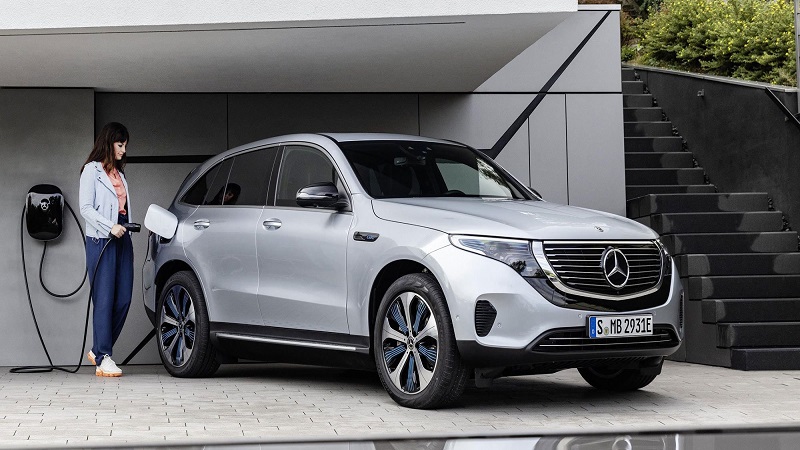
The tariffs raise the cost of German EVs exported to the U.S., a key market for manufacturers like Volkswagen, BMW, and Mercedes-Benz. For example, models like the VW ID.4 or BMW i4 could see price hikes of 5-10% in the U.S., reducing affordability and demand. Alternatively, absorbing tariffs cuts profit margins, straining finances already stretched by EV R&D investments.

German EVs face heightened competition from U.S.-made EVs (e.g., Tesla, Ford Mustang Mach-E) and Asian manufacturers not subject to similar tariffs. The German Economic Institute (IW) estimates a potential 10-15% drop in German EV exports to the U.S., with luxury brands like Porsche (Taycan) and Audi (Q8 e-tron) particularly affected due to their premium pricing.

EV production relies on complex global supply chains, including batteries and components. Tariffs increase costs for imported parts, disrupting suppliers like ZF or Continental. Smaller firms may struggle, with some, like Tornado Antriebstechnik GmbH, already halting U.S. expansion, as noted by economist Hermann Simon.

The EV sector’s struggles contribute to Germany’s zero-growth GDP forecast for 2025. A potential EU-U.S. trade war with retaliatory tariffs could further slash EV exports by up to 20%, per IW estimates, exacerbating pressure from China’s slowing demand and competition from Chinese EV makers. Higher U.S. prices may dampen EV adoption, conflicting with U.S. and EU climate goals. German manufacturers may shift focus to markets like the EU or China, but global oversupply and China’s competitive pricing limit relief.

Tesla Eyes Compact Pickup as Cybertruck Falters amid Legal Pressure Over Autopilot Claims

0

Tesla is now touting a compact electric pickup truck, a strategic pivot that comes as its long-hyped Cybertruck continues to underperform.

The potential shift was revealed by Lars Moravy, Tesla’s vice president of engineering, who said the company has been actively considering a smaller sibling to the Cybertruck, particularly with an eye on international markets where demand and regulatory requirements sharply differ from the U.S.

“We always talked about making a smaller pickup,” Moravy said during an event in California over the weekend, hosted by Tesla investors and owners. He explained that such a model could align with future plans for Tesla’s robotaxi platform, saying, “That kind of service is useful not just for people, but also for goods… We’ve definitely been churning in the design studio about what we might do to serve that need.”

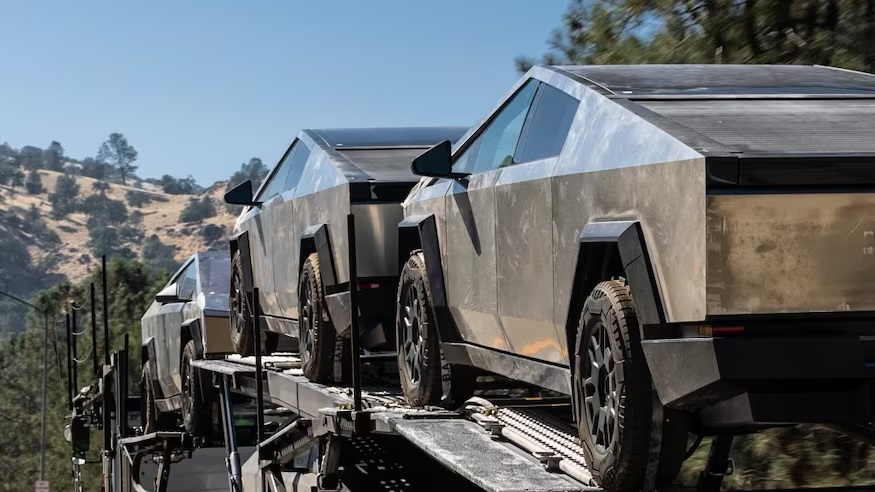
This marks a possible recalibration of Tesla’s electric truck ambitions, especially as Cybertruck sales remain far below expectations. Tesla had predicted annual sales of over 250,000 units, but the reality has been sobering: just under 39,000 Cybertrucks were sold throughout 2024, and approximately 11,000 have been sold so far in 2025, according to industry estimates. That figure is a fraction of what Tesla envisioned when it launched the “apocalypse-proof” truck with high hopes and cinematic flair in 2023.

At the heart of the problem is the Cybertruck’s design and pricing. Initially promised at a starting price of $39,900, the actual entry-level model now starts at over $60,000, with premium trims inching close to the $100,000 mark. The vehicle’s hefty 6,000kg frame and sharp-edged design have further restricted its global expansion. The truck is not road-legal in many markets, including Europe and China—Tesla’s two largest markets outside the U.S.

Authorities in the UK seized one of the first Cybertrucks imported into the country earlier this year, while another in the European Union had to be modified to pass local safety regulations due to its angular, rigid body. While Tesla has managed to expand Cybertruck sales to Canada, Mexico, Saudi Arabia, the UAE, and Qatar, these remain relatively limited markets compared to the regulatory-tight European and Chinese auto sectors.

Meanwhile, Tesla’s overall vehicle sales have continued to slump. In the second quarter of 2025, the automaker recorded a 13.5% year-over-year drop, marking the second consecutive quarter of declining sales. The disappointing numbers come at a pivotal time for the company, which has been battling mounting criticism over its controversial self-driving technology claims.

California’s Legal Challenge

Tesla’s ability to continue selling vehicles in its home state of California is also under scrutiny. The California Department of Motor Vehicles has concluded a weeklong court hearing on a lawsuit it filed in 2022, accusing Tesla of misleading consumers about the capabilities of its “Full Self-Driving” (FSD) and “Autopilot” systems. The DMV is seeking to suspend Tesla’s sales license in the state for at least 30 days and to impose monetary penalties.

The suit argues that Tesla falsely marketed its driver-assist features as nearly autonomous, citing statements from the company’s website that implied the cars could operate from departure to destination without human input. DMV Commander Melanie Rosario, testifying as a witness, told the court she found Tesla’s branding around “Autopilot” and “FSD” to be confusing and contradictory, saying it gave the impression the vehicles could drive themselves despite disclaimers in the fine print.

Tesla’s legal team pushed back, arguing that the company had always stated drivers must remain attentive and that the systems are not fully autonomous. However, multiple witnesses, including experts in vehicle automation and advertising law, suggested that the language used by Tesla could indeed mislead consumers. The case remains pending, but legal analysts have flagged it as one with potentially far-reaching implications for Tesla’s operations nationwide.

Adding to Tesla’s woes is the public backlash tied to CEO Elon Musk’s recent appointment as the face of the White House’s controversial DOGE Office, which spurred protests outside Tesla dealerships across the country earlier this year. The political spotlight, coupled with growing consumer dissatisfaction, has only intensified the company’s mounting image problems.

Further complicating the situation are several lawsuits. In Florida, a wrongful death case alleges that a Tesla operating on Autopilot struck a parked SUV, killing a 22-year-old woman, while another class-action lawsuit and federal probe are examining reports of “phantom braking,” where Teslas suddenly slam on the brakes without cause, creating safety hazards at high speeds.

Amid the turbulence, a compact pickup could serve as a fresh offering to re-engage markets increasingly wary of Tesla’s bolder bets. Although Moravy noted that it’s still at the design phase, it is not clear whether a smaller truck will succeed where the Cybertruck stumbled.