DD
MM
YYYY

PAGES

DD
MM
YYYY

spot_img

PAGES

Home Blog Page 829

Nigeria’s Current Account Surplus Faces Sharp Decline Amid Oil Price Weakness and Income Deficits

0

Nigeria is bracing for a significant drop in its current account surplus in 2025, with the balance expected to shrink to 2.7% of GDP, down from a robust 9.2% in 2024.

This projection is detailed in the H2 2025 Economic Outlook released by CSL Stockbrokers Limited, a subsidiary of FCMB Group Plc, and signals mounting external vulnerabilities for Africa’s biggest oil exporter.

According to CSL, the sharp moderation stems from weakening global oil prices, growing deficits in the services and primary income accounts, and an overall worsening in trade dynamics. Despite a brief spike in oil price forecasts triggered by geopolitical tensions between Israel and Iran earlier in the year, those gains proved short-lived. Analysts now forecast average oil prices to range between $60 and $70 per barrel for the rest of 2025, a sharp drop from previous years.

“Although earlier tensions from the Israel-Iran conflict momentarily lifted oil price forecasts, those concerns have since waned,” CSL stated in its report. “We now expect average oil prices to settle between $60 and $70 per barrel through the remainder of the year.”

Trade Balance Pressured by Falling Exports

Oil prices in the first half of 2025 were reportedly 15% lower than in the same period last year. That has prompted CSL to revise Nigeria’s oil export forecast downward, expecting a 20% year-on-year contraction to $36.4 billion. Crude oil still makes up about 86% of the country’s total exports, underscoring how deeply Nigeria’s external balance is tethered to global oil markets.

While imports are also projected to decline—mainly as Dangote Refinery ramps up production and reduces Nigeria’s reliance on imported fuel—the fall in exports is expected to outweigh the import compression. This imbalance threatens to widen Nigeria’s trade deficit, even as import substitution efforts gain momentum.

“The goods trade balance will remain constrained as the decline in imports is unlikely to match the drop in oil exports,” CSL warned.

Services and Income Accounts Continue to Weaken

Compounding the situation are persistent deficits in the services and income accounts. Nigeria’s services account—driven largely by international travel, shipping, and aviation—has posted a consistent annual deficit of roughly $13.7 billion over the past five years. Although there is a weakened naira and rising travel costs that may dampen foreign travel slightly, the services gap is unlikely to close in the near term.

Even more troubling is the deterioration in the primary income account. Higher repatriation payments to foreign portfolio investors and oil multinationals are eating into Nigeria’s surplus. These payments are rising as foreign investor activity rebounds, with equity market participation reaching 29% year-to-date in May, up from 20% in the same period in 2024.

Remittance Inflows Steady—But Now at Risk

One area that continues to provide some cushion is remittance inflows, which are projected to rise to $25.3 billion in 2025, up from $23.8 billion in 2024. These flows—captured under the secondary income account—have been critical in supporting Nigeria’s balance of payments amid growing external pressures.

However, new risks are emerging. A proposed U.S. bill that would impose a 5% tax on outbound remittances could directly impact Nigeria, one of the world’s top recipients of diaspora inflows. CSL warned that this legislation, if passed, could undermine government efforts to attract $1 billion monthly in remittance inflows.

“Government efforts to attract $1 billion in monthly inflows may come under pressure if the U.S. legislation is passed,” the firm said.

Oil Prices Remain the Wild Card

Ultimately, CSL emphasized that oil price movements and production volumes remain the biggest risks to Nigeria’s current account outlook. In a downside scenario where oil prices fall below $55 per barrel—even if production remains stable around 1.22 million barrels per day—Nigeria could slide into a current account deficit of 0.3% of GDP.

In contrast, a modest rebound in prices toward $70 per barrel could boost the surplus by 1 to 2 percentage points, offering some relief to the country’s external reserves and naira exchange rate.

Contrast with World Bank Outlook

Interestingly, CSL’s outlook contrasts with that of the World Bank, which in its April 2025 Africa’s Pulse report projected Nigeria’s current account surplus to rise slightly from 9.2% of GDP in 2024 to 9.4% by 2026. The World Bank attributed its optimistic forecast to the naira’s depreciation, which it says will help curb imports while boosting worker remittances.

Regionally, the World Bank also noted marginal improvement across Sub-Saharan Africa, where the current account deficit is projected to decline from 3.4% of GDP in 2023 to 2.4% in 2024.
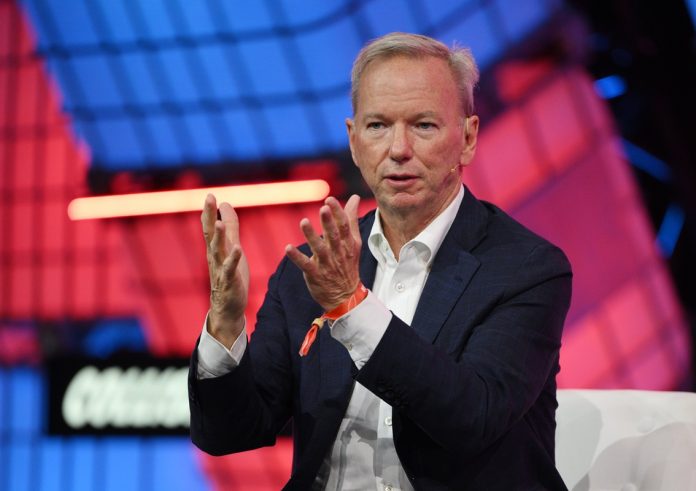
Former Google CEO Eric Schmidt on AI: Not a Bubble, but “A Whole New Industrial Structure”

0

Former Google CEO Eric Schmidt, who steered the tech giant through the collapse of the dot-com bubble in the early 2000s, says the current artificial intelligence boom is fundamentally different and unlikely to suffer a similar fate.

Speaking at the RAISE Summit in Paris, Schmidt addressed growing concerns that AI could be heading toward bubble territory, especially as Wall Street voices caution and major tech firms pour billions into the sector.

“I think it’s unlikely, based on my experience, that this is a bubble,” Schmidt said. “It’s much more likely that you’re seeing a whole new industrial structure.”

His comments come at a time when AI’s rapid expansion has drawn comparisons to the tech boom—and-bust of the 1990s. Since OpenAI’s ChatGPT broke into the mainstream, AI has been thrust into the center of global tech innovation, with major companies like Microsoft, Amazon, Google, Meta, and Nvidia investing heavily in AI infrastructure, talent, and startups.

According to market research cited during the summit, the AI sector was valued at $189 billion in 2023, with projections pointing to a meteoric rise to $4.8 trillion by 2033. But with that growth has come skepticism from financial circles.

Torsten Sløk, chief economist at Apollo Global Management, recently warned that the U.S. stock market is experiencing an even bigger bubble than during the dot-com boom. In a research note published Wednesday, Sløk blamed what he described as irrational exuberance around AI.

“The difference between the IT bubble in the 1990s and the AI bubble today is that the top 10 companies in the S&P 500 today are more overvalued than they were in the 1990s,” Sløk wrote, cautioning that soaring valuations risk disconnecting from underlying earnings.

Schmidt, however, pushed back against the idea that inflated valuations alone prove a bubble exists. He pointed to the AI industry’s investment in physical infrastructure—especially high-performance computing hardware—as a sign of long-term viability.

“You have these massive data centers, and Nvidia is quite happy to sell them all the chips,” Schmidt said. “I’ve never seen a situation where hardware capacity was not taken up by software.”

The former Google chief, who currently holds stakes in AI startups such as Anthropic, acknowledged that there are concerns inside the industry. Some executives have admitted to “overbuilding” data infrastructure and anticipate overcapacity within two to three years. Schmidt recounted conversations with leaders who privately say, “‘I’ll be fine and the other guys are going to lose all their money.’ That’s a classic bubble, right?”

Still, he argued that the dichotomy within the industry—between fears of overcapacity and beliefs in transformative breakthroughs—shows just how early and dynamic the AI landscape remains. Schmidt described some Bay Area AI pioneers who believe that technologies like reinforcement learning will fundamentally redefine human society.

“If you believe that those are going to be the defining aspects of humanity, then it’s under-hyped and we need even more,” he said.

Adding to the conversation, Nvidia, which has become the poster child of the AI boom with a 173% surge in share price in 2024 alone, also announced a 10-for-1 stock split and dividend hike earlier this year, moves that reflect investor demand. Its data center revenue crossed $22.6 billion last quarter, up over 400% year-over-year, driven by cloud providers and AI startups racing to expand computing capacity.

Yet for some, these are red flags. With Nvidia trading at around 40 times forward earnings—higher than most large-cap peers—some market watchers argue the company embodies the kind of runaway valuations reminiscent of the 1990s tech craze.

Despite those fears, Schmidt’s position indicates that while AI may be in a phase of frenzied investment and occasional irrational behavior, the underlying transformation is real and global. To him, the investments in hardware, software, and machine learning infrastructure point to a structural shift rather than a speculative spike.

From $2B to $20B: Jon McNeil Shares How Tesla’s Breakout Run Was Built—Offers Startups A Lesson in Scaling

0

The Tesla Model 3 launch may have represented a breakout moment for the company, but the underlying playbook that fueled Tesla’s leap from $2 billion to $20 billion in revenue in just 30 months was a masterclass in operational discipline and scaling strategy.

At the 2025 TechCrunch All Stage event, Jon McNeil—former Tesla president and now CEO of DVx Ventures—shared how the surge wasn’t driven by hype, but by strict validation benchmarks and capital discipline.

Yet even as McNeil offered a guide for startup growth, Tesla’s legacy also faced a parallel lesson: when to restrain expansion. His blueprint—detailed through stage-gated investments and product-market validation—echoes today as the broader tech industry reins in unchecked scaling amid tighter economic conditions.

According to McNeil, scaling prematurely is a mistake many startups make, often confusing momentum with validation. For him, scaling starts with two questions: Do you have product-market fit, and do you have go-to-market fit? And to answer the first, he asks founders to consider this data point: Do 40% of your users say they’d be ‘very disappointed’ if your product disappeared? Until that answer is yes, growth is a trap.

Once this threshold is crossed, the next checkpoint is profitability—specifically, achieving an LTV:CAC ratio of at least 4:1. Without that, McNeil argues, spending large sums on marketing is reckless. At Tesla, and now at DVx Ventures, he pioneered a more measured approach: testing go-to-market efforts in $100,000 increments until repeatable results are confirmed. Only then do they “pour in the cash.”

McNeil’s approach isn’t theoretical—it’s embedded in DVx’s operating model. His venture studio has backed 12 startups so far, all of which follow this method. The focus isn’t just on growth, but on durable, cash-positive scaling. McNeil made this point in a widely shared LinkedIn post, warning that too many startups collapse under the weight of premature expansion.

For product-market fit, he asks each startup, “do 40% of your customers say they cannot live without your product,” he said. If not, then the company isn’t ready.

“We keep adding, adding, adding and tweaking the product until we get to 40% and then we say, okay, boom, now we’ve got product market fit,” McNeil said. “It’s actually objective and measured. It’s not a feeling, it’s not a sense. It’s a metric.”

McNeil added, “We did a study of businesses that actually achieved breakout, and those businesses achieved breakout at roughly that 40% acceptance level.”

Startups Can Apply McNeil’s Strategy This Way:

  1. Establish product indispensability. Founders should track user sentiment early. If 40% of users wouldn’t miss the product, it’s not yet indispensable. Keep iterating.

  2. Validate the unit economics. Before scaling, ensure a 4:1 LTV to CAC ratio. Without this, each new user is a financial liability, not a growth asset.

  3. Stage investment like experiments. Don’t bet everything on one campaign. Allocate growth funding in small tranches—test, validate, then expand.

This model isn’t just a relic of Tesla’s past—it’s increasingly a necessity in today’s post-2021 funding landscape. With capital no longer flowing freely and investors demanding leaner, proof-based growth, McNeil’s approach reads less like advice and more like survival.

Why This Matters Now

Startups today are navigating a different terrain than Tesla did during its breakout. Rising interest rates, more stringent investor scrutiny, and a shift toward profitability have redefined what “scaling” means.

The TechCrunch stage wasn’t just a reunion for a Tesla veteran—it was a signal to the startup world that scale must now be earned, not assumed.

McNeil’s message is simple: You don’t grow because you want to. You grow because the data says you’re ready. It’s the operator’s path to breakout.

XRP Price Prediction: XRP Needs to More Than Double to Flip Ethereum (ETH), While Viral Coin Under $0.0018 Eyes an 8,000% Climb

0

With the crypto market projected to heat up in 2025, two self-regarding narratives arise. One of these is the passion project where many are eagerly anticipating the highly debated XRP-ETH flip.  On the other hand, other users are simply scrolling, sifting through tokens in hopes of coming across another hit meme coin that will allow them profits in heaps. Both narratives hold potential in their own context, but from one, life-changing opportunities can be brought forth for ordinary buyers.

XRP vs Ethereum: Huge Gap to Close

According to recent projections, XRP would need to reach $3.94 to match Ethereum’s market capitalization, surpassing its previous all-time high and more than doubling its current value.  XRP has a market worth of $174 billion and trades between $2.89 and $2.95.  Ethereum has a market capitalization of over $360 billion. XRP must rise 35–40% to hit a new high and roughly 100% to flip Ethereum. Crypto expert Egrag Crypto notes that XRP’s close above critical Fibonacci retracement levels, particularly the 0.5 line, indicates a strong upward price movement.  Others argue that Ethereum’s ecosystem, which is characterized by its extensive use of smart contracts, DApps, and institutional backing, makes it more challenging to take down. Bullish projections prevail.  The forecast predicts XRP will reach $22.54 by 2025, assuming significant adoption and regulatory changes. These events demand flawless execution and macro conditions.  Most retail investors doubt the XRP switch.

Enter Little Pepe (LILPEPE): Viral Meme Coin with 8,000% Potential

Now contrast XRP’s complex journey with the rise of Little Pepe (LILPEPE), a new meme coin that’s already taking the crypto community by storm. But LILPEPE isn’t just another memecoin riding on Pepe aesthetics; it’s the native token of the Little Pepe Chain, a newly developed Ethereum-compatible Layer-2 blockchain explicitly built to host and amplify meme culture. LILPEPE is still in presale, trading under $0.0018, and it has already raised over $6.8 million in record time. The fifth presale stage, which offered tokens at $0.0014, sold out early due to overwhelming demand. At $0.0015, Stage 6 is now live and 80.82% complete. The rapid rate of sales is due to both huge community interest and investment FOMO, which are two key factors contributing to explosive post-launch momentum. What makes LILPEPE truly different is its built-in utility and scalability. Unlike most meme coins that rely solely on hype, Little Pepe Chain is a high-speed, low-cost Layer-2 protocol with sniper bot protection, zero gas fees for microtransactions, and a Meme Launchpad that enables new meme projects to launch directly on the chain. This is an entire ecosystem centered on memes, built for memes, and governed by the meme community. With features such as zero trading tax, staking and rewards pools, DAO-based governance, and locked liquidity, LILPEPE combines the viral appeal of meme tokens with the long-term viability of a robust blockchain infrastructure.

Roadmap: From Meme to Machine

The project’s roadmap is laid out in three key phases:

  • Pregnancy – This was the development phase, during which the Layer-2 blockchain was engineered to be ultra-fast, EVM-compatible, and secure. It also included testing the meme Launchpad and sniper-proof trading mechanisms.
  • Birth – The current presale and public awareness phase. Little Pepe has achieved a CoinMarketCap listing, expanded its social media community, and launched viral campaigns, including a $777,000 giveaway.
  • Growth – This next phase includes listings on two top-tier centralized exchanges (already confirmed), deeper DeFi integration, NFT partnerships, and the onboarding of meme creators to build and launch directly on the Little Pepe Chain. The team aims for a $1 billion market cap and a Layer-2 meme empire that rivals Ethereum in cultural relevance.

The Path to 8,000% Returns

Some analysts believe LILPEPE can increase in value by 80 times its current presale price, meaning a token bought at $0.0015 could one day reach $0.12 or more. That might sound ambitious, but consider what DOGE and SHIB achieved in their infancy. With its chain, robust community, and hype-driven model, LILPEPE could become the next breakout star of the meme coin revolution. Even if it only increases to $0.05, buyers who purchased early would receive more than 30 times their investment back.  It would be more than 6,500% more expensive if the price were $0.10. In the world of meme coins, where story and motion drive action, such occurrences are commonplace.

Conclusion

Betting on XRP to surpass Ethereum is a conservative long-term investment strategy with substantial capital flows. It’s a viable option for those seeking stability and gradual progress. On the other hand, LILPEPE is the speculative moonshot. It’s new, underpriced, rapidly growing, and built on top of real utility. With Stage 6 nearly sold out, investors still have a short window to join the Little Pepe presale. For those looking to turn a small investment into something life-changing in 2025, it may offer the best odds in the current crypto landscape.


For more information about Little Pepe (LILPEPE) visit the links below:

Website: https://littlepepe.com

Whitepaper: https://littlepepe.com/whitepaper.pdf

Telegram: https://t.me/littlepepetoken

Twitter/X: https://x.com/littlepepetoken

The Overlooked Hero of Home Security: Your Garage Door

0

When most homeowners think about securing their property, they picture front?door locks, alarm systems, and sturdy windows. Yet the largest moving part of nearly every house, the garage door, often gets minimal attention until something breaks. A well?maintained, properly balanced door does far more than protect the family car. It deters intruders, shields tools and seasonal items from costly damage, improves energy efficiency, and adds instant curb appeal. Treating your garage door as an essential security layer rather than an after-thought starts with understanding how the system works and what proactive care really means.

Anatomy of a Modern Garage Door

A typical sectional door relies on a precise interaction of panels, rollers, tracks, cables, springs, and an opener motor. When any single component wears out, the entire mechanism strains, causing noisy operation or sudden failure. Springs shoulder most of the weight, more than 150?pounds, so they need periodic inspection. Rollers and hinges collect dust and road salt, shortening their lifespan without lubrication. Advanced openers now include smart Wi?Fi controls, battery backups, and rolling?code security to prevent “code?grabbing” break?ins.

Warning Signs You Should Never Ignore

  • Uneven movement or jerking – indicates frayed cables or misaligned tracks.
  • Loud grinding or squeaking – usually means dry rollers or hinges.
  • Delayed response from the wall switch or remote – points to circuitry or safety?sensor issues.
  • Sagging panels – suggest worn hinges or water damage that can eventually warp the whole door.

Addressing these symptoms early prevents costlier structural repairs and keeps your family safe in emergencies.

Preventive Maintenance: More Than a Weekend Job

DIY upkeep covers basics such as tightening visible hardware, clearing track debris, and testing the auto?reverse sensors with a 2?x?4 block. For deeper tasks like torsion spring adjustments, cable replacement, and opener recalibration professional help is critical. Torsion springs store enough tension to cause severe injury if handled incorrectly. Certified technicians bring specialized tools, correct replacement parts, and the training to balance the door so it neither slams shut nor drifts open.

Halfway through the life of an opener (about seven to ten years), scheduling a full safety tune?up can reveal hidden wear and software glitches. A small investment now avoids midnight emergencies later on. That is why many Brooklyn homeowners search for reliable garage door repairspecialists instead of pushing off the task.

Smart Upgrades That Pay for Themselves

  1. Insulated Steel Panels – cut heating and cooling costs, especially for attached garages.
  2. High?Cycle Springs – rated for 25,000+ open–close cycles versus the standard 10,000.
  3. LED Motion Lighting – discourages trespassers and brightens the driveway automatically.
  4. Fingerprint or Keypad Entry – convenient for kids and eliminates lost remotes.

These enhancements modernize your garage without a full remodel and add resale value instantly.

Weatherproofing for Brooklyn’s Four Seasons

Brooklyn’s humid summers and icy winters wreak havoc on untreated metal and wood. Galvanized hardware, rubber bottom seals, and polyurethane?coated weather strips combat rust and keep critters out. Annual inspections each spring and fall ensure your door glides smoothly despite salty slush or sweltering heat.

Choose Confidence with Mr. Garage Door Repairman

Mr. Garage Door Repairman has served Brooklyn, NY?11223 for over two decades, delivering expert installation, precision spring repairs, custom door designs, and round?the?clock emergency response. Every technician is factory?trained, background?checked, and committed to 100?percent satisfaction at a price that respects your budget. Call 718?300?4032 today and discover why thousands of homeowners trust us to keep their biggest door operating safely, quietly, and beautifully.


Mr. Garage Door Repairman

Brooklyn, NY 11223

718-300-4032

mrgaragedoorrepairman.com