DD
MM
YYYY

PAGES

DD
MM
YYYY

spot_img

PAGES

Home Blog Page 829

The Digital Financial Revolution: How Fintech is Transforming Access to Financial Services for Women in Arab Countries

0

In the rapidly evolving global finance landscape, perhaps the most profound transformation is occurring at the intersection of technology and inclusion. Across Arab countries—from the Gulf to North Africa—financial technology (fintech) is transforming not just how services are delivered, but fundamentally who can access them. Women, historically shut out of traditional financial systems throughout the region, are now witnessing—and indeed driving—a quiet revolution that can arguably be posited as the most significant economic trend of the decade.

The Historical Context of Financial Exclusion

Financial exclusion of women in the Arab world is an outcome of a complex interplay between socio-cultural norms, regulatory frameworks, and infrastructural limitations. Legacy banking systems have long operated under circumstances that, by design or by fate, put extremely high obstacles to women’s financial inclusion. The contrast between the likes of such legacy systems and newer digital platforms is day and night in terms of user experiences. Digital financial applications, including those where one can melbet apk and other similar platforms that offer the functionality to carry out financial transactions, are exemplary of how technology reduces friction in accessing finance. This technological revolution is especially important for women who had no easy means of managing money on their own before. The digital revolution cuts across different financial services, from banking to investment services, opening up several avenues for the previously excluded groups.

Women in most Arab nations have faced particular obstacles in attempting to gain access to conventional financial institutions. They vary from constraining documentation prerequisites that tend to operate against women who lack particular forms of identification; branch hours of operation that conflict with family responsibilities disproportionately carried by women; and geographic limitations that render physical banks unreachable in localities where women’s mobility is limited.

Cultural Impediments and Structural Challenges

The deeply entrenched cultural factors that have historically limited women’s financial autonomy cannot be overstated. These include:

  • Legal guardianship requirements — In several countries, women have needed male guardians’ permission to open accounts or access certain financial products, though these restrictions have been easing in recent years
  • Social attitudes regarding financial decision-making — Traditional expectations often place financial authority primarily with male household members
  • Limited financial literacy opportunities — Women have frequently received less exposure to financial education and mentorship
  • Inheritance and property rights disparities — Legal frameworks in some countries have allocated smaller inheritance shares to women, affecting their collateral capacity

Aside from these cultural elements, structural elements have compounded the challenge. Banking systems based substantially on salaried employment have inevitably disadvantaged women who more frequently work in informal economies or direct domestic economies. The digital space has introduced new facets to financial inclusion beyond traditional frontiers. Social media incorporation has immensely amplified this phenomenon across the region. Many women now hear about financial services through channels like Facebook MelBet pages, and other similar social platforms that combine entertainment, sports betting, and financial transactional features in easily accessible digital spaces. This convergence of social media and financial services has created new paths to financial inclusion that bypass traditional gatekeepers, like credit-scoring systems that have traditionally overlooked alternative indicators of creditworthiness that better reflect women’s financial capabilities and activities.

This range of challenges has created a huge gender gap in financial inclusion across the region, with some countries having up to 30 percentage points disparity between men’s and women’s access to formal financial services—a gap which fintech innovations are now beginning to close with remarkable success.

Fintech Solutions Breaking Down Traditional Barriers

The emergence of fintech represents not merely an incremental improvement but a radical reconception of financial systems. Digital innovations are systematically eliminating the very barriers that have historically excluded women from financial inclusion. The transformation is occurring on multiple dimensions simultaneously, building a strong convergence of opportunities.

Before examining specific solutions, it’s worth understanding the comparative advantages that fintech offers compared to traditional banking services:

Feature Traditional Banking Fintech Solutions Impact on Women’s Financial Inclusion
Access Requirements Physical presence, extensive documentation Digital-first, simplified KYC processes Reduces mobility constraints and documentation barriers
Service Hours Limited business hours 24/7 availability Accommodates women’s complex scheduling needs around caregiving
Transaction Costs Higher fees, minimum balances Lower costs, micropayment capability Makes services accessible regardless of economic status
Privacy Limited confidentiality in close-knit communities Enhanced privacy through digital interfaces Enables financial independence without community scrutiny
Product Design Standardized offerings Personalized, data-driven solutions Addresses women’s specific financial needs and behaviors

Mobile money platforms have been particularly groundbreaking in bringing about greater financial inclusion among women. These services enable individuals to save, send, and receive money using basic mobile phones, creating financial capability without requiring smartphones or internet connections. This technology cannot be emphasized enough in regions where women may not have access to more advanced levels of technology, but are ever more likely to own basic mobile phones.

Digital wallets and payment applications have also revolutionized women’s financial inclusion. These platforms facilitate cashless transactions, bill payments, and merchant purchases through smartphone applications. The reduction in the physical handling of money offers not just convenience but also better security and monitoring of transactions—benefits that resonate strongly with women entrepreneurs and home financial managers.

Regional Success Stories and Emerging Models

While the fintech revolution sweeps across the entire Arab world, certain markets have emerged as particularly dynamic ecosystems for women’s financial inclusion. The UAE and Saudi Arabia have experienced runaway growth in fintech startups targeting women, often underpinned by state-driven economic diversification and labor force feminization initiatives.

Egypt and Jordan also provide another compelling case, where fintech innovation has been especially successful in reaching underserved women in rural and urban areas. Companies like Fawry in Egypt have built expansive digital payment networks enabling women to manage finances, pay bills, and transfer money without the necessity of traditional bank accounts. Similarly, Jordan’s CliQ and JoMoPay platforms have expanded financial services to previously underbanked women.

The North African nations, particularly Morocco and Tunisia, have developed innovative fintech products that specialize in microfinance and business development. These platforms frequently include features specifically designed to address the needs of women entrepreneurs, such as flexible repayment schedules to align with seasonal business cycles and integrated business development services.

What is particularly noteworthy about these regional trends is the pattern of localization and adaptation that is starting to manifest. Rather than importing fintech models from other international markets wholesale, these developments have reflected thoughtful customization to address specific regional challenges and opportunities. The most successful platforms have been culturally sensitive even as they have disrupted outdated constraints—a balance that has proved crucial to wide adoption.

Challenges and Future Directions

Despite significant progress, substantial challenges remain in fully realizing fintech’s potential for women’s financial inclusion in Arab countries. Persistent issues include:

  1. Digital literacy gaps that disproportionately affect women, particularly in rural areas and among older generations
  2. Regulatory frameworks that sometimes lag behind technological capabilities, creating compliance uncertainties
  3. Data privacy concerns that may be especially acute for women in conservative societies
  4. Cybersecurity vulnerabilities that could undermine trust in digital financial systems
  5. Limited connectivity infrastructure in remote regions where many women reside

To address such challenges, coordination among various stakeholders will be required: government regulatory authorities, private sector innovators, civil society, and international development partners. Incentivized investment in digital infrastructure, education programs to enhance women’s technological capacities, and regulatory sandboxes that facilitate innovation while ensuring consumer protection are some of the solutions with potential.

In the coming years, several emerging technologies have particular potential to further accelerate women’s financial inclusion. Blockchain technologies promise secure identity verification that can break through documentation limitations, while artificial intelligence promises further personalization of financial products. Voice-based services can break through literacy limitations, and biometric authentication can break through identification limitations.

The Broader Socioeconomic Implications

The effect of the fintech revolution extends way beyond the one financial transaction—there are profound implications for women’s economic empowerment and for social transformation. Greater financial autonomy through digital means is enabling women to play a more assertive role in domestic decision-making, pursue entrepreneurial aspirations, and weather economic shocks with more resilience.

To policymakers across all Arab nations, the connection between macroeconomic objectives and women’s financial inclusion has become better appreciated. Nations that economically diversify recognize that integrating women into the financial system at maximum levels is not only socially desirable but also economically imperative. Each percentage point of growth in women’s financial participation equals measurable GDP expansion.

This transition underway is a once-in-a-generation opportunity to correct generations of economic imbalances and create financial systems that are custom-designed to 21st-century needs and opportunities. As mobile financial services continue to evolve to the special needs of women in Arab countries, they are writing a new chapter in the economic development of the region—one based on an unprecedented level of inclusiveness and innovation.

The way forward may have hurdles, but the congruence of technological capability, market opportunity, and social forces suggests that fintech will continue to reshape financial spaces in ways that increasingly empower women throughout the Arab region.


Little Pepe (LILPEPE) Price Prediction: Why Top Analysts Forecast a 20x-50x Boom in the Upcoming Bull Run

0

Many investors are now scouting altcoins that promise huge gains as the market anticipates the upcoming bull run. One coin stealing the spotlight in the meme space is Little Pepe (LILPEPE), a light-hearted spin on the classic Pepe meme, featuring DeFi capabilities and driven by a lively, dedicated community. Top analysts are forecasting a 20x to 50x surge in price for LILPEPE, and the reasons behind this bold prediction are as compelling as they are exciting. From lightning-fast presale sellouts to strong community engagement and CEX listing plans, Little Pepe (LILPEPE) is poised to make a historic splash in the meme coin universe. Here’s why top analysts are betting big on LILPEPE in 2025.

Presale Momentum: Over $7.72M Raised

One of the strongest indicators of a token’s future success is early investor demand, and Little Pepe has absolutely crushed expectations. In Presale Stage 5, $LILPEPE raised over $6.57 million, selling out faster than originally anticipated. That momentum hasn’t slowed: Stage 6 launched at $0.0015 per token and has already crossed $1 million in contributions within just two days.

Coin Gabber on X

Crypto analyst @coin_gabbar_ on X (formerly Twitter) predicts that LILPEPE could hit $0.005 to $0.01 during the upcoming bull run, provided strong adoption and key listings continue. For presale investors, that means potential 20x to 50x gains, aligning perfectly with broader bullish sentiment surrounding meme coins.

The Meme Coin with a Mission: No Taxes, No Rugs, Just Vibes

In a market crowded with gimmicks and vaporware, Little Pepe (LILPEPE) is offering something radically different: pure meme energy, no hidden traps. Built on the ERC-20 network, LILPEPE isn’t just riding on hype—it’s creating an authentic and decentralized community, free from taxes and rug-pull fears. What truly sets LILPEPE apart is its irresistible branding and narrative. With a tongue-in-cheek roadmap that boasts being in the “pregnancy stage,” cooking in the “crypto-womb” with Mumma Pepe, LILPEPE blends humor, culture, and tokenomics in a way that resonates deeply with the meme coin community. This unique identity and cultural presence mean LILPEPE isn’t just another meme coin—it’s a movement. And in crypto, the community is everything.

Massive $777K Giveaway Fueling Viral Growth

LILPEPE isn’t just building hype—it’s rewarding its community in a way few projects dare to. The group has initiated an enormous giveaway of $777,000. Ten fortunate participants will each win $77,000 in LILPEPE tokens. The campaign has already recorded over 55,000 entries and has been bringing in thousands more viewers and wallet holders which helps to reinforce loyalty among the early supporters. In an era where user acquisition is paramount, this bold move is yielding significant benefits for community engagement and solidifying LILPEPE as a people-first project.

Big Listings and Exchange Plans: Momentum Set to Explode

While many meme coins rely solely on hype, LILPEPE is preparing for serious market exposure. Already listed on CoinMarketCap, the token is aiming even higher. The team has confirmed plans to list on two major centralized exchanges (CEX) immediately after the presale ends.  Notably, a clear roadmap is in place to list on the world’s largest crypto exchange. These upcoming listings are pivotal.  As seen with other meme coins in the past, CEX listings often act as launchpads for explosive 20x to 50x moonshot price action. What makes LILPEPE special isn’t just the meme—it’s the execution, energy, and ecosystem being built from day one. While other projects scramble for relevance, LILPEPE is organically going viral, fueled by its authentic Web3 culture and the power of decentralized community.

Conclusion: Will You Catch the Wave?

Meme coins have always been about emotion, culture, and momentum. And right now, Little Pepe (LILPEPE) is generating all three in massive waves. With analysts predicting a potential 20x to 50x surge, the time to get in is before the rocket launches. Whether you’re a seasoned investor or just meme-curious, LILPEPE is shaping up to be the breakout star of 2025. The next chapter in meme coin evolution is being written—and it’s got a green frog, a lot of hype, and possibly life-changing returns. Don’t miss out. Join the $LILPEPE revolution today.


For more information about Little Pepe (LILPEPE) visit the links below:

Website: https://littlepepe.com

Whitepaper: https://littlepepe.com/whitepaper.pdf

Telegram: https://t.me/littlepepetoken

Twitter/X: https://x.com/littlepepetoken

Trump to Unveil AI Action Plan, Scrapping Biden-Era Mandates and Pushing America-First Innovation Agenda

0

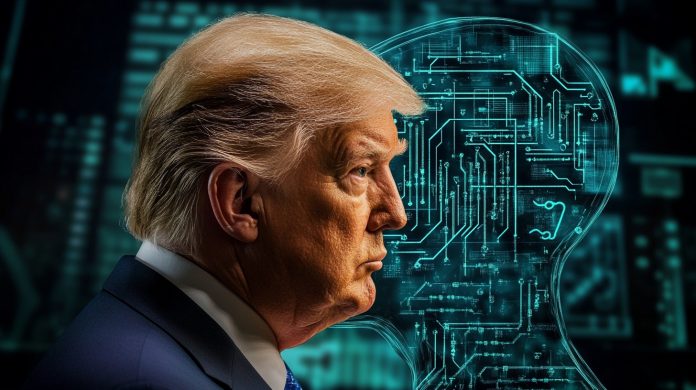
U.S. President Donald Trump is set to reveal his administration’s long-anticipated AI Action Plan on Wednesday in Washington, D.C., marking his most sweeping address yet on artificial intelligence since returning to office in January.

The announcement, which will take place at the “Winning the AI Race” summit, hosted by The Hill and Valley Forum and the All-In Podcast, is expected to outline a new framework for how the United States will build, govern, and globally deploy AI — with Trump aiming to reclaim American dominance in a sector he sees as central to the country’s future.

Three Pillars: Infrastructure, Innovation, and Global Influence

According to a report by Time Magazine, Trump’s AI Action Plan is built on three pillars: infrastructure, innovation, and global influence. The President is expected to propose a sweeping overhaul of permitting rules to fast-track the construction of AI data centers — massive computing hubs that power today’s most advanced language models and algorithms but also strain the energy and water grids of surrounding communities.

The plan includes efforts to modernize America’s aging electrical grid and expand energy production, particularly to support AI’s soaring power demands. Without immediate upgrades, experts have warned that energy shortages tied to these data centers could emerge before the end of the decade.

Under the innovation pillar, Trump aims to revive the effort to preempt state-level AI legislation that could complicate the regulatory landscape for tech firms. A previous federal bill that would have blocked such state initiatives recently failed in Congress, but the Trump administration reportedly plans to pursue executive action to ease regulatory burdens for American AI companies and shield them from what it views as “innovation-stifling” mandates.

The third pillar — global influence — targets the export and adoption of American AI technology abroad. Federal officials are reportedly concerned about the rise of Chinese AI developers like DeepSeek, Qwen, and Moonshot AI. The Action Plan seeks to position American companies like OpenAI, xAI, and Google as the global gold standard in AI development and deployment.

Repealing Biden’s AI Rules

Trump’s plan effectively replaces the Biden administration’s AI executive order, which emphasized safety, transparency, and non-discrimination. Biden’s order had required AI companies to submit reports on security risks and algorithmic bias. Trump repealed it almost immediately after taking office for the second time, saying the rules placed “unnecessary burdens” on American tech companies and risked slowing innovation.

The Pushback: People’s AI Action Plan

The announcement comes amid growing criticism from labor unions, civil rights groups, and consumer advocates, who argue that Trump’s plan favors corporate interests over public safety and accountability. On Tuesday, more than 90 organizations, including labor and environmental justice groups, released an alternative roadmap — dubbed the People’s AI Action Plan. The plan urges the government to prevent Big Tech and fossil fuel lobbyists from dictating AI policy.

“We can’t let Big Tech and Big Oil lobbyists write the rules for AI and our economy at the expense of our freedom and equality, workers and families’ well-being,” the coalition said in a statement, highlighting concerns that the energy demands of Silicon Valley’s AI ambitions may come at a steep cost to American communities.

Executive Orders and the Crackdown on “Woke AI”

Alongside the policy framework, Trump is expected to sign a series of executive orders. One of the most controversial will require companies with federal AI contracts — including OpenAI, Anthropic, Google, and Elon Musk’s xAI — to ensure that their models produce “neutral and unbiased language,” an effort to stamp out what the administration calls “woke” AI.

This move reflects a broader campaign by Trump and the Republican party to confront perceived political bias in Silicon Valley. In the past, Republicans accused social media platforms of censoring conservative voices. Now, the same scrutiny is being directed at AI models, with critics alleging they reflect left-leaning worldviews.

However, defining “neutral” AI remains murky. A recent ruling by a Florida judge found that AI chatbots are not protected by the First Amendment, suggesting the government could impose content-related requirements. Still, some observers point out that setting rules for how AI should respond contradicts Trump’s stated advocacy for free speech.

Tech Giants’ Wishlists

Ahead of the plan’s release, the White House reportedly received more than 10,000 public comments, many from tech giants such as OpenAI, Meta, Amazon, and Google. These companies lobbied the Trump administration to:

Declare training on copyrighted material to be “fair use,” shielding them from growing legal challenges from publishers, artists, and authors.

Protect open-source AI models like Meta’s LLaMA from restrictions. Meta believes open models are key to competing with the closed systems of rivals like OpenAI and Google.

Increase research investment into non-commercial AI efforts, a plea notably ignored by Trump’s Department of Energy, which has already slashed university research funding.

Meanwhile, national security voices have raised concerns that open AI models could leak advanced capabilities to foreign adversaries — particularly China. Anthropic and others have argued that without sufficient oversight, open-source models risk global misuse.

The Global Stakes and America’s AI Arms Race

Trump’s plan comes amid intensifying competition with China over AI supremacy. Chinese labs have accelerated AI development across multiple fronts, prompting unease among U.S. officials. Trump’s strategy appears tailored to assert American dominance by ensuring that U.S.-made models and chips — particularly those from Nvidia, AMD, and AI startups — remain the global standard.

To that end, some of the executive orders are expected to clear red tape around exporting AI-related technologies, potentially helping U.S. firms gain further access to emerging markets.

While Trump’s AI Action Plan promises to supercharge U.S. innovation and reshape global tech leadership, its critics warn that prioritizing deregulation and private sector expansion may undermine much-needed safeguards.

Wall Street Unleashes Tokenized Money Market Funds as Trump-Backed Stablecoin Law Spurs Digital Shift

0

Goldman Sachs and Bank of New York Mellon have teamed up in a landmark move to introduce tokenized money market funds for institutional investors—an initiative they say is the next evolution of digital finance, coming just days after President Donald Trump signed the GENIUS Act into law to formally regulate U.S.-based stablecoins.

Under the new system, clients of BNY Mellon, the world’s largest custody bank, will be able to invest in money market funds with ownership recorded directly on Goldman Sachs’ private blockchain platform. This innovation will allow faster and more frictionless transactions compared to traditional settlement processes.

The pilot program already has heavyweight backers including BlackRock, Fidelity Investments, Federated Hermes, and the asset management divisions of both Goldman Sachs and BNY Mellon. These institutions collectively manage trillions of dollars and are now pushing tokenization as a game-changing breakthrough for finance.

“We have created the ability for our clients to invest in tokenized money market share classes across a number of fund companies,” said Laide Majiyagbe, BNY’s global head of liquidity, financing, and collateral. “The step of tokenizing is important, because today that will enable seamless and efficient transactions, without the frictions that happen in traditional markets.”

Tokenized money market funds differ fundamentally from stablecoins. While stablecoins are typically pegged to fiat currencies and used for payments, tokenized money market funds generate yield, offering a compelling place for hedge funds, pensions, and corporations to park idle capital.

Money market funds themselves are low-risk investment vehicles that hold short-term securities like U.S. Treasuries, repurchase agreements, and commercial paper. These funds are considered among the safest options for short-term investing, and they allow for relatively quick redemptions. Since the U.S. Federal Reserve began hiking interest rates in 2022, investors have poured approximately $2.5 trillion into the asset class, drawn by rising yields.

Now, Wall Street sees tokenization as a way to modernize that $7.1 trillion industry. By putting money market fund ownership on a blockchain, trades can be executed in real time, around the clock, without needing to go through banks or clearinghouses that traditionally settle transactions during market hours.

Mathew McDermott, global head of digital assets at Goldman Sachs, said tokenized assets offer far more than just speed. They could potentially eliminate the need to liquidate assets when transferring between intermediaries.

“The sheer scale of this market just offers a huge opportunity to create a lot more efficiency across the whole financial plumbing,” McDermott said. “That is what’s really powerful, because you’re creating utility in an instrument where it doesn’t exist today.”

President Trump’s signing of the GENIUS Act has accelerated momentum behind blockchain-based financial infrastructure. The law officially recognizes and regulates U.S. stablecoins, encouraging mainstream institutions to move beyond pilot programs and into production-scale deployment of blockchain solutions.

Major banks including JPMorgan Chase, Citigroup, and Bank of America are also exploring stablecoins for global payment applications. While those projects are ongoing, the move by Goldman and BNY focuses on capital markets and treasury management—areas with deep liquidity needs and the potential for significant cost savings.

The shift hints at a future where digital assets form the backbone of global financial infrastructure. In that world, stablecoins may power real-time payments, while tokenized money market funds anchor short-term liquidity management and serve as collateral in complex transactions.

For Wall Street, the digitization of cash-like instruments is more than a tech upgrade. It’s a strategic overhaul of the $7.1 trillion money market industry—and the race to dominate that space is now in full gear.

Trump’s Japan Trade Pact Signals Shift Across Asia as Countries Rethink US Alliances

0

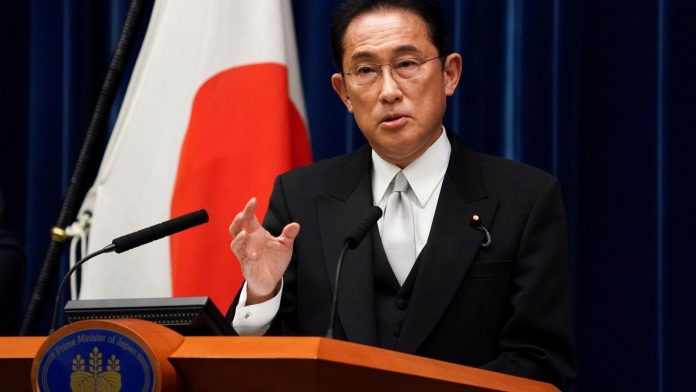
President Donald Trump has declared the new trade agreement with Japan the “largest trade deal in history,” touting it as a landmark achievement in his administration’s ongoing bid to reset global commerce on terms favorable to Washington.

Though the scale of the deal may fall short of Trump’s hyperbole, its implications across Asia are already reverberating.

The agreement, finalized after months of tense negotiations, drastically reduces US tariffs on Japanese automobiles—from a steep 27.5% to 15%—and paves the way for Tokyo to pour $550 billion into the US economy. In return, Japan will lift restrictions on US agricultural exports, especially rice and beef, allowing American farmers greater access to the world’s third-largest economy.

But while this deal brings immediate benefits for both nations, it is also triggering broader consequences throughout Asia, where countries are reassessing their trade strategies, bargaining positions, and geopolitical alignments.

A New Benchmark for Asian Trade Negotiations

The 15% US tariff on Japanese cars now serves as a critical benchmark for other major Asian economies currently negotiating trade deals with Washington. Countries like South Korea and Taiwan, both major exporters of vehicles and electronics, are under pressure to extract similar or better terms. South Korea’s industry minister, preparing for crunch talks in Washington, said Seoul will study the Japan deal carefully, noting that “fairness and reciprocity” will guide Korea’s approach.

South Korea and Japan are long-time competitors in global markets—especially in automobiles, steel, and semiconductors. A more favorable deal for Japan may compel South Korea to accelerate negotiations to avoid being outcompeted in the American market.

Likewise, Taiwan, heavily reliant on exports to the US, particularly in semiconductors, is now expected to seek concessions similar to Japan’s—especially around market access and tariffs. Analysts believe the Japan-US agreement gives Taiwan a stronger case to negotiate lower duties on key goods like computer chips and electrical equipment.

Dividing Asia: Winners and Losers

While major Asian economies like Japan, South Korea, and Taiwan prepare to adjust, the Trump-Ishiba pact threatens to leave smaller nations behind.

Countries such as Cambodia, Laos, and Sri Lanka—largely dependent on low-cost textile exports—offer little strategic value to the US in terms of high-tech supply chains or investment opportunities. With Washington now prioritizing deals that support critical industries like semiconductors, pharma, and autos, these smaller economies may find themselves increasingly sidelined in a new trade order.

Indonesia and the Philippines, which had earlier been seen as potential victims of Trump’s tariff regime, have since raced to the negotiating table. Preliminary agreements with Washington have already been announced, with both countries hoping to build deeper industrial links with the US in exchange for greater trade access.

But their window is narrowing. Trump’s administration has set a self-imposed August deadline to lock in as many bilateral deals as possible, prompting fears among Asian policymakers that they could be boxed out unless swift action is taken.

Strategic Supply Chains, Not Just Tariffs

Beyond trade in goods, Japan’s commitment to invest $550 billion in the United States marks a clear shift in the future of Asia-US relations. The bulk of that money is expected to flow into high-tech sectors like pharmaceuticals, semiconductors, and clean energy — areas where the US has sought to reduce dependency on China.

That investment strategy is not lost on other Asian countries. South Korea and Taiwan, already dominant players in semiconductors, are likely to propose similar investment partnerships to ensure their access to the US market is not undermined by Japan’s first-mover advantage.

Singapore, another technology hub, is also watching the developments closely. A senior official from Singapore’s trade ministry said the country is exploring ways to offer joint R&D projects with US firms, in hopes of aligning with Washington’s new supply chain priorities.

Japan’s Strategic Gain, China’s Strategic Loss?

There is also a broader strategic layer to the deal. Japan’s enhanced trade status with the US sends a clear message to China, whose own trade relationship with Washington remains clouded by distrust, sanctions, and security concerns.

As Japan secures lower tariffs, expanded exports, and a stronger position in the US market, China faces increasing isolation — particularly as the U.S. government has doubled down on restricting Chinese access to critical American technologies.

Trump’s Japan deal is not just a trade agreement. It’s a calculated effort to redraw Asia’s economic map in a way that favors US allies and penalizes rivals, particularly Beijing.

EU-Japan Alignment Raises US Stakes

While the US-Japan deal is positioned as a bilateral win, it has also pushed Tokyo closer to the European Union. On the same day the agreement was signed, Japan and the EU pledged to deepen cooperation against “economic coercion and unfair trade practices” — a thinly veiled swipe at China’s tactics and possibly Trump’s own earlier tariffs.

European Commission President Ursula von der Leyen emphasized that global trade must benefit everyone, not just a select few, hinting at growing European concerns over bilateralism and protectionism.

In sum, the US-Japan trade agreement, while lauded by Trump as the “largest in history,” has triggered a far broader realignment across Asia. From South Korea and Taiwan to Indonesia and Singapore, countries are racing to preserve their positions in the global value chain before Trump’s deadline resets the terms once again.

What started as a bilateral deal may end up reshaping trade priorities across Asia, redrawing alliances, and deepening divides — not just economically, but geopolitically.