DD
MM
YYYY

PAGES

DD
MM
YYYY

spot_img

PAGES

Home Blog Page 830

Lawmaker Slams Commerce Secretary Over Nvidia Sales to China, Even as Nvidia Faces Hurdles in Resuming Supply

0

A Republican lawmaker is ramping up pressure on the U.S. Commerce Department over its decision to allow Nvidia to resume exports of its H20 artificial intelligence chips to China, warning that the move could severely undermine America’s technological edge and empower Beijing’s military and surveillance ambitions.

In a strongly worded letter sent Friday to Commerce Secretary Howard Lutnick, Rep. John Moolenaar, who chairs the House Select Committee on the Chinese Communist Party, criticized the reversal of an earlier export restriction and demanded urgent clarification on how the department intends to handle the renewed sales. The ban, initially imposed in April by the Trump administration, was aimed at cutting off China’s access to cutting-edge U.S.-designed AI chips out of national security concerns.

“The Commerce Department made the right call in banning the H20,” Moolenaar wrote, referring to Nvidia’s China-specific chip. “We can’t let the Chinese Communist Party use American chips to train AI models that will power its military, censor its people, and undercut American innovation.”

Moolenaar also warned that allowing the H20 chips into China could tilt the global AI race in Beijing’s favor.

“The H20 significantly outperforms anything Chinese chipmakers like Huawei can currently produce at scale,” he noted, calling it a “substantial increase to China’s AI development.”

His latest remarks are the strongest yet since Nvidia announced earlier this week that it had secured approval to resume H20 shipments to China under a revised licensing regime. Under the current policy, the Commerce Department still requires export licenses for H20 sales, but Nvidia said it has received assurance that licenses will be granted and is preparing to ship chips.

Nvidia designed the H20 in response to Biden-era restrictions that blocked exports of its most advanced GPUs to China. While the H20 was specifically engineered to comply with those rules, it remains potent in key AI tasks like inference — the process by which trained AI models generate real-time responses. Inference computing is now one of the most commercially valuable segments of the AI chip market, with applications spanning from cloud services to AI assistants.

Moolenaar’s letter underscores concern that these chips are already helping Chinese tech giants accelerate AI capabilities. He pointed to Chinese companies like Tencent and DeepSeek, which have reportedly used the H20 in developing massive AI systems and even supercomputers. A recent congressional report released in April 2025 by the Select Committee on China cited the H20’s critical role in enabling DeepSeek’s AI model that stunned the global tech community earlier this year.

The lawmaker’s criticism represents a rare public rebuke of a Trump administration policy by a fellow Republican, underlining how deep the alarm runs among Washington’s China hawks over Beijing’s rapid AI progress. Bipartisan consensus has emerged around restricting China’s access to American-designed chips, a key ingredient in building powerful machine learning models and national security tools.

The decision to ease restrictions has triggered broader market reactions as well. Nvidia shares dipped into negative territory on Friday shortly after Moolenaar issued his letter. A spokesperson for Nvidia defended the move, saying, “The government made the best decision for America, promoting U.S. technology leadership, economic growth and national security.”

The Commerce Department has not commented publicly, but Secretary Lutnick said Tuesday that the move to resume H20 exports is tied to wider negotiations with China involving rare earth materials and strategic commodities like magnets — essential components in both defense and tech industries.

But lawmakers like Moolenaar remain unconvinced. In his letter, he requested a detailed briefing no later than August 8 on how the Commerce Department plans to assess license applications for the H20 and similar chips. He also demanded transparency on the number of chips expected to be exported and the recipients.

The controversy has reignited debate over the delicate balance between preserving America’s technological dominance and engaging in strategic trade, particularly with a geopolitical rival that is actively working to close the AI gap.

Nvidia Faces Hurdles in Resuming China AI Chip Supply Following U.S. Approval

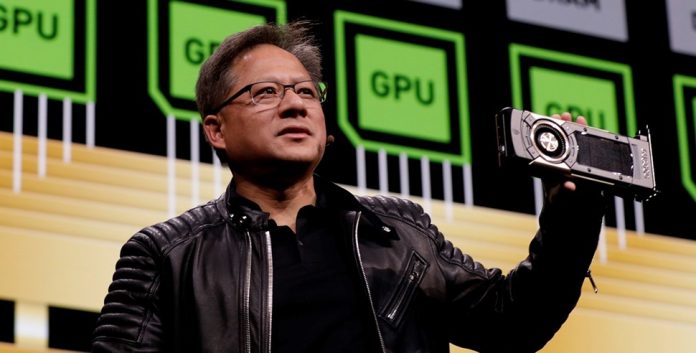
Meanwhile, Nvidia has informed customers in China that it has limited supplies of its H20 artificial intelligence chips, the most advanced model it is allowed to export to the country under current U.S. restrictions.

The disclosure, reported by The Information, adds to growing uncertainty surrounding Nvidia’s business in China, even as the company attempts to navigate intensifying geopolitical and regulatory headwinds.

The H20 was part of a trio of custom AI chips—alongside the L20 and L2—developed by Nvidia to comply with Washington’s sweeping export controls, which aimed to curtail China’s access to advanced U.S. semiconductors for military and surveillance use. While the L20 and L2 made it to market, the H20 faced delays and eventually a halt in shipments following an April directive from the U.S. Commerce Department requiring licenses for sales of all three chips to China.

According to The Information, Nvidia was forced to cancel customer orders and manufacturing slots at Taiwan Semiconductor Manufacturing Company (TSMC) as a result of the April policy change. TSMC, which had previously allocated capacity for H20 production, repurposed its lines for other clients, and restarting H20 production would take up to nine months, Nvidia CEO Jensen Huang reportedly told attendees at a media briefing in Beijing this past week.

Despite this disruption, Huang said Nvidia expects licenses for the H20 to be granted swiftly. He also assured that shipments would resume in China, although the recent internal communication cited by The Information suggests supply will be significantly constrained in the near term.

Meanwhile, Nvidia has announced plans to introduce a new graphics chip specifically for the Chinese market called the RTX Pro GPU. This product, the company says, is engineered to fall below the performance thresholds that would trigger U.S. export bans, making it compliant with current restrictions.

The shortage of H20 chips adds to Nvidia’s complex position in China, a market that accounted for about 17% of its data center revenue before the October 2023 export ban. Since then, Nvidia has been trying to shore up its presence with modified hardware, while also adapting to shifting policies from Washington.

The timing of the resumed shipments followed a private meeting between Jensen Huang and President Donald Trump earlier this year, where tech export restrictions and Nvidia’s China interests were reportedly discussed. After that meeting, Huang embarked on a closely watched trip to China, where he met with top executives and publicly expressed optimism that licenses for H20 exports would be processed swiftly.

In Beijing, Huang confirmed that the company was working to increase the supply of the H20 chip in China, and at the same time announced the RTX Pro GPU. The RTX Pro is a graphics chip designed for less advanced AI tasks, making it exempt from the latest round of restrictions.

Analysts say the company’s balancing act—maintaining U.S. compliance while preserving market share in China—will continue to test Nvidia’s strategic flexibility. With high-end chip demand surging due to the AI boom, competitors including Huawei have also ramped up their efforts, seizing the opportunity created by Nvidia’s regulatory constraints.

Nvidia is expected to provide updates on its China strategy during its next earnings report, scheduled for August 21.

Astronomer CEO Resigns After Viral Affair Video Sparks Backlash, Internal Investigation

1

Andy Byron, the chief executive officer of Astronomer, has resigned following mounting pressure over a viral video that captured him in what appeared to be an intimate moment with a senior colleague during a Coldplay concert in the U.S.

The incident, which spread widely across social media this week, triggered an internal investigation and led to his placement on administrative leave before Saturday’s announcement confirming his exit.

In a statement, Astronomer said: “Andy Byron has tendered his resignation, and the Board of Directors has accepted. The Board will begin a search for our next Chief Executive as Cofounder and Chief Product Officer Pete DeJoy continues to serve as interim CEO.”

The footage that led to Byron’s downfall emerged on Wednesday night at a Coldplay concert, where the tech executive was captured by cameras embracing Kristin Cabot, Astronomer’s Chief People Officer. The pair were shown on the concert’s big screen, and Byron — who is married with children — appeared to quickly duck out of view once they realized they were being watched. Lead singer Chris Martin, addressing the audience, quipped: “Either they’re having an affair or they’re just very shy.” That remark, and the video taken by an audience member, went viral, setting off a storm of public and internal company criticism.

By Friday, Astronomer confirmed it had launched a formal investigation and placed Byron on leave. But with the incident continuing to dominate conversation online and within industry circles, Byron formally stepped down less than 48 hours later. In its Saturday update, the company said, “Before this week, we were known as a pioneer in the DataOps space, helping data teams power everything from modern analytics to production AI. Our leaders are expected to set the standard in both conduct and accountability, and recently, that standard was not met.”

A Startup Caught in Crisis

The scandal comes at a delicate time for Astronomer, a fast-growing data orchestration company based in Cincinnati, Ohio. Founded in 2018, Astronomer is best known for developing a commercial distribution of Apache Airflow — an open-source tool used to program, schedule, and monitor data pipelines. Airflow has become a backbone for modern data infrastructure, especially as companies adopt artificial intelligence and cloud-native analytics.

Astronomer positioned itself early on as a go-to platform for enterprises seeking scalable, flexible tools to manage complex data workflows. Its enterprise-grade tools have been adopted by global companies across finance, healthcare, and tech, with users ranging from data scientists to DevOps teams. In many ways, Astronomer rode the wave of the data and AI boom.

The company’s momentum attracted strong venture backing. In May this year, it raised $93 million in a late-stage investment round led by Bain Capital Ventures. The round also saw participation from existing and new investors, including Salesforce Ventures, Insight Partners, and Sutter Hill Ventures. The infusion was intended to support product development, expand its enterprise footprint, and accelerate growth in international markets.

Until the scandal, Byron was seen as a stabilizing force in Astronomer’s transition from a startup to an enterprise-grade platform. He joined the company in 2022 after serving in senior roles at cybersecurity firm Lacework and software company DataRobot. His appointment was seen as a move to mature Astronomer’s operations and position it for an eventual IPO or acquisition.

Internally, however, sources say tensions had been building over the executive team’s management style. While the company had built a reputation around innovation and technical excellence, the recent scandal triggered broader conversations among staff about culture, accountability, and HR leadership, especially given the involvement of Kristin Cabot.

It remains unclear whether Cabot will remain at the company. Astronomer has not commented on her role in the investigation or whether she will face disciplinary action. Multiple employees have reportedly expressed concern over the company’s handling of the situation, with some questioning whether the board acted swiftly enough given the nature of the incident and its potential for reputational damage.

With interim CEO Pete DeJoy — a cofounder and head of product — now at the helm, Astronomer is hoping to stabilize its image and reassure investors and customers that the core business remains intact. DeJoy has been with the company since its inception and is seen as a key figure behind the technical success of its Airflow-based platform.

Block Set to Join S&P 500, Sparks Over 10% Stock Surge

0

Block Inc., the fintech company formerly known as Square, is set to join the S&P 500 index, replacing Hess Corp., which was recently acquired by Chevron.

The announcement, made late Friday by S&P Dow Jones Indices, triggered an immediate investor reaction—Block’s shares surged over 10% in after-hours trading, closing at $80.88.

This development marks one of two sudden index changes this week, the other being The Trade Desk’s addition following Synopsys’ acquisition of Ansys. Block’s inclusion will officially take effect before markets open on Wednesday, July 23.

Founded by Jack Dorsey in 2009, Square changed its name to Block in 2021 to emphasize its focus on blockchain technologies.

Why Block Was Picked

Despite earlier expectations that Robinhood or AppLovin—both boasting higher market capitalizations of $93 billion and $120 billion, respectively—would be selected, S&P Dow Jones opted for Block. Analysts believe the decision was influenced by sector balancing and Block’s unique positioning in digital payments and cryptocurrency, a combination that diversifies the index’s tech weight.

Block has a current market cap nearing $45 billion, well above the S&P 500’s eligibility floor. Until Friday’s announcement, its shares had been down around 14% year-to-date, weighed by investor caution over consumer spending and broader economic uncertainty.

In May, Block reported first-quarter results that missed Wall Street expectations on Thursday and issued a disappointing outlook, leading to a plunge in the stock price. Block’s forecast for the second quarter and full year reflected challenging economic conditions that followed sweeping tariff announcements by President Donald Trump.

“We recognize we are operating in a more dynamic macro environment, so we have reflected a more cautious stance on the macro outlook into our guidance for the rest of the year,” the company wrote in its quarterly report.

But the index inclusion has reversed that sentiment, triggering buying pressure from index-tracking funds that must now add Block to their portfolios.

A Crypto-Driven Differentiator

Beyond fintech, Block brings a bold and unique edge to the S&P 500—Bitcoin. The company holds substantial Bitcoin assets and has committed to reinvesting 10% of its monthly Bitcoin gross profits back into BTC. VanEck analysts say this makes Block potentially the first S&P 500 company with a formal Bitcoin accumulation strategy.

While Tesla and MicroStrategy are known for their Bitcoin holdings, Block’s methodical reinvestment signals a structured crypto commitment. Market analysts note that Block’s Bitcoin integration could pave the way for broader institutional exposure to digital assets via mainstream index funds.

The Index Effect and Market Expectations

Inclusion in the S&P 500 typically boosts a company’s visibility, credibility, and liquidity. Institutional investors who mirror the index will be compelled to buy Block shares, further fueling demand. However, analysts caution that such spikes often cool down after initial inflows, and longer-term performance will depend on fundamentals.

Block has its next earnings report scheduled for August 7. Investors will be watching closely to see if its Q2 performance justifies the market’s renewed optimism. The company has faced a mixed economic environment, with macroeconomic headwinds including tariffs and spending slowdowns, particularly under ongoing policies from the Trump administration.

Robinhood Left Waiting—Again

Robinhood’s exclusion, despite qualifying on market cap and liquidity grounds, has drawn attention. The company has previously missed out on index inclusion due to profit volatility, and this latest snub is likely another blow for its institutional appeal. AppLovin, another expected contender, was also bypassed.

S&P’s choices reflect a nuanced balancing act that factors in industry exposure, index composition, and long-term growth outlook—areas where Block’s integration of payments, commerce, and crypto seem to offer a stronger match.

Block’s entry into the S&P 500 is a milestone—not just for the company, but for the broader acceptance of fintech and crypto in traditional financial benchmarks. The stock’s double-digit surge underscores investor excitement, but the true test will come in its upcoming earnings and ability to sustain momentum.

EU Moves to Tighten Sanction on Russia’s Oil Revenues with Lower Price Cap in 18th Sanctions Package

0

The European Union has reached a new agreement on its 18th sanctions package against Russia, tightening restrictions with a revised and lower price cap on Russian crude oil — a key source of revenue for the Kremlin’s war effort in Ukraine.

The move comes amid growing international pressure and renewed threats from U.S. President Donald Trump to impose harsher sanctions on Moscow, following President Vladimir Putin’s continued refusal to engage in meaningful peace talks with Kyiv.

At the heart of the EU’s fresh sanctions is a downward revision of the oil price cap initially introduced in December 2022. That original measure, agreed by the G7 and EU, sought to limit how much non-G7 countries could pay for Russian crude and oil products while still accessing shipping, insurance, and other logistical services from G7 firms. The aim was to strike a balance between curbing Russia’s oil revenues and avoiding global supply disruptions.

The cap previously stood at $60 per barrel, but according to four EU officials who spoke to CNBC, the new dynamic threshold will be set just above $47, reflecting current market prices and allowing for future adjustments in line with oil price trends.

European Commission President Ursula von der Leyen confirmed the development in a statement on Friday, declaring that the new package strikes “at the heart of Russia’s war machine” by targeting key sectors such as banking, energy, and defense.

“I welcome the agreement on our 18th sanctions package against Russia. We are striking at the heart of Russia’s war machine. Targeting its banking, energy and military-industrial sectors and including a new dynamic oil price cap,” she said.

The EU’s top diplomat, Kaja Kallas, added that this was the first time the bloc had targeted Russian oil operations outside its territory, with sanctions now extending to Rosneft’s largest refinery in India — a major processing point for Russian oil sold to Asian buyers.

The decision follows weeks of quiet diplomacy and behind-the-scenes negotiations, particularly as President Trump ramps up pressure on U.S. allies to intensify efforts against Moscow. Trump, who initially took a less confrontational approach to the Kremlin compared to his predecessor, Joe Biden, has hardened his stance in recent weeks. His administration has grown increasingly frustrated with stalled ceasefire negotiations and Putin’s defiant tone, prompting Trump to float the possibility of broader penalties, including actions against countries that continue to import discounted Russian crude.

Senator Lindsey Graham recently suggested that Congress might back Trump with legislative tools to “end this bloodbath,” potentially targeting third-party buyers and companies facilitating Russian oil sales outside the price cap.

Despite multiple rounds of sanctions, Russia has managed to sustain oil exports through a network of shadow fleets, shell companies, and alternative financial arrangements. Much of its crude now flows to India and China, often through opaque deals beyond the reach of G7 enforcement mechanisms. However, analysts believe that the latest sanctions — particularly the lower price cap and new pressure from Washington — could mark a turning point.

Russia’s crude production in June averaged 9.19 million barrels per day, according to the International Energy Agency. However, much of that output is sold at discounted rates and now faces tighter restrictions, potentially reducing Moscow’s revenue stream at a time when its military spending continues to climb.

Global oil markets remain volatile, with additional pressure from geopolitical flashpoints. Tensions between Iran and Israel have amplified fears of disruptions in the Middle East, while lower Russian output could further squeeze supplies in the months ahead.

The move by Europe and the U.S. underlines unity in fresh economic pressure on the Kremlin. However, the challenge lies in how effectively the new cap is enforced, and whether countries like India — which has defended its purchases of Russian oil as necessary for energy security — will comply or face retribution.

Meta Refuses to Sign EU’s AI Code of Practice, Warns of Overreach as Europe Pushes Ahead with Landmark Regulation

0

Meta Platforms has formally declined to sign the European Union’s newly unveiled Code of Practice for General-Purpose Artificial Intelligence, escalating tensions between Big Tech and European regulators just weeks before key provisions of the EU’s landmark AI Act are set to take effect.

In a detailed statement shared on LinkedIn, Meta’s Chief Global Affairs Officer Joel Kaplan criticized the voluntary framework, warning it could “stunt innovation” and introduce legal uncertainty for AI developers across the bloc. Kaplan said the EU was “heading down the wrong path on AI,” describing the Code as regulatory overreach that “goes far beyond the scope” of the AI Act itself.

Although the Code of Practice is non-binding, companies that voluntarily sign on are granted practical benefits, such as a simplified compliance pathway, lighter regulatory obligations, and legal clarity when the AI Act becomes fully enforceable starting August 2025. Non-signatories like Meta will have to navigate the full weight of the AI Act’s compliance requirements without the benefit of these easing measures.

Meta’s refusal to sign is the latest in a growing wave of resistance from both global tech giants and European firms. A coalition of 44 European tech leaders, including Airbus, Siemens, Mistral, and ASML, had earlier called on the European Commission to delay the implementation of the AI Act’s Code of Practice by two years, citing fears that the framework is moving too quickly and could endanger Europe’s global competitiveness in the AI arms race.

In their open letter, the companies warned that the current scope of the Code places an “undue burden” on developers of general-purpose AI models and risks “jeopardizing the entire European AI ecosystem.” They called for more time to test, refine, and adjust compliance mechanisms before they become operational.

Despite mounting opposition, the European Commission has refused to delay. The EU’s Internal Market Commissioner Thierry Breton has insisted that the framework will proceed as scheduled, emphasizing that the AI Act is essential for consumer safety and trust in emerging technologies. The first compliance obligations for general-purpose AI developers will commence on August 2, 2025, with full obligations for high-risk systems following a year later, in August 2026.

The Code of Practice itself outlines voluntary standards in several key areas:

  • Companies are expected to document the data used to train AI models, disclose technical capabilities, and share summaries that explain how models behave.
  • The code also imposes copyright compliance safeguards, transparent risk mitigation procedures, and governance frameworks to manage systemic AI threats.
  • Signatories will also have to demonstrate how they address safety concerns and avoid discriminatory outputs.

The EU says the Code is not just about enforcement—it’s meant to provide legal certainty, especially for general-purpose models that fall into a gray area of the AI Act. However, critics like Meta argue that it essentially extends legal obligations under the guise of “voluntary” rules, setting a precedent for indirect enforcement.

“We are committed to building and deploying AI responsibly and have already published a number of transparency and safety resources for our generative AI models,” Meta said in a statement. “We’ll continue to engage with the Commission and look forward to supporting the goals of the AI Act in practice.”

As the deadline nears, other AI giants, including Google and OpenAI, are still reviewing their positions on whether to sign the Code. While Meta insists that it may still join later if its concerns are addressed, its current stance reflects a broader rift between regulators focused on precaution and tech companies emphasizing flexibility and speed in innovation.

Analysts say the rift could determine the pace and direction of AI development in Europe, where concerns about misuse, bias, and safety are being weighed against the continent’s lagging position in the AI race.

Ultimately, the EU appears determined to use its regulatory muscle to set global norms for artificial intelligence, regardless of whether Big Tech chooses to cooperate.