DD
MM
YYYY

PAGES

DD
MM
YYYY

spot_img

PAGES

Home Blog Page 841

Intel Posts $12.86bn in Q2 Revenue, Beats Estimates in Rare Glimmer of Hope

0

Intel’s second-quarter results may have topped Wall Street’s expectations on revenue, but the once-dominant chipmaker remains far from the powerhouse it used to be. The earnings report, released Thursday, came with a sobering reminder of the company’s long road to recovery — and its ongoing financial and operational overhaul under new CEO Lip-Bu Tan.

For the quarter ended June, Intel posted $12.86 billion in revenue, ahead of analysts’ estimates of $11.92 billion, according to LSEG. The company, however, recorded a net loss of $2.9 billion, or 67 cents per share, nearly double the $1.61 billion loss from the same period a year ago. Adjusted earnings showed a 10-cent loss per share, driven by an $800 million impairment charge related to idle tools, which alone knocked about 20 cents off the bottom line.

Still, the better-than-expected revenue and improved guidance for Q3 — $13.1 billion at the midpoint versus a $12.65 billion consensus — were enough to push Intel shares higher in extended trading. And for the market, it wasn’t just a matter of numbers beating expectations; it was the first concrete sign in months that Intel’s brutal slide may be slowing.

Intel’s current position marks a stunning decline for a company that once defined the semiconductor industry. Just a decade ago, Intel was unshakable — the undisputed leader in central processing units (CPUs) and one of the most valuable tech firms in the world. But years of strategic missteps, delays in manufacturing innovation, and a failure to pivot fast enough to the AI and smartphone chip boom allowed competitors — particularly TSMC, AMD, and Nvidia — to eclipse it.

By 2024, Intel had not only lost its technological edge but had also tumbled out of the top 10 semiconductor companies globally — a humiliating milestone confirmed by its own chief.

“We are not in the top 10 semiconductor companies anymore,” Lip-Bu Tan told staff in a brutal internal assessment earlier this month.

The admission was a stark departure from the optimism that once characterized Intel’s ambitious foundry plans and efforts to recapture leadership in chip manufacturing.

The damage wasn’t just reputational. Intel’s stock plunged 60% in 2024, marking its worst performance in company history. Over-investment in chip factories that never found sufficient demand, rising competition, and lagging innovation in both PC and data center chips all contributed to the rout.

Lip-Bu Tan’s Tough Medicine

Tan, the former Cadence Design Systems chairman and a respected voice in Silicon Valley, took over from Pat Gelsinger in March with a mandate to stop the bleeding and refocus Intel’s operations. His approach has been anything but cosmetic.

In a memo to employees Thursday, Tan revealed that Intel has now “completed the majority” of planned layoffs, trimming its workforce by 15% — or around 13,000 jobs — and will close the year with approximately 75,000 employees. The move is part of a broader plan to slash operating costs by $17 billion by the end of 2025.

More drastically, Tan canceled large-scale chip fabrication (fab) projects in Germany and Poland, slowed down the $20 billion “Silicon Heartland” plant in Ohio, and consolidated testing and assembly lines in Vietnam and Malaysia. These changes hit at the heart of Intel’s once-ambitious global expansion strategy under Gelsinger, who sought to challenge TSMC as a contract chipmaker.

“Over the past several years, the company invested too much, too soon – without adequate demand,” Tan wrote in his memo. “Our factory footprint became needlessly fragmented and underutilized.”

Intel’s foundry unit — the linchpin of its outsourcing pivot — posted a $3.17 billion operating loss on $4.4 billion in revenue. Without a big external customer to anchor the business, the unit has continued to drain resources.

Tan made it clear that going forward, all investments must be backed by firm demand. “There are no more blank checks. Every investment must make economic sense,” he wrote. He also said he would personally approve all chip designs before tape-out, reflecting tighter control and a renewed focus on engineering discipline.

Turning A Corner?

While the overall business remains under pressure, the latest report does offer signs of stabilization. Sales from the Client Computing Group — which includes chips for personal computers — declined 3% to $7.9 billion, while the Data Center and AI Group grew 4% to $3.9 billion. The latter unit, though still lagging behind AMD and Nvidia, shows Intel is not entirely losing the AI race.

The financial outlook is also improving. After last year’s catastrophic drop, Intel shares are up roughly 13% year-to-date, suggesting some investor confidence in Tan’s turnaround strategy. The company’s Q3 forecast also hints at momentum — albeit fragile — heading into the second half of the year.

Intel’s second-quarter performance won’t erase years of setbacks. But it is perhaps the clearest indication yet that the company is starting to steady its footing under Lip-Bu Tan. The revenue beat and improved forecast may look modest on paper, but in the context of Intel’s recent history — and Tan’s own admission that it no longer ranks among the top 10 global chipmakers — it represents more than just a quarterly win.

Analysts believe that the recovery will depend not just on cost cuts and restructuring, but on whether Intel can once again deliver on innovation — and win back the customers it lost.
Tether’s Re-Entry Could Entrench Its Dominance, Especially If Its New Stablecoin Gains Traction Among U.S. Institutions

0

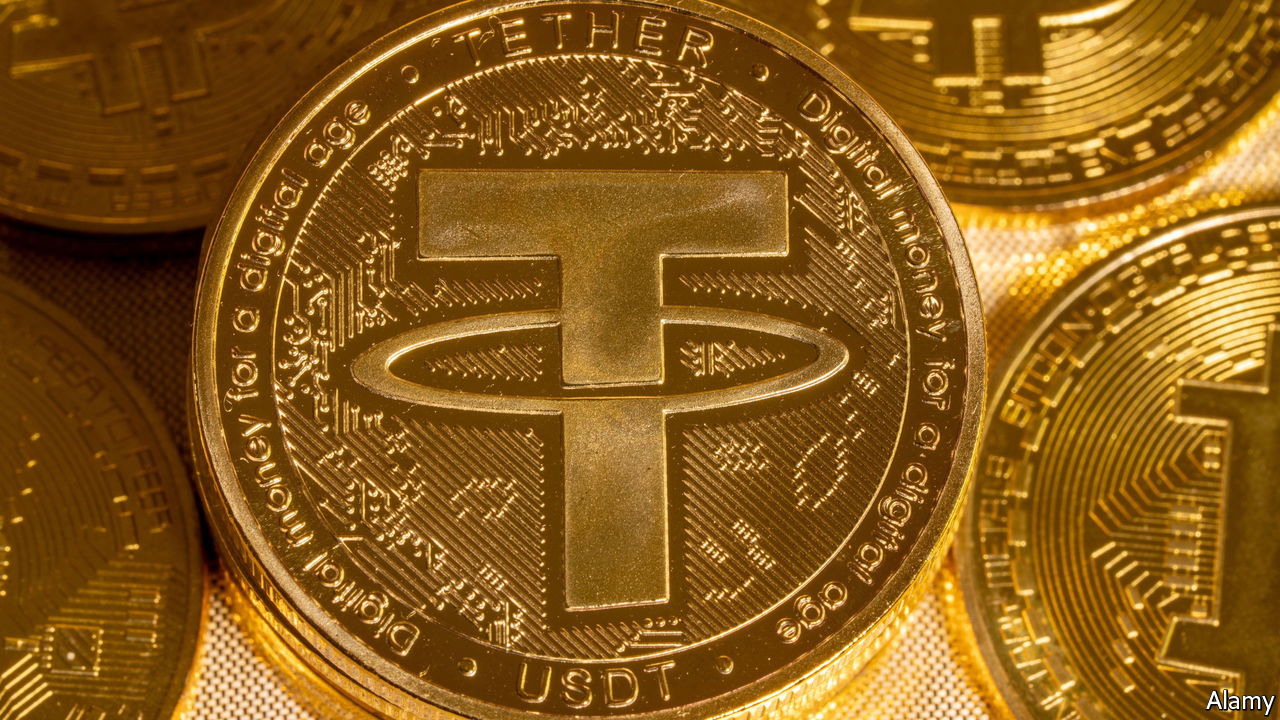
Tether, the issuer of the world’s largest stablecoin USDT, is planning to re-enter the U.S. market with a focus on institutional clients, driven by the recent passage of the GENIUS Act, signed by President Donald Trump. This legislation establishes a federal regulatory framework for stablecoins, mandating full reserve backing, anti-money laundering (AML) compliance, and regular audits, creating a conducive environment for Tether’s expansion.

CEO Paolo Ardoino has outlined a strategy targeting banks, hedge funds, and corporations for use cases like interbank settlements, corporate treasury management, and tokenized assets, emphasizing efficiency in payments and trading.

Tether is developing a new U.S.-based stablecoin distinct from USDT, designed to meet stricter compliance and transparency requirements, addressing past criticisms about reserve audits. The company aims to leverage its technological edge and market experience, despite competition from compliant rivals like Circle’s USDC. Tether’s re-entry follows a 2021 exit due to regulatory issues, including a $60 million settlement and a New York ban, and it continues to prioritize emerging markets while pursuing this U.S. strategy.

Tether’s new U.S.-compliant stablecoin, tailored for banks, hedge funds, and corporations, could accelerate institutional use of stablecoins for high-value transactions like interbank settlements, corporate treasury management, and tokenized asset trading. The GENIUS Act’s regulatory clarity (full reserve backing, AML compliance, audits) reduces legal risks, making stablecoins more attractive to risk-averse institutions.

Institutional adoption could drive significant demand for stablecoins, potentially increasing Tether’s market cap (USDT already at $120 billion as of recent data) and reinforcing its dominance. This could also spur innovation in tokenized financial products. The GENIUS Act’s framework signals U.S. acceptance of stablecoins as legitimate financial tools, potentially encouraging other jurisdictions to adopt similar regulations. Tether’s compliance with these rules could set a benchmark for the industry, pressuring non-compliant players to adapt or lose market share.

By launching a new stablecoin separate from USDT, Tether addresses past criticisms over transparency and reserves, potentially restoring trust among U.S. regulators and institutions. However, maintaining dual stablecoins (USDT globally, new stablecoin in the U.S.) may complicate operations and messaging. Tether’s re-entry intensifies competition with U.S.-based stablecoin issuers like Circle (USDC), which has already established itself as a compliant alternative. Tether’s technological edge and global dominance could challenge USDC’s market share, especially if Tether leverages its experience in high-volume transaction processing.

Smaller or less compliant stablecoin issuers may struggle to compete under the new regulatory regime, potentially leading to market consolidation around major players like Tether and Circle. Tether’s continued focus on emerging markets (e.g., Latin America, Africa) alongside its U.S. push suggests a bifurcated strategy. USDT will likely remain the go-to stablecoin in less-regulated regions, while the new stablecoin targets the U.S. institutional market. This could solidify Tether’s global dominance but risks creating operational silos.

By expanding stablecoin use in the U.S., Tether reinforces the U.S. dollar’s role in global finance, as both USDT and the new stablecoin are dollar-pegged. This could amplify dollar hegemony in crypto markets, impacting non-dollar-based stablecoins. The GENIUS Act’s strict requirements (full reserves, AML, audits) contrast with the looser regulatory environments in many emerging markets where USDT thrives. Tether’s dual stablecoin approach may create a two-tier system: a highly regulated, transparent stablecoin for the U.S. and USDT for less-regulated regions.

Smaller stablecoin issuers or decentralized projects may struggle to meet U.S. standards, creating a divide between well-funded, compliant players (Tether, Circle) and less-resourced or non-compliant ones. This could marginalize innovative but underfunded projects. Tether’s focus on institutional clients (banks, hedge funds, corporations) prioritizes high-value use cases, potentially sidelining retail users in the U.S. While USDT remains available globally, the new stablecoin’s institutional focus may limit retail access to Tether’s U.S.-compliant product, creating a perception that stablecoins are becoming tools for the financial elite.

Tether’s re-entry could entrench its dominance, especially if its new stablecoin gains traction among U.S. institutions. This risks creating a winner-takes-most dynamic, where Tether and Circle dominate, stifling competition from smaller stablecoin issuers or non-dollar-based stablecoins. Tether’s centralized model, backed by a corporate entity, contrasts with decentralized stablecoin protocols (e.g., DAI). The U.S. regulatory framework may favor centralized issuers, widening the gap between centralized and decentralized finance (DeFi) ecosystems.

Tether’s focus on the U.S. market may divert resources from its emerging market initiatives, where USDT is a critical tool for remittances and inflation hedging. This could slow innovation or support for underserved regions, deepening the economic divide between developed and developing nations. Tether’s ability to operate USDT in less-regulated markets while offering a compliant stablecoin in the U.S. could perpetuate regulatory arbitrage, raising ethical questions about exploiting regulatory gaps in poorer nations.

Tether’s U.S. re-entry is a strategic move to capitalize on regulatory clarity and institutional demand, potentially reshaping the stablecoin landscape. It could drive mainstream adoption, enhance Tether’s legitimacy, and intensify competition, but it also risks deepening divides between regulated and unregulated markets, institutional and retail users, and centralized and decentralized ecosystems.

The $1.9 Billion Ethereum Unstaking Queue Reflects A Mix of Profit-Taking and Strategic Reasons

0

The $1.9 billion worth of Ethereum (ETH) in the unstaking queue, totaling around 519,000 to 644,330 ETH according to various sources, is indeed the highest since January 2024, when a similar spike occurred. This surge follows a 160% ETH price rally since April 2024, with prices peaking at $4,040 before pulling back to around $3,545-$3,651.

Analysts, like Andy Cronk from Figment, attribute this to profit-taking by retail and institutional investors who staked at lower prices, as well as institutional maneuvers like custodial transitions or wallet tech upgrades.

Notably, Tron founder Justin Sun’s withdrawal of $600 million in ETH from Aave contributed to the congestion, causing a brief depeg of Lido’s stETH. Despite the unstaking wave, selling pressure may be limited. Over 343,000-390,000 ETH ($1.2-$1.3 billion) is queued for staking, reflecting strong demand, partly driven by the SEC’s May 2024 clarification that staking doesn’t violate securities laws. This has boosted institutional interest, with firms like SharpLink Gaming accumulating $1.3 billion in ETH.

The validator exit queue, now stretching 9-11 days, is a built-in mechanism to maintain Ethereum’s proof-of-stake stability, limiting validator exits per epoch. The net unstaked amount is roughly 255,000-316,000 ETH, suggesting a balanced market with strategic repositioning rather than panic selling. The surge in unstaking follows a 160% ETH price rally since April 2024, with ETH peaking at $4,040 before settling around $3,545-$3,651. Many investors, particularly those who staked at lower prices (e.g., $1,500-$2,000), are likely unstaking to lock in profits.

However, the net unstaked amount (255,000-316,000 ETH after accounting for 343,000-390,000 ETH in the staking queue) suggests limited immediate selling pressure. The market appears to be absorbing this through strong staking demand and institutional accumulation. The unstaking wave, combined with high-profile moves like Justin Sun’s $600 million ETH withdrawal from Aave, could introduce short-term volatility.

The 9-11 day validator exit queue, a built-in feature of Ethereum’s PoS system, ensures network stability by limiting the rate of validator exits per epoch. This prevents sudden disruptions to the network’s security or consensus mechanism. The current queue length indicates high unstaking demand but also underscores the robustness of Ethereum’s design in managing such events.

The significant staking queue ($1.2-$1.3 billion in ETH) reflects ongoing confidence in Ethereum’s long-term value proposition, particularly after the SEC’s May 2024 clarification that staking does not violate securities laws. This has reduced regulatory overhang, encouraging institutional participation.

Institutional activity, such as custodial transitions or wallet tech upgrades, is a key driver of the unstaking queue. For instance, large players like SharpLink Gaming, with $1.3 billion in ETH holdings, are likely optimizing their staking strategies or repositioning assets for new opportunities (e.g., spot ETH ETFs or DeFi protocols).

The unstaking surge has strained some DeFi protocols, as seen with Lido’s stETH depeg. This could prompt adjustments in liquid staking platforms to better manage redemption pressures during high-demand periods. The high unstaking volume could be misinterpreted as bearish sentiment, but the simultaneous staking inflow suggests a more nuanced picture: investors are rebalancing portfolios rather than exiting Ethereum entirely.

Retail investors are primarily driven by profit-taking after ETH’s 160% rally. Many staked ETH during the 2022-2023 bear market at prices as low as $1,000-$1,500. With ETH now trading at $3,545-$3,651, these investors are unstaking to realize gains, especially as staking yields (around 3-5% APR) may seem less attractive compared to locking in profits.

Retail unstaking tends to be more fragmented and opportunistic, contributing to the queue but in smaller amounts per validator (typically 32 ETH per validator). Some retail investors may also be rotating into other assets, such as altcoins or newly launched spot ETH ETFs. Retail unstaking adds to queue congestion but is less likely to cause systemic market shifts due to smaller individual positions. However, coordinated retail selling could amplify short-term price dips if sentiment turns bearish.

Institutions are unstaking for strategic reasons beyond profit-taking. Examples include: Moving staked ETH between custodians or upgrading wallet infrastructure for better security or efficiency. Adjusting exposure to ETH in response to market conditions or new investment vehicles like spot ETH ETFs. Redeploying ETH into higher-yield DeFi protocols or liquid staking solutions. Justin Sun’s $600 million withdrawal from Aave, for instance, reflects large-scale repositioning.

Institutions contribute larger chunks to the unstaking queue, often involving thousands of ETH per transaction. Their actions are more calculated, often timed with market events or regulatory clarity (e.g., the SEC’s staking ruling). Institutional unstaking can create temporary liquidity strains, as seen with the stETH depeg, but their long-term confidence is evident in continued staking inflows. Firms like SharpLink Gaming are accumulating ETH, signaling bullish sentiment despite unstaking activity.

343,000-390,000 ETH in the staking queue shows a cohort of investors doubling down on Ethereum’s PoS model, likely driven by yields and long-term belief in network growth. Non-stakers, including speculators or DeFi users, may be contributing to unstaking to pursue higher-risk opportunities elsewhere. The strain on liquid staking protocols like Lido highlights a divide between traditional validators (running their own nodes) and DeFi users relying on liquid staking for flexibility. The latter group’s unstaking can create cascading effects in DeFi markets.

The SEC’s May 2024 ruling has emboldened institutional staking, but lingering global regulatory uncertainties (e.g., in Europe or Asia) may prompt some investors to unstake and hold ETH in cold storage until clearer frameworks emerge. The $1.9 billion ETH unstaking queue reflects a mix of profit-taking, strategic repositioning, and infrastructure adjustments, with limited immediate selling pressure due to strong staking demand.

Is Early Exercise a Smart Move or a Tax Trap for Startup Employees?

0

Early exercise sounds empowering. You buy your options now, start the tax clock, and (hopefully) lock in a low strike price. It seems simple on paper, but it can be messy in real life. Cash goes out, taxes may come due, and liquidity is still a big question. Here’s how to decide if exercising before vesting or before a liquidity event actually helps you, or just hands the IRS a tip.

1.   Know what “early” really means

Early exercise means you are exercising before the company’s value jumps or before your options vest. This lets the long-term capital gains clock start sooner. It can also cut or eliminate the spread between strike price and fair market value, which lowers immediate tax. However, once you exercise, you own restricted stock. If you leave, unvested shares are repurchased.

2.   Get the basics down before you move

It’s vital to learn how options, vesting, and taxation work. Online resources like this stock option basics for startups guide can keep you from guessing. Once you grasp ISOs vs NSOs, 409A valuations, and the Alternative Minimum Tax (AMT), you can model real numbers. Blindly exercising because “everyone in growth mode does it” is risky.

3.   File the 83(b) election on time, or don’t bother

If you exercise unvested shares early and want favorable tax treatment, you must file an 83(b) election within 30 days of exercise. If you miss this window, the IRS treats each vesting tranche as new income. This means ordinary income rates, not capital gains. Be sure to calendar the deadline the moment you sign the exercise paperwork. You should send it via certified mail and keep the receipt.

4.   Model best, base, and worst cases

Run three scenarios: company skyrockets, company grows slowly, company flatlines or dies. In the big win case, early exercise plus an on-time 83(b) means most upside is taxed at long-term capital gains, AMT stays manageable, and you keep more of the win. In a steady but slow climb, your cash is locked up for years while tax savings stay modest. In a flop, you lose exercised cash and can’t always claim a full capital loss. Be sure to put real numbers on strike cost, FMV, tax, and timelines.

5.   Consider your cash flow and tax budget

Exercising takes cash, and paying AMT or state tax might take more. Will that money hurt your emergency fund? Will you need to borrow? Early exercise should not torpedo your financial stability. Build a simple spreadsheet. Add strike price cost, estimated AMT, and filing fees. Compare that to savings, debt, and big life expenses ahead.

6.   Ask about company policies and future plans

Some startups do not allow early exercise. Others do but have complex repurchase rights. Ask HR or legal departments about secondary windows, tender offers, or planned liquidity programs. A promised tender in 12 months can change the math, and so does a down round that could reset valuations. Corporate policies matter as much as the tax code here.

Endnote

Early exercise is not a default move; it is a lever you pull with intent. Pause, price the risk, and see if the tax benefit is worth the cash you lock away. Confirm the 83(b) clock, company policies, and your own runway. Be sure to also talk to a startup-savvy CPA, not a generic tax preparer. When you mix clear basics, disciplined math, and honest risk tolerance, you can choose confidently, not fearfully.

Tekedia AI Lab for Colleges Comes with Programmable Microprocessor Capabilities

0

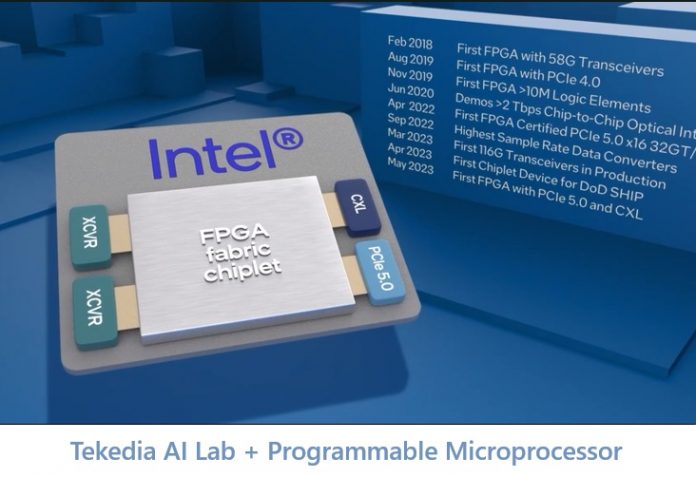
To Universities in Africa: Tekedia AI Lab for Colleges will come with programmable microprocessor capabilities. Yes, as we educate your students on how to build AI agents, using code-based open-model systems, we will introduce programmable microprocessors. With the support of Intel Corporation, we’re here to ensure that your students are ready for the 21st century.

The Tekedia AI Lab for Colleges is a customized version of Tekedia AI Lab: From Technical Design to Deployment. We welcome universities which want to expose their students to practical AI design and programmable microprocessor development. Learn more here.


About Us:

Tekedia Institute is a leading business school; more people study business management in the Institute than any university in Africa.

Fasmicro is Africa’s only Intel programmable microprocessor knowledge partner with access to Intel designkits, models, codebase, etc to design, develop and deploy intelligent systems. Besides training, we support design companies helping them with designs, design reviews, firmware development, and more.