DD
MM
YYYY

PAGES

DD
MM
YYYY

spot_img

PAGES

Home Blog Page 842

5 Tools That Quietly Save You Hours on Repetitive Tasks

0

There are tasks that need to be done over and over again. The worst thing about it isn’t that it’s boring or that it’s not something inspiring to do; it’s the time you’re losing that could be used to grow your business. Repetitive tasks cannot be avoided, unfortunately. They’re literally everywhere, from replying to similar emails to updating spreadsheets or rewriting content. 

Don’t worry, it’s not all bad news. Maybe you can’t avoid them… maybe, sure. But you can save a lot of time by using the right tool in the right places. That can help you take the burden off your shoulders and give you more hours for important tasks every week.

If you want to know how to make your work easier without losing quality, here are five tools that help simplify and speed up common tasks without getting in your way. 

And, no worries, you don’t need a degree in automation to learn how to use them.

1. Convert Static Content into Dynamic Assets

If you‘ve ever written content such as a help article or blog post and you want it in a video form, there’s no need to do the video from scratch. You can do it pretty much by pushing a button. 

Today, there are tools that let you turn link into video, and they do the whole process automatically (little to no input on your end is required). They use AI avatars and voice-overs to create a polished product. The best part is that it only takes minutes. So even if you don’t like the outcome, you can tweak it a bit and redo it until you’re satisfied.

Support centers and marketing teams love this kind of tool because it is very helpful. Why would you rewrite the same information in video format when you can easily take an existing URL and leave it to the tool to handle the rest of the job for you? You will get a video that is ready to use, and you will save production time.

It is extremely effective if your audience prefers visual content.

2. Automate Your Inbox with Gmail Filters and Canned Responses

Email management could be easily called a nightmare for most people. If you need more than 30 minutes daily to sort or reply to messages, it is time to consider getting Gmail’s built-in features. This can save you hours every week.

You can start by using filters to automatically label, archive, or forward emails based on sender, keywords, or attachments. When you finish that, you are ready to set up canned responses, called Templates. 

It’s a great option for those whose inbox is full of repetitive messages like meeting confirmations, support requests, etc.

3. Zapier: The Glue Between All Your Apps

Zapier links your most-used tools and automates the recurring tasks between them. It’s like a virtual assistant running in the background. It can duplicate leads from Facebook ads to Google Sheets, notify your team on Slack when there’s a new order, or back up email attachments to Dropbox.

You don’t need to know code. Just pick a trigger and an action. 

For example:

  • When a new Trello card is created, create an event in Google Calendar
  • When a new Stripe payment is made, send a thank-you email via Gmail

And anyone can use them. You don’t have to be a tech savant, nor are these tools super expensive; in fact, most are completely free to use while offering certain privileges for their premium (paying) users.

Even basic automations can save hours of boring copy-paste work. Once you’ve set up some workflows (“Zaps”), they run in the background as you focus on higher-impact work.

4. Notion Templates That Do the Thinking for You

Notion is more than a note-taking tool; it’s a workspace that can be customized, and its job is to replace spreadsheets, docs, calendars, and databases. But the biggest time-saver is using pre-built Notion templates for recurring workflows.

Whether content scheduling, product roadmaps, meeting agendas, or tracking habits, using an existing template eliminates setup and decision fatigue time. You’re not doing it from scratch, and the structure keeps you on track.

This is useful especially for startup teams and remote collaborators who need a central hub that’s flexible but still keeps everyone aligned. A few minutes of planning inside a template can prevent hours of repeated catch-up work.

5. Grammarly Keyboard for Instant Writing Cleanup

If you are writing a lot, this is the tool you need asap. It doesn’t matter which form of writing is in your job description; Grammarly’s browser extension and mobile keyboard are going to be your new besties. 

They automatically detect spelling mistakes, correct sentence structure, and suggest tone in real-time, before you even think about clicking send. 

Conclusion

Repetitive tasks are always going to be present, but that doesn’t mean that you can’t make them bearable and less time-consuming. Depending on your job and tasks you need to do, you can choose tools that are going to help you the most in working in the background, the job that you don’t have to do, and you can focus on what truly matters to you. 

Using these types of tools means you’re freeing up your time. How you’ll use this ‘extra time’ is entirely up to you.

Nigeria Customs Scraps Multiple Import Levies, Introduces Unified 4% FOB Charge Amid Push for Trade Reforms

1

In a sweeping reform that could reshape Nigeria’s import ecosystem, the Comptroller-General of Customs, Adewale Adeniyi, has announced the elimination of multiple levies previously imposed on imports, replacing them with a streamlined 4% Free On Board (FOB) charge.

The move is expected to simplify the country’s notoriously complicated port charges, reduce room for abuse, and promote ease of doing business.

The announcement was made during a stakeholder town hall meeting in Lagos on Monday, July 21, where Adeniyi detailed the government’s plan to replace the 1% Comprehensive Import Supervision Scheme (CISS) and the 7% cost of collection with a single upfront charge of 4% on FOB value.

“Once the 4% FOB takes effect, the 1% Comprehensive Import Supervision Scheme (CISS) will cease automatically. In addition, the 7% cost of collection currently charged will also be completely removed,” the Customs boss said.

“Under the new Act, the 4% FOB is paid upfront—and that’s it. Thereafter, 100% of the revenue generated by Customs will go into the Federation Account. It’s a win-win for everyone.”

What the New Policy Means

Before this reform, importers were subject to fragmented charges that not only inflated the cost of doing business but also created loopholes for discretionary fees and corrupt practices. The Customs Service aims to introduce a transparent, predictable framework that could significantly consolidate the levies into one clear charge, improve compliance, and revenue generation.

The 4% FOB rate, paid at the point of entry, is designed to be both simple and inclusive—replacing overlapping charges that often confused importers and led to repeated assessments. The unified structure will also put an end to the Customs Service retaining 7% of collected revenue as a “cost of collection”—a system that critics have long argued incentivized internal inefficiencies.

Potential Benefits

Economic experts and trade analysts believe the policy could bring immediate and long-term benefits if effectively implemented.

  • Enhanced Revenue Transparency: With 100% of Customs revenue now set to flow directly into the Federation Account, the reform eliminates the previous practice where a portion of funds was retained by Customs. This is expected to improve fiscal discipline and give the federal government clearer oversight over trade-related income.
  • Reduction in Trade Costs: Eliminating multiple and sometimes overlapping levies could reduce the overall cost of imports. This may eventually reflect in consumer prices and stimulate higher import volumes, especially for small and medium-scale businesses that previously struggled with opaque Customs charges.
  • Improved Global Trade Rankings: Nigeria’s standing in global ease-of-trade metrics has been persistently poor, largely due to delays, unofficial charges, and complex clearance procedures. A more predictable levy system could boost Nigeria’s ratings and send the right signal to investors and trading partners.
  • Curbing Corruption and Abuse: By removing discretion from the process and digitizing the clearance chain through the B’Odogwu platform, the reform limits avenues for arbitrary charges and backdoor negotiations—a longstanding problem at Nigeria’s ports.

The introduction of the B’Odogwu clearance platform—hailed as a homegrown digital solution—is being touted as a critical pillar of the reform. It is designed to automate Customs processes, reduce human interference, and improve the speed and integrity of clearance procedures.

DCG Kikelomo Adeola, head of ICT and Modernisation, stressed the platform’s strategic value, noting that its rollout aligns with Nigeria’s leadership role as chair of the World Customs Organisation (WCO). “This is more than a digital tool. It’s a signal that Nigeria is ready to lead on Customs modernisation globally,” she said.

At the town hall, freight forwarders, clearing agents, and trade operators welcomed the move but voiced concerns about the readiness of supporting infrastructure. Many pointed to persistent delays from banks and documentation lapses that could frustrate the new system’s efficiency.

Saleh Ahmadu, Chairman of Trade Modernisation Project Limited (TMPL), assured participants of ongoing investments in infrastructure to ensure a seamless transition. “We understand the concerns. But our team is focused on building a system that works for all parties—from Customs to the smallest importer,” he said.

Several panel sessions were held to address lingering issues, including “Overcoming Common Importer Challenges on B’Odogwu” and “Enhancing Transparency, Speed, and Revenue through Full Participation.” A candid Q&A session followed, with Customs officials pressed on how soon the full switch to the new framework would take effect and how implementation hiccups would be handled.

Lingering Questions

However, some stakeholders expressed fears that without strict enforcement and stakeholder education, the system could suffer the same fate as previous reforms—bogged down by implementation gaps and informal practices.

There are also questions around how long it will take for the benefits to be felt at the retail and industrial levels, and whether Customs staff and partner agencies have been adequately trained for the digital transition.

However, many industry insiders say the unified 4% FOB charge is the boldest step yet in Nigeria’s quest to reform its trade environment. If executed with transparency and backed by functional digital infrastructure, it could mark a turning point in the country’s long battle with port inefficiencies and trade-related corruption.

The Customs Service says implementation will be gradual but firm—and that the days of multiple overlapping charges at Nigeria’s ports are numbered.

Nigeria’s Digital Economy Sector Contributes N7 Trillion to Q1 2025 GDP, Ranks Among Top Performers

0

Nigeria’s digital economy has emerged as a powerhouse, contributing an impressive N7 trillion to the country’s GDP in the first quarter (Q1) of 2025, solidifying its position as one of the nation’s top-performing sectors.

This remarkable achievement underscores the transformative impact of technology and innovation on Nigeria’s economic landscape, driven by advancements in telecommunications, fintech, e-commerce, and digital services

According to a report released by the National Bureau of Statistics (NBS), Nigeria’s total real GDP grew by 3.13% in Q1 2025, down from 3.76% in Q4 2024. The Digital Economy sector accounted for 14.19% of the total N49.34 trillion real GDP.

The sector, comprising the Information and Communication (I&C) sector and the Financial Institutions (FI) sector, posted real GDP contributions of 10.59% and 3.60% respectively. Both sub-sectors ranked among the top 10 performers in the Q1.

The I&C sector recorded a year-on-year (YoY) growth of 7.40% in real terms, despite a -8.86% contraction quarter-on-quarter. Its contribution to total real GDP (10.59%) was an improvement over the 10.17% recorded in the same quarter of 2024. Notably, the telecommunications industry dominated the I&C sector, contributing N4.2 trillion out of the total N5.2 trillion, representing 80% of the sector’s value. The remaining 20% came from broadcasting, publishing, and creative media services.

The Financial Institutions sector, which includes banks, fintechs, and insurance providers, contributed N1.8 trillion to GDP, with financial institutions accounting for N1.6 trillion (90.74%) and the insurance industry contributing just under N200 billion (9.26%).

Nigeria’s digital economy has continued to show impressive growth. The sector revenue rose from US$5.09 billion in 2019 to US$7.13 billion and US$9.97 billion in 2020 and 2021, respectively. It is projected that the sector revenue will reach $18.30 billion by 2026. In terms of investment in start-ups on the African continent, Nigeria ranks ahead of South Africa, Egypt, Kenya, and Ghana.

A McKinsey study published in 2017 predicted that the digital economy in Nigeria would contribute 3.0 million new jobs and add $88.00 billion to the economy over a decade. However, for a thriving and inclusive digital economy, African countries such as Nigeria need to build the critical foundations of the digital economy.

These foundations are interdependent and require public and private sector solutions. In Nigeria, the National Information Technology Development Agency’s (NITDA) Digital Economy Development Department aims to help the Federal Government meet its targets set by its National Digital Economy Policy and Strategy (NITDA, 2022).

The department aims to facilitate an effective, inclusive, and sustainable digital economy by:

  • Transforming Business Models: Promoting the adoption of digital business models and markets across sectors to enhance economic competitiveness.

  • Creating an Enabling Environment: Providing guidelines, frameworks, and regulations to foster digital service exchanges and the trade of digital goods.

  • Promoting Digital Literacy: Implementing capacity-building programs to boost digital skills, supporting the government’s goal of achieving 70% digital literacy by 2027 and 95% by 2030.

  • Driving Economic Growth: Supporting initiatives to increase digitally enabled Micro, Small, and Medium Enterprises (MSMEs) and Integrated Digital Ecosystems (IDEs), contributing to job creation and economic diversification.

  • Fostering Innovation: Encouraging the development and integration of emerging technologies like AI, IoT, blockchain, and robotics to address local challenges and create economic opportunities.

This is driven by efforts to boost digital literacy, digital commerce promotion, technology adoption, and industry collaboration to transform digital business models and markets across all sectors and industries while providing an enabling environment for exchanges of digital services and digital goods.

Digital innovation and disruptive technologies is a crucial key engine to the growth of the Nigerian economy, and the achievement of the diversification from oil dependency.

As Nigeria looks into the future, supporting these efforts by strategic investments in digital literacy, infrastructure and creating key linkages are crucial.

“I No Longer Need to Lobby for FX”: BUA Cement Chairman Hails CBN Reforms, Sees Naira Strengthening to N1,200/$

0

The Chairman of BUA Cement Plc, Dr Abdul Samad Rabiu, says the Central Bank of Nigeria’s (CBN) ongoing foreign exchange reforms have effectively eliminated the era of lobbying for dollars—a practice he admitted was once routine for Nigerian businesses under the previous FX regime.

Rabiu, who spoke in Abuja on Monday during a media briefing following the company’s 9th Annual General Meeting, said the new FX framework has brought transparency and fairness to currency access, allowing businesses to plan with more confidence and less political maneuvering.

“I was making a joke a few weeks ago that I’ve only seen the current CBN Governor maybe twice since his appointment. That’s because I don’t need him,” Rabiu said. “Before now, I used to visit the CBN every two weeks to lobby for FX. That was the only way to survive.”

The billionaire businessman described the previous system as a distortion that created artificial scarcity and privilege. “The rate was N500 or N600 officially, but nobody could get it. On the street, it was closer to N1,000. It was an artificial rate,” he said.

In contrast, Rabiu praised the new FX system for unifying the market and closing the gap between the official and parallel rates.

“Now, the rate you get is what everyone else gets. You go to the bank, you get FX at the market rate,” he said, adding that the current policy environment fosters a level playing field for all businesses.

Naira Could Strengthen Further

Rabiu expressed optimism that the naira would continue its upward trajectory, predicting that the exchange rate could appreciate to around N1,200/$ in the coming months, down from highs of nearly N2,000/$ earlier in the year. He linked this optimism to increased transparency in FX flows and the market-driven approach adopted by the CBN.

The BUA chairman said this trend is already translating into lower commodity prices.

“We are beginning to see a decline in the cost of goods—cement prices are coming down, food prices too,” he noted.

FX Reforms Offset by Soaring Input Costs

However, Rabiu acknowledged that cement prices had earlier risen sharply due to cost pressures tied to FX volatility, imported machinery, and high energy costs.

“Despite these challenges, we’ve tried to keep our prices stable and fair. But energy and imported components really drove production costs up,” he explained.

BUA Cement’s Financials Defy Volatility

Despite macroeconomic headwinds, BUA Cement posted a remarkable 90.6 per cent revenue growth in 2024, reaching N877 billion—up from N460 billion in 2023. The company, however, reported FX-related losses of N93.9 billion in the same period, underscoring the lingering impact of currency depreciation earlier in the year.

Profit before tax rose 48.2 per cent to N99.63 billion, while profit after tax for the first quarter of 2025 alone stood at N81 billion—more than the entire earnings for the full year 2024. Rabiu projected that full-year 2025 earnings could hit N250 billion if current performance trends continue, buoyed by increased output, better FX conditions, and operational efficiencies.

Return on average capital employed rose to 15 per cent in 2024 from 10 per cent the previous year, while earnings per share grew to N2.18 from N2.05, representing a 6.3 per cent increase.

“This performance was driven by a combination of increased dispatch volumes and prudent pricing strategies, even as the Company absorbed rising input costs,” Rabiu said. He added that cash generation had also improved significantly, allowing BUA Cement to pay down import finance facilities and reduce its exposure to dollar-denominated obligations.

Having recently commissioned two new cement lines in Sokoto and Edo states, Rabiu disclosed that the company has reached its production target of 20 million metric tonnes per year and will not be pursuing further expansion in the short term.

“Our focus now is on consolidating operations, cutting costs, and improving efficiency,” he said.

BUA Bets on Local Content and LNG to Tame Energy Costs

Managing Director and CEO of BUA Cement, Yusuf Binji, also spoke at the AGM and emphasized that energy remains the company’s largest cost driver. He revealed that BUA is investing in a 700-tonnes-per-day liquefied natural gas (LNG) regasification plant to stabilize energy supply and cut costs.

Binji said the company had renegotiated existing service contracts to increase local content participation, which has helped in reducing FX exposure and improving cost efficiency. “We are focused on resilience, strategic agility, and delivering value in a volatile macroeconomic environment,” he said.

Rabiu reaffirmed the company’s commitment to rewarding shareholders, announcing a N2.05 dividend per share—a 94 per cent payout ratio.

“We remain committed to shareholder value and long-term sustainability,” he said.

The financial turnaround, strategic investments, and FX reforms have all contributed to a more stable outlook for BUA Cement in 2025, reinforcing the group’s position as one of Nigeria’s most formidable industrial players.

A Look At Trump Media & Technology Group’s $2B Bitcoin Investments

0

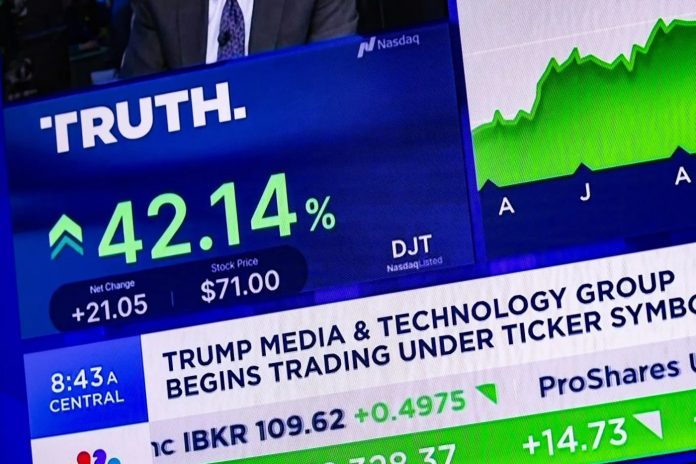
Trump Media & Technology Group, the company behind Truth Social, announced that it has acquired approximately $2 billion in Bitcoin and Bitcoin-related securities as part of its crypto treasury strategy. This move, which accounts for about two-thirds of the company’s $3 billion in liquid assets, includes an additional $300 million allocated to an options acquisition strategy for Bitcoin-related securities. The company plans to continue acquiring Bitcoin and may convert these options into spot Bitcoin based on market conditions.

CEO Devin Nunes stated that these assets aim to ensure financial freedom, protect against discrimination by financial institutions, and create synergies with a planned utility token for the Truth Social ecosystem. The announcement follows a $2.5 billion fundraising plan disclosed in May 2025, involving stock sales and convertible bonds. Shares of Trump Media (DJT) rose as much as 9% in early trading after the news.

By allocating two-thirds of its $3 billion in liquid assets to Bitcoin and Bitcoin-related securities, TMTG is heavily betting on cryptocurrency as a hedge against inflation, currency devaluation, or financial censorship. Bitcoin’s volatility, however, introduces significant risk, as its price can fluctuate dramatically (e.g., Bitcoin’s price has ranged from $30,000 to over $100,000 in recent years). A sharp decline could erode TMTG’s financial position, while a surge could bolster its balance sheet.

The move signals confidence in Bitcoin’s long-term value and aligns TMTG with the growing trend of corporate Bitcoin adoption (e.g., MicroStrategy, Tesla in the past). The 9% stock price surge for DJT post-announcement suggests investor enthusiasm, but sustained market confidence will depend on Bitcoin’s performance and TMTG’s execution of its crypto strategy. The $300 million options strategy for Bitcoin-related securities provides flexibility to pivot based on market conditions, potentially mitigating risk. However, converting options to spot Bitcoin could amplify exposure to volatility.

TMTG’s stated goal of protecting against “discrimination by financial institutions” aligns with a narrative of resisting centralized financial systems, often associated with “Big Tech” or “Big Finance.” This resonates with Bitcoin’s ethos of decentralization and censorship resistance, appealing to supporters skeptical of traditional institutions. By embracing Bitcoin, TMTG positions itself within the pro-crypto movement, which has gained traction among conservative and libertarian groups.

The planned utility token for the Truth Social ecosystem suggests an ambition to integrate blockchain technology into its platform, potentially for payments, rewards, or decentralized features. This could differentiate Truth Social from competitors but risks regulatory scrutiny, especially given the SEC’s strict stance on crypto tokens. The U.S. regulatory environment for cryptocurrencies remains uncertain, with potential crackdowns on unregistered securities or tax evasion.

TMTG’s Bitcoin holdings and planned token could attract attention from the SEC, IRS, or other agencies, especially given the company’s high-profile political associations. The announcement could fuel speculation in Bitcoin markets, particularly if perceived as a politically motivated move. Critics may argue it inflates Bitcoin’s price artificially, drawing scrutiny from regulators or market watchdogs.

Bitcoin’s accessibility is limited to those with technical knowledge or financial resources, potentially alienating TMTG’s broader user base. If the utility token becomes central to Truth Social, it could create barriers for non-crypto-savvy users, limiting platform adoption. The move aligns TMTG with pro-crypto conservatives and libertarians who view Bitcoin as a tool for financial sovereignty. Conversely, it may alienate critics who associate crypto with speculation, fraud, or environmental concerns (e.g., Bitcoin mining’s energy consumption).

By framing the acquisition as a defense against financial discrimination, TMTG reinforces a narrative of distrust in banks and government institutions. This resonates with its base but risks further polarizing those who support traditional financial systems or regulatory oversight. Bitcoin’s high entry cost and the technical complexity of crypto markets exclude many lower-income individuals, including some of TMTG’s target audience. This could exacerbate perceptions of economic elitism, even among supporters, if the benefits of TMTG’s crypto strategy.

TMTG’s heavy Bitcoin allocation contrasts with traditional corporate treasury strategies (e.g., holding cash or bonds). If successful, it could validate crypto as a mainstream asset, but a crash could fuel criticism that TMTG prioritizes speculative bets over stability, deepening divides between crypto advocates and skeptics. Integrating a utility token into Truth Social may appeal to crypto enthusiasts but could alienate less tech-savvy users, particularly older demographics who form a significant portion of TMTG’s base.

By doubling down on crypto, TMTG further differentiates itself from mainstream platforms like X or Meta, which have not heavily embraced blockchain. This could solidify Truth Social’s niche as a platform for a specific ideological and technological subculture but limit its broader appeal. The stock surge and media attention boost TMTG’s visibility, potentially attracting new investors and users to Truth Social. However, Bitcoin’s volatility and regulatory risks could lead to financial instability if not managed carefully.

If successful, TMTG’s crypto strategy could position it as a leader in the convergence of social media and blockchain, potentially influencing other platforms to follow suit. However, failure (e.g., a Bitcoin crash or regulatory crackdown) could damage TMTG’s credibility and financial health, reinforcing critics’ skepticism. The move entrenches TMTG in a polarizing space, aligning it with crypto’s anti-establishment ethos while risking alienation of those wary of speculative or unregulated markets.

TMTG’s $2 billion Bitcoin acquisition is a bold, high-risk move that strengthens its anti-establishment brand and aligns it with the pro-crypto movement. While it may enhance financial flexibility and appeal to a niche audience, it risks exacerbating divides between crypto advocates and skeptics, tech-savvy and traditional users, and those who trust versus distrust centralized institutions. The success of this strategy hinges on Bitcoin’s performance, regulatory developments, and TMTG’s ability to integrate crypto into Truth Social without alienating its core user base.