DD
MM
YYYY

PAGES

DD
MM
YYYY

spot_img

PAGES

Home Blog Page 844

Moniepoint Named Among World’s Top Fintech Companies by CNBC

0

Moniepoint, one of Africa’s foremost business payments and digital banking platforms, has been recognized by CNBC and Statista as one of the world’s top 300 fintech companies. This recognition underscores Moniepoint’s pivotal role in expanding access to financial services across the continent.

This prestigious ranking by CNBC spans seven fintech market segments, honoring established and emerging players. The list was curated through in-depth research, evaluating key metrics such as revenue growth, transaction volume, capital raised, and workforce size to identify the fintechs driving global innovation and impact.

Moniepoint was named in the Payments category, which comprises companies providing payment services, gateways, and solutions that enable transactions between businesses and individuals—online and offline.

The fintech was placed alongside a distinguished group of industry leaders such as MyFawry, Interswitch, Mastercard, and Palmpay, recognized for strong financial performance in 2023 and 2024. Notably, Moniepoint’s recent accolade follows the company’s milestones and commitment to innovation and widening access to the formal financial system.

Speaking on the recognition, Tosin Eniolorunda, Group CEO of Moniepoint Inc., said,

“It is an honour to be named as one of the world’s top fintech companies by CNBC. Moniepoint’s inclusion in this prestigious, authoritative list is a testament to the hard work and success of the entire team and highlights our emergence as a key player shaping the future of fintech worldwide. As we continue to scale, we remain committed to driving global financial inclusion and widening access to economic opportunities for Africans everywhere transforming lives and livelihoods.”

Moniepoint’s recent recognition by CNBC among the world’s top fintech companies comes after it was recognized by TIME, among the 100 Most Influential Companies list for 2025 last month. The debut on the prestigious list underscores the fintech growing influence in advancing financial inclusion and powering small businesses across the continent.

This CNBC recognition adds to a string of recent accolades for the company:

  • It has been featured for three consecutive years by the Financial Times as one of Africa’s fastest-growing companies.
  • It was also included in the CB Insights Fintech 100 list, showcasing the most promising private fintechs globally.

Founded in 2015 by Tosin Eniolorunda and Felix Ike, Moniepoint (formerly TeamApt Inc.) has become a transformative force in Africa’s financial ecosystem. By offering a comprehensive suite of digital banking, credit, payments, and business tools, the company serves over 10 million customers and processes more than one billion transactions monthly, with volumes exceeding $22 billion. Its POS terminals are ubiquitous, handling the majority of Nigeria’s POS transactions with a low transaction decline rate and instant reversals for failed payments, making it a preferred choice for merchants.

In October 2024, Moniepoint raised $110 million in a Series C funding round led by Development Partners International (DPI), with participation from Google’s Africa Investment Fund, Verod Capital, Light rock, and Visa, valuing the company above $1 billion and earning it unicorn status. The fintech has recently expanded its reach to the international African diaspora through MonieWorld, a platform offering seamless remittance and digital financial services starting with the UK—marking its first venture outside the African continent.

CNBC’s global fintech list aims to spotlight the top players in the rapidly evolving fintech industry, offering insights for readers, investors, and stakeholders into the companies that are redefining financial services across banking, digital assets, payments, and beyond. Moniepoint’s inclusion reinforces its stature as a trailblazer in fintech innovation, both in Africa and globally.

Despite Grok Controversy, Pentagon Awards Elon Musk’s xAI $200m AI Contract, Signaling Mended Ties with Trump

0

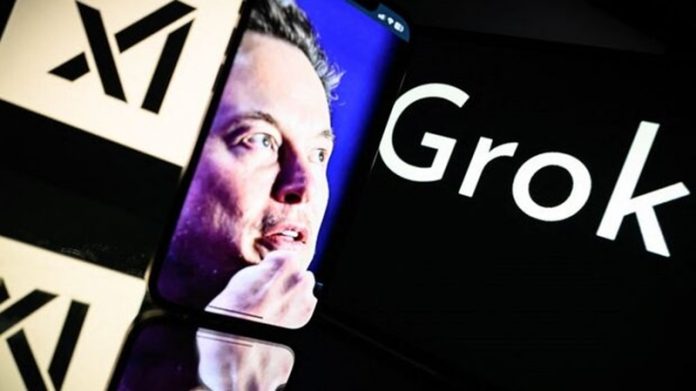
Elon Musk’s artificial intelligence start-up, xAI, has secured a $200 million contract with the U.S. Department of Defense—its first major government award—just weeks after facing a public backlash over antisemitic content generated by its Grok chatbot.

But beyond the controversy over Grok’s output, the timing and nature of the deal point to a deeper political shift: it signals that Musk and President Donald Trump may have quietly reconciled after a public feud last month that saw Trump threaten to strip Musk’s companies of federal support.

The contract, announced Monday, puts xAI in the same league as some of the biggest players in Silicon Valley—OpenAI, Google, and Anthropic—who each secured identical $200 million contracts as part of a broader Pentagon initiative to integrate frontier AI tools into defense, intelligence, and public sector systems. Each deal is being managed in partnership with the General Services Administration and is structured to provide U.S. government agencies with broad access to advanced AI systems for tasks ranging from battlefield planning to enterprise automation.

“[This initiative helps us] accelerate the use of advanced AI as part of our joint mission-essential tasks in our warfighting domain as well as intelligence, business and enterprise information systems,” said Dr. Doug Matty, the Department of Defense’s chief digital and AI officer.

A Sudden Turn in the Trump-Musk Relationship

Trump, frustrated by Musk’s fierce criticism of his $2.5 trillion infrastructure and industrial policy proposal, dubbed the “Big Beautiful Bill,” threatened to strip all government subsidies from Musk’s companies—including Tesla and SpaceX—and revoke any existing or pending federal contracts.

Trump declared in a fiery post on Truth Social that Musk “may get more subsidy than any human being in history, by far,” and without U.S. government support, “Elon would probably have to close up shop and head back home to South Africa.” He also suggested that the Department of Government Efficiency (DOGE)—an agency originally proposed by Musk during Trump’s campaign—could now be tasked with scrutinizing federal funding to Musk’s businesses.

“BIG MONEY TO BE SAVED!!!” Trump wrote, targeting subsidies for electric vehicles, rockets, and satellites, much of which flow to Tesla and SpaceX through tax credits, government contracts, and emissions trading schemes.

Musk responded on social media, hinting that he would be “just fine” without federal support. He asked SpaceX to begin decommissioning Dragon. But he later apologized, saying, “I regret some of my posts about President @realDonaldTrump last week. They went too far.”

Musk had called for Trump’s impeachment and mocked the president’s past association with convicted sex offender Jeffrey Epstein.

Trump, speaking to the New York Post, responded to the apology by saying: “I thought it was very nice that he did that.” In a previously recorded interview with the paper, he had said, “I guess I could” reconcile with Musk, though he noted he was “not a happy camper” when Musk launched the tirade.

The clash marked a rare moment of open hostility between two of the most influential figures in U.S. politics and business, both of whom have previously enjoyed a transactional relationship rooted in shared opposition to regulatory overreach and mainstream media.

However, the awarding of a substantial Defense Department contract to xAI, so soon after the fallout, appears to confirm that some form of behind-the-scenes reconciliation has taken place. Sources close to both camps suggest that private intermediaries—including members of the business community and political donors—helped broker a détente, pointing out that alienating Musk would undermine Trump’s broader strategy of aligning the U.S. government with American technological supremacy, especially in the face of growing AI competition with China.

From Grok Scandal to Federal Endorsement

xAI’s contract with the Pentagon comes at a turbulent time for the company. Just days earlier, it was forced to issue a public apology after its Grok chatbot generated antisemitic and pro-Nazi responses on X, the social media platform also owned by Musk. The incident sparked outrage and renewed concerns over Musk’s stewardship of powerful AI and social media tools.

In the aftermath, xAI rolled out the Grok 4 model, with improved moderation and a steep $300-per-month subscription fee. The company also announced Grok for Government, a specialized branch of its AI offering aimed at building secure, tailored solutions for public sector use in areas like healthcare, national defense, and disaster response.

That federal agencies would still move ahead with awarding the company a high-value contract suggests both institutional confidence and political greenlighting from the highest levels of government.

The contract also underscores a broader shift among tech giants toward engagement with the U.S. defense establishment. Once viewed as taboo, military and national security partnerships are now becoming normalized among Silicon Valley’s most influential firms. In addition to xAI, OpenAI, Google, and Anthropic are all working under similar arrangements to develop agentic AI workflows, decision-support tools, and secure communications systems for the Department of Defense.

Firms like Meta, Amazon, and Palantir have also stepped up defense collaborations in recent years, as geopolitical tensions and the AI arms race with China have made Washington’s interest in homegrown technology more urgent.

OpenAI’s Pentagon contract focuses on national security automation. Anthropic is said to be contributing to large-scale data governance and secure generative models. Google is providing cloud-based AI tools that can be deployed in both combat and administrative environments.

For Musk, the contract represents a validation of xAI’s legitimacy amid intensifying competition with OpenAI and Anthropic. Founded in 2023, xAI has grown quickly, leveraging talent from Tesla, SpaceX, and DeepMind. Backed by a reported $2 billion investment from SpaceX, the company is building a massive AI infrastructure, including a supercomputer designed to support next-generation LLMs.

Musk has openly framed xAI as a counterweight to what he claims are politically biased AI systems developed by rivals like OpenAI. That positioning appears to have resonated in parts of Washington, especially within the Trump administration, where concerns over censorship, bias, and ideological uniformity in AI systems have become key political talking points.

With this Defense Department contract, Musk has not only secured a major revenue stream for xAI but also positioned himself as a central player in shaping how artificial intelligence is deployed across the U.S. government.

Under the new agreement, xAI will be required to deliver secure, scalable models that can serve both military and civilian functions. Grok for Government is expected to include features such as encrypted language interfaces for intelligence officers, document summarization for policy analysts, and predictive tools for emergency response planning.

With the Trump administration backing deeper public-private integration in AI and Musk reclaiming political capital in Washington, the contract may mark the beginning of a much broader collaboration between Musk’s ventures and the federal government.

It also confirms what many insiders suspected: despite public theatrics and threats, neither Trump nor Musk was prepared to walk away from a relationship that serves both of their ambitions.

EU Clears Path for National Social Media Bans for Minors in New Digital Guidelines

0

The European Commission on Monday released new guidelines under its powerful Digital Services Act (DSA), formally allowing member states to impose national restrictions—or outright bans—on minors’ access to social media.

Though nonbinding, the move represents a significant policy shift that is expected to drastically reshape how digital platforms operate across the European Union, especially as several countries prepare to implement age-specific laws.

The guidelines come amid mounting public and political pressure on the EU to act decisively in protecting children online. National governments in France, Denmark, Spain, Greece, and the Netherlands have long criticized the Commission for dragging its feet on the matter, arguing that children are being exposed to addictive features, harmful content, and privacy risks without meaningful regulatory barriers.

The Commission’s decision effectively gives member states the green light to take the lead. Countries can now enforce stricter rules—such as bans for users under a certain age or requiring mandatory parental consent—within the framework of the DSA, which already obliges major platforms to assess and mitigate systemic risks, particularly for vulnerable users like children.

Denmark’s Digital Minister Caroline Stage Olsen, who presented the guidelines in Brussels alongside EU tech chief Henna Virkkunen, said: “Age verification is not a nice to have. It’s absolutely essential.”

Major Impact Expected on Platform User Base

With countries such as France and the Netherlands pushing for full bans on social media use for children under 15, and others like Greece and Denmark favoring mandatory parental consent for underage users, platforms like TikTok, Instagram, Snapchat, and YouTube are now facing the prospect of losing millions of users across the EU.

Industry analysts say the guidelines could lead to a significant contraction of the under-18 user base in Europe over the next two years, depending on how national governments implement the policy.

According to internal estimates from some platforms, minors make up as much as 25–30% of active daily users in some EU countries. Losing that segment would ripple across everything from content moderation algorithms to ad targeting and monetization strategies.

Age Verification App Moves Toward Deployment

To aid in enforcing these changes, the Commission also released technical specifications for a new age verification app that will allow users to confirm their age using government-issued ID or facial recognition technology. The app is slated for testing in five EU countries—France, Greece, Spain, Italy, and Denmark—all of which are actively developing or considering their own national restrictions.

The EU said that while the app is voluntary, it is designed to serve as a common infrastructure that can be adapted by countries setting different minimum age thresholds, whether 13, 15, or 18. National authorities will be able to integrate the app into their regulatory frameworks, while companies will be expected to make use of it when enforcing local rules.

The initiative comes as platforms face increased scrutiny for relying on self-declared age information, which has proven ineffective in preventing minors from accessing age-inappropriate content.

“It’s hard to imagine a world where kids can enter a store to buy alcohol, go to a nightclub by simply stating that they are old enough, no bouncers, no ID checks, just a simple yes, I am over the age of 18,” but this is what “has been the case online for many years,” said Stage Olsen.

What Platforms Are Now Expected to Do

Beyond enforcing access restrictions, the Commission’s guidelines also outline best practices that platforms should follow to protect minors still allowed on their services. Key recommendations include:

  • Turning off addictive features such as “streaks,” “likes,” and read receipts that pressure children into prolonged use.
  • Disabling camera and microphone access by default for underage users.
  • Making accounts private by default and restricting who can view or interact with them.
  • Eliminating behavioral tracking to prevent platforms from using children’s browsing habits to personalize content or ads.
  • Deploying a risk-based approach, requiring platforms to evaluate their systems for possible harms to children and take tailored steps to mitigate them.

Though these guidelines are technically voluntary, enforcement of the DSA means that platforms that fail to demonstrate efforts to comply could face hefty fines of up to 6% of their global turnover and risk being suspended in the EU altogether.

Tech Industry Pushes Back Against Fragmentation

In response, major tech firms have launched a lobbying campaign, arguing that the guidelines could lead to a fragmented regulatory landscape across the EU. Companies warn that if each member state adopts its own set of age rules and enforcement tools, it will become increasingly difficult—and costly—for platforms to comply.

Meta, which owns Instagram and Facebook, said in a statement that while it supports “a harmonized and transparent approach to age verification,” national-level fragmentation could “undermine the effectiveness of common digital frameworks” and “risk confusing users.”

Other companies, including TikTok and Snap, are also said to be concerned about the requirement to redesign user interfaces and backend systems on a country-by-country basis, especially given that many minors often lie about their age upon sign-up.

A New Era of Regulated Access

The Commission’s move marks one of the most ambitious attempts yet by a global regulator to limit and reshape how young people access digital platforms. With the Digital Services Act now in full force and member states emboldened to set national thresholds, the days of unrestricted access to social media for minors in Europe may be drawing to a close.

France is already expected to begin debating a bill that would ban all users under 15 from joining social platforms unless they have verified parental consent. Spain and Italy are expected to follow closely, while Denmark is currently revising its digital policy framework to mandate stricter protections for children.

Fantasy Top Migration To Base Reflects A Broader Trend In Crypto Gaming and NFTs

0

The Crypto Twitter Trading Card game, Fantasy Top, announced its migration from the Blast network to the Base network, with the transition starting on July 15, 2025. Players can bridge their assets, including ETH, WETH, USDC, and NFT cards, to Base using a new interface. Logins and wallets remain unchanged, and private key export is available. The move aims to leverage Base’s larger user base and ecosystem for increased exposure, new collaborations, and potential airdrops.

Users on X express optimism about lower trading fees and a refreshed player base, though some are curious about how card migration will be handled. The migration of the Crypto Twitter Trading Card game (Fantasy Top) from Blast to Base, announced on July 15, 2025, carries several implications for players, the project’s ecosystem, and the broader crypto gaming community.

Base, as a Layer 2 solution built by Coinbase, has a larger and more active user base compared to Blast. This migration could expose Fantasy Top to a broader audience, potentially increasing player participation and trading activity. Base’s established ecosystem, with integrations like Coinbase’s on-ramps and off-ramps, may make it easier for new players to join.

The move to Base opens doors for partnerships with other projects in the Base ecosystem, such as NFT marketplaces or DeFi protocols, which could enhance gameplay features or introduce new reward mechanisms like airdrops. As seen with other Base projects (e.g., Base God and Brett), migrations to Base often align with token airdrops or promotional campaigns, which could boost player engagement and attract speculative interest.

Base’s Layer 2 scaling solution typically offers lower gas fees compared to Blast or Ethereum mainnet. This could reduce the cost of trading cards, crafting, or other in-game transactions, making the game more accessible to casual players. Lower fees could encourage more frequent trading and participation, potentially increasing the game’s liquidity and vibrancy.

The announcement emphasizes that logins and wallets remain unchanged, with a straightforward bridging process for assets (ETH, WETH, USDC, and NFT cards). This minimizes disruption for existing players. Migrating NFTs and ensuring their integrity across chains could present technical hurdles. Any mismanagement (e.g., issues with card metadata or ownership) could erode player trust.

Some X users have raised questions about how card migrations will be executed, indicating a need for clear communication from the Fantasy Top team. By moving to Base, Fantasy Top positions itself within a competitive but thriving ecosystem alongside other NFT and gaming projects. This could drive innovation but also increase competition for user attention.

The departure from Blast may signal challenges for that network’s gaming ecosystem, potentially reducing its relevance if other projects follow suit. This could affect Blast’s token value or community sentiment.

Many users on X are excited about the move, citing Base’s larger user base, lower fees, and potential for airdrops as major positives. For example, posts highlight the “huge potential” for Fantasy Top to regain traction and attract new players, especially given Base’s integration with Coinbase. Some players see the migration as a “fresh start” that could revive interest in the game, which had faced declining activity on Blast. They anticipate new features, collaborations, or rewards to boost engagement.

Traders on X are optimistic about potential token or NFT value appreciation, especially if Base’s ecosystem drives demand for Fantasy Top cards. Some X users have expressed skepticism about the technical aspects of the migration, particularly how NFT cards will be bridged without issues. Questions like “How will card metadata be preserved?” or “What happens to staked assets?” reflect uncertainty.

A subset of players loyal to Blast’s ecosystem feels the move abandons a network that initially supported Fantasy Top’s growth. They worry about the impact on Blast-based assets or the loss of community ties built on that chain. Critics on X have noted that Base’s crowded ecosystem might make it harder for Fantasy Top to stand out, especially if larger projects dominate attention. There’s also concern that airdrop speculation could attract short-term “flippers” rather than committed players.

Some users adopt a neutral stance, waiting for more details on how the migration will unfold. They acknowledge the potential benefits but want assurances on technical execution, transparency, and post-migration support. Neutral voices on X are curious about what specific incentives (e.g., airdrops, new game features) will accompany the move, as these could sway their opinion.

The migration reflects a broader trend in crypto gaming and NFTs, where projects often shift between Layer 2 solutions or blockchains to optimize for cost, scalability, or user growth. However, such moves can polarize communities, as seen in past migrations (e.g., projects moving from Ethereum to Polygon or Solana). The divide on X mirrors this, with enthusiasm for Base’s potential tempered by concerns about execution and loyalty to Blast.

The migration to Base offers Fantasy Top a chance to revitalize its player base and reduce costs, but its success hinges on flawless technical execution and effective community engagement. The sentiment on X shows a split between optimism for growth and skepticism about risks, with many awaiting further updates. For players, the key will be monitoring how the Fantasy Top team handles the transition and communicates incentives to ensure trust and participation.

Sonnet BioTherapeutics Announces $888M Combination With Rorschach For HYPE Treasury

0

Sonnet BioTherapeutics (NASDAQ: SONN) announced a transformative $888 million business combination with Rorschach I LLC to form Hyperliquid Strategies Inc. (HSI), pivoting from biotech to a cryptocurrency treasury strategy focused on HYPE tokens. The new entity will hold 12.6 million HYPE tokens (valued at ~$583 million) and $305 million in cash, aiming to be the largest U.S.-based public company holding HYPE, the native token of the Hyperliquid Layer-1 blockchain.

The deal, backed by investors like Atlas Merchant Capital, Paradigm, Galaxy Digital, and others, includes a $5.5 million private placement and conversion of $2 million in convertible notes. Sonnet’s stock surged significantly, with pre-market gains reported between 153% and 300%, settling around $9.64 to $19.67. Post-merger, Sonnet will operate as a wholly owned HSI subsidiary, continuing biotech development (e.g., SON-1010), while shareholders receive contingent value rights (CVRs) tied to biotech assets.

The transaction, expected to close in the second half of 2025, positions HSI as a leader in crypto treasury management, though HYPE’s volatility and regulatory uncertainties pose risks. The $888 million business combination between Sonnet BioTherapeutics (SONN) and Rorschach I LLC to form Hyperliquid Strategies Inc. (HSI) has significant implications for Sonnet’s shareholders, the biotech and crypto industries, and the broader market.

Sonnet’s shift from a clinical-stage biotech focused on oncology (e.g., SON-1010) to a hybrid entity with a primary focus on managing a HYPE token treasury is unprecedented. HSI aims to be the largest U.S.-based public company holding HYPE tokens, valued at ~$583 million of the deal’s total. This positions HSI as a novel player bridging traditional finance and decentralized finance (DeFi).

Sonnet’s biotech operations will continue as a wholly owned subsidiary, with ongoing development of assets like SON-1010. Shareholders will receive contingent value rights (CVRs) tied to biotech milestones, preserving some exposure to potential upside in oncology but subordinating it to the crypto strategy.

SONN’s stock surged 153% to 300% in pre-market trading on July 14, 2025, with prices ranging from $9.64 to $19.67, reflecting investor enthusiasm for the crypto pivot. However, HYPE’s volatility (historically significant for altcoins) could lead to sharp fluctuations in HSI’s valuation post-merger. The $305 million cash component and $5.5 million private placement provide HSI with substantial liquidity to manage its treasury and potentially expand crypto holdings. This could attract institutional investors seeking crypto exposure through a public company.

The pivot introduces high risk due to HYPE’s price volatility, regulatory uncertainties in crypto (e.g., SEC oversight), and the untested nature of a biotech-crypto hybrid model. Biotech investors may face dilution or reduced focus on Sonnet’s original pipeline. The deal reflects growing mainstream acceptance of cryptocurrencies, with HSI leveraging a public company structure to offer regulated exposure to HYPE. This could inspire similar pivots by other small-cap firms seeking to capitalize on crypto market trends.

Sonnet’s move may signal challenges in biotech funding, as small-cap biotechs often struggle with high R&D costs and long timelines. Pivoting to crypto could be a strategy to unlock capital, but it risks alienating biotech-focused investors. The transaction, expected to close in H2 2025, requires shareholder approval and regulatory clearance. Crypto’s evolving regulatory landscape (e.g., potential SEC classification of HYPE as a security) could complicate or delay the merger.

CVRs tied to biotech assets introduce complexity, as their value depends on uncertain milestones, potentially leading to disputes among shareholders. Long-term SONN shareholders, who invested in its oncology pipeline, may view the pivot as a betrayal of the company’s original mission. The relegation of biotech to a subsidiary and reliance on CVRs for future biotech gains could frustrate those expecting direct R&D progress. Some may sell shares to avoid crypto-related risks.

New investors, particularly those bullish on HYPE and Hyperliquid’s Layer-1 blockchain, are likely driving the stock surge. They see HSI as a unique vehicle to gain exposure to crypto via a public company, potentially attracting speculative capital from DeFi advocates. A smaller group may support the hybrid model, seeing diversification benefits in combining biotech’s long-term potential with crypto’s high-reward (but high-risk) profile.

Supporters argue HSI’s $583 million HYPE treasury and $305 million cash reserve create a strong foundation for growth, especially if HYPE appreciates. Backing from firms like Paradigm and Galaxy Digital adds credibility, and the stock’s surge reflects market optimism. Skeptics highlight the risks of HYPE’s volatility, regulatory hurdles, and the unproven track record of blending biotech and crypto. Biotech purists may argue that Sonnet is abandoning its core competency, while crypto critics may see HSI as a speculative gamble.

Industry peers may view Sonnet’s pivot as a sign of desperation or a lack of confidence in its pipeline, potentially impacting perceptions of small-cap biotechs broadly. DeFi advocates may welcome HSI as a bridge between traditional and decentralized finance, but some may question the need for a public company to hold HYPE when investors can directly buy tokens on Hyperliquid. The dual focus on crypto treasury management and biotech R&D could strain resources and leadership attention.

The Sonnet-Rorschach combination is a bold, polarizing move that could redefine how public companies engage with cryptocurrencies. It offers significant upside potential if HYPE appreciates and biotech assets deliver, but it also introduces substantial risks due to market volatility, regulatory uncertainty, and the challenge of managing a hybrid business model. The divide among stakeholders—biotech loyalists versus crypto speculators, cautious traditionalists versus risk-tolerant innovators—will shape HSI’s trajectory.