DD
MM
YYYY

PAGES

DD
MM
YYYY

spot_img

PAGES

Home Blog Page 85

Oracle To Emerge As Top AI Beneficiary Amid Massive Infrastructure Shifts, Wells Fargo Projects

0

Oracle is set to emerge as a major financial beneficiary in the next phase of Artificial Intelligence adoption, according to a bullish new report from Wells Fargo.

The investment bank projects “significant upside” for the technology giant, citing the surging demand for its cloud infrastructure platform as enterprises begin shifting AI training and inference workloads away from established hyperscale cloud providers.

The firm’s optimism centers on the growing traction of Oracle Cloud Infrastructure (OCI), which is gaining market share by offering performance and cost advantages crucial for intensive AI workloads. The transition to OCI is being driven by factors beyond just pricing.

Wells Fargo highlights that Oracle’s strategy has been to challenge the breadth and market share of Amazon Web Services (AWS) and Microsoft Azure by focusing on deep performance and cost optimization, particularly for specialized AI and database workloads.

Unlike the shared infrastructure models of its larger competitors, OCI is known for its bare-metal GPU instances that eliminate virtualization overhead. This design choice translates directly into superior and more consistent processing power for demanding tasks like training massive foundational AI models. Benchmarks have indicated that OCI offers up to four times the cluster networking bandwidth as AWS for clustered workloads, and in some analyses, the cost of a billion-parameter GPT-3 training run on OCI was found to be 35% lower than on AWS and 41% lower than on Google Cloud.

A crucial element is Oracle’s ability to rapidly deploy high-throughput, GPU-rich clusters. While AWS and Azure offer a wider array of general cloud services and a larger global footprint, Oracle has locked in critical deals with top AI model developers, including its blockbuster partnership with OpenAI to provide cloud computing power, as well as working with companies like Cohere and Abjad AI. For instance, Oracle will be the first hyperscaler to offer an AI supercluster powered by 50,000 AMD Instinct MI450 Series GPUs starting in 2026, showcasing its commitment to scaling its dedicated AI infrastructure.

OCI generally offers a more predictable pricing model, which contrasts sharply with the often complex, opaque, and high data egress (outbound data transfer) costs of AWS and Azure. OCI’s lower egress fees and globally consistent pricing across all regions offer a significant financial advantage for enterprises moving massive data sets required for deep learning.

The report concludes that OCI is capturing this demand because enterprises are no longer just looking for a general-purpose cloud; they are looking for the most cost-effective and high-performing engine for their specialized AI operations.

Operational Leverage and Financial Outlook
The report suggests that this AI-driven demand will fundamentally change Oracle’s financial trajectory.

Wells Fargo claimed that Oracle’s overall revenue would begin to expand faster, driven by the increasing magnitude of long-term cloud contracts and the sustained expansion of its lucrative database and applications businesses, which are increasingly being migrated to OCI. Oracle’s total remaining performance obligations (RPO)—a key indicator of future revenue—hit a record $455 billion in Q1 Fiscal 2026. The analyst also noted that Oracle’s operational leverage is improving as the company rapidly expands its data center footprint. As more customers migrate to the high-margin OCI platform, the efficiency and scale of the infrastructure business are expected to help margins grow even more.

While the research did not provide a specific price objective, Wells Fargo’s confidence in “significant upside” is based on the expectation that expenditure on AI infrastructure will continue to rise dramatically across all sectors through 2026, with Oracle firmly positioned as a primary alternative to the legacy hyperscalers.

India Retreats From Mandatory Cybersecurity App Order After Nationwide Backlash

0
Social media is huge in India

India’s government has reversed its plan to compel smartphone makers to preload a state-run cybersecurity app, Sanchar Saathi, on all new devices—a directive that had triggered a fierce storm over surveillance concerns, political overreach, and the country’s unpredictable regulatory playbook.

The climbdown came barely a week after Prime Minister Narendra Modi’s administration quietly informed major manufacturers—including Apple, Samsung, and Xiaomi—of a 90-day deadline to install the app on every new handset sold in the country.

The initial order, reported first by Reuters, required the tool to be permanently embedded and impossible for users to remove. This provision ignited fears that the government was edging closer to direct control over personal devices, reviving older debates about data protection and state intrusion that have followed New Delhi for years.

On Wednesday, the communications ministry issued a brief but decisive statement: “Government has decided not to make the pre-installation mandatory for mobile manufacturers.”

The short announcement capped 48 hours of political fire, industry backlash, and public unease.

The reversal is striking for several reasons. Only a day earlier, ministers had vigorously defended the mandate, insisting Sanchar Saathi’s purpose is limited to tracking stolen devices and blocking their misuse. They maintained that the app helps curb financial fraud linked to lost or cloned phones. What rattled companies and privacy groups was the requirement that manufacturers make the app impossible to disable—a feature that inevitably raised suspicions over long-term intentions.

Political pushback intensified the pressure

Opposition parties seized on the issue almost immediately. Congress leader Randeep Singh Surjewala submitted a notice to Parliament demanding that the government explain the legal basis for enforcing a non-removable application on citizens. He warned that once such an app becomes mandatory, users cannot know what channels it may open in the future, saying this type of tool could have a “backdoor” that leaves personal data exposed.

Newspaper editorials widened the criticism, calling the directive heavy-handed and unnecessary. Civil society groups argued that forcing a state-linked app onto every device would lower user autonomy and set a dangerous precedent for broader digital access.

Online, discussions questioned why the government needed a compulsory pre-installation when the app was already available for voluntary download. Many users feared the plan would open the door to greater monitoring of personal communication and location data.

Tech giants were poised to reject the mandate

Sources familiar with discussions told Reuters that Apple and Samsung were preparing not to comply with the order. Both companies have long taken firm positions on user control and privacy, and a non-removable government app would have placed them at odds with their global product frameworks.

India is now one of the world’s biggest smartphone markets, and companies treat its regulatory environment carefully. A move that forces hardware changes at the manufacturing level—particularly one involving an undeletable state-linked app—would have magnified operational costs and created a challenge across supply chains.

Mishi Choudhary, a prominent technology lawyer and policy advocate, said the episode underscores a broader trend: “India’s highly unpredictable regulatory framework presents constant challenges for business that values predictability.”

She welcomed the withdrawal but warned that policy swings without a clear foundation weaken confidence among global companies.

Her concerns echo past events. India was forced to abandon a laptop import licensing rule last year after sustained intervention from U.S. officials and industry lobbies. That policy would have required import permits for devices entering the country, a move that caused immediate concern among American and Asian manufacturers.

Government shifts tone, cites rising app adoption

After the backlash gathered pace, the government attributed its U-turn to “growing popularity” of Sanchar Saathi, saying more than 600,000 people downloaded the app since Tuesday. Officials described the tool as secure and said it was created solely to protect users from cybercriminals, fraudulent SIM registration, and phone theft.

Sanchar Saathi allows users to block stolen devices, check associated SIM cards, and identify suspicious activity. Devices flagged through the app can be disabled across Indian networks to prevent misuse—useful in tackling fraudulent calls and digital scams.

The government’s latest position suggests that voluntary adoption may be enough to advance what it sees as public-interest cybersecurity goals. Still, many observers believe the deeper reason for the retreat lies in the rapidly escalating political and commercial fallout.

Global comparisons and a longer pattern of privacy battles

Modi’s planned requirement had almost no global precedent, according to sources. The closest parallel comes from Russia. In August, Moscow ordered all smartphones and tablets to include MAX—a state-linked messenger app commonly used by government agencies and seen by opponents as potentially intrusive. That policy drew immediate concern from digital rights groups over its potential use for monitoring.

India’s history with digital privacy debates made the latest uproar even more charged. In 2020, the government mandated the use of a COVID-19 contact-tracing app among office workers. After widespread uproar over privacy and data transparency, authorities scaled it back from a requirement to a recommendation.

The country has also spent years working through data protection bills, with earlier versions drawing objections from both privacy experts and industry because of provisions that allowed wide government access to user information.

A policy episode that raises broader questions

For now, the decision to withdraw the Sanchar Saathi mandate removes one immediate flashpoint. But it also exposes persistent tension between the government’s desire for tighter digital security controls and the public’s push for stronger privacy protections.

It also amplifies concerns among manufacturers who say they need predictable regulations to plan investments and product cycles. India’s booming smartphone market depends heavily on foreign companies. Sudden shifts in policy—particularly those that require hardware-level alterations—risk sending signals that complicate future planning.

The latest U-turn brings relief for manufacturers and digital rights advocates, but it revives a familiar debate: how a fast-growing digital economy balances cybersecurity needs with personal freedoms, user control, and industry stability.

Odds for US Rate Cut in December are Pricing Around 87% Probability at 25 Bps 0.25%

0

According to the latest data from the CME FedWatch Tool, markets are pricing in an 87% probability of a 25 basis point 0.25% cut to the US federal funds rate at the Federal Open Market Committee (FOMC) meeting scheduled for December 10-11.

This would lower the target range from the current 3.75%-4.00% to 3.50%-3.75%. Odds have fluctuated significantly in recent weeks due to mixed economic signals. For instance, they dipped to around 35% in mid-November amid stronger-than-expected jobs data and inflation concerns but have rebounded sharply on cooling labor market indicators and softer PCE inflation readings.

The tool, based on 30-day Fed funds futures prices, shows the following breakdown for the December meeting: 87% chance of a 25 bps cut to 3.50%-3.75%. 13% chance of no change holding at 3.75%-4.00%.

Negligible odds <1% for a larger cut or hike. Looking further ahead, markets now imply about 75-80 basis points of total cuts by the end of 2025, down from earlier expectations of 100+ bps, reflecting caution over persistent inflation risks.

With the CME FedWatch Tool showing an 87% probability of a 25 basis point (bps) cut at the December 10-11, 2025, FOMC meeting, U.S. stocks have rallied sharply in recent sessions.

This rebound follows a mid-November sell-off when odds dipped to around 30-50% amid hawkish Fed comments and mixed data, which dragged the S&P 500 down ~2-3% and pushed Treasury yields higher.

As probabilities climbed back above 80% on cooling jobs data, 4.1% unemployment and softer PCE inflation core at ~2.4%, equities recovered: the Nasdaq Composite gained ~1.5% on December 2, led by tech, while the S&P 500 and Dow Jones rose 0.5-1% in muted trading.

Crypto stocks like MicroStrategy +5.8% and Coinbase +1.3% also surged on the “risk-on” sentiment. However, volatility remains elevated—VIX up ~20% since October—due to data gaps from the recent government shutdown and tariff uncertainties.

If the cut materializes as expected, analysts see a potential 2-3% year-end S&P 500 grind higher, but a “hawkish cut” (e.g., signaling fewer 2026 easings) could trigger a 0.5-5% pullback via “sell-the-news.”

Lower rates reduce borrowing costs, boosting corporate profits, consumer spending, and investment—historically fueling ~7-10% S&P 500 gains in the six months post-cut non-recessionary periods.

Markets now imply ~75-80 bps of total 2025 cuts ending at ~3.0-3.25%, down from 100+ bps earlier, reflecting caution on persistent inflation risks from tariffs. This could broaden the rally beyond mega-cap tech, which has driven ~85% of 2025 S&P gains, toward small-caps and cyclicals if easing sustains growth.

Cheaper capital for capex; supports valuations like Nvidia, Alphabet up 5-10% on odds spike. Net interest margins compress but loan growth rises; historical +7.3% post-cut. Lower financing costs; data centers outperform (e.g., +6.8% in Oct).

Rate-sensitive; benefits from yield drop 10Y Treasury <4%. Boosted spending; holiday sales eyed at $1T+. Tariffs offset easing; Deere -5.7% on profit warning. Bitcoin has swung wildly +30% then -30% since Oct but could rebound 10-20% on confirmed easing, as seen in prior cycles.

Gold, up 60% YTD to $4,200/oz, acts as a hedge against volatility. The cut signals a “soft landing” but risks rekindling inflation if tariffs  on autos bite harder than expected—potentially forcing a 2026 pause.

A no-cut surprise 13% odds could spark a 1-2% dip, echoing November’s slump. Overall, easing supports a 2025 bull market extension, but fiscal deficits and geopolitics add headwinds—position for quality growth over speculation.

Watch Friday’s PCE data for final clues. These probabilities are derived from trader expectations in futures markets and can shift quickly with new data like upcoming nonfarm payrolls or CPI reports.

If you’re trading or investing based on this, consider consulting a financial advisor, as these are market-implied odds, not guarantees.

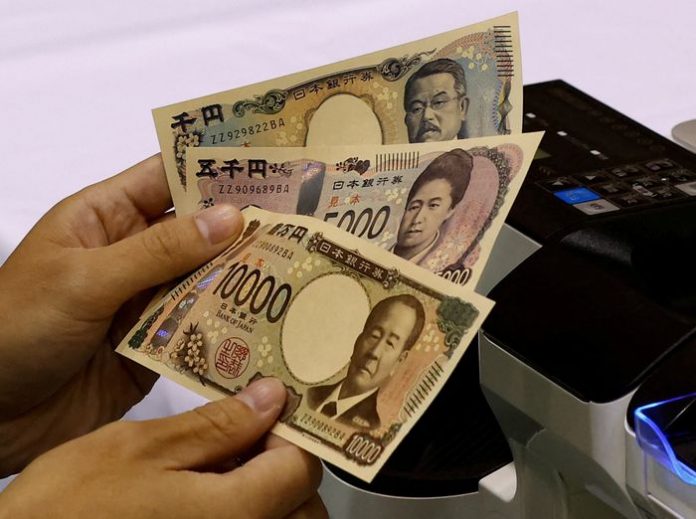
Japan’s Bond Yield Surge, A Flashback to 1999 and the Looming Yen Carry Trade Unwind

0

Japan’s government bond (JGB) market is experiencing a dramatic shift, with the 20-year JGB yield recently climbing to around 2.85–2.891%, marking its highest level since June 1999.

This surge—up sharply from near-zero territory just a few years ago—has reignited fears of a massive unwind in the yen carry trade, a strategy that has fueled trillions in global investments for decades.

As of early December 2025, the 10-year JGB yield has also approached 1.84–1.87%, a threshold not seen since 2008, while the 30-year yield hit a record 3.39%. These moves come amid weak demand at recent bond auctions and broader fiscal pressures, sending ripples through global markets.

Japan’s government announced a stimulus package exceeding 17 trillion yen about $110 billion in November 2025, aimed at boosting public spending on defense and social security. This has heightened concerns over Japan’s ballooning debt—already the world’s highest at over 250% of GDP—pushing yields higher as investors demand compensation for long-term risks.

Bank of Japan (BoJ) Policy Normalization

The BoJ has gradually stepped back from its ultra-loose yield curve control (YCC) framework, allowing market forces to push rates up. Hints of further rate hikes have added fuel, with the 2-year yield hitting 1.02%, its highest since 2008.

A November 20-year bond auction saw the bid-to-cover ratio drop to 2.5x, the lowest in 13 years, signaling investor hesitation. The spread between average and lowest bids widened to levels not seen since 1987, exacerbating the sell-off.

Foreign investors, facing dollar shortages, are offloading long-dated JGBs as collateral in a broader liquidity crunch, rather than a purely domestic crisis. This isn’t just a Japanese story—higher JGB yields make domestic bonds more attractive, potentially luring back the $3.7 trillion in overseas assets held by Japanese institutions.

The yen carry trade has been a cornerstone of global finance since the 1990s: Investors borrow cheaply in low-yield yen often near zero and plow the funds into higher-yielding assets abroad, like U.S. tech stocks, emerging market bonds, or even cryptocurrencies.

Estimates peg the trade at $20 trillion, with Japanese inflows propping up everything from the S&P 500 to Bitcoin. Rising JGB yields erode the trade’s profitability in two ways. Yen funding becomes pricier, squeezing margins.

As capital repatriates, the yen strengthens USD/JPY has dipped toward 155 from recent highs, forcing traders to cover short yen positions. This unwind creates a feedback loop: Selling foreign assets to repay yen loans lifts global yields, triggers margin calls, and sparks volatility.

Correlation studies show a 0.55 link between yen carry reversals and S&P 500 drops, with U.S. Treasury yields potentially jumping 15–40 basis points from reduced Japanese buying. Emerging markets could see currencies weaken 1–3% within 30 days.

Historical parallels are stark—think the August 2024 “carry trade crash,” where a surprise BoJ hike caused global markets to seize up, with the Nikkei plunging 12% in a day. Today’s episode echoes that but on a larger scale, with super-long JGBs entering uncharted territory.

The unwind isn’t hypothetical; it’s already weighing on risk assets:U.S. Equities and Tech: Japanese investors hold massive stakes in Nasdaq stocks. A “sucking sound” of capital flight could hit high-growth sectors hardest, capping rallies amid already elevated valuations.

Outflows from Indian bonds and equities are likely as Japanese funds pivot home. India’s market, sensitive to global risk-off moves, could face heightened volatility. Global yields are rising in sympathy—U.S. 10-year Treasuries touched 4.09% recently—raising borrowing costs and pressuring leveraged portfolios.

Bitcoin dropped 8% in early December amid yen volatility, with altcoins following. The trade’s reversal tightens liquidity, amplifying downside. Pairs like USD/JPY, AUD/JPY, and EUR/JPY are swinging wildly, with the yen hitting 10-month lows against the euro before rebounding.

Not all views are apocalyptic—some analysts argue fears are overstated, as the yen remains weak no strong rally yet to force mass unwinds, and BoJ interventions could cap the damage. A upcoming 40-year bond auction on November 20 delayed in reports, but critical will be a key test; a bid-to-cover below 2.5x could accelerate the spiral.

Any hawkish tilt could push 10-year yields past 1.84%, tipping the unwind into overdrive. Tokyo may sell dollars to weaken the yen if it strengthens too fast, stabilizing carry trades temporarily.

Fed or ECB easing could offset some pressure, but synchronized tightening risks a broader liquidity crunch. In short, Japan’s bond market—once the “widow-maker” for its predictability—is now a global shaker.

Investors should hedge yen exposure, trim risk-on bets, and eye safe-havens like gold or short-duration bonds. This regime shift marks the end of Japan’s zero-rate era, but at the cost of short-term chaos.

Bank of America Recommends 4% Allocation in Crypto for Wealth-Management Clients

0

Bank of America has recently endorsed a modest allocation to digital assets for its wealth management clients, recommending 1% to 4% of portfolios depending on individual risk tolerance and interest in thematic innovation like crypto.

This guidance applies to clients on its Merrill, Bank of America Private Bank, and Merrill Edge platforms, marking a shift from prior restrictions where advisers could only discuss crypto upon client request.

Starting January 2026, the bank’s over 15,000 wealth advisers will proactively recommend regulated crypto products, including coverage of four major spot Bitcoin ETFs from BlackRock, Bitwise, Fidelity, and Grayscale beginning January 5.

Chris Hyzy, CIO of Bank of America Private Bank, described this as suitable for investors comfortable with volatility, emphasizing regulated vehicles and diversified exposure to balance opportunities and risks.

This aligns with a wave of institutional adoption. Modest for thematic innovation; ETF-focused. Morgan Stanley, views Bitcoin as “digital gold”; for opportunistic portfolios. BlackRock improves long-term portfolio efficiency. Fidelity higher for younger, risk-tolerant investors.

Vanguard Now allows crypto ETFs/mutual funds on platform as of December 2025. This move reflects growing mainstream acceptance of crypto amid Bitcoin’s volatility down ~10% over the past year after peaking above $126,000 in October 2025, but it underscores caution—retail investors have faced significant ETF losses recently.

A Bitcoin ETF (Exchange-Traded Fund) is a regulated investment vehicle that tracks the price of Bitcoin and trades on traditional stock exchanges (e.g., NYSE, Nasdaq). It allows investors to get exposure to Bitcoin’s price movements without directly buying, storing, or securing actual Bitcoin.

IBIT (BlackRock), FBTC (Fidelity), GBTC (Grayscale), ARKB (Ark/21Shares), BITB (Bitwise), HODL (VanEck), BTCO (Invesco), BRRR (Valkyrie), EZBC (Franklin), BTCW (WisdomTree). Holds actual Bitcoin in cold storage via a regulated custodian.

Since January 2024, spot Bitcoin ETFs dominate inflows and trading volume. Futures ETFs are now a small minority. The ETF calculates its NAV once per day using a benchmark price (e.g., CME CF Bitcoin Reference Rate or CoinMetrics index).

ETF market price ? NAV ± tiny premium/discount usually < 0.1% because of the creation/redemption arbitrage. Tax Implications, treated like stocks: capital gains/losses when you sell the ETF shares.

No K-1 forms unlike some crypto LPs or the old GBTC trust). Held in IRAs/401(k)s is huge advantage no wallet needed, no taxable events when the ETF buys/sells Bitcoin internally.

A spot Bitcoin ETF is the easiest, most regulated way for traditional investors especially institutions and retirement accounts to get Bitcoin exposure in 2025. It behaves almost exactly like owning Bitcoin price-wise, but with the legal structure and convenience of a stock.

The creation/redemption mechanism performed daily by big banks keeps the price tightly aligned with real Bitcoin — usually within a few basis points.

Bitcoin is no longer “fringe.” It is now a standard (albeit small) sleeve in diversified portfolios at almost every major wealth platform. The ETF wrapper has dramatically widened the investor base while narrowing volatility and exchange failure risk.

The trade-off is centralization mainly Coinbase custody and permanent fee drag. Expect every G–20 country to have spot Bitcoin ETFs by 2027; the U.S. version was the dam breaker.

Spot Bitcoin ETFs turned Bitcoin from a tech subculture asset into something your 70-year-old financial advisor at Bank of America now recommends 2–4% of your portfolio for. That is one of the biggest financial regime shifts of the decade.