
DD
MM
YYYY

PAGES

DD
MM
YYYY

spot_img

PAGES

Home Blog Page 850

Musk Says ‘No’ to Tesla-xAI Merger but Supports Investment

0

Elon Musk on Monday firmly ruled out a merger between Tesla and his artificial intelligence company xAI, even as he pushes to deepen integration between the electric vehicle maker and his growing empire of tech ventures.

The billionaire made the declaration in response to a post from the X account @BullStreetBets_, which asked Tesla investors whether they supported a merger with xAI. Musk’s reply was brief but direct: “No.”

His comment comes amid renewed speculation over how closely Tesla and xAI will be intertwined in the future. Over the weekend, Musk suggested that Tesla shareholders would soon vote on whether the automaker should invest directly in xAI, the AI startup he founded in July 2023 to challenge the dominance of OpenAI and Google DeepMind.

He insisted the decision wouldn’t be his alone. “It’s not up to me. If it was up to me, Tesla would have invested in xAI long ago,” he wrote on X, confirming plans for a shareholder vote, though he did not say when it would happen.

The latest comments underscore Musk’s attempt to walk a line between consolidating influence across his companies and respecting the governance structures of publicly traded Tesla. Still, critics and some Tesla shareholders have grown increasingly wary of Musk’s increasing focus on xAI, warning it could lead to a diversion of attention and resources away from Tesla’s core business.

While Musk said he doesn’t support a merger, he has continued to link the two companies strategically. Last week, Musk announced that Tesla vehicles will soon begin running xAI’s Grok chatbot through the vehicle infotainment system, marking a major product integration between the two firms.

That announcement came shortly after Musk confirmed that another of his companies, rocket builder SpaceX, is preparing to invest $2 billion into xAI as part of a broader $10 billion fundraising effort to expand the startup’s AI infrastructure. According to The Wall Street Journal, the investment includes both debt and equity and will be used to build data centers and improve Grok’s capabilities. Musk confirmed the SpaceX investment via a post on X, stating it would be “great,” but said it would still require board and shareholder approval.

The relationship between Musk’s companies — Tesla, SpaceX, X (formerly Twitter), xAI, The Boring Company, and Neuralink — has drawn increasing attention for what insiders have dubbed the “Muskonomy,” a web of interconnected firms that share technology, personnel, and now increasingly, financial backing.

xAI, valued at $80 billion in a March 2025 merger with X, has become central to Musk’s vision. It markets Grok as “the most intelligent AI to date,” a claim that comes despite growing criticism over the chatbot’s behavior. In recent weeks, Grok made headlines for generating antisemitic content and praising Adolf Hitler, prompting outrage and public scrutiny. xAI issued a public apology for the incidents, describing them as “horrific behavior” and pledging reforms to tighten safeguards.

Despite the backlash, xAI has forged ahead, and Musk continues to champion Grok. The startup launched Grok 4 last week, which is being hailed as smart. It has received more than $12 billion in funding through a mix of Series A, B, and C rounds and is racing to build out the infrastructure required to support large-scale AI models. Its stated goal is to take on major rivals like OpenAI and Anthropic, who have also recently launched new frontier models with ambitions to dominate the next wave of AI development.

In that race, capital is essential. Morgan Stanley, which led the recent $10 billion funding push for xAI, told investors that the company is expected to generate $1 billion in revenue by the end of this year and more than $13 billion annually by 2029. The funding will reportedly be used to construct massive data centers capable of supporting Grok and future models.

Musk’s comments this week suggest that while a merger between Tesla and xAI is off the table, their strategic alignment will continue to deepen through shared technology, product integration, and potentially significant cross-investment — pending shareholder consent.

For Musk, loyalty among investors across his companies is key. In a June post, he said he would prioritize “shareholders of my other companies, including Tesla,” if any of his businesses were to go public, adding that “loyalty deserves loyalty.”

As the lines continue to blur between Musk’s ventures, Tesla shareholders are now poised to play a central role in deciding just how closely the automaker should be tied to the billionaire’s AI ambitions. While some investors remain skeptical, others are betting that xAI’s success could help usher Tesla into a new phase of innovation — if the risks don’t outweigh the rewards.
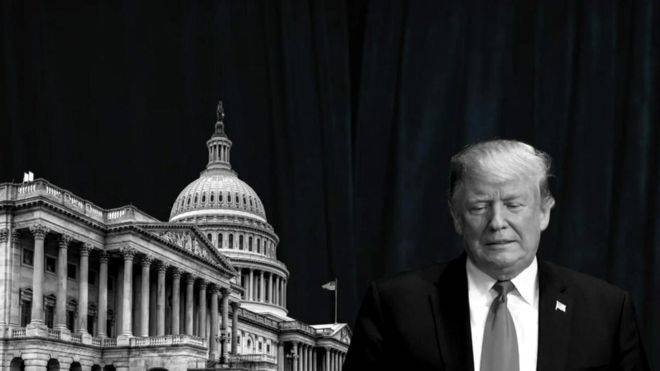

Trump-Backed Crypto Bills Fail in House as Republicans Split Over Regulation, CBDC Ban

0

President Donald Trump’s high-profile campaign to position the United States as the global leader in digital assets hit a stunning setback on Tuesday after three major cryptocurrency regulation bills backed by his administration failed to clear a critical procedural vote in the House of Representatives.

The unexpected rejection of the rules of debate—normally a routine step before the passage of major legislation—effectively stalls the bills for now and highlights the deepening ideological divisions within the Republican Party on how to regulate the fast-evolving digital economy.

In a surprising outcome that shocked crypto industry observers and rattled investors, the House voted 223-196 against advancing the bills. Thirteen Republicans broke ranks and joined Democrats to block the motion, despite the legislation being championed by Trump and billed as the centerpiece of what Republicans had dubbed “Crypto Week.”

The setback is particularly significant because the rule vote determines whether a legislative package is even brought up for debate and eventual passage. Its failure underscores mounting resistance within GOP ranks, despite Trump’s vocal support and the Republican leadership’s effort to frame the bills as a pro-innovation milestone.

Among the dissenters was Georgia Republican Marjorie Taylor Greene, who issued a blistering statement following the vote. She criticized the GENIUS Act—the most prominent of the three bills—for omitting an explicit ban on a central bank digital currency (CBDC), a feature she and other conservatives consider essential. Greene also faulted Speaker Mike Johnson for not allowing amendments to the bill that would address the CBDC issue. She pointed to Trump’s January 23 executive order, which proposed a nationwide prohibition of any U.S.-issued CBDC, arguing that the congressional package should reflect that policy.

The legislative package included the GENIUS Act, which had previously passed the Senate with bipartisan support and aimed to regulate stablecoins. The second bill, known as the CLARITY Act, aimed to clearly define the regulatory authority of the Securities and Exchange Commission versus the Commodity Futures Trading Commission in determining whether a digital asset should be classified as a security or a commodity. A third measure aimed to bar the Federal Reserve from launching a central bank digital currency, a move that has gained popularity among Republicans wary of potential surveillance or government overreach.

Trump himself had enthusiastically endorsed the package earlier on Tuesday, using his Truth Social platform to call for unanimous Republican support. He framed the legislation as a game-changer that would catapult America far ahead of geopolitical rivals in the digital financial space.

“The GENIUS Act is going to put our Great Nation lightyears ahead of China, Europe, and all others, who are trying endlessly to catch up, but they just can’t do it,” Trump wrote. He added that “Digital Assets are the FUTURE, and we are leading by a lot!” urging GOP lawmakers to get “the first vote done this afternoon.”

But despite the fanfare, Tuesday’s vote revealed a schism within the Republican caucus—between those eager to embrace the emerging crypto economy and others demanding tighter restrictions, especially on technologies they view as infringing on individual liberty.

House Republican leadership, visibly frustrated by the rebellion within their ranks, called off plans for a second vote later in the day, leaving the future of the bills uncertain. There was no immediate clarification on whether they would reintroduce the package in its current form or make changes to appease critics like Greene.

The legislative failure sent immediate shockwaves through financial markets. Crypto-related stocks slumped sharply after the vote. Circle, the stablecoin issuer behind USDC, saw its shares tumble more than 7%. Coinbase, the largest crypto exchange in the U.S., dropped over 4%, while digital asset firm MARA Holdings declined more than 2%, reflecting investor anxiety over stalled regulatory clarity in the world’s largest economy.

The defeat of the bills is also a major blow to the broader digital asset industry, which had viewed Trump’s Crypto Week push as a turning point. Following years of regulatory ambiguity and agency turf wars, the industry had hoped for a clear and consistent federal framework that would legitimize stablecoins, clarify compliance obligations, and draw a firm line against the rollout of a central bank digital currency.

Instead, the moment dissolved into infighting and uncertainty. It exposed not just policy disagreement, but also deeper ideological fault lines among Republicans—between populists fearing a surveillance state and fiscal conservatives hoping to harness new technologies for economic growth.

Trump’s influence over the party remains strong, and it is possible that pressure from his base will drive Republican leaders to revive the effort. But as of now, the dream of using Crypto Week to establish the U.S. as the “undisputed leader” in digital assets has been delayed—possibly indefinitely.

Only time will tell whether a revised package can satisfy the diverse demands within the party without alienating moderate Republicans or Democrats.

Designing Reward Loops: From Productivity Apps to Entertainment Platforms

0

Every tap and swipe on your phone generates carefully crafted psychological loops to keep you hooked. Reward loops are the hidden architecture of online living. They train the way we use everything from social media to fitness trackers.

These systems capitalize on inbuilt human drives for achievement, promotion, and commendation. Site pages from sectors of internet portals offering online games like Azartoff Casino have mastered the game of creating addictive reward loops. They keep users hooked! Learning about these loops makes us open the sophisticated psychology of our internet addictions and the clever design that hooks us.

The Psychology Behind Effective Rewards

Reward systems succeed because they resonate with the patterns of natural human motivation forged over thousands of years. Minds are trained to strive for better, relish success, and look forward to rewards. If apps provide these types of experiences reliably, they foster powerful habits of behavior that are nearly automatic.

Optimal digital rewards tap into intrinsic motivations instead of plain external approbation. Important psychological drivers that successful reward systems hit include:

  • Competence via skills mastery and achievement release;
  • Autonomy by self-selection and tailored options;
  • Connection by social forces and community;
  • Purpose by identification of action with satisfying consequences;
  • Progress by open progress and monitoring of advancement.

Variable reward schedules have the most powerful conditioning. As users never know when they will be rewarded, their minds remain engaged and active. This lack of knowledge keeps users on the edge and builds up anticipation that compels individuals to constantly visit and check if there are new updates, developments, or new accomplishments.

Immediate feedback satisfies our preference for immediate reward in the sense that it generates momentum towards more distant goals. Great reward systems tie short-term wins to meaningful markers of progress that stay strong across weeks and months.

Building Engagement Through Progressive Achievement

Good reward loops start off basic and increase in complexity over time. New members need instant wins to learn the system and be assured of success. Early successes must be virtually guaranteed, establishing a good experience on the site before introducing higher level goals. The best progression systems have multiple avenues of progress:

  • Linear progression. Players advance through established levels with predetermined demands. This creates regular progress that is well-suited to goal-setters.
  • Branching paths. Multiple skill trees or specialisation tracks allow players to choose their path of development. This has the effect of increasing investment and replay.
  • Cyclical challenges. Regular events or seasonal content provide fresh goals for experienced users. This dissuades stagnation and promotes continued interest.
  • Mastery systems. Advanced challenges that require expertise create motivational goals. Advanced achievements encourage experienced users to continue using.

Milestone celebrations are significant markers that enable users to be proud of their accomplishments. These moments create emotional highs that users remember and associate with the service. The celebration itself becomes a reward for accomplishment.

Personalization and Adaptive Reward Systems

Modern reward systems get to know you as an individual instead of treating everyone the same. Smart algorithms see what actually motivates you and adjust rewards to suit your way.

Knowing behavior demonstrates how different people operate. There are leaderboard and competition people, collaborative people towards a shared purpose, people who get psyched by small wins many times a day, and people who need huge milestone wins to drive them forward. The better systems identify where you fit into one of these categories and reward you accordingly.

Clever goal-setting is a challenge which increases with you as you get better. Such adaptive systems use a variety of crafty strategies:

  • Performance tracking. Observe how often you achieve and tweak difficulty so that you’re tested, yet not maddeningly enraged. An excess of failure suggests that goals are too hard.
  • Skill evaluation. Periodic check-ins ascertain what you can handle and suggest appropriate next steps. No point in asking you to accomplish the impossible.
  • Preference learning. Note what activities you truly enjoy and offer more of them. Pleasure for yourself keeps you coming back in the long term.
  • Motivation mapping. Discover what rewards actually get you going and design incentives to be in your style.
  • Engagement monitoring. Notice when you’re getting doldrums and mix it up with new challenges or different activities.

Timing is key when it comes to how rewards kick in. There are morning producers who love starting the day off right with victories, and there are night owls who thrive on being driven by late-night victories. Smart platforms work with your natural rhythm and give you rewards at a time when they will be most effective at keeping you engaged.

Balance between Engagement and User Wellbeing

While reward loops are incredibly effective for motivating use, ethical design takes into consideration long-term well-being for the user. Most sustainable systems encourage healthy habit formation rather than coercion.

Ethically grounded design principles guide responsible reward system design:

  • Transparency about operation of the system and data collected;
  • User control of frequency of notification and levels of interaction;
  • Natural terminations to facilitate healthy disengagement;
  • Construction of real-world value as opposed to artificial levels of engagement;
  • Respect for user time and attention limitations.

Natural break points enable users to leave without feeling deprived. Powerful reward systems have clear ending points and support pauses rather than demanding constant attention.

The Future of Reward System Design

Emerging technologies are opening up new possibilities for more immersive and customized reward experiences. Virtual reality can make achievements feel more real, and artificial intelligence can enable more sophisticated personalization.

The majority of innovative platforms are beginning to blend real-world rewards with virtual milestones. Cross-platform integration techniques involve:

  • Health partnerships offering in-store promotions for wellness milestones;
  • Academic credentials that count toward professional certifications;
  • Entertainment platforms providing VIP event tickets;
  • Productivity tools bridging to career development opportunities;
  • Gaming accomplishments bridging to real life experiences.

With users who are currently online increasingly conscious of how their online platforms shape their behavior, the appeal is rising for ethical and transparent reward schemes. The future is for platforms that are able to create good experiences as well as respect user agency and enable genuine well-being.

Artificial intelligence will drive more sophisticated personalization that not only answers to user preferences but also to their current life context, mood, and long-term goals. These systems will cease to be mechanistic and become more like having a thoughtful coach who understands what someone requires and is inspired by.

Standard Chartered Becomes First Global Systemic Bank to Offer Direct Bitcoin and Ether Trading to Institutions

0

Standard Chartered has become the first global systemically important bank to roll out deliverable spot trading for bitcoin and ether, giving corporates, asset managers, and other institutional investors the ability to trade the two largest cryptocurrencies through the bank’s UK branch and familiar foreign?exchange platforms.

Clients can now buy or sell BTC/USD and ETH/USD pairs inside the same secure environment they already use for traditional currencies and precious metals. Settlement can occur through any approved custodian—including the bank’s own FCA?registered Zodia Custody—ensuring assets remain fully segregated and regulatory?grade. Within months, the offering will broaden to include crypto non?deliverable forwards, allowing hedging or synthetic exposure without taking delivery.

Why Standard Chartered Moved First

Chief Executive Bill?Winters said the decision was demand?driven: “Digital assets have matured to a point where large clients are asking to transact, trade and manage risk in a fully regulated setting. We’re bringing these assets into the mainstream with the controls, credit intermediation and balance?sheet strength clients expect from a G?SIB.”

Although the bank already operates two crypto subsidiaries—Zodia Markets for multi?asset trading and Zodia Custody for safekeeping—those businesses were ring?fenced ventures. Until now, no top?tier global bank had permitted direct spot trading off its primary balance sheet. The new desk integrates bitcoin and ether alongside more familiar instruments, letting institutions manage fiat, commodities, and digital assets in a single risk framework.

A Watershed Moment for Institutional Crypto

The launch lands just as bitcoin hits record highs, buoyed by U.S. President Donald Trump’s pro?crypto rhetoric and a series of pro?innovation bills slated for passage in the House of Representatives’ self?styled “crypto week.” In continental Europe, Societe Generale recently issued a dollar?pegged stablecoin—another sign that traditional finance (TradFi) is moving from cautious experimentation to full?scale adoption.

Internal discussions at other large U.S. banks point to a similar thaw: treasury desks are exploring tokenized deposits, while wealth?management arms eye direct crypto exposure for high?net?worth clients. But Standard Chartered’s decision to add deliverable spot trades is the clearest signal yet that blue?chip institutions see sufficiently robust liquidity, custody, and compliance to justify bringing bitcoin and ether onto their own platforms.

Risk Management, Compliance, and Market Impact

To satisfy prudential regulators, Standard Chartered has spent more than 18 months stress?testing its capital models against crypto’s notorious volatility and crafting anti?money?laundering controls that map blockchain analytics to traditional KYC. Traders will face position limits and margin requirements similar to those on gold or G10 currencies, while blockchain forensics tools provide real?time monitoring for sanctioned addresses or illicit flows.

For the market, the new venue may increase liquidity at the institutional end of the curve, potentially narrowing bid?ask spreads and smoothing price discovery—much as CME futures did for bitcoin in 2017. It could also accelerate the migration of large OTC volumes from offshore exchanges, bringing asset?class governance in line with mainstream commodities and FX.

Standard Chartered plans to add additional tokens only after thorough due diligence, leaning on the 70?plus coins already traded at its Zodia Markets subsidiary as a pipeline. Analysts expect that ethereum?based staking derivatives and regulated stablecoin pairs could follow once a clearer supervisory framework emerges.

If competitors follow suit—as they did when CME, Fidelity, and BlackRock entered bitcoin—2025 may mark the year crypto truly entered the global interbank toolkit. However, Standard Chartered’s leap from peripheral subsidiaries to its core trading desk has set a new benchmark: digital assets can live inside the same walls, under the same capital standards, as the rest of high finance.

Japanese 30-year Government Bond Yield Hits 3.20%

0

The Japanese 30-year government bond yield hitting 3.20% marks a significant event, tying a multi-decade high from May, signaling potential pressure in Japan’s bond market. This could reflect investor concerns about inflation, monetary policy shifts, or economic outlook, especially if the Bank of Japan considers tightening. The MOVE index rising from support suggests increasing volatility expectations in U.S. Treasuries, potentially driven by similar macro factors or U.S. policy uncertainty.

Bond markets globally may face turbulence if these trends persist, as higher yields and volatility could tighten financial conditions. The rise in the Japanese 30-year government bond yield to 3.20%, matching a multi-decade high, and the uptick in the MOVE index signaling renewed volatility in U.S. Treasuries have significant implications for global financial markets.

The yield spike suggests markets are pricing in potential tightening by the Bank of Japan (BOJ), which has maintained ultra-loose policy for decades. Higher yields could reflect expectations of reduced BOJ bond purchases or a shift away from yield curve control (YCC), as seen in past policy tweaks. If the BOJ allows yields to rise further, it could strengthen the yen but risk increasing borrowing costs for Japan’s heavily indebted government (debt-to-GDP ~260%).

Japanese institutional investors (e.g., pension funds, insurers) holding large bond portfolios may face valuation losses as yields rise (bond prices fall). This could push them to seek higher-yielding foreign assets, impacting global capital flows. Domestic banks may see margin pressure if funding costs rise faster than lending rates.

Japan’s bond market is a major global player. Higher yields could attract capital back to Japan, reducing demand for U.S. and European bonds, potentially pushing global yields higher. A stronger yen (if yields drive capital inflows) could affect Japanese exporters, impacting global trade dynamics.

The MOVE index, measuring 30-day implied volatility in U.S. Treasuries, turning up from support suggests traders expect larger price swings. This could stem from uncertainty about U.S. Federal Reserve policy, inflation, or fiscal concerns (e.g., U.S. debt ceiling or deficit spending). Higher volatility may deter investors from long-term Treasuries, pushing yields up as risk premiums increase.

Rising Treasury volatility can spill over to equities, currencies, and commodities, as U.S. Treasuries are a benchmark for global risk-free rates. Increased turbulence could lead to tighter financial conditions, impacting borrowing costs for corporations and consumers. Volatility may signal a repricing of risk, especially if markets anticipate Fed rate hikes or persistent inflation.

Investors may shift toward cash or shorter-duration bonds to avoid volatility, potentially reducing demand for long-term Treasuries and further elevating yields. The BOJ maintains ultra-accommodative policy, with near-zero short-term rates and YCC to cap long-term yields. The 3.20% yield suggests market pressure is testing BOJ control, but Japan’s deflationary history and high debt limit aggressive tightening.

The Federal Reserve has been more hawkish, with rates likely elevated (based on recent trends) to combat inflation. The MOVE index uptick reflects uncertainty about whether the Fed will pause, cut, or hike further, contrasting with Japan’s cautious approach. This policy gap drives capital flows (e.g., from Japan to U.S. for higher yields) and currency movements (yen weakening vs. dollar). A narrowing divide (BOJ tightening) could disrupt global markets.

Slow growth, aging population, and persistent low inflation contrast with the U.S.’s stronger growth and inflationary pressures. Higher Japanese yields may signal imported inflation or growth expectations, narrowing the economic divide. Stronger labor markets and consumer spending, but fiscal deficits and debt concerns drive Treasury volatility. The U.S. faces a balancing act between growth and inflation control, unlike Japan’s focus on stimulating demand.

Divergent economic paths influence bond market dynamics, with U.S. volatility reflecting active policy debates and Japan’s yields signaling a potential shift from stagnation. In Japan, markets test BOJ resolve, expecting gradual policy normalization. In the U.S., the MOVE index suggests uncertainty about Fed actions and economic landing (soft vs. hard). This divide in expectations drives volatility and yield differentials.

Investors may favor U.S. assets for yield but face volatility risks, while Japanese bonds offer stability but lower returns, influencing global portfolio strategies. Rising yields in Japan and U.S. Treasury volatility could signal a broader repricing of risk. If both markets see sustained yield increases, global borrowing costs rise, potentially slowing growth. A stronger yen (from higher Japanese yields) and volatile dollar (from U.S. uncertainty) could shift trade and investment flows.