DD
MM
YYYY

PAGES

DD
MM
YYYY

spot_img

PAGES

Home Blog Page 859

Mercurity Fintech’s $200 Million Solana Treasury Strategy Could Enhance Its Position In The Blockchain Space

0

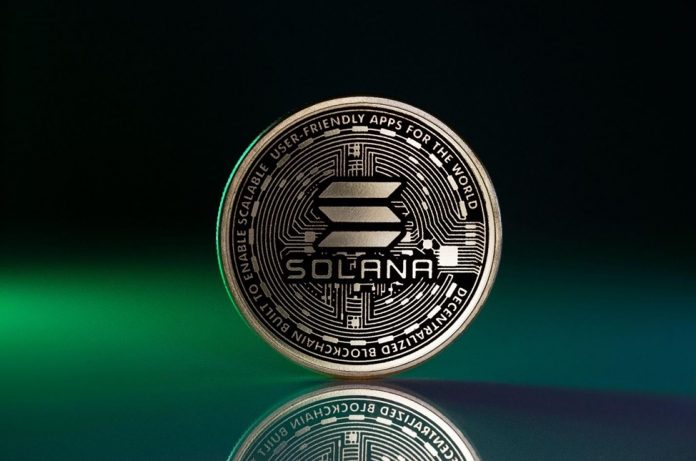
Mercurity Fintech Holding Inc. (Nasdaq: MFH) announced that it secured a $200 million Equity Line of Credit Agreement with an entity named Solana Ventures Ltd. to launch a Solana-based digital asset treasury strategy. The initiative aims to position MFH as a long-term institutional participant in the Solana ecosystem, focusing on accumulating SOL tokens, generating yield through staking, validator nodes, and decentralized finance (DeFi) protocols, and investing in Solana-based projects like tokenized real-world assets and financial products.

The strategy complements MFH’s existing plans, including a $500 million DeFi basket treasury involving assets like Ethereum, XRP, Cardano, and BNB, and does not replace its Bitcoin investment strategy. Chief Strategy Officer Wilfred Daye highlighted Solana’s speed, cost-efficiency, and regulatory acceptance as key drivers for this move. However, controversy arose as Solana Ventures LLC, the official subsidiary of Solana Labs, denied any involvement in the agreement, stating it has not engaged in equity credit lines with public companies.

According to Wu Blockchain, MFH clarified that the deal involves a different entity with a similar name to Solana Ventures, though MFH has not publicly retracted its initial announcement or provided further details on the entity. This discrepancy remains unresolved. The news coincided with a 5.46% rise in Solana’s price boosting its market cap above $100 billion, and a 2% increase in MFH’s stock price to around $5.

The announcement contributed to a 5.46% increase in Solana’s (SOL) price, pushing its market capitalization above $100 billion with a 69.44% surge in trading volume to $8.69 billion. This reflects growing institutional interest in Solana as a high-performance blockchain for tokenized assets, DeFi, and real-time payments. MFH’s strategy to accumulate SOL, generate yield through staking and validator nodes, and invest in Solana-based projects (e.g., tokenized real-world assets and financial products) could drive liquidity and innovation within the Solana ecosystem.

This aligns with a broader trend of companies like DeFi Development Corp. (holding 999,999 SOL) and BIT Mining (planning $200–300M for SOL) adopting Solana for treasury strategies. By diversifying its treasury to include SOL alongside its $500 million “DeFi Basket” (involving Ethereum, XRP, Cardano, and BNB) and an $800 million Bitcoin strategy, MFH positions itself as a major player in blockchain-native treasury management, potentially attracting more institutional investors to Solana.

MFH’s focus on staking, validator operations, and DeFi protocols offers potential for long-term yield generation, enhancing its financial stability beyond traditional fintech services. The announcement led to a 2% increase in MFH’s stock price to around $5, with some reports noting a peak of 14.09% at $5.16, reflecting positive market sentiment. However, MFH’s financial challenges, including negative profitability and cash flow issues, suggest that the success of this strategy is critical for its valuation.

MFH’s move to bridge traditional finance with blockchain innovation, as articulated by Chief Strategy Officer Wilfred Daye, positions it to capitalize on Solana’s speed, cost-efficiency, and regulatory acceptance, potentially strengthening its market presence. The announcement reflects a growing trend of public companies diversifying treasuries with altcoins like Solana, Ethereum, and XRP, following MicroStrategy’s Bitcoin model. This shift involves active participation through staking and DeFi, unlike Bitcoin’s passive accumulation approach, but carries risks due to altcoins’ volatility and lower liquidity.

Solana’s growing regulatory acceptance, as noted by MFH, could encourage more firms to adopt similar strategies, though long-term success depends on navigating regulatory uncertainties. The controversy stems from Solana Ventures LLC, the official subsidiary of Solana Labs, denying any involvement in the $200 million deal, stating it has not engaged in equity credit line agreements with public companies.

MFH clarified that the agreement involves a different entity with a similar name, but has not retracted its announcement or provided further details, creating a divide in perception and credibility. The discrepancy raises questions about MFH’s due diligence and transparency. The failure to clarify the identity of “Solana Ventures Ltd.” or retract misleading statements could erode investor trust, potentially impacting MFH’s stock performance and partnerships.

If the entity named “Solana Ventures Ltd.” is unrelated to Solana Labs, MFH’s use of the name could invite legal scrutiny for misleading investors. Solana Labs may also face reputational challenges if the confusion persists. While the announcement initially boosted SOL’s price and MFH’s stock, the controversy could lead to divergent outcomes. Continued institutional interest in Solana (e.g., DeFi Development Corp., BIT Mining) may sustain SOL’s momentum, but MFH’s stock could face volatility if the controversy escalates.

The announcement highlights Solana’s rising appeal for institutional treasury strategies due to its high-performance blockchain and yield-generating opportunities. However, the controversy underscores the importance of transparency in crypto-finance deals. MFH’s failure to promptly clarify the identity of “Solana Ventures Ltd.” risks undermining its credibility, especially given its financial challenges (negative P/E ratio, cash flow issues). The broader trend of altcoin treasuries carries both promise and risk, as altcoins’ volatility and regulatory uncertainties could amplify losses compared to Bitcoin-focused strategies.

Solana’s ecosystem benefits from institutional interest, but the confusion around this deal could deter cautious investors unless resolved swiftly. Mercurity Fintech’s $200 million Solana treasury strategy could enhance its position in the blockchain space and bolster Solana’s ecosystem, driving liquidity and innovation. However, the controversy over Solana Ventures’ involvement creates a divide between optimistic market sentiment and skepticism about MFH’s transparency.


Coinwatch Launches ” The Coinwatch Track” For Market Makers

0

Coinwatch has launched “Coinwatch Track“, a real-time dashboard designed to help crypto projects monitor their market makers’ activities. The tool provides visibility into trading metrics such as order book depth, spread, and volume across exchanges, using market maker API keys processed securely via Trusted Execution Environments (TEEs) to protect privacy. This addresses challenges like opaque market maker performance, enabling projects to track liquidity, verify activity, and ensure accountability.

Currently, 12 market makers are integrated, including Amber, Ampersan, Auros, CyantArb, Flowdesk, Galaxy, GSR, IMC, Keyrock, LO:TECH, Pulsar, and STS Digital, with more expected to join. The platform also supports exchange listing processes and liquidity management for tokens. Coinwatch Track provides crypto projects with real-time insights into market maker performance, including metrics like order book depth, spread, and trading volume. This transparency helps projects ensure market makers are fulfilling their obligations, such as maintaining liquidity and minimizing price manipulation.

Projects can make data-driven decisions, optimize token performance, and hold market makers accountable, reducing the risk of underperformance or unethical practices. By integrating 12 major market makers (e.g., Amber, Auros, GSR) and using secure Trusted Execution Environments (TEEs) to protect sensitive data, Coinwatch fosters trust between projects and market makers.

The dashboard supports projects in navigating exchange listing requirements by providing verifiable liquidity metrics, streamlining the process. Smaller or newer projects may find it easier to meet exchange standards, potentially increasing the number of tokens listed on reputable platforms. The tool levels the playing field by giving smaller projects access to sophisticated monitoring tools previously available only to larger players with in-house analytics.

As more market makers join the platform, Coinwatch Track could set a precedent for standardized reporting and performance metrics in the industry. This may push market makers to adopt best practices, reducing predatory behaviors like wash trading or front-running, but it could also increase operational costs for market makers.

While Coinwatch Track empowers projects with data, access to the dashboard may come with costs (pricing details are not publicly available, but premium tools often require subscriptions). Smaller projects or those with limited budgets may struggle to afford it. This could create a two-tier system where well-funded projects gain a competitive edge through better market maker oversight, while smaller projects remain reliant on less transparent or manual monitoring methods.

Coinwatch could offer tiered pricing or free access for early-stage projects to bridge this gap. The dashboard’s advanced metrics (e.g., order book depth, spread analysis) require a degree of technical expertise to interpret and act upon. Projects without skilled analysts may underutilize the tool. Teams with technical resources will benefit more, potentially widening the gap between professionally managed projects and those run by less experienced teams.

Coinwatch could provide educational resources or simplified interfaces to make the tool more accessible to non-technical users. Only 12 market makers are currently integrated, and others may resist joining due to privacy concerns or the cost of compliance with Coinwatch’s API requirements. Projects working with non-integrated market makers may face reduced visibility, creating a divide between those using supported market makers and those using others.

Market makers not on the platform may lose business if projects prioritize Coinwatch-compatible partners. Coinwatch’s expansion to include more market makers will be critical to reducing this divide. While Coinwatch Track enhances transparency, it introduces a centralized platform for monitoring decentralized markets. Projects relying heavily on Coinwatch may cede some control to a third-party tool.

Coinwatch’s use of TEEs for data privacy is a step toward addressing security concerns, but broader adoption may require open-source components or decentralized alternatives. Crypto projects operate in varied regulatory environments, and market makers may face different compliance requirements based on jurisdiction. Coinwatch Track’s utility could vary depending on local regulations.

Projects in stricter jurisdictions may face challenges integrating with the platform if market makers or exchanges are restricted, creating disparities in tool adoption globally. Coinwatch could tailor its platform to comply with major regulatory frameworks, but this would require significant resources. The tool could reduce market manipulation by making market maker activities more transparent, potentially stabilizing token prices and increasing investor trust.

However, it may also increase scrutiny on market makers, potentially driving some to operate in less regulated or non-integrated environments. Coinwatch Track positions Coinwatch as a leader in crypto analytics, but competitors like Nansen or Dune Analytics could develop similar tools, intensifying competition. Widespread adoption depends on market maker participation and project willingness to integrate APIs. Resistance from either group could limit the tool’s impact.

Coinwatch Track is a significant step toward transparency and accountability in crypto market making, benefiting projects, investors, and exchanges. However, it risks creating divides based on access, technical expertise, market maker integration, centralization concerns, and regulatory differences. To maximize its impact and minimize inequities, Coinwatch should focus on affordability, user education, broader market maker integration, and regulatory adaptability.

NNPC Declares N905bn Profit in June as Statutory Remittances Hit N6.96tn — Signs of Shift Under Ojulari’s Leadership Amid Lingering Transparency Concerns

0
NNPC HQs in Abuja (credit: Guardian)

The Nigerian National Petroleum Company Limited (NNPC Ltd) reported a Profit After Tax (PAT) of N905 billion for June 2025, a decline from the N1.054 trillion recorded in May. Despite the month-on-month drop, the state-owned oil giant saw a notable increase in its statutory remittances to the Federation Account, with N6.961 trillion remitted between January and May—up from N5.583 trillion in the first four months of the year.

In its June Monthly Report Summary released Monday night, NNPC disclosed that revenue for the month stood at N4.571 trillion, down from N6.008 trillion in May. Still, the company reported progress in several operational areas. Crude oil and condensate production rose to 1.68 million barrels per day (bpd) in June, from 1.629 million bpd the previous month—a gain of 51,000 bpd. While the increase is modest, it moves Nigeria a step closer to the 2.06 million bpd benchmark assumed in the 2025 budget.

Natural gas output also improved, reaching 7.581 billion standard cubic feet per day (scf/d) in June—up from 7.352 billion scf/d in May and 6.615 billion scf/d in February—highlighting a steady recovery in gas supply, which is vital for both export earnings and domestic electricity generation.

Fuel supply saw improvement as well, with petrol availability in NNPC stations rising to 71 percent in June from 62 percent in May. The company, which currently handles nearly all the country’s petrol imports, has struggled in recent months to maintain stable distribution amid foreign exchange volatility and refinery delays.

NNPC also reported continued advancement in its gas infrastructure projects. The Ajaokuta-Kaduna-Kano (AKK) pipeline project reached 83 percent completion in June, up from 81 percent in May. Notably, the successful completion of the River Niger crossing segment—a critical and technically complex part of the project—has reduced execution risks for the mainline.

The OB3 pipeline, designed to move gas from the eastern Niger Delta to the west, remains stuck at 96 percent completion, unchanged from May. Still, NNPC says it is applying lessons learned from the AKK crossing to expedite the OB3 River Niger segment and bring the long-delayed project to fruition.

“Ongoing industry-wide collaborations are increasingly improving synergies to achieve production improvement and cost optimization,” the company noted in its June update, while also highlighting that strategic interventions are being implemented to fast-track pipeline delivery.

This development is being interpreted by industry observers as a signal of a gradual but significant shift in the profit and remittance trajectory of the national oil company, following the appointment of Olufemi S. Ojulari as Group CEO. Since assuming office earlier this year, Ojulari has pledged to restructure NNPC’s financial systems and drive more accountable, performance-oriented management across its subsidiaries. The increase in remittances—despite the drop in monthly profit—is seen by some as early evidence of those reforms beginning to take root.

This improved fiscal performance arrives in the shadow of longstanding allegations that NNPC has consistently short-changed the Nigerian government and its citizens. For years, the company has faced scrutiny over opaque accounting practices, under-declared revenues, and accusations of retaining earnings without appropriate remittance to the federal purse. Lawmakers are currently probing the NNPC over N210 trillion missing funds.

On the status of the Port Harcourt, Warri, and Kaduna refineries, NNPC stated that reviews remain in progress but did not give specific timelines for the completion of rehabilitation works. This continues to raise concern, especially after multiple missed deadlines and heavy borrowings committed to the refurbishment of the ageing facilities.

Despite the company’s profit streak and higher remittances under Ojulari, skepticism remains. Many are cautious about celebrating NNPC’s fiscal turnaround without independent audits or external verification of its figures. Previous administrations have been accused of using the company as a black box—routinely bypassing appropriation processes while keeping critical oil receipts off the books.

Still, there is growing pressure on Ojulari to prove that his leadership marks a genuine departure from the past. The June report may be a step in the right direction—but to build lasting credibility, NNPC is expected to consistently show openness, adopt global best practices in disclosure, and be held to account not just for how much it earns, but how much it remits.

Oyedele: Nigeria Would Have Become $1tn Economy if Current Reforms Happened 10 Years Ago

0

Chairman of the Presidential Fiscal Policy and Tax Reforms Committee, Mr. Taiwo Oyedele, says Nigeria could have been a $1 trillion economy today if it had embraced key economic and fiscal reforms a decade ago.

Speaking at PwC’s Executive Summit on Nigeria’s Tax Reform in Lagos on Monday, Oyedele said the country’s past missteps in foreign exchange management and subsidy spending nearly derailed its financial stability and economic potential.

He warned that without the fuel subsidy removal and other reform decisions taken by President Bola Tinubu since May 2023, Nigeria could have headed the way of Zimbabwe and Venezuela, where uncontrolled economic distortions triggered systemic collapse.

“If some of these reforms done in the past two years ago were implemented, I tell you authoritatively that Nigeria’s $1 trillion economy is guaranteed and the price of PMS will be under N300 per liter because the foreign exchange rate will be under N300 against the dollar,” Oyedele declared.

He said analysis of Nigeria’s balance of payment trends over the last 10 years compared with Kenya and South Africa showed the naira had depreciated more than six times the rate of Kenya’s shilling and South Africa’s rand.

“If only we had maintained that level of stability as those two other countries, Nigeria will be a $1 trillion economy. What that means is that the size of the middle class will probably be 10 times what it is and every single investor will take us seriously,” he said.

According to Oyedele, the Tinubu administration’s reforms—though painful—are already yielding macroeconomic dividends. He noted that Nigeria’s tax-to-GDP ratio has risen from under 10 percent to 13.5 percent within two years, and that the country’s debt servicing burden has dropped from 97 percent to below 50 percent. He also added that the government no longer relies on printing money, claiming that nearly half of the “Ways and Means” advances from the last administration have now been paid down.

“In Nigeria, we have what it takes in terms of human capacity, knowledge and skills. We’re missing the political will, until we found it,” he said.

The Reforms Were Opposed by Tinubu in 2012

Many Nigerians have pushed back—pointing out that such efforts were, in fact, made over 10 years ago but actively sabotaged by the same political forces now in power.

Nigerians recall the fuel subsidy removal attempt in 2012 under President Goodluck Jonathan—a reform plan that was met with fierce resistance by then-opposition figures, notably Bola Tinubu, who is now president and executing the same policy.

Jonathan’s government had removed fuel subsidy on January 1, 2012, sparking nationwide protests tagged #OccupyNigeria. It led to mass demonstrations in major cities, including Lagos, Abuja, Kano, and Port Harcourt. Then-civil society groups, labor unions, and opposition parties staged marches against the policy. Tinubu, then the National Leader of the Action Congress of Nigeria (ACN), publicly condemned the subsidy removal, joining forces with NLC, TUC, and various civil groups to pressure the government into reversing the decision.

The pushback forced Jonathan to partially reinstate the subsidy—bringing petrol prices back down from N141 to N97 per liter—effectively derailing what was arguably the country’s most serious effort at subsidy reform in the Fourth Republic.

Against this backdrop, many Nigerians believe that Tinubu deserves no praise for the reforms because he largely contributed to setting the country back.

Is $1tn Economy Possible by 2030?

While the reforms have been touted to accelerate Nigeria’s $1 trillion economic plan by 2030, economists have raised doubts over the feasibility. The 2024 rebased GDP put Nigeria’s economy at N372.8 trillion—roughly $243 billion at the prevailing exchange rate—making it the fourth largest economy in Africa, behind South Africa, Egypt, and Algeria.

Analysts say achieving a $1 trillion GDP by 2030 would require Nigeria to post a nominal growth rate of at least 13 percent every year for the next six years—far above the federal government’s own projection of 4.6 percent growth by 2025. The World Bank’s estimate is even steeper, suggesting that Nigeria would need nearly 19 percent annual growth to hit the $1 trillion milestone by the end of the decade.

Further compounding the skepticism is the government’s reliance on tax reforms as a major lever for economic expansion. Oyedele maintained that the tax overhaul was not just about boosting government revenue, but about incentivizing broader economic activities. But some analysts argue that the reform’s expected outcomes may be limited by the country’s income demographics.

A 2023 report by Lagos-based research firm Intelpoint revealed that only 10 percent of Nigerians earn above N100,000 monthly—or N1.2 million annually. This suggests that the vast majority of Nigerians would fall below the new personal income tax threshold and thus be exempt from taxation. That’s good for equity but problematic for revenue generation.

With much of the economy still informal, and only a small portion of the population earning enough to be taxed, experts say significant gains in revenue will only materialize if job creation, productivity, and income levels increase markedly.

However, the reforms mark a major overhaul. PwC’s Regional Senior Partner for West Market Area, Mr. Sam Adu, noted that Nigeria had just undertaken the most ambitious revamp of its tax system in decades, if not ever.

“This is significant, not just about compliance, it’s about creating a fairer, more transparent and more growth-oriented tax system for businesses and individuals,” he said.

Adu also pointed to global trends shaping taxation—such as technology, sustainability, geopolitics, and cross-border cooperation—and highlighted the importance of smarter taxation systems in line with modern economies.

While the Federal Government hopes its reforms can reposition Nigeria’s economic future, the path to a $1 trillion economy is fraught with hurdles. Without faster GDP growth, which translates to more taxable demographic, the goal may remain aspirational—at least for the near future.

Here’s Why Online Gambling Payment Processing is Set on Crypto

0

Online gambling is changing rapidly and crypto is at the heart of that change. No longer do players want to have to spend a lot of time making deposits and withdrawals (show me a single casino player that just doesn’t care about fast, safe and private payment options), and this is exactly why new crypto casinos are the 1st choice for the modern gambler in 2025.

Fast and Frictionless Payments

Sick of waiting days for your withdrawals? With crypto, deposits and withdrawals take minutes. No bank approvals or third-party delays are necessary. You are able to instantly access your funds anytime, no headaches.

Full Control Over Your Wallet

Total control is one of the great advantages of using crypto. You maintain possession of your own funds and decide when and where to spend them. No blocked cards. No reversed payments. Simply, nice, user directed experiences that keep you in control.

Better Privacy, More Security

You don’t need to expose your personal banking details when using crypto payments. That means more privacy and less possibility of identity theft or leaks of financial data. All is secured on the blockchain, open, transparent, and tamper-proof, you can bet with confidence.

Fewer Fees, More Value

It’s time to kiss those problematic high transaction fees goodbye. The majority of crypto casinos won’t charge you anything to move money between your wallet and your casino account, and will only charge you when you cash out. The more you save the more you can play, with better bonuses and bigger potential winnings the more you login.

Global Access Anytime

With crypto, it doesn’t care where you are. Crypto is the great equalizer: Whether your country blocks payment methods or bans online gaming entirely, crypto provides a way, no strings attached, no intercepting.

Final Thoughts

Crypto is not just a fad, it is the future of Web-based wagering. Faster, safer, and friendly to players, it’s here to stay. What do you think? Are you ready to dive into this?