DD
MM
YYYY

PAGES

DD
MM
YYYY

spot_img

PAGES

Home Blog Page 868

NRW.BANK’s Tokenized Bond On Polygon Is A Milestone In Bridging TradFi And Blockchain

0

NRW.BANK, Germany’s largest regional development bank, issued a €100 million tokenized bond on the Polygon blockchain, marking its first fully digital bond. Registered under Germany’s Electronic Securities Act (eWpG), the two-year bond leverages Polygon’s infrastructure and Cashlink Technologies, a BaFin-licensed crypto registrar, for compliance. Major banks like Deutsche Bank, DZ BANK, and DekaBank acted as joint lead managers, signaling strong institutional support. This move highlights the growing adoption of blockchain in regulated capital markets, offering faster settlement, lower costs, and greater transparency.

Tokenization on blockchain platforms like Polygon enables faster settlement times (near-instantaneous compared to days in traditional systems) and reduces intermediaries, lowering operational costs for issuers and investors. Smart contracts automate processes like interest payments and redemption, minimizing manual errors and administrative overhead. Blockchain’s immutable ledger ensures transparent tracking of bond ownership and transactions, boosting trust among investors and regulators.

Tokenized bonds could democratize access to fixed-income markets, allowing smaller investors to participate in assets traditionally reserved for institutional players, assuming regulatory frameworks evolve to support retail access. The bond’s compliance with Germany’s Electronic Securities Act (eWpG) shows regulators are adapting to blockchain-based financial instruments, setting a precedent for other jurisdictions.

Involvement of major banks like Deutsche Bank and DZ BANK signals growing confidence in blockchain among TradFi giants, potentially accelerating mainstream adoption. Polygon’s layer-2 scaling solution offers low transaction costs and high throughput, making it a practical choice for tokenized assets. This could encourage other issuers to adopt similar platforms. The use of Polygon suggests potential for interoperability with other blockchain networks, enabling cross-platform asset transfers in the future.

Tokenized bonds could reshape capital markets by enabling fractional ownership, 24/7 trading, and global reach, challenging traditional exchanges and clearinghouses. This move may spur competition among blockchain platforms (e.g., Ethereum, Solana, or private chains) to capture the tokenized securities market.

NRW.BANK’s bond, backed by major banks and compliant with strict regulations, reflects TradFi’s cautious embrace of blockchain. This contrasts with DeFi’s permissionless, decentralized ethos, where bonds or similar instruments might be issued without intermediaries or regulatory oversight. TradFi’s tokenized assets are tightly controlled, with centralized registrars like Cashlink and regulated custodians. DeFi, conversely, prioritizes decentralization, which can conflict with regulatory requirements but offers greater freedom for users.

While tokenization could lower barriers, TradFi’s tokenized bonds are still largely institutional, with high minimum investments and regulatory hurdles. DeFi platforms, while riskier, often allow broader participation without such restrictions. Polygon, a public blockchain, competes with private or consortium blockchains (e.g., Hyperledger) favored by some financial institutions for their control and privacy features. NRW.BANK’s choice of Polygon suggests public chains are gaining traction for regulated assets.

Polygon’s layer-2 solution highlights the divide between layer-1 blockchains (like Ethereum) and layer-2s optimized for scalability. This choice prioritizes cost and speed but may raise questions about long-term security compared to layer-1 alternatives. The divide between innovation and regulation is evident. While DeFi pushes boundaries with experimental financial products, TradFi’s tokenized bonds must navigate strict legal frameworks, slowing innovation but ensuring stability.

Germany’s progressive eWpG contrasts with jurisdictions lagging in blockchain regulation, creating a global divide in adoption pace. NRW.BANK’s tokenized bond on Polygon is a milestone in bridging TradFi and blockchain, promising efficiency, transparency, and broader market access. However, it also highlights a divide: TradFi’s regulated, institutional approach clashes with DeFi’s open, decentralized model, and public blockchains like Polygon compete with private alternatives.
Flutterwave and NoraFirst Partner to Power B2B Trade Payments Between Africa and East Asia

0

Flutterwave, Nigeria’s leading fintech company, has announced a strategic partnership with NoraFirst, an East Asia-based payments firm offering one-stop cross-border financial services.

This collaboration aims to unlock seamless B2B trade payments between Africa and East Asia, ushering in a new era of cross-border commerce and connectivity.

Speaking on the partnership, Flutterwave CEO Olugbenga Agboola said,

“At Flutterwave, our mission has always been to connect Africa to the world through seamless payments. Today, we’re proud to live that mission by partnering with NoraFirst to unlock B2B trade payments between Africa and East Asia—fueling the next wave of cross-border commerce.”

Through Flutterwave’s robust payment infrastructure, NoraFirst will be able to scale effortlessly into African markets. Their clients will now gain the ability to make localized, non-card cross-border payments, bridging global exporters in East Asia with local African businesses.

Operating in over 30 African countries and with a valuation of over $3 billion, Flutterwave continues to extend its influence in global commerce by delivering cutting-edge payment solutions across borders.

It is worth noting that over the past decade, economic relationships between Sub-Saharan Africa and Asia have expanded. In 2021, Asia accounted for over 40% of Africa’s exports and imports, surpassing Europe as the continent’s primary trading partner. China is the leading individual country, with trade volumes reaching $266.3 billion in 2022, a 14.5% year-on-year increase.

With Africa–East Asia trade volumes already exceeding $250 billion annually, this partnership is set to play a significant role in powering the financial rails behind that growth.

For NoraFirst, the partnership aligns with its long-standing commitment to making global trade more accessible, localized, and efficient, especially in high-growth regions like Africa.

“We’re honored to collaborate with Flutterwave,” said Dongdong Wang, Founder & CEO of NoraFirst. “Together, we’ll unlock broader opportunities and drive the next wave of financial innovation in global-Africa trade.”

Commenting on the partnership, NoraFirst wrote via a LinkedIn post,

“At NoraFirst, we’ve spent years deeply embedded in Africa’s financial landscape—building the largest network of local receiving accounts and driving innovation in cross-border finance. Our mission has always been clear: make global trade more accessible, localized, and efficient, especially in high-growth regions like Africa.

“That’s why we’re excited to announce our partnership with Flutterwave, Africa’s leading B2B payments platform and one of the world’s most innovative fintech companies. With operations in 30+ African countries and a $3B+ valuation, Flutterwave has built a world-class payment infrastructure that is transforming how money moves across the continent.

“Together, we’re delivering seamless, localized, and efficient cross-border collection services, empowering African trade businesses and bridging global exporters with local African markets. We’re building a future where financial infrastructure makes cross-border trade simple, fast, and inclusive.”

NoraFirst provides local currency collection, exchange rate management, and other services to traders, cross-border e-commerce businesses, and outbound service providers in emerging markets such as Africa, Southeast Asia, the Middle East, and Latin America, supporting the digital transformation and innovation of businesses in their outbound operations.

Together, Flutterwave and NoraFirst are poised to revolutionize B2B trade payments—empowering businesses, enhancing efficiency, and deepening Africa’s integration into the global economy.

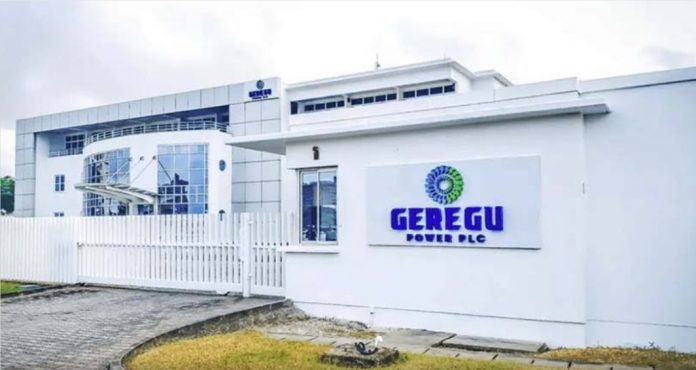
Geregu Power Surpasses Q2 Forecast With N13.3bn Pre-Tax Profit, But H1 Figures Trail 2024 Despite Strong Quarter

0

Geregu Power Plc has posted a strong rebound in its financial performance for the second quarter of 2025, recording a pre-tax profit of N13.297 billion, a 61.14% year-on-year growth, and surpassing management’s internal forecast for the period.

The result reinforces the company’s dominance in Nigeria’s electricity generation market and highlights the broader trend of profitability within the nation’s power sector.

Combined with its Q1 pre-tax profit of N13.015 billion, Geregu Power’s first-half profit stood at N26.311 billion. While that reflects a 12.74% decline compared to the same period in 2024—due mainly to a weak Q1—analysts say the impressive Q2 comeback not only restores investor confidence but also signals an industry-wide trend: Nigeria’s power sector is fast becoming one of the country’s most lucrative sectors.

Power Sector’s Rising Appeal

Geregu’s quarter-on-quarter performance offers a telling snapshot of the growing financial potential in the Nigerian electricity market. With consistent demand, limited competition, and government-backed reforms aimed at improving energy infrastructure, the sector is increasingly viewed as a viable hedge against inflation and macroeconomic uncertainty.

Despite the country’s persistent power shortages, producers like Geregu continue to generate strong earnings, owing to favorable tariffs, bulk power sales to the Nigerian Bulk Electricity Trading Company (NBET), and the relative monopolistic structure of Nigeria’s generation sector.

Industry watchers say Geregu’s results may encourage more private sector investment into power generation, especially as returns from traditional sectors like oil and gas, banking, and manufacturing face more regulatory constraints and rising input costs.

Revenue, Margins Show Strength

In Q2 2025, Geregu posted revenue of N55.875 billion, up 84.72% from the N30.249 billion recorded in the same period last year. This performance was particularly important after a disappointing Q1, which saw revenue drop over 37% year-on-year. First-half 2025 revenue ended at N87.633 billion, reflecting a modest 8.62% increase from H1 2024, but Q2 clearly carried the weight of this growth.

Profitability also remained solid. Core operating profit rose by 73.7% year-on-year to N15.01 billion in Q2, while profit after tax surged by 75.61% to N9.75 billion. Earnings per share jumped to N3.90, also up 75.68% from a year earlier.

Geregu’s gross profit margin in Q2 stood at over 42%, despite cost pressures driven by gas supply and transportation expenses, which consumed over 55% of total revenue. The cost of sales jumped by 86.95% to N32.128 billion, aligning with higher generation volumes and fuel costs, but the company still managed to protect its bottom line effectively.

Impairments and Balance Sheet

The power firm did post a sharp increase in impairment losses, which rose nearly 197% to N6.08 billion, likely due to increased provisioning for trade receivables and credit risks. But it didn’t appear to weaken investor sentiment.

Geregu’s total assets climbed to N267.6 billion as of June 30, 2025 — a 9.91% increase from the end of 2024 — driven largely by a 24% surge in trade and other receivables. Retained earnings and shareholders’ funds saw slight declines of 2.08% and 2.03% respectively, but these were marginal compared to the topline and operating performance growth.

Market Outlook

Geregu’s share price stood at N1,141.50 on the Nigerian Exchange (NGX) as of July 11, 2025, reflecting a modest 0.74% dip on the day, though it remains up nearly 188% year-to-date, marking one of the most impressive capital gains on the NGX this year.

Given that H1 profit already accounts for 64% of FY 2024’s total, the company is well-positioned to outperform its full-year targets, barring any severe disruptions in gas supply or national grid failures. Analysts also note that if Nigeria’s transmission infrastructure improves and power theft is reduced through better metering, firms like Geregu stand to benefit even more.

The Next Investment Frontier

Geregu’s Q2 2025 performance affirms what many in the market are beginning to acknowledge: the power sector may be Nigeria’s next frontier for outsized investment returns. Despite its structural bottlenecks and long-standing inefficiencies, power generation—especially for firms with stable capacity, strong management, and NBET contracts—has become a goldmine in the current economic landscape.

As private equity interest and institutional capital continue to flow into power assets, Geregu Power remains a bellwether for what a profitable electricity company in Nigeria can look like. Although analysts expect the coming quarters to further test its consistency, for now, its earnings story stands as one of the most profitable on the Nigerian Exchange.

Trump Threatens 30% Tariffs on Mexico and EU as Trade Talks Falter — Allies Vow Retaliation

0
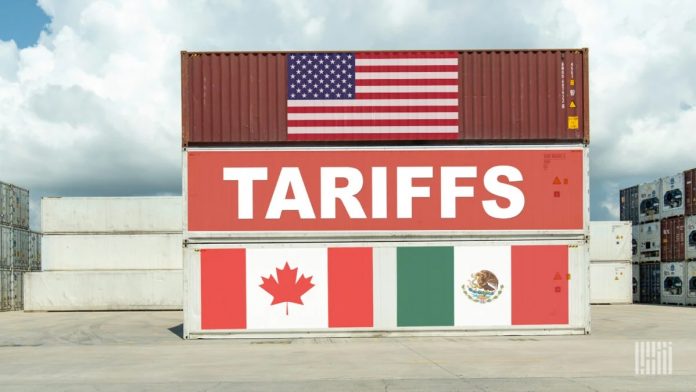
USC experts talk about the importance of U.S.-China trade and how it affects the economy. (Illustration/iStock)

President Donald Trump has reignited global trade tensions by announcing sweeping new tariffs on Saturday, threatening to impose a 30% blanket levy on all imports from Mexico and the European Union starting August 1, 2025.

The move, delivered in official letters posted on Trump’s Truth Social platform, marks a return to his combative trade posture and comes after weeks of failed negotiations with key U.S. trading partners.

The new tariffs are in addition to previously imposed sector-specific duties, including 50% tariffs on steel and aluminum and a 25% levy on auto imports. The 30% rate, Trump said, was “separate from all sectoral tariffs,” signaling a broad-based escalation. The letters also went out to 23 other countries, including Canada, Japan, and Brazil, with some nations facing tariff rates as high as 50% on critical commodities such as copper.

Justification and Global Reaction

In his letter to European Commission President Ursula von der Leyen, Trump demanded full and open U.S. market access, arguing the European Union must drop all its tariffs to reduce the U.S. trade deficit. He cited similar complaints in his communication with Mexican President Claudia Sheinbaum, accusing Mexico of failing to do enough to stop drug cartels and fentanyl trafficking.

“Mexico has been helping me secure the border, BUT what Mexico has done is not enough,” Trump wrote. “Mexico still has not stopped the Cartels who are trying to turn all of North America into a Narco-Trafficking Playground.”

The letter to Mexico pegged the country’s proposed tariff at 30%—lower than Canada’s 35%—but officials in Mexico described the move as unfair and a violation of diplomatic norms.

“We mentioned at the roundtable that it was unfair treatment and that we did not agree,” Mexico’s economy ministry said in a statement following a meeting with U.S. officials.

President Claudia Sheinbaum expressed cautious optimism for resolving the matter but was firm on protecting national interests.

“There’s something that’s never negotiable: the sovereignty of our country,” she said.

Von der Leyen warned that the tariffs would “disrupt essential transatlantic supply chains, to the detriment of businesses, consumers, and patients on both sides of the Atlantic,” and stressed that the EU would take “all necessary steps to safeguard its interests,” including countermeasures.

Bernd Lange, chair of the European Parliament’s trade committee, described the action as “a slap in the face,” urging Brussels to respond with tariffs of its own as early as Monday.

Retaliation Looms as Allies Rethink U.S. Ties

The aggressive tariff policy has unsettled even America’s closest allies. Japan’s Prime Minister Shigeru Ishiba said Tokyo is reassessing its economic dependence on Washington. Canada and several European countries have also begun reviewing their security and trade alignments, with some exploring alternatives to U.S.-made military equipment.

Trade experts warn the moves could ignite a tariff spiral similar to the U.S.-China trade war. “U.S. and Chinese tariffs went up together and they came down together. Not all the way down, but still down,” said Jacob Funk Kirkegaard, senior fellow at the Brussels-based Bruegel think tank. “This opens the door to another cycle of retaliatory moves.”

The Implications

Economists have warned that the new tariffs will act as an indirect tax on American households. A Yale study projects that the 18% effective average tariff rate—now the highest since 1934—will cost the average U.S. household an additional $2,400 this year alone. Copper prices, which have already surged more than 10% in anticipation, are likely to push prices for construction, electronics, and renewable energy products even higher.

Peter Schiff, Chief Economist at Euro Pacific, said the tariff plan may stoke inflation. “Consumers need to brace for much higher prices and get used to higher interest rates,” he said. “This won’t end well for the middle class.”

However, Trump’s tariffs have significantly bolstered government revenue. U.S. customs duties revenue has topped $100 billion in the current fiscal year—setting a record pace, according to U.S. Treasury data.

While stock markets initially appeared unshaken—benefiting from recent all-time highs and strong economic fundamentals—investors are beginning to factor in broader consequences. Analysts from Citi and Pepperstone warned that unresolved trade tensions could weigh on European equities, depress the euro, and complicate U.S. earnings forecasts for Q3.

The August 1 implementation deadline gives targeted countries limited time to secure new deals or carve out exemptions. Trump’s track record suggests there may be room for negotiation, but many fear that even temporary enforcement could inflict lasting damage on diplomatic and economic ties.

GTCO CEO Agbaje Defends CBN Over Forbearance Exit, Says Banks Were Informed Well In Advance

0

The Group Chief Executive Officer of Guaranty Trust Holding Company (GTCO), Segun Agbaje, has said Nigerian banks had ample notice to prepare for the end of regulatory forbearance, and therefore the recent decision by the Central Bank of Nigeria (CBN) to phase it out should not come as a surprise.

Agbaje made the remarks on Thursday, July 10, during an event commemorating the company’s secondary listing on the London Stock Exchange (LSE), where GTCO officially began trading under the ticker “GTHC.”

“We had letters — there was enough time”

Addressing the issue of regulatory forbearance, a temporary relief policy introduced to ease the pressure of non-performing loans during turbulent periods, Agbaje was unequivocal.

“I don’t think forbearance or the exit of forbearance should have come as a surprise to banks. We all basically had letters saying it would end in 2023. Therefore, we should have exited by the end of 2024. So whatever the regulators chose to do should not have come as a surprise,” he said.

The remarks come amid complaints from some bank executives who described the CBN’s timing as abrupt. But Agbaje’s comments appear to challenge that narrative, suggesting the industry had more than enough time to align with the exit timeline.

On CRR and inherited liquidity overhang

On the broader regulatory environment, Agbaje also weighed in on the controversial Cash Reserve Ratio (CRR), which banks say locks away an excessive portion of their deposits at the CBN, thereby tightening liquidity and curbing lending ability.

“CRR is a result of a liquidity overhang that was inherited by this government and this central bank. You have to find a methodical way of getting rid of the liquidity,” he said, defending the CBN’s posture. “My belief is that as the central bank sees normalized liquidity, they will reduce CRR over time. But I don’t think it’s realistic to expect them to just release CRR in the midst of what is a large liquidity overhang.”

The CBN has faced criticism for sequestering over N15 trillion in the banking sector CRR — a situation many analysts argue restricts banks’ ability to lend and weakens earnings. But Agbaje’s stance suggests an understanding of the regulator’s cautious approach to liquidity management.

Navigating tough international regulatory terrain

Agbaje also spoke about the intense regulatory scrutiny faced by GTCO during its London listing process, including requirements from the UK’s Financial Conduct Authority (FCA).

“It’s very challenging. It’s not only the exchange that you have to meet. You have to meet the FCA — it’s the financial regulator here,” he said. “Honestly, the takeaway is you have to learn how to play by the rules. Because you’ll be surprised how much pops up.”

He further stressed the importance of responsible journalism, saying misinformation — particularly in Nigeria — can complicate international due diligence exercises.

“When you do a due diligence on a company, everything that has been said about that company or the individuals pops up. And you have to defend it… But people don’t see that. So you go through a lot of that. And you have to debunk. You have to confirm. You have to explain.”

GTCO’s London listing: A West African first

GTCO’s secondary listing on the London Stock Exchange marks a significant step in its strategic global expansion. On July 9, the company announced the admission of its Ordinary Shares to the LSE’s main market, making it the first financial services institution in West Africa to dual-list shares on both the Nigerian and London exchanges.

The listing follows a fully marketed offering that raised $105 million through the issuance of 2.29 billion new ordinary shares, attracting a strong mix of long-term institutional investors.

The company’s shares are now trading under the ticker “GTHC”, with a planned shift to “GTCO” following the cancellation of its Global Depository Receipts (GDRs). The transition reflects GTCO’s current corporate structure and rebranding efforts.

GTCO’s listing comes at a time when Nigerian banks face steep regulatory demands and macroeconomic uncertainty. Yet, the firm’s ability to meet the LSE’s stringent standards — including anti-money laundering protocols, board composition rules, and audit transparency — suggests GTCO is positioning itself to attract more foreign capital and assert its footprint beyond Africa.

Agbaje’s remarks not only defend regulatory policies back home but also highlight the burden of perception that Nigerian companies must overcome on the global stage — especially in an era where public narrative largely influences investor confidence.