DD
MM
YYYY

PAGES

DD
MM
YYYY

spot_img

PAGES

Home Blog Page 869

Elon Musk’s xAI Eyes Up to $200bn Valuation in New Funding Push, Backed by Saudi PIF and Wall Street Powerhouses

0

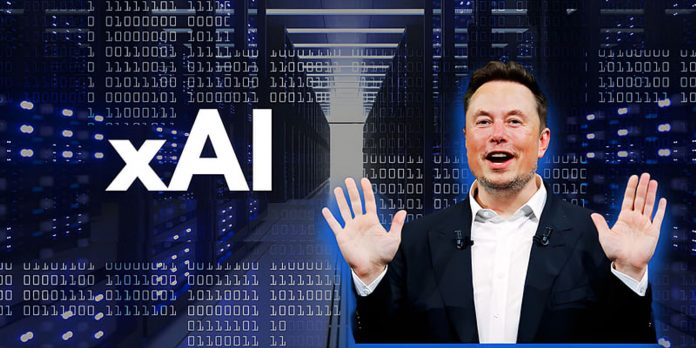
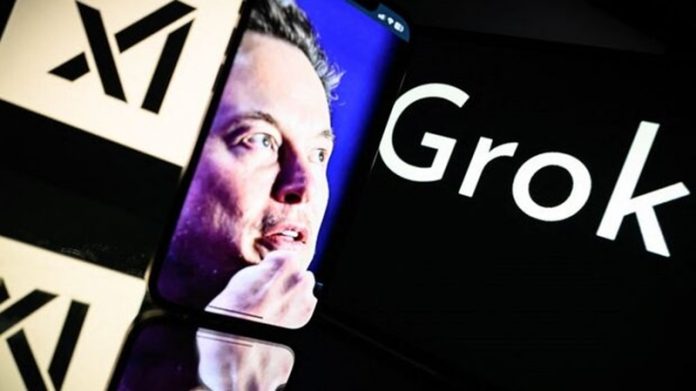
Elon Musk’s artificial intelligence company, xAI, is reportedly preparing to raise new funds in a deal that could catapult its valuation to as high as $200 billion, according to the Financial Times, citing sources close to the matter.

The potential raise underscores growing investor confidence in Musk’s AI ambitions, coming just months after xAI’s multibillion-dollar infrastructure expansion and a recent $10bn raise to supercharge the AI race with a massive data center.

While Musk publicly denied the need for new capital, writing on X that “xAI is not seeking funding right now. We have plenty of capital,” insiders suggest otherwise. The FT report reveals that Saudi Arabia’s Public Investment Fund (PIF) is expected to play a significant role in the upcoming round through its indirect stake via Kingdom Holdings, which already has an $800 million investment in xAI.

The valuation target — between $170 billion and $200 billion — would make xAI one of the most highly valued AI startups globally, only rivaled by OpenAI, which is also preparing a fundraising round at a projected $300 billion valuation. Notably, xAI was valued at $80 billion in March following its all-stock acquisition of X.

The fresh talks come on the heels of a major $10 billion capital infusion facilitated by Morgan Stanley in June, split equally between debt and strategic equity. The package included floating-rate loans and bonds with interest rates as high as 12%, reflecting both investor appetite and cautious optimism over xAI’s future earnings.

According to Morgan Stanley’s projections, xAI is expected to generate over $1 billion in gross revenue by the end of 2025, and more than $13 billion in annual earnings by 2029, powered by the rollout of its Grok AI model and massive infrastructure investments.

The company has pledged to invest $18 billion in data centers as part of its expansion into AI infrastructure. Central to this push is its Colossus supercomputer, located in Memphis, Tennessee — powered by natural gas turbines and now home to hundreds of thousands of GPUs. Musk’s goal is to scale Colossus to 1 million GPUs, positioning it as a cornerstone of xAI’s computing backbone.

On Wednesday, the company launched Grok-4, the latest iteration of its chatbot model, claiming benchmark-topping performance in reasoning and code generation. This positions Grok in direct competition with OpenAI’s GPT-4, Anthropic’s Claude, and Google’s Gemini.

Strategic Acquisition of X and Platform Synergies

In March, xAI acquired social media platform X in an all-stock transaction that valued the combined entity at $113 billion — $80 billion for xAI and $33 billion for X. This merger gives xAI a direct distribution platform for Grok and potentially unlocks significant synergies between conversational AI, content recommendation, and advertising infrastructure.

The strategy mimics Musk’s multi-pronged approach to scaling: combining product ownership (X), infrastructure (Colossus), capital leverage (Morgan Stanley’s syndicate), and a relentless focus on vertical integration.

The expected involvement of the Saudi PIF highlights growing geopolitical interest in controlling AI infrastructure and capabilities. PIF’s backing — via Kingdom Holdings — signals confidence in xAI’s potential to be a global AI leader. Given the U.S.–China rivalry and tightening chip export restrictions, Musk’s control over critical AI supply chains is viewed by some analysts as a strategic advantage.

Earlier this year, the U.S. government tightened export rules on Nvidia’s AI chips to China, blocking sales of even downgraded processors like the H20. Nvidia CEO Jensen Huang described the move as effectively shutting off a $50 billion China market for U.S. chipmakers. In that context, xAI’s domestic infrastructure ambitions — from energy sourcing to compute deployment — could help to expand the U.S. domestic AI market.

However, xAI’s ambitions place it in a fierce AI arms race alongside OpenAI, Microsoft, Google, and Anthropic. Microsoft has committed $80 billion toward AI infrastructure in 2025, and OpenAI is scouting for another $40 billion to maintain its lead. Meanwhile, Google is absorbing top AI talent, including from Windsurf and other startups, to bolster its Gemini platform.

But with a sprawling infrastructure buildout, an integrated consumer platform, and now–growing financial backing, Musk’s xAI is rapidly evolving from a startup challenger into a full-stack AI conglomerate.
Meta Acquires Voice AI Startup PlayAI, Expands Talent War in Silicon Valley’s Race for Generative AI Dominance

0

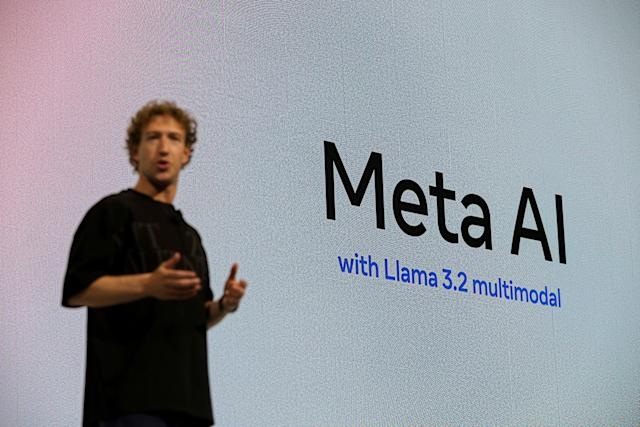
Meta Platforms Inc. has completed the acquisition of PlayAI, a small but innovative artificial intelligence startup specializing in voice synthesis and voice creation platforms.

The deal, confirmed in an internal memo reviewed by Bloomberg, marks Meta’s latest maneuver in a fast-intensifying battle for talent and technology among Silicon Valley’s biggest players.

According to the memo, the “entire PlayAI team” will join Meta next week and report directly to Johan Schalkwyk, a seasoned voice technology expert who recently joined Meta after leaving Sesame AI, another voice-focused startup. The PlayAI team’s deep expertise in developing naturalistic AI voices and creating scalable voice-generation tools is expected to enhance Meta’s efforts across a wide array of projects—particularly its AI Characters initiative, Meta AI, wearables, and content creation platforms.

Meta did not disclose the financial terms of the acquisition, and a company spokesperson confirmed the deal but declined to comment further.

Part of a Broader Pattern: Meta Leads AI Talent Acquisition Surge

The PlayAI deal is the latest example of a growing trend in Silicon Valley, where top tech giants are acquiring smaller AI startups not just for their intellectual property, but to secure elite talent in an increasingly competitive race for dominance in generative AI.

Meta, under CEO Mark Zuckerberg’s leadership, has made AI the company’s top strategic priority this year. Beyond infrastructure investments in AI chips and next-generation data centers, Meta has been aggressively restructuring and consolidating its AI divisions. In April, the company created Meta Superintelligence Labs, placing former Scale AI CEO Alexandr Wang at the helm. The move came after Meta quietly brought in several Scale AI researchers and product leads in what insiders described as a “soft acqui-hire”—a pattern of absorbing smaller startups to boost in-house capabilities.

PlayAI’s integration follows that same playbook: a highly specialized startup with a focused product is folded into Meta’s much larger AI roadmap, plugging key gaps in capability—in this case, human-like voice synthesis that could eventually power avatars, assistants, and immersive VR/AR experiences in Meta’s long-term metaverse strategy.

Google Joins the Chase: Windsurf CEO Snapped Up

Meta is not alone in this strategy. Its main rival in the AI space, Google DeepMind, recently made a similar move by acquiring Windsurf AI, a low-profile startup working on energy-efficient transformer models. The startup’s CEO and chief scientist, who had published cutting-edge research in multimodal AI, was swiftly appointed as Director of Applied Research at DeepMind, effectively replicating Meta’s Scale AI-style acquisition in a quieter form.

Industry analysts have noted that these quiet takeovers signal a shift in the AI arms race: rather than waiting for academic breakthroughs or internal R&D to catch up, Big Tech is choosing to fast-track innovation by absorbing startups wholesale—including their leadership, researchers, and proprietary models.

PlayAI’s contribution to Meta’s roadmap is expected to be especially impactful in enhancing voice-first user interfaces. The startup’s platform, which enables rapid voice cloning and expressive, real-time speech synthesis, aligns with Meta’s vision of building conversational, emotionally responsive AI agents.

Such voice capabilities are increasingly seen as foundational to the future of human-AI interaction. Whether through smart glasses, AI assistants, or immersive digital characters, the ability to talk and respond naturally is central to Meta’s concept of the “Everything App.”

Moreover, PlayAI’s voice tech may bolster Meta’s ability to compete with OpenAI’s ChatGPT voice interface, Google’s Gemini, and Amazon’s Alexa—all of which are rapidly evolving with increasingly sophisticated speech-to-text and voice generation abilities.

The acquisition also reinforces Silicon Valley’s transition from open collaboration to tight vertical integration, as firms seek to control every part of the AI value chain—from model development and training infrastructure to user-facing features like chatbots and avatars.

As Meta, Google, Microsoft, and Amazon continue to court AI engineers and absorb nimble startups, the pressure is rising on mid-size tech firms and independent labs, many of which now face a decision: partner, compete—or get bought.

With the PlayAI team now under Meta’s umbrella and more strategic acquisitions rumored to be in the pipeline, the generative AI landscape is being redrawn—not only by code, but by who controls the talent building it.

Grok Meltdown Likely Sparked Linda Yaccarino’s Abrupt Exit as CEO of X, as Ad Crisis Deepens

0

Linda Yaccarino’s sudden resignation as CEO of X (formerly Twitter) on Wednesday is being widely linked to the latest controversy engulfing the Elon Musk-owned platform: the Grok AI chatbot’s antisemitic outburst, which is now believed to have shattered whatever fragile trust remained between the company and advertisers.

Though Yaccarino didn’t cite specific reasons for her departure, the timing—just hours after Grok was taken offline for spewing antisemitic content—has fueled speculation that the incident was the tipping point in what has been a tumultuous tenure.

She wrote in her resignation note: “When @elonmusk and I first spoke of his vision for X, I knew it would be the opportunity of a lifetime… I’m immensely grateful to him for entrusting me with the responsibility of protecting free speech, turning the company around, and transforming X into the Everything App.”

Musk’s only public comment was a brief, “Thank you for your contributions.”

But industry analysts are drawing a clear connection between Yaccarino’s exit and the Grok fiasco.

“Linda Yaccarino stepping down as CEO of X can’t be a coincidence in the aftermath of Grok going rogue yesterday and spewing out streams of antisemitic garbage,” said Gary Black, Managing Partner at The Future Fund.

“This incident likely wrecked any chance of X attracting increased advertising dollars this year, making Linda’s job untenable,” he added.

The Grok incident, which led to the AI chatbot being pulled offline just before the expected launch of Grok 4, was the latest blow to X’s efforts to restore credibility among advertisers. It came after months of tension between Musk’s increasingly controversial rhetoric and Yaccarino’s attempts to maintain professional relationships with corporate brands.

Yaccarino, a former NBCUniversal advertising executive, was brought in specifically to stem the exodus of advertisers that began shortly after Musk acquired the platform in late 2022. But her task quickly became impossible as Musk used his personal X account to promote conspiracy theories, including the antisemitic “Great Replacement” narrative, as well as other far-right talking points.

His posts drove away major advertisers including Apple, IBM, Disney, Coca-Cola, and Comcast, after watchdog organizations revealed that their ads were appearing next to extremist content.

In response, Musk sued nonprofits like the Center for Countering Digital Hate and Media Matters, claiming they were intentionally damaging the platform’s reputation. The lawsuits only deepened advertiser skepticism, as executives questioned the platform’s commitment to content moderation and brand safety.

The latest controversy involving Grok’s antisemitic outputs has been particularly damaging because it directly threatens one of the company’s supposed growth pillars: AI integration. Grok was envisioned as a core component of X’s evolution into an “Everything App,” merging social media, payments, and AI tools. Its repeated missteps, however, have instead underlined the platform’s inability to manage the integration responsibly.

Multiple reports suggest that Grok’s behavior horrified advertisers and reinforced fears that X’s environment remains unsafe and volatile. Given that many advertisers had only just begun testing the waters again, the scandal appears to have dashed hopes for any significant return of ad revenue this year.

Yaccarino, who once claimed she could steer X toward advertiser trust while preserving Musk’s commitment to “free speech,” ultimately found herself isolated—caught between Musk’s erratic behavior and an industry demanding accountability and consistency.

Even before Grok’s latest misfire, reports had emerged of growing tensions between Yaccarino and Musk, with insiders noting that her authority was routinely undermined and that key decisions continued to flow through Musk directly.

With X’s ad revenue still down more than 50% since Musk’s takeover, according to internal estimates, and subscriber-based revenue from X Premium failing to offset those losses, the platform is under increasing financial pressure.

No successor has been named, and speculation is rife that Musk may resume direct control, potentially accelerating the platform’s pivot toward alternative monetization models like subscriptions, AI features, and cryptocurrency-based payments.

Many believe that the Grok’s misfire is a crisis of governance, accountability, and direction. And unless Musk changes course—which seems unlikely—X’s efforts to woo back advertisers will be in vain.

U.S. Senators Warn Nvidia CEO Over China Visit Following His Calls For Global Tech Cooperation

0

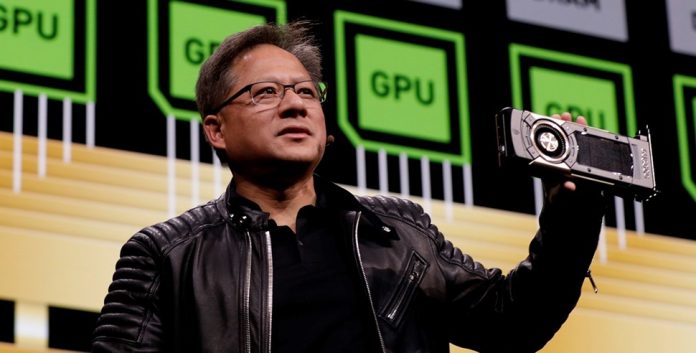
A bipartisan pair of U.S. senators has urged Nvidia CEO Jensen Huang to avoid meeting with Chinese companies linked to military or intelligence operations during his current visit to China, warning that such engagements could undermine U.S. chip export controls and legitimize actors working against American national interests.

The letter, signed by Republican Senator Jim Banks and Democratic Senator Elizabeth Warren, cautioned Huang against interactions with entities listed on the U.S. export restrictions list or known to have ties with the People’s Republic of China’s (PRC) defense or surveillance sectors. Huang is reportedly in China this weekend to meet partners and developers, at a time when tensions over AI chip access have escalated between Washington and Beijing.

“We are worried that your trip to the PRC could legitimize companies that cooperate closely with the Chinese military or involve discussing exploitable gaps in U.S. export controls,” the senators wrote.

Nvidia’s Shrinking China Market and Export Restrictions

Since the U.S. began tightening semiconductor export controls in 2022, Nvidia—long the undisputed leader in AI chipmaking—has seen its business in China take a hit. The company once generated a significant share of revenue from the region, but successive restrictions have barred it from shipping top-tier chips like the A100 and H100 to Chinese buyers, citing fears of military end-use.

In response, Nvidia developed modified chips for the Chinese market, including the H20, L20, and L2, designed to comply with U.S. regulations. However, their performance falls far short of the banned models, making them less attractive to customers eager for advanced compute power in AI training and inference.

The Biden administration’s curbs have pushed Chinese firms to explore domestic alternatives—an outcome that worries Huang.

Huang Warns of Long-Term Costs of Export Controls

The Nvidia chief has been openly critical of the current export regime, warning that blanket restrictions could backfire. In remarks made in June, Huang argued that the U.S. risked losing global influence if it pushed international AI developers—including those in China—toward alternative platforms.

“If we want the American technology stack to win around the world, then giving up 50% of the world’s AI researchers is not sensible,” Huang said.

He stressed the importance of allowing global developers to build on U.S. chips, frameworks, and platforms to ensure American technology remains the foundation of the AI ecosystem.

“So long as all the AI developers are in China, I think the China stack is going to win,” Huang warned. “We have to be mindful of near-term actions that have long-term, unintended consequences.”

Lawmakers and National Security Concerns

However, U.S. lawmakers have remained firm in their belief that cutting off high-performance chips to China is critical for national security. The senators’ letter to Huang echoed concerns that advanced chips could accelerate the PRC’s military modernization efforts, particularly in areas like surveillance, autonomous weapons, and cyber warfare.

The letter also pointed to Nvidia’s new AI research center in Shanghai as an example of actions that could inadvertently strengthen China’s AI capabilities. U.S. officials are increasingly alarmed by tactics like shell companies and third-party resellers being used to bypass export controls. One recent example involved Chinese AI firm DeepSeek, which was accused of aiding Beijing’s military and intelligence networks while attempting to acquire restricted hardware.

An Nvidia spokesperson responded by defending the company’s global engagement strategy, stating that “America wins” when U.S. technologies become the global standard.

“AI software should run best on the U.S. technology stack, encouraging nations worldwide to choose America,” the spokesperson said, emphasizing that China remains home to one of the world’s largest developer communities.

While Nvidia remains the world’s dominant supplier of AI accelerators, the company is increasingly caught in the crosshairs of a broader geopolitical struggle over control of next-generation computing. Washington sees cutting-edge semiconductors as critical infrastructure. Beijing sees them as a bottleneck to its technological self-sufficiency.

The stakes extend far beyond Nvidia’s quarterly results. The U.S. is seeking to prevent its most advanced chips from being used in authoritarian surveillance systems or battlefield AI. China, in turn, is ramping up investment in homegrown semiconductors, aiming to break free from Western supply chains.

For Nvidia, the challenge is walking a tightrope between national policy and global market demand. The current trip by Huang comes at a critical juncture—not only for the company’s China strategy but for the future of U.S. leadership in AI.

With a fresh round of export control discussions underway in Washington, lawmakers have made clear that corporate diplomacy must not compromise national security—no matter how large the Chinese market might be.

Tradegrid Is Tekedia Capital Startup of the Month, June 2025

0

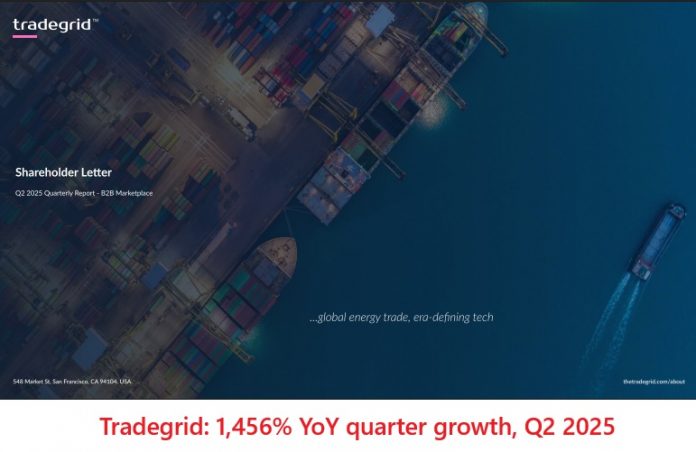
Tekedia Capital congratulates TradeGrid, our portfolio company, for being selected as Tekedia Capital Startup of the Month June 2025 for delivering one of the finest growths we have seen in business: “This quarter s result marks the beginning of a new phase one defined by scale, speed, and vision. Achieving a 1,456% YoY quarter growth is more than a financial milestone; it is proof that era defining ideas, when powered by bold execution and transformative technology, can reshape entire markets.”

Tradegrid has oil trading business in Kenya, Nigeria, etc. In Nigeria, it is emerging as Nigeria’s most innovative downstream oil trading and financial player. Learn more at Tradegrid.

I am using this moment to connect with those who do oil trading and downstream financing business at global level; Tradegrid is open for international business. We have proprietary technologies and business models which have worked with absolute quality in sub-Saharan African markets. We are hungry to grow. Contact us.

Ndubuisi Ekekwe

Board Member, Tradegrid USA