DD
MM
YYYY

PAGES

DD
MM
YYYY

spot_img

PAGES

Home Blog Page 87

OpenAI’s New Playbook: Turning AI Partnerships Into Enterprise Wealth

0

Bill Gates did not become wealthy simply because he co-invented Microsoft technologies; he became a legend because he pioneered a new business model, one where software could be sold and licensed at scale. At a time when IBM bundled software with hardware at no explicit cost, Gates rewrote the economics of computing. That business model, not just technology, created Microsoft wealth.

Elon Musk is celebrated not merely because he built an electric car company, but because he reimagined how cars themselves generate revenue. His breakthrough was not batteries; it was the business model of monetizing software inside a car. When other automakers must pay Tesla billions in carbon credits, and when drivers pay recurring fees for additional features, Musk transformed an automobile company into a software subscription machine. That is why he is the high priest of money.

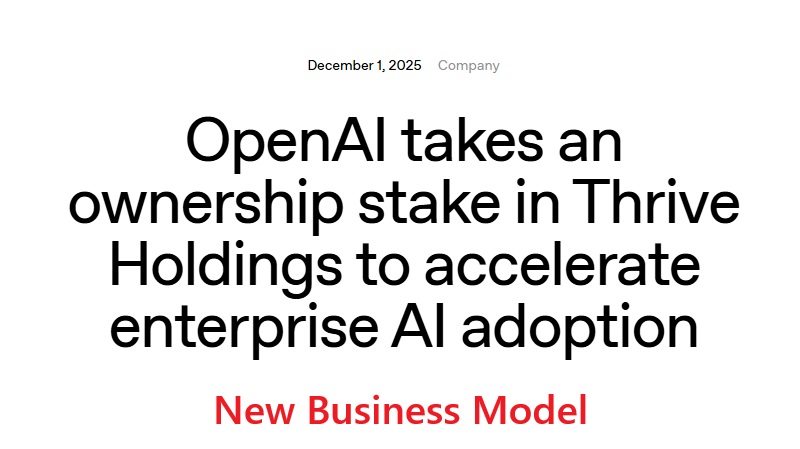
Now, with OpenAI, a new business model is emerging, a circular AI partnership model with a new enterprise layer. Consider this: “OpenAI and Thrive Holdings are partnering to accelerate enterprise AI adoption. Thrive invests in, acquires, and builds businesses positioned for long-term, technology-driven transformation. The initial focus is accounting and IT services—functions with high-volume, rules-driven workflows where OpenAI’s platform can drive immediate gains.”

The move widens OpenAI’s ongoing push to diversify its revenue streams at a time when the company is still battling to turn its wildly popular ChatGPT product into a profitable business. By embedding itself directly inside operating businesses across the “real economy,” OpenAI is placing bets that its models can unlock new efficiencies, reshape traditional workflows, and ultimately return financial gains that could support its heavy compute needs.

Thrive Holdings focuses on buying, owning, and running companies that could benefit from new technologies like AI, with an early focus on accounting and IT services. As part of the deal, OpenAI will embed engineers, researchers, and product teams inside Thrive Holdings’ companies, aiming to speed up their AI adoption and cut operating costs.

This is profound. Thrive has invested in OpenAI. And now OpenAI will supply the AI engines and engineering teams to transform the companies Thrive acquires. As those companies improve productivity and profitability through AI, OpenAI benefits again.

This is a flywheel. A loop. A circular business architecture where capital, AI capabilities, and enterprise outcomes reinforce each other.

For founders building foundational AI systems, this is the emerging playbook:
Partner with investment funds whose portfolio companies can become systematic adopters of your AI infrastructure. Embed your teams, deploy your stack, deepen usage, and your revenue becomes structural, not episodic.

The future of AI will not just be about models. It will be about new business models.

Giannandrea Steps Down, Subramanya Steps In: Apple Shakes Up AI Leadership Amid Criticism and Project Delays

0

Apple has announced the most significant change to its Artificial Intelligence (AI) group since the 2024 launch of Apple Intelligence, confirming that long-serving AI chief John Giannandrea is stepping down.

The move comes as the company faces increasing pressure and criticism for falling behind its major tech rivals in the AI race.

Giannandrea, who has held the position of Senior Vice President for Machine Learning and AI Strategy since joining in 2018 and reported directly to CEO Tim Cook, will transition to an advisor role before fully retiring next spring (2026).

The New AI Chief: Amar Subramanya

Apple has hired a high-profile industry veteran to take the reins, signaling a fresh focus on foundational research and talent acquisition. Amar Subramanya will join Apple as Vice President of AI. Subramanya brings a wealth of relevant experience, having most recently served as a Corporate Vice President of AI at Microsoft. Crucially, he spent 16 years at Google, where he was the head of engineering for Google’s Gemini Assistant before his brief stint at Microsoft. He also worked at Google’s DeepMind AI unit.

Subramanya will now report to software chief Craig Federighi, marking a key organizational change. Previously, Giannandrea reported directly to Tim Cook.

Apple confirmed that Subramanya will lead critical areas, including the development of Apple Foundation Models, machine learning research, and AI safety and evaluation. The remaining teams previously under Giannandrea will be shifted under COO Sabih Khan and services chief Eddy Cue for better organizational alignment.

The shake-up occurs during a period of intense scrutiny over Apple’s AI execution. The suite, intended to put Apple alongside leaders like OpenAI and Google, has received lukewarm reviews from users and critics since its launch. One of Apple Intelligence’s centerpiece features—a significantly improved and personalized Siri assistant—was delayed until 2026, signaling internal development struggles.

CEO Tim Cook acknowledged that Federighi “has been instrumental in driving our AI efforts, including overseeing our work to bring a more personalized Siri to users next year.”

Although Apple’s stock is up 16% in 2025, it has lagged behind many other big tech companies. Investors worry that Apple is spending “much less” on the necessary cloud infrastructure, data centers, and frontier models compared to rivals like Microsoft, Google, and Meta, as its strategy prefers to run AI on-device.

Adding competitive pressure is the emergence of new AI-driven hardware. Jony Ive, Apple’s legendary hardware designer, sold his startup io to OpenAI for $6.4 billion earlier this year. Ive and OpenAI CEO Sam Altman have since collaborated on AI-driven hardware prototypes, which they intend to reveal in two years or less, potentially challenging the iPhone’s dominance built since 2007.

To address its competitive gap, Apple has increased its spending on AI and struck a key deal with OpenAI to integrate ChatGPT into some of its products, including Siri. The hiring of Subramanya, a leader experienced in commercializing foundation models at the industry’s top competitors, is a decisive move to reset and accelerate Apple’s internal AI development strategy.

Inside Amar Subramanya’s Trailblazing Run from Google Gemini to Apple’s AI Hot Seat

Apple’s appointment of Amar Subramanya as its new Vice President of AI is not just a standard executive change; it is a high-stakes talent coup that brings a chief architect of two rival AI superpowers—Google and Microsoft—to the helm of a division criticized for falling behind.

Subramanya’s career trajectory is a direct map of the global AI race’s most competitive battlegrounds. His deep expertise in turning cutting-edge Machine Learning (ML) research into products that scale to billions of users is precisely what Apple, grappling with the delay of its next-generation Siri until 2026 and lukewarm reviews for Apple Intelligence, desperately needs.

Google: The Architect of Gemini

Subramanya spent 16 years at Google, rising through the ranks to a senior leadership position defined by the company’s highest-profile AI initiative. He served as the Head of Engineering for Google’s Gemini Assistant (the successor to the Google Assistant), where he gained critical, practical expertise in building and deploying advanced AI products.

The Gemini project represents Google’s definitive effort to integrate its foundational Large Language Models (LLMs) into a highly interactive, multimodal consumer application.

His tenure included time within Google’s DeepMind AI unit, one of the world’s most influential AI research groups. This exposure gives him invaluable insight into the theoretical and engineering requirements necessary to develop state-of-the-art foundation models—the very core technology Apple needs to master.

His work at Google was centered on scaling complex machine learning and natural language processing systems, establishing a reputation as a researcher-turned-builder capable of productizing theoretical AI advances.

Microsoft: The Target of the Talent War

Subramanya’s stopover at Microsoft was brief but highly significant, placing him at the heart of Redmond’s aggressive AI expansion. He joined Microsoft in mid-2025 as Corporate Vice President of AI, reporting directly to Mustafa Suleyman, the CEO of Microsoft AI and co-founder of DeepMind.

His hiring was part of an aggressive talent acquisition strategy by Microsoft, which reportedly poached over 24 engineers and researchers from Google/DeepMind in a concentrated effort to bolster its consumer AI products.

At Microsoft, Subramanya was focused on developing advanced foundation models to drive AI-powered products such as Microsoft Copilot, which currently relies heavily on OpenAI’s GPT models. His experience was expected to accelerate Microsoft’s capability to build proprietary models and reduce its external dependency.

Upon joining Microsoft, he publicly praised the culture as “refreshingly low ego yet bursting with ambition”—a comment widely interpreted as a contrast to the competitive internal dynamics at Google. This unique perspective on both companies’ corporate cultures makes him an ideal leader to address the internal execution and collaboration challenges that have plagued Apple’s AI team.

OpenAI Deepens Its Circular Investment Strategy With New Stake in Thrive Holdings

0

OpenAI has added a fresh layer to its fast-expanding web of strategic deals, announcing on Monday that it is taking an ownership stake in Thrive Holdings — a company launched in April by Thrive Capital, one of OpenAI’s biggest and most influential backers.

The move widens OpenAI’s ongoing push to diversify its revenue streams at a time when the company is still battling to turn its wildly popular ChatGPT product into a profitable business. By embedding itself directly inside operating businesses across the “real economy,” OpenAI is placing bets that its models can unlock new efficiencies, reshape traditional workflows, and ultimately return financial gains that could support its heavy compute needs.

Thrive Holdings focuses on buying, owning, and running companies that could benefit from new technologies like AI, with an early focus on accounting and IT services. As part of the deal, OpenAI will embed engineers, researchers, and product teams inside Thrive Holdings’ companies, aiming to speed up their AI adoption and cut operating costs.

OpenAI, currently valued at $500 billion, did not disclose how much it invested. But the structure of the partnership means the size of OpenAI’s stake can expand as Thrive Holdings’ companies grow. A person familiar with the agreement — who asked not to be named because the details are private — said the setup is designed to align long-term incentives. Another person familiar with the deal said it also serves as a way for OpenAI to be compensated for its services.

Joshua Kushner, CEO and founder of both Thrive Capital and Thrive Holdings, called the partnership a natural extension of their long-running relationship.

“We are excited to extend our partnership with OpenAI to embed their frontier models, products, and services into sectors we believe have tremendous potential to benefit from technological innovation and adoption,” he said in a statement.

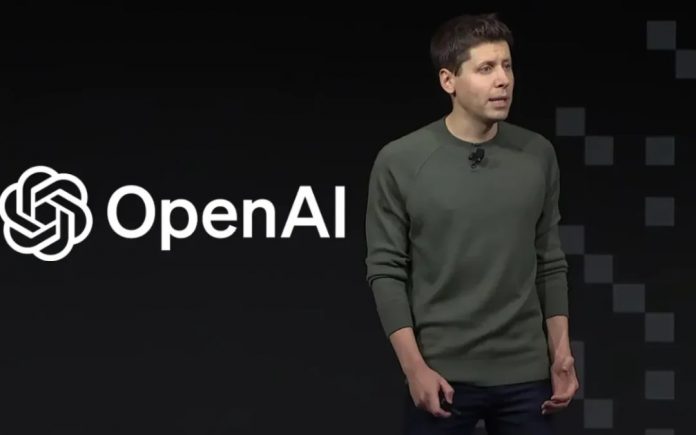
Brad Lightcap, OpenAI’s COO, framed the partnership as a real-world testing ground for how AI can transform core business operations.

“This partnership with Thrive Holdings is about demonstrating what’s possible when frontier AI research and deployment are rapidly deployed across entire organizations to revolutionize how businesses work and engage with customers,” he said.

It’s another example of OpenAI’s increasingly circular dealmaking strategy: the company invests in partners, those partners expand their AI infrastructure or operations using OpenAI’s products, and OpenAI gains both strategic influence and a potential revenue backstop. In recent months, it has taken positions in infrastructure players like AMD and CoreWeave, which supply the compute backbone that its own models depend on.

The announcement also arrived alongside a second major update: OpenAI revealed that ChatGPT Enterprise will be deployed to “tens of thousands” of employees at Accenture. The consulting giant is already one of the most aggressive adopters of generative AI in the corporate world, with its own teams dedicated to helping clients integrate tools like ChatGPT into daily operations.

The dual announcements show an evolving playbook — one that goes far beyond model releases and consumer subscriptions for OpenAI. With escalating compute demands, rising operating costs, and investors expecting OpenAI to one day convert its global popularity into sustainable earnings, the company is working to deepen its roots inside businesses where AI can drive measurable, billable change.

The Thrive Holdings deal drops OpenAI more directly into sectors where AI adoption has barely scratched the surface. And if the partnership works as designed, the company won’t just sell AI — it’ll partly own the gains created by it.

British Fintech Wise Secures Approval to Launch in South Africa, Marking Its First Entry Into Africa

0

Wise, the British financial technology company, has officially received conditional regulatory approval to operate in South Africa, marking its first expansion into Africa.

The company expressed excitement about entering the market, noting that millions of South Africans will soon benefit from faster, cheaper, and more transparent international money transfers.

The approval comes shortly after UK Prime Minister Keir Starmer’s visit to South Africa during the G20 summit. Commenting on Wise’s expansion, the Prime Minister stated that the move strengthens economic ties with one of Africa’s most dynamic economies while highlighting British innovation in building solutions that improve life for people and businesses globally.

In his words,

“Wise’s expansion into South Africa not only strengthens ties with one of Africa’s most dynamic economies but also showcases British excellence in building solutions that make life better for people and business worldwide, both at home and abroad. This is yet another example of a thriving UK business expanding internationally, that success is good for British jobs, good for growth, and good for business.”

Also speaking, Nadia Costanzo, Director of Banking and Expansion LatAm & MEA at Wise, said,

“South Africans are among the most digitally savvy consumers on the continent, yet many still face high costs, poor price transparency, and slow, inconvenient processes when sending money abroad. Our first regulatory approval in Africa marks a significant step forward in our mission to give South Africans access to a faster, cheaper, and more transparent way to send money abroad – and we’re grateful for the Reserve Bank’s collaboration and support throughout the process. We look forward to actively engaging with SARB as it continues to modernise and develop its regulatory framework to fuel financial innovation.”

South Africa is committed to the G20 Roadmap for Enhancing Cross-Border Payments, an initiative aimed at making global payments more accessible, transparent, fast, and affordable by 2027. Wise’s entry into the African country aligns with and supports these national and global objectives.

By lowering costs and simplifying global money movement, Wise will enable more South Africans to:

•Pay for online services globally

•Receive payments from international employers

•Engage in global e-commerce and gig-economy work.

Notably, Wise’s entry into South Africa comes after the global technology company in October this year, secured regulatory approvals by the Central Bank of the United Arab Emirates (CBUAE) to bring its suite of products to the country. 

Co-founded by Kristo Käärmann and Taavet Hinrikus, Wise formerly known as TransferWise was launched in 2011. Today, it stands as one of the world’s fastest-growing and profitable technology companies, publicly traded on the London Stock Exchange under the ticker WISE.

With over 16 million users worldwide, the fintech processes approximately £9 billion in cross-border transactions monthly, saving customers around £1.5 billion annually. Through the Wise account, individuals and businesses can hold more than 40 currencies, transfer funds internationally, and spend money abroad with ease.

In fiscal year 2025, Wise supported around 15.6 million people and businesses, processing over $185 billion in cross-border transactions and saving customers around $2.6 billion.

Wise is driven by a mission to build “money without borders” where sending, receiving, and spending money internationally feels as instant and simple as email. Its technology, transparency, and global mindset continue to challenge traditional financial systems and push the global payments industry toward greater fairness and efficiency.

Four Crypto Presales Drawing Attention in Early December: Why Mono Protocol Leads Developer and User Interest

0

Several early-stage projects continue gaining traction as users search for platforms built around utility and structured development. Mono Protocol, Nexchain, WeWake, and Maxi Doge now appear in multiple tracking lists due to steady raises and active updates. These entries remain visible across the crypto presale market as interest shifts toward practical solutions.

1. Mono Protocol – Unified Routing Framework Driving Continuous Growth

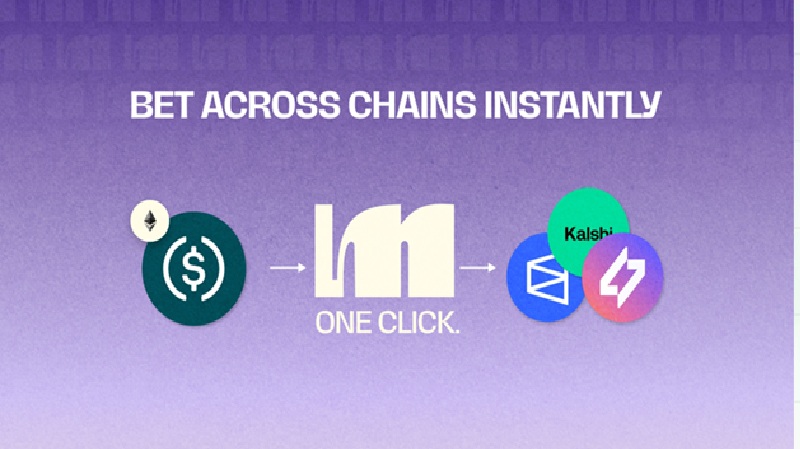
Mono Protocol remains one of the most followed entries in current cryptocurrency presales. The project is in Stage 19 with a presale coin price of $0.0550 and $3.68 million raised. Its approach focuses on unifying the user balance across supported blockchains, reducing manual switching and simplifying cross-chain activity.

The routing engine manages execution behind the scenes. It chooses the optimal path based on network conditions and handles settlement automatically. This technical direction positions Mono Protocol as a platform designed for multi-chain accessibility.

Its CertiK audit and continued updates help support visibility across crypto pre sales as infrastructure interest rises.

2. Nexchain – AI-Enhanced Layer-1 With High Throughput and Testnet Expansion

Nexchain continues appearing in web3 crypto presale discussions due to its AI-supported consensus system and high-performance architecture. The Layer-1 blockchain targets up to 400,000 transactions per second, using hybrid validation and parallel processing to maintain speed.

The presale price stands at $0.116 during Stage 29, with over $12.25 million raised toward the target. TESTNET 2.0 introduces wallet reputation scoring, contract behavior detection, and risk profiling tools. These additions support transparency and draw developer attention.

Its listed target of $0.30 creates a 259% projected margin, which keeps Nexchain present across several crypto presales lists focusing on long-term infrastructure projects.

3. WeWake – Walletless and Gasless Entry Designed for Mainstream Users

WeWake remains a top choice among pre sale cryptocurrency projects targeting new Web3 participants. The platform removes common barriers by offering login access through Google, Apple, or Telegram instead of seed phrases or wallets. This improves onboarding for users unfamiliar with blockchain tools.

Stage 17 is priced at $0.0340 with $1.49 million raised. The Layer-2 system supports gasless transactions through internal mechanisms. This allows users to complete actions without paying network fees, a design aligned with broader accessibility goals.

The model positions WeWake within discussions about user-friendly platforms and keeps it visible across active coin presale searches.

4. Maxi Doge – Meme Token With Utility and Planned Trading Integrations

Maxi Doge enters this list as a meme-focused project that incorporates planned utility features rather than relying solely on branding. Built on Ethereum as an ERC-20 token, it integrates easily with existing wallets, hardware devices, and major DeFi tools.

Twenty-five percent of the supply is allocated to the MAXI Fund. This pool supports partnerships, including potential integrations with futures trading platforms.

The token incorporates staking rewards, gamified engagement systems, and Web3 features such as “proof-of-workout” elements.

Audits from Coinsult and SolidProof show no critical vulnerabilities. With a heavy marketing allocation and broad compatibility, Maxi Doge maintains a steady presence across coin presale and crypto presales discussions.

Final Overview

Mono Protocol, Nexchain, WeWake, and Maxi Doge continue appearing across market tracking reports due to structured development, active communities, and practical use cases. These projects maintain visibility in the presale crypto market as users explore platforms offering infrastructure, accessibility, and targeted utility rather than short-term speculation.


Learn More about Mono Protocol

Website: https://www.monoprotocol.com/

X: https://x.com/mono_protocol

Telegram: https://t.me/monoprotocol_official

LinkedIn: https://www.linkedin.com/company/monoprotocol/